In remembrance of my teacher, I would like to share some stories that I believe will contribute to his stature, but which many people may not yet know.
The long journey of the curriculum
In late 1975, I was fortunate enough to join a delegation from the Ministry of Higher Education and Vocational Training working at the Saigon Faculty of Letters University. At that time, South Vietnam was still nominally governed by the military administration at all levels of the Provisional Revolutionary Government of the Republic of South Vietnam. I have to elaborate a bit like this to fully convey the meaning of the story I want to tell.
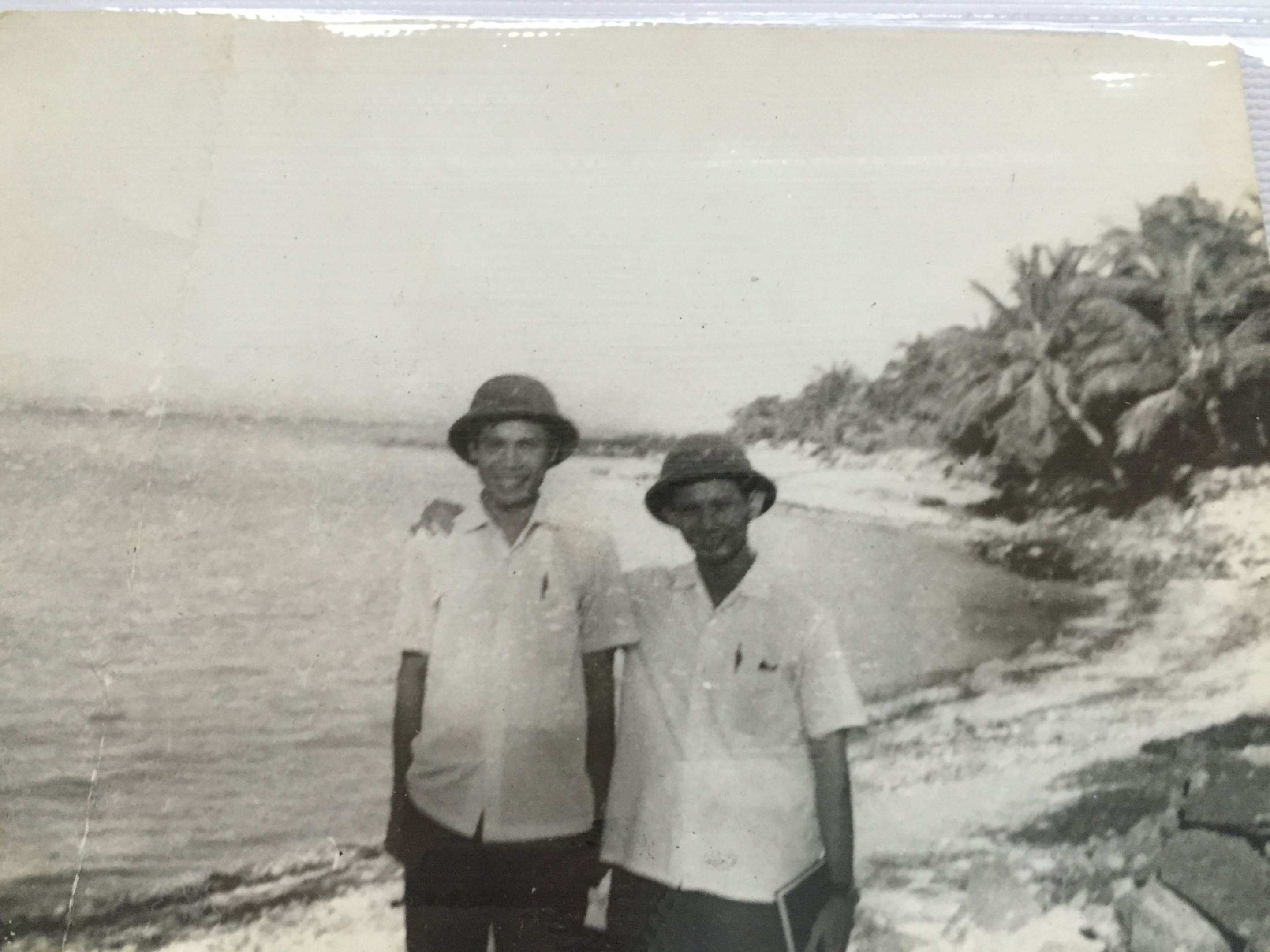
Professor Phan Huy Le (right) and Professor Vu Minh Giang during a survey trip to Ly Son Island in 1977.
Here's the story: After arriving in Saigon, our group was accommodated right on the campus of the Faculty of Literature. Although not large, the university has a valuable asset that generations of professors and students are very proud of: the library. We were invited to visit and get library cards. It was truly an admirable library. Here, for the first time, I saw a complete set of journals such as BEFEO (Bulletinde l'École française d'Extrême-Orient), BAVH (Bulletindes Amis du Vieux Hué), BSEI (Bulletin(from the Société d'Études Indochinoises)… When I reached the rare book cabinet, my eyes were immediately drawn to two thick books of a very familiar size, carefully bound in hardcover. I approached them and could hardly believe my eyes when I read the inscription on the spine.History of the feudal systemVolume II is by Phan Huy Lê. The book next to it is Volume III of the same series, edited by the teacher. I wondered and asked the librarian how the library had acquired these two sets of textbooks so quickly, given that Saigon had just been liberated and schools hadn't yet reopened.
The librarian said that these books had been in the library for many years before the liberation of Saigon. Noticing our surprised expressions and curious eyes, the librarian calmly explained why Professor Phan Huy Le's works were placed in the university's valuable book collection so early. It turned out to be a long and rather intriguing story. During the period when the two regions were still divided, although the Faculty of Literature had almost no contact with the North, some professors frequently traveled to France and had the opportunity to come into contact with these books, quickly recognizing their scientific value. The Faculty of Literature had to ask French scholars to help purchase a set via Moscow.
Thus, Professor Le's textbook traveled nearly 20,000 kilometers from Hanoi to Saigon in the early 1970s. This event alone speaks volumes about the exceptional value of the work.
Perhaps because Professor Phan Huy Le's name had transcended all barriers and reached the historical community of South Vietnam so early, when he first began teaching at the Faculty of Literature, the faculty and students expressed a special fondness for him. The only thing was, as one faculty member told me, that Professor Le was much younger than they had imagined.
The Emperor's tomb is also a creation of the people.
There's an unusual story I'd like to share here so that everyone can better understand the character, intellect, and persuasive skills of Professor Phan Huy Le. I remember around 1977, I assisted him on a survey trip and helped final-year students gather materials for their graduation theses in Binh Tri Thien. The head of the provincial Department of Culture invited Professor Le to his house for dinner. During the conversation, the head of the department brought up a problem that the province was extremely concerned about: the restoration of relics related to the Nguyen Dynasty. Over time and due to the impact of war, many relics (fortifications, temples, tombs, etc.) had been damaged, deteriorated, or even fallen into ruin, but this was not a priority for the government. At that time, this was considered normal. Having just emerged from war, the government had countless other tasks to deal with.
At that very moment, UNESCO graciously offered Hue a fund to urgently address the serious condition of several historical sites, including the tomb of Emperor Gia Long. What seemed like a stroke of luck unexpectedly turned into an awkward situation. Several key provincial leaders resolutely refused to accept the funds for the restoration of the historical site, arguing that while the province was still grappling with countless difficulties, it was not the time to be repairing the tombs of feudal kings and officials, especially those of a king who had once been "carrying a snake to bite one's own chicken" (referring to King Gia Long).
In a seemingly insurmountable crisis, the Head of the Department came up with the idea of asking Professor Le to persuade the provincial leaders, and Professor Le agreed. I don't remember the exact wording, but the general argument was as follows:
- We can share with the leaders our view that we are not prioritizing the restoration of historical sites while the province has countless other urgent tasks to address, but preserving and restoring historical sites must be done sooner or later. The urgency of the work, as proposed by the Department of Culture, is not due to...naturebut due to the degreeurgentof the work. If these monuments are not reinforced in time, they could collapse and be lost forever. Future generations may blame us for this.
- The fortresses, temples, and tombs of kings and mandarins are the culmination of the labor of craftsmen from all over the country. Restoring these relics is about preserving the architectural and artistic works of the nation, the fruits of the people's labor.
- Whoever owned those tombs, they were all historical figures. Their merits and demerits will be judged by history, but even if they were villains, preserving these physical relics will be far better for education than simply talking about them later...
- Although it's urgent, given the province's current difficulties (especially with people still facing food shortages), we cannot prioritize funding for this project. This is money donated by UNESCO and cannot be used for anything else. If we refuse it, we will be judged negatively regarding our cultural awareness.
The effect was unexpected. Professor Phan Huy Le's argument convinced even the most difficult leaders. The province agreed to accept the funds to promptly repair the dilapidated relics. This story was recounted many times by the Head of the Department, who later became a high-ranking official[i].
The teacher's students whose faces he didn't know.
Throughout his more than half-century of teaching, Professor Phan Huy Le trained countless generations of students. Despite the large number, when they met again, everyone seemed to feel that he still remembered them. Just mentioning a particular characteristic of the class would prompt him to reminisce about a series of memories associated with that group. For example, if a former student from the K13 cohort simply said, "I was in the Trai Chuoi class" (the location where the class was evacuated during the war), he would immediately recall, "You guys were the class I taught at the temple in Cao Vien, Binh Da..." Yet, there were instances where he didn't "remember the faces" of his students.
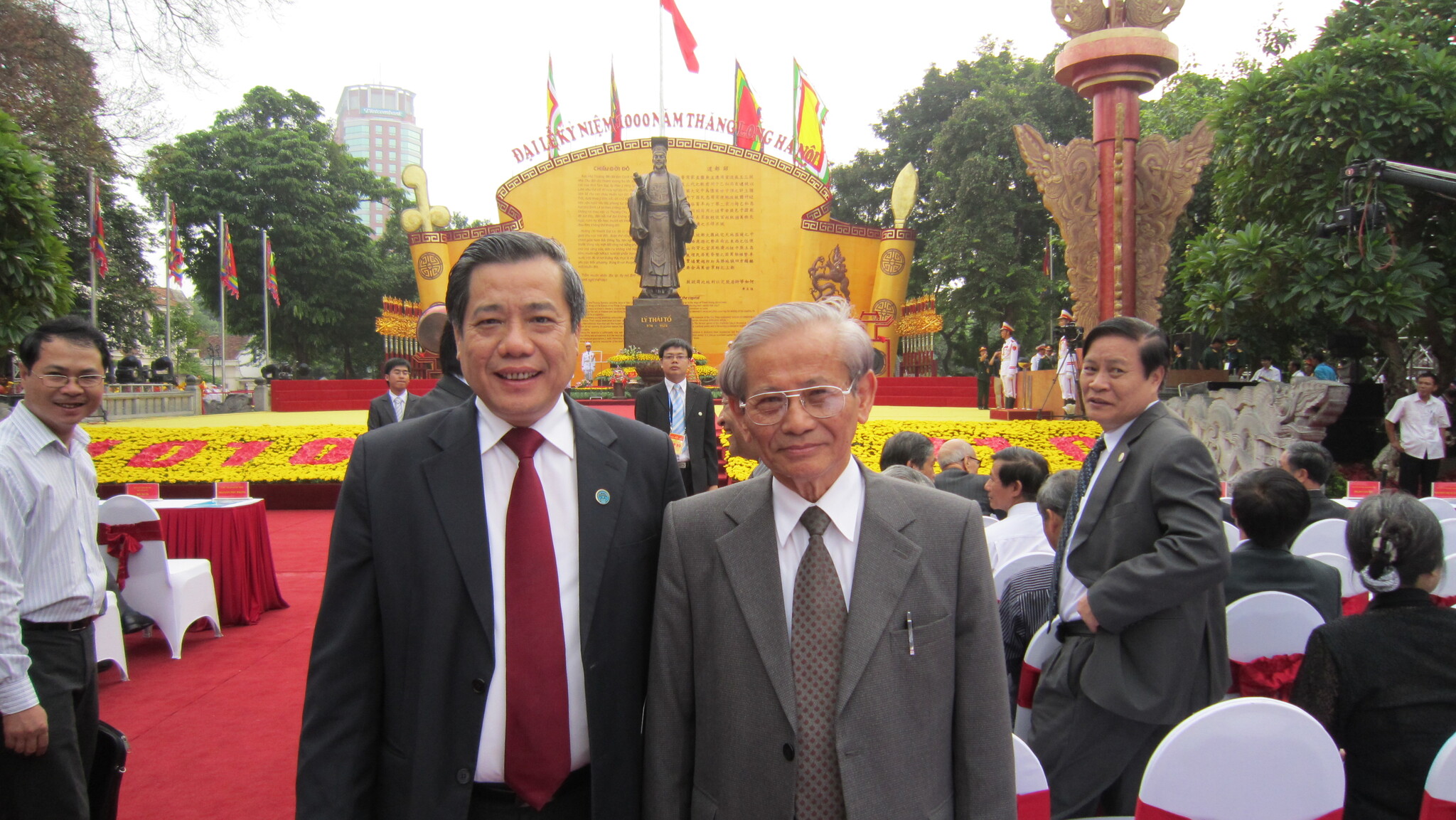
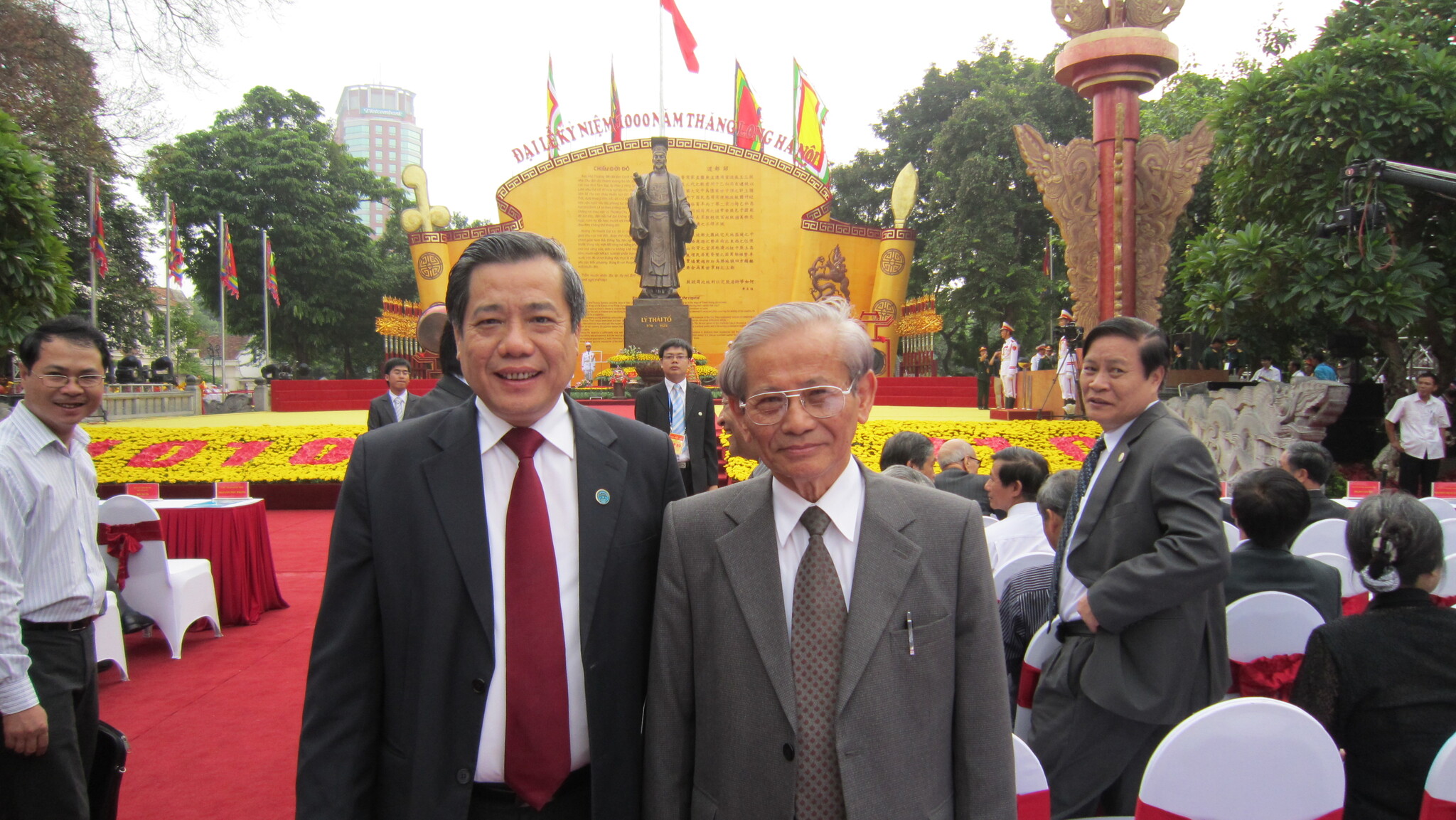
Professor Phan Huy Le and Professor Vu Minh Giang at the Grand Celebration of the 1000th Anniversary of Thang Long - Hanoi
During a business trip with Professor, I witnessed a rather interesting reunion. It was when the leaders of Quang Nam - Da Nang province invited Professor to consult on the preservation and promotion of the value of the ancient town of Hoi An. During the meeting, the Provincial Party Secretary warmly welcomed him, addressing him as if he were a former student. Although always very polite, Professor did not show the familiar gestures I often see when meeting former students from other localities. Looking at his face, it wasn't difficult for me to tell that Professor had never met this comrade before. Seemingly noticing Professor's awkwardness and as if suddenly remembering something, the Party Secretary gently reminded him of the special circumstances of the class Professor had taught. It was during wartime, and the Party Secretary was then operating secretly in the city. Therefore, when he went to the North for his studies, he had to cover his face completely with a burlap sack, leaving only his eyes exposed, so that those around him (including the lecturers) wouldn't recognize him. After listening, I heard the Teacher say "Ah" and the conversation became unusually intimate. Through this somewhat coincidental conversation, I learned that the Teacher had been invited by the Nguyen Ai Quoc Academy to lecture to high-level political classes, including students who were operating secretly in cities. The Secretary was one of them[ii]
The teacher's work wasn't just what people usually see; it also included special tasks like this.
The "battle" in Tasken
In the early 1980s, while I was a postgraduate student at Moscow University, a delegation of senior Vietnamese scholars, including Professor Phan Huy Le, visited the Soviet Union to attend an important scientific event. I visited him at the hotel of the Soviet Academy of Sciences and learned that the purpose of their visit was to attend an important conference on the national question to be held in Tashkent.
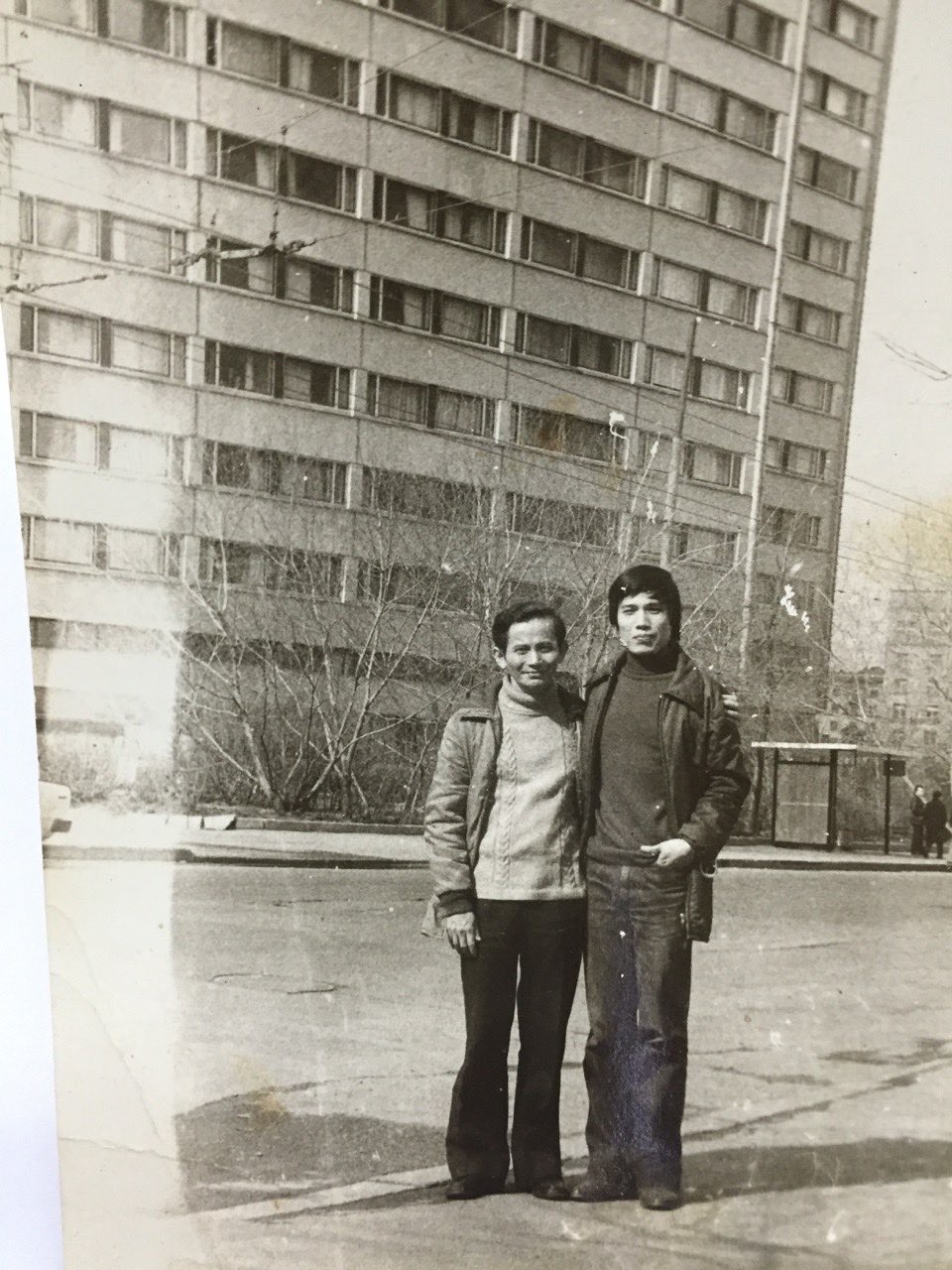
Professor Phan Huy Le (on the left) andProfessor Vu Minh Giang (on the right)before the trip to Tasken
During that period, the theoretical system in the academic circles of socialist countries was mainly based on the classic works of K. Marx, F. Engels, V. Lenin, and G. Stalin. Regarding the national question, Stalin's definition was given in his book...Marxism and the National Questionwith four "common" criteria:common language, common territory, common economic activitiesandgeneral psychological stateThis is manifested within a shared culture considered the norm. Stalin's key argument in this definition is that lacking any of the four criteria mentioned above disqualifies one from being considered a nation, andgeneral economic activitiesIt must be linked to the national market, linked to capitalism. In other words, a nation cannot be born before capitalism. According to this definition, Vietnam does not yet have a nation in the true sense of the word. This is something that Vietnamese scholars find difficult to accept. The difficulty lies in the fact that Soviet scholars considered this definition a guiding principle, meaning that any deviation would be tantamount to "revising" classical theory. They invited leading Vietnamese scholars to the capital of the Republic of Uzbekistan to, with their powerful presence and the historical reality of a fairly typical Asian country, persuade Vietnamese scholars to acknowledge the "universal law."
When we meet again in Moscow after “campaign Tasken"I noticed Professor Phan Huy Le was unusually enthusiastic. He recounted the dramatic events throughout the conference, and how, in the end, the Soviet scholars were convinced that in Vietnam, the nation was born early, and national consciousness had matured even before the advent of capitalism. Professor Phan Huy Le's paper was a very important contribution to this 'academic victory,' which had immense political significance. His fundamental argument was based on historical reality. This is the scientific basis for his specialized topics, articles, and the main viewpoints in his major works on the formation of the Vietnamese nation."
Further research on the Nguyen Dynasty is needed.
Let me clarify that this is not Professor Phan Huy Le's statement, but rather the opinion of former General Secretary Do Muoi during a meeting with him.
In October 2008, an event took place that attracted considerable attention both domestically and internationally: the National Conference.The Nguyen Lords and the Nguyen Dynasty in Vietnamese history from the 16th to the 19th centuriesOrganized jointly by the Vietnam Historical Science Association and Thanh Hoa province, the conference, with the participation of over 600 delegates, including some overseas Vietnamese, elevated scientific understanding of the Nguyen Lords period and the Nguyen Dynasty to a new level. In particular, Professor Phan Huy Le's insightful and comprehensive concluding remarks immediately became a cornerstone for research and lectures on this historical period.
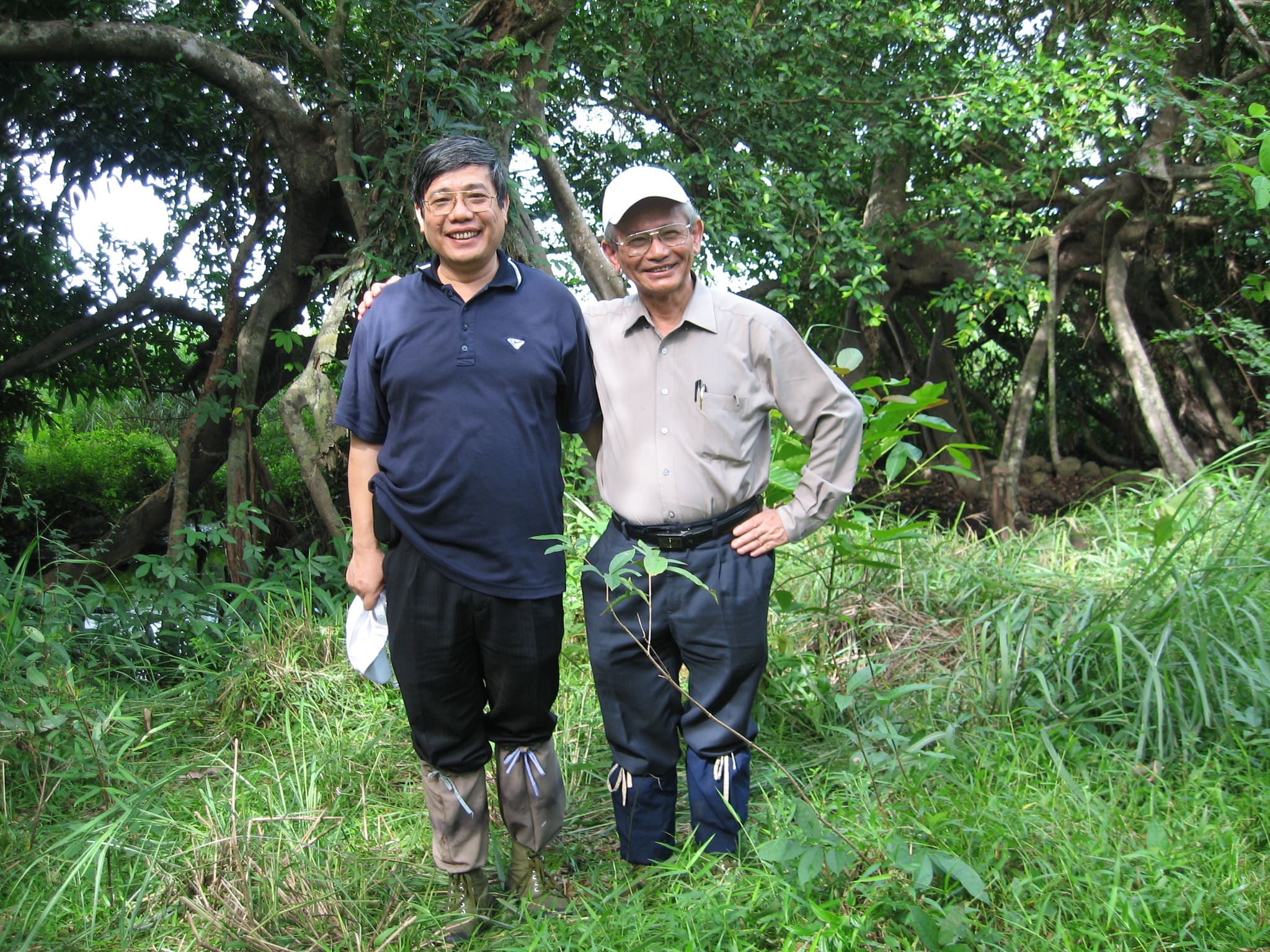
Professor Phan Huy Le and Professor Vu Minh Giang during a survey of Cat Tien National Park.
However, immediately after the conference, some strong reactions emerged, arguing that the assessments of the Nguyen Dynasty, a reactionary dynasty overthrown by the revolution, should be condemned as a matter of principle. Anyone who disagreed or re-evaluated the Nguyen Dynasty violated this principle and should be criticized. With this perspective, some people wrote articles distorting the conference results and attacking Professor Phan Huy Le, considered the driving force behind the conference. Not stopping there, they also wrote letters under the guise of "accusations" and "petitions" to various levels of management and some current and former leaders of the Party and State.
During a business trip with Professor Do Muoi to Ho Chi Minh City, I received a phone call from former General Secretary Do Muoi. It's unclear who influenced him, or to what extent, but the former General Secretary was extremely upset. After some thought, Professor Do Muoi decided he needed to meet with the former General Secretary in person. I accompanied him to this meeting.
As expected, the former General Secretary harshly criticized the views and methods (whose source is unknown) aimed at "Trying to exonerate the Nguyen dynasty's king and officials.After listening to Comrade Do Muoi's remarks, Professor Phan Huy Le presented his views in a very calm and composed manner. Without offering any counter-criticism regarding inaccurate opinions about the conference or debates on viewpoints, he focused on three main points:
- From a historical materialist perspective, any feudal dynasty can be seen to have both contributions to history and limitations (or, as it's commonly known, "...merit and fault”). Let history judge this.
- Understanding is a process, and history is no exception. The further back in time history recedes, the clearer we see figures and events. From this perspective, in the spirit of the Party's Renewal policy, many historical issues need to be re-examined in a more objective and scientific manner. Vietnamese history from the 16th to the 19th centuries is one of the periods with many new research findings that need to be summarized and used to guide further research. The recently held conference aimed to achieve this goal.
Regarding the assessment of the role of the Nguyen lords and the Nguyen dynasty, those who had limitations or committed "crimes" against the nation must bear responsibility before history. History's judgment is always fair; no one can excuse or escape punishment. However, their contributions cannot be denied because of limitations. The Nguyen lords' contributions to organizing the exploration and establishment of sovereignty in the southern region were immense. The Nguyen dynasty built a unified nation after years of division and left behind a vast cultural heritage for the nation – these contributions were significant. In particular, the Nguyen lords' and the Nguyen dynasty's efforts to affirm and protect sovereignty over the sea and the Hoang Sa and Truong Sa archipelagos, especially under Emperors Gia Long and Minh Mang, were immense. To diminish the historical role of these governments would inadvertently devalue the historical and legal documents concerning our sovereignty.
With his objective, scientific approach and solid reasoning, Professor Le completely convinced the former General Secretary, causing him to regain his usual gentle demeanor, smile, and say:Then comrades Further research on the Nguyen Dynasty is needed.
*
* *
Professor Phan Huy Le was a national-level educator and scientist with significant international influence. To fully appreciate his contributions to the country, to Vietnamese historiography, and his prestige among international scholars, worthy research is needed. The anecdotes above are merely observations from my experiences accompanying him over the past 50 years. I share them in the hope of contributing a few small details to help people better understand his character, intellect, and contributions during times and circumstances not widely known.
[ii] The Secretary of the Quang Nam - Da Nang Provincial Party Committee at that time was Comrade Nguyen Van Chi.
Author:Prof. Dr. Vu Minh Giang - Chairman of the Science and Training Council of Vietnam National University, Hanoi
Newer news
Older news

