
Professor Tran Tri Doi graduated with a degree in Literature from Hanoi University in 1977 and has remained a lecturer in the department from 1978 to the present. Since completing his undergraduate thesis, he has been guided by Professor Nguyen Tai Can to research the history of the Vietnamese language, specifically the historical phonology of Vietnamese. At that time, this was a research area that few linguists in Vietnam were interested in. Just one guiding sentence from Professor Nguyen Tai Can: "There is still a research direction on historical phonology, and I think you are suitable; you should try it," and this field, from a chance encounter, became his lifelong career in scientific research. Until 1979, he joined the first cohort of the Associate Doctorate (now Doctorate) program at Hanoi University and continued to persevere in this field. In his recollections of those early days, he always remembers and cherishes the teachers and mentors in the field and in the Faculty who inspired his knowledge and passion for the historical phonetics of the Vietnamese language. These include Professor Nguyen Tai Can, his main supervisor for his doctoral dissertation, and Professors Hoang Trong Phien and Nguyen Van Tu in the dissertation supervision team, as well as Professors Phan Ngoc, Pham Duc Duong, Vuong Loc, and Dr. Cung Khac Luoc... In his stories, he always mentions his French friends, Professor M. Ferlus - formerly...Research DirectorAt CLAO, part of the French National Centre for Research (CNRS), and under Professor Nguyen Phu Phong, Professor Tran Tri Doi diligently sought out mentors and acquired knowledge. In the context of scarce domestic resources and limited experts in this field, the difficulties and challenges he faced were considerable. While working on his doctoral dissertation, following a suggestion from Professor Nguyen Tai Can, Professor Doi visited Professor Phan Ngoc countless times to inquire about the history of Vietnamese phonetics in H. Maspero's work, which Professor Phan Ngoc had translated from French. Thanks to this, Professor Doi successfully completed his dissertation. Professor Tran Tri Doi's main research areas are:Practical Vietnamese, Phonetics and Historical Phonetics, History of the Vietnamese Language, Comparative - Historical Analysis of Ethnic Language Groups;,Language and culture of Vietnam's ethnic minorities; Language and cultural policy and language education issues in ethnic minority areas of Vietnam and Language and CultureandToponymyIn Vietnam.
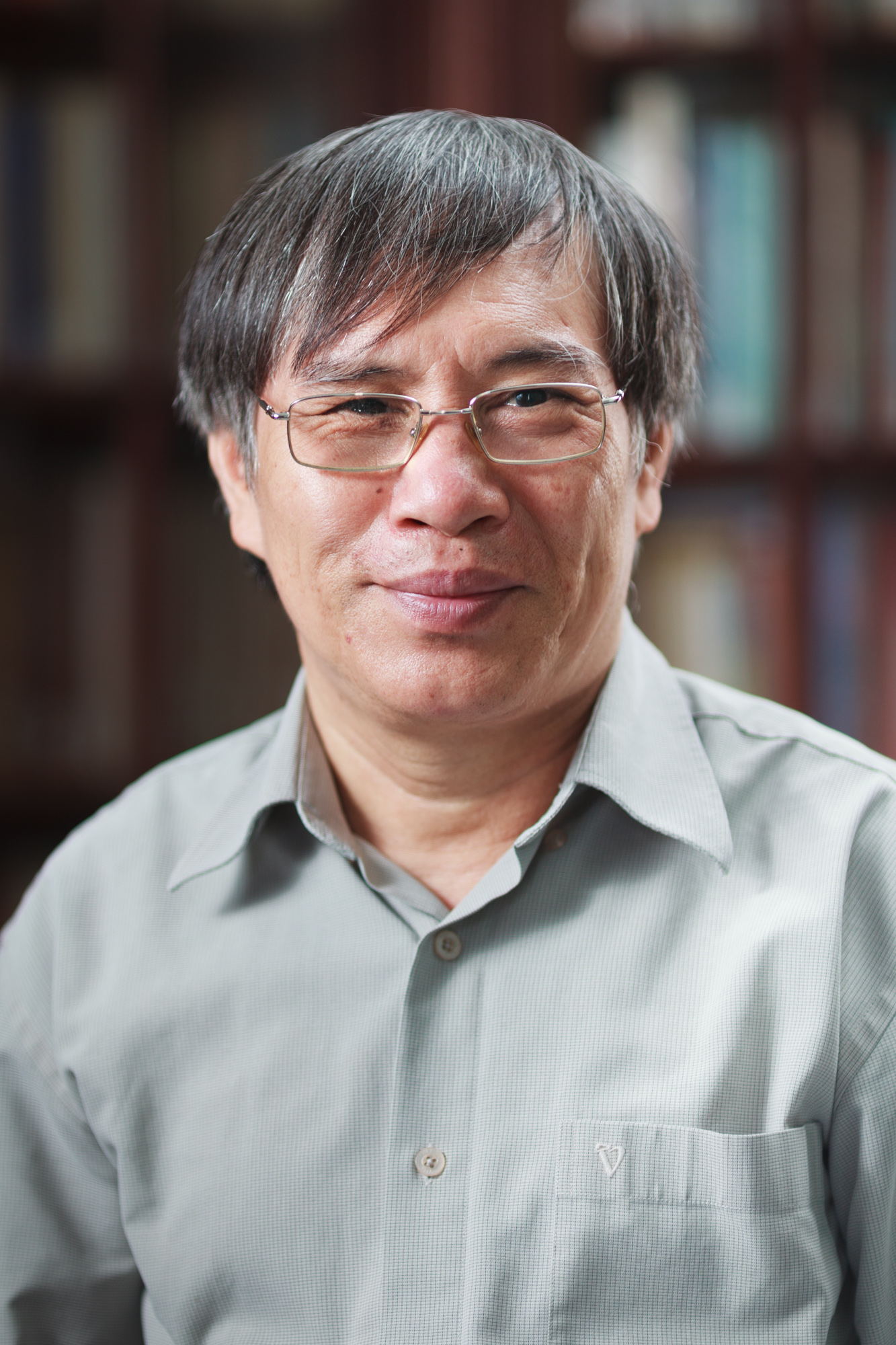
Professor, Doctor Tran Tri Doi/Photo: Thanh Long
Eager to learn, and above all, recognizing the responsibility of a researcher in historical phonology to delve into the origins of the nation's linguistic life, Professor Tran Tri Doi soon developed his own approach, linking theoretical research with fieldwork and practical experience. To write a history of the Vietnamese language, one must understand the nation. After researching ethnic groups, he realized that the field of ethnic studies was still thin and lacking in depth, with insufficient human resources to conduct in-depth research. And with this mindset...The goal of linguistics is culture"(*)Professor Tran Tri Doi increasingly realized the boundless scope of the history of the Vietnamese language. In 1981, Professor Tran Tri Doi spent more than three months traveling throughout the western provinces of Quang Binh, Ha Tinh, and Nghe An on his Thong Nhat bicycle, personally observing and listening to the Viet-Muong dialects. During this "empty-handed" journey, primarily on foot and by bicycle, he became intimately familiar with the Viet-Muong language group. From then on, his fieldwork continued, meticulously collecting notes and data to enrich his theoretical knowledge, decipher historical phonetic issues, and contribute many practical suggestions for policies on the cultural and social development of ethnic groups.
Professor Tran Tri Doi considers fieldwork an essential scientific method in the study of the history of Vietnamese phonetics. The story of his field trips will probably never end. Professor Tran Tri Doi is known by the people of Tuong Duong, Nghe An as "the King of Lai Pao" for his work in finding and restoring the Lai Pao script, making it the writing system of the Thai people in this area. This script flourished in the late 19th century but disappeared in the early 20th century due to social upheavals. From 1991 to 1994, together with French professor Michel Ferlus (a researcher of East Asian languages at the National Center for Linguistics of the Republic of France), the two professors traveled to Nghe An every year, climbing mountains and crossing streams to reach villages upstream of the Nam Pao River. They meticulously examined rare ancient documents, preserved in scattered and individual households of ethnic minorities, reading each character, comparing and selecting texts. In 2007, professors announced the restoration of the Lai Pao script. Currently, more than 200,000 people in the two districts of Con Cuong and Tuong Duong, Nghe An province, consider it a type of Thai script and organize re-learning sessions to eradicate illiteracy. Furthermore, Professor Tran Tri Doi is also known as the "King of Arem" and the "King of Ruc". From the results of his field research (from 1980 to 1994), a vivid picture of the economic and cultural reality of the three ethnic groups Arem, Ruc, and Ma Lieng in Quang Binh province is authentically recreated, making a significant contribution to the preservation and development of these ethnic groups at risk of extinction. Read the book "The economic and cultural realities of these three ethnic groups are at risk of disappearing."(National Ethnic Culture Publishing House, 1995), I felt three things: firstly, these are meticulous, authentic records, presented in a very simple and clear manner, yet possessing extremely rare and valuable qualities; secondly, the ability to generalize and link the fields of linguistic history, ethnology, and culture is very logical, coherent, and flexible; thirdly, the dedication to research, regardless of all difficulties, hardships, and even dangers in the "sacred forests and poisonous waters," to find the most authentic data. The professor's fieldwork also had many "painful" experiences. In 1983, he had a trip where he lost his vehicle at Cha Lo Pass, and afterwards, spent a month in Bo Trach District Hospital because doctors had to monitor brain problems. Or in 1984, he once ran out of money and returned to Dong Le train station (Tuyen Hoa, Quang Binh) empty-handed. He mainly traveled on foot, by bicycle, or by specialized vehicles like..." U-boats and Gat66s were used for traveling through the forest. In the dry season, the sun was scorching; in the rainy season, the roads were muddy and slippery. They would put cotton in bottles, pour oil over it so the cotton would absorb the oil and prevent spillage. When needed, they would squeeze the oil out of the cotton or insert a wick… And so they would pack their backpacks and set off, some trips lasting several months. But they had to travel to get there! Traveling allowed them to see and offer suggestions to local authorities, such as protecting the upstream forests of the Gianh River; raising the issue of consanguineous marriage in response to the question of how to preserve the ARem ethnic group, dating back to 1995-1996; traveling allowed them to understand the difficulties and hardships of the people and the sacrifices of teachers in remote areas, the challenges in the fight against hunger and illiteracy… That's why, even though it was truly exhausting at times, the professor, in his sixties, would enthusiastically set off again when his concerns were addressed. For example, in 2012, to research the issue of blindness. In Dien Bien, the teacher went all the way to Muong Nha, to a Hmong village with only 56 inhabitants, to conduct a survey. As always, he has to go on field trips 3-4 times a year.
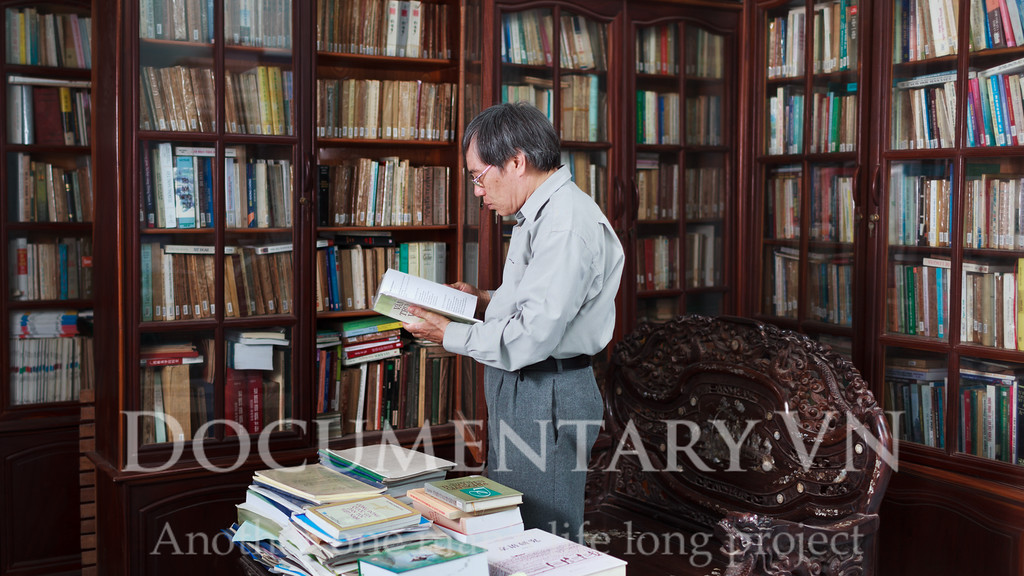
Photo: Jackie Chan
In terms of theory, Professor Tran Tri Doi has made many outstanding contributions. In the field of research on the history of the Vietnamese language – an area with very few researchers – Professor Tran Tri Doi's work is particularly noteworthy:Vietnamese History Textbook (Draft)2005. This was the first work to systematically present issues related to the origins of the Vietnamese language in relation to related languages and regional languages, defining and summarizing the stages of Vietnamese development in history, in the form of a university textbook. The professor published research results on the phonetic history of Vietnamese and the Viet-Muong languages, focusing on the formation of the tonal system and the rules of voiceless and nasalization, in this work.Some comparative research issues – the history of the Viet-Muong language group. (2011),This marks a new milestone in the study of the origins and phonetic history of Vietnamese and related languages. Within the general theoretical framework for studying the languages of ethnic minorities in Vietnam, Professor Tran Tri Doi can be considered a dedicated researcher with many significant achievements. (Textbook)Research on the languages of ethnic minorities in Vietnam(1999) is the only work in Vietnam that follows a general research direction on ethnic minority languages, from linguistic context to origin relations, current usage, conservation and development policies. In addition, the research direction on origin relations or contact relations between ethnic minority languages or between ethnic minority languages and Vietnamese and other languages in the region is the main concern of Professor Tran Tri Doi. Research on the preservation of the culture and writing systems of ethnic minorities is shown through articles on ancient Thai script. Research on language, culture and education policies for ethnic minorities is presented in three published books.National language and culture policy in Vietnam(2003)The current state of language education in ethnic minority mountainous regions of three northern provinces of Vietnam. (2004), The current state of language use among some ethnic minorities and the challenges facing language education in schools in Northern Vietnam.(2006, co-authored with Nguyen Van Loc)...
A key aspect of historical phonology research is the need to widely disseminate research data and results within the international professional community. This provides a foundation for deciphering linguistic phenomena worldwide. Professor Tran Tri Doi has actively participated in professional exchanges with the international scientific community in the field of historical phonology since its early stages. Since 1986, he has been invited to France to discuss research issues. His French language skills, which he considers "mediocre," are due to his collaboration with French experts. His audio archives are currently being digitized to become a shared resource worldwide. He regularly participates in writing articles and attending international scientific conferences. In 2010, he served on the doctoral dissertation defense committee at the University of Nancy (France). In 2012, he presented a paper at the National Institute of Japanese Language... A great source of pride in Professor Tran Tri Doi's teaching and research career is that many students and trainees from France, Japan, Canada, Russia, etc., have considered themselves his students through reading his books, calling him "Teacher" in Vietnamese even though he has never taught them.
I ventured to ask him: "Have you ever felt alone, since no one (or more likely) has followed your method of linguistic research?" He smiled: "...It's true that not everyone ventures into this difficult area. But without it, we wouldn't be able to grasp the essence of the problem. My good fortune is that the results I've obtained have contributed and continue to contribute to the advancement of science and its practical applications, and to the development of society. Not only in Vietnam, but also worldwide, this research direction and methodology are greatly needed." I still reflect on the image of a dedicated, upright, and resolute teacher and scientist, a lone traveler on his scientific research path. However, the respect and admiration of his colleagues and students, along with the valuable recognition and support from international research organizations, and especially the genuine affection of the ethnic minority communities in all the places he has visited, perhaps ensure that he never feels lonely.
|
PROFESSOR, DR. TRAN TRI DOI
+ Workplace: Department of Linguistics. Center for Research and Development of Ethnic Minorities & Mountainous Areas and the Red River Basin. + Management position: Head of the Department of Linguistics (2004-2009). Head of the Department of Languages and Cultures of Vietnamese Ethnic Minorities, Faculty of Linguistics (1996 to present). Director of the Center for Research and Development of Ethnic Minorities & Mountainous Regions and the Red River Basin, University of Social Sciences and Humanities (2008 to present).
1.Les initiales */s,z/ et */h/ du proto Viet – Muong (PVM) et leurs changements dans le Vietnamien, Mon-Khmer Studies Journal, Bangkok-Dallas, (25)1996, pp. 263-268. 2. Research on the languages of ethnic minorities in Vietnam, Hanoi National University Publishing House, 1999, 2000. 3. A Historical-Comparative Study of the Viet-Muong Language Group), National University Publishing House, Hanoi, 2011. 4. Vietnamese History Textbook (Draft), Hanoi National University Publishing House, 2005, 2007; revised edition with additionsVietnamese history textbook, Vietnam Education Publishing House, Hanoi 2011. 5. Language families in Vietnam(The language Families in Vietnam(National University Publishing House, Hanoi 2015.
+ Encouragement Award for Scientific Research ProjectFolk tales of the Nguồn peopleof the Vietnam Folk Arts Association, 1993. + Encouragement Award for Scientific Research ProjectWill the Arem, Ruc, and Ma Lieng ethnic groups in Quang Binh disappear?of the Vietnam Folk Arts Association, 1996. + Third Prize in the annual scientific research competition for the projectLanguage and the development of traditional culture of ethnic minorities in Vietnam.of the Vietnam Folk Arts Association, 1998. + Second Prize in the annual Scientific Research Competition for the projectRegarding the works of Dang Hanh and Ban Dai Hoi of the Dao people in Thanh Hoaof the Vietnam Folk Arts Association, 2008. + Second Prize in Scientific Research for the projectProverbs and idioms of the Thai Muong people (in Tuong Duong, Nghe An) – bilingualof the Vietnam Folk Arts Association, 2010. + Second Prize in Scientific Research for the projectProverbs and idioms of the Thai Muong people (in Tuong Duong, Nghe An) - bilingualVolume IIof the Vietnam Folk Arts Association, 2011. |
Author:Ms. Le Thu Ha

