
University governance reformis a necessary requirement
The training program was organized in the context of Vietnamese higher education entering a period of profound reform in its governance model. University autonomy, accountability requirements, management according to higher education institution standards, and the pressure to improve the quality of training, scientific research, and community service are placing new demands on each higher education institution. For the University of Social Sciences and Humanities, building a work management system based on KPIs is not only a technical requirement in evaluation and ranking, but also a crucial task to realize the University's development strategy in the new phase.
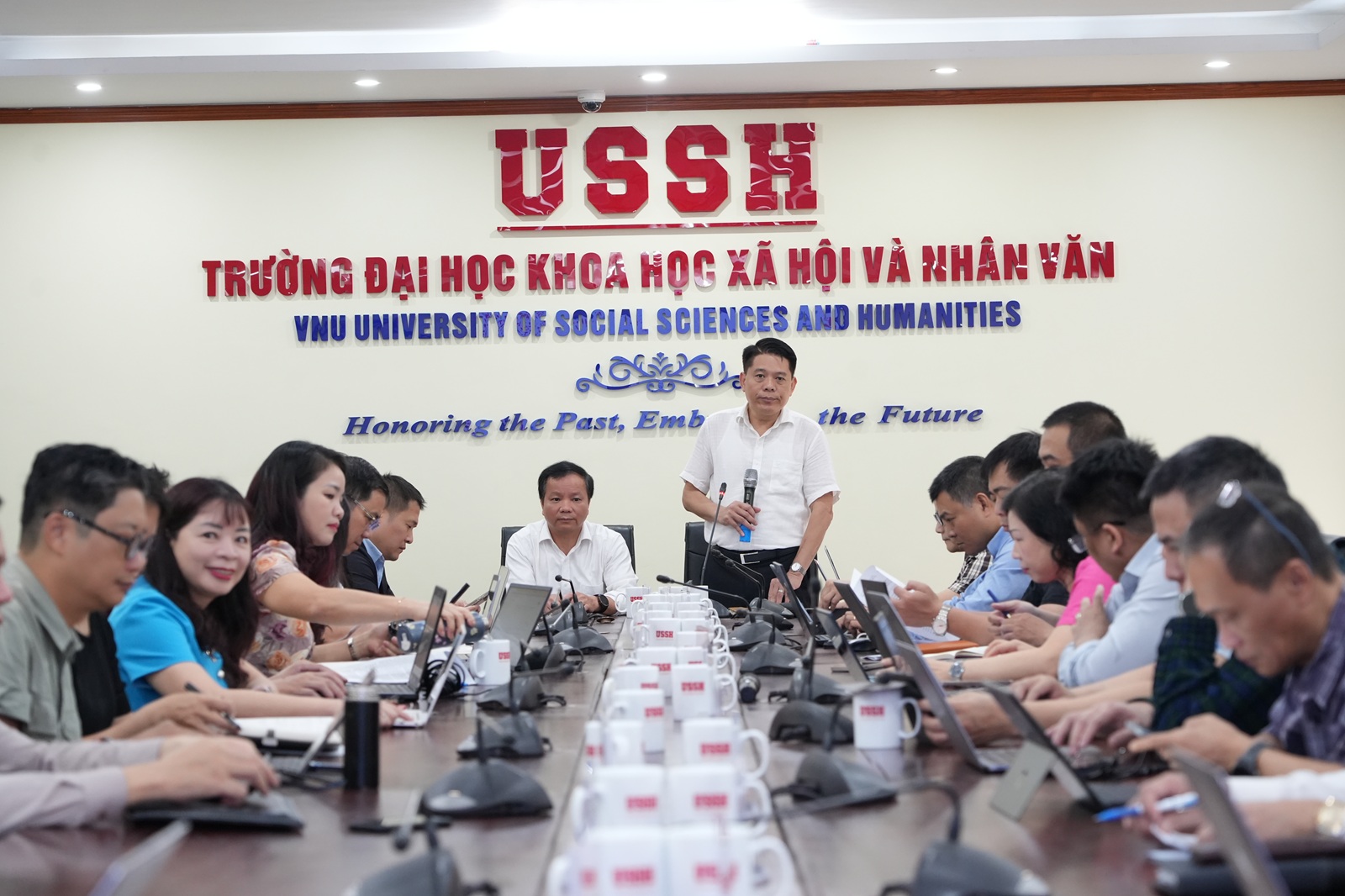
Associate Professor Bui Thanh Nam emphasized the necessity of reforming higher education governance.
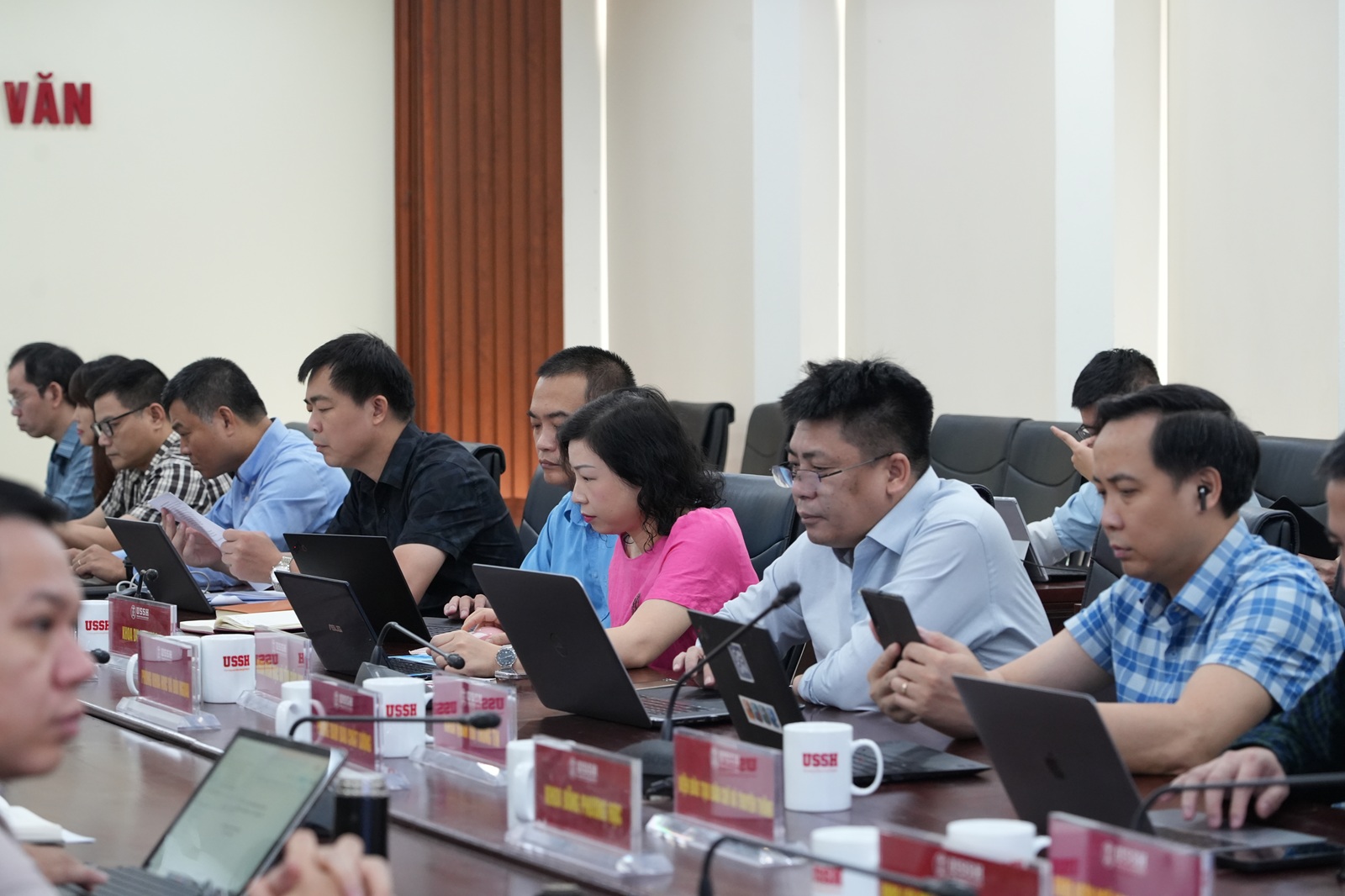
Attending the program were the Heads and Deputy Heads of the units under the School; the Chairman of the School's Trade Union; and the Secretary of the School's Youth Union.
In his opening remarks, Associate Professor Bui Thanh Nam, Permanent Vice Rector of the University of Social Sciences and Humanities, emphasized that Vietnamese higher education is facing significant changes. The policy of promoting university autonomy, the implementation of new regulations on higher education, and the evaluation and ranking of the quality of public service units and staff have placed new demands on each university regarding its management capacity. In this context, management innovation is no longer an option, but a condition for each higher education institution to survive, develop sustainably, and maintain its position.
According to Associate Professor Bui Thanh Nam, in its more than 80-year history and 30-year development, the University of Social Sciences and Humanities has affirmed its vitality, strength, and position as a leading training and research center in the field of social sciences and humanities. However, this pride also places an increasingly great responsibility on the University: not only to maintain the standards already achieved, but also to strive for a leading role in many fields of social sciences and humanities. To fulfill that mission, the University needs amodern and transparent governance systemIt is measurable, assessable, and provides genuine motivation for the staff, lecturers, and scientists.
Associate Professor Bui Thanh Nam stated that the university is urgently finalizing the draft regulations on evaluating and ranking the quality of units, staff, and employees according to KPIs. Therefore, the knowledge and experience shared by experts at the program are of great importance, helping the university to define a set of indicators, evaluation methods, and implementation approaches suitable to the specific characteristics of a multidisciplinary higher education institution in the social sciences and humanities.
Approaching the BSC and KPI tools in higher education institution management.
In the in-depth discussion, Professor Vu Van Yem presented three main groups of content: university autonomy and innovation in university governance based on KPIs; the KPI-based governance system in higher education institutions; and recommendations for university governance at the University of Social Sciences and Humanities.
According to Professor Vu Van Yem, the world context is changing rapidly under the impact of the Fourth Industrial Revolution, digital transformation, changes in the labor market, and new demands on learners' capabilities. Therefore, higher education faces the need for innovation not only in training and research, but also in management, operation, and resource utilization.
In this context, the University of Social Sciences and Humanities is facing numerous challenges and opportunities. University autonomy opens up opportunities for innovation in training, research, cooperation, and governance; at the same time, it places the university under pressure to compete for student enrollment, develop revenue sources, improve governance capacity, standardize data, and enhance accountability. This is clearly demonstrated through expert analysis of opportunities for academic autonomy, organizational structure, personnel, finance, and international cooperation; while also highlighting challenges related to revenue sources, student enrollment competition, organizational mechanisms, legal regulations, and governance capacity.
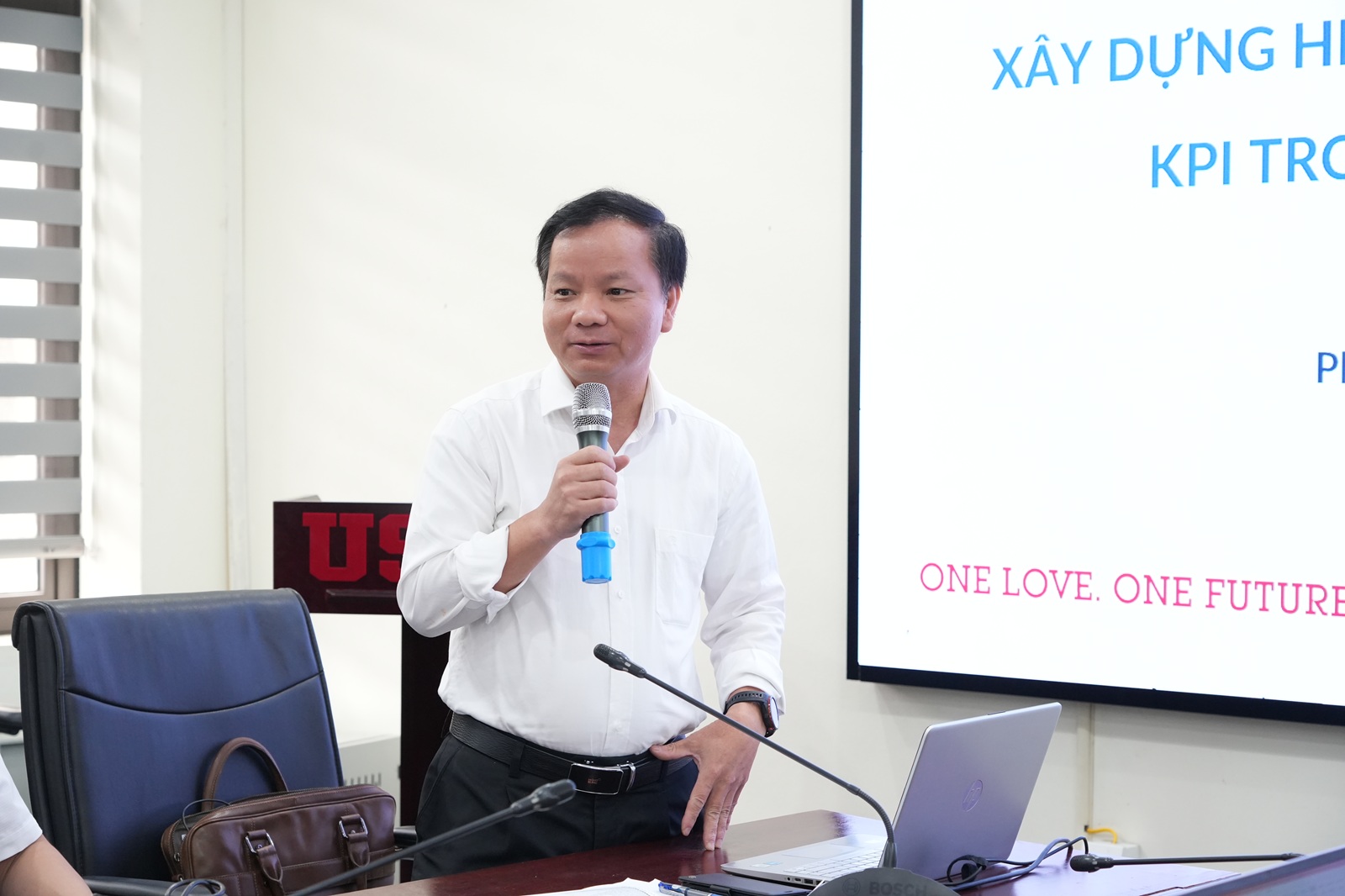
Professor Vu Van Yem shared insights on tools and methods for university management.
A key focus of the program is the BSC and KPI approach in higher education management. Professor Vu Van Yem emphasized that the BSC (Balanced Scorecard) and KPI (Key Performance Indicators) are effective strategic implementation tools in modern management. When applied to universities, pillars such as finance, customers, internal processes, learning, and development need to be understood appropriately to the specific characteristics of the higher education environment. For universities, "customers" are not only students but also society, employers, management agencies, partners, and the academic community; "finance" is not only revenue but also the capacity to allocate resources for sustainable development; and "learning and development" is not only for staff but also linked to the development of organizational capacity, data, and innovation.
According to experts, KPI systems should not be understood as administrative performance indicators, but rather as a strategic management tool. KPIs need to help the university transform its vision, mission, and strategic goals into specific, measurable, trackable, evaluateable, and improveable objectives. Objective breakdown should be implemented from the university level, school level, faculty/department/center level down to the individual level, while ensuring horizontal linkages throughout the operational process. This is a crucial principle to avoid situations where each unit implements its objectives independently, lacking interconnectedness, common data, and making it difficult to measure results accurately.
For the University of Social Sciences and Humanities, many indicators in higher education governance have met and exceeded requirements, demonstrating an important foundation for governance innovation; however, further improvement is still needed in several groups of indicators related to infrastructure, scientific research, digital transformation, database systems, governance dashboards, and consistency in reporting and measurement.
Some recommendations for reforming university governance at the University of Social Sciences and Humanities.
Based on this practical experience, experts have made several important recommendations for the University. Firstly, it is necessary to accelerate the development and implementation of a management information system, ensuring data interoperability between units throughout the University, linked to management and governance innovation. Secondly, it is necessary to review, adjust, or develop a model for managing and allocating finances based on the quality and efficiency of unit operations, with appropriate regulatory mechanisms at the University level. Thirdly, it is necessary to review the staff and unit evaluation methods, linking them to a performance-based salary system, avoiding formality and creating genuine motivation for the staff.
In particular, Professor Vu Van Yem suggested reforming the mechanism for paying additional salaries based on job position schemes, considering the 3P salary model, a salary fund allocation mechanism for units linked to KPIs, and a mechanism for regulating and evaluating staff in a quantitative direction, which is more in line with the requirements of modern management.
The training program not only provided additional knowledge and practical experience on building KPI systems, but also opened a forum for direct exchange between school leaders, department leaders, and experts on outstanding issues in the implementation process. A proactive, serious attitude towards learning and a willingness to engage in frank discussions are crucial foundations for ensuring that the school's KPI system goes beyond mere regulations and truly becomes a management tool, promoting innovation and improving the quality and efficiency of operations.
In its development roadmap for 2026, the University of Social Sciences and Humanities will implement a Task Management and KPI Tracking Software. Simultaneously, regulations on evaluating and ranking the quality of units and staff based on KPIs will be applied, contributing to the University's development in line with its strategic direction.
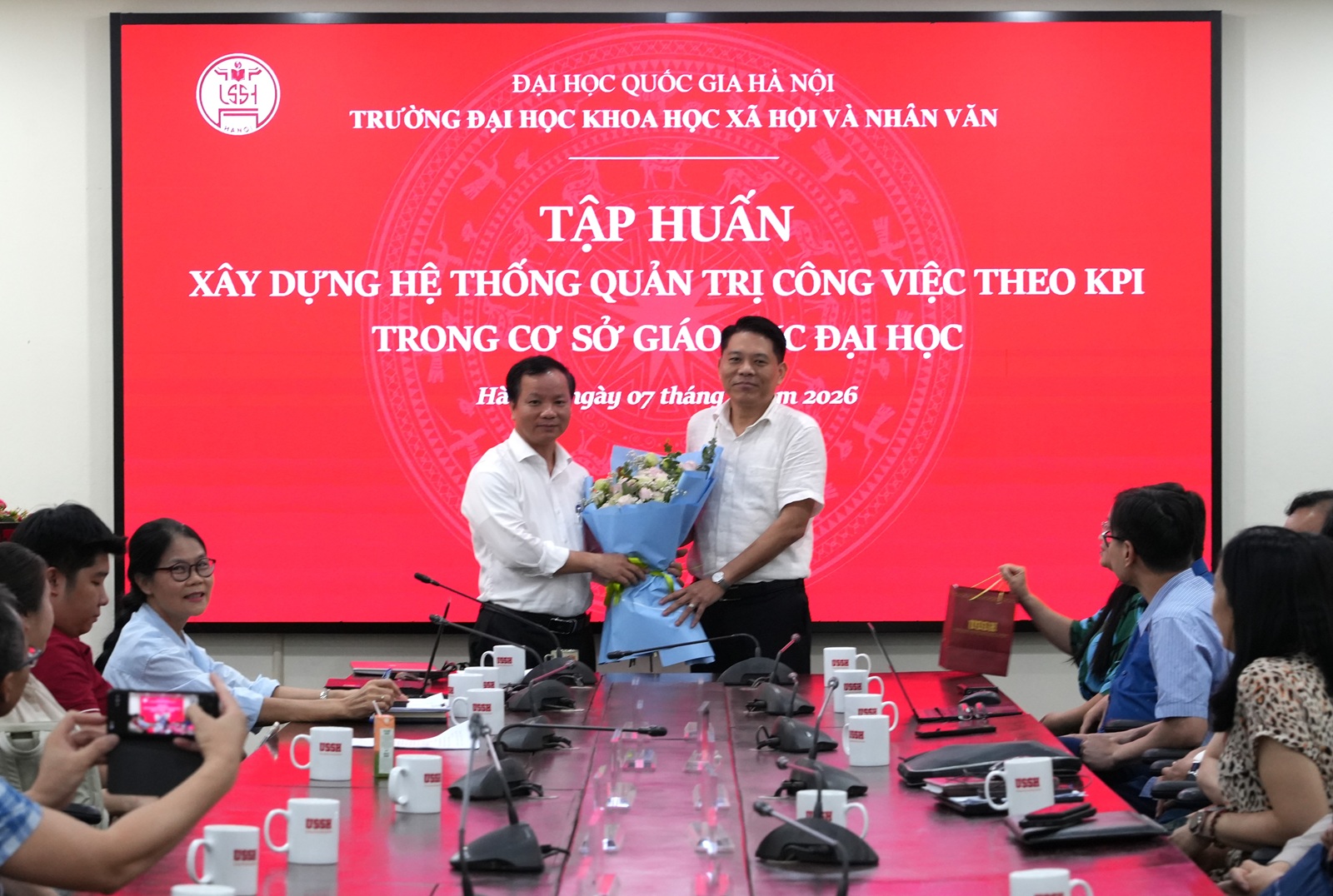
With its in-depth, practical, and valuable content, the training program "Building a KPI-Based Performance Management System in Higher Education Institutions" contributes to raising general awareness of innovation in university management at the University of Social Sciences and Humanities. This is also an important preparatory step for the University to further refine its performance evaluation and management system towards a modern, transparent, and measurable approach, creating momentum for development and realizing its goal of outstanding growth, fulfilling its mission of training elites and leading the field of social sciences and humanities nationwide.
Related articles:
VNU-USSH's administrative work: Tidy, professional, standardized, and focused.
Author:Thuy Dzung - USSH Media
Newer news
Older news

