University of Social Sciences and Humanities - VNU Hanoihttps://ussh.vnu.edu.vn/uploads/ussh/logo-ussh-2_100_100.png
Sunday - 03/11/2024 05:06
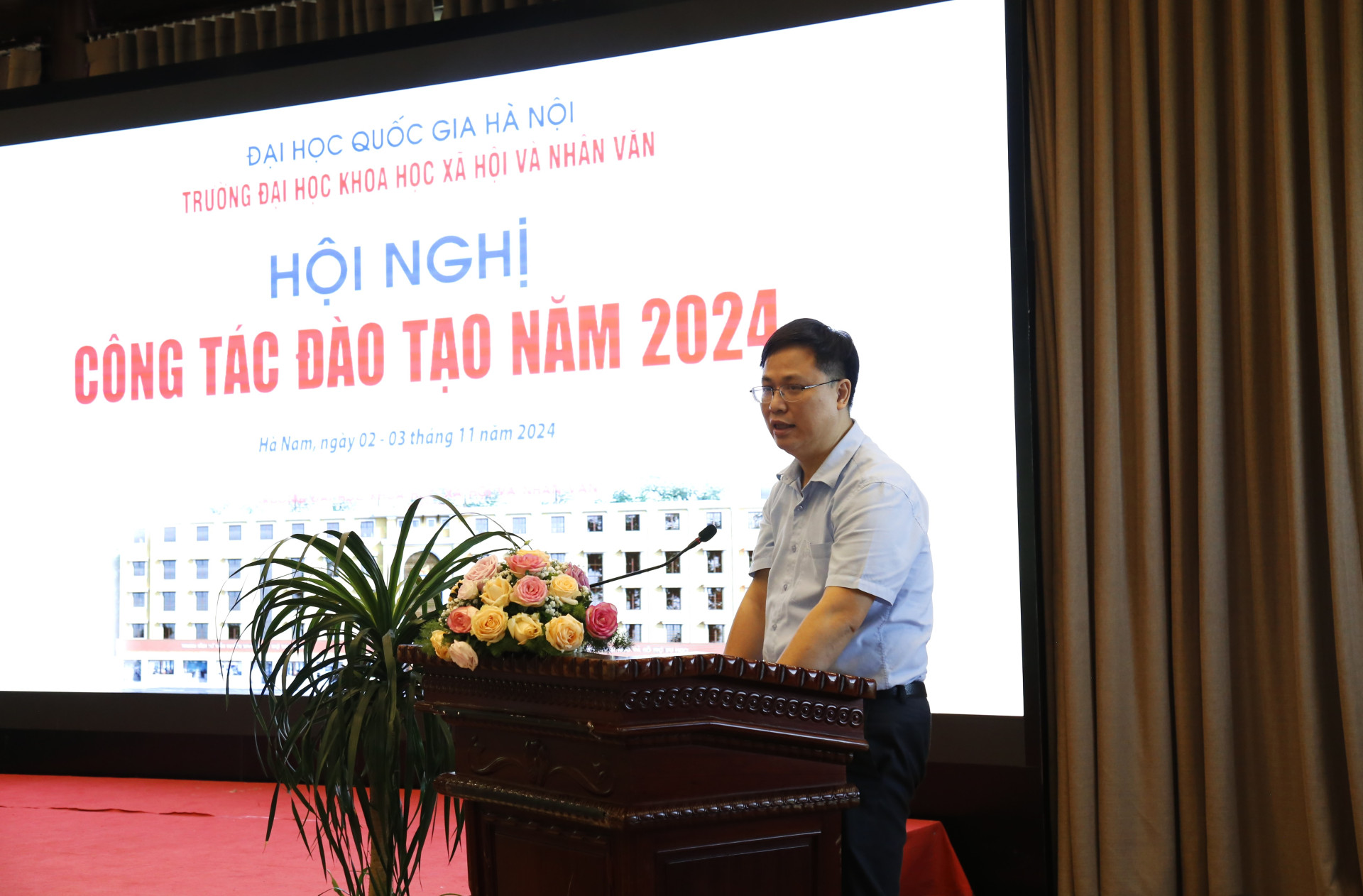
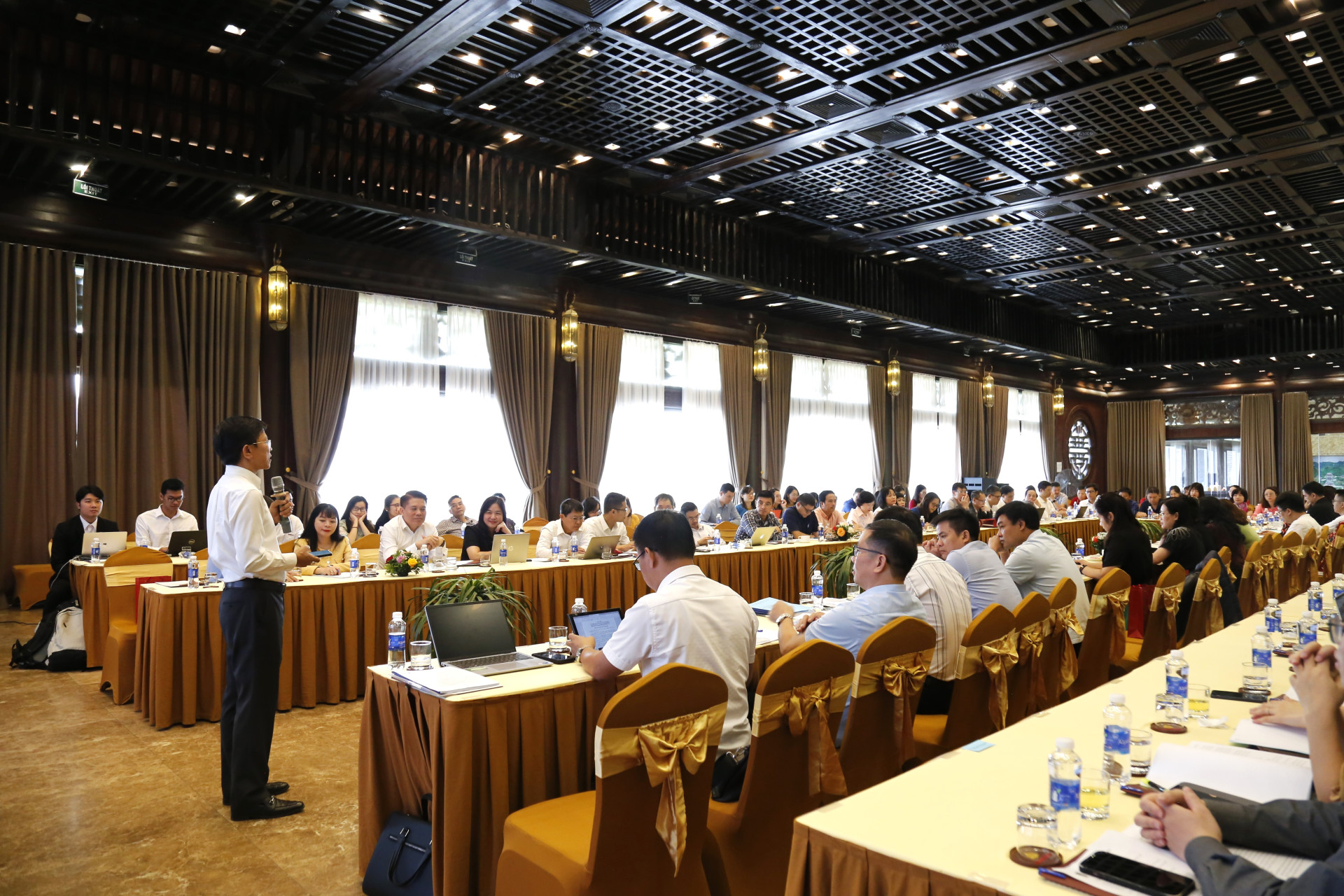
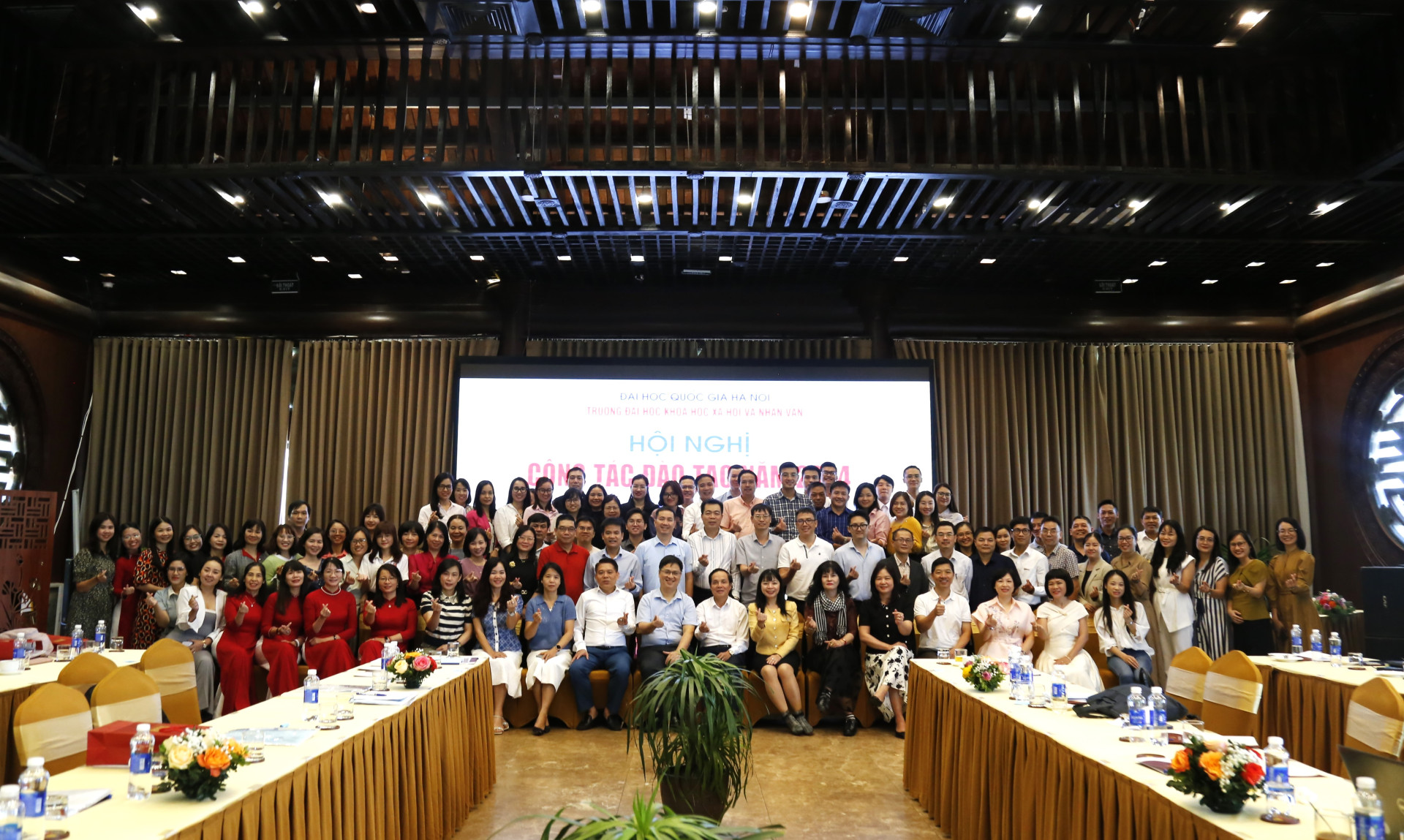
On November 2-3, 2024, the 2024 Training Conference of the University of Social Sciences and Humanities, VNU Hanoi (VNU-USSH) was held with the participation of representatives from the leadership of Vietnam National University, Hanoi, the university's leadership, and leaders and specialists in charge of training at the training units and functional departments/centers of the university.
Innovation and flexibility in the context of a rapidly transforming higher education environment. Delivering a keynote address at the conference, Professor Hoang Anh Tuan, Secretary of the Party Committee and Rector of the University of Social Sciences and Humanities, emphasized that 2024 is a pivotal year with many positive achievements for VNU-USSH. With the system undergoing restructuring and operating increasingly stably, the university continues to reap many positive results. Furthermore, the university also faces many challenges in the context of reduced state budget allocation for its operations, significant changes in education in general and higher education in particular, the fact that VNU-USSH no longer enjoys a "monopoly," and is facing increasing domestic and international competition. However, this also presents an opportunity for the University of Social Sciences and Humanities to leverage its strengths in research and training to enhance its competitiveness. Rector Hoang Anh Tuan called on all staff and faculty members of the university to work together in the face of numerous difficulties. "Professionalism, friendliness, and efficiency" were the keywords that Rector Hoang Anh Tuan conveyed to the entire conference.
Professor Hoang Anh Tuan, Secretary of the Party Committee and Rector of the University of Social Sciences and Humanities, emphasized the need to continue standardizing, streamlining, and centralizing the organization of training; to continue promoting the restructuring of training programs, integrating some training programs, and opening new training programs to meet the trends of society.
At the conference, Rector Hoang Anh Tuan directed that training in 2025 needs to be innovative and flexible with the joint efforts of all staff and lecturers of the university. Professor Hoang Anh Tuan emphasized six key areas, accordingly, 2025 is the first year the high school graduation exam will be implemented according to the 2018 General Education Program, and admissions activities need to be adjusted to adapt, ensuring not only quantity but also quality. It is necessary to continue standardizing, streamlining, and centralizing the organization of training; continue promoting the restructuring of training programs, integrating some training programs and opening new training programs to meet the trends of society. Learning materials are a vital issue, a measure of the position of the University of Social Sciences and Humanities in the national education system. The university has issued a plan on publishing publications for training and research, allocating resources to develop a national-level system of learning materials. In addition, the school is implementing technology in teaching and training management; student and alumni care needs many new approaches.
Associate Professor Dr. Nguyen Anh Tuan - Head of Training Department, Vietnam National University, Hanoi, congratulated the University of Social Sciences and Humanities on its achievements and offered advice on issues related to the university's training programs.
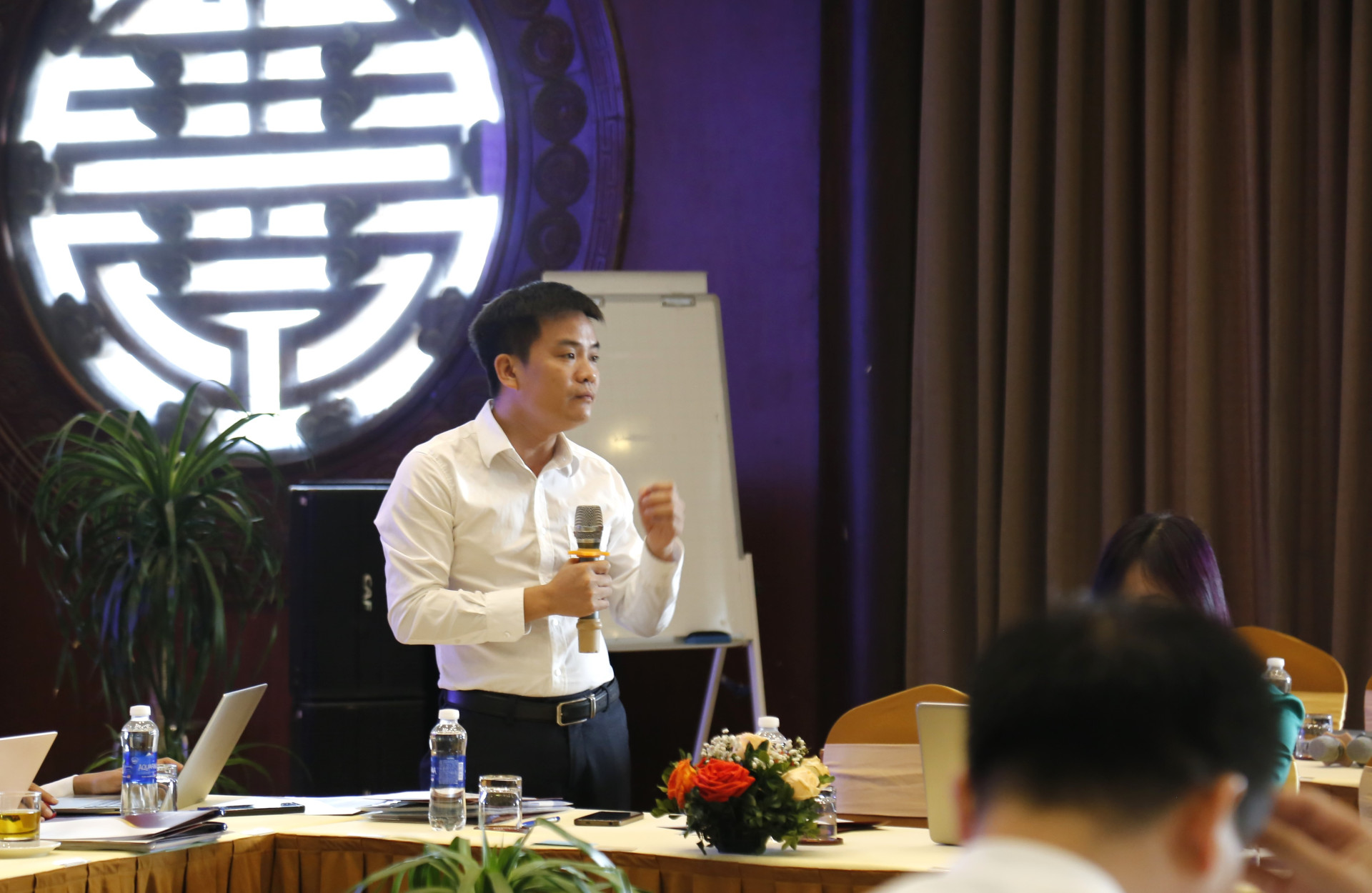
From the perspective of the management of Vietnam National University, Hanoi, Associate Professor Dr. Nguyen Anh Tuan - Head of the Training Department, Vietnam National University, Hanoi, assessed that the training activities of the University of Social Sciences and Humanities in 2024 achieved many outstanding results. Consulting on several issues regarding the adjustment and opening of new training programs and the implementation of the internationalization requirements of Vietnam National University, Hanoi, the Head of the Training Department emphasized that VNU-USSH needs to promote its unique and distinctive values in research and training in basic sciences in the field of social sciences and humanities to increase its competitive advantage in the current context.
Associate Professor Dr. Dang Thi Thu Huong - Vice Rector of the University of Social Sciences and Humanities, chaired the discussion session of the conference.
Associate Professor Dr. Dang Thi Thu Huong - Vice Rector of the University of Social Sciences and Humanities - assessed that the training activities have achieved five important results and set out six key tasks. She emphasized that training activities must be closely linked to student care, improving training quality, applying information technology, innovating assessment methods, and building a national-level system of learning materials, especially digital learning materials in the field of social sciences and humanities.
Training activities achieved many new results in 2024.
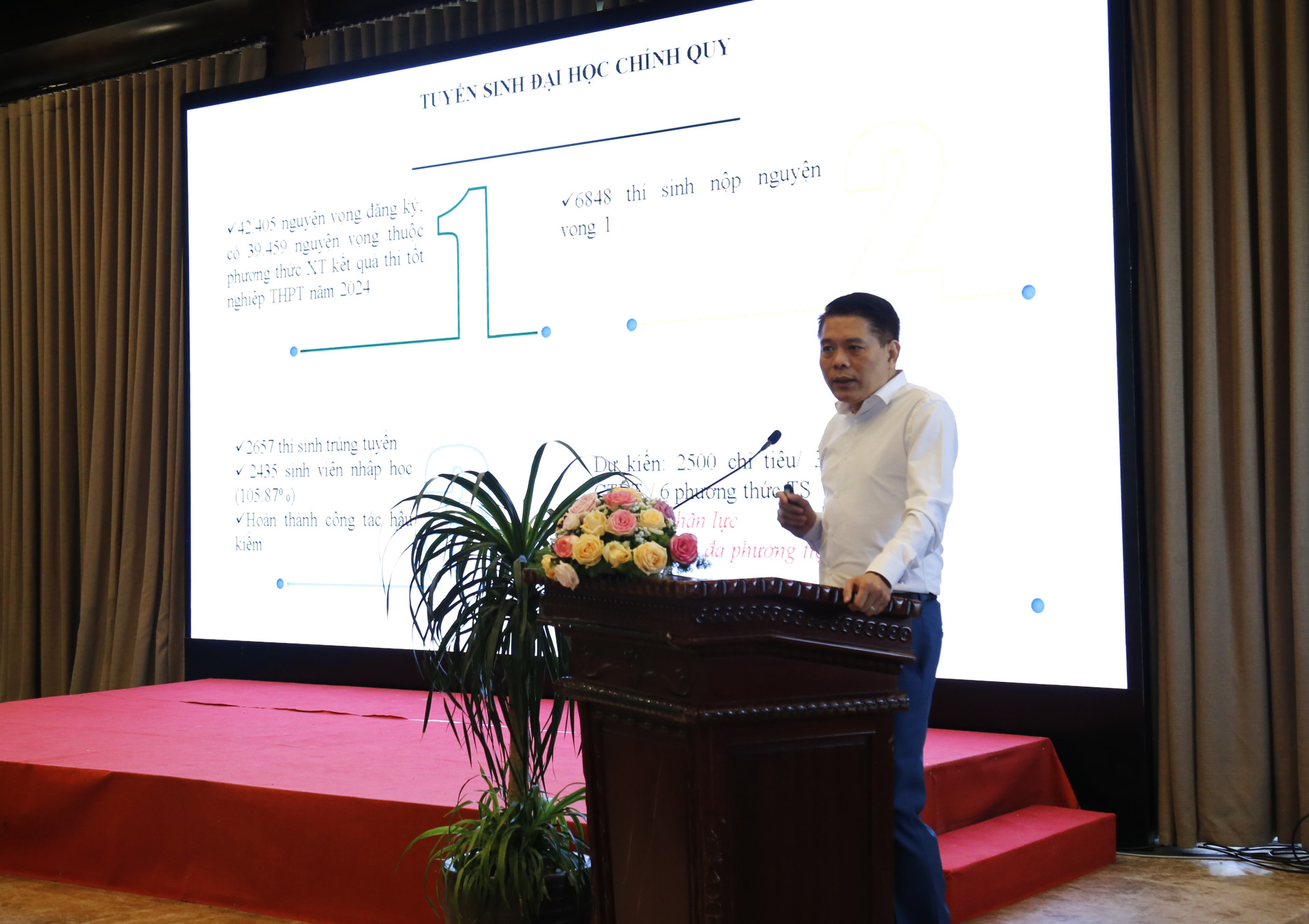
Reporting on the 2024 admissions work and the 2025 admissions direction of the University of Social Sciences and Humanities, Assoc. Prof. Dr. Bui Thanh Nam - Vice Chairman of the University Council, Head of the Training Department, stated that in the 2023-2024 academic year, the university completed adjustments to 28 undergraduate programs, 36 master's programs, and 30 doctoral programs, streamlining many programs and implementing two common research topics for research-oriented master's programs.
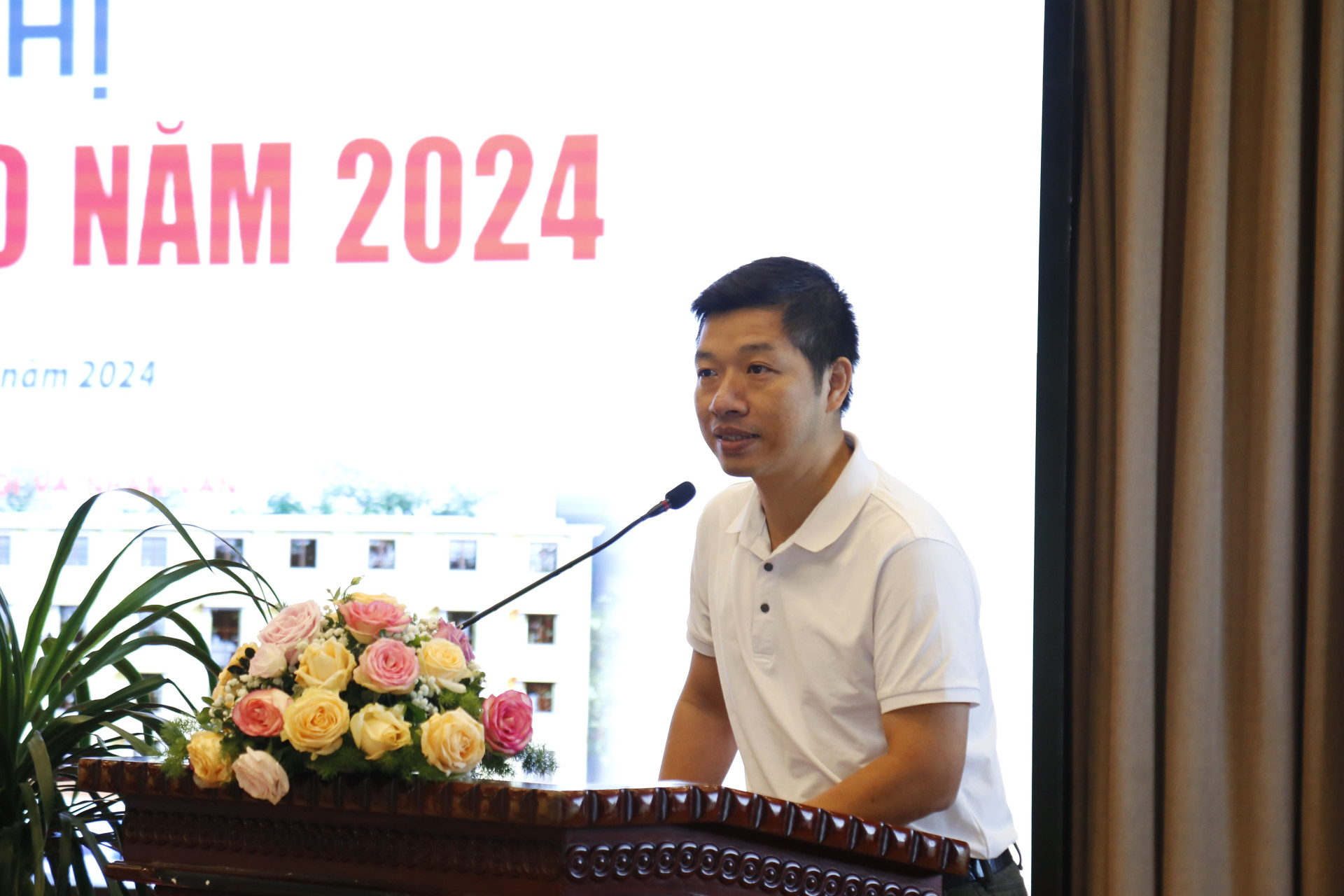
Assoc. Prof. Dr. Bui Thanh Nam - Vice Chairman of the University Council, Head of Training Department, University of Social Sciences and Humanities
The university has completed and approved new training programs at all levels, increasing the rate of early graduation and reducing the rate of students forced to drop out. However, training activities still have some limitations, such as the rate of students graduating late and the limited number of courses taught in English. In the 2024-2025 academic year, the university will continue to focus on developing new training programs, strengthening innovation in teaching methods, promoting digital transformation, and improving the quality of training through various improvement activities and student support, aiming to achieve a graduation rate of over 50% and reduce the number of students who do not complete the program. The admissions process has several new features, including the application of online exam registration software to facilitate registration for candidates; reasonable adjustments to the exam structure, registration methods, and exam schedule have yielded clear results, simplifying the admissions process while creating favorable conditions and reducing pressure on candidates and parents. The admissions process was organized rigorously, ensuring compliance with regulations and plans, with the participation and coordination of relevant units throughout the university. The enrollment rate reached 109.28% of the announced enrollment target and maintained a balanced scale of training for each class. Postgraduate admissions have seen an increase in the number of applicants for master's and doctoral programs, exceeding targets. In 2025, the University of Social Sciences and Humanities aims to expand its admissions pool and enhance its marketing efforts through the media. The university also focuses on supporting applicants with foreign language proficiency requirements and proposes several improvements to optimize the admissions process and meet the postgraduate training needs of society. The 2024 admissions process for the 10th grade at the Specialized High School for Social Sciences and Humanities features several new aspects, such as innovative admission methods and the application of science and technology in admissions and training. The timely implementation of the enrollment process has helped the Specialized High School quickly determine the number of students, stabilize class organization, and provide peace of mind for students and parents.
Investing in improving faculty capacity and attracting high-quality personnel.
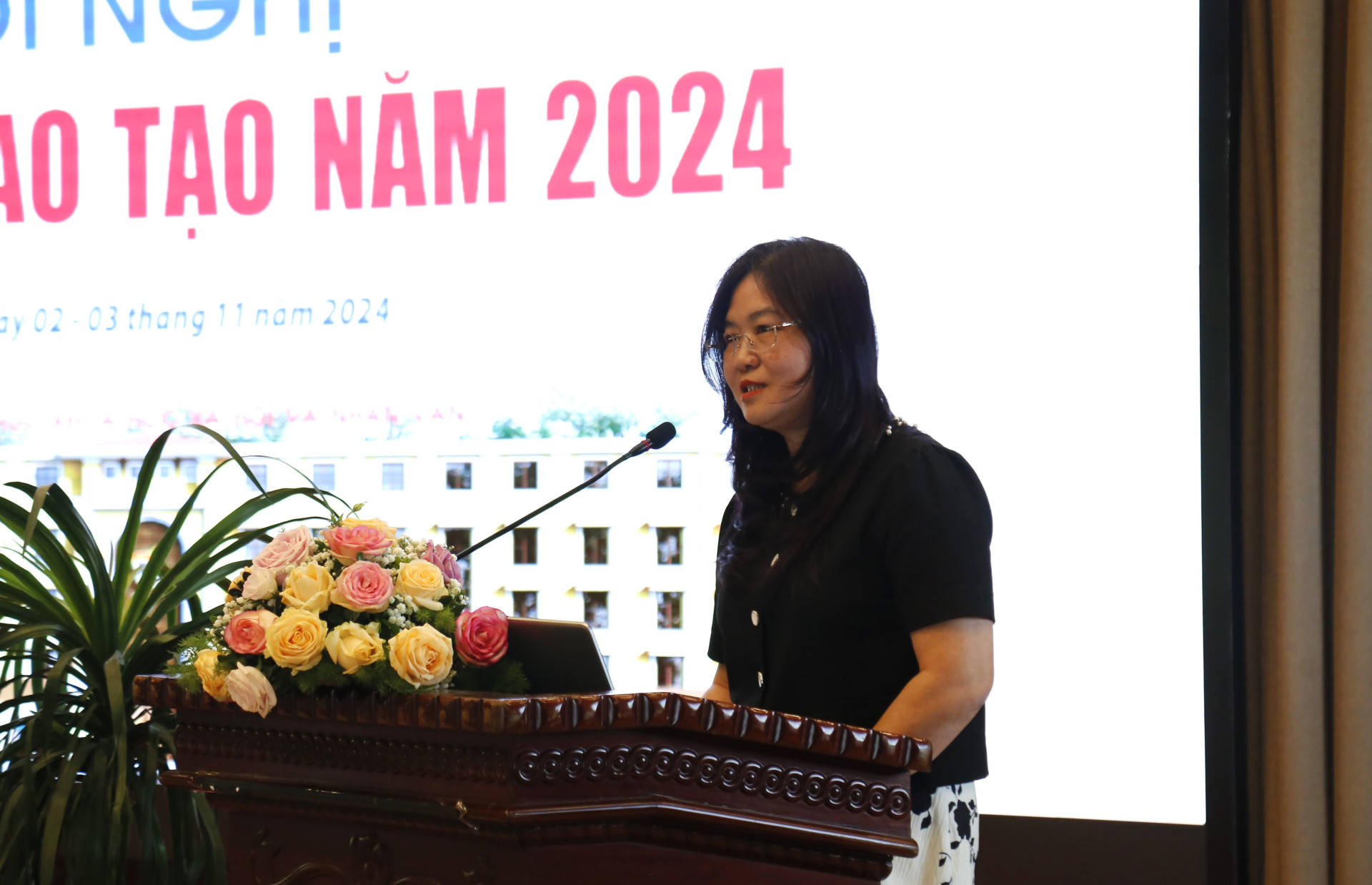
Dr. Ngo Thi Kieu Oanh - Deputy Head of the Organization and Personnel Department, University of Social Sciences and Humanities.
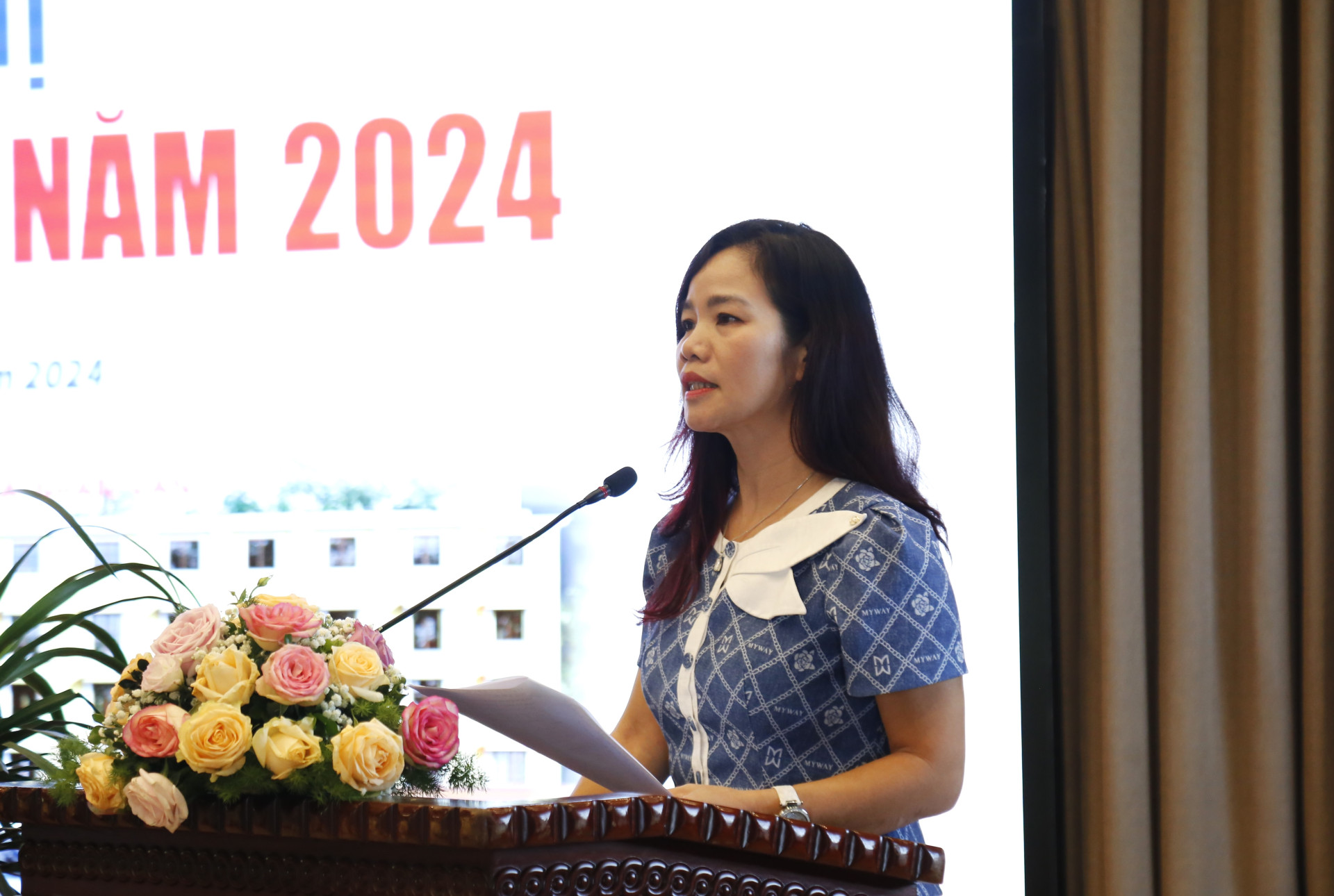
In her presentation on personnel management in the context of training in the new trend, Dr. Ngo Thi Kieu Oanh – Deputy Head of the Organization and Personnel Department – stated that currently, 79.8% of the university's lecturers hold doctoral degrees, and 19% hold professorships or associate professorships. Requirements regarding foreign language proficiency and English teaching skills, as well as criteria for international publications, are demanding that the university's faculty members continuously improve their individual capabilities. The university has intensified its efforts in training local human resources and attracting high-quality lecturers from other training institutions. Attracting highly qualified lecturers, including professors and associate professors, requires the collective effort of the entire university, from departmental to faculty and school levels. Furthermore, in 2024-2025 and subsequent periods, the university will invest more heavily in ensuring its lecturers meet the standards for professor and associate professor titles; and maintain policies and support to help staff and lecturers improve their foreign language skills and participate in international conferences. Dr. Ngo Thi Kieu Oanh suggested that, in implementing training programs, the university needs to balance personnel to maximize the advantages of its high-quality human resources, in addition to training and attracting talent. Furthermore, it is necessary to promote the internationalization of the Journal of Social Sciences and Humanities to support faculty members within the university, while simultaneously enhancing the scientific standing of VNU-USSH both domestically and internationally.
Ms. Kim Thi Diep Ha, M.Sc. – Head of Planning and Finance Department, University of Social Sciences and Humanities
Reporting on the development of economic and technical norms for training programs to determine the price of training services aimed at achieving financial autonomy at the University of Social Sciences and Humanities, Ms. Kim Thi Diep Ha, Head of the Planning and Finance Department, stated that, in implementing the policy of financial autonomy ranging from 70% to less than 100%, the university has taken many measures to ensure revenue and income for staff and lecturers. Besides revenue from training, the university is boosting revenue from scientific research, services, and a portion from the state budget. In the context of the overall difficulties facing the entire industry and society, with the state budget decreasing by 11%, the school has always strived to find ways to increase revenue sources. Among these, collecting tuition fees according to economic and technical standards is a vital task for the school, alongside using funds economically and efficiently, ensuring a balance between revenue and expenditure, and striving to increase staff income and develop the school. Strengthening the role of science and technology in training activities. The university has organized two seminars for graduate students, with an increasing number of papers received. A third seminar is planned for the near future.
Dr. Trinh Van Dinh - Head of the Scientific Research Management Department, University of Social Sciences and Humanities
According to Dr. Trinh Van Dinh, Head of the Scientific Research Management Department, student scientific research activities have been promoted, giving students opportunities to practice skills in writing scientific research papers, fieldwork, etc. In 2024, the University of Social Sciences and Humanities won 5 scientific research awards at the Vietnam National University, Hanoi level, including 1 first prize. Some student scientific research projects will receive funding for practical implementation. In addition, the university focuses on investing in and promoting the publication of series of books, textbooks, monographs, conference proceedings, etc., increasing both the quantity and quality.
Addressing specific issues from training units to improve training quality.
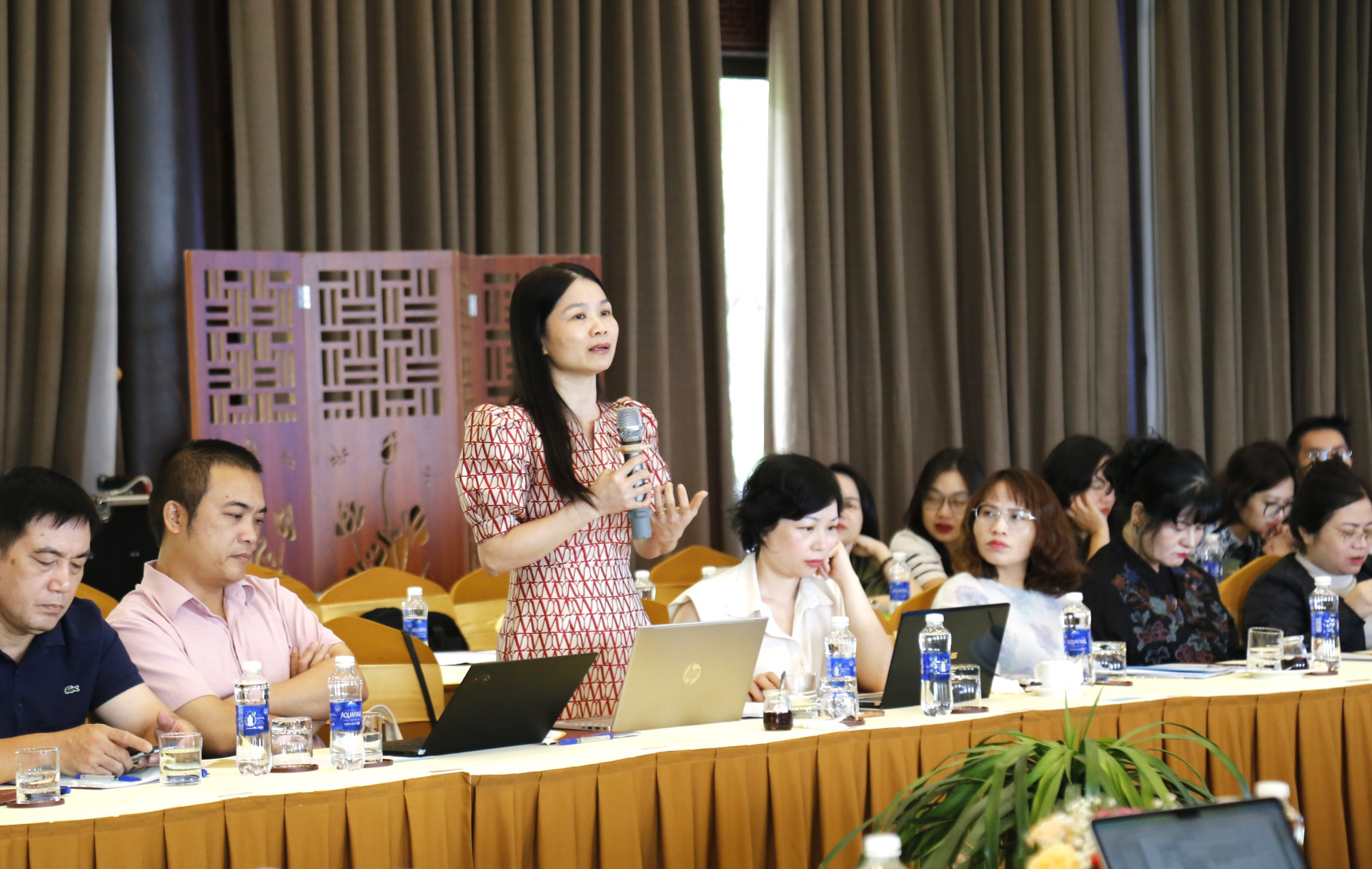
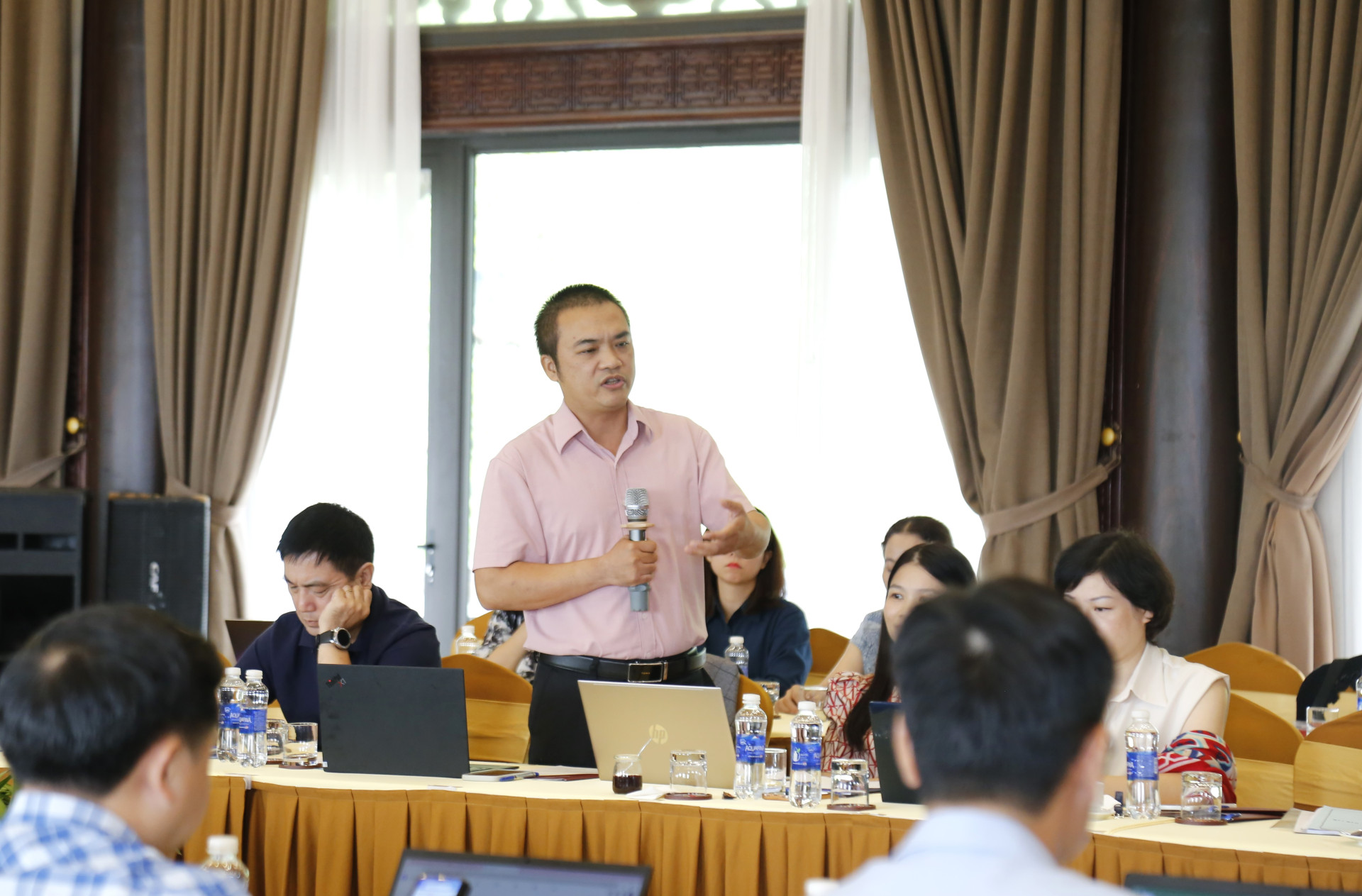
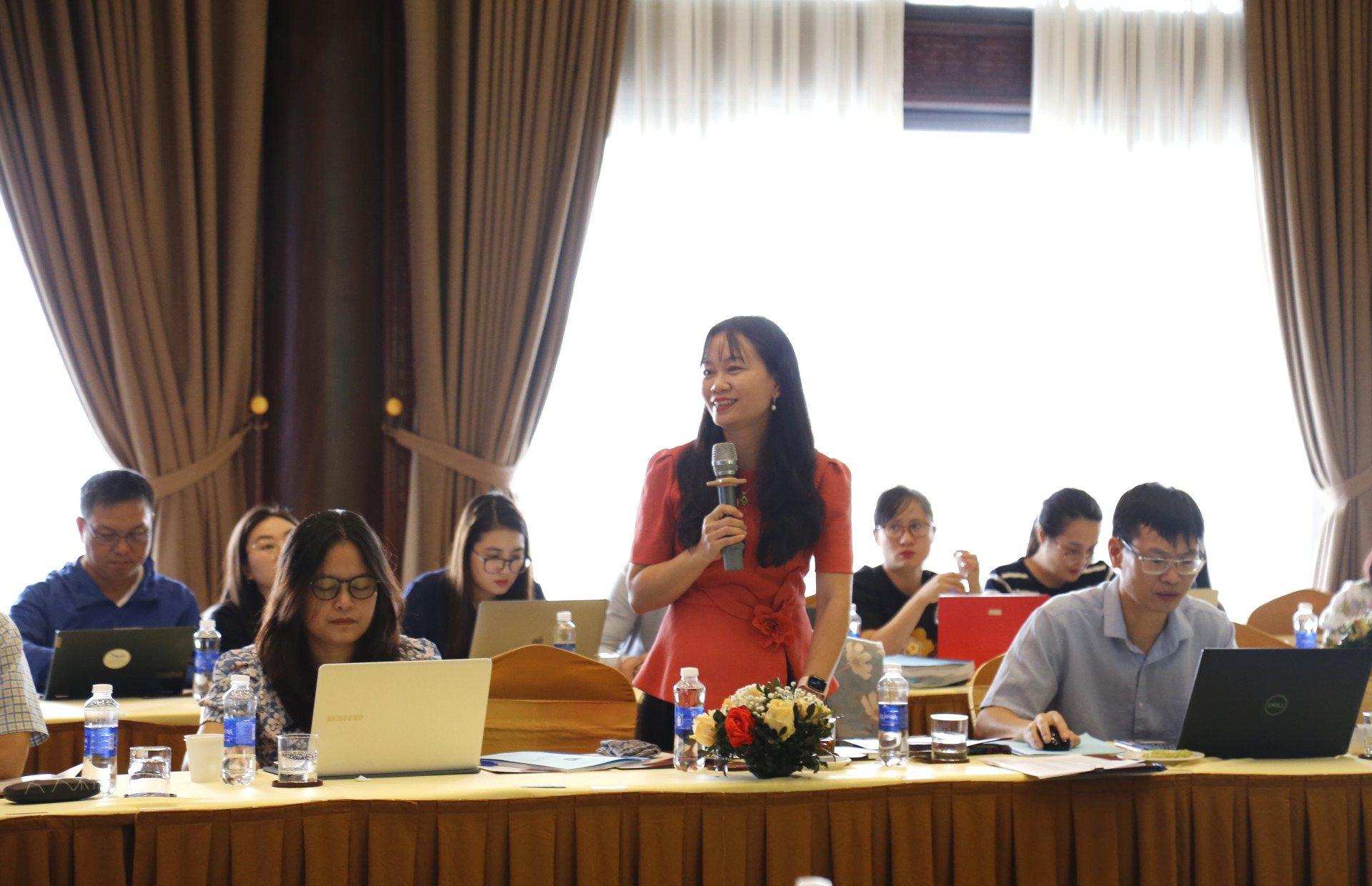
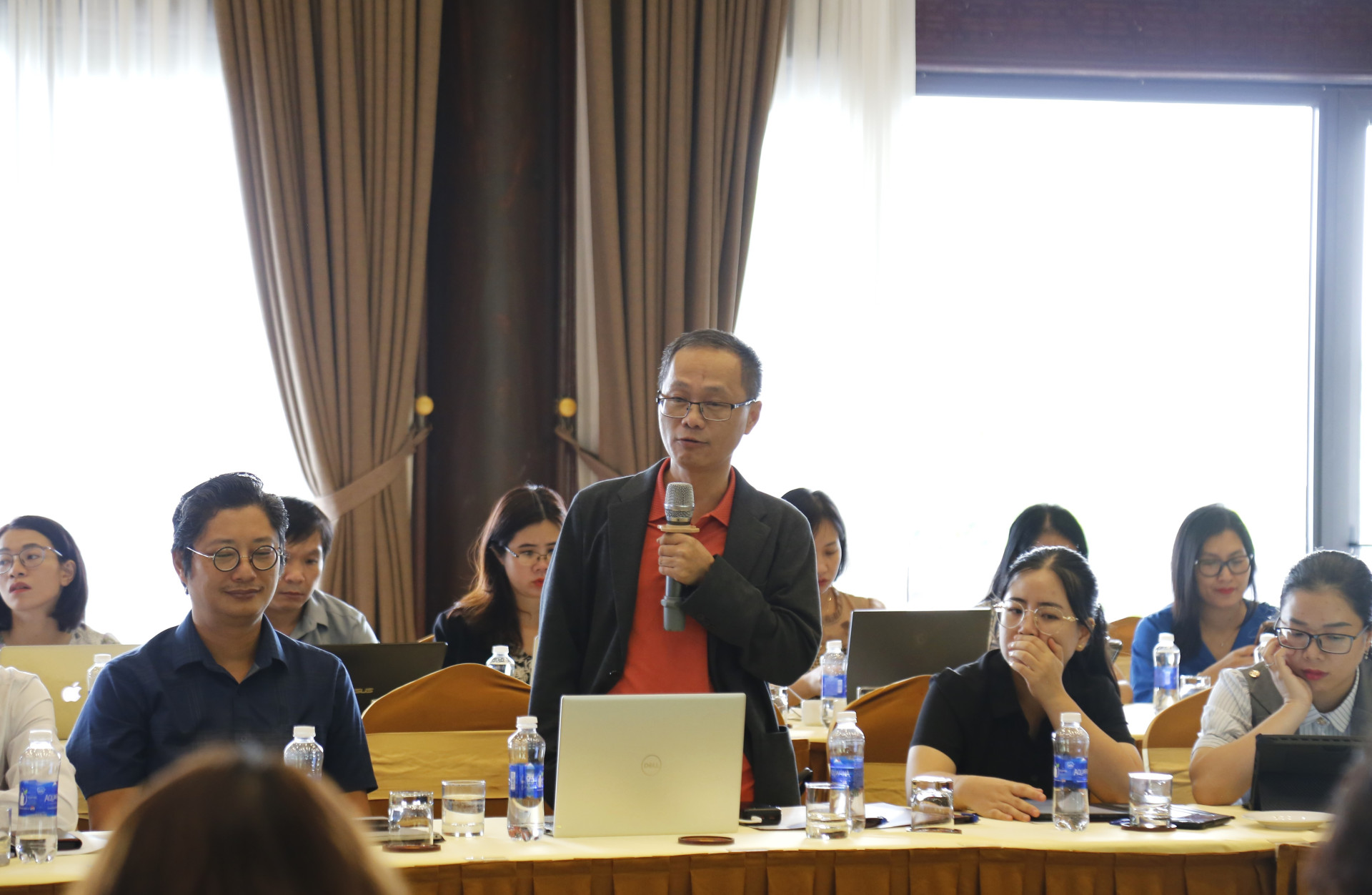
At the workshop, representatives from training units shared their contributions to improving the quality of training activities, such as reviewing, adjusting, and launching new training programs that reflect the unique identity of the University of Social Sciences and Humanities and are in line with the learning needs of society; international cooperation in training; synchronizing the process of admission - training - care and support for learners from bachelor's, master's, and doctoral levels; preparing the conditions for accreditation and evaluation of the quality of training programs; organizing soft skills classes for students, etc.
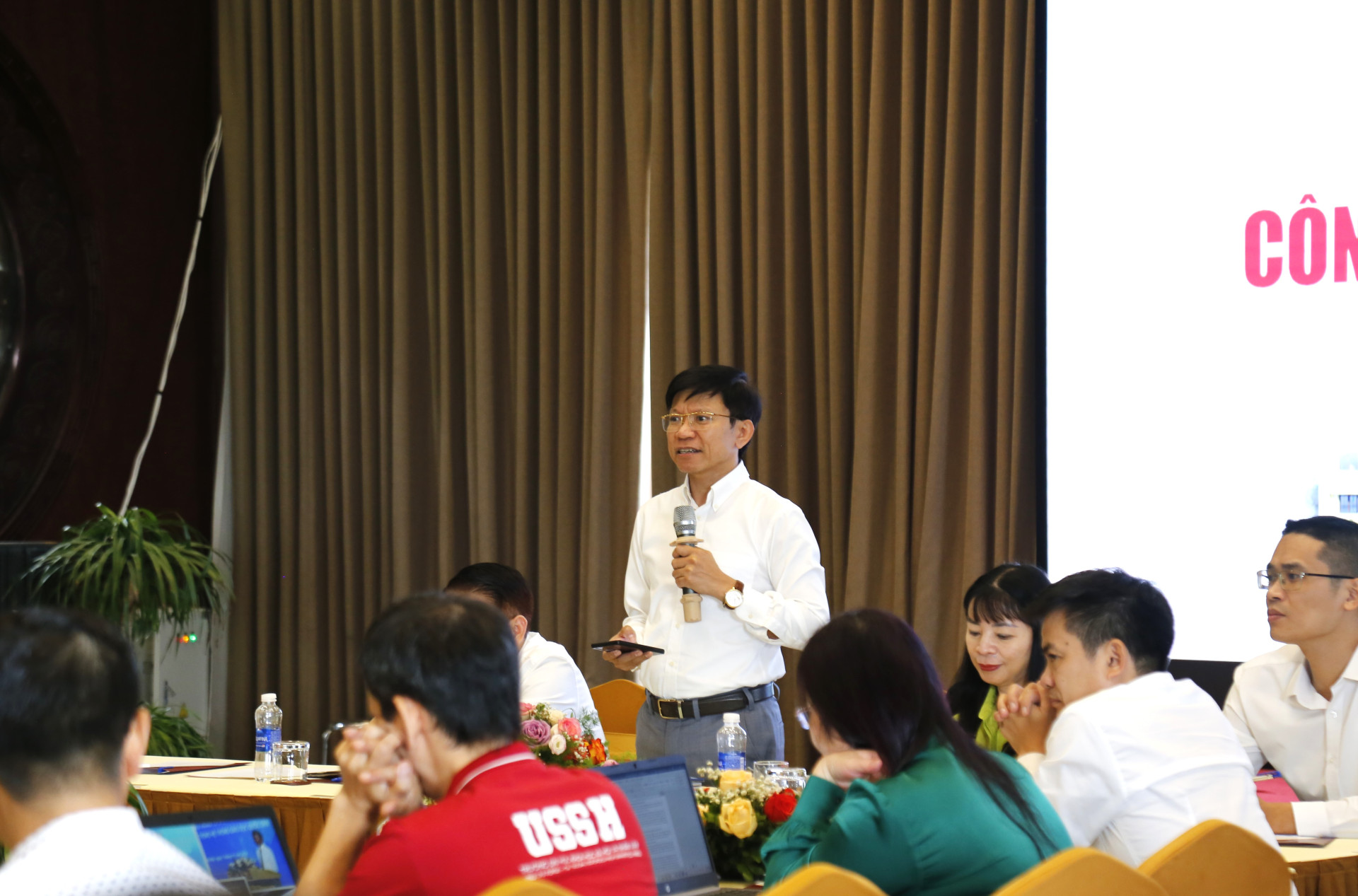
Dr. Pham Huy Cuong – Director of the Center for Quality Assurance, University of Social Sciences and Humanities, shared the requirements for training to meet domestic and international accreditation standards.
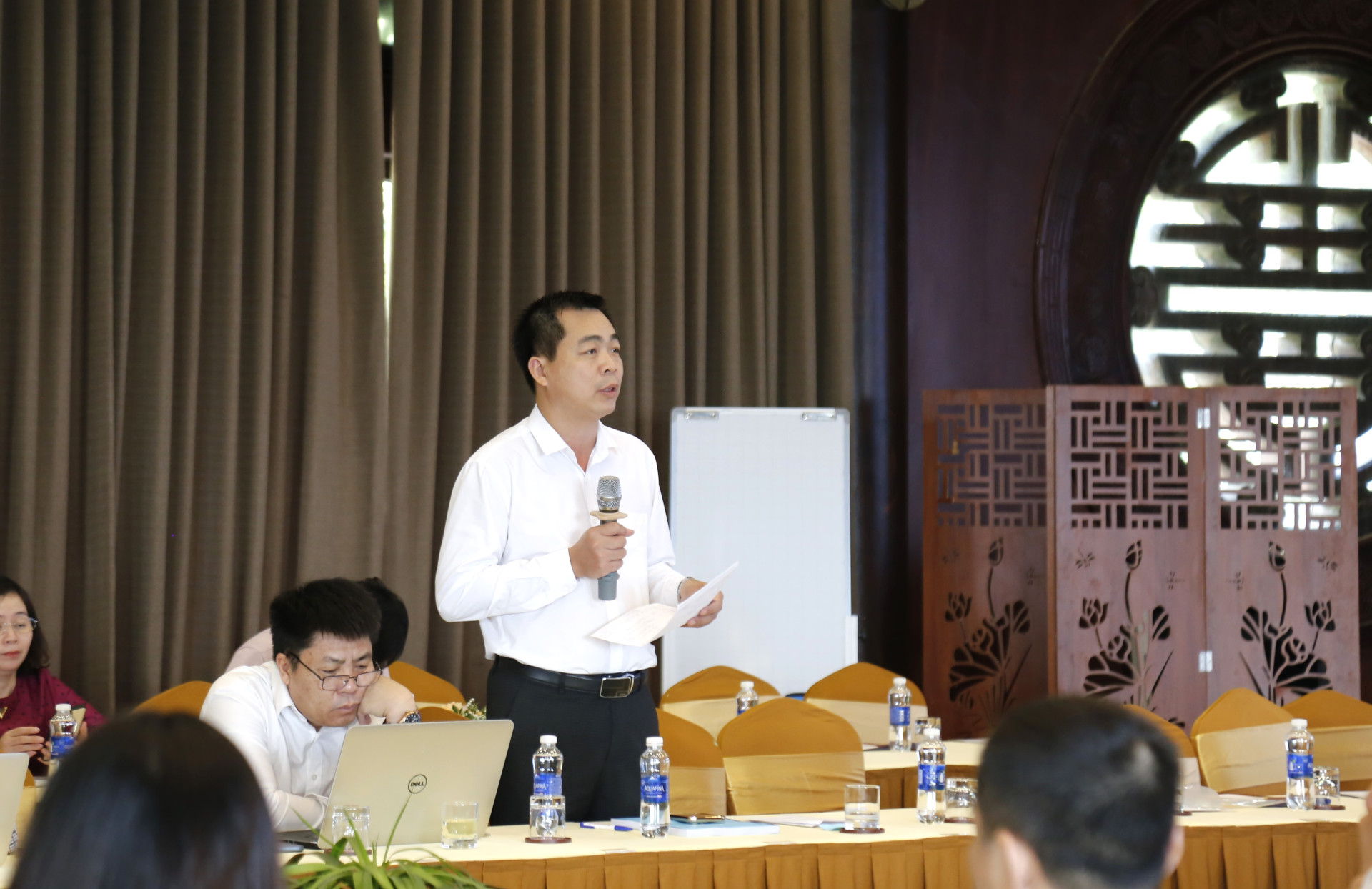
Associate Professor Dr. Dang Hong Son - Head of the History Department, University of Social Sciences and Humanities, shared his experience on adjusting and opening new training programs to suit the learning needs of society, fulfilling the mission of leading in research and training in basic sciences at VNU-USSH.
Associate Professor Dr. Nguyen Van Chieu - Head of the Department of Political Science, University of Social Sciences and Humanities, assessed that VNU-USSH has extensive experience and potential in implementing distinctive, interdisciplinary training programs with its own unique identity.
Associate Professor Dr. Trinh Thi Linh - Head of the Psychology Department, University of Social Sciences and Humanities, shared some limitations in the competition for training programs in the same major within the Vietnam National University, Hanoi (VNU) and the standardization of postgraduate training processes at VNU-USSH.
Dr. Pham Hoang Giang - Head of the Philosophy Department, University of Social Sciences and Humanities, proposed several solutions to support postgraduate students during their studies at the university and expand soft skills training courses for undergraduates.
Dr. Nguyen Thi Nam Hoang - Deputy Head of the Faculty of Literature, shared the Faculty of Literature's experience in launching new training programs and establishing international collaborations in training activities.
Dr. Nguyen Ngoc Binh - Head of the Department of Linguistics, proposed the development and expansion of the staff and lecturers of the departments/institutes/divisions.
The training conference was attended by leaders of Vietnam National University, Hanoi, and leaders, staff, and lecturers of the University of Social Sciences and Humanities.