Summary:Our presentation at the conference "From the University of Indochina to the Vietnam National University, Hanoi: A 120-Year Tradition of Elite Training" aims to: firstly, contribute to understanding the special position and role of the University of Indochina (1906-1945) and its unique destiny; and secondly, to a certain extent, offer a historical perspective on the "natural" relationship between the Vietnam National University, Hanoi, and the University of Indochina. This is achieved at least by comparing the unique experiences of these two educational institutions from different eras and political systems, yet sharing certain similarities despite differing educational goals. Specifically, how is modernization implemented during the transformation of education in Vietnam? Accordingly, the paper includes the following content:
1) Indochina University: A typical educational reform event reflecting the colonial political trends of the early 20th century.
2) Indochina University - A 120-Year Vision in the Eyes of the Vietnamese People
3) What lessons can Vietnam National University, Hanoi still learn from the experiences of Indochina University today?
Keywords: Indochina University, Vietnam National University, Hanoi, Excellence, Competitive Excellence, Technocracy
1) Indochina University: A typical educational reform event reflecting the colonial political trends of the early 20th century.
Historically, to this day, not only in France but also in Vietnam, the history of this unique educational phenomenon during the colonial period has been studied, presented, and discussed quite thoroughly, particularly the history of "The Only University" in colonial Indochina. Below, we would like to contribute some further insights into its history, striving to adhere to a 120-year perspective.
Firstly, when discussing the timing and conditions of the establishment of the University of Indochina, also known as Hanoi University, in 1906, Vietnamese historians largely focus on the transformation in colonial policies, especially regarding culture and education, of the colonial government in Vietnam. For example, one can easily acknowledge the important role of Governor-General Paul Doumer (1898-1902) in building infrastructure in Tonkin, especially in Hanoi; however, Doumer paid less attention to building social and cultural and educational facilities.
The fate of the University of Indochina was linked to Governor-General Paul Beau (1903-1908) and especially to Governor-General Albert Sarraut later on. The most significant decision of Governor-General Paul Beau during his difficult tenure was the establishment of the University of Indochina on May 16, 1906, with the aim of "using the French language to disseminate scientific knowledge and research methods of Europeans in the Far East" (Decree No. 1514a).
Governor-General Beau must have received favorable opinions from the Executive Board, as the aforementioned Decree contained outstanding ideas for designing the structure of the "University of Indochina" almost entirely according to the French model, in which from the outset there were five member schools (Corpus) of Western universities: the School of Law and Political Science; the School of Practical Sciences and Medicine of Indochina; Civil Engineering; and finally, the Faculty of Literature....
Furthermore, right from the opening of the University of Indochina on November 1, 1907, it already had a fairly complete range of modern subjects: Mathematics, Mechanics, Astronomy, Physics, General Chemistry, along with a series of other specialties in Natural Sciences. Regarding Social Sciences, of course, all were taught in French: French Literature, History, General Geography, Philosophy, French Law; and notably, it also included subjects closely related to Vietnamese Studies and Area Studies: Annamese Law and Political Institutions; General Education and Practical Education.
As early as 1908, subjects related to Vietnam and Indochina within the Literature and Law departments were expanded to include History of Indochina and the Far East; Commercial Law and Administrative Organization of Indochina...
We can readily acknowledge that the University of Indochina was founded as a direct result of two educational reforms under Paul Beau and Albert Sarraut (1917). These events are sufficiently worthy of being recognized as the aforementioned historical milestone of the University of Indochina.
However, in our opinion, the issue of the University of Indochina needs to be expanded with two other dimensions. Firstly, the major problem for France itself, and to some extent even in some of its colonies at the beginning of the 20th century, was the problem of modernity. We have also discussed this in relation to the policy shift of the colonial regime in Indochina at the beginning of the 20th century;
"Applying the theory of modernity, this section clarifies its common content and transformation in European and American societies, as well as its spread to Asian societies at that time. While in Western societies, the affirmation of modernity is always 'created from the dialogue between Reason and Subject' or 'the core of modernity is science and technology' or 'a harmonious combination of individuality, scientific and technological achievements, and community groups,' in Asian societies at the end of the 19th century, this 'journey' began with reforms aimed at revitalizing the people's intellect and spirit, starting with whether or not to accept the trend of 'national modernization.' Entering the beginning of the 20th century, when elements of capitalism became evident in many social spaces, whether colonial or semi-colonial, a process of cultural model transformation, cultural institutions, and the emergence of new cultural forms in the Western style inevitably occurred." West."
{Do Quang Hung (Editor) Tran Viet Nghia (2013) Modernity and the Transformation of Vietnamese Culture in the Modern Era, National Political Publishing House, pages 20-21}
Secondly, there were two main trends in the colonial policy of the French in Vietnam, or more broadly in Indochina: the choice between implementing an assimilation policy (as in Algeria) or a cooperation policy (in Tonkin and Annam at the beginning of the 20th century), alongside other important policies such as divide and conquer. At the beginning of the 20th century, this issue became particularly acute in Tonkin and Annam after Japan's victory in the Russo-Japanese War (1905), especially in 1906, when Phan Boi Chau and the Duy Tan Society sent over 200 Vietnamese students to study in Japan. This significantly influenced the proposal of the Council for the Improvement of Indigenous Education in April 1906: “To establish in Indochina, under the name of a University, a higher education course for students from colonies and neighboring countries. The purpose of this educational institution is to disseminate in the Far East, through the French language, scientific knowledge and European methods. This university will be under the direct supervision of the Governor-General of Indochina.”
{Reference: Le Xuan Phan, Indochina University - An Overview of a History of Ups and Downs, Tia Sang Magazine No. 18 2020}
Nearly 10 years after the opening of the first course (1917), Governor-General Albert Sarraut himself emphasized that: “The University of Indochina not only replaces higher education in the traditional education system in Annam but also trains outstanding local talents to serve the policy of “Franco-Vietnamese cooperation” or “Franco-Vietnamese harmony.” (Pham Quynh) This means that this was also a clever political solution to appease the discontent of the Annamese people....
It should be added that the "cooperative policy" trend gradually gained clear dominance in North and Central Vietnam with Governors-General such as Paul Bert, De Lanessan, Albert Sarraut, Varenne... Names closely associated with the turbulent history of the University of Indochina.
Of course, the struggle between these two tendencies has not ended, as vividly demonstrated in the tumultuous history of the University of Indochina. French-language documents show that from its very inception (1906), the University of Indochina faced considerable political and public criticism from both France and Indochina. While the first course commenced in 1907, it was forced to close a year later, in early 1908, under Governor-General Klobukowsky, Paul Bert's son-in-law, due to its "immaturity." The opposition within the colonial government argued that the declining student numbers and the high financial costs incurred by the French government were not commensurate with the effectiveness of the program.
Looking back now, we can understand that public opinion from the opposition also made the top colonialists in Indochina, like Paul Beau, hesitant to take political risks... On the other hand, the University of Indochina, when reopened under Albert Sarraut, developed strongly but faced another difficulty: the large number of students seeking to go to France and other countries to continue their activities created a situation where "the path to France is the path against France."
Therefore, there is yet another reason: "The University of Indochina is merely a facade used to deceive French public opinion." (L'Universite indochinoise n'est qu'une facade destinee à tromper l'opinion publique metropolitaine) {See Georges Grandjean, "Ère Nouvelle," March 10, 1925}
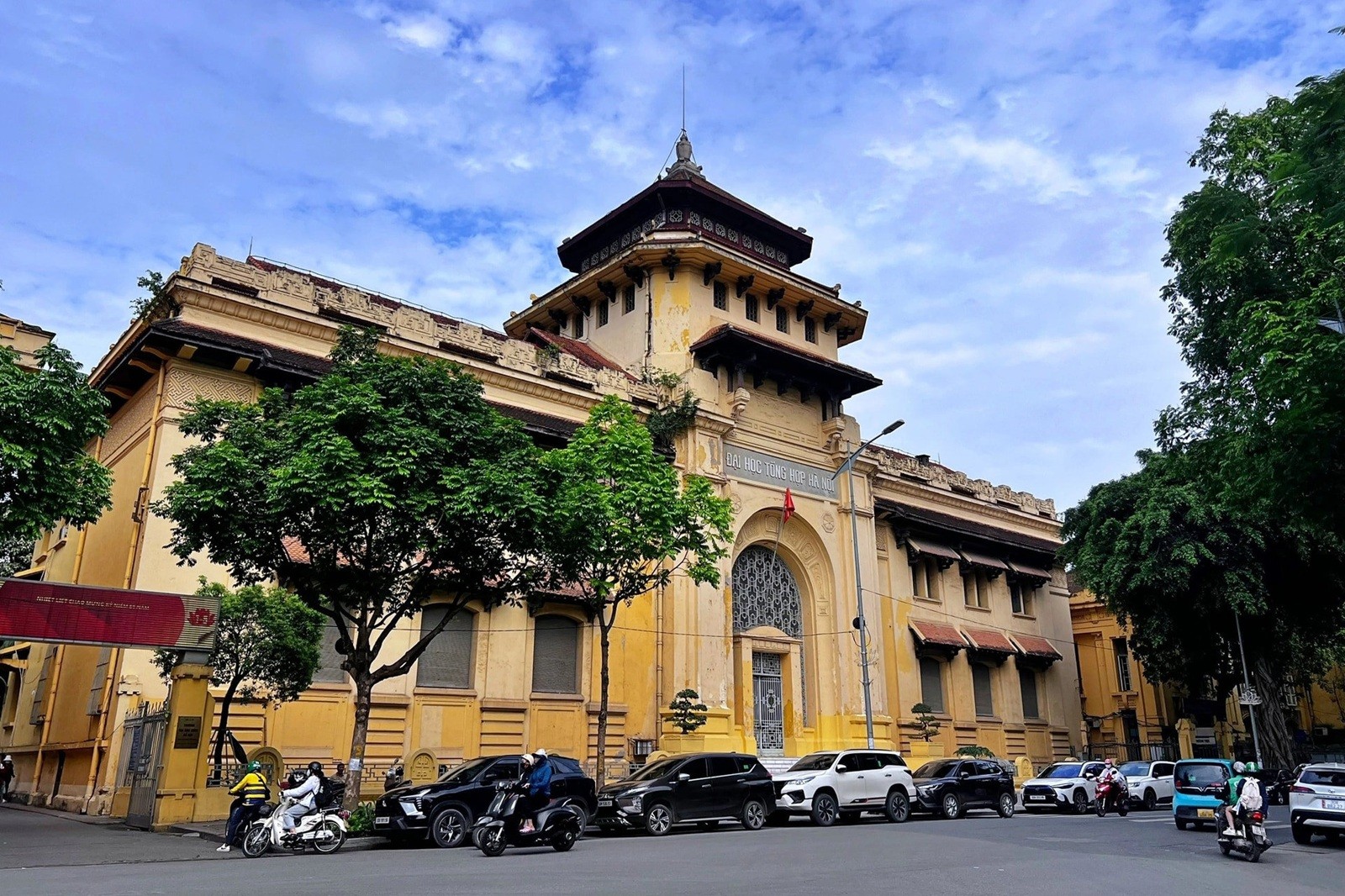
2 - Indochina University - A 120-Year Vision in the Eyes of the Vietnamese People
2.1 Reiterating some ideas, the "100-Year Vision" for Indochina University
On this occasion, a book titled "Le Vietnam, Une histoire de transferts culturels" (edited by Hoai Huong Aubert-Nguyen and Michel Espagne), published in France in 2015, was released. This book includes an article by Hoang Van Tuan titled "The University of Indochina and French Cultural Activities in Vietnam" (pages 151-167). After briefly presenting the origins and development of French higher education in Vietnam from 1902 to 1945, the author focuses on the founding milestones of universities and colleges (essentially falling within the scope of two familiar French educational terms: Universite and Enseignement Superieur), along with student numbers from 1918-19 to 1943-44.
The author argues that, for the Vietnamese people, "education became a means of conquering their spirit." Of course, this also coincided with the period of definitively resolving the influence of Chinese culture in Vietnam before the colonial era. On the other hand, the author interprets it this way: for the French government, "The dissemination of French culture was an important and continuous task of education, especially higher education." This viewpoint is cited by the author from the opinions of Paul Doumer, Henri Gourdon, Albert Sarraut, and especially Trinh Van Thao, when this renowned researcher once again reiterated the famous view of Jules Ferry (1884): providing the colonies with human resources commensurate with economic and cultural development and at the same time transforming Indochina into a model of France in Asia...
Thus, it seems the author focuses on the objectives of the general education policy of the French colonialists in Vietnam (at least in the North and Central regions) as well as the Vietnamese people's reception of this education system. However, the author also quotes, as necessary, Maurice Cognacq, Director of the Indochina Education Department, on his view of the motherland: “We do not aspire to create scientists in laboratories or architects of utopian things – the University of Indochina, formed on a model similar to its neighboring sister universities in the Far East, but nourished by the more abundant milk of French science, the powerful and benevolent mother of human progress, will strive to effectively fulfill the task of building a prosperous Indochina and enlightening the global struggle. For now, it is only necessary to provide the youth with the knowledge and professional skills to become excellent tools of labor; later, our successors will be able to pursue the more altruistic aspirations of an elite that has been transformed to other more pressing needs. It is at that time, according to the definition of the great Allied President Wilson, that the university will transform the young men who It welcomed them as "more than skilled merchants and experts" - At that time, the time had not yet come for conquered nations, with their immense power and position in the vast world market; overly obvious tendencies toward speculation often undermined the motivation for action. {Excerpt from Nam Phong magazine, issue 10, speech by Dr. Cognacq - Director of Higher Education and Inspector General of Education - on the occasion of the inauguration of the University of Indochina in Hanoi, April 28, 1919}
Indeed, not only within the colonial administrations in the colonies and the mother country did opposing views exist regarding the University of Indochina and the implementation of the complete French education model in Indochina in general, but the attitudes of the press and the Vietnamese people were also intertwined, clearly revealing such differing tendencies regarding this university.
At the time when the French abolished Confucian education in North and Central Vietnam, the young intellectuals in our country at that time enthusiastically embraced this new education system, with great passion for the new knowledge and teaching methods. However, important newspapers in North Vietnam, although not always agreeing with the model and methods of the University of Indochina, such as Pham Quynh, always advised young Vietnamese people to make the most of their time, even though the University of Indochina was only a place to train "skilled technicians" and not "an academic castle" like in Paris to train scholars. {Pham Quynh (1917) "The University", Nam Phong No. 3, July 1917)
On the other hand, Pham Quynh still noted that "for the young generation of Annam, the most important and urgent task remains teaching them useful professions." Indeed, the fluctuating fate of the University of Indochina still left its mark on colonial public opinion in Hanoi. The Indochina Newspaper in 1926 still had articles about the limitations of the students of the University of Indochina: "That university was merely a combination of several specialized schools similar to those teaching agriculture, mechanics, commerce... not like the Sorbonne University, or like the University of Montpellier, Nancy..." {The Deception of the University of Indochina, April 26, 1926} This was also a time of trial when the mother country restricted funding for the school's operations, and there was a shortage of human resources, including both lecturers and students.
According to Hoang Van Tuan, the influence of the University of Indochina on Vietnamese people at that time was primarily within the realm of Vietnamese culture in general, first and foremost in the areas of Literature and Fine Arts. From the New Poetry Movement of the 1930s to the emergence of prominent Vietnamese modern artists such as Nguyen Phan Chanh, To Ngoc Van, Le Pho... whose works initially captivated discerning art connoisseurs in Europe at the International Colonial Exhibitions in Paris 1931, Rome 1932, Italy 1934, and Japan 1940...
This observation is a fairly familiar assertion among researchers in Vietnam.
2.2 Was the University of Indochina a "tool for renewing the Vietnamese elite and culture"?
This opinion by Hoang Van Tuan is based on the logical premises that the author himself put forward:
(a) The French colonial administration “fully understood the important role of the elite and implemented a new training system influenced by Western knowledge and ideas”;
(b) “The University of Indochina was the first French university established outside mainland France, well-organized, becoming a symbol of French civilization and, in fact, throughout the Far East” (In reality, the University of Algiers was founded in 1909, not long after)
c) “The impact of the education provided at the University of Indochina on the cultural life of Vietnam during the colonial period and in the contemporary era”
Let's not discuss these three logical premises yet. To delve into the author's logical viewpoint, first, with a fairly high level of synthesis of source materials from Vietnam and France, the author reconstructs "a turbulent history of the University of Indochina." He delves into several factors related to the issue of the "elite class," such as the French-Vietnamese faculty and the situation of Vietnamese students, who constituted the majority in all different disciplines, to present his perspective on the tools for reforming the elite class and Vietnamese culture. Accordingly, the author presents two basic arguments:
Firstly, "Hanoi University and the Scientific Innovation" in the training of Vietnam's elite emphasizes, first and foremost, the "broad scope of disciplines" (natural sciences and social sciences) as well as scientific theory and technological applications. In addition, the author quite accurately highlights the training of "administrative officials" in all the aforementioned new fields of study. "Graduates of this university are increasingly integrated into the services of the colonial government." Finally, this change facilitated communication between the colonial government and the local population, reflecting the desire for "Franco-Vietnamese cooperation," an idea that Sarraut affirmed at the time.
Thus, the author has provided certain logical justifications. The University of Indochina's "renewal of the elite" was primarily achieved by expanding modern professional fields, rather than a complete "renewal" of the elite itself. Ultimately, if we're talking about "renewal" of the elite, we must consider what the University of Indochina contributed to their transformation from Confucian ideology to a modern Western worldview. More specifically, as Max Wildiers put it on the Modern Worldview and Science and Technology: "But it was Descartes, Newton, and other brilliant thinkers who truly destroyed the vision of the ancient and medieval world and replaced it with a 'world divided into two: the spiritual world and the material world.'" Philosophy and theology reigned supreme in the spiritual world. Meanwhile, natural science, with its innovative analytical methods, dominated the material world, creating immense mechanical power through its entirely empirical and quantitative laws. If a metaphor for this cosmology were needed, the author would not hesitate to call it "a world like a machine."
{Do Quang Hung (2025) As another religion, Hanoi Publishing House, page 56}
Or, to put it more concisely, the vision of modernity requires a dualistic vision, rationality, and scientific approach. From the beginning of the 20th century, France recognized the objective difficulties and limitations of implementing modernity, and there were issues that needed to be changed, including the field of education and training of people in both the mother country and its colonies, if it did not want to fall behind other great powers.
The University of Indochina was merely a highlight; it cannot, in itself, be considered a tool for innovating and training the elite.
Secondly, it is clear that the University of Indochina, during its four decades of existence, made a significant contribution to "renewing" many aspects of cultural life in colonial Annam. However, it can hardly be considered a historical "turning point."
3) The issue of 120 years of elite training: From Indochina University to Hanoi National University
3.1 We are living in the “Postmodern” era, in which the rise of Populism globally and the explosion of social media have created an unprecedented challenge to the competitive elite-based governance model. The confrontation between technocratic logic and populist logic—in essence, competitive eliteism and populism are based on opposing logics—creates an irreconcilable clash of worldviews.
Technocratic logic: This logic is based on delegation and trust in expertise. It recognizes that modern governance issues (climate change, monetary policy, pandemics) are extremely complex, requiring specialized knowledge that the general public cannot access. Therefore, decision-making should be delegated to a well-trained, competent elite who act on objective, scientific evidence. Their legitimacy stems from their competence and effectiveness in problem-solving. They prioritize rationality, procedure, and long-term thinking.
(Referencing GF Lyotard (1979), A. Gidens (1990), and JP Willaime (1998) on Postmodernism. These scholars note that the modern era often emphasizes the contributions of science, politics, and art to human progress. But the postmodern era is marked by the breakdown of that narrative... Humans must find a way to live in that fragmented society, which has many incompatible "social codes" and morals.)
Thus, at least within the context of contemporary competitive eliteism, we can gain a more thorough understanding of the issue of "Elite Training" or the training of the "Intellectual Upper Class," a term Phạm Quỳnh often used in Nam Phong magazine.
3.2 Some of our thoughts on the experiences of Indochina University regarding this issue
As mentioned above, the nearly 40-year history of Indochina University has been marked by many ups and downs and challenges, but also by periods of glory. Before analyzing the valuable experiences of Indochina University, we would like to quote the image of the "peak" of the university's educational space as described by Professor Vu Quoc Thuc:
“Let us imagine an auditorium with rows of green upholstered seats descending from top to bottom, before us a spacious stage with a green-covered table and a massive armchair, a professor in a black robe, a red tassel on his chest, and three rows of pristine white rabbit fur armbands solemnly lecturing. Behind him is an arched wall painted with a landscape and large gold-leaf Latin inscriptions meaning: ‘The University Grants Us Knowledge, Dignity, and Happiness.’”
(ALMA MATER EX TE NOBIS DIGNITAS UBERTAS FELICITAS) (This inscription is located in the middle at the bottom of a mural by the artist Victor Tardieu. The painting was restored in 2006, but the inscription has not been restored as of 2021.)
This setting alone made the listeners serious, feeling as if they were attending a ceremony, and eliminating any intention of disrupting the order. Needless to say, in that solemn atmosphere, the speaker easily felt as if they were carrying out a noble mission, while the students listening had the illusion that they belonged to the elite of society. This was not a trick of the French authorities in Indochina to enhance the prestige of the French university, but simply a tradition of that university before the revolutionary movement of 1968.” (Vu Quoc Thuc (2010) My Era, Nguoi Viet Publishing House, quoted by Le Xuan Phan in the article Indochina Law University, 15 years of brief brilliance, on the website:https://tiasang.com.vn/truong-dai-hoc-luat-dong-duong-15-nam-toa-sang-ngan-ngui-4971983.html)
Here are some experiences:
Firstly, selecting exemplary models and types of member schools and establishing close ties with the mother country to meet the requirements of a modern French and international university model, so that the Governor-General of Indochina, General Catroux, could for the first time declare in January 1940 that: "The University of Indochina must define its mission as a place to train the elite of Indochina and also the French here." {Speech by General Catroux, Governor-General of Indochina, in Hanoi on January 9, 1940, Indochina Official Gazette.}
Although the University of Indochina was founded in 1906, for almost the first 20 years there was no clear distinction between the two types of education: Higher Education (Enseignement Superieur) and University (Université). It wasn't until 1933-34 that higher education in Indochina took on a form corresponding to higher education in the mother country. Within this system, the Law and Medical schools became part of the University of Law and Medicine in Paris. In October 1933, Professor Michel Escarra of the University of Law in Paris chaired the evaluation committee for the first year of Bachelor of Law training at the Hanoi Law School. In 1934, Professor Lemaire, the first representative of the University of Medicine in Paris, came to Hanoi to chair the examination committee, commissioned by the Ministry of National Education, to learn about the activities of the Medical school, which had been established since 1902! Thus, by 1936, the name Indochina University, with its three member schools—the School of Medicine and Pharmacy, the School of Law, and the School of Fine Arts—truly became a university with three defined objectives:
1. Training of senior administrative and technical staff.
2. Participate in the major scientific movement in the mother country, especially in research related to Indochina.
3. To make the general public in Indochina aware of the major achievements of humanity.
The two major schools, Law and Medicine, on their way to becoming full-fledged higher education institutions, will prepare for all three objectives above.” {Gouvernement generale de L'Indochine , Rapport au Conseil de Gouvernement , Hanoi, 1936, p.109}
During World War II, the University of Indochina welcomed its last member (before the establishment of the Democratic Republic of Vietnam in September 1945), founded in 1941. At this stage, the position and character of the University of Indochina became clearer, demonstrating its ability to truly train elites, as stated in Governor-General Decoux's speech on October 16, 1942: “In the near future, Indochina will possess an intellectual center indistinguishable from the great universities in the mother country. The University of Indochina will have the duty to receive, preserve, and continuously develop the scientific heritage.” (L'Indochine Hebdomadaire Illustree magazine, issue 114, November 5, 1942)
This was further confirmed by Mr. Charton, Director of Education in Indochina, who said in 1944: “The University of Indochina welcomed more than 1,300 students at the beginning of the academic year. Gradually, this school is becoming similar to its sister universities in France.” Unfortunately, after the Japanese coup on March 9, 1945, the University of Indochina was essentially forced to temporarily close, although some member schools continued to operate, but their nature was no longer the same as before.
Thus, the University of Indochina was fortunate to exist continuously until 1945 with four schools that can be considered elite: the Hanoi Medical University (1902); the Indochina University of Fine Arts (1924); the Indochina University of Law (1931); and the College of Science (1941). However, we should not forget that after the establishment of the University of Science, the opinions of officials and the Indochina Education Council felt that there was still a lack of another school, the University of Literature (training both bachelor's and postgraduate students in several social science fields), to make the Indochina University education model truly similar to that of the French. Therefore, later, in Saigon, within the French-occupied zone, in October 1948, this school was established {Special issue of Revue Education magazine, December 1949}. Perhaps this should be considered the last true school of the University of Indochina.
Secondly, the training of the elite at the University of Indochina, as analyzed above, clearly reflects the reality of the ideological and educational policy struggle between the French motherland and the colonial administration in Indochina, encompassing everything from training trends and models to personnel policies, finances, and other forms of investment. In such circumstances, from the Governor-General of Indochina to high-ranking colonial officials, they were consciously and deliberately attracted the most outstanding intellectuals from France and some other advanced capitalist countries, not to mention the renowned lecturers whose names we have yet to fully compile. We will only cite a few typical examples of this experience. First of all, in the case of Governor-General Paul Doumer, he was not only the pioneer of this model of higher education by establishing the Hanoi Medical University and directly inviting Dr. Yersin to be its rector, which later led to the establishment of the renowned Institute of Hygiene and Epidemiology in Vietnam, which remains famous to this day.
During the reign of Albert Sarraut, the Governor-General made his mark with educational reforms in Indochina and also attracted many renowned figures in the scientific fields of France to the University of Indochina, along with subsequent Governors-General such as Paul Varenne and especially Jean Decoux. The image of French professors at the University of Indochina was highly prestigious, with beautiful symbols deeply etched in the hearts and minds of the Vietnamese people. The teaching staff was very carefully selected, and some professors were great scholars or artists such as Alexandre Yersin, Le Roy des Barres, Armand Degorce, Maurice Cognacq, Pierre Huard, Jacques Meyer May, Henri Gaillard, Victor Tardieu, etc. Many former students of the University of Indochina, in their memoirs, have expressed their sympathy and respect for the talent and character of the French professors.
{Hoang Van Tuan in the article “Indochina University and French cultural activities in Vietnam” (pages 151-167) from the book Le Vietnam, Une histoire de transferts culturels (edited by Hoai Huong Aubert-Nguyen and Michel Espagne) Demopolis Publishing House, Paris 2015.}
As we analyzed above, regarding the trends in elite training, even in the first half of the 20th century, there were figures in French politics who followed a pragmatic technocratic approach, such as Paul Doumer. This powerful Governor-General seemed to prioritize applied science and practical training. Therefore, from the end of the 19th century, under Paul Doumer, alongside the vibrant educational phenomenon of the University of Indochina, there were a series of applied research institutions such as: the French School of Far Eastern Studies (1898); the Indochina Meteorological Office (1898); the Indochina Geographical Office (1899); the Saigon Institute of Microbiology (1891); the Pasteur Institute of Nha Trang (1895)... This, to a greater or lesser extent, will be related to the formation and development of the French education system in general in our country, which we have discussed in the previous sections.
{Tran Thi Phuong Hoa (2016) Indochina University 1906-1945, modernization efforts and application orientation, website:https://vnu.edu.vn/dh-dong-duong-19061945-no-luc-hien-dai-hoa-va-dinh-huong-ung-dung-post19244.html}
Thirdly, regarding the training of the elite, from a very early stage, the colonial administration was aware that, while focusing on building, developing, and perfecting the University of Indochina, whether following technocratism or not, it was necessary to simultaneously develop a system of technical colleges or vocational schools. This was despite the fact that this type of institution faced many difficult stages, had limited investment, and was very susceptible to closure or temporary suspension of operations, similar to the colleges of pedagogy, commerce, public works, agriculture, forestry, and veterinary medicine. It should be added that, in terms of form and training conditions, the system of technical colleges and vocational schools, although narrow in scope and specialized in their training, ultimately did not differ significantly from the fate of the elite of the University of Indochina.
Fourth, the educational product, the elite social group, and the Vietnamese intellectual class in general emerged from the "French schools in Indochina." A striking paradox exists: the consistent goal of France and the colonial regime was nothing less than to train a new intellectual class in the Western style, especially the elite, so that they could all contribute to consolidating the French colony in Indochina, as they themselves had declared throughout history.
However, reality presented a widespread paradox: the vast majority of those who graduated from French-run schools in Indochina hardly abandoned their national identity, patriotism, and nationalism. Furthermore, many of them, including those who received certificates and degrees from these schools, had to continue their studies in France and other European countries using their family's money if they wanted higher qualifications. Yet, they then "entered the world" amidst the torrents of the national liberation revolution. As a result, these members of the elite not only avoided the technocratic machinery of the colonial regime but also contributed to building the political, economic, social, and even military apparatus of the Democratic Republic of Vietnam.
Regarding the contributions to the development of Hanoi University, and later Hanoi National University (1995 to the present), a descendant like myself still remembers many figures such as Professor Nguyen Van Chien, specializing in Geology; Professor Dao Van Tien in Biology; Professor Nguyen Hoan in Chemistry... for those fields of Hanoi National University today. These images of the "Founding Fathers of the fields" are surely similar to those of Professors Nguyen Canh Toan and Ngo Thuc Lanh in Mathematics at Hanoi Pedagogical University, and Professors Ton That Tung, Dang Van Ngu, and Vu Dinh Tung in Medicine.
There is another, much-loved image associated with figures from the aforementioned elite class that continues to significantly influence contemporary social sciences, humanities, and education, from figures like Hoang Ngoc Phach, Le Thuoc, Duong Quang Ham, Dang Thai Mai, Ton Quang Phiệt, Duong Duc Hien, Vu Dinh Hoe, Do Duc Duc, Cao Xuan Huy, Pham Thieu, Ca Van Thinh, Hoang Minh Giam, Nguyen Lan, and even Vo Nguyen Giap... to similar figures whose "social standing today" is a little more difficult to define, such as Vu Quoc Thuc, Vu Van Mau, Vu Quoc Thong, Nguyen Van Huyen, Vu Van Hien, etc.
Fifth, considering the aforementioned experiences, which are undoubtedly incomplete, we sincerely wish to make two suggestions to the comrades in the leadership of Hanoi National University on the occasion of our university's solemn celebration and reliving the memories of the origins of Indochina University:
Has our Vietnam National University, Hanoi today identified its core member universities with the mission of training elite/competitive elites to contribute to national governance, nation-building, and national defense? Of course, the mission of Vietnam National University, Hanoi still includes the task of contributing to the improvement of the system of universities and scientific institutions of the technocratic type.
We are not fully aware of the regulations regarding the selection, recruitment, and appointment of personnel to leadership and management positions, and especially the strengthening of the faculty and renowned scientists in their respective fields, so that they can lead the way in training the aforementioned elite/competitive workforce.
Thank you very much.
Hanoi, May 4, 2026
References:
Dao Thi Dien, “The Training Issues of the University of Indochina in its Early Period (1906-1908)” Vietnam National University Hanoi Journal of Science, 22nd Edition, No. 2, 2006, pp. 8-19
Dao Thi Dien, The Birth of Indochina University through Archival Documents, article on the website:https://vnu.edu.vn/su-ra-doi-cua-dai-hoc-dong-duong-qua-tai-lieu-luu-tru-post19219.html
Hoang Hang, The Formation and Development Process of Indochina University through Archival Documents (article on the website):https://archives.org.vn/gioi-thieu-tai-lieu-nghiep-vu/qua-trinh-hinh-thanh-va-phat-trien-cua-dai-hoc-dong-duong-qua-tai-lieu-luu-tru.htm
Trinh Van Thao (1995), L'école française en Indochine, Editions Karthala
Tran Thi Phuong Hoa, Indochina University - A break with the past? VNU Journal of Science, Social Sciences and Humanities 28 (2012) 223-233
Tran Thi Phuong Hoa (2022) Franco-Vietnamese Education in Tonkin: 1884-1945 (monograph) Social Sciences Publishing House
Tran Thi Phuong Hoa (2016) Indochina University 1906-1945, modernization efforts and application orientation, website:https://vnu.edu.vn/dh-dong-duong-19061945-no-luc-hien-dai-hoa-va-dinh-huong-ung-dung-post19244.html}
Do Quang Hung (Editor) Tran Viet Nghia (2013) Modernity and the Transformation of Vietnamese Culture in the Modern Era, National Political Publishing House
Trinh Van Thao (2020) Three Generations of Vietnamese Intellectuals (1862-1954), Tri Thuc Publishing House
(Editors by Hoai Huong Aubert-Nguyen and Michel Espagne) (2015) Le Vietnam, Une histoire de transferts culturels. Editions. Demopolis, Paris.
Le Xuan Phan, Indochina Law University, 15 years of brief brilliance, on the website:https://tiasang.com.vn/truong-dai-hoc-luat-dong-duong-15-nam-toa-sang-ngan-ngui-4971983.html
Vu Quoc Thuc (2010) My Era (2 volumes), Nguoi Viet Publishing House (USA)
Gouvernement generale de L'Indochine , Rapport au Conseil de Gouvernement , Hanoi, 1936
Revue L'Indochine Hebdomadaire Illustree
Universe Education
Author:Prof. Dr. Do Quang Hung
Newer news
Older news

