
When rosy dreams clash with the somber reality of the earth.
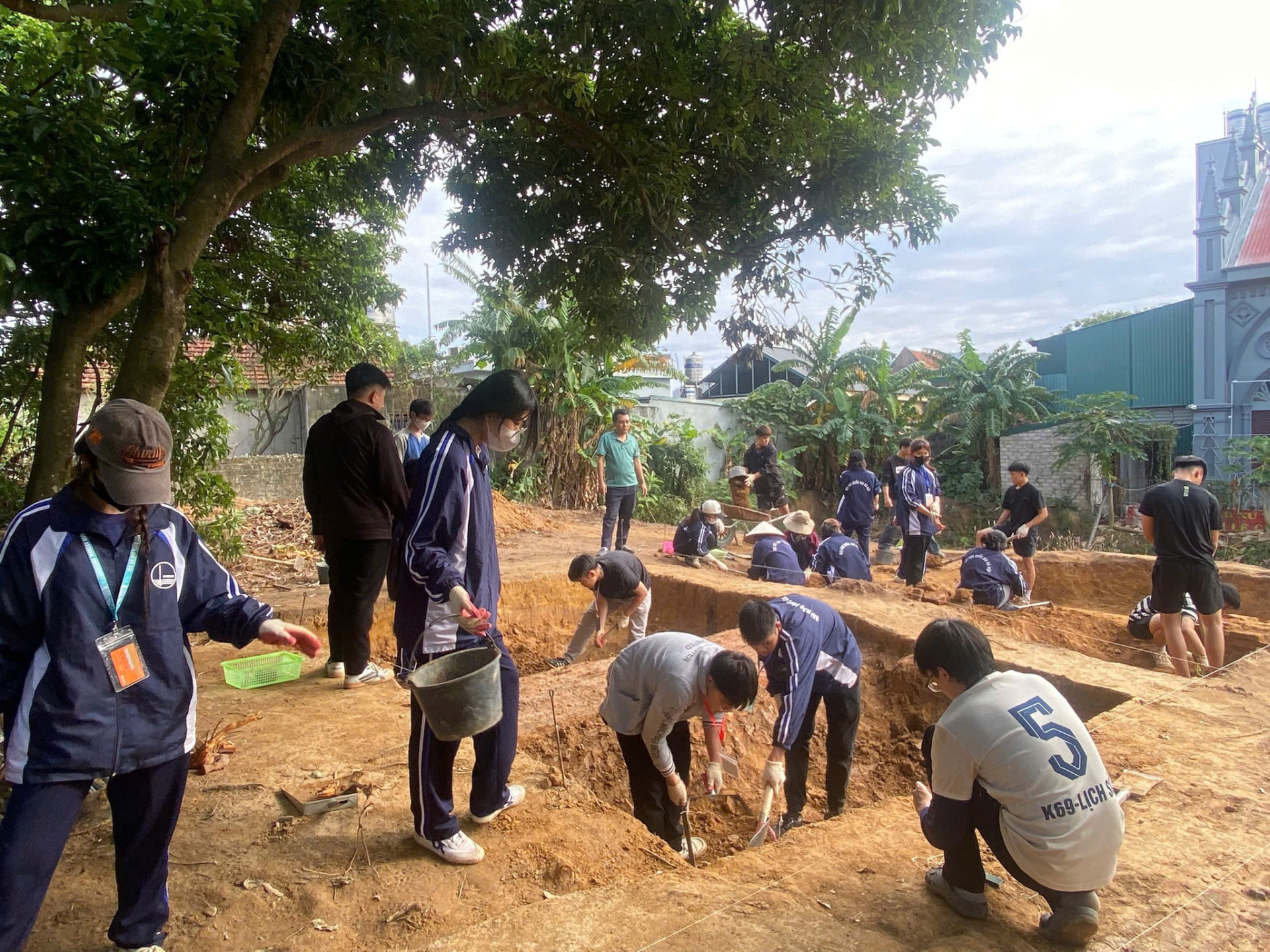
As a second-year history student at the University of Social Sciences and Humanities (Vietnam National University, Hanoi), Hoang Ngan came to archaeology out of pure curiosity, the curiosity of a girl who had loved history in high school. However, it wasn't until she actually stepped into the field, especially during her 15-day internship in Cat Don (Hai Phong) in her first year, that Ngan truly understood that archaeology is not a journey to find material treasures, but a process of "hunting for information." "Each broken piece of pottery, trace of burnt charcoal, or animal bone is no longer seen as an inanimate object, but as historical data carrying within it the story of the life, living environment, and thinking of people in the past," Ngan enthusiastically shared.

Regarding stereotypes like "studying archaeology means becoming a construction worker," Hoang Ngan argues that this is a one-sided view. According to Ngan, excavation work only accounts for about 10-20% of the total workload; the majority of time and effort is devoted to pre- and post-field research. "Archaeology is essentially an interdisciplinary science, where every relic, artifact, or environmental trace is meticulously documented, measured, and analyzed to piece together a picture of human life in the past. This rigorous scientific process is what allows archaeology to interpret the evidence of time, opening up important insights into history, culture, and human development."
My friend recounted an unforgettable experience while working at the Northern Gate site (Thang Long Imperial Citadel): "Once, wanting to finish the work quickly, I messed up the artifact registration form. I had to start over, slowly and calmly. At that moment, I realized that archaeology was my teacher of patience, because you can't rush history."

Although she's only completed a quarter of her academic journey, for Hoang Ngan, each field experience and excavation task has completely changed her initial perception of archaeology. From a field once thought to be dry and uninteresting, archaeology has gradually become a space that sparks curiosity, a thirst for discovery, and profound lessons about patience. Ngan confided: "I'm excited to excavate, and even excited to work with the artifacts afterward. Archaeology has taught me so many lessons, and I look forward to learning even more in the future." For this second-year student, these unfinished experiences are precisely what makes the journey ahead even more exciting than ever.
Knowledge is like wine; the longer it's aged, the richer and more flavorful it becomes.
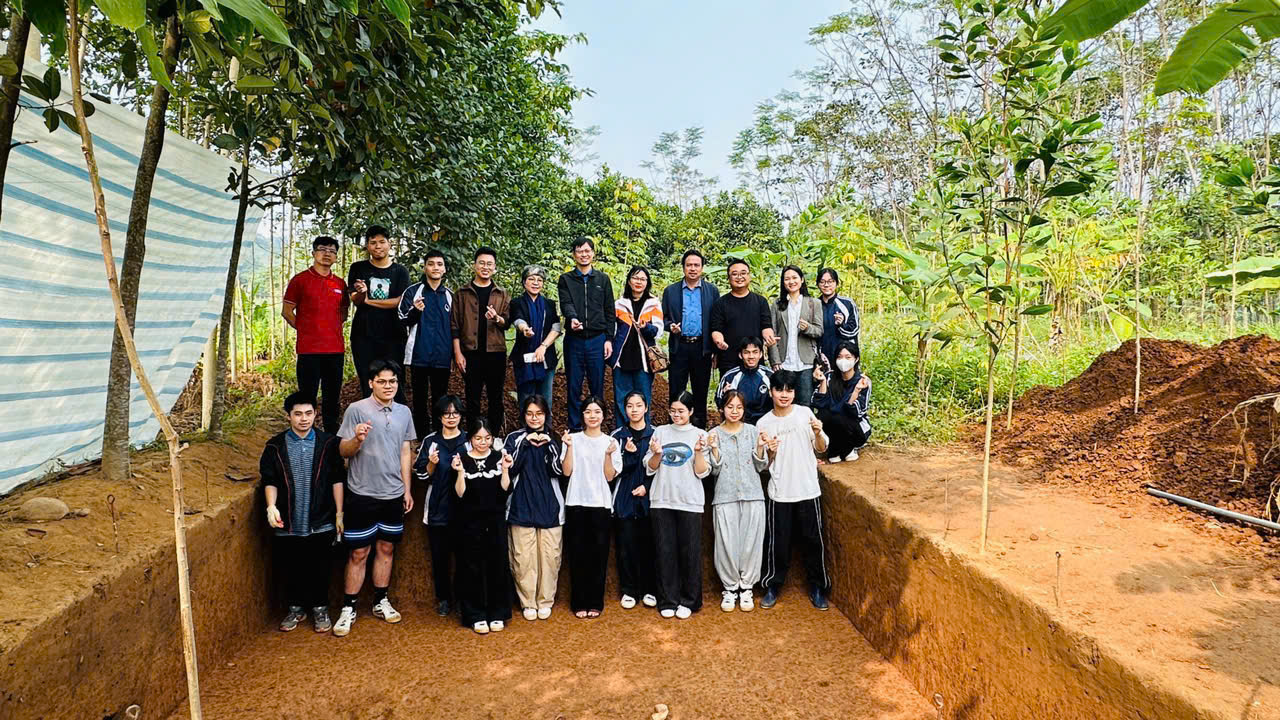
Each year, fewer than 10 people choose Archaeology as their major. As one of those few students, and having completed her university studies, Thao Hien (a fourth-year History student) no longer views Archaeology through rose-tinted glasses of novelty. Instead, she offers a more calm, insightful, and realistic perspective of someone about to enter the profession. For Hien, choosing Archaeology means accepting a difficult but rewarding path.
Thảo Hiền's most memorable experience was lighting incense at the tomb of Japanese archaeologist Nishimura Masanari in Kim Lan pottery village: “I deeply understood that archaeology and cultural heritage are not 'academic' matters for professional researchers in closed rooms, but rather concerns of the local working people, those who directly created, inherited, and developed the heritage of their ancestors. At the same time, Mr. Nishimura's contributions, and the fact that he rests in peace in Vietnam, in the very village where he spent so much time, deeply moved me and made me feel the profound meaning of 'science without borders'.”

Thảo Hiền readily admits that the stereotypes about the hardships and low starting income of the profession are... true. However, instead of becoming disillusioned, the fourth-year student observes: "Every profession has its own difficulties and hardships. I feel I have to face and acknowledge them, and from there find a solution to balance pursuing my passion with the realities of life, rather than blindly 'romanticizing' it and then being disappointed. Without serious mental preparation, it's very difficult to pursue your passion long-term, no matter the field. I always believe that if you don't let your profession down, your profession won't let you down."
The facts have proven her capabilities. Beyond her passion, Thảo Hiền has demonstrated her abilities with an impressive record of achievements, including first and second prizes in student scientific research at the university level, second prize at the Hanoi National University level, and numerous articles in conferences, seminars, and journals. She plans to pursue postgraduate studies abroad and return to contribute to specialized research institutions, with a simple wish: "I don't expect dazzling fame, I just want to fulfill my passion and contribute to the country's science, even if it's just a small contribution."
Concluding her story, the fourth-year student conveyed a powerful message, a culmination of her four years of dedication: "Pursuing basic science won't get you money quickly. But knowledge is like aged wine; the longer it ages, the more valuable it becomes. It gives you strategic vision and unwavering resilience to go far, regardless of the vicissitudes of the times."

Author:According to Vietnam Student Newspaper
Newer news
Older news

