
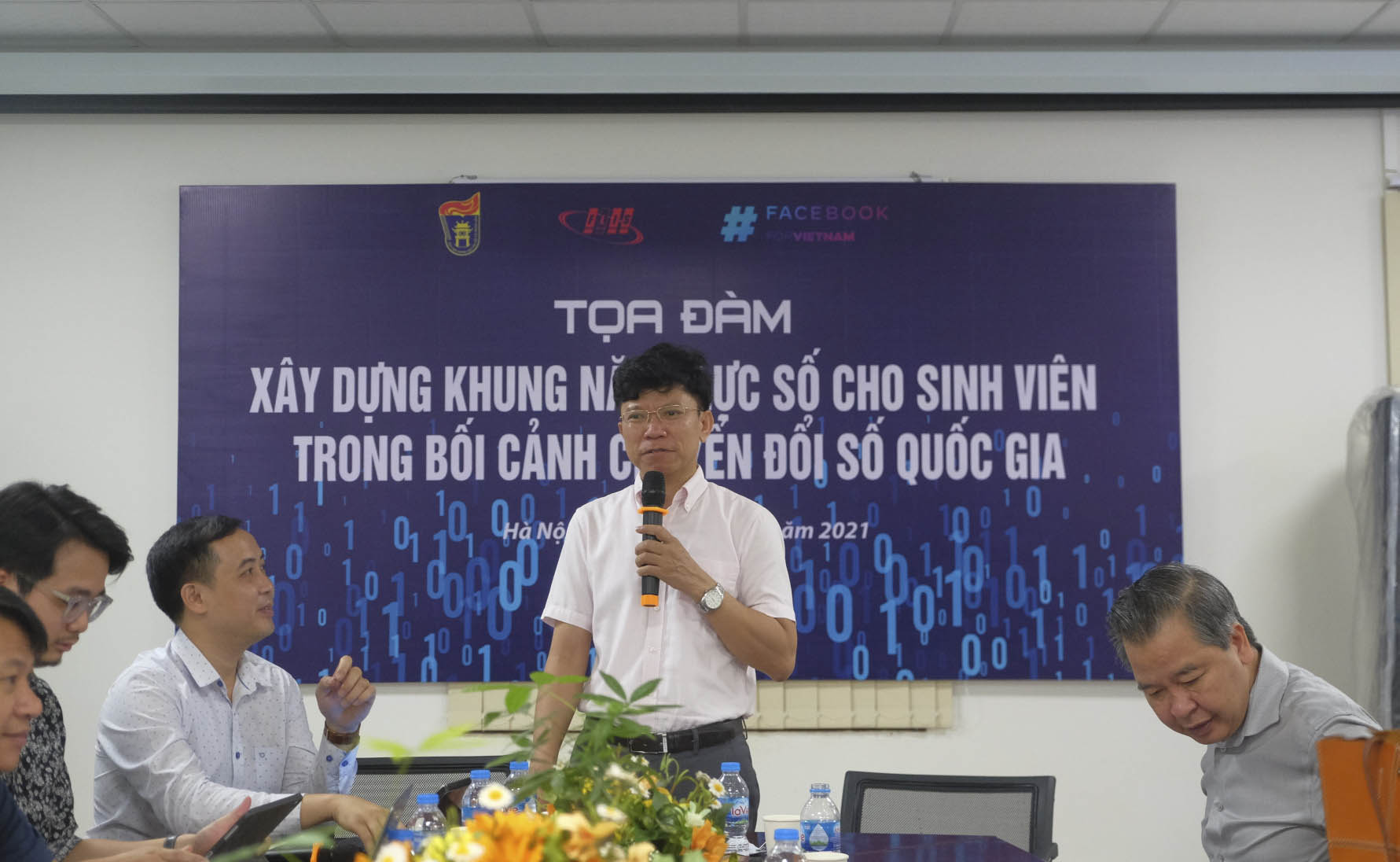
Prof. Dr. Hoang Anh Tuan - Head of Project Coordination Board
During the seminar, a report on the current state of digital competence among students (based on survey results at the University of Social Sciences and Humanities) and a model of digital competence framework along with output standards for students (expected to be proposed for general application across universities) were presented by the research team. The research results showed that students are lacking essential skills and knowledge for working, studying, and experiencing life in the digital environment. While students are aware of protecting their personal information, they are not yet actively participating in creating a safe and happy digital environment.
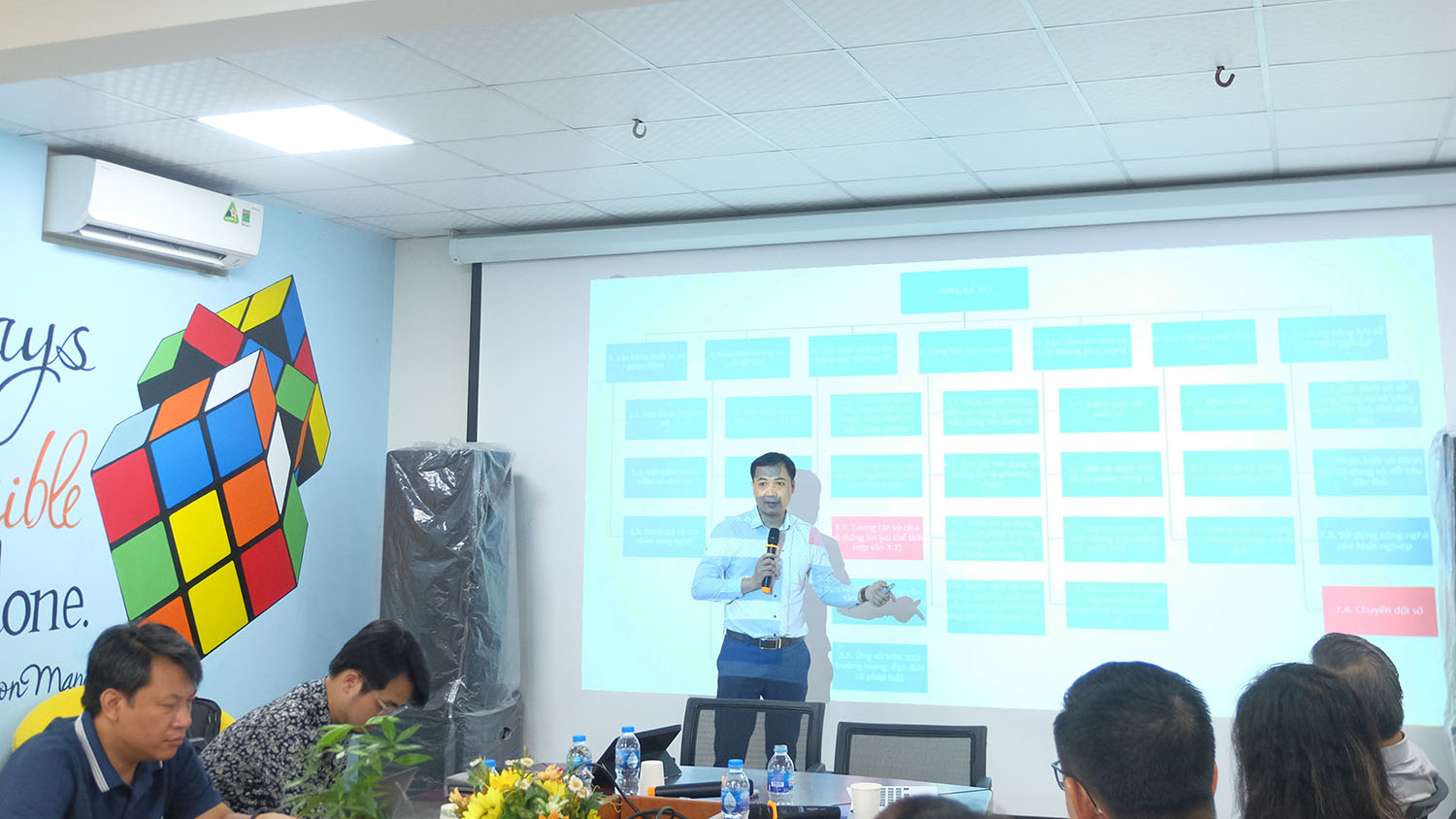
Dr. Do Van Hung presented the digital competency framework.
According to UNESCO, digital competence is the ability to access, manage, understand, combine, communicate, evaluate, and create information securely and appropriately through digital technology to serve tasks ranging from simple to complex, as well as entrepreneurship. Digital competence is a synthesis of computer literacy, information technology literacy, information literacy, and communication literacy.
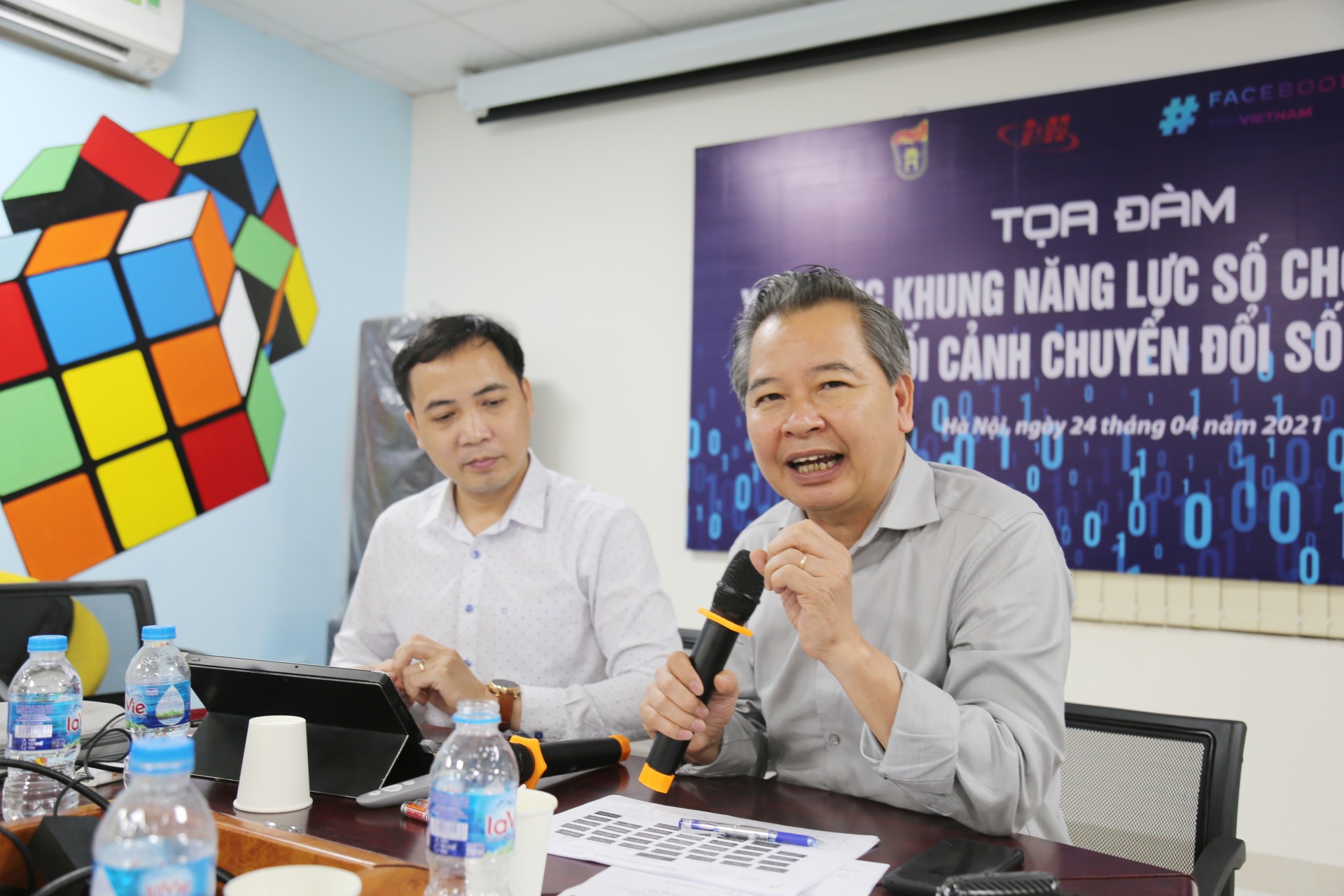
Prof. Dr. Pham Quang Minh - Senior Advisor of the program
The research team proposed a Digital Competency Framework for 21st-Century Students with seven skill groups, including: Operating equipment and software, Information and data mining, Communication and collaboration in the digital environment, Digital content creation, Cybersecurity, Digital learning and development, and Utilizing digital competencies for careers.

Dr. Nghiem Xuan Huy - Consulting Expert
Digital competence is widely recognized as encompassing knowledge and skills, but there are differing perspectives on the requirements for attitude or accountability. Within the scope of this study, accountability is considered an integral part of digital competence and plays a crucial role in proposing a digital competence framework because it is essential for individuals to have the commitment and motivation to acquire sufficient digital competence. Each individual's digital competence is developed based on the foundations of empathy, critical thinking, problem-solving, creativity, and innovation.
Dr. Pham Hai Chung - Consulting Expert
Experts suggested that it is necessary to improve the applicability of the digital competency framework and learning outcomes for students, consider solutions for incorporating digital competency courses into university curricula, and raise awareness of digital competency in the context of national digital transformation, etc.

Delegates in attendance contributed their opinions.
Concluding the seminar, Professor Hoang Anh Tuan - Head of the Project Coordination Board - respectfully thanked the experts and guests, and committed to continuing to analyze, research, and adjust the digital competency framework as well as the output standards system based on the discussion content, as a theoretical basis for implementing the next steps. The project to enhance digital competency for students of the University of Social Sciences and Humanities is expected to last until 2022 with important objectives including: developing general and specialized courses on digital competency, publishing textbooks and handbooks on digital competency, and developing extracurricular activity models and clubs for students on digital competency. The results of this project are also expected to be replicated and applied to many universities nationwide.
Author:Tran Duc Hoa
Newer news
Older news


