At the opening ceremony, the Decision to establish the University's Science and Training Council for the 2021-2026 term was announced. The Council consists of 57 members, including 10 members of the Standing Committee.
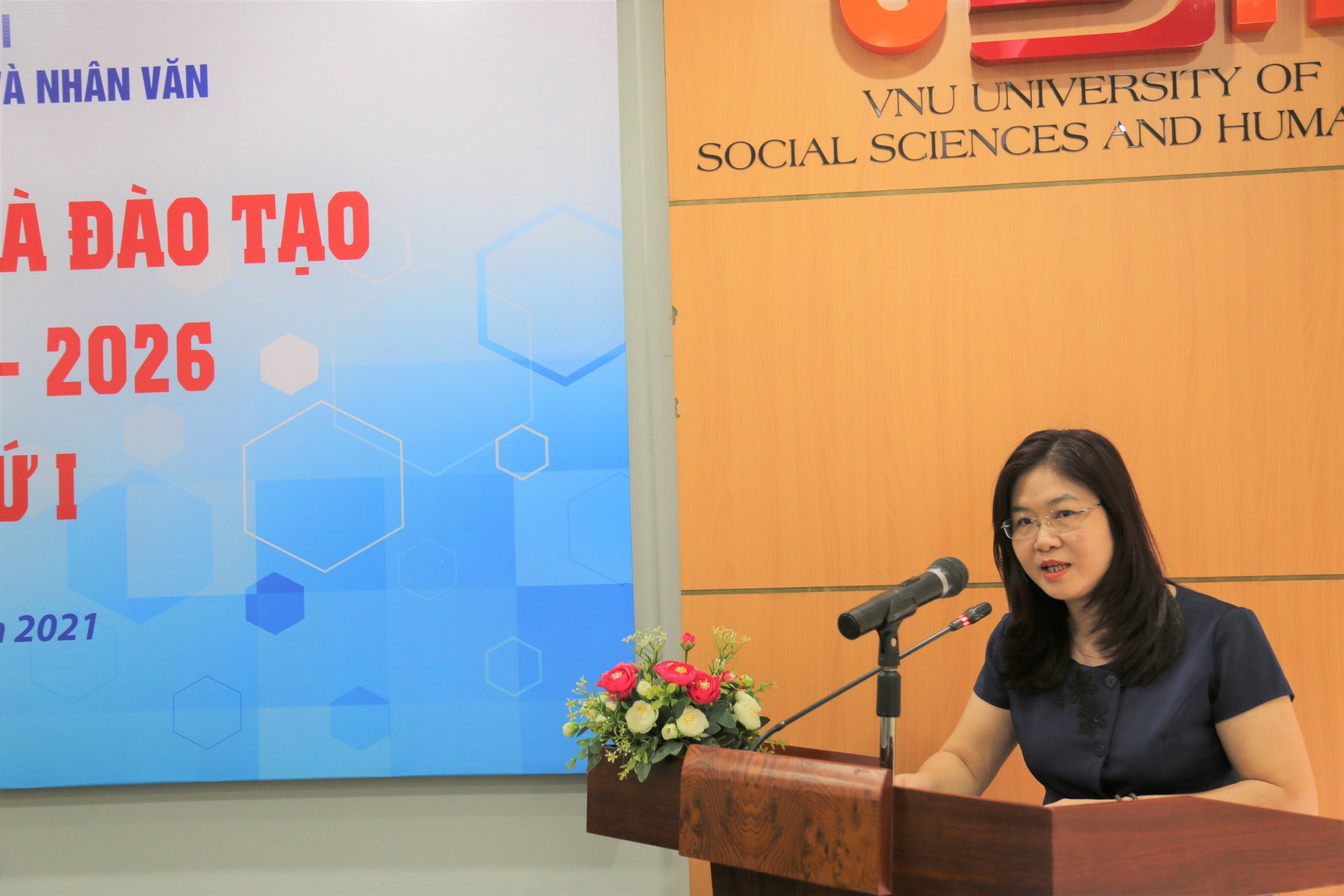 Dr. Ngo Thi Kieu Oanh (Head of the Organization and Personnel Department) announced the Decision to establish the School's Science and Training Council for the term 2021-2026.
In his opening remarks, Professor Hoang Anh Tuan (Rector of the University) reviewed some figures on the University's development during the 2015-2020 term. Over the past five years, the University has developed in all three areas: staff, training, and scientific research. Regarding staff, the number of lecturers with academic titles (currently accounting for 27% of the total staff) and degrees (accounting for 71% of the total staff) has increased over the years; regarding training, the number of majors, specializations, and training programs at all three levels (Bachelor, Master, and Doctorate) has steadily increased; and regarding science, the number of scientific products, especially international publications, has also steadily increased.
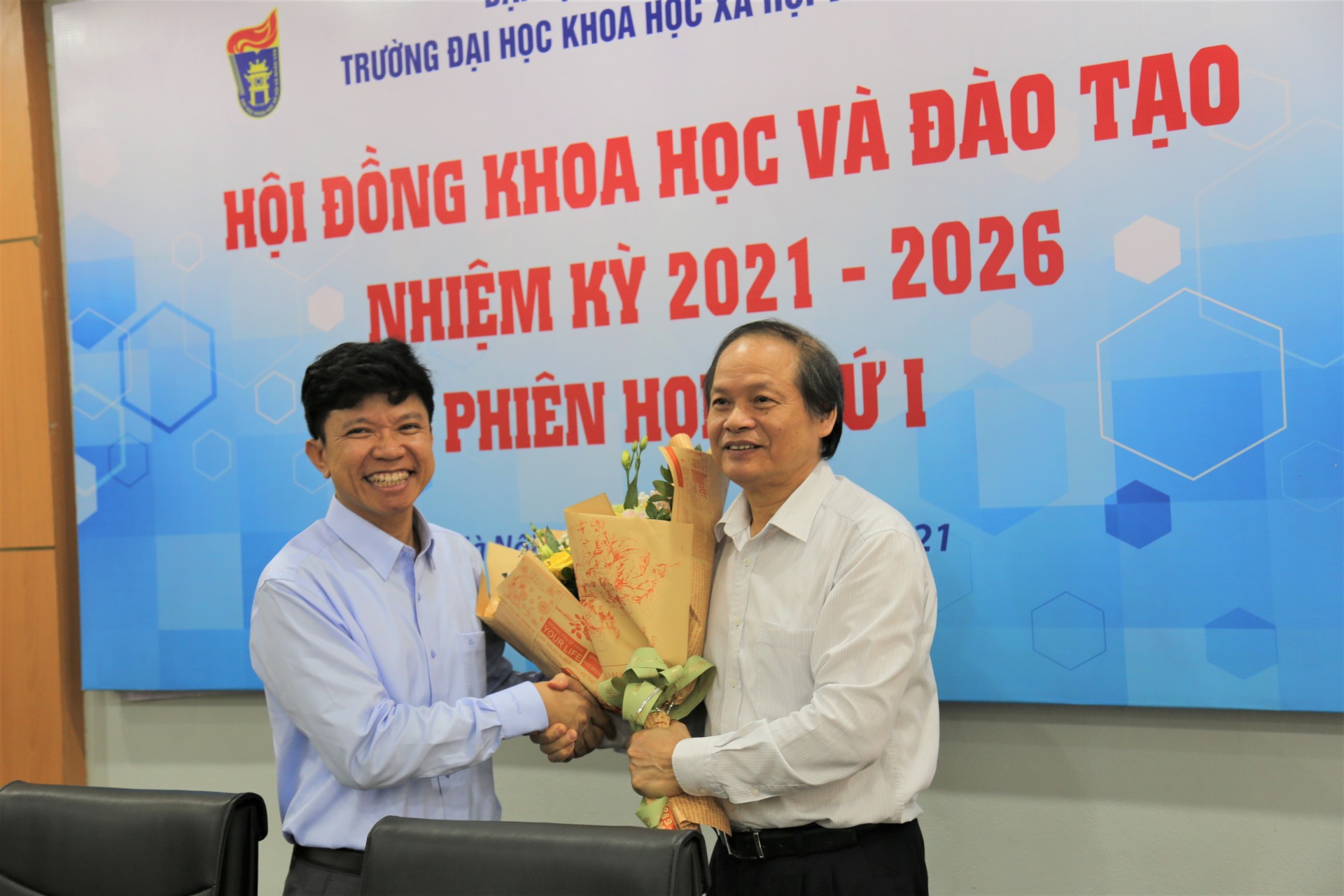 Professor Hoang Anh Tuan (Rector of the University) presents flowers to Professor Nguyen Van Khanh (Chairman of the University's Scientific and Training Council for the 2021-2026 term).
These achievements provide a relatively good foundation for development over the next five years; however, several challenges remain, such as: faculty members still face obstacles in upgrading their academic ranks; postgraduate training programs are still modest; and promoting international publications still faces many difficulties. The University's Science and Training Council for the 2021-2026 term has the role and responsibility of guiding and supporting the leadership and staff of the University to overcome these difficulties, aiming to transform quantitative achievements into long-term qualitative ones.
As Chairman of the Council, Professor Nguyen Van Khanh also raised several issues concerning the development of the University, such as: improving the quality of social sciences and humanities disciplines to contribute to the competitiveness and ranking of the University in particular and Vietnam National University, Hanoi in general; grasping and leveraging the strengths of social sciences and humanities in the current digital transformation; and promoting the quality of training and scientific research with the goal of transforming the University into a research university. Overcoming these challenges requires the attention and support of the Science and Training Council in providing sound opinions and recommendations on policy.
Following the opening remarks, the Council listened to two thematic reports.
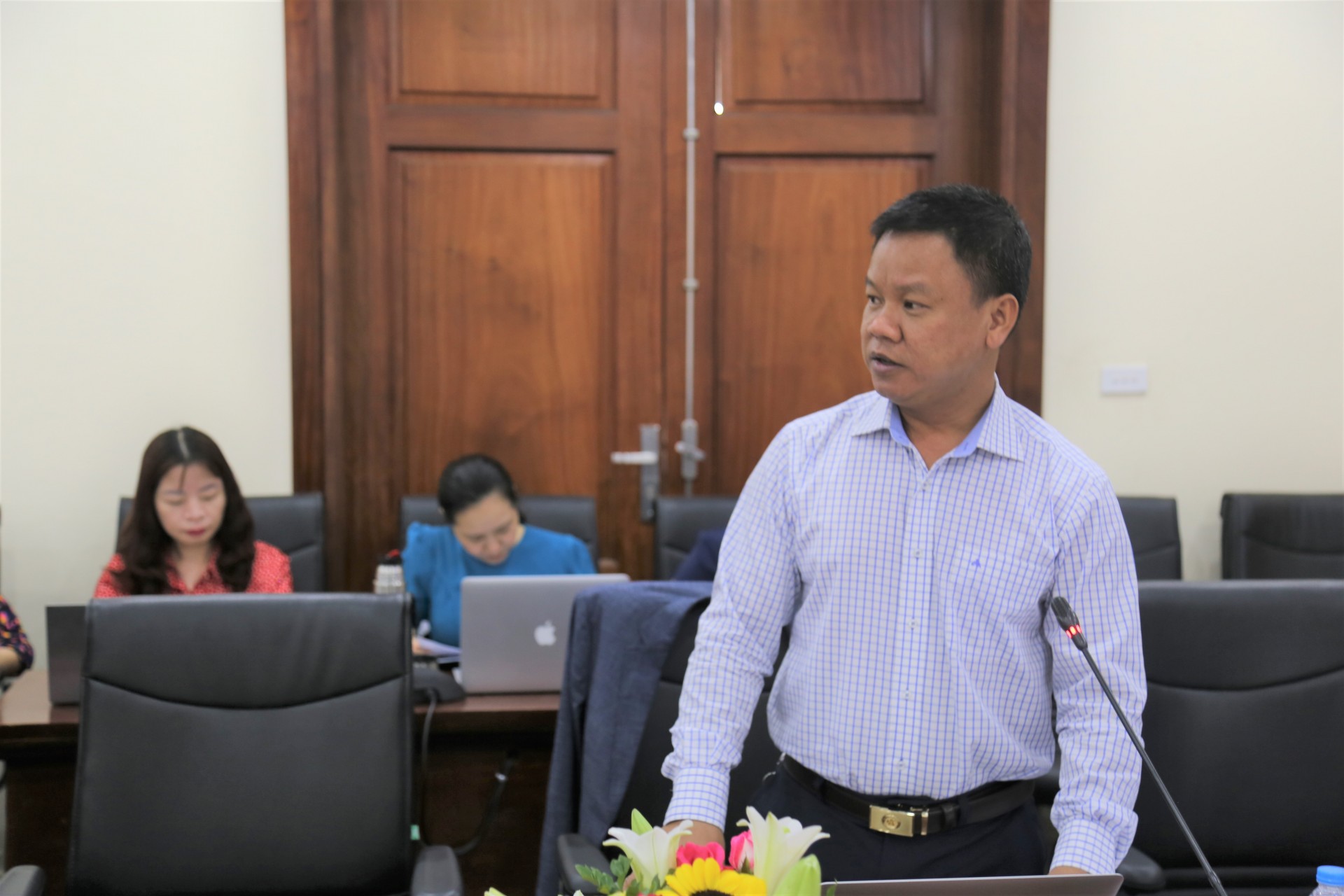 Associate Professor Dr. Lai Quoc Khanh (Vice Rector of the University) presented the report.
The report "Planning Scheme for Training Majors and Specializations in the Period 2021-2025" by Assoc. Prof. Dr. Lai Quoc Khanh (Vice Rector of the University) reviewed the current state of organization and management of training majors/specializations. The report stated that from 2015 to 2020, the University opened 5 undergraduate majors, 5 master's degree specializations, 1 doctoral degree specialization, and adjusted the orientation from research to application for 8 master's degree specializations. To date, the University has 101 majors, specializations, and training programs, including 27 Bachelor's degree programs, 43 Master's degree programs, and 31 Doctoral degree programs.
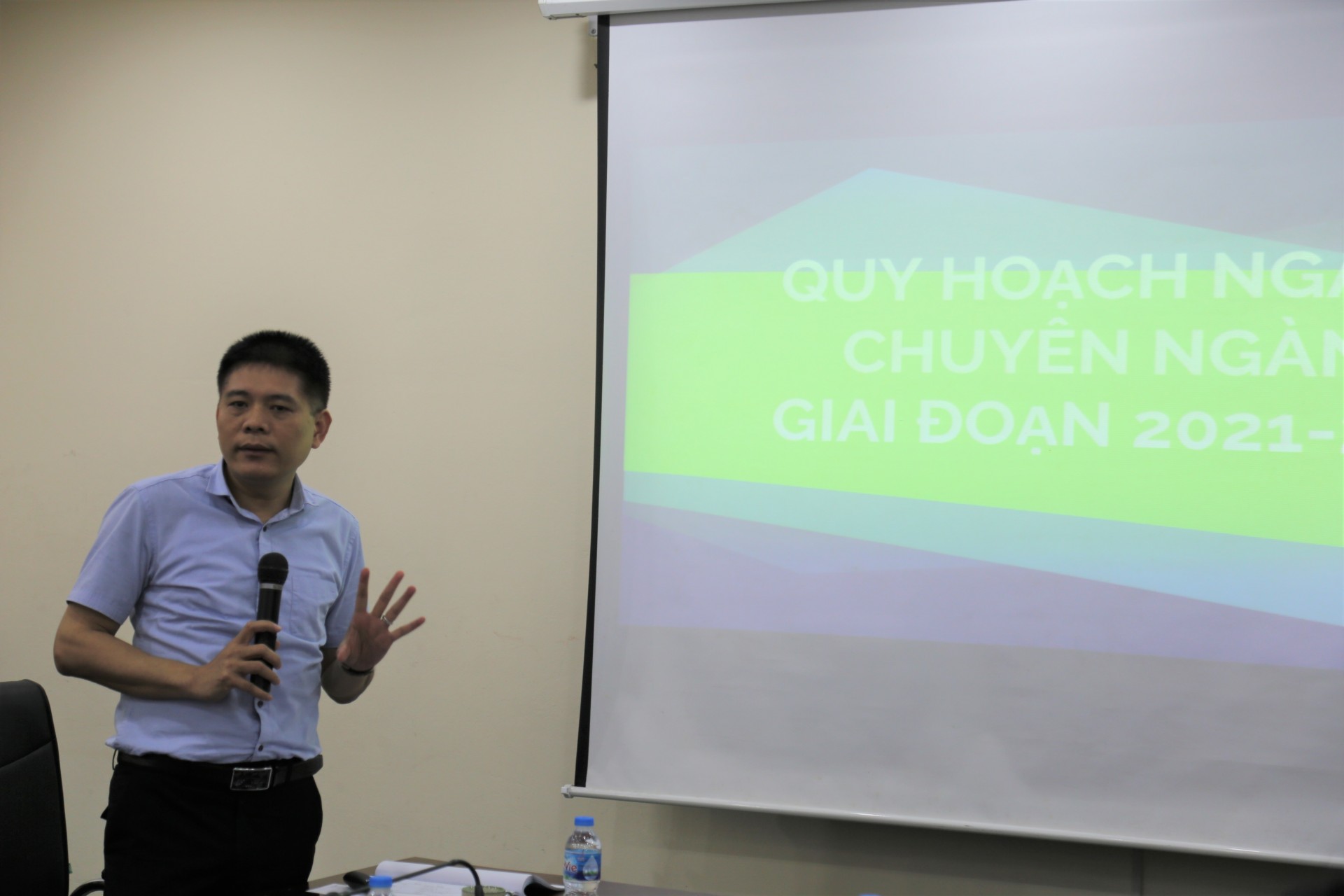 Assoc. Prof. Dr. Bui Thanh Nam (Head of Training Department) reported on the training statistics during the Council's term.
In general, from 2015 to the present, the University has organized and implemented the development of majors and specializations, and the transformation of majors and specializations in accordance with the regulations and guidelines of Vietnam National University, Hanoi. The University has exceeded the targets for developing training programs according to the planning targets for majors and specializations in the 2014-2020 period.
However, some limitations remain: there is a lack of balance between training capacity and social needs in some fields and specializations; enrollment exceeds the training capacity and the ability to supervise theses and dissertations; some postgraduate training programs are too spread out and fragmented, leading to insufficient enrollment or failure to meet enrollment targets.
Based on the assessment of the current situation, the Project has set out a roadmap for developing industries and specialized fields, and transforming these industries and specialized fields according to the viewpoints, principles, requirements, conditions, and timeline from now until 2025.
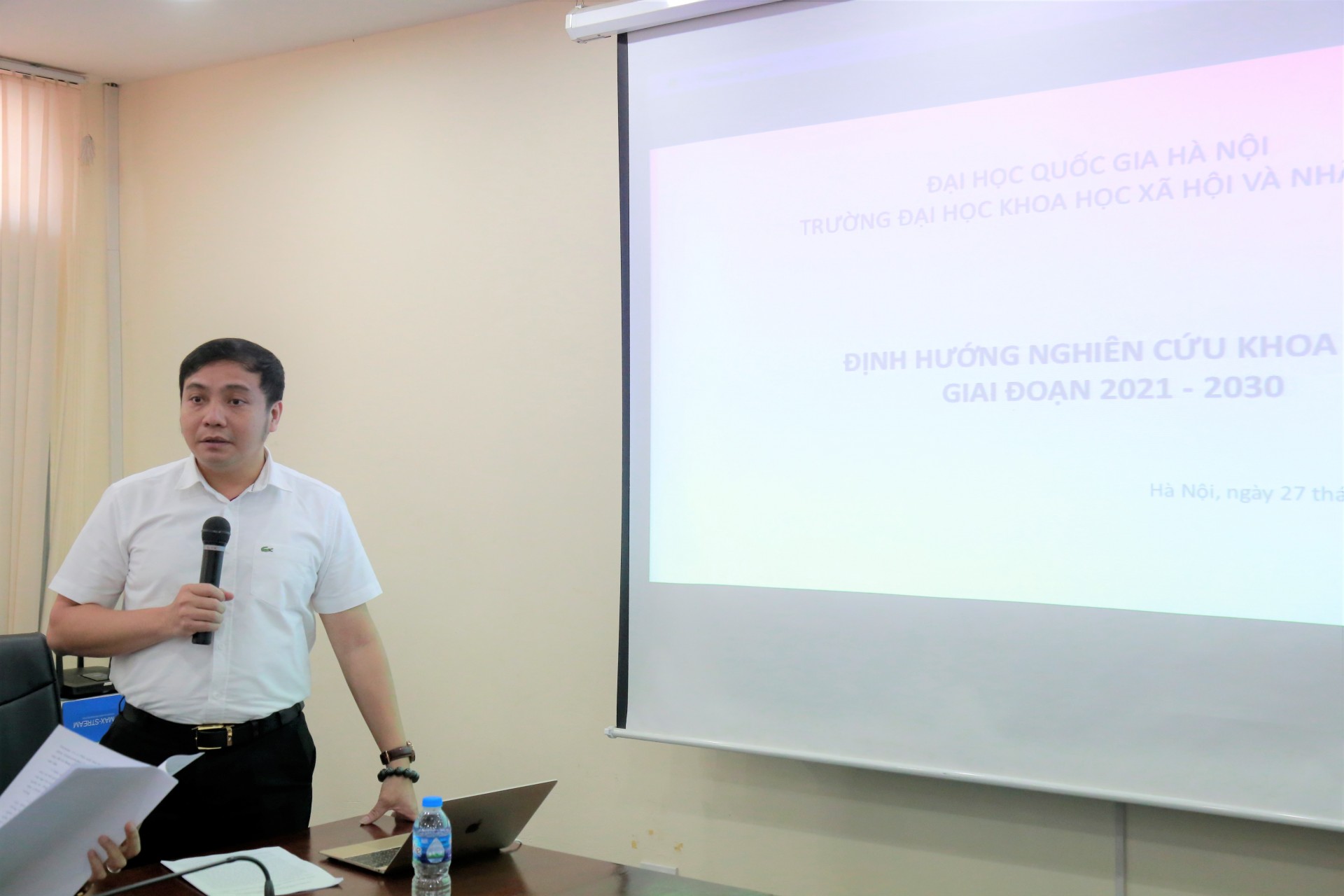 Associate Professor Dr. Dao Thanh Truong (Vice Rector of the University) presented the report.
The report "Orientation of Scientific Research Activities in the Period 2021-2030" by Assoc. Prof. Dr. Dao Thanh Truong (Vice Rector of the University) highlighted several achievements in the University's scientific research during the period 2010-2020: The focus on basic research aimed at developing reference books that significantly contribute to updating theoretical trends and new approaches in the field of social sciences and humanities, as demonstrated by the number of projects funded by the National Science and Technology Fund and projects funded by the Vietnam National University, Hanoi. The University's staff led and implemented 36 projects funded by the National Science and Technology Fund and 158 projects funded by the Vietnam National University, Hanoi. On average, the University published 15 monographs and reference books per year; some of which were published by prestigious international publishers such as Paglgrave Macmillan and Springer. During this period, major, interdisciplinary research projects addressing key issues in Vietnam's development were also implemented. Specifically, the university's staff developed and led 44 state-level research projects.
 Associate Professor Pham Xuan Thach (Secretary of the Party Committee of the University of Social Sciences and Humanities) contributed his opinion.
Some limitations remain: some orientations of the 2010-2020 period have not received sufficient attention and have not attracted sufficient resources; interdisciplinary research is still limited to the social sciences and humanities, and has not expanded to other fields; the university has not yet developed and led state-level research programs and projects, but has only made proposals.
 Professor Vu Minh Giang (Chairman of the Science and Training Council of Vietnam National University, Hanoi) contributed his opinion.
Based on an assessment of the current situation, the Report has identified the viewpoints, directions, and objectives of scientific research work for the period 2021-2030, some priority research directions, and proposed some solutions to overcome limitations.
During the discussion, the Council members highly appreciated and contributed opinions to the two reports. The opinions were received and recorded by the Presidium, focusing on key points such as: the need to ensure harmonious and flexible operation horizontally and vertically in the mechanisms, principles, and regulations of training and scientific research; the need for further investment in the university's science and technology activities; and the need to standardize training disciplines and specializations towards elite training alongside mass training…