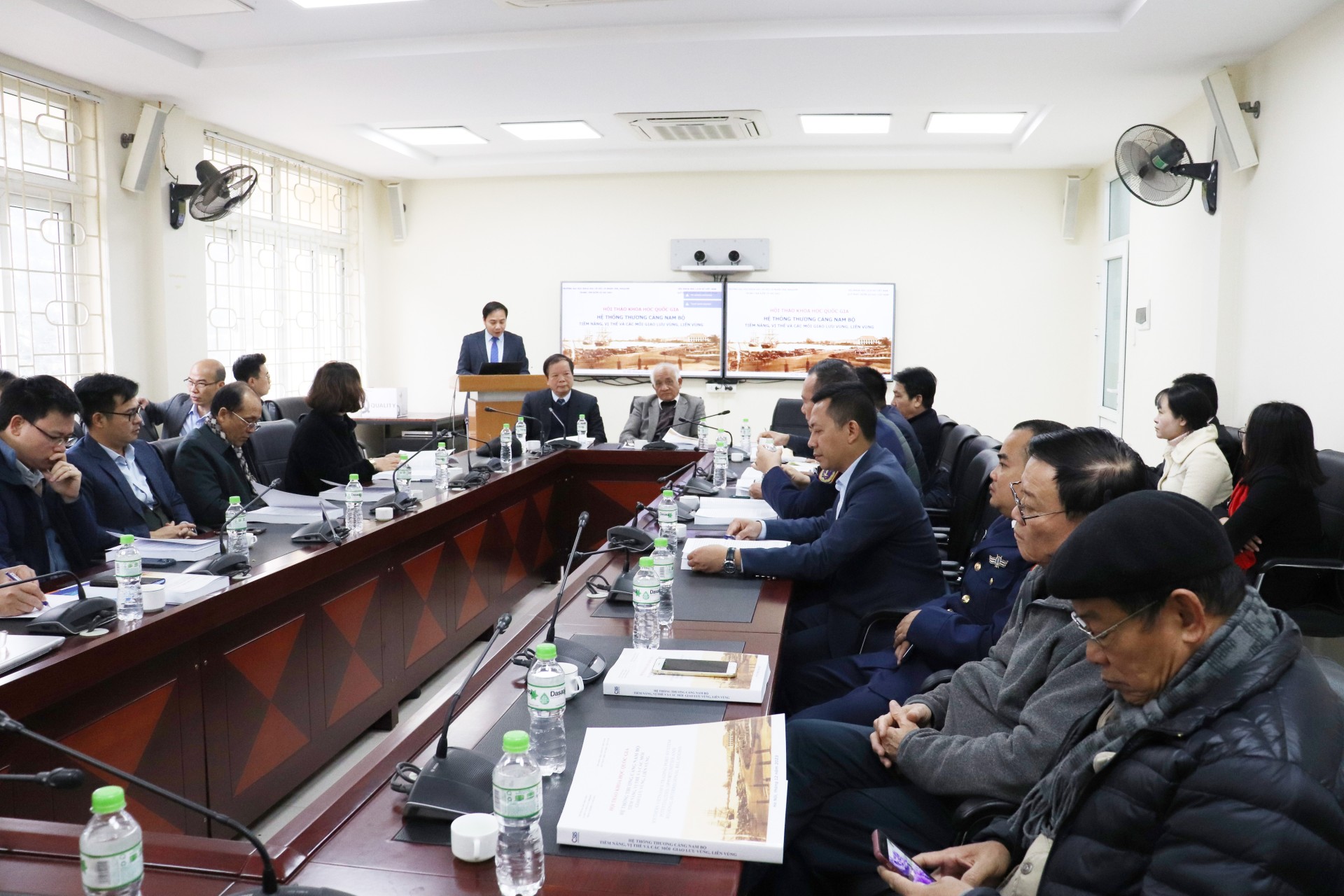
Attending the workshop were representatives from the Board of Directors of VNU USSH, the Center for Marine and Island Studies of the University, the Vietnam Historical Science Association; the Institute of Archaeology, the Institute of Imperial City Studies, the Institute of Southeast Asian Studies, the Institute of Religious Studies of the Vietnam Academy of Social Sciences; the National Museum of History; the National Institute of Culture and Arts Studies; the University of Social Sciences and Humanities, Ho Chi Minh City, Tien Giang University, Ho Chi Minh City University of Technology, the Center for Training and Professional Development of the Coast Guard, and numerous scientists from research institutes and universities nationwide.
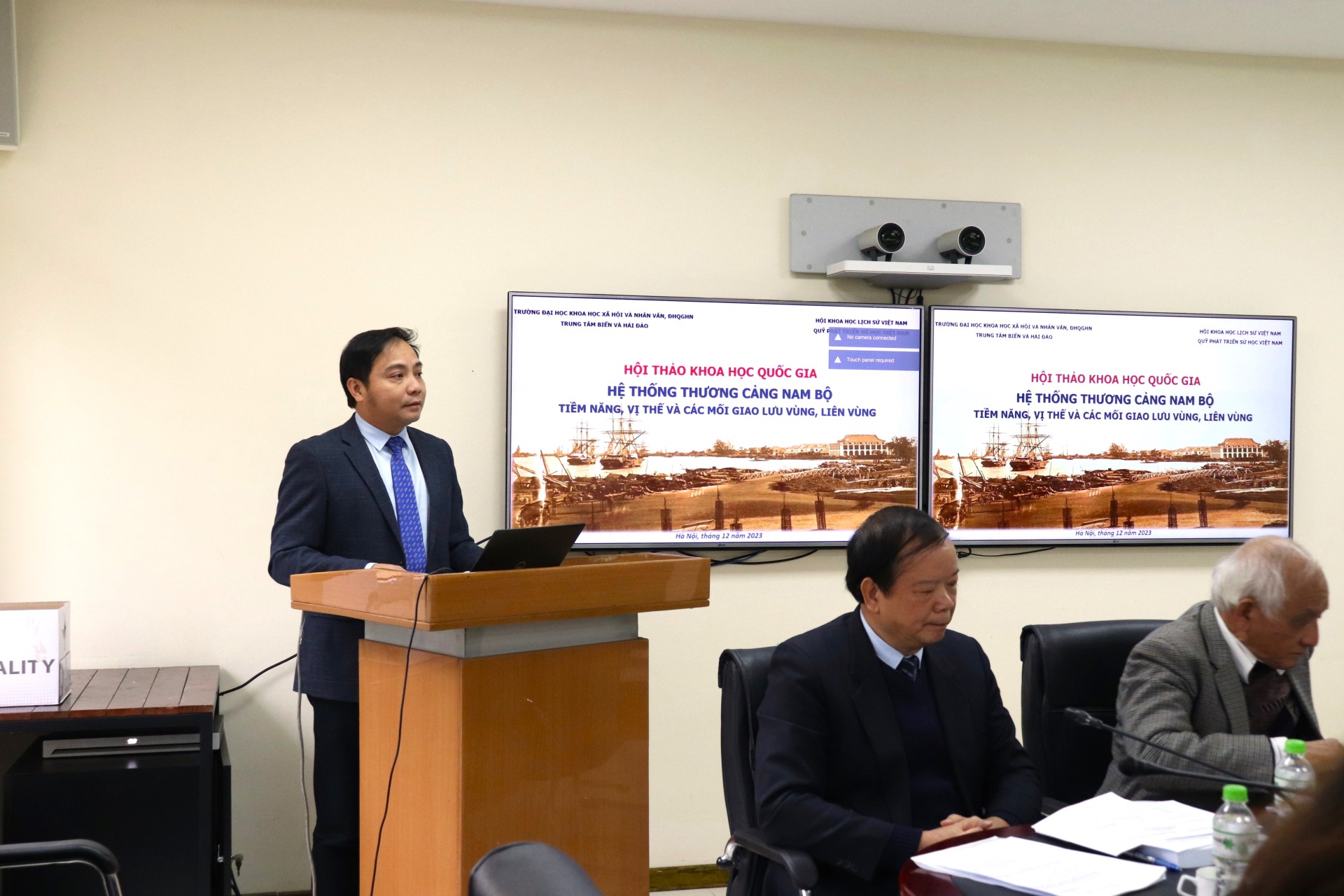
On behalf of the Conference Organizing Committee and the Board of Directors of the University of Social Sciences and Humanities, Vice Rector Dao Thanh Truong expressed gratitude for the effective support and cooperation of the Vietnam Historical Studies Development Fund under the Vietnam Historical Science Association; as well as the scientists from universities, academies, and research centers in the Central Government, Ho Chi Minh City, and some provinces in the Southern region who showed interest, wrote papers, and participated in the conference.
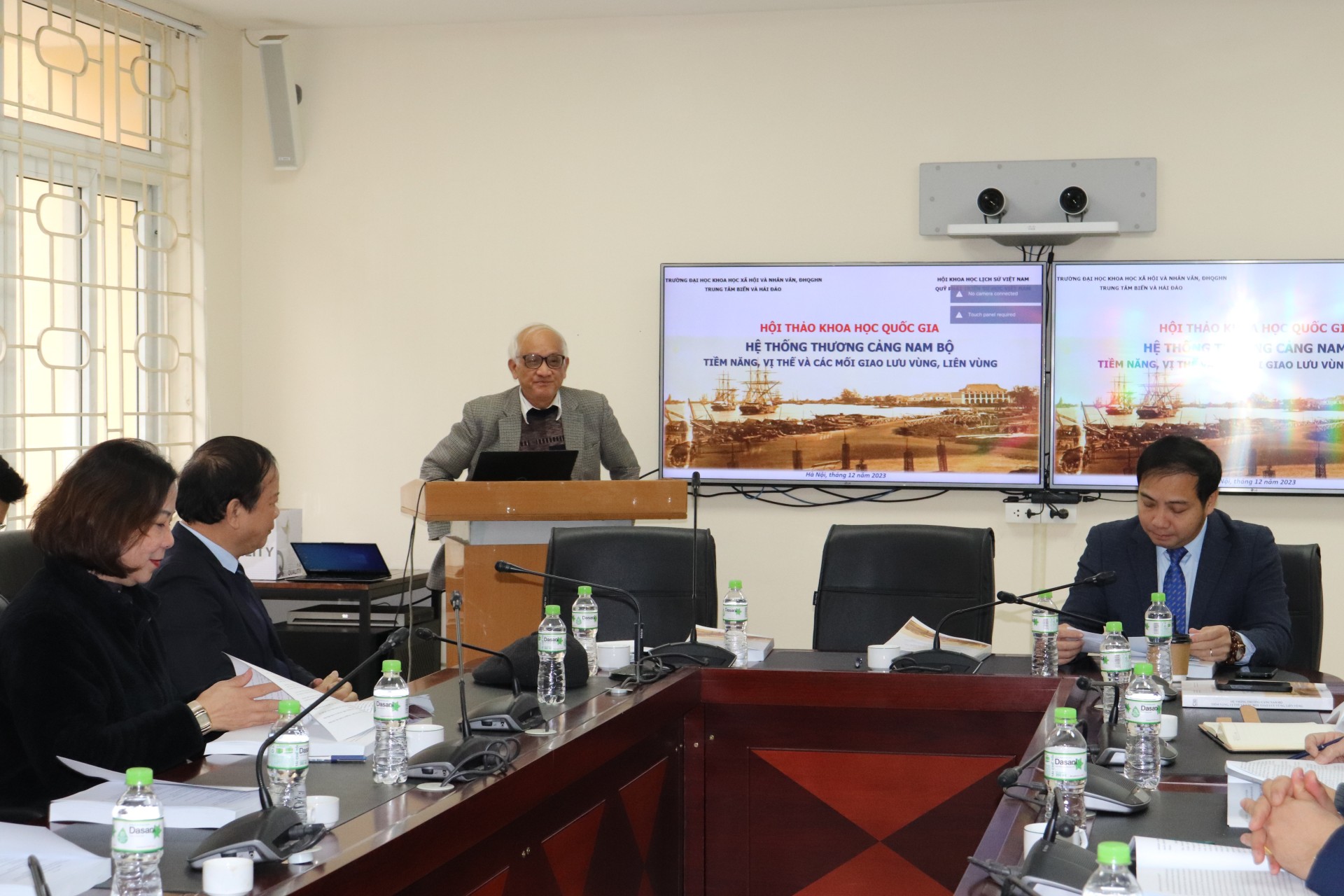
In his introductory report to the conference, Associate Professor Dr. Tran Duc Cuong (Chairman of the Vietnam Historical Science Association) emphasized that the Southern Vietnam port system plays an extremely important role not only in the economic and cultural life of the region's inhabitants but also in diplomatic relations and economic exchanges between Vietnam and other Asian and global countries. Today's conference, with the participation of many scientists from various fields such as history, cultural studies, archaeology, ethnology, international relations, urban studies, etc., hopes to bring about new, deeper, and more comprehensive understanding of the Southern Vietnam port system within its regional and inter-regional context.
The conference organizing committee received 27 papers from scientists, ranging from specialized and interdisciplinary approaches (History, economic history, archaeology, historical geography, cultural studies, cultural management, etc.). Besides general reports with theoretical value, the conference also featured many in-depth reports that explored new sources, the results of archaeology, and data from field investigations and surveys conducted locally.
In the introductory overview report of the Workshop"Southern Vietnam's Port System: Role, Structure, and Characteristics"Professor Nguyen Van Kim systematically analyzed the formation and development of the Southern Vietnam port system throughout historical periods (the basis of formation, development process, economic potential of the ports, etc.), while affirming the role and position of the Southern Vietnam port system in trade activities and diplomatic relations with Southeast Asian and Asian economic regions and spaces; clarifying the contributions of the communities, maritime cultures, and domestic and foreign merchant communities to Southern Vietnam and the economic revitalization of Vietnam. The author of the paper emphasized: Along with an agricultural tradition, the people of Southern Vietnam have long been skilled craftsmen and artisans. They also have a tradition of exploiting the sea and exceptional seafaring skills. Understanding the natural conditions, exploiting the natural advantages and potential of the delta, mountains, forests, rivers, and seas, ancient ethnic groups built profound imprints on the Can Gio - Long Son culture and later the Oc Eo - Funan culture.
By the 16th-19th centuries, in both the Southeast and Southwest regions of Vietnam, and on the southwestern islands, numerous economic and trading centers had formed across four geographical areas: river ports, estuary ports, seaports, and island ports. In some trading ports, such as Saigon-Gia Dinh and Ha Tien, structures were formed with trading areas for Vietnamese people, Chinese people, and foreigners (India, Southeast Asia, Europe, etc.); retail and wholesale trading areas. There were also specialized areas for trading rice, agricultural products, seafood, textiles, and silk. All of this reflects the scale and professionalism of regional and international trade. Importantly, the economic development of Southern Vietnam in the 16th-19th centuries integrated the southern region into the overall development of Vietnam, making a significant contribution to strengthening the country's power, protecting sovereignty, and preserving the unity of the Vietnamese nation.
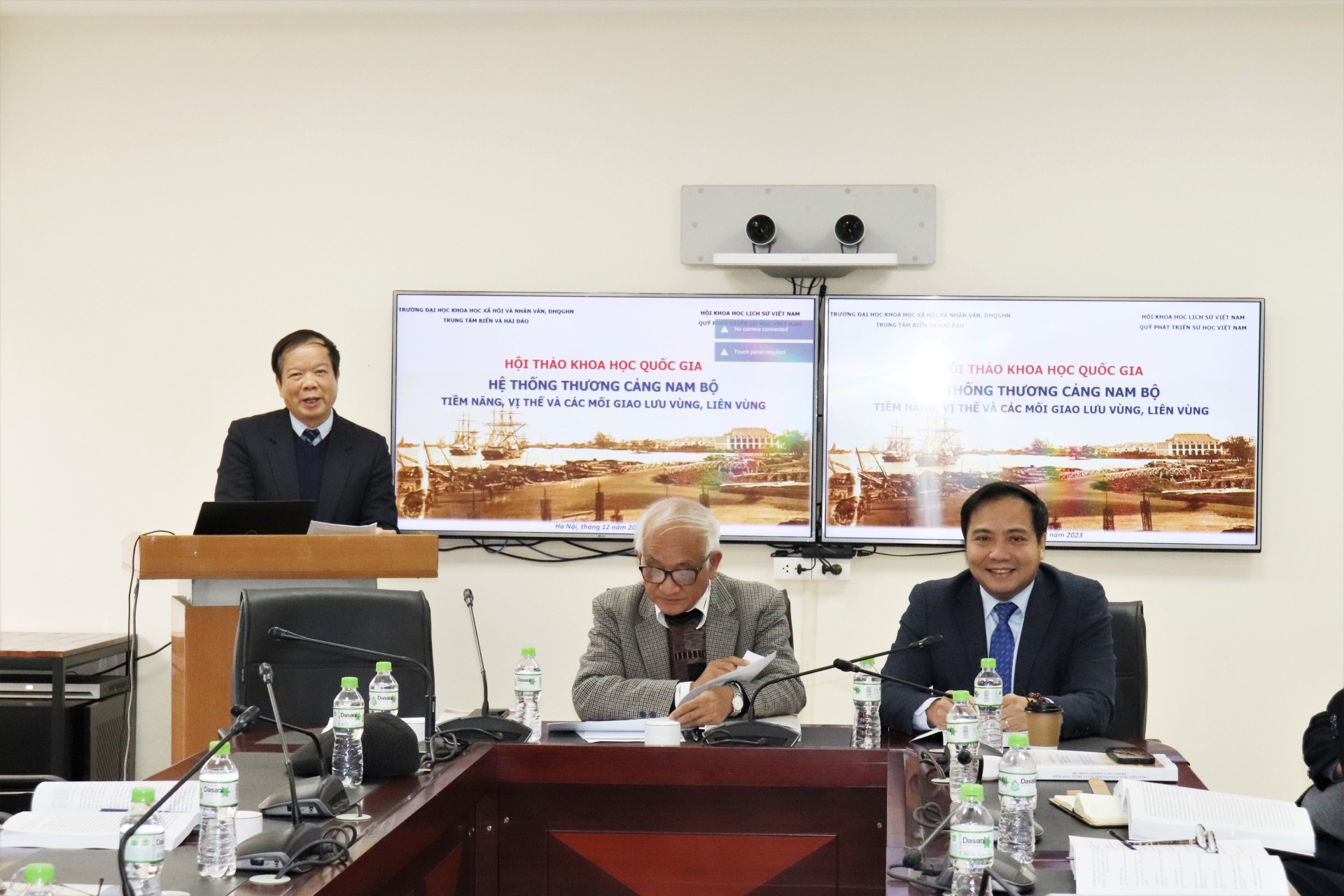
Professor Dr. Nguyen Van Kim presented his report at the conference.
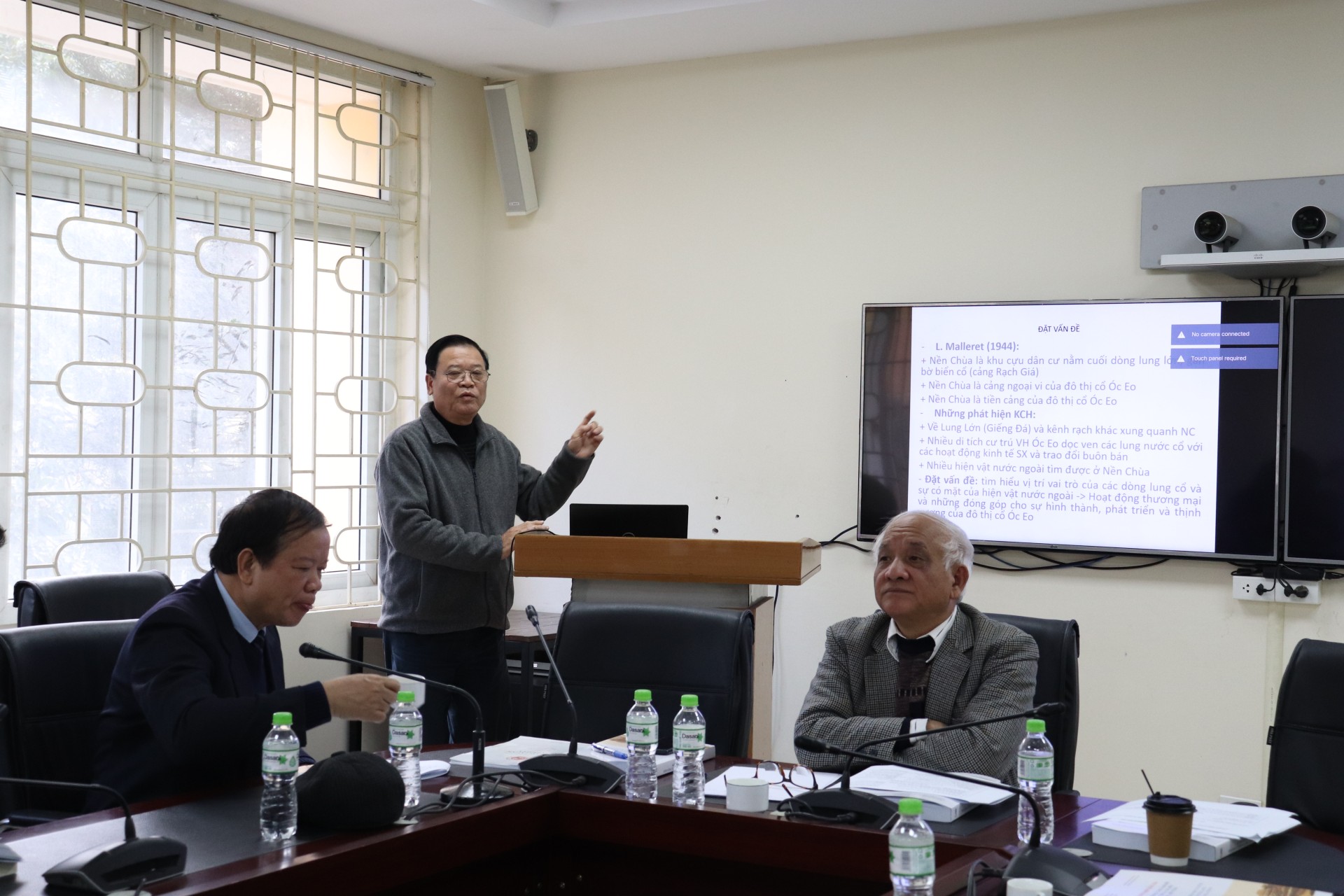
The conference received many insightful presentations from scientists:The premise and basis for the formation of the Southern Vietnam port system." by Prof. Dr. Lam Thi My Dung; "Cultural Interaction in Southern Vietnam during the Pre- and Early Historical Periods: The Case of Archaeological Sites in the Southwestern Coastal and Island Regionsby Assoc. Prof. Dr. Tong Trung Tin and Dr. Le Hai Dang;The role of the Nền Chùa site in the trade activities of the ancient city of Óc Eo." by Assoc. Prof. Dr. Lai Van Toi; "The role of the Chinese in the commercial activities of the Southern Vietnamese ports.” by Assoc. Prof. Dr. Duong Van Huy;Saigon Port in the latter half of the 19th and beginning of the 20th centuries: Potential and economic position.by Assoc. Prof. Dr. Nguyen Manh Dung and Dr. Tran Xuan Thanh;My Tho Dai Pho Port" by Dr. Nguyen Phuc Nghiep - MSc Nguyen Ngoc Lan Huong; "Boats and shipbuilding workshops in Gia Dinh in the 19th century."by Assoc. Prof. Dr. Pham Van Thuy - MSc. PhD Candidate Tran Van Manh,...
The conference included presentations by experts in archaeology, history, and cultural studies, providing scientific evidence from field research to clarify the economic and cultural foundations of the inhabitants and trading ports of Southern Vietnam. The discovery of numerous artifacts from other localities across the country, or originating from other countries (Japan, China, Arabia, Rome, etc.), in archaeological sites and many shipwrecks in the Southern Vietnamese sea region demonstrates that this area was part of a vital trade network between Asian and pan-Asian nations.
The workshop featured numerous selected presentations and lively discussions and comments. This demonstrated the strong interest of the participating scientists in the research topic, the role of the sea and islands, and the trading ports and economic centers of Southern Vietnam. All opinions unanimously affirmed the important position and historical, economic, cultural, and national security value of the Southern Vietnam seaport system, not only in the past, but also in the present and future.
Citing the rich collection of artifacts unearthed at archaeological sites in the southern coastal and island region, the report by Associate Professor Dr. Tong Trung Tin and Dr. Le Hai Dang (Institute of Archaeology) affirmed: Through initial research on the system of archaeological sites in the southern coastal and island region, archaeologists from the Institute of Archaeology have been able to draw preliminary conclusions about the cultural nature of these sites: they belong to the Sa Huynh culture, a type of southern coastal and island culture with prominent characteristics of the Sa Huynh culture from the central region of Vietnam. The research results on the system of prehistoric and early historical archaeological sites and artifacts on the islands and archipelagos in the southern coastal and island region have added new markers to the archaeological map of Vietnam, contributing to clarifying the historical and cultural process of the nation, and also clarifying the structure and cultural identity of Vietnam, an important issue in the current era of openness, integration, and international trade.
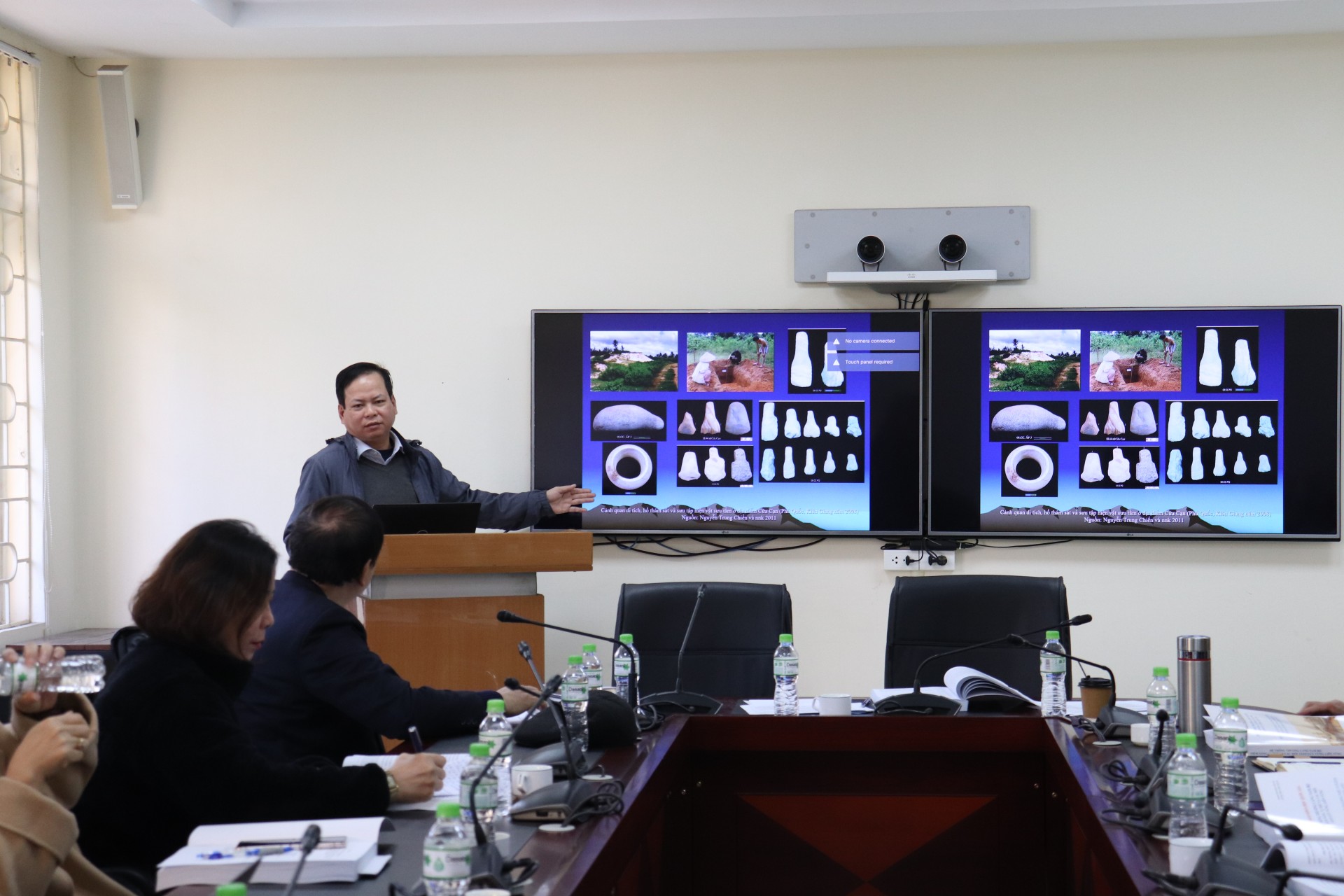
Dr. Le Hai Dang presented the report on behalf of the group of authors at the conference.
From a regional cultural theory perspective, Professor Nguyen Chi Ben argues that the maritime culture of Southern Vietnam is a cultural region with many unique elements. Among the geographical regions of our country, perhaps Southern Vietnam has the most concentrated maritime influence. Current research on the maritime culture of Southern Vietnam is only preliminary; more in-depth and comprehensive studies are needed!
Based on an analysis of the strengths and geographical location of the South Vietnam Sea, which is particularly strategic in terms of economics, security, and national defense, possessing many advantages for development and serving as a major gateway for the entire country to promote international exchange and attract foreign investment, the report states:"Sustainable development of the marine economy in conjunction with protecting sovereignty in the southern sea and islands region"Lieutenant Colonel Nguyen Thanh Minh (Deputy Director of the Center for Training and Professional Development of the Coast Guard) proposed several solutions to develop the marine economy in conjunction with protecting national sovereignty.
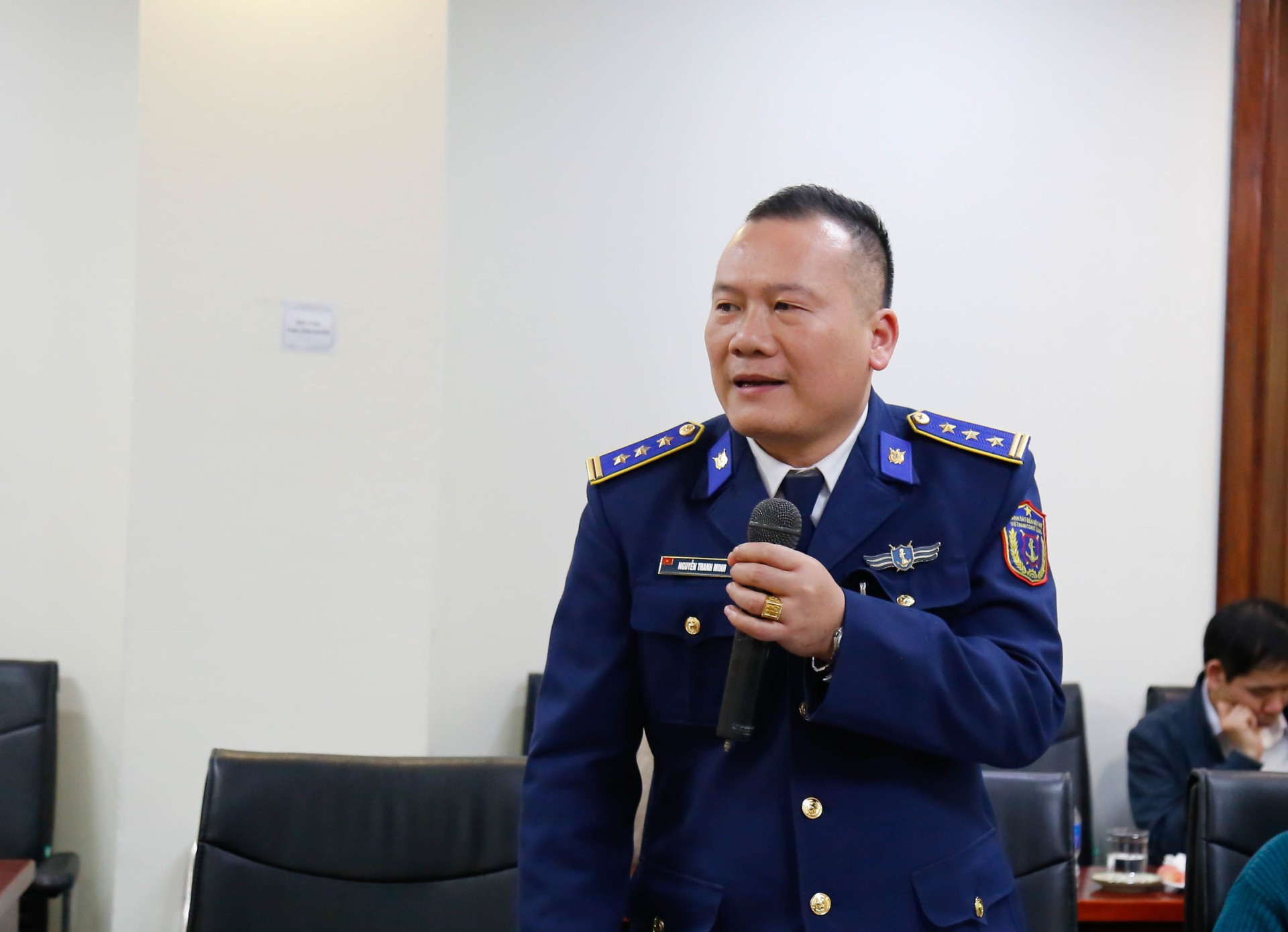
Lieutenant Colonel Nguyen Thanh Minh speaks at the seminar.
Concluding the conference, Professor Nguyen Van Kim, on behalf of the Organizing Committee, highly appreciated the new points, new perspectives, and new discoveries from the very meticulous research of the authors. The success of the conference stemmed from the close cooperation between the Center for Marine and Island Studies of the University of Social Sciences and Humanities and the Vietnam Historical Development Fund of the Vietnam Historical Science Association, and the enthusiastic and responsible participation of a large number of domestic scholars with diverse approaches from archaeology, history, culture, and society. The conference contributed extremely important scientific data, demonstrating a comprehensive, profound, and multifaceted understanding of the Southern region in general, and the Southern maritime and island region in particular. The results of the conference will certainly contribute to clarifying scientific arguments and contributing to the successful implementation of Vietnam's Maritime Strategy.
Professor Nguyen Van Kim also shared: Taking into account the opinions and suggestions exchanged at the conference, the authors will refine their articles so that the Organizing Committee can edit and publish another large-scale work on the Southern Vietnam seaport system. Based on the achievements of scientific research and the insights from experts, the conference will offer some proposals and advice to several localities in Southern Vietnam regarding research, training of personnel, especially experts in marine and island research; on the management and preservation of cultural heritage, as well as the development of the economic and cultural life of the residents.
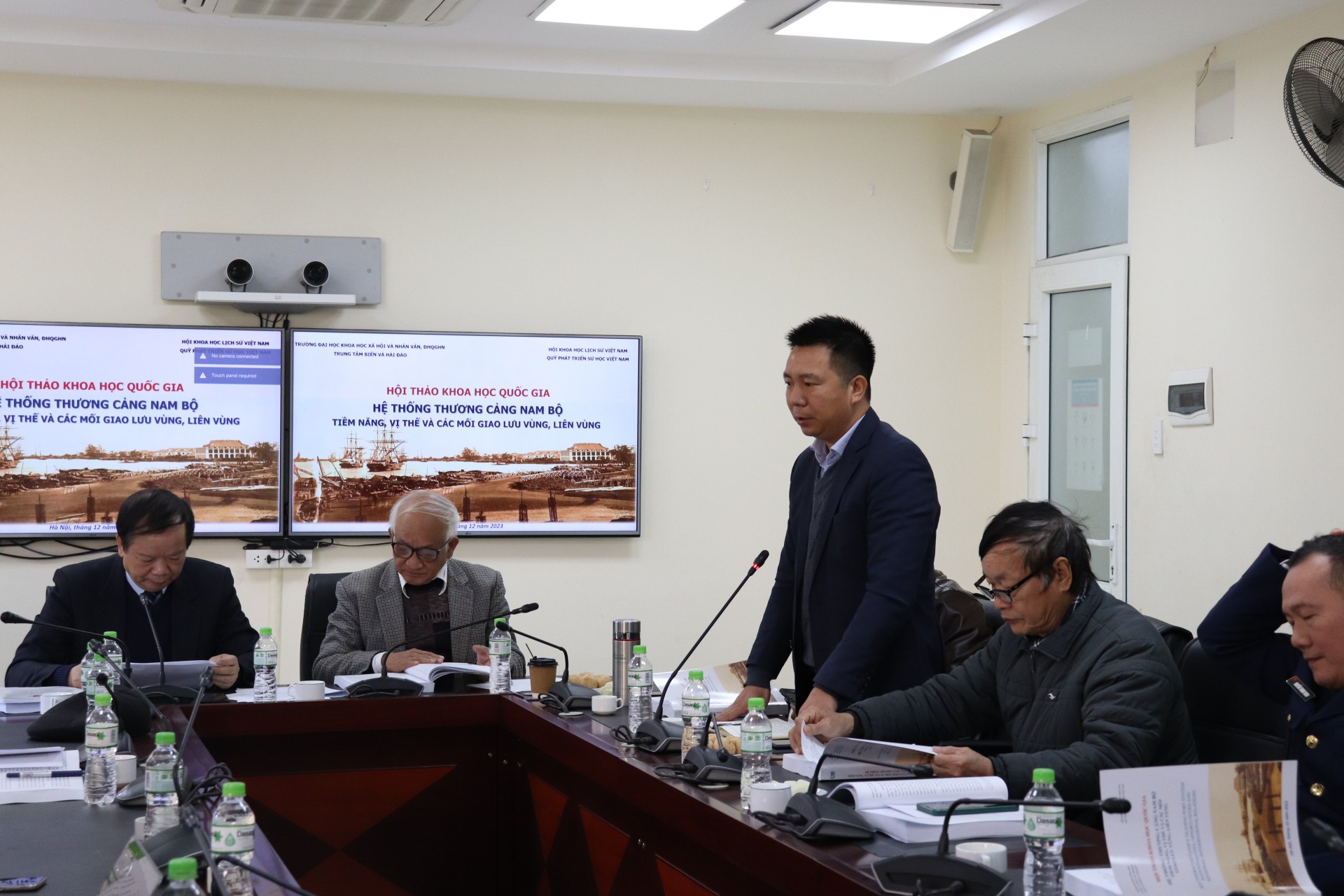
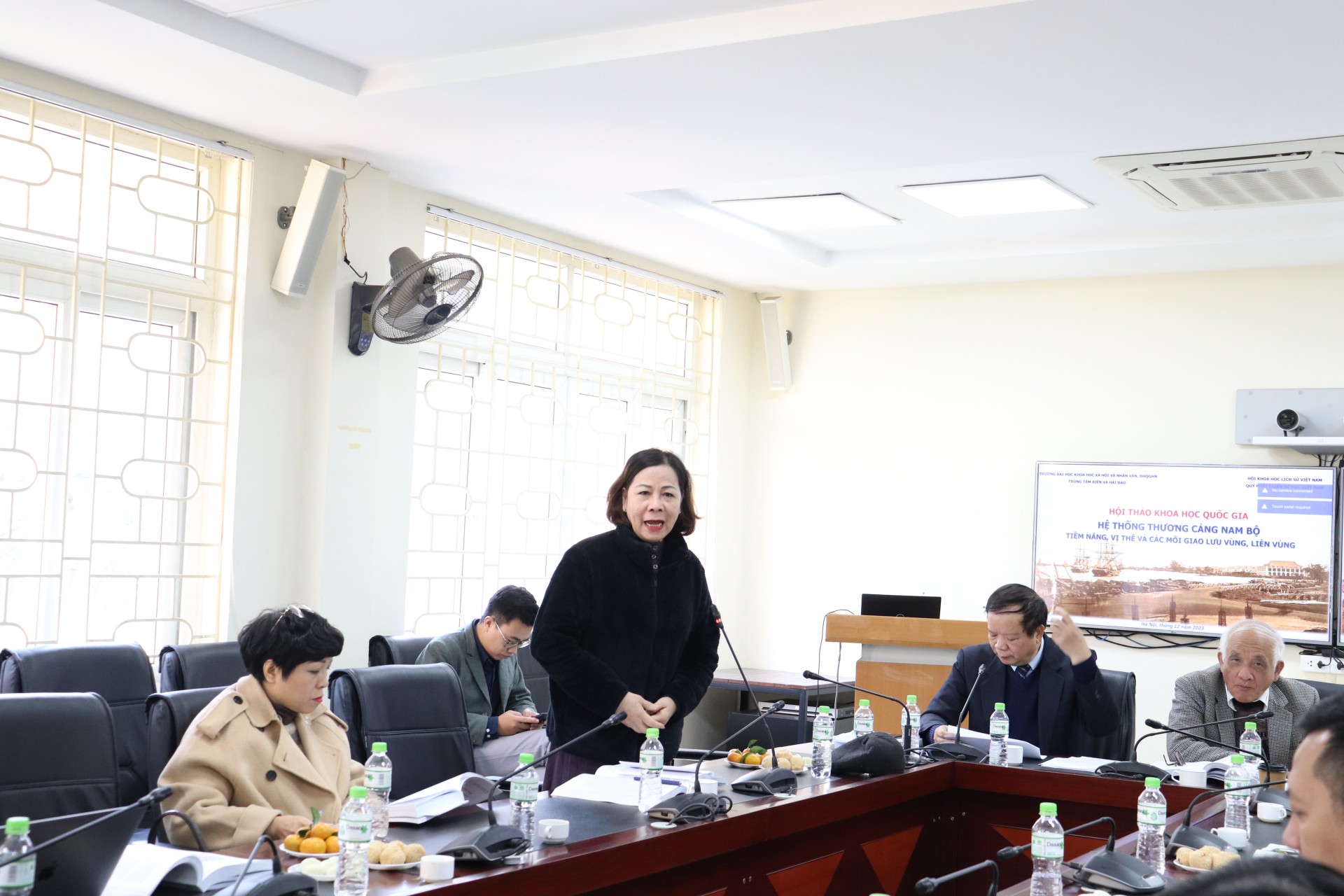
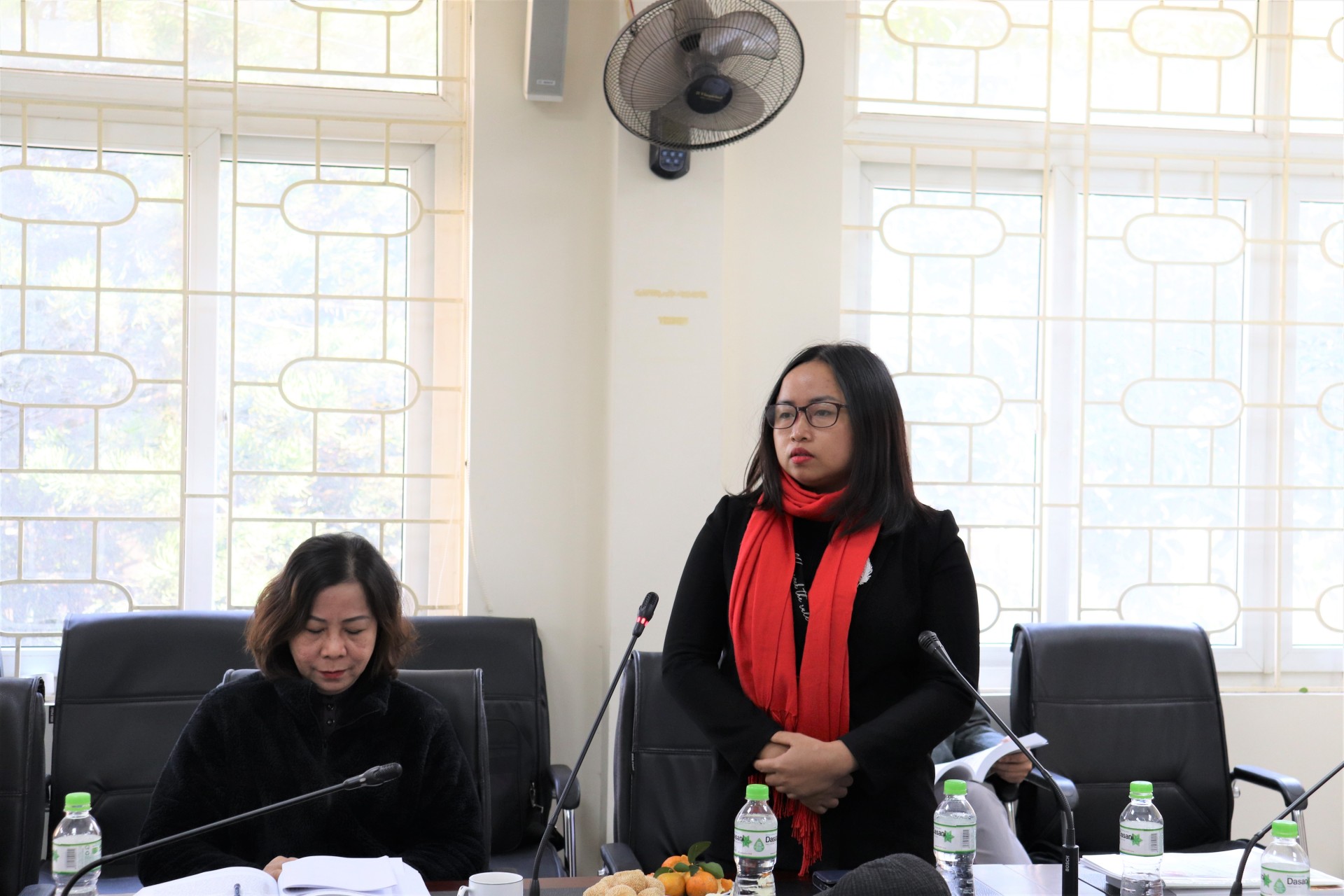
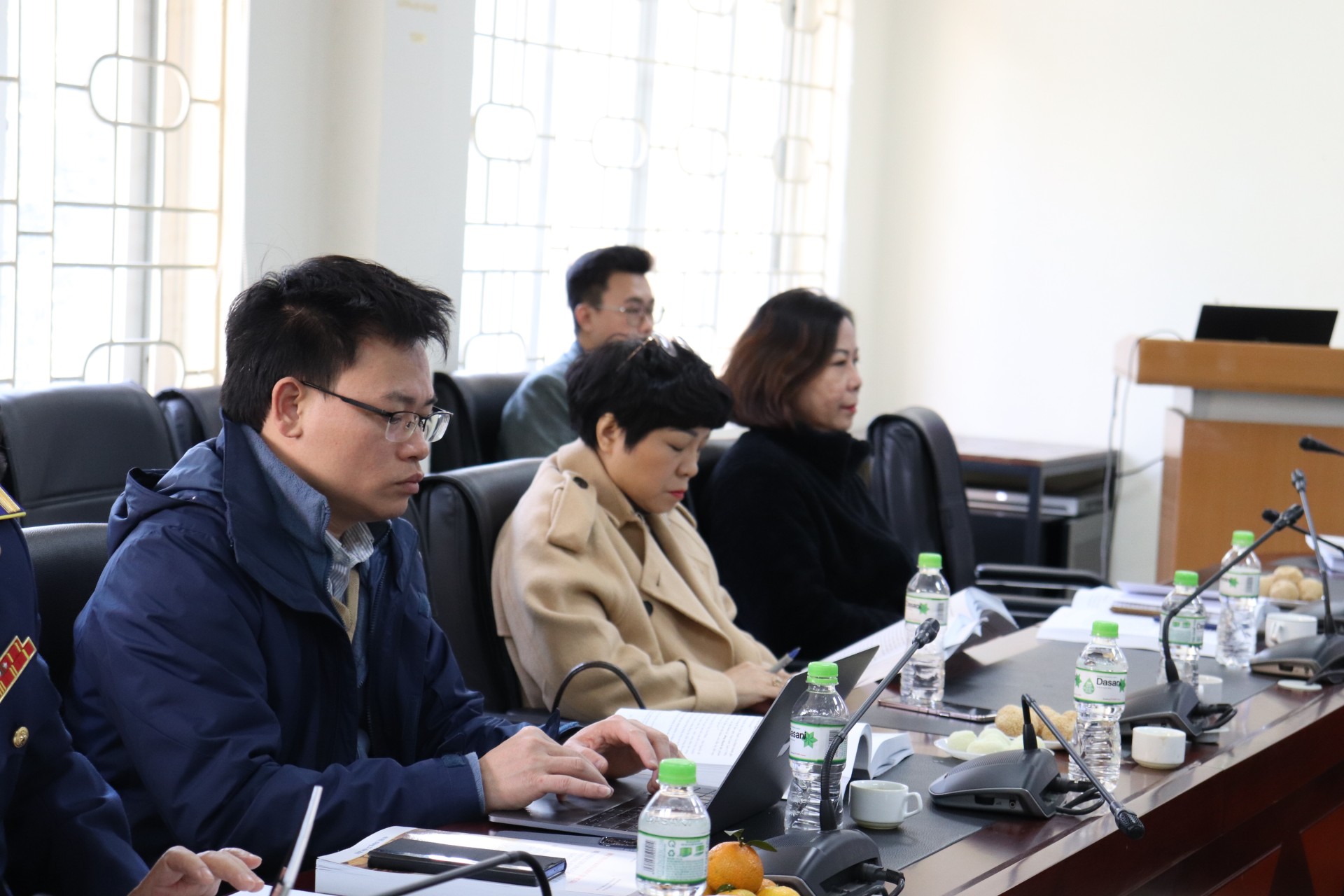
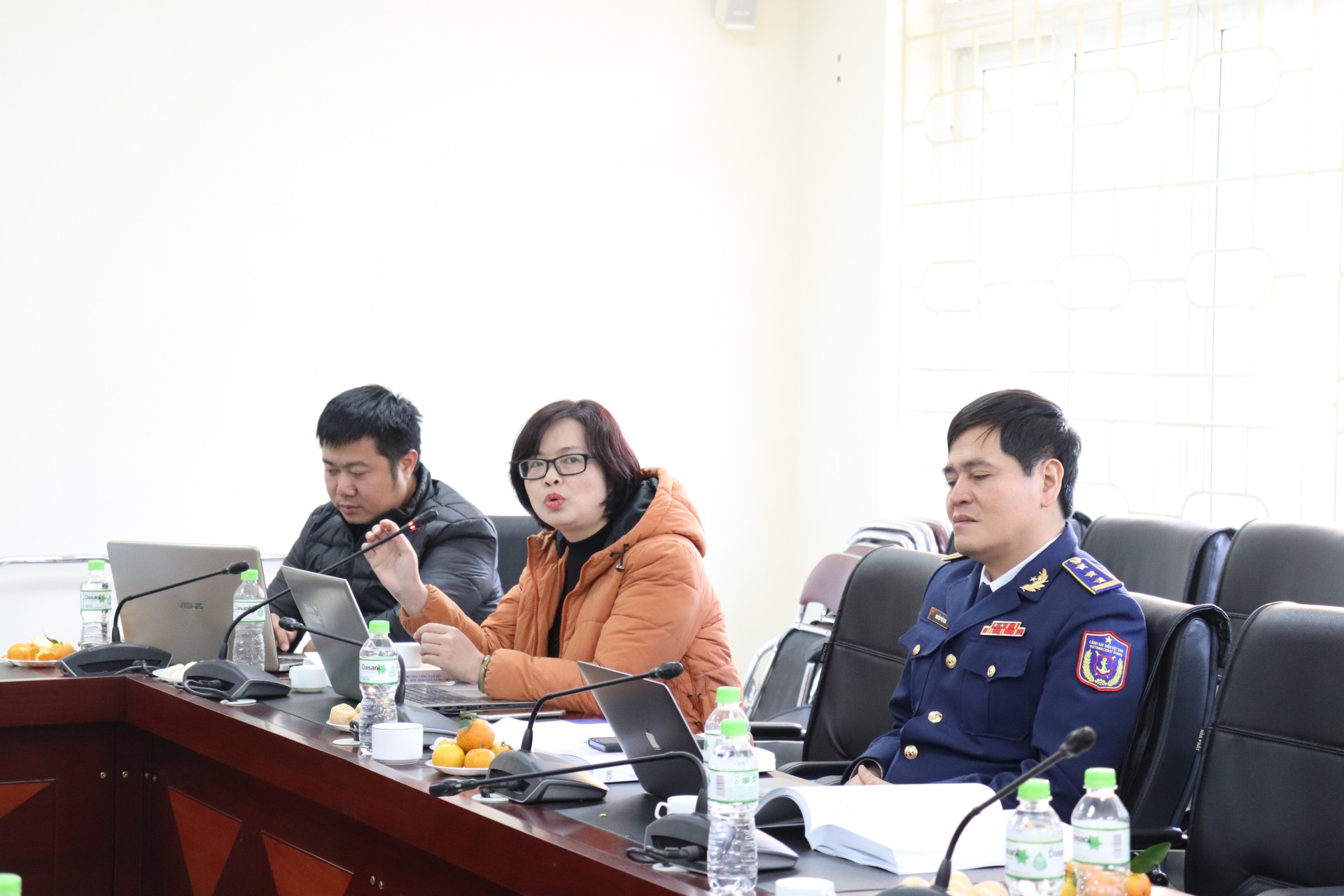
Some photos from the workshop.
Author:Hanh Quynh - USSH Media
Newer news
Older news

