
On October 16th, in Hanoi, the Vietnam Press Museum (Vietnam Journalists Association), in collaboration with the Institute of Journalism and Communication Training (University of Social Sciences and Humanities), organized a seminar and exhibition on the topic: The Art of Propaganda and National Life in Propaganda Posters.
Propaganda posters are a genre of Vietnamese visual art, characterized by their clear, persuasive, and easily understandable expression of content; they possess a sense of generality, aesthetics, and visual appeal. Throughout the history of our country's revolution, from its inception, propaganda posters quickly became an effective artistic tool contributing to conveying the Party and State's policies and guidelines to all segments of the population.
Speaking at the seminar, journalist Ho Quang Loi, Permanent Vice President of the Vietnam Journalists Association, said that, like journalism, the messages conveyed by propaganda posters are always relevant in our time, and this will certainly continue to be a genre capable of strongly stimulating the creativity of artists in the process of reaching the public and penetrating social life. Therefore, journalists and artists who create propaganda posters always remind us of soldiers on the propaganda front, leading the way in reflecting current events and having a direct and strong impact on the life of the country.
 |
|
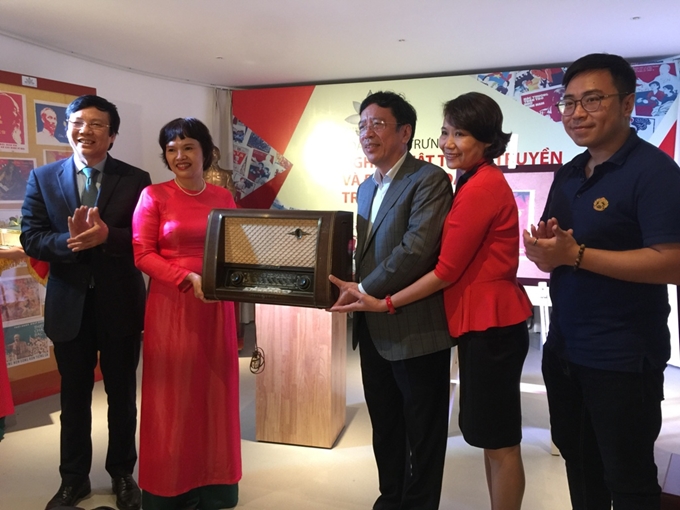
Representatives of the Vietnam Journalists Association receive paintings and memorabilia donated by journalist Nguyen Dang Tien. (Photo: HT) |
Journalist Ho Quang Loi also commended the Vietnam Press Museum, noting that despite being established just over three months ago and having a heavy workload, it has proactively and creatively researched and organized the event to receive the collection of 1010 propaganda posters meticulously collected and donated by journalist Nguyen Dang Tien. "The organization of this seminar and exhibition will help us and the public have more confidence in the power of propaganda art in posters and in the press, as well as many other media," journalist Ho Quang Loi affirmed.
At the seminar, the delegates' presentations affirmed that in Vietnam, propaganda posters are closely associated with the struggle for liberation and the protection of national independence. From their very inception, propaganda posters have played a significant role, effectively serving political objectives and the lives of the people.
Associate Professor Dr. Dang Thi Thu Huong, Director of the Institute of Journalism and Communication Training (University of Social Sciences and Humanities), believes that from the 1920s, Leader Nguyen Ai Quoc (Ho Chi Minh) drew propaganda posters for the newspaper "The Oppressed People" published in France to spread awareness and encourage the oppressed to understand and unite in the struggle. In 1941, Nguyen Ai Quoc returned to Vietnam and established the Viet Minh Front with the newspaper "Vietnam Independence" as its mouthpiece. On this newspaper, the words "Vietnam Independence" were depicted by Nguyen Ai Quoc as a Vietnamese citizen wearing a conical hat and blowing a trumpet, accompanied by four easily understandable verses calling on everyone to unite to save the country. From then on, propaganda posters were present and closely associated with the movement to defend the country.
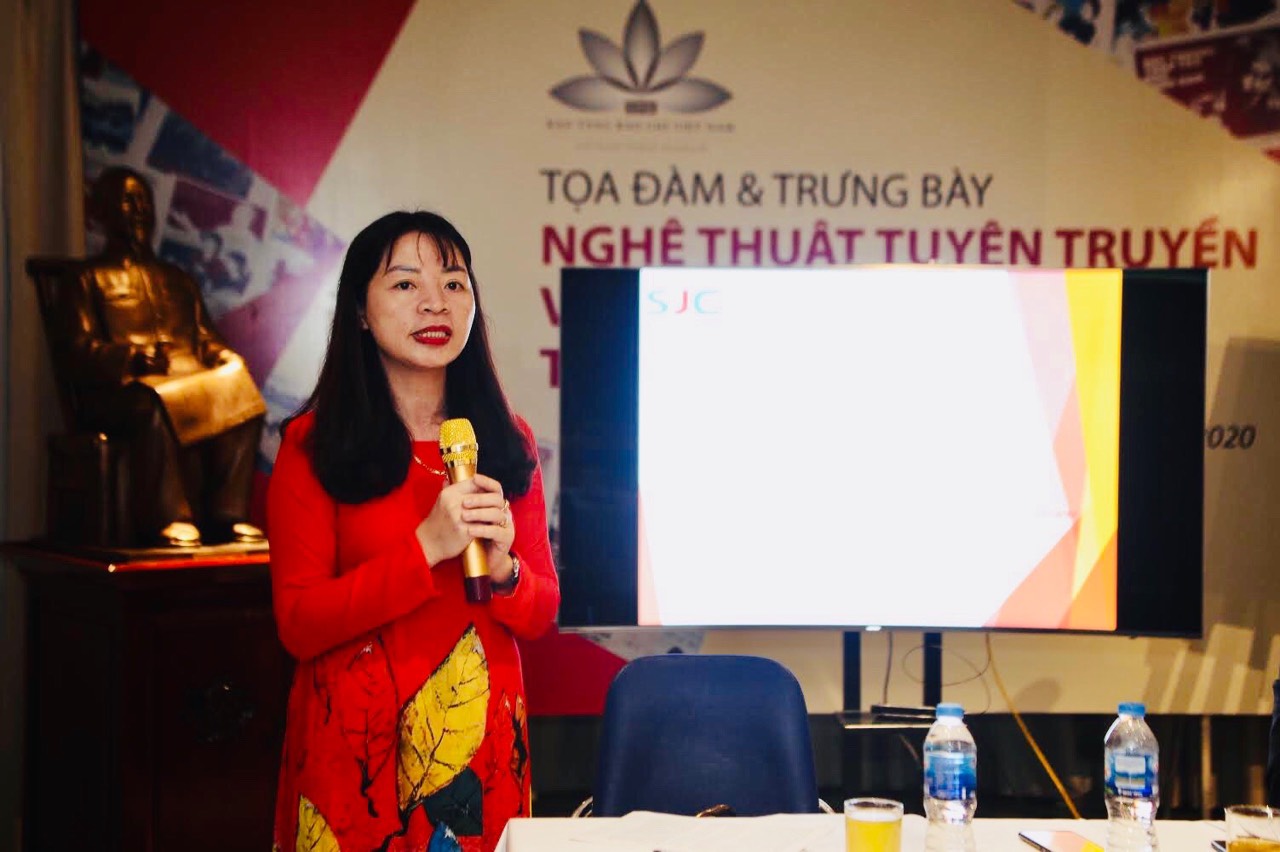
According to Associate Professor Dr. Dang Thi Thu Huong, propaganda posters possess both artistic and topical qualities, as well as a propaganda function, and deeply embedded within them is a very strong journalistic element. Art paintings are usually intended for a specific audience, with a particular capacity for appreciation and are often unique, but propaganda posters can be reproduced many times for widespread dissemination to the public. The language in art paintings is only understood and absorbed by a specific group of people. Propaganda posters, on the other hand, are seen and felt directly by everyone. Propaganda posters follow major national events and convey powerful messages to encourage the people to carry out political and social tasks. Therefore, propaganda posters share many similarities with journalism.
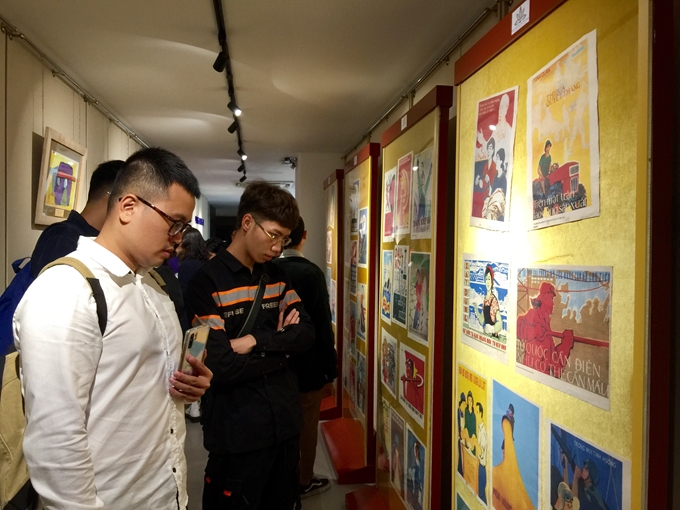 |
| The public visits a thematic exhibition of propaganda posters. (Photo: HT) |
Researcher Ta Thu Phong stated that throughout the history of journalism during the two wars of resistance against French colonialism and American imperialism, propaganda posters were always utilized by newspapers from the central to local levels to serve propaganda purposes. Newspapers such as Nhan Dan, Van Nghe, Lao Dong, and Phu Nu consistently featured propaganda posters opposing the destructive war waged by American imperialism, supporting the South, and encouraging movements such as "good people, good deeds," "three ready," "three capable," the courageous spirit and heroic deeds of soldiers on the battlefields, and the nationwide emulation of labor and production…
In the face of major social and national events and issues, propaganda posters raise their own voice, demonstrating their pioneering role on the propaganda front. During the recent fight against the COVID-19 pandemic, this genre of posters successfully fulfilled its mission of raising awareness and mobilizing people to work together to prevent and control the disease. This demonstrates the enduring vitality of this art form.
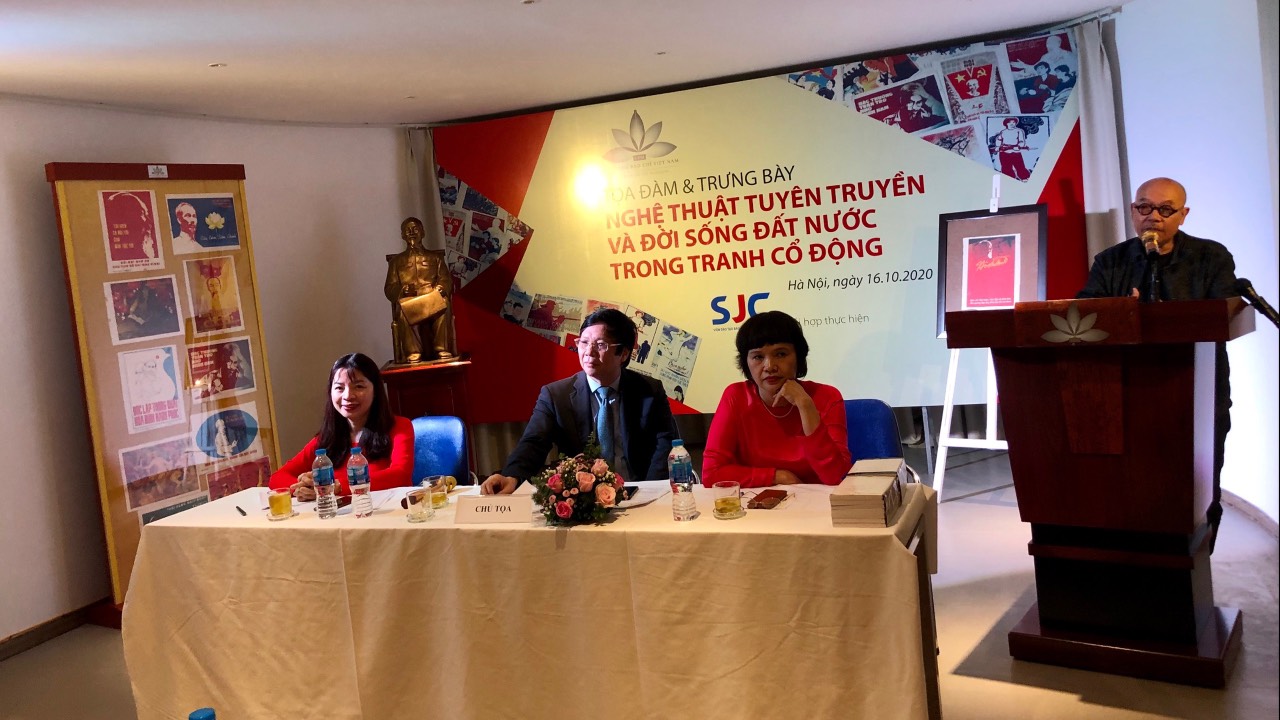
Mr. Nguyen Dang Tien, former Director General of the Voice of Vietnam Radio – who donated 1010 propaganda posters to the Vietnam Press Museum – shared: "Propaganda posters have been closely associated with the fighting, labor, and production lives of millions of soldiers and compatriots; they also leave a strong mark on important historical events of the country and the nation. That is why I have entrusted the Press Museum with 1010 propaganda posters collected over the past 20 years so that the public can read the history of the country through these emotionally charged paintings."
As part of the event, the Organizing Committee also displayed over 200 propaganda posters selected from 1010 posters donated by Mr. Nguyen Dang Tien to the Vietnam Press Museum. The exhibition took place at the Vietnam Press Museum, Duong Dinh Nghe Street, Cau Giay District, Hanoi.
According to the Vietnam Communist Party's online newspaper.
Author:Ha Thao
Newer news
Older news

