
Following controversies surrounding this year's professor and associate professor candidates, who were accused of not meeting the qualifications but were still approved by the disciplinary council.YouthOn October 25th, education experts reviewed the current process and standards for appointing professors and associate professors in our country.
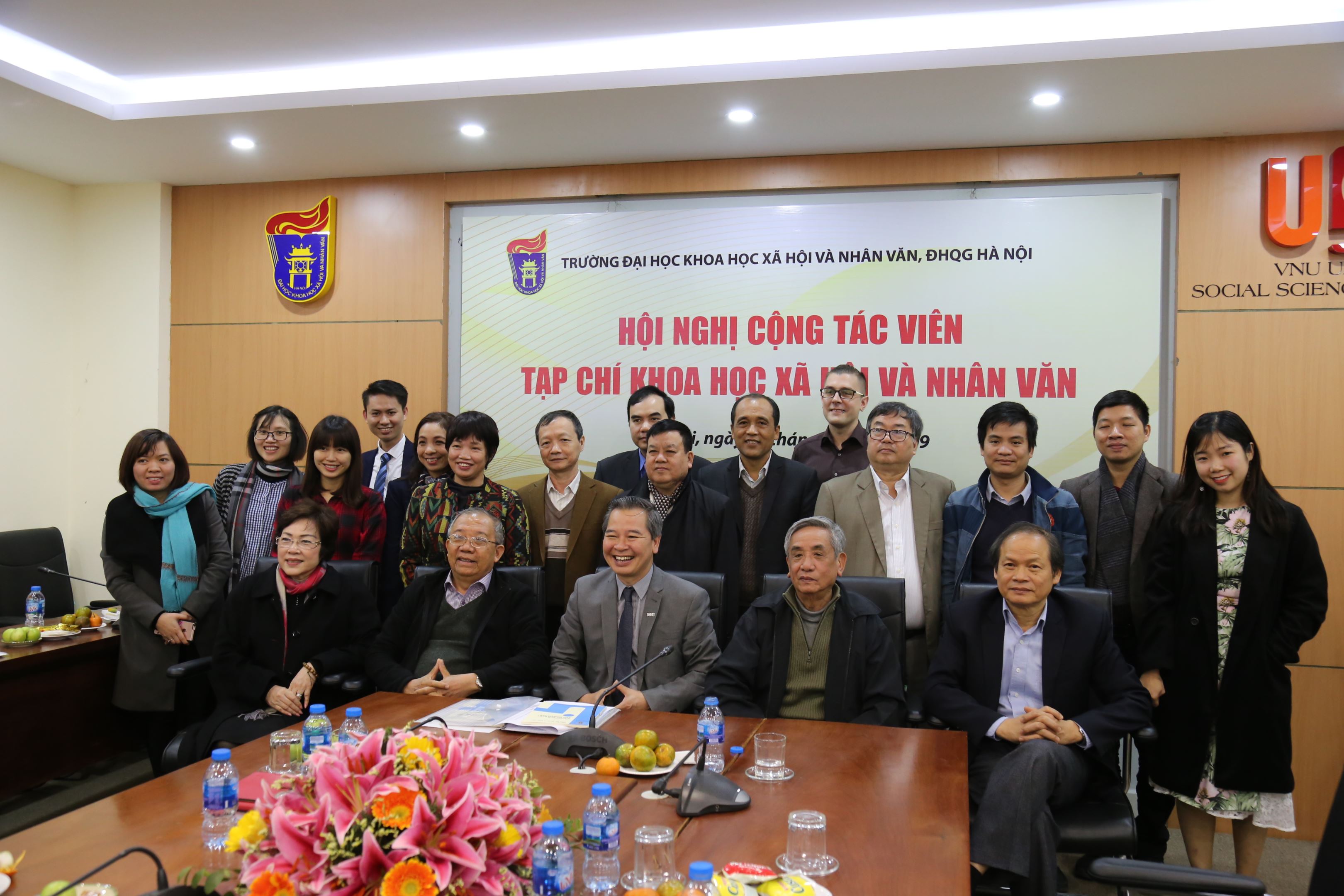
Professor Pham Quang Minh, editor-in-chief of the Journal of Social Sciences and Humanities, University of Social Sciences and Humanities, Vietnam National University, Hanoi, stated that the professorship title council at the institution (school) is established with the permission of the State Professorship Council, based on the academic prestige of that institution as well as the number of scientists there.
Verify authenticity
One of the important tasks of the university-level professorship council is to review the authenticity of information provided in the candidate's application, from diplomas and certificates to lists of journals and publishers.
For example, the council may review whether the candidate has taught the declared number of hours, which subjects they taught, whether their completed scientific research projects followed the correct procedures, and whether the topics of the theses and dissertations they supervised are relevant to their field of study.
For example, a candidate for associate professorship with a specialization in cultural anthropology could supervise a master's thesis on the topic of entrepreneurial culture or cultural management. "In short, the professorship appointment council at the university level must work very objectively, scientifically, impartially, and specifically," Mr. Minh said.
Similarly, Associate Professor Dr. Do Van Dung - Rector and Vice Chairman of the Faculty Council of Ho Chi Minh City University of Technology and Education - explained that every year, when the State Council for Professor Titles announces the results, some universities begin allowing candidates from within and outside the university to register.
Depending on the number of candidates, the university's professorial council will consist of 9-15 members to ensure sufficient personnel for evaluation and review. The university may invite professors and associate professors from within and outside the country, or collaborate with other universities to establish this council.
At the first meeting, the council elects the chairman, vice-chairman, and secretary. In years when there are candidates for the professorship, the chairman is usually a professor.
At the next meeting, the faculty council reviews and scores the candidates' applications. This process can be time-consuming. Simultaneously, the list of candidates is published on the university's website to receive feedback and critique from the community, particularly regarding the candidates' ethical qualities.
The Faculty Council conducts a review of the scores given by each member to check for discrepancies, then compiles the totals. Candidates whose scores meet the predetermined threshold will proceed to the presentation round.
In addition, to assess foreign language proficiency, the school establishes a panel, usually chaired by the head of the foreign language department. Candidates take turns presenting and answering questions in the foreign language for this panel to evaluate whether they meet the requirements.
Finally, after hearing the reports and feedback, the members of the university's professorial council cast secret ballots for each candidate for professorship or associate professorship. If approved, the candidate will revise their work according to the council's feedback and submit it to the State Professorship Title Council.
"Some councils are difficult, some are easy."
According to Mr. Dung, the main reasons for rejection at the preliminary round were candidates' limited foreign language skills and insufficient points from their scientific publications. These publications include articles, books, and scientific research projects.
Notably, each work does not have a fixed score but is graded according to the scale of the State Council for Professor Titles. This means that members of the council may give different scores within the framework. The university-level professor council will have to finalize these scores, especially for dossiers with large discrepancies.
Mr. Dung commented that the process for evaluating professors and associate professors in Vietnam is currently quite rigorous, with the role of the institutional level being very significant as it is the first to conduct thorough evaluations. Mr. Dung added that the "difference" between the institutional professor council and the state professor council is usually due to some councils being more lenient and others more strict.
"Furthermore, the State Council for Professor Titles seems to be afraid of lawsuits, and when a complaint is received, they often handle it harshly. Lawsuits are not uncommon in universities. This year, even the head of a famous medical school faced this problem when considering professors," Mr. Dung said.

Many professors at major universities face immense research pressure - Photo: Getty Images
Professor Le Tien Thuong, chairman of the Faculty Council of the University of Technology, Vietnam National University Ho Chi Minh City, said that this year the council received applications from 4 candidates for professorship and 9 candidates for associate professorship. After evaluation, the council only approved 8 associate professorship applications. Most candidates did not meet the criteria due to insufficient scientific publications such as books, documents, and international journals.
Mr. Thuong stated that, aside from cases where some university-level professorial councils acted "improperly," few other councils had candidates who passed the university-level round but failed the state-level round. A few cases occurred because members of the later-round councils were stricter in their evaluations, but the difference was usually not significant. In particular, the disciplinary and interdisciplinary professorial councils would conduct more detailed assessments of many other factors.
According to Mr. Thuong, the rigor of the professor and associate professor evaluation process largely depends on human factors, specifically the seriousness of the council members. "For the Polytechnic University in particular, the evaluation stages are very detailed and thorough."
"The review process by the university council is conducted independently, based on the regulations of the State Council for Professor Titles, and is generally not influenced by the Ho Chi Minh City National University. Even for candidates who are not from the University of Technology but register with this council, we consider them normally, without favoritism or making things difficult," Mr. Thuong said.
|
Procedures for considering and recognizing the titles of Professor and Associate Professor 1 Candidates submit their applications to the university's professorial committee. 2 The university's Professor Council reviews the applications, listens to candidates present their comprehensive scientific reports, and tests their foreign language proficiency. After approving the list of qualified candidates, the council publishes it on the university's website and reports the results to the State Professor Council. 3 The State Professorship Council receives the results proposed by the institutional professorship councils and then submits them to the sectoral and interdisciplinary professorship councils for evaluation. Based on the evaluation results and proposals from the sectoral and interdisciplinary professorship councils, the State Professorship Council reviews and approves the list of candidates who meet the standards. |
|
No more research, no more professorship. According to The Guardian, there are currently three common academic ranks: Assistant Professor, Associate Professor, and Full Professor. Besides Vietnam, China, Thailand, and several other Asian countries consider the title of Professor to be a lifetime position, reviewed by a national council. A limitation of this system is that it "honored" individuals who have never worked or no longer work in universities or research institutions. |
In contrast, in the US, Japan, South Korea, and many European countries, the title of professor is appointed by the university, accompanied by numerous criteria regarding teaching and research. This regulation aims to grant autonomy to the university and to ensure that professors continue to contribute to their institution and to academia in general. The title of professor is always accompanied by their place of work, for example, "Professor Alexa B. Kimball at Harvard University." If they are no longer at the university or are stripped of their title, they can no longer use the title of professor.
Becoming a professor is quite difficult. The Smart Science Career website outlines the criteria that professor selection committees at American universities often use to evaluate candidates, such as having relevant expertise, 5-10 years of work and teaching experience, reputable scientific publications, experience in numerous international conferences and research projects, good relationships with the academic community, and the ability to self-fund research…
In Japan and South Korea, universities are very selective when appointing professors to ensure it aligns with their salary budgets. Typically, only about 5-10% of PhD holders become professors at a university. According to the selection mechanism, if a professor fails to meet research and teaching requirements, they may be replaced by another candidate. This creates pressure for professors to continuously pursue their research.
In Australia, universities are often assigned different numbers of professors to prevent excessive appointments and to build prestige for each institution based on the number of professors it has. In Europe, some countries used to have "lifetime professorships," but these have now been abandoned. This is because after striving to achieve this title, many people become complacent and cease their research.
|
Professor Pham Quang Minh(Editor-in-Chief of the Journal of Social Sciences and Humanities, University of Social Sciences and Humanities, Vietnam National University, Hanoi): Scientific title, not position Professor and Associate Professor are scientific titles, not positions. Specifically, the title of Professor should be awarded to genuine scientists who are capable of proposing, organizing, and conducting high-quality research, opening new research directions, effectively organizing research groups/laboratories, training and inspiring young scientists, and attracting many doctoral, master's, and undergraduate students. Abroad, educational and research institutions, depending on the country, often set standards to assess the prestige and competence of professors and associate professors. For example, their prestige and competence are measured by the number of books and articles published, the number of scientific research projects successfully bid on, the corresponding funding, the number of doctoral students supervised, the number of times they are invited to present as a lead speaker or chair prestigious international scientific conferences, etc. Professors are individuals whose voices and opinions not only influence the academic community but also impact policymaking and politics in general. For example, many world leaders are accompanied by experts wherever they travel, a large proportion of whom are professors from educational and research institutions. Dr. Le Viet Khuyen(Head of the Education Quality Support Committee, Association of Vietnamese Universities and Colleges): Contributions to scientific research The current system of the State considering and recognizing the titles of Professor and Associate Professor is still a subsidized mechanism. Professors and Associate Professors are those who teach and contribute to research at universities. Therefore, universities should be responsible for the selection and recognition of these titles. With the trend toward university autonomy, universities should be responsible for reviewing and approving professorships and associate professorships because they have the best understanding of their staff's capabilities. With their own salary budget, universities can provide the most accurate compensation for professors and associate professors who have made significant contributions. Some might argue that bringing the process of appointing professors and associate professors back to the universities will lead to an overabundance of professors and associate professors, but society will regulate this. Universities that arbitrarily appoint too many professors and associate professors, or appoint unqualified individuals, will only diminish their own prestige. Furthermore, it's important to emphasize that Professor and Associate Professor are temporary titles, not lifelong positions. These titles are reserved for individuals engaged in teaching and research within universities. Those who transition to administrative roles and no longer teach or conduct research should not retain the titles of Professor or Associate Professor. They should only be introduced as former Professors or Associate Professors of a particular university. |
According to Tuoi Tre Online
Author:Ngoc Diep - Trong Nhan
Newer news
Older news

