On June 10th, in Hanoi, the University of Social Sciences and Humanities, Vietnam National University, Hanoi, in collaboration with the Ministry of Information and Communications (Press Department, Information and Communications Magazine, VietNamNet Newspaper) and Hanoi Law University (Ministry of Justice), organized a national scientific conference: "Scientific and Practical Basis for Amending the 2016 Press Law".
This is a conference summarizing the implementation of the 2016 Press Law, one of the 2023 work programs of the Ministry of Information and Communications assigned by the Government, linked to the task of amending and supplementing the 2016 Press Law.
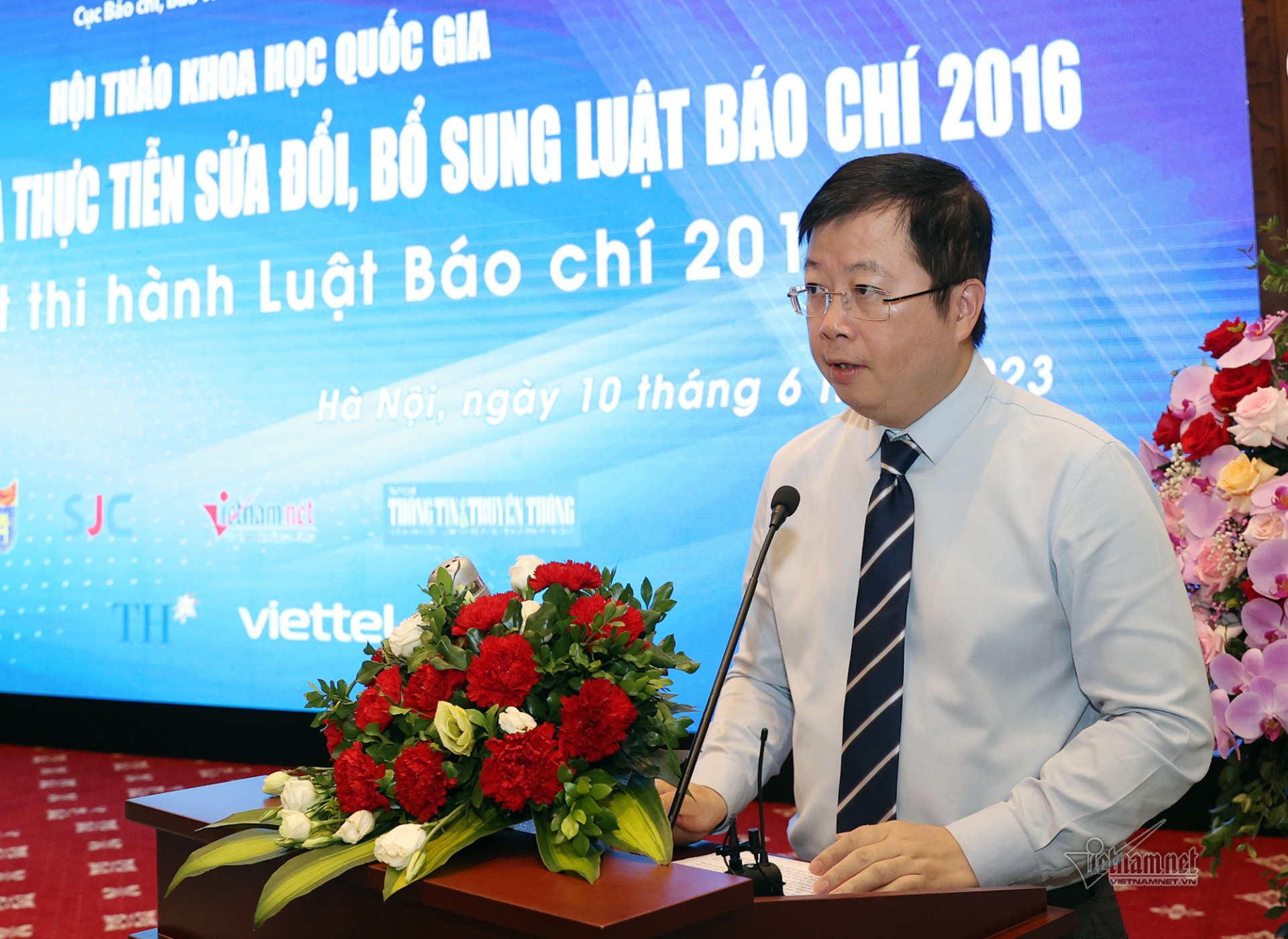
Speaking at the conference, Deputy Minister of Information and Communications Nguyen Thanh Lam said that the 2016 Press Law and its implementing guidelines have created a legal framework for the development of journalism and related activities; the people's right to freedom of the press and freedom of expression in the press is guaranteed and promoted within the framework of the Constitution and laws.
Deputy Minister of Information and Communications Nguyen Thanh Lam speaks at the conference. Photo: Pham Hai
The law has also promptly and effectively addressed many emerging issues; met the practical requirements of journalistic activities; gradually improved the effectiveness and efficiency of state management of the press in the past period; and created favorable conditions for the strong development of the revolutionary Vietnamese press.
According to Deputy Minister Nguyen Thanh Lam, after more than 6 years of implementing the Press Law, in the context of the strong and rapid development of science, technology, and modern media, some provisions of the Press Law have revealed limitations and inadequacies, failing to meet practical requirements.
"I believe that, whether viewed through the lens of state management agencies from the central to local levels and the press, or from the scientific perspective of researchers and lecturers specializing in journalism and law, these will be the most heartfelt voices with the goal of contributing to the development of a revolutionary Vietnamese press," the Deputy Minister stated.
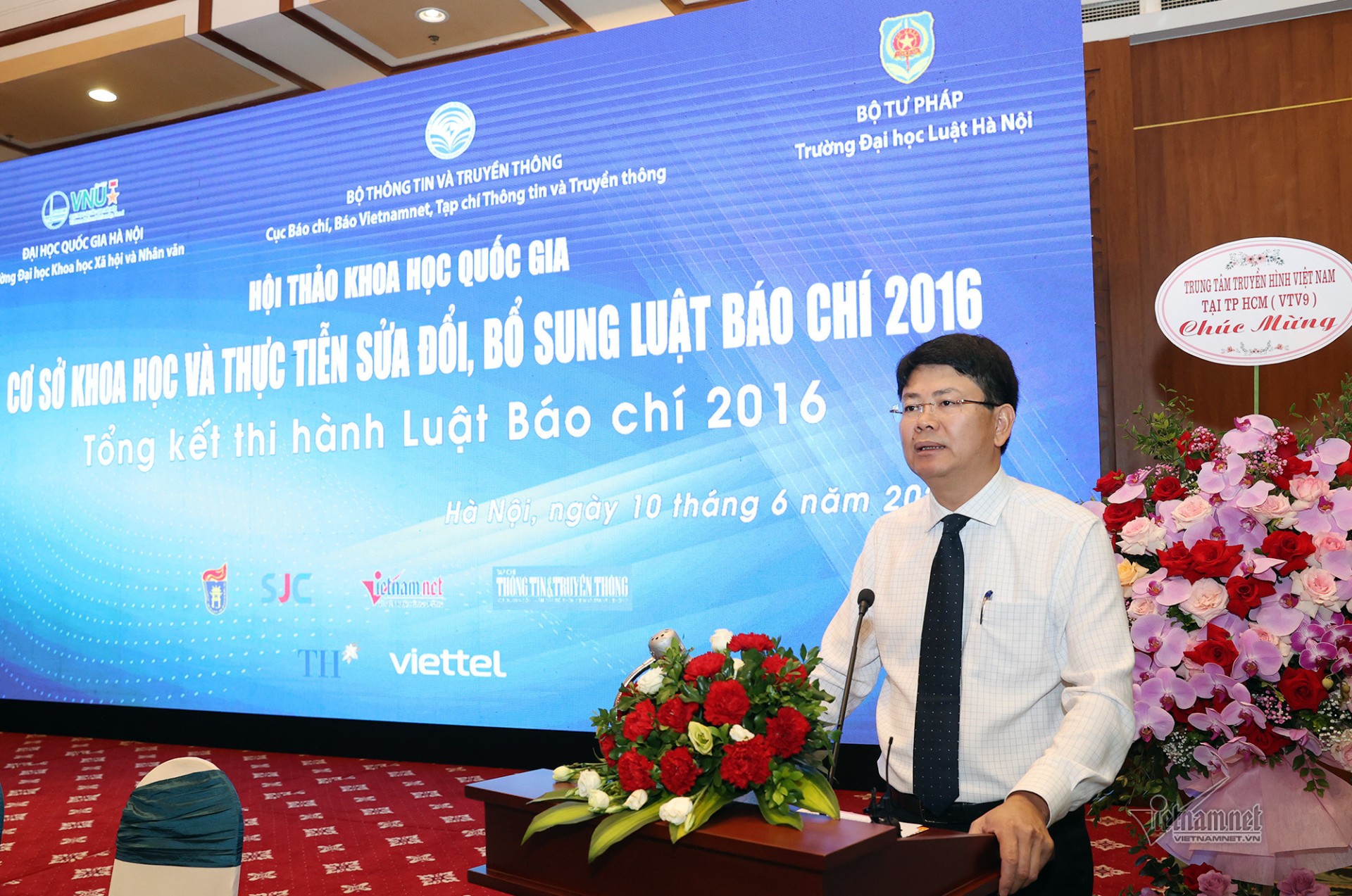
Mr. Nguyen Thanh Tinh, Deputy Minister of Justice, agreed with the above opinion and said that the 2016 Press Law needs to be studied and amended soon and thoroughly.
Mr. Nguyen Thanh Tinh, Deputy Minister of Justice, speaks at the workshop. Photo: Pham Hai
The Ministry of Justice is very interested in perfecting legal regulations on the press in general and on the responsibilities of press management agencies in particular, in order to promote decentralization and delegation of power, enhance autonomy, and create proactiveness and flexibility for press agencies.
On the other hand, it is also necessary to clearly define the responsibilities, leadership, and guidance of the governing body over the press, ensuring that press agencies operate in accordance with their principles and objectives, fully comply with legal regulations, and are under the absolute and comprehensive leadership of the Party.
Building a media and press complex model.Mr. Nguyen Van Hieu, Deputy Director of the Press Department (Ministry of Information and Communications), suggested that consideration should be given to building a media and press complex model as a public service unit of the State. This complex could include multiple affiliated press agencies and publishing houses, operating in diverse formats, platforms, and services.
At the same time, the leadership titles of press agencies are regulated in the direction of "publisher-director" and "chief editor." This is also the direction to form large press agencies of the country and to continue implementing the Plan for the Development and Management of the Press until 2025 for governing bodies and localities with many press agencies that have a tradition, prestige, and a leading role in guiding and shaping public opinion.
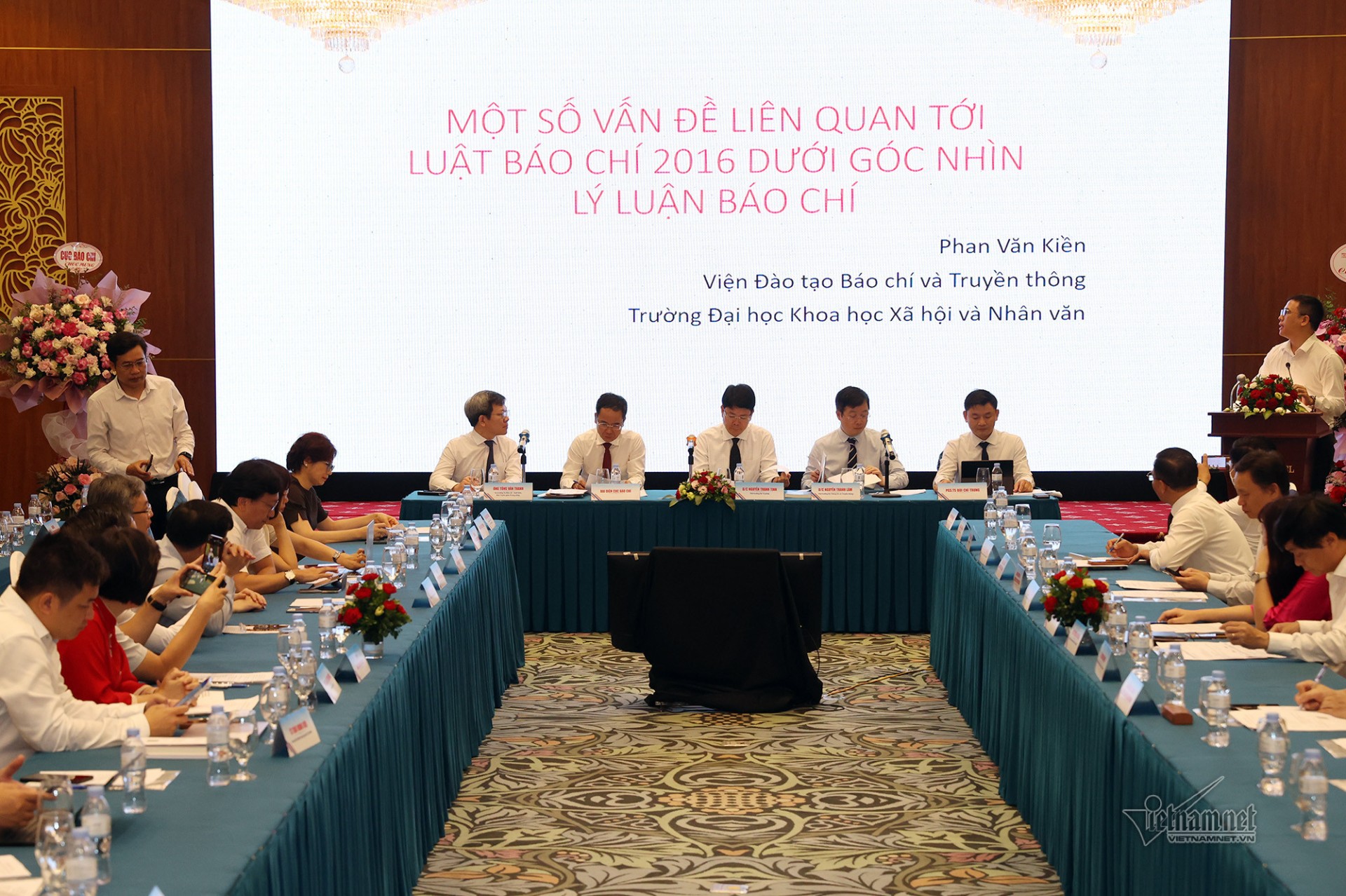
National scientific conference: "Scientific and practical basis for amending the 2016 Press Law". Photo: Pham Hai
On the other hand, defining journalistic titles as "publisher" or "editor-in-chief" is suitable for even large media organizations with diverse types and products, aiming to individualize responsibility for each product of the media organization.
Associate Professor Dr. Nguyen Van Dung suggested that instead of calling it the Press Law, it should be called the Law on Mass Media. The law would regulate everything, not just the press, but also entities like KOLs and social media accounts that are set to public…
Ms. Nguyen Thi Mai Huong, Deputy Director of the Hanoi Department of Information and Communications, presented her views on the obstacles encountered in the implementation of the 2016 Press Law.
Ms. Mai Huong stated: Allowing media outlets to publish citizens' petitions, respond to or request agencies and organizations to respond to citizens' petitions, complaints, and denunciations leads to a situation where media outlets publish citizens' opinions without verifying the information, and exploit this to send documents to pressure agencies and organizations to provide explanations and information.
Meanwhile, press agencies do not have the authority to handle complaints; they must forward them to the competent authorities for resolution in accordance with the Law on Complaints and the Law on Denunciations.
Currently, many media outlets (magazines) rely on readers' letters to send documents and dispatch reporters to provinces and cities requesting files and documents for investigation and verification of local socio-economic development programs and projects… causing inconvenience to agencies, organizations, and businesses, and showing signs of exceeding the functions of media outlets.
Dr. Dong Manh Hung, Head of the Editorial Secretariat of the Voice of Vietnam (VOV), raised the question: The products of the economy are goods and services. So, should journalistic products be considered goods? Can the public be considered customers of the journalistic economy? These issues are not yet regulated in the Press Law.
According to Mr. Hung, there are currently no regulations regarding the business functions of the press. Therefore, it is necessary to regulate and define the main functions of the press as propaganda and business.
Journalistic products should be considered a special type of commodity, subject to competition, supply and demand, pricing, and operating according to the laws of a market economy. Similarly, the media audience are the customers of the media outlets.
The relationship between media organizations and their governing bodies.
Concluding the workshop, Deputy Minister Nguyen Thanh Lam, on behalf of the Ministry of Information and Communications, thanked the scholars, experts, scientists, and leaders of media agencies for their interest and intellectual contributions, which helped make the workshop a success.
According to Mr. Nguyen Thanh Lam, the press has two roles. Firstly, it plays a role in protecting the regime. But besides that, the press also provides essential public services in the form of information and propaganda.
So what scientific basis is there to clarify and unequivocally define the relationship between media organizations and their governing bodies, particularly the State as a major client of the press? A scientific basis is needed to present arguments convincingly to various levels of government, sectors, and society, especially when the issues surrounding journalism and the economics of journalism remain a pressing concern.
"Meanwhile, other forms of social information will quickly replace some of the roles of journalism if we do not consider elevating the level of revolutionary journalism. We hope that universities, training institutions, and research centers will provide assistance in developing research projects on many such issues," Deputy Minister Nguyen Thanh Lam stated.
Professor Hoang Anh Tuan, Rector of the University of Social Sciences and Humanities, affirmed:
The development of journalism and media in the new context is one of the key themes for the school in developing training programs, research topics, and activities connecting with the domestic and international media community.
This also serves as the guiding principle for today's scientific seminar on the amendment and improvement of the 2016 Press Law. This is the most important legal framework for the development of journalism, ensuring and promoting the people's freedom of the press and freedom of speech within the framework of the Constitution and laws, in accordance with the spirit of the 13th National Congress of the Communist Party of Vietnam's resolution: "building a professional, humane, and modern press and media." |
The press reported on the event:
Vietnamnet newspaper: Many insightful opinions were contributed to amending the 2016 Press Law.
Newspaper of the Communist Party of Vietnam: Clarifying the scientific and practical basis for amending and supplementing the 2016 Press Law.
Tuoi Tre Thu Do Newspaper: Creating a legal framework to enable the remarkable development of journalism.
Labor Newspaper:Nearly 80 experts, journalists, and lawyers contributed their opinions on amending the 2016 Press Law.
Tuoi Tre Thu Do Newspaper:A special mechanism is needed for essential journalistic products.
Ho Chi Minh City Law Newspaper:The 2016 Press Law contains 27 provisions, some of which are inadequate.
Hanoi Labor Newspaper:Amend and supplement the 2016 Press Law to suit current practices, which is necessary.
Ho Chi Minh City Law Newspaper: Amend the Press Law: New regulations on the 'economics of journalism' are needed.
Construction Newspaper:Workshop on the scientific and practical basis for amending the 2016 Press Law.