At the 2016 World Economic Forum in Davos, Switzerland, Professor Klaus Schwab stated that the Fourth Industrial Revolution is unfolding across three main areas: biotechnology, digital technology, and the physical world. Of these, digital technology relates to the development of mass media in general and journalism in particular. Digital technology is changing the way news is produced and distributed. Therefore, journalists need to be trained to adapt to these new technologies.
President Ho Chi Minh once affirmed: "When speaking of journalism, one must first speak of the journalists." Inheriting Ho Chi Minh's ideology, the Party and State of Vietnam have always paid attention to training and nurturing human resources in journalism.
On December 1, 2004, the Politburo issued Conclusion Notice 162-TB/TW on "some measures to strengthen press management in the new situation," which clearly stated: "Pay more attention to training and improving the skills of journalists in terms of political awareness and professional expertise, professional ethics, social responsibility, and civic duty."
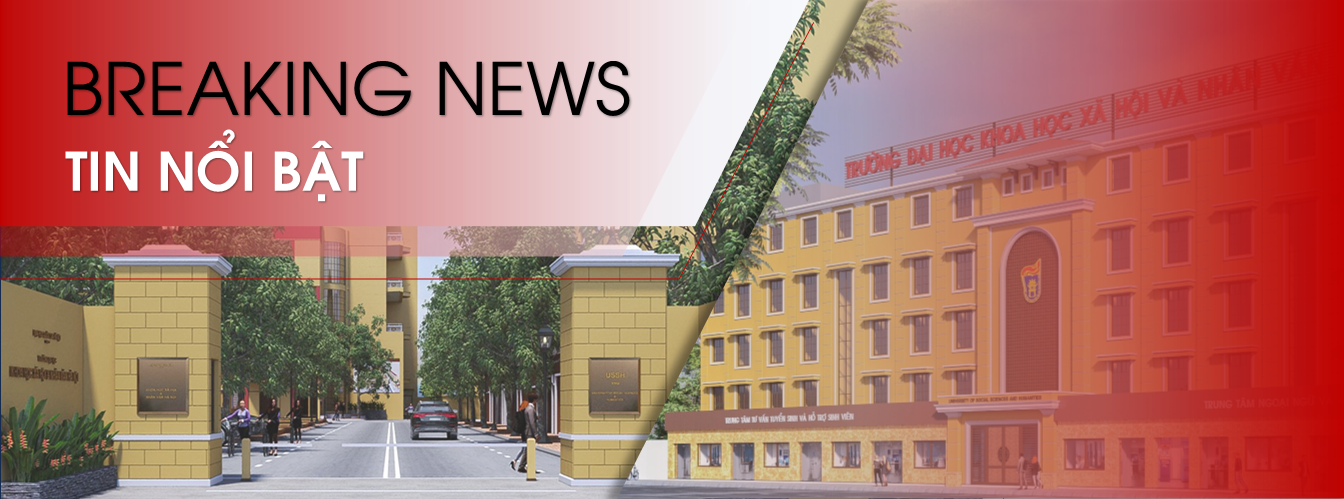
To commemorate the 98th anniversary of Vietnam's Revolutionary Press Day, a VietTimes reporter interviewed Ms. Nguyen Thi Thanh Huyen, Deputy Director of the Institute of Journalism and Communication Training, University of Social Sciences and Humanities (Vietnam National University, Hanoi), and a member of the Executive Board of the Vietnam Digital Communication Association, on the issue of training human resources for journalism.
PV: Madam, could you please tell us about the current journalism training programs at universities and whether they meet the practical needs of the journalism profession?
Ms. Nguyen Thi Thanh Huyen:Currently, there are many training institutions nationwide offering journalism and multimedia communication programs to supply human resources for the journalism and media industry. Generally, these training programs ensure compliance with the standards regarding duration, structure, content, and format as stipulated by the Ministry of Education and Training and the governing body. Each university has its own strengths, and therefore, journalism training programs reflect the unique characteristics and capabilities of each institution.
The Journalism program at the Institute of Journalism and Communication Training is designed based on the general regulations of the University of Social Sciences and Humanities, Vietnam National University, Hanoi. In particular, the program is built upon a foundation of social sciences and humanities knowledge, which is a significant competitive advantage of the University compared to other training institutions. Accordingly, graduates of the Journalism program at the University of Social Sciences and Humanities will be able to apply knowledge and skills from fundamental social sciences, learned from experienced professors in Philosophy, Psychology, Sociology, Linguistics, Literature, History, etc., to create modern journalistic and media products that meet the increasingly high demands of media organizations and serve a diverse public.
I don't have enough data to comprehensively assess whether all journalism training programs at current institutions meet practical needs. However, independent surveys on the quality of journalism training conducted by a licensed accreditation body of the Ministry of Education and Training have shown that employers are highly satisfied with our Institute's graduates. Many generations of our students have embarked on challenging journalistic careers with confidence, professionalism, and a passion for contributing to society and their profession.
Because journalism is a field deeply involved with technology, it is constantly evolving and changing rapidly. Therefore, journalism training programs must always keep pace with these changes to stay updated and adjusted if they do not want to fall behind. The audience for journalism is also changing towards becoming more actively involved in media, which also presents a challenge for journalism training programs.
PV: Do you see any difficulties in creating the best possible curriculum for journalism students (difficulties regarding equipment, finances, etc.)?
Ms. Nguyen Thi Thanh Huyen:I believe that to teach journalism effectively, the lecture halls and facilities for journalism need to be regularly invested in and upgraded. They should even be modeled after or equipped to resemble real newsrooms, so that students can visualize and practice journalism while still in school. Achieving this is the aspiration of all journalism schools.
However, even with good technical facilities, it's difficult to produce excellent journalists if students lack passion for the profession. Students desperately need inspiration from talented and enthusiastic journalists who have gone before them. Therefore, technology is only one part; more importantly, it's the attitude of the users and operators of those devices and technologies in their practical professional work that matters.
PV: How is the current level of access to technology for journalism students, Madam? Does the school have equipment such as video cameras, still cameras, and high-configuration computers for teaching purposes?
Ms. Nguyen Thi Thanh Huyen:The Institute of Journalism and Communication Training is fully equipped with smart, multimedia classrooms, radio and television studios, and photojournalism studios with advanced, modern quality. Journalism students all learn in practice rooms, helping them master the skills of using specialized equipment. Many of the products created by the students have been used in practice by numerous newsrooms.
PV: Has the number of students enrolling in Journalism programs been increasing or decreasing over the years, Madam?
Ms. Nguyen Thi Thanh Huyen: Journalism remains an attractive profession for young people due to its dynamism. The number of students enrolling in journalism programs has continued to increase in recent years, resulting in very high entrance exam scores for journalism programs at universities. In the 2022-2023 academic year, the entrance score for the Journalism program in Group C at our Institute of Journalism and Communication Training reached a record high of 29.9 points. With such a high score, the quality of incoming students in the Journalism program at our school can be considered excellent, promising to produce talented future journalists who will contribute to society.
PV: Currently, advanced technologies like AI and Big Data are developing very rapidly. They can replace journalists in writing short news articles, and even replace real people presenting television news. In your opinion, will AI be able to completely replace the work of journalists in the future?
Ms. Nguyen Thi Thanh Huyen:I think AI is a fantastic technological application that makes things easier for people in general, and journalists in particular, in their work. Currently, AI has assisted journalists in many stages of their tasks.
However, I believe that AI is unlikely to completely replace the work of journalists, because journalism requires adherence to many professional and ethical standards that AI may violate due to limitations in the quality of the system's input data.
PV: In your opinion, what policies should the government, specifically the Ministry of Education and Training, implement to support the training of journalism students?
Ms. Nguyen Thi Thanh Huyen:I think journalism training should be treated the same way as many other fields. The policies and regulations currently in place for journalism training are appropriate and don't necessarily require any additional special support policies.
Interviewer: If you were to give one piece of advice to students on how to become a talented journalist, what would you say?
Ms. Nguyen Thi Thanh Huyen:One of my mentors once said, in essence, that journalism is a profession that can be learned but not taught. This doesn't mean that no one can teach journalism—if that were the case, our work would be meaningless—but rather it emphasizes the importance of self-learning, self-improvement, and the professional integrity of a journalist. There are still excellent journalists who haven't received formal journalism training, but their number is certainly not large.
In my opinion, to become a truly impactful journalist, journalism students must be clearly aware of the mission and purpose of journalism, and strive to achieve their goals and objectives. Simply put, a journalist must love their profession and be courageous enough to immerse themselves in the vibrant reality of the field to understand the hidden truths behind statistics and the lives of the marginalized, especially those in society. If you only like sitting in air-conditioned offices and traveling to luxurious places, then don't even think about studying journalism, because you won't be able to see the beauty of this profession!
Interviewer: Thank you for this interview!
As of the end of May 2022, the country had 816 media outlets, including: 114 newspapers and 116 magazines operating in both print and online formats; 557 print newspapers and magazines; 29 independent online newspapers and magazines; and 72 agencies operating in the fields of radio and television.
The journalistic workforce comprises 41,600 people working across all four types of media. The total number of licensed journalists is nearly 18,000. The workforce in Vietnamese media and press agencies is primarily trained at journalism schools, with a small proportion being talented and passionate about journalism, having matured through practical experience..
|