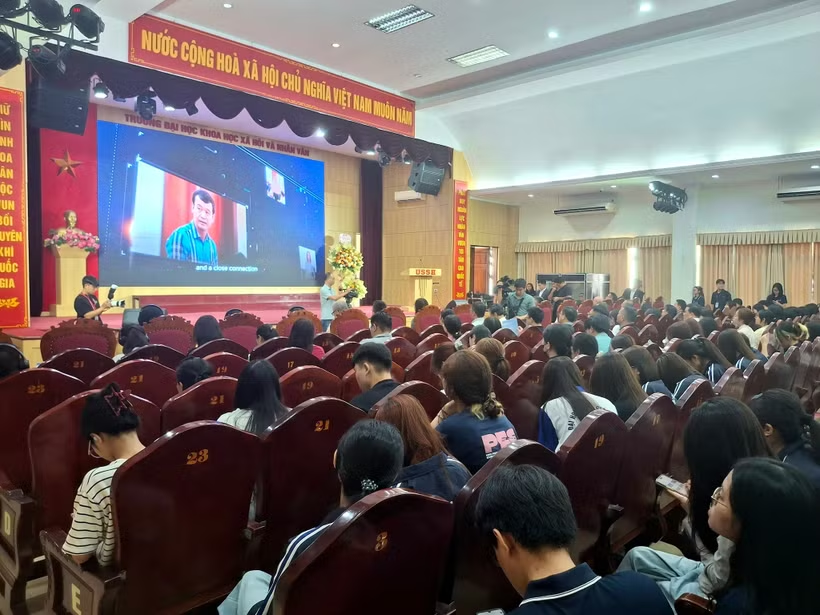
Overview of the international scientific conference "The Digital Divide and AI Capabilities" in Hanoi on October 22nd. (Photo: Hien Anh/Vietnam+)
The development of digital technology and artificial intelligence is opening up many opportunities in learning, work, and social management. However, the ability to access and utilize these achievements still varies among different population groups. Therefore, the digital divide is not only about access to devices or the internet, but also about technological skills, the ability to evaluate information, and the level of proactiveness in responding to changes in the digital environment.
Based on the above reality, and with the aim of exchanging academic knowledge, sharing research experiences, and seeking solutions to bridge the digital divide, the Institute of Journalism and Communication Training (Faculty of Social Sciences and Humanities, Vietnam National University, Hanoi) organized the international scientific conference "Digital Gap and AI Literacy" on October 22nd in Hanoi.
AI capabilities in the context of digital transformation.
In the context of artificial intelligence (AI) creating profound changes in socio-economic life, ensuring access to and utilization of technology has become an increasingly urgent requirement. This is also a key issue in the digital transformation process, demanding attention not only to technological development but also to enhancing the capabilities of users.
Speaking at the opening ceremony, Associate Professor, Dr. Dang Thi Thu Huong, Vice Rector of the University of Social Sciences and Humanities, emphasized that AI is rapidly changing the way we connect, work, and participate in social life. Artificial intelligence brings opportunities for knowledge innovation and human development. But at the same time, it raises the question of whether AI will exacerbate inequality in society, such as creating a divide or a digital divide between those who benefit from the technology and those who are left behind.
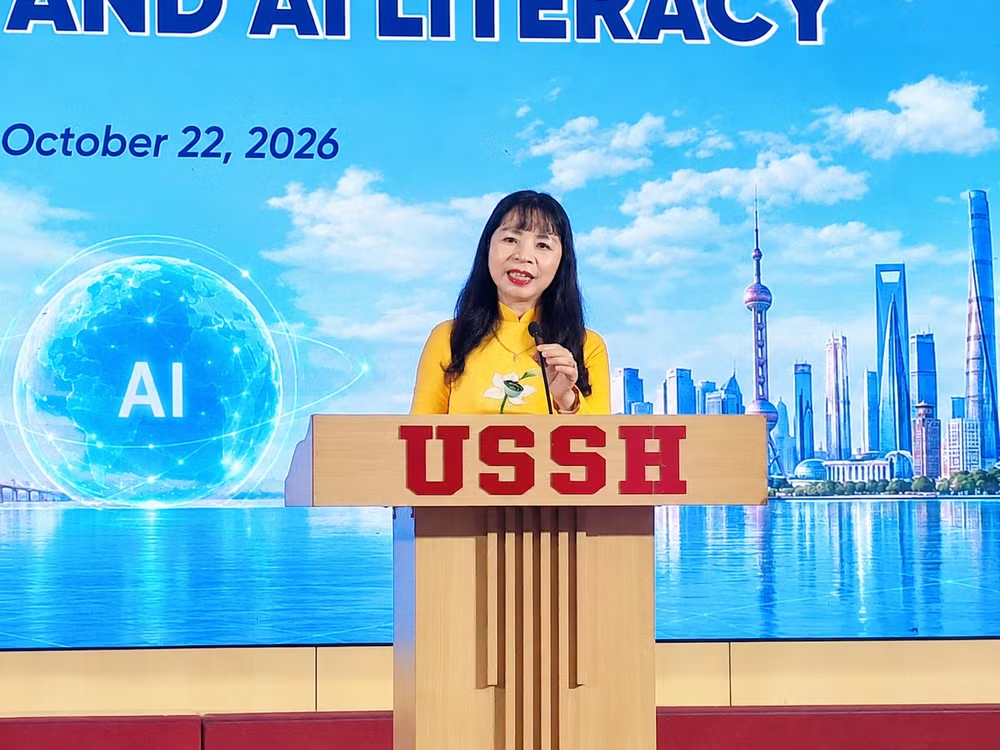
Associate Professor, Dr. Dang Thi Thu Huong, Vice Rector of the University of Social Sciences and Humanities, Vietnam National University, Hanoi, speaks at the conference. (Photo: Hien Anh/Vietnam+)
From the perspective of someone researching how people interact with AI, Professor Yi Mou, Vice President of the Institute of Communication, Shanghai Jiao Tong University, China, further addresses the issue of "knowledge illusion." AI capability is not just about knowing how to use the tool, but also about testing and evaluating the answers that the AI generates.
Most current AI is being developed globally. Users can live anywhere, so their needs and experiences vary. For AI to be used effectively, we shouldn't just import it from abroad, but first create opportunities domestically.
Vietnam and China share similarities in their young populations and the advantage of receiving significant public attention. Therefore, sharing experiences and learning from each other, especially in the field of journalism and media, will be more effective between the two countries.
Notably, in Vietnam, promoting the development of science and technology, innovation, and digital transformation has been identified as a key strategic direction in the major policies of the Party and State, especially Resolution No. 57-NQ/TW of the Politburo.
Furthermore, the promulgation of the Law on Science, Technology and Innovation (Law No. 93/2025/QH15) and Decree No. 180/2025/ND-CP has created an important legal framework to promote scientific autonomy, public-private partnerships, and the application of research results to socio-economic development.
In this process, social sciences and humanities play a special role in analyzing the social impact of technology, identifying risks related to inequality, ethics, and governance, and providing scientific arguments for planning and adjusting AI development policies towards inclusiveness and sustainability.
According to Ms. Dang Thi Thu Huong, the most urgent task now is developing digital skills, critical thinking abilities, information evaluation skills, and the effective and responsible use of AI.
In this context, the press and media are not exempt from the digital transformation. The press provides crucial information such as verifying facts and combating fake news. Especially in the AI-generated environment, the press also helps citizens distinguish between reliable and false information.
Enhancing AI capabilities and expanding international educational cooperation.
However, for AI to be truly effective, technological development needs to go hand in hand with improving the capabilities of its users. The digital divide is not only reflected in access to devices and the internet, but also in differences in skills in utilizing technology, the ability to evaluate information, and the conditions for applying AI in learning, work, and production.
According to statistics from the Chinese Ministry of Education, as of June 2026, there are 25,000 Vietnamese students studying at Chinese educational institutions, more than double the number in 2018. This growth has occurred simultaneously in both quantity and quality, with postgraduate studies predominating, reflecting Vietnam's growing demand for high-quality human resources.
Developing AI capabilities is therefore not only the responsibility of training institutions or technology companies, but also linked to the accessibility and adaptability of many social groups. Besides the ability to use the tools, users need critical thinking, the ability to identify misinformation, and a sense of responsibility when applying the technology.
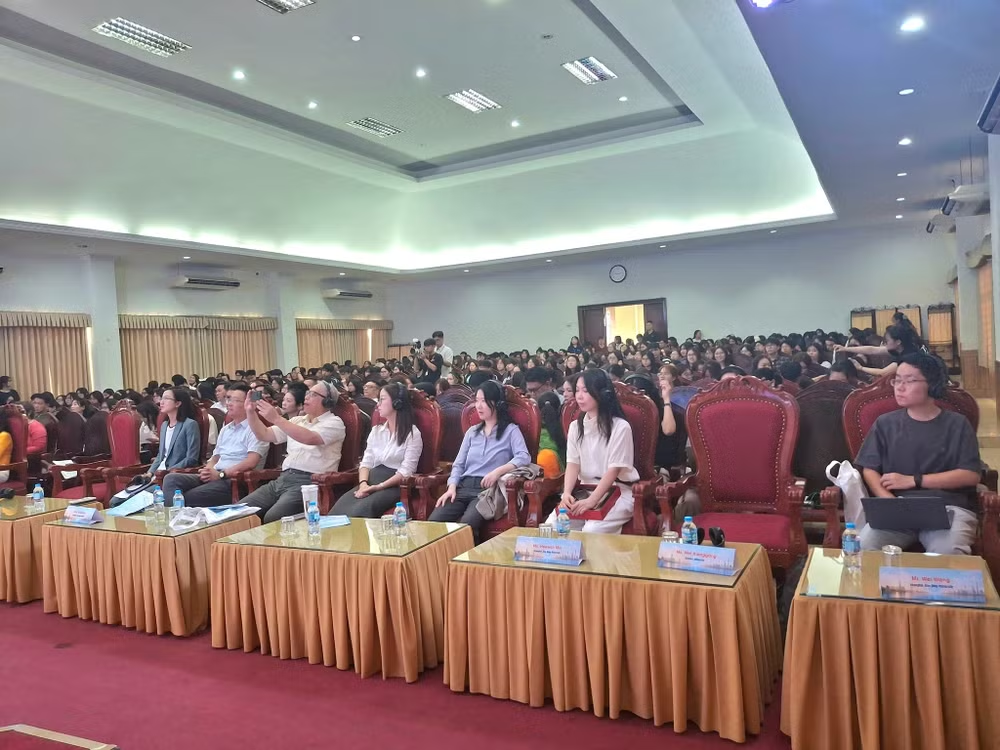
The workshop attracted researchers, lecturers, and experts to exchange ideas on the impact of AI on journalism, media, and social life. (Photo: Hien Anh/Vietnam+)
From the perspective of international integration, the exchange of research and training experiences is also seen as a way to improve the quality of human resources and broaden approaches to new issues in the digital environment.
Based on that, within the framework of the Conference, the Institute of Journalism and Communication Training, University of Social Sciences and Humanities, signed a memorandum of cooperation with the Institute of Communication and Media, Shanghai Jiao Tong University, with the goal of strengthening cooperation in journalism and communication training and research.
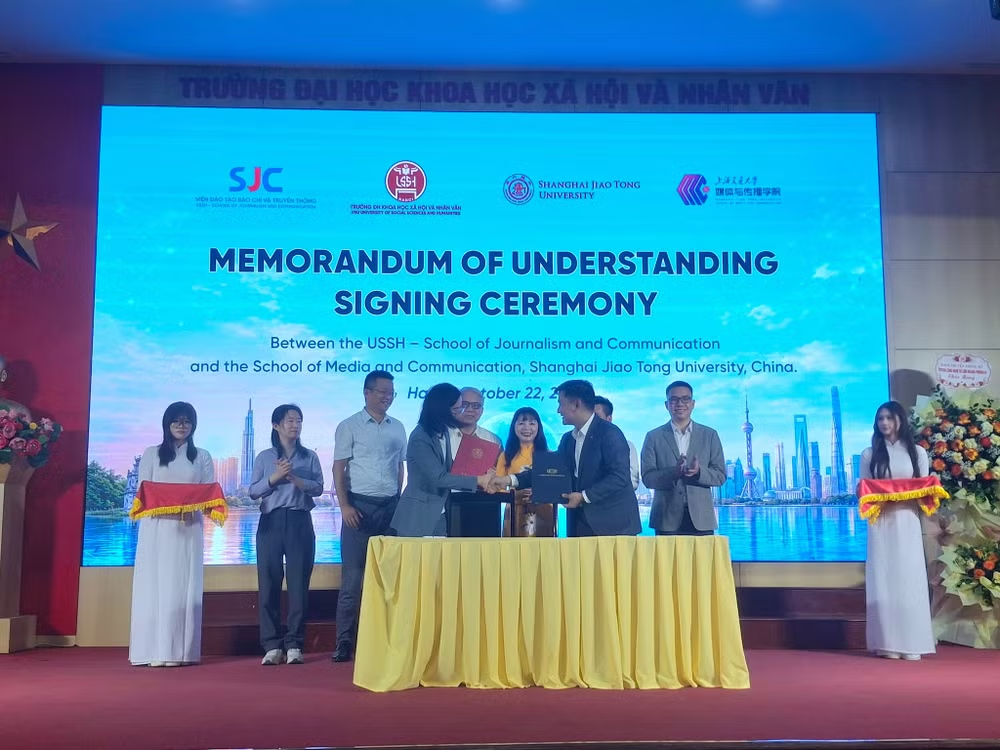
Representatives from the Institute of Journalism and Communication Training and the Institute of Communication and Media, Shanghai Jiao Tong University, signed a memorandum of cooperation. (Photo: Hien Anh/Vietnam+)
The signing of the memorandum of understanding is expected to lay the foundation for strengthening connections between the two institutions, promoting academic exchange and research in the fields of journalism and media, especially in light of the changes brought about by digital technology and AI.
With 52 selected papers published in the proceedings, the conference connected research perspectives from journalism, media, education to public administration, the labor market, and heritage preservation. Academic exchanges contributed to supplementing the scientific basis and practical experience for enhancing AI capabilities, aiming to bridge the digital divide and promote inclusive digital transformation in Vietnam.
In addition to the plenary session, four parallel thematic sessions were held in both Vietnamese and English, expanding the scope of discussion from journalism and media to education, business, and public administration. Through these sessions, the concept of AI capability was viewed more broadly – not just the ability to use tools, but also encompassing critical thinking, the ability to evaluate information, and adaptability to a changing technological environment.
In the context of artificial intelligence transforming the way information is produced, distributed, and received, strengthening connections between training and research institutions is of practical significance in sharing knowledge, experience, and approaches. This also forms the basis for the two institutes to further expand cooperation and promote interdisciplinary research on the digital divide, AI capabilities, and the impact of technology on journalism and media activities.
Author:Hien Anh/Vietnam+
Newer news
Older news

