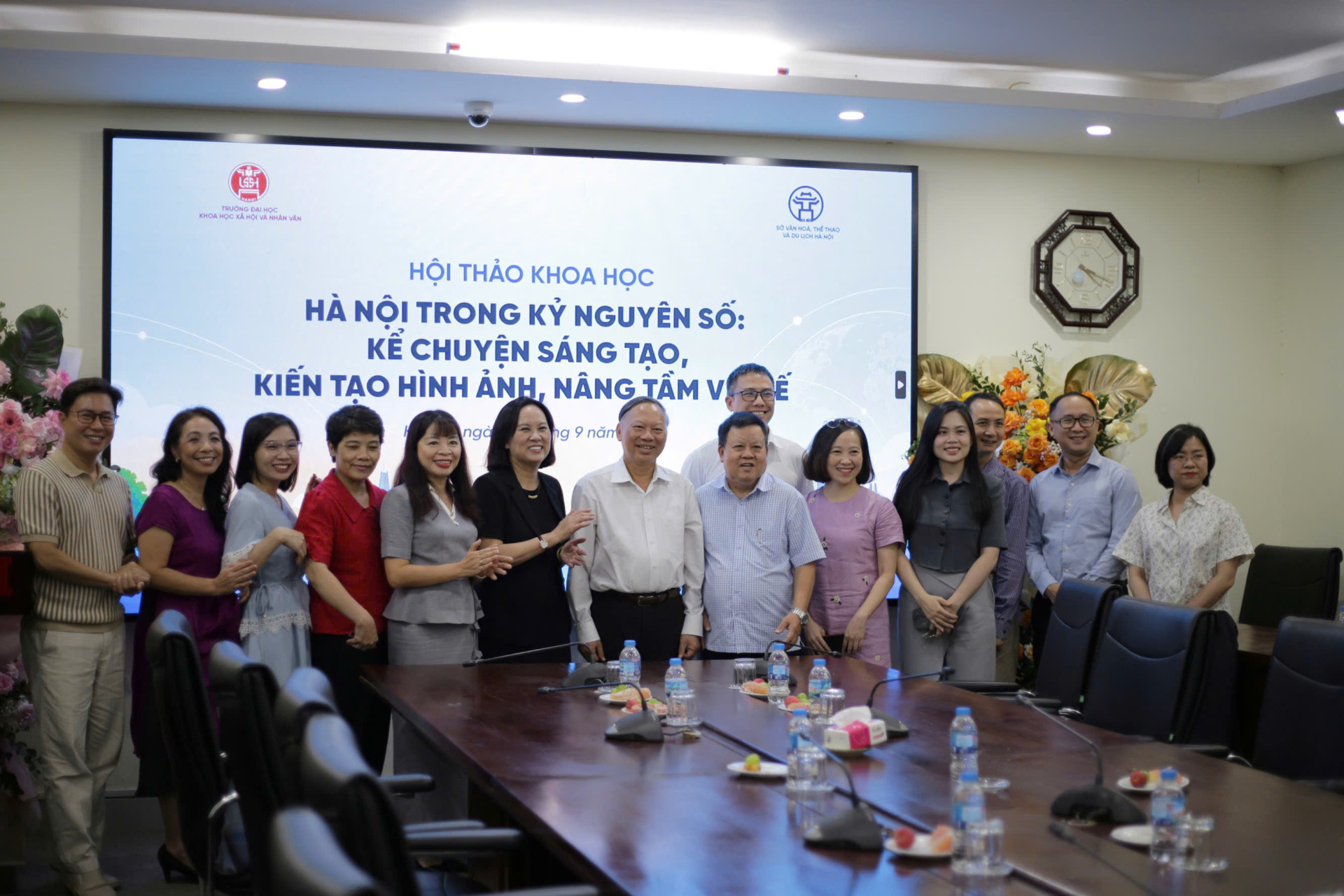
The workshop was attended by Ms. Nguyen Thi Mai Huong, Deputy Director of the Hanoi Department of Culture, Sports and Tourism; Ms. Tran Thi Mai Dung, Head of the Information - Press - Publishing Department (Hanoi Department of Culture, Sports and Tourism); Prof. Dr. Nguyen Quang Ngoc - Vice President of the Vietnam Historical Science Association. From the University of Social Sciences and Humanities, there was Assoc. Prof. Dr. Dang Thi Thu Huong, Vice Rector, along with many experts, scientists, and students.
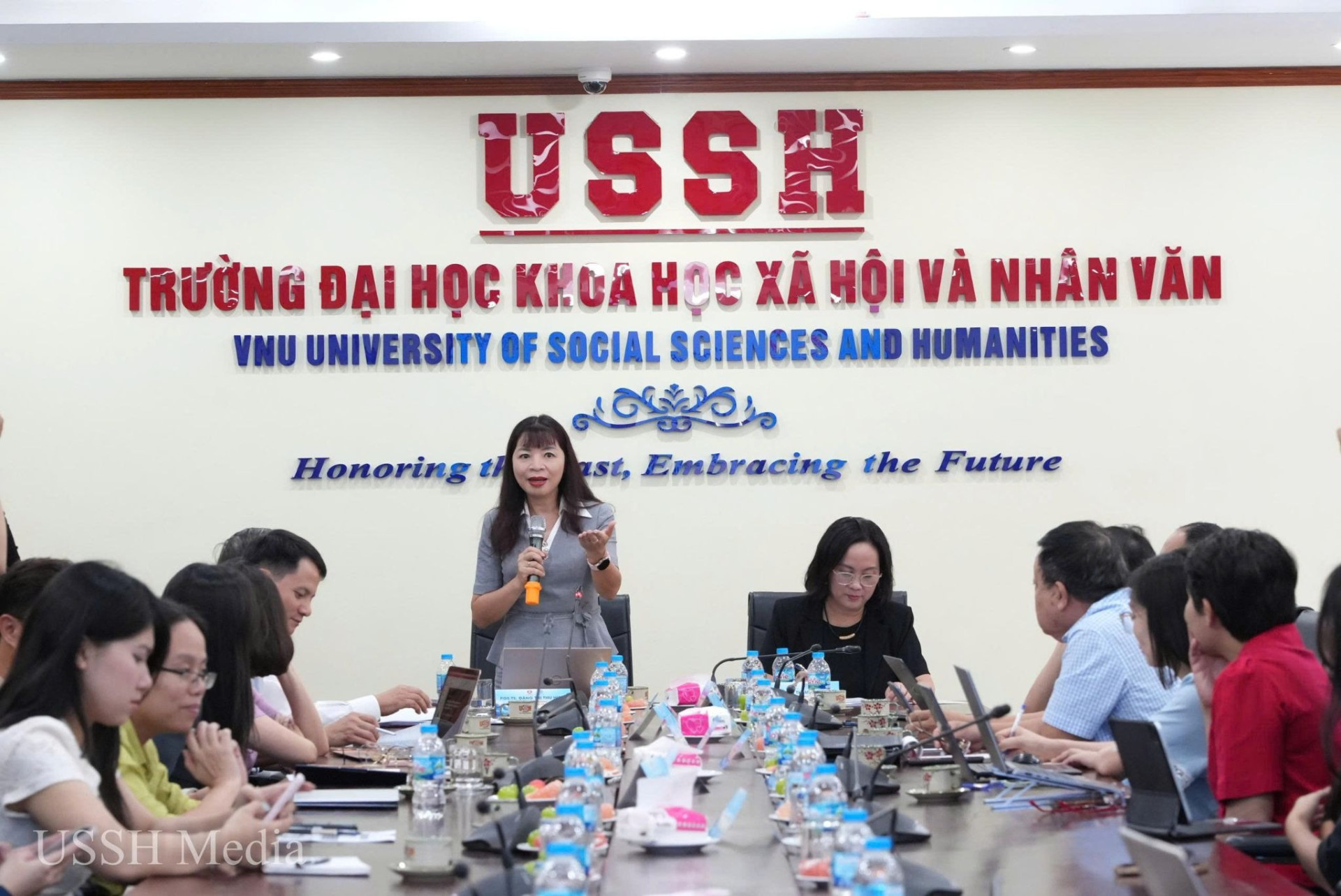
Overview of the scientific conference "Hanoi in the Digital Age: Creative Storytelling, Image Creation, Elevating Status" held on the afternoon of September 14th at the University of Social Sciences and Humanities.
Shift from "showcasing what's available" to "shaping the future"
In her opening remarks, Associate Professor Dr. Dang Thi Thu Huong emphasized that Hanoi is not just a city but also a national symbol, a place where unique historical and cultural values are embodied. In the digital age, the rich heritage will be difficult to fully realize without compelling storytelling to transform tradition into a resource for development.
From this perspective, Associate Professor Dr. Dang Thi Thu Huong suggests that the city needs to make a strong shift from the mindset of "promoting what Hanoi has" to "jointly creating the desired image of Hanoi in the future," aiming to build a multi-stakeholder and multi-platform media ecosystem.

Associate Professor Dr. Dang Thi Thu Huong shared: "A Hanoi with a beautiful image, unique identity, attractiveness, and international competitiveness will contribute to making Vietnam a more powerful soft power." Photo: Duy Phuong
Sharing the same view, Ms. Nguyen Thi Mai Huong, Deputy Director of the Hanoi Department of Culture, Sports and Tourism, stated: The project to promote the capital's brand aims to position Hanoi as a "Cultural - Civilized - Modern - Happy" city, green, creative, and rich in identity. To realize this goal, the project needs to ensure four pillars: Comprehensiveness (mobilizing the entire population, with each citizen acting as an ambassador), Identity (linking promotion with improving actual quality), Internationality (anticipating the world's need for understanding), and Modernity (digital transformation, multi-platform and multi-language communication).
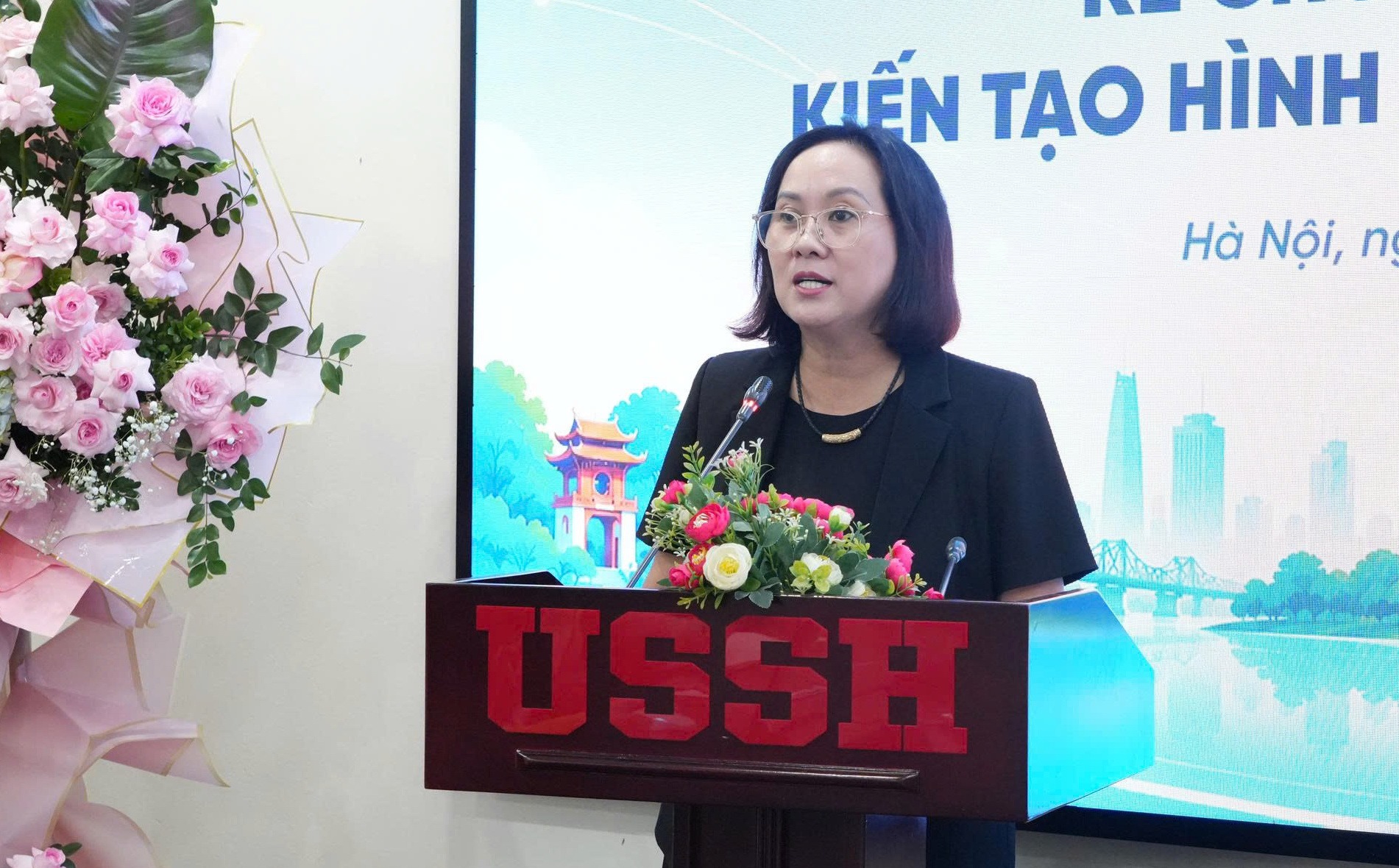
Ms. Nguyen Thi Mai Huong, Deputy Director of the Hanoi Department of Culture, Sports and Tourism, shared the four core principles of the Capital City Branding Project.
The Red River cultural axis and the challenge of experiential economy.
During the discussion session, Professor Nguyen Quang Ngoc, Vice President of the Vietnam Historical Science Association and Director of the Center for Hanoi Studies and Development Science, affirmed that to create the image of the future capital, it is first necessary to deeply understand the fundamental geo-cultural space of Thang Long. Recalling the ideas of the late Professor Tran Quoc Vuong about a Hanoi that is "half land, half water" and the admonition from the 1010 Edict on Relocating the Capital, "It is appropriate to look at the river and lean against the mountains," Professor Ngoc noted that Hanoi's planning must consistently adhere to the "river-oriented city" orientation, using the Red River as the main ecological and cultural landscape axis.
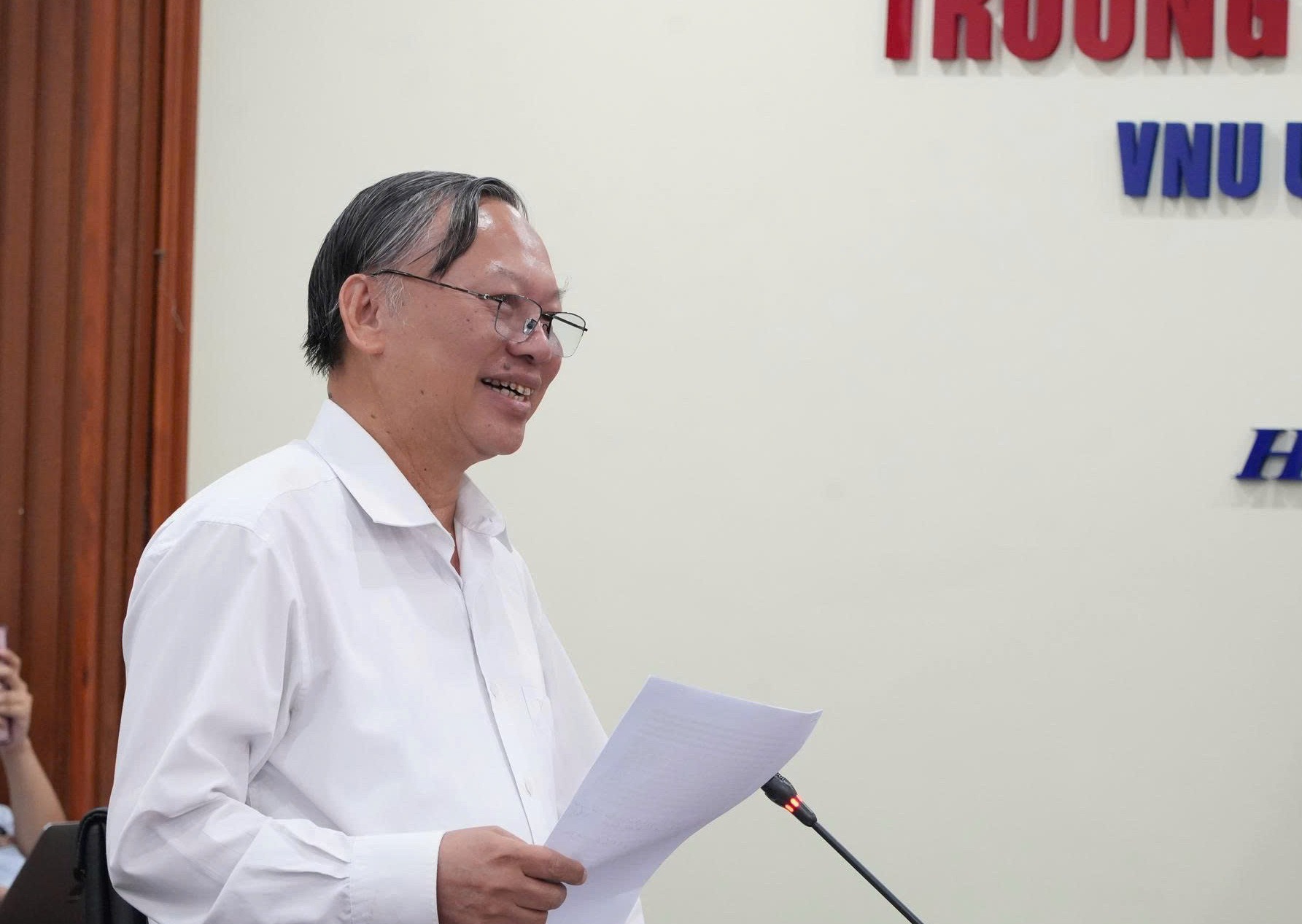
Professor Nguyen Quang Ngoc emphasized that Hanoi's development orientation must take culture as an endogenous resource and place people at the center.
In addition, Professor Nguyen Quang Ngoc warned that the search for new cultural symbols for the capital city requires extreme caution, absolutely avoiding massive, haphazard, alien structures or blatant concrete interventions in sacred landscape spaces such as Hoan Kiem Lake and West Lake.
To address the challenge of brand positioning in the digital environment, Associate Professor Dr. Dang Phuong Anh proposed a model based on three interconnected pillars: "Living Heritage - Creativity - Humanism." According to her, the depth of a thousand years of cultural heritage needs to be naturally continued in contemporary life; because a city's brand is only sustainable when the media accurately reflects what its citizens experience and believe every day.
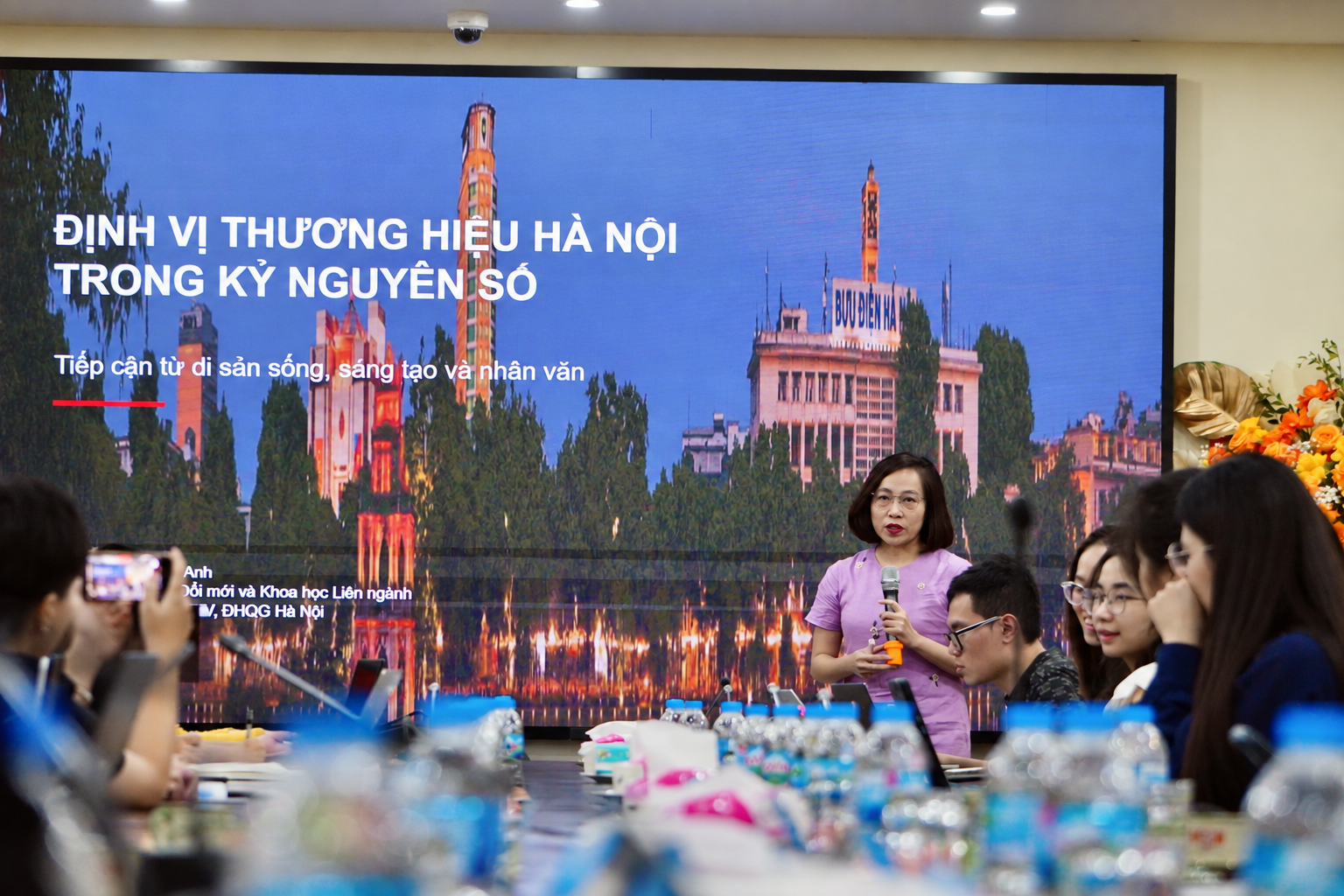
Associate Professor Dr. Dang Phuong Anh stated: "The Hanoi brand is only truly sustainable when what the city wants to communicate is exactly what its people are living, experiencing, and believing in." (Photo: Duy Phuong)
From an experiential economics perspective, Dr. Trinh Le Anh (Faculty of Tourism Studies, University of Social Sciences and Humanities) analyzed the effectiveness of typical night tour packages (Hoa Lo Prison, Thang Long Imperial Citadel, and Temple of Literature). Alongside positive results, the night tourism product chain still reveals some limitations such as: low connectivity, inconsistent digital infrastructure, and "sensory pollution." Dr. Le Anh suggested that Hanoi should soon pilot the issuance of a "Hanoi Night Heritage Card" with QR code integration and electric bus connectivity between destinations; develop a set of technical standards for sound and lighting at night for historical sites; and establish an open digital heritage data bank to provide accurate data sources for the creative community.
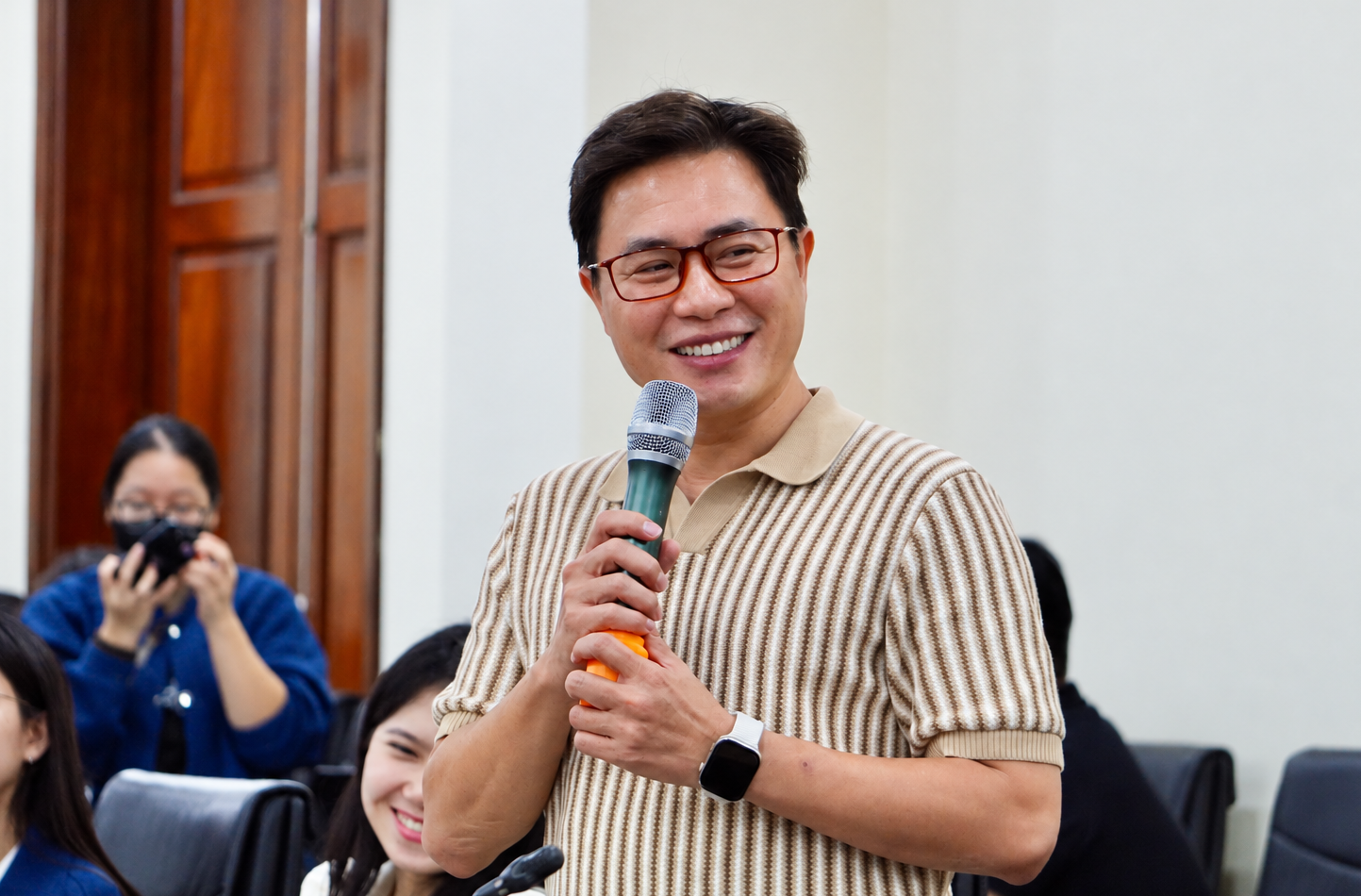
Dr. Trinh Le Anh emphasized the role of tourism as a driving force for economic and cultural development. Photo: Duy Phuong
From "Storytelling" to "Practical Action"
On the international level, Dr. Nguyen Dong Anh, Head of the Department of Communication and Foreign Cultural Relations at the Diplomatic Academy, analyzed the challenge of transforming four sources of capital into soft power: cultural capital, symbolic capital, creative capital, and diplomatic capital. Dr. Nguyen Dong Anh emphasized that, with its advantage as the political and diplomatic center of the nation, Hanoi can absolutely become a place with many attractive academic and political spaces that international friends will proactively seek out.

Dr. Nguyen Dong Anh analyzes four sources of capital that position Hanoi as "where the world meets Vietnam". Photo: Duy Phuong
Sharing the practical perspective of someone born and raised in Hanoi's Old Quarter for generations, Associate Professor Dr. Bui Chi Trung clearly distinguishes three levels: Image - Brand - Reputation. Image represents the outward appearance, brand is what the city desires, but reputation is what the public and society truly trust after experiencing it. Associate Professor Dr. Bui Chi Trung proposes a practical "5B" action model: Identity (condensed core values); Evidence (each promise must be proven by existing products/spaces); Transformation (demonstrating efforts to address urban bottlenecks); Partnership (co-creation with 10 million citizens); and Guarantee (measured by specific KPIs on quality of life).
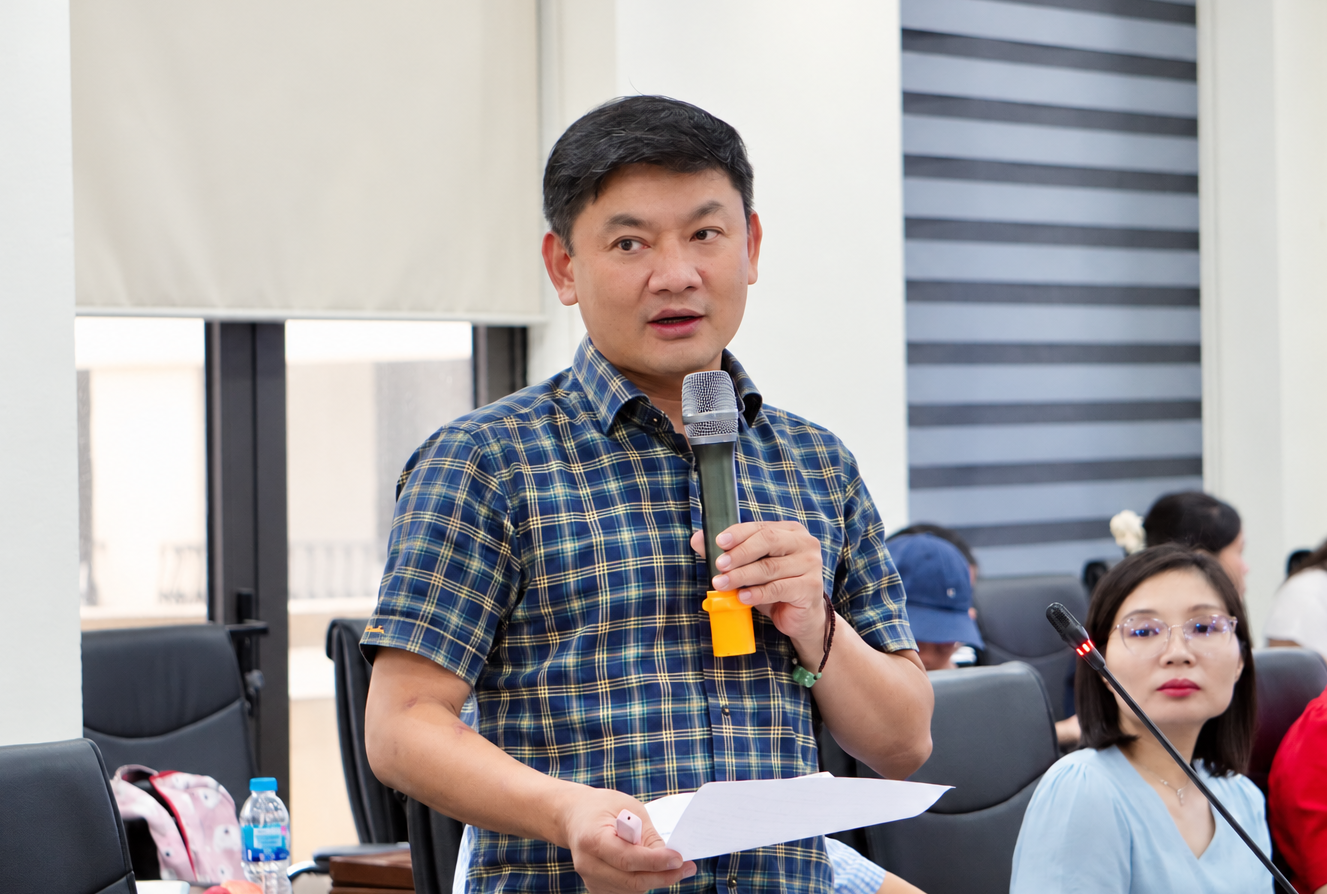
Associate Professor Bui Chi Trung proposed the "5B" action framework and the "Hanoi 365" initiative to build a genuine reputation for the capital city. Photo: Duy Phuong
Approaching from a digital media perspective, Dr. Tran Thu Thuy (Diplomatic Academy of Vietnam) outlines the brand's spatial axis as "Heritage - Creativity - Future." She particularly emphasizes that the digital era demands a shift from "Storytelling" to "Storydoing." All communication slogans will become meaningless if they are not accompanied by tangible upgrades in services, environments, and the public's real-world experience.

According to Dr. Tran Thu Thuy, traditional heritage needs digital technology to reach the younger generation, but technology without cultural depth will only remain a superficial performance. Photo: Duy Phuong
Hội thảo khép lại với sự đồng thuận cao rằng: Thương hiệu Thủ đô không thể chỉ dừng lại ở các thông điệp quảng bá trên không gian số, mà phải được bồi đắp từ chính chất lượng sống và sự chuyển mình thực chất của đô thị mỗi ngày. Những ý kiến tâm huyết, đa chiều từ các chuyên gia sẽ là cơ sở khoa học và thực tiễn quan trọng để hoàn thiện Đề án Truyền thông quảng bá thương hiệu, hình ảnh Thủ đô giai đoạn 2026-2030, tầm nhìn 2045, từng bước hiện thực hóa khát vọng định vị Hà Nội - nơi kết tinh di sản, ngập tràn sức sáng tạo và lan tỏa giá trị nhân văn ra thế giới.
Related articles:
Báo Thể thao & Văn hóa: To make the Hanoi brand a driving force for development.
Author:Tuấn Vũ, Duy Phương
Newer news
Older news

