Emerging from a prestigious institution specializing in training and research in the social sciences and humanities.
In 1990, the Faculty of Journalism (now the Faculty of Journalism and Communication) was established, marking a significant milestone as it was the first time that journalism training and research were conducted within a university outside the Party school system, and moreover, within a leading university in training and research in social sciences and humanities in Vietnam - Hanoi University (now the University of Social Sciences and Humanities, Vietnam National University, Hanoi).
From its early days, the Faculty has gathered a dedicated and enthusiastic team of faculty and staff, many of whom are renowned and respected scientists such as Prof. Ha Minh Duc, Assoc. Prof. Dr. Duong Xuan Son, Assoc. Prof. Dr. Dinh Van Huong, Assoc. Prof. Dr. Do Xuan Ha, Assoc. Prof. Dr. Vu Quang Hao, Prof. Dr. Do Quang Hung, Prof. Dr. Nguyen Thien Giap, Dr. Doan Huong, Assoc. Prof. Dr. Nguyen Thi Minh Thai, Dr. Trinh Ho Khoa, etc.
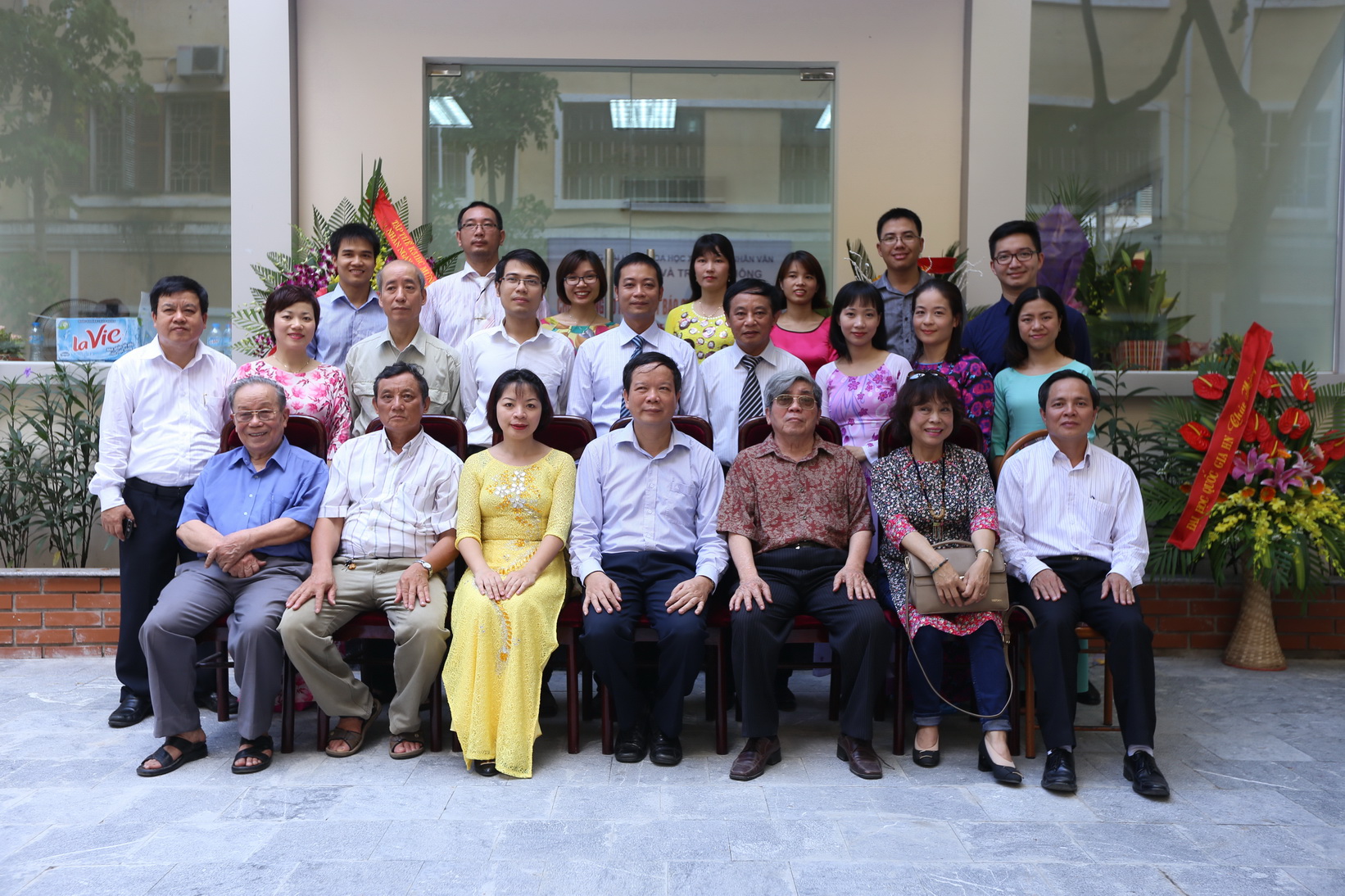
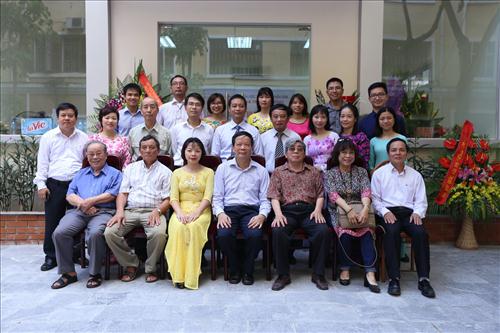
The faculty and staff of the Faculty of Journalism and Communication and the leadership of the University.
on Vietnam Press Day, June 21st
The academic knowledge and professional experience of the early professors and doctors laid a solid foundation for the existence and development of the Faculty, helping it to quickly grow and establish its position within the Social Sciences and Humanities sector of Hanoi National University. Continuing the work of previous generations, the current faculty of the Faculty of Journalism and Communication largely consists of young, dynamic, and enthusiastic staff. 100% of the lecturers hold a Master's degree or higher, with 29% being Associate Professors and 43% holding a Doctorate. Many staff members received professional training in the Soviet Union, the UK, Australia, South Korea, etc., and are reputable experts in the academic, research, and professional consulting fields of journalism and communication. In addition to the permanent staff, the Faculty also has more than 50 part-time and visiting lecturers who are experts in journalism, media management, and many reputable and experienced journalists.
Studying and working in a leading training and research environment for social sciences and humanities in Vietnam, students of the faculty have access to and are imparted the most fundamental, in-depth knowledge in philosophy, history, literature, linguistics, psychology, political science, etc. This important and valuable knowledge base helps future journalists create articles that resonate with readers, possessing cultural depth and a comprehensive understanding of society.
Training reform: Learner-centered approach, linking theory with practice.
Currently, the Faculty of Journalism and Communication (University of Social Sciences and Humanities, Vietnam National University, Hanoi) is one of the two largest journalism and communication training and research institutions in Vietnam, offering three levels of study from bachelor's to doctoral degrees in Journalism. It was the first institution to collaborate with Guangxi University (China) in training bachelor's degree students in journalism, and one of the first to collaborate with Stirling University (UK) in training master's degree students in "Media Management". The Faculty is also the only faculty in Vietnam to offer both Journalism and Public Relations programs. The applied-oriented Master's program in Journalism, which the faculty is awaiting approval for, will be the first postgraduate journalism program in Vietnam focusing on operational subjects and journalistic skills.
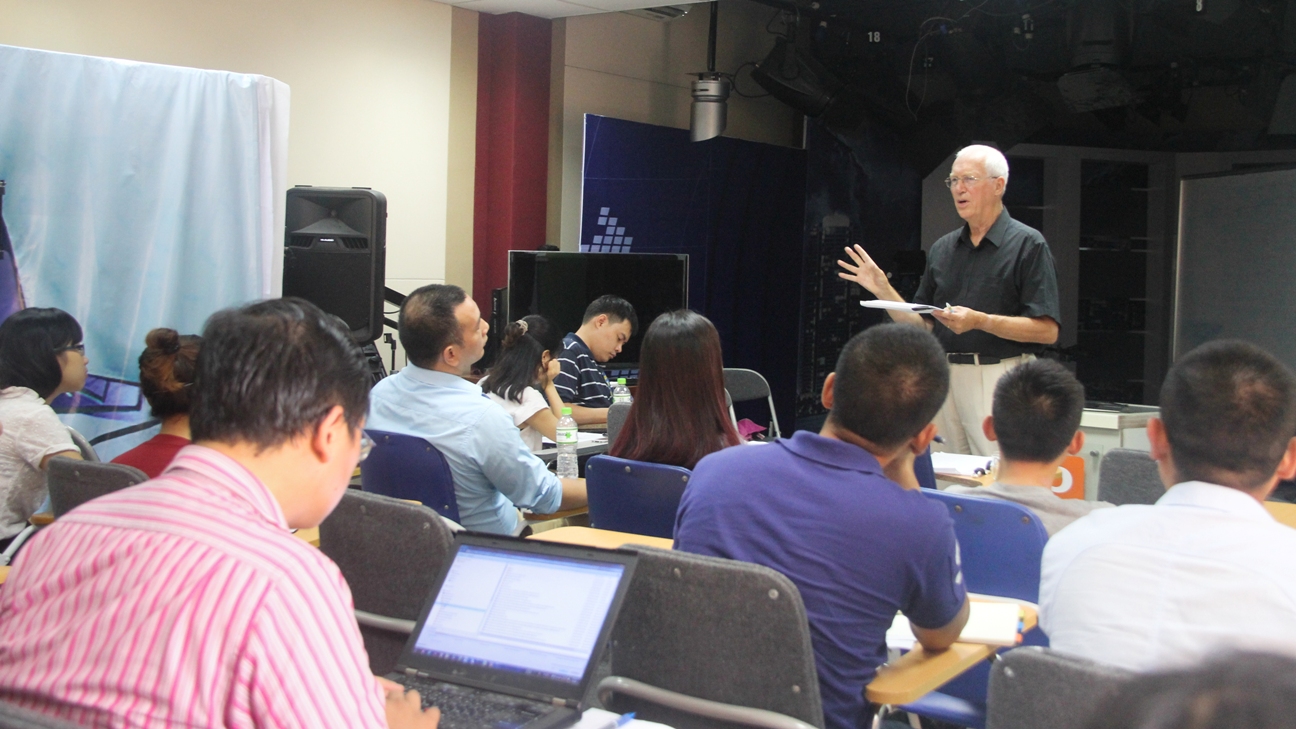
Richard Kilborn, professor at the University of Stirling (UK), gave a presentation on the topic "Participation Agreements - When the Audience is Involved".
as part of a television program with students from the Faculty of Journalism and Communication, June 2015
Since its establishment in 1990, the Faculty has trained over 10,000 full-time and part-time undergraduates, along with more than 350 master's and doctoral graduates. Among them are thousands of reporters, editors, and media professionals for many localities nationwide, from Lao Cai, Yen Bai, Tuyen Quang, Thai Nguyen, Ha Nam, Thuong Tin, Thanh Hoa, Vinh, Ho Chi Minh City, to Ca Mau. Over 100 alumni of the Faculty have won national journalism awards and journalism awards from various sectors and levels. Many alumni are heads or currently hold important positions in press management agencies and media organizations from the central to local levels.
Infrastructure development has also seen significant improvements, effectively and practically serving the teaching and research of journalism and media. The in-depth investment project to build a journalism and media training center, approved by the National University with a total investment of nearly 60 billion VND (phases 1 and 2), has helped the Faculty become the most modern and comprehensive journalism and media training institution in Vietnam today. Many student projects in practical courses have been broadcast and published on mass media channels, and many students have chosen to create journalistic products instead of writing their undergraduate theses. The gap between training and practical journalism is gradually narrowing, with theory being more closely linked to practice as the Faculty trains journalists in a miniature newsroom. At the same time, this modern and comprehensive infrastructure is one of the important factors that helps the faculty affirm its training conditions and quality during negotiations for student exchange and recognition of professional training credits with the network of major journalism schools in the region.
Professional research forms the foundation for professional training.
In addition to its training mission, the Faculty is also a leading center for journalism and media research in the country, with 2 state-level scientific research projects, 6 projects at the Vietnam National University, Hanoi level, 1 Asia Foundation project, and 3 university-level projects currently underway. Over the past 5 years, more than 200 scientific papers by faculty members have been published in scientific, theoretical, and specialized journals, or presented at domestic and international conferences.
Numerous domestic and international scientific conferences organized by the faculty over the past five years have attracted the attention and participation of hundreds of Vietnamese and foreign scientists, creating a significant impact in the research community. Simultaneously, they have offered many recommendations, solutions, and contributions to relevant agencies managing and promoting the improvement of journalism quality in Vietnam today, such as the conference "Media culture in the era of integration, “Social responsibility and journalistic ethics in the digital age”, “Models of economic journalism in Vietnam and Germany.”, “Social media, traditional media, and public opinion.”, 'Media management and information providers in the digital age”, “The role and impact of mass media culture on the Vietnamese public and society in the context of a market economy and international integration.”, “Operational skills for industry newspapers”, “Participatory discussion – When the audience is part of the television program." and "Legal issues in public relations..."
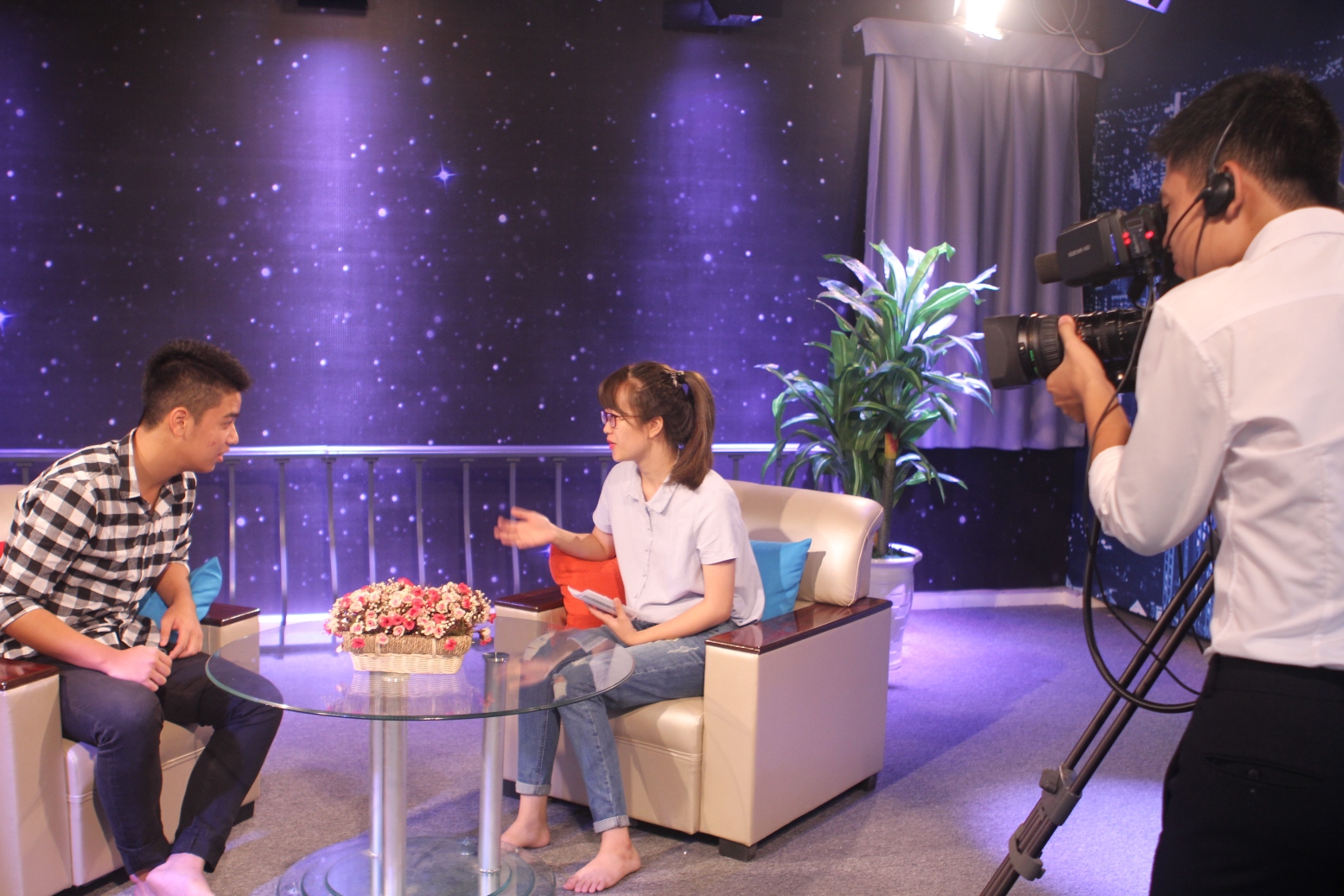
Students from the Faculty of Journalism and Communication during a practical television broadcasting class.
with modern machinery and equipment
The faculty members of the department have compiled 20 textbooks and 24 specialized lectures, nearly 30 monographs, and translated more than 15 documents on foreign journalism. These works systematically and comprehensively address fundamental issues in research and practice of journalism and media in Vietnam today, effectively serving training and policy advice. Many of these textbooks and monographs are not only essential reading for the department's students but also serve as handbooks for lecturers and students at many other universities.
Cooperation, integration, and development
The Faculty of Journalism and Communication is a major hub for international exchange in journalism and communication research and training in Vietnam, with partnerships with many large international media organizations.
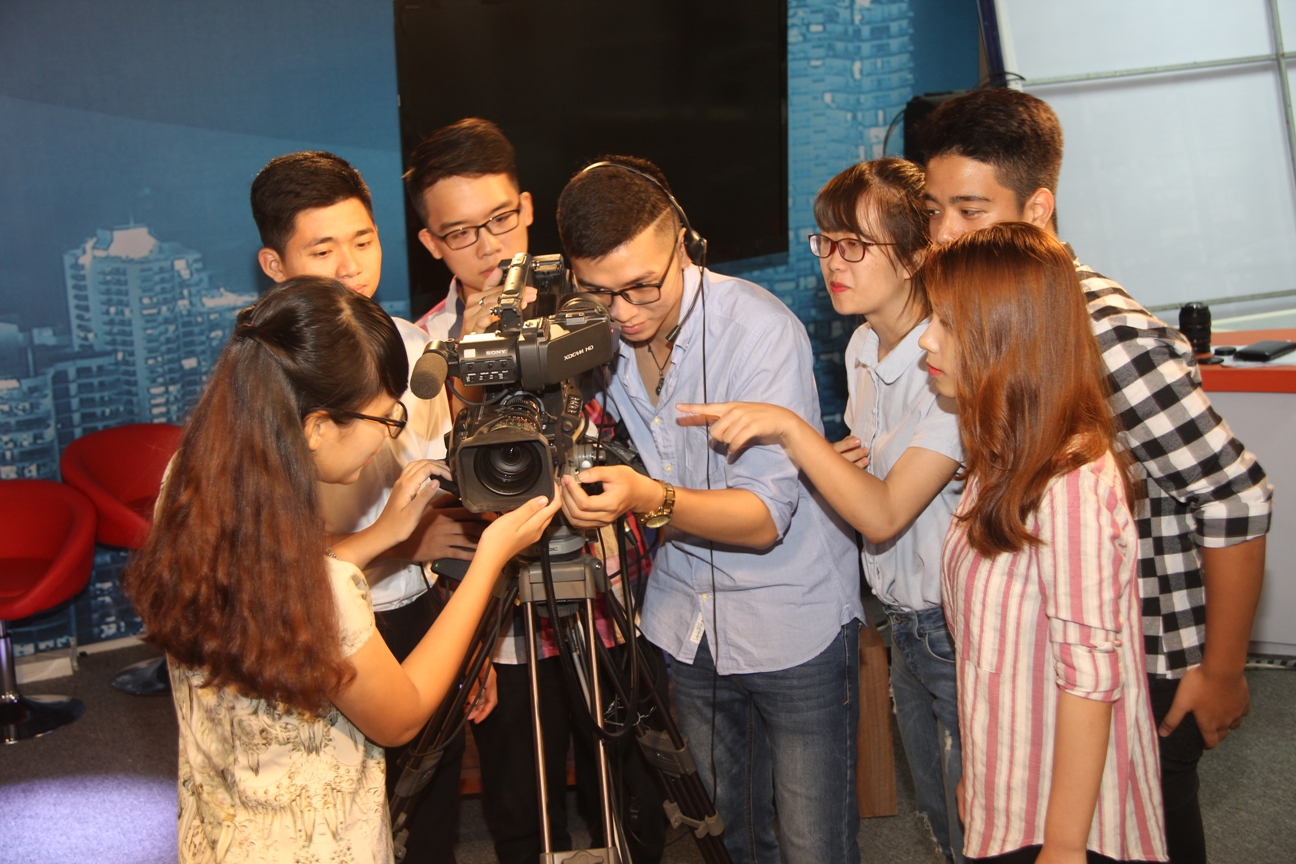
Numerous international cooperation projects have been implemented, notably the MediaPro Project – building a framework for journalism training programs according to international standards (funded by the British Council), and the project to enhance the capacity of young journalists (funded by the US Embassy)... The results of these cooperation projects include the publication of many specialized books, dozens of staff members receiving training to improve their teaching skills both domestically and internationally, and the journalism training framework has been gradually revised and improved to suit the development trends of the global and Vietnamese media industry.
The Faculty of Journalism and Communication is gradually joining the network of five major journalism schools in the region, and in the near future, these five schools will exchange students and recognize practical training credits in each other's undergraduate programs. This is one of the steps the Faculty is taking to continuously improve the quality of its training to be on par with regional and international standards.
The profound lessons that have led to the Faculty's success today are the spirit of unity, consensus, and close ties among generations of faculty and students; the responsible, dedicated, dynamic, and effective work ethic of the staff and lecturers; the diligent, serious, open-minded, eager-to-learn, and creative efforts of the students and trainees of the Faculty of Journalism and Communication; and the collaborative support of many forces both inside and outside the Faculty.
With the youthful energy and ambition of its 25th year, the Faculty of Journalism and Communication will continue to leverage its internal strengths and collective power, attracting external resources to build and develop the Faculty in depth and towards standardization and modernization of all aspects of its work, in line with the overall development of the University of Social Sciences and Humanities and Vietnam National University, Hanoi, towards a research-oriented university.
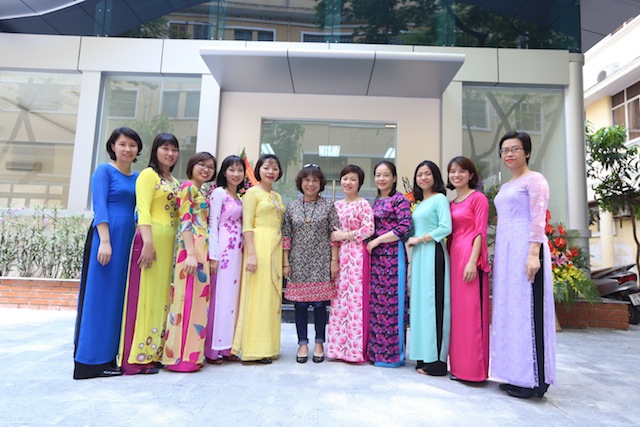
The female staff of the Faculty of Journalism and Communication and the Center for Journalism and Communication Professional Training
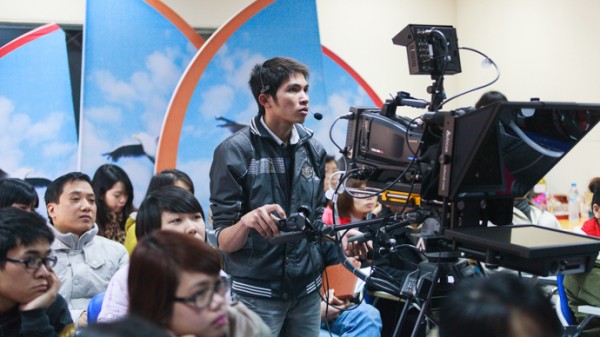
Students of the Faculty of Journalism and Communication have the opportunity to practice with modern equipment at the Center for Journalism and Communication Professional Training.
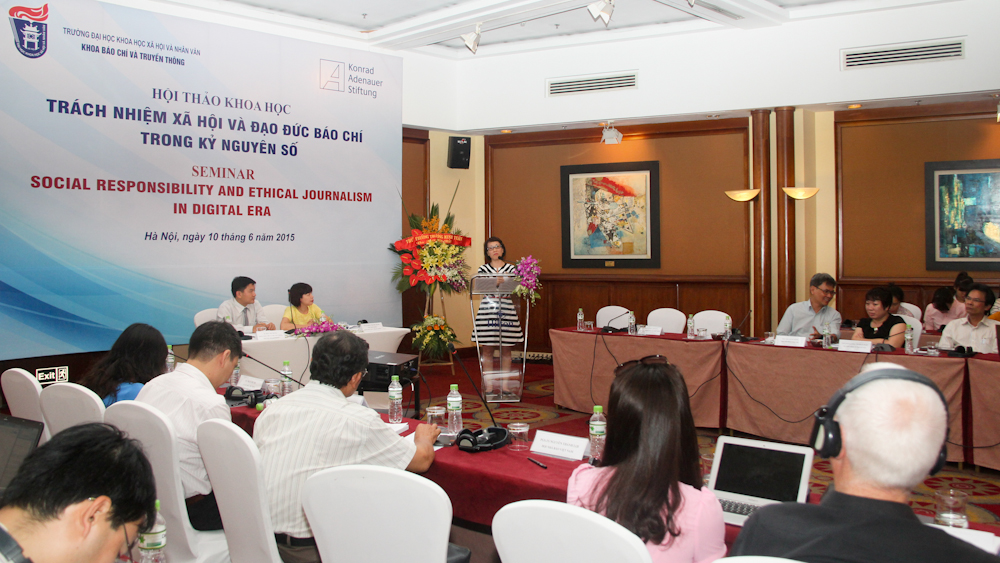
The Scientific Conference was organized by the Faculty of Journalism and Communication, University of Social Sciences and Humanities, Vietnam National University, Hanoi, in collaboration with the KAS Institute (Federal Republic of Germany) on June 10, 2015.
Assoc. Prof. Dr. Dang Thi Thu Huong - Head of Department
Newer news
Older news

