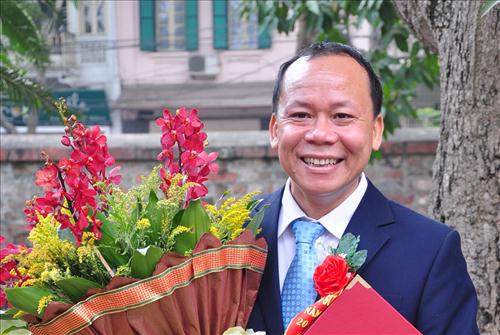
In 2005, I was assigned as a doctoral student under his supervision. I was one of the first doctoral students supervised by the youngest associate professor in the country in the field of linguistics at that time (and later, he became the youngest professor in the social sciences to be appointed at the age of 46). At that time, I still harbored many ambitions in other branches of linguistics besides syntax, so I was somewhat apprehensive. When I met him, he said, "I believe Duong can do it!" I knew he was encouraging me, but I also felt reassured and confident. Later, I learned that he knew how to encourage his students' abilities. For him, no student was incapable of doing the work; the only difference was how much effort they put in. His belief in his students was both a motivation and a pressure, and for me, that was the starting point of everything I did afterward.
I still remember the days when my teacher was in Korea. Every morning I would receive an email from him. He would tell me what he had read, what he had written, what he had absorbed into his mind… And at the end of the email, he would always demand a corresponding answer from me: “What have you accomplished, Duong?” Needless to say, I was incredibly nervous every time I received an email from him, because I saw how knowledgeable he was, yet he continued to accumulate knowledge every day, like adding pebbles to his vase. That vase kept filling up, while my vase only had a few pebbles at the bottom, which he himself had helped me fill. Until one day, impatient with my sluggishness, he emailed me a story that I will probably never forget. He said that Confucius once said that if a scholar doesn't read a book for a day, when he looks in the mirror, he will see his face stained. He left it at that. But after reading it, I had to go wash my face to clear my head, and two weeks later I sent my first paper to the professor.
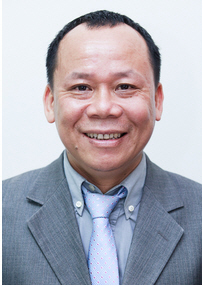
Professor, Doctor Nguyen Van Hiep
I loved to have fun, and I used to be proud of that (I often blamed it on "youth," because everyone my age was the same). Once, after a trip, I met my professor. He asked me all sorts of questions about the trip, but then concluded with, "Actually, nothing is more enjoyable than completing something related to science." Indeed, upon reflection, I realized he was right. Having fun and feeling tipsy afterwards is great, but completing a paper or writing a research project leaves a lasting impression. My professor had a lot of experience, so his words made even a stubborn person like me (after arguing vehemently) have to admit it.
I often tell my professor that he's like a dictionary. Whatever I ask, he points me directly to the relevant book, page, or section. He has a vast collection of e-books and enthusiastically shares them with everyone. But in my opinion, he only needs to integrate a search tool into his own mind; that would be enough for people who need to look up information without having to access any other electronic library.
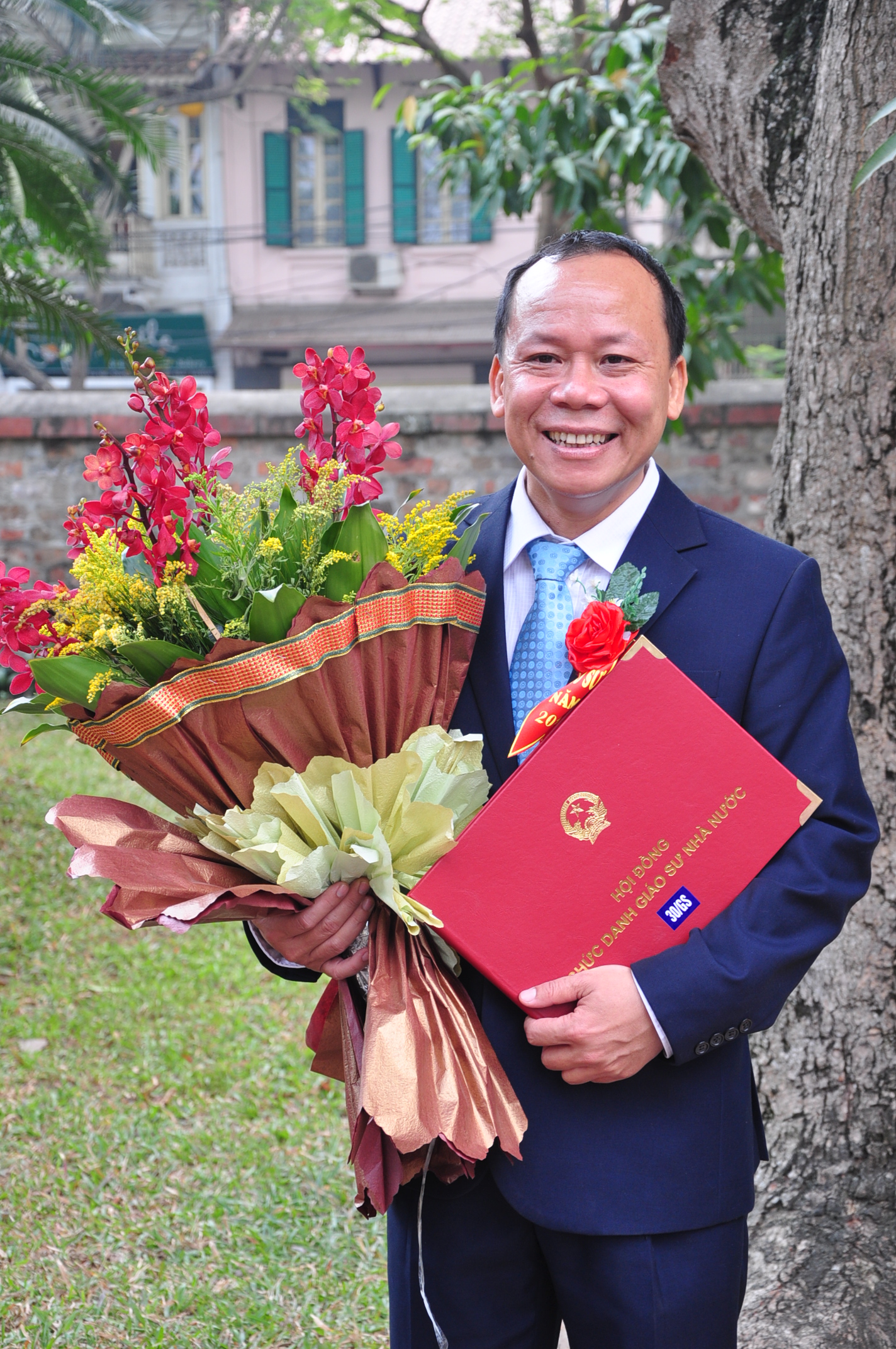
Professor Nguyen Van Hiep was awarded the title of Professor in 2010 - the youngest professor in the field of Linguistics.
To become a scientist, he went through a challenging path. I often called him "the teacher of firsts," because I've never seen him come in second. As a student, he won first prize in the national middle school literature competition, and then went on to win first prize in the national high school literature competition (I suspect that if there were a national competition at the university level, he would still be the first prize!). In university, he won first prize in the Russian language Olympiad for students from universities in the capital when he was only a second-year student. Later, when I learned about his Russian language award, I was incredibly surprised, because he was very good at English and French, especially English, so I thought he majored in English in his student years. It turned out that English was just a "side" foreign language for him. Reading the translations of someone who learned English on their own like this teacher, no one can find fault with them, because they are so refined; any other translation would immediately lose that refinement. My friend – someone who has lived in America for over 10 years, whose English is like a mother tongue – once exclaimed this after reading the translation of the book.Linguistic Semantic s- An IntroductionJ. Lyons' work was translated by the teacher and published as a book by the Education Publishing House in 2006, and has been reprinted twice in the following years.
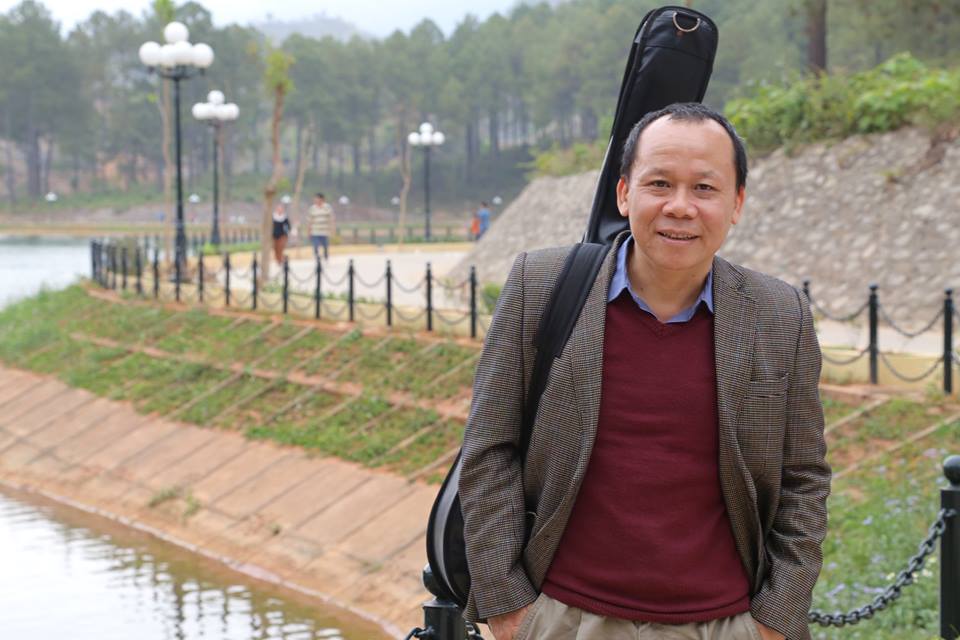
Professor Dr. Nguyen Van Hiep: An artist in everyday life.
He was knowledgeable and profound, but if anyone asked me about him, I preferred to tell them other, more personal stories. One time, I accompanied him to meet Professor Shimizu (a Japanese professor at Osaka University). Witnessing Professor Shimizu's emotional reaction, even to tears, upon receiving a nunchaku as a gift from my teacher, I was utterly surprised. In the professional sense, it's an invaluable asset for a martial artist. That nunchaku had been with him for a very long time, and he must have been a very close friend to give it to someone else. From that incident with the nunchaku, I learned another interesting thing about him. He was once a renowned karate instructor, having taught martial arts to countless generations of students. Then I remember the moment he embraced his guitar amidst his close friends from Saigon who had come to Hanoi, playing and singing Trinh Cong Son's songs, deeply moving and poignant. I remember the image of my professor in his shorts and jersey, chasing the ball with his students during the sports seasons… Those simple moments seemed hard to find in a university professor, but luckily, I witnessed them frequently while studying under him throughout my years of “learning the teaching profession.” Perhaps it was because of his kind, warm, and approachable way of life that he had so many friends who were wholeheartedly devoted to him, and his students always felt proud and moved whenever they mentioned him.
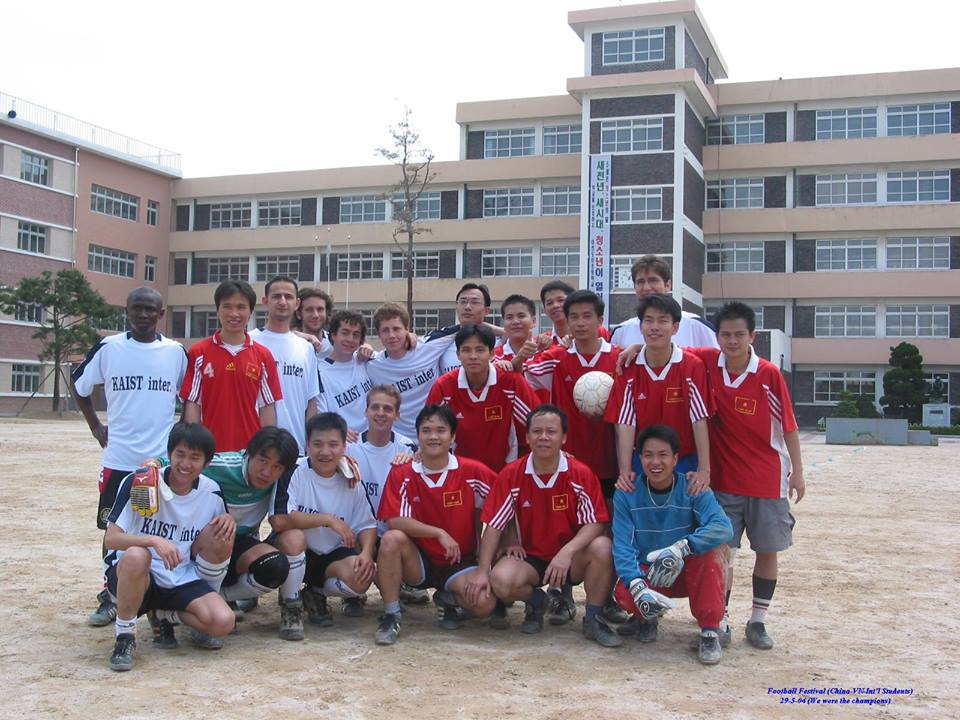
Professor Nguyen Van Hiep and the Hankuk University of Foreign Studies football team.
In 2008, during a trip to Hue to take students for internships, I met my professor and accompanied him to visit his home in Bao La village, Quang Phu commune (Quang Dien district) – about 15km from Hue city. The road from the beginning of the village to his house was still unpaved, and when it rained, it became a muddy mess. His house hadn't been rebuilt yet; it was still a very old, single-story house, bearing the marks of countless floods. He pointed out different places in the house to me: some areas were flooded up to his knees, others up to his waist, and the highest point was where the whole family would take refuge from the floodwaters, waiting for the water to recede. Hearing this, I was deeply impressed by his determination to overcome hardship. From poverty, he had resolved to escape suffering through education, and as a result, he had conquered countless challenges. From a poor student to an outstanding graduate who immediately pursued postgraduate studies, to the youngest professor in his field at the age of 46, trusted by his superiors to serve as Deputy Head of the Department of Linguistics at the University of Social Sciences and Humanities, then transferred to the Institute of Linguistics and appointed as its Director. A long journey, marking the hard work and efforts of an outstanding son of Hue.
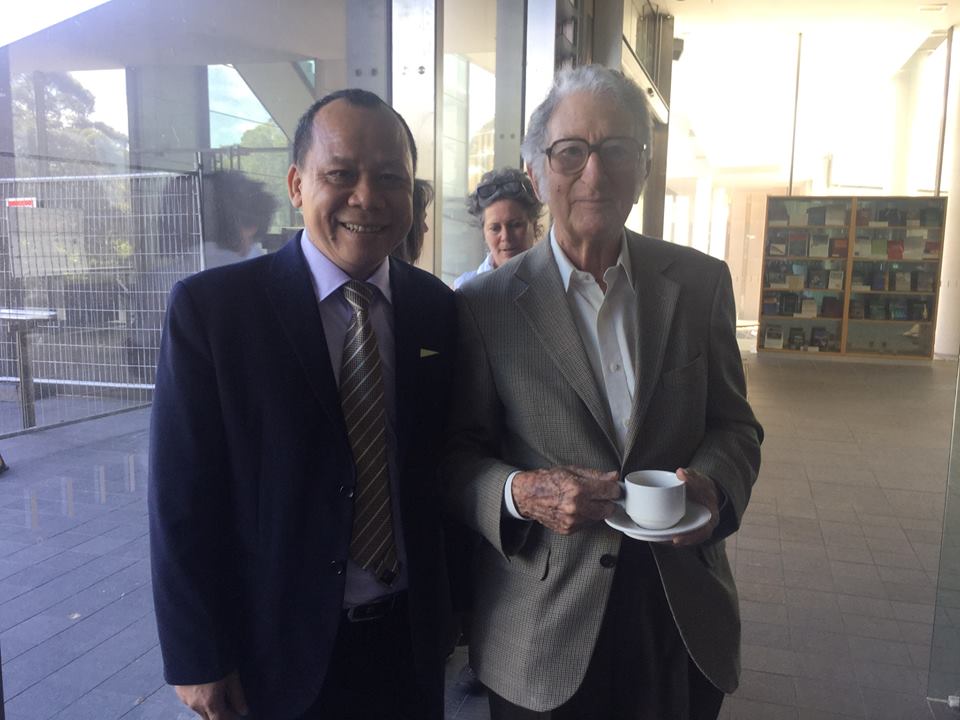
Professor Dr. Nguyen Van Hiep and the renowned scientist - Professor MAK Halliday
I haven't had the chance to return to Bao La village, my teacher's hometown, but I was delighted to see a photo on his Facebook page of him with his parents and friends in front of his spacious and sturdy house, which was rebuilt in 2010, partly thanks to the money he saved after a long period of hard work researching and teaching. He confided to his friends that this was the most worthwhile thing he had done; with this house, he no longer worries so much about his parents back home during the rainy and stormy seasons.
Professor [Name] has appeared in dozens of books and research papers both domestically and internationally. During his 20 years at the university, he published 9 books and monographs, including [title of book].Vietnamese syntaxHe won the National University's annual award for outstanding scientific work in 2011, translated two books, and published nearly 50 articles in prestigious journals both domestically and internationally. His scientific reputation is not only known among domestic scholars but also resonates internationally, earning him the admiration of many scientists. Teaching and research are both passionate pursuits for him. He often says, "With passion comes success." With such an insatiable passion for science, I will surely have many more opportunities to write about him in the near future…
|
PROFESSOR, DR. NGUYEN VAN HIEP
+ Affiliation: Department of Linguistics, University of Social Sciences and Humanities + Management position: Deputy Head of the Department of Linguistics (November 2010 - January 2012). Director of the Institute of Linguistics, Vietnam Academy of Social Sciences (2012-present).
Vietnamese syntaxVietnam Education Publishing House, 2009 The semantic basis of parsing,Education Publishing House, 2008. Vietnamese sentence components.Hanoi National University Publishing House,1998. Reprinted by the Education Publishing House in 2004 and 2014, co-authored with Nguyen Minh Thuyet (editor-in-chief). The expression of modality in VietnameseThe expression of modality in Vietnamese. Cahiers d'etudes vietnamiennes, University Paris 7 Denis Diderot. The History of Approaches in Describing Vietnamese Syntax. Journal of the Research Institute for World Languages. Osaka University. No. 1-2009.
+ Award for Outstanding Scientific Work of Hanoi National University in 2011 for the bookVietnamese syntax, Education Publishing House, 2009. + Certificate of Merit from the President of the Vietnam Academy of Social Sciences for outstanding achievements in scientific research in 2014, for the following work:Some new issues in the development and preservation of the purity of the Vietnamese language.. |
Author:Dr. Do Hong Duong

