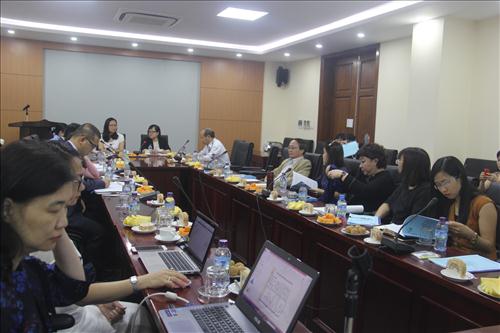
The training delegation from the Institute for Educational Quality Assurance - Vietnam National University, Hanoi included Dr. Tran Thi Hoai (Deputy Director), Dr. Mai Thi Quynh Lan, and Dr. Mai Anh. Assoc. Prof. Dr. Tran Thi Minh Hoa, Vice Rector of the University, attended, along with the University's Center for Educational Quality Assurance, which was directly in charge. The leadership and staff of the Faculty of Tourism Studies also participated in the training session.
Associate Professor Tran Thi Minh Hoa stated: "The Faculty of Tourism Studies is one of the three faculties of the University (Faculty of Linguistics, Faculty of Tourism Studies, and Faculty of History) that have pioneered in evaluating the quality of training programs - the Faculty previously conducted an evaluation of the Tourism Studies program in 2009. We are currently implementing peer evaluation of training program quality according to AUN standards. This training session is oriented towards addressing the most basic issues of report writing. Following this, there will be additional training sessions conducted by the University's Center for Quality Assurance in Education, working directly with the Faculties."
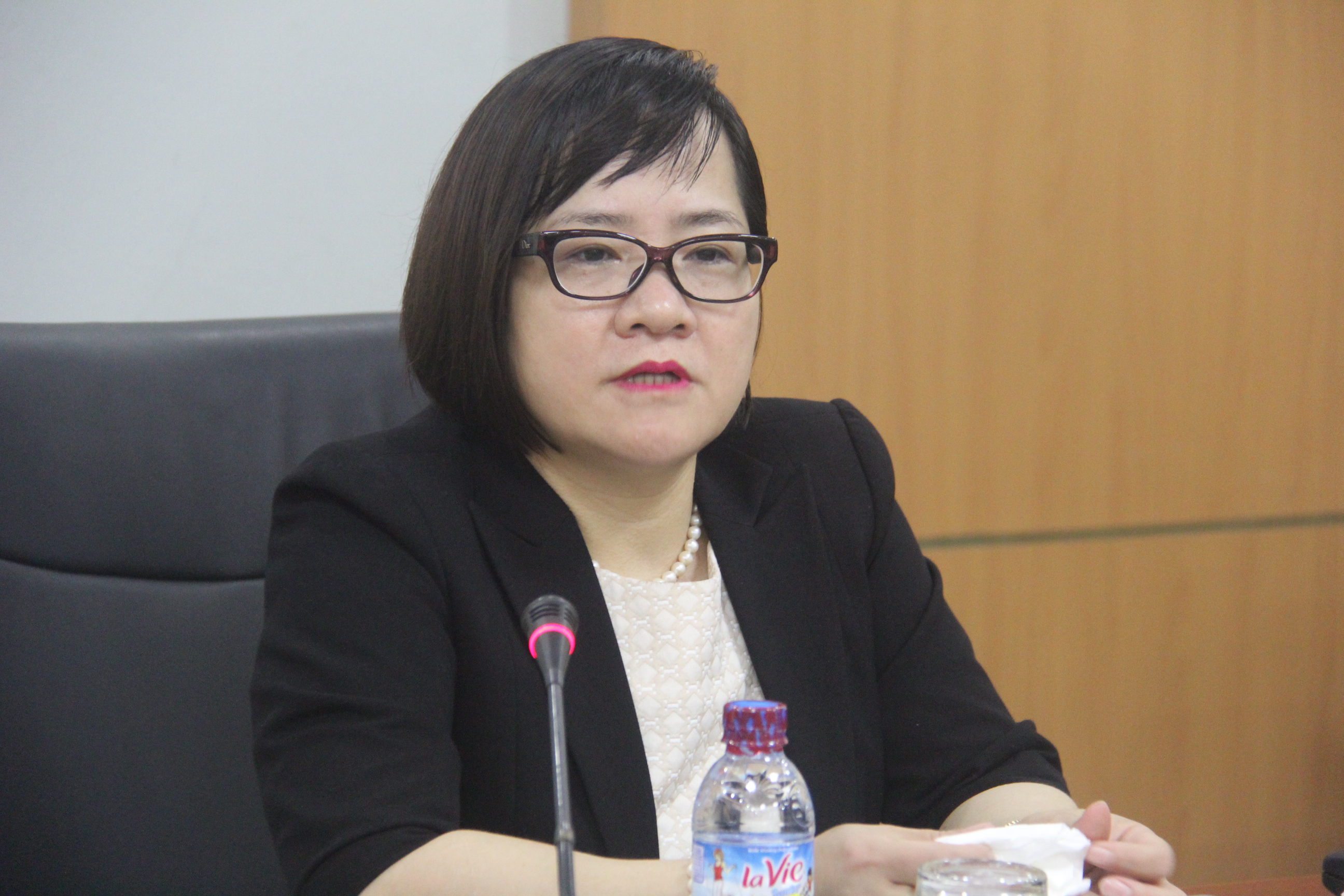
Dr. Tran Thi Hoai (Deputy Director of the Institute for Quality Assurance in Education - Vietnam National University, Hanoi) shared: "In the last two years, partner organizations have consistently asked the universities in particular and Vietnam National University, Hanoi in general: has the training program or training institution undergone quality accreditation? If we do not make efforts to implement accreditation, we will likely fall behind even within the domestic education landscape, let alone cooperate or expand to the regional and global levels."
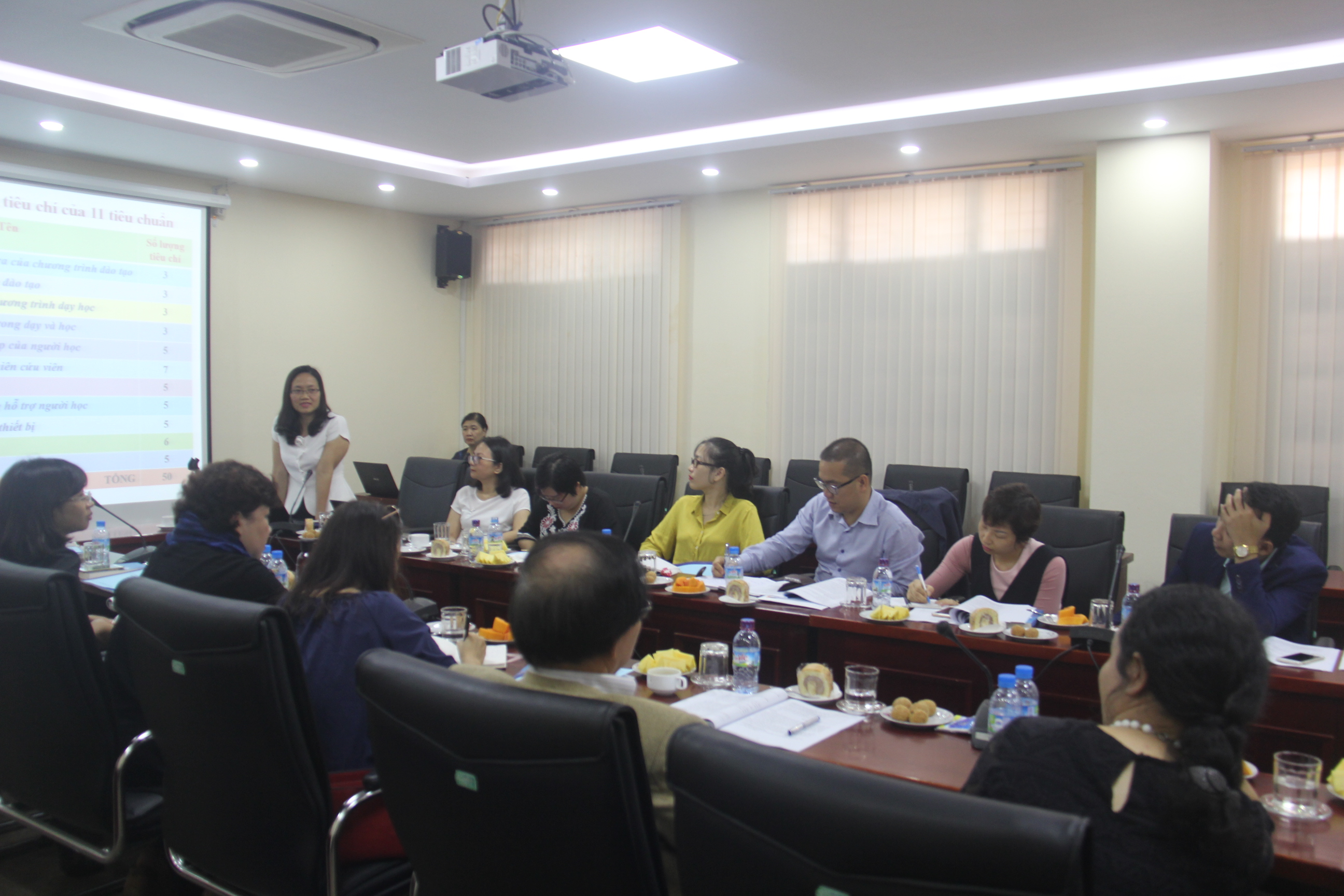
The leadership and staff of the Faculty of Tourism Studies engaged in lively and frank discussions about the remaining issues encountered during the report writing process. In the training program for the Tourism and Travel Service Management major, the faculty highlighted strengths such as: high integration – access to many international training programs; meeting societal needs; pioneering and opening up many new trends in the field of tourism human resource training; good interdisciplinary and articulation capabilities; high-quality practical training facilities; and high knowledge synthesis capacity – graduates are capable of meeting the requirements of many professional fields. In addition, questions regarding the collection of evidence, types of evidence, and the timeframes for evidence were also addressed and shared with the Faculty of Tourism Studies by experts. Furthermore, ensuring the updating of training programs on the University and Faculty websites and through other widespread promotional methods is also crucial.
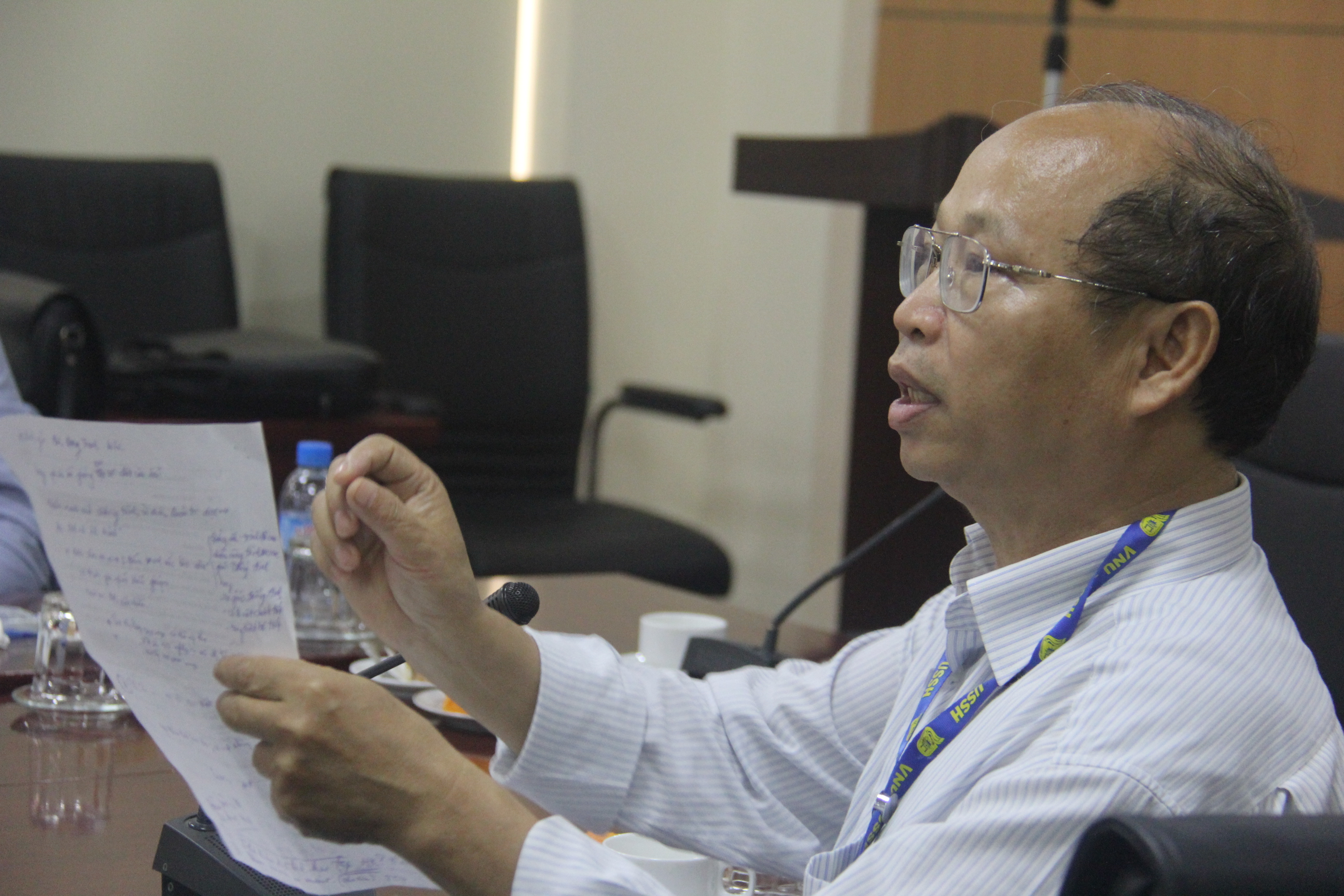
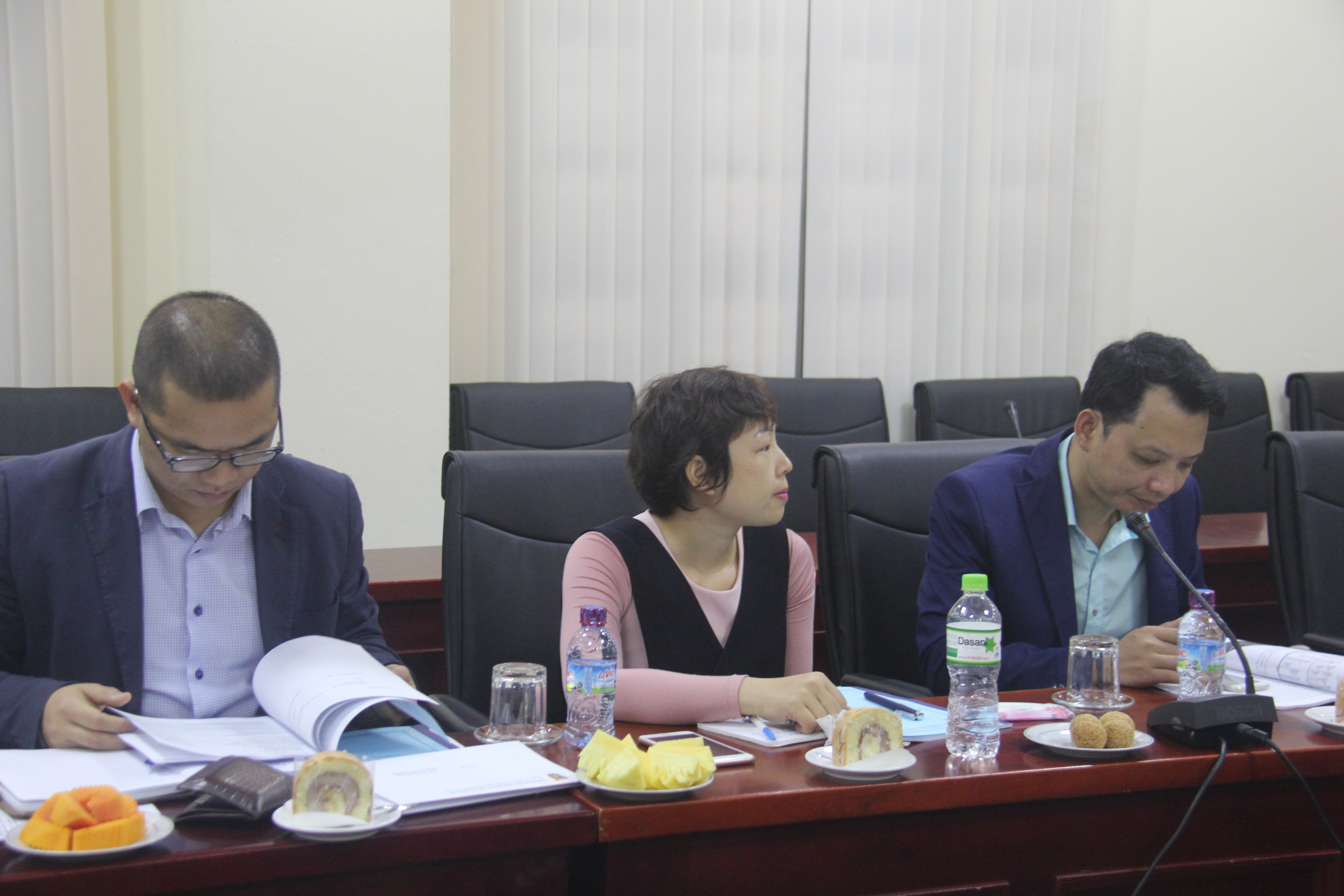
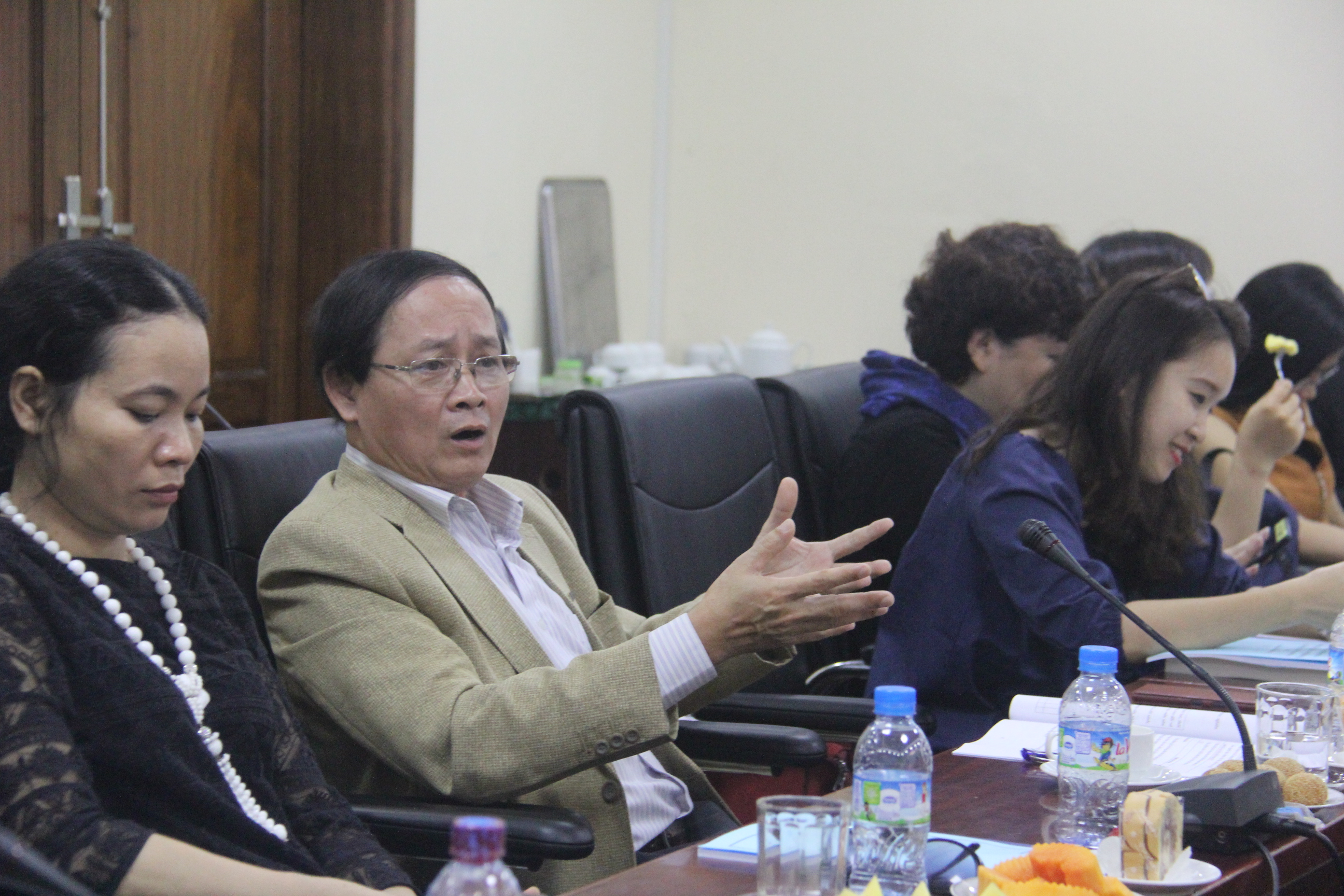
The leadership and staff of the Faculty of Tourism Studies enthusiastically discussed during the training session.
According to the plan, on April 14th, the School will continue to organize training on writing self-assessment reports on the quality of undergraduate programs in Anthropology and Political Science.
Author:Thu Ha
Newer news
Older news

