
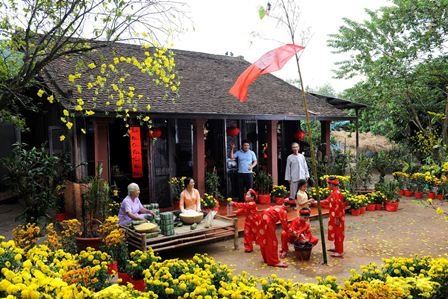
According to tradition, the "first visitor" hour is considered to begin after midnight on New Year's Eve.first visitor of the year"The first visitor to enter the house from midnight on New Year's Eve until the morning of the first day of the Lunar New Year." Since ancient times, our ancestors believed that the "first visitor" would have a significant influence on the luck, happiness, career, and wealth of the entire family in the new year.
According to folklore researcher Nguyen Hung Vi, each family has its own territory, and the first person to enter that territory is called "xong dat" (first visitor). "Xong" means to advance, to enter, and "dat" refers to the territory of that family. Therefore, Tet, the beginning of a new year, is when the first people to arrive at a family's home are called "xong dat".
Vietnamese people believe that the first day of the new year is the opening day, and that those whose zodiac signs are compatible with the family's will be the first to enter the house on this first day of the year, bringing wealth, peace, good fortune, and health to the family in the new year.
When discussing the selection of the first person to enter a new home on New Year's Day, folklore researcher Nguyen Hung Vi shared with the Lao Dong newspaper:
"Homeowners are very selective about who will be the first person to enter their house on New Year's Day. The most anticipated first visitors are children. This is because children are not yet responsible for their horoscopes or fates; they bring joy and good fortune to the household. Children are innocent and carefree, always cheerful, so people really want to welcome them."
Besides children, some meticulous people check the age of visitors to see if it's compatible with the homeowner, whether it will bring prosperity and good fortune, and invite people with compatible ages to be the first to enter their house on New Year's Day.
According to the custom of "first visitor" at the beginning of the year, guests visiting a house should prepare neat, tidy clothing in bright, vibrant colors to wish the homeowner a prosperous and abundant year. If possible, guests should bring a small Tet gift for the homeowner, such as a bottle of wine, banh chung (sticky rice cake), banh tet (cylindrical sticky rice cake), or a box of Tet jam.
Nowadays, the custom of "first visitor of the year" has been simplified. Guests only need to bring red envelopes to give to the host and children as a New Year's gift. The host also gives the first visitor a red envelope as a wish for good luck.
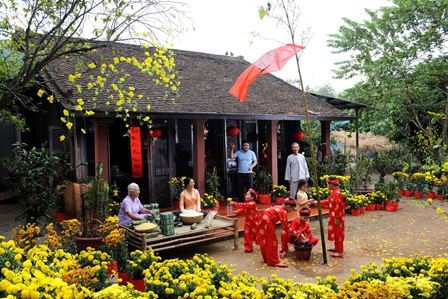
Another traditional way of "first-footing" is for a family member to do it themselves. A family member leaves the house before midnight on New Year's Eve, returns after midnight, and brings with them branches of auspicious spring blossoms, symbolizing good fortune for the family throughout the year.
However, over time, old customs and traditions have also changed to adapt to the changes and developments of modern life. The custom of "first-footing" is no exception; family members still visit relatives and friends to be the first to enter their homes, but mostly as a joyful tradition during Tet (Lunar New Year).
According to the online newspaper laodong.
Author:Hai Minh
Newer news
Older news

