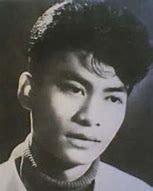
My journey led me to become a student and then a history teacher at Hanoi University.
Le Anh Xuan, whose real name is Ca Le Hien, was born on June 5, 1940, in Ben Tre. He was born into a family with a tradition in education and the arts. His father was Professor Ca Van Thinh, an educator, literary and historical researcher, and an active participant in the Vietnamese student movement against the war in the early 20th century. His older brother is the musician Ca Le Thuan, his older sister is the director and Meritorious Artist Ca Le Hong - former Principal of the Ho Chi Minh City School of Performing Arts II, and his younger brother is the painter Ca Le Thang.
In 1954, he and his family relocated to North Vietnam, where he studied at schools for students from the South, including Nguyen Trai High School in Hanoi. Later, he became a student at the History Department of Hanoi University (now the History Department of the University of Social Sciences and Humanities). After graduating, Le Anh Xuan was offered a teaching position in the History Department and sent abroad for postgraduate studies, but he declined the opportunity to return to his homeland in the South and join the resistance against the American invasion.
In late 1964, he crossed the Truong Son Mountains into the South, working in the Education Subcommittee of the Central Propaganda Department of the Southern Region and later in the Southern Liberation Arts and Literature Association. In 1966, he was admitted to the Communist Party of Vietnam.
Le Anh Xuan sacrificed his life on May 24, 1968, in Phuoc Quang hamlet, Phuoc Loi commune, Can Duoc district, Long An province, during a raid by the American army at a very young age (28 years old).
Le Anh Xuan – a poet, a soldier
Le Anh Xuan – a poet with innate talent and a courageous soldier – came from a family with a rich tradition. He loved literature and wrote poetry from a young age, and from his very first poems, he was highly regarded. His poem "Remembering the Rain of My Homeland," which won second prize in a poetry competition organized by the Literature and Arts magazine in 1960, marked his initial successes.
Le Anh Xuan represents a generation of Vietnamese youth passionate about ideals, fighting and sacrificing unconditionally for the revolutionary cause. His poetry and his life itself reflect a deep, inseparable bond with his homeland, his people, and his comrades. It can be said that he is a historian who records history through poetry. He vividly reflects the heroic struggle of the nation during the resistance against the US, particularly the image of his hometown of Ben Tre and the brave men who fell for the survival of the Fatherland. "The Rooster's Crow," "Coconut Flowers," and the epic poem "Nguyen Van Troi" reveal a pure, intoxicating poetic voice praising the beautiful country and homeland—a gentle, heartfelt tone that is nonetheless profound.
"Oh, the rain of my homeland"
Rain is the melody of a gentle, soothing song.
On those nights, we lie listening to the rain sing, oh rain!
Listen to the rain beating against the bamboo branches, listen to the rain falling on the leaves.
Whispers and murmurs echoed far and wide…”
But Le Anh Xuan was not just a poet; he was also a soldier. Upon graduating from the History Department of Hanoi University with outstanding academic achievements, he was sent abroad for postgraduate studies. A bright future awaited him, an opportunity not everyone gets. But faced with the circumstances...
:His homeland was being ravaged, "Our village has been bombed to pieces several times / Coconut trees scattered, bamboo groves withered and barren," he set aside his personal dreams, only yearning to return to his homeland to participate in the fighting:
"Oh, I long to hold a gun."
Walking among the troops with friends.
Waiting for the enemy in our heroic homeland.
We are intoxicated by the scent of fallen leaves by the bamboo grove.
In the archives of poet Le Anh Xuan's trip to the South, currently held at the National Archives Center, there is a passage that reads: "Besides my work in education, I very much want to participate in literary and artistic activities in the South. I can go wherever the Party needs me. My aspiration and determination is to return to the South, to my homeland."
In a letter to her sister Ca Le Hong, Le Anh Xuan wrote:I know that new difficulties and challenges will come, and I may even have to make sacrifices, but that will not diminish my determination…"
When the resistance war against the US for national liberation in the South and the entire nation was entering its most fierce and arduous phase, the superiors decided to restrict artists and writers from entering the battlefield to avoid danger. But Le Anh Xuan met Le Van Thao and asked him to find a way to get into the city:I've just arrived and heard that the fighting in the city is very fierce. I'm uneasy being on the outskirts; is there any way you can let me see firsthand what's happening there?"And it truly was a life-or-death choice. Le Anh Xuan plunged into the fierce battlefield and sacrificed his life on May 24, 1968. Just two months before his death, he left behind an immortal epic:Vietnamese StanceHis name has been etched into Vietnamese poetry and the history of the nation's resistance struggle as a hero in his works:
"Not a single picture, not a single address."
He left nothing for himself before he set off.
Leaving behind only the iconic image of Vietnam etched into the century.
He was a soldier in the Liberation Army.
The English name has become the name of the country.
Oh, my Liberation Army soldier!
From the way he stood on the Tan Son Nhat runway.
"The homeland soars high in the boundless spring."
Le Anh Xuan was posthumously awarded the State Prize for Literature and Arts and the title of Hero of the People's Armed Forces by the Vietnamese State for his immense contributions to the nation. Generations of lecturers and students of the University of Social Sciences and Humanities, Vietnam National University, Hanoi, will forever remember his name.