
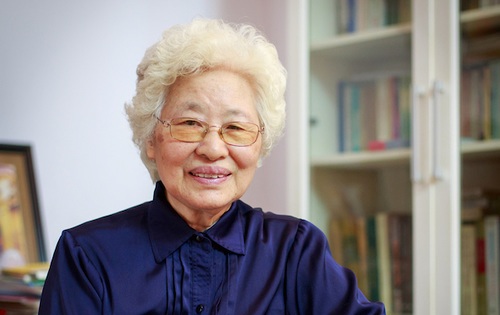
But… you must also knowHistory of the feudal system in Vietnam, Volume 1, Education Publishing House, 1962 (written one chapter);Some observations on privately owned land in Vietnam during the Ly and Tran dynasties., MagazineHistorical Research, number 52/1963; especiallyThe resistance war against the Mongol invasion in the 13th century- This book has become one of the classic works of Vietnamese history; a book that President Ho Chi Minh read and sent his regards to the two authors, Ha Van Tan and Pham Thi Tam; renowned scholars Hoang Xuan Han and Hoai Thanh praised it and considered it "a masterpiece of history"... first published when the authors were both under 30 years old!
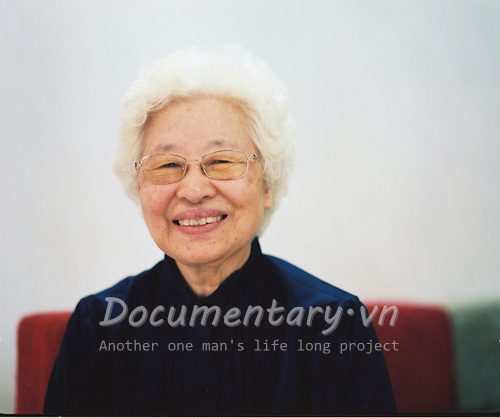
Associate Professor, Distinguished Teacher Pham Thi Tam/Photo: Thanh Long
And… during those years of 1962, 1963, and 1965… I was still a high school student.
When I entered university (1970), I first read this book - the 1968 edition from the university library - covered in pencil marks left by senior students…
Over the past few decades, as a lecturer in the Department of Ancient and Medieval Vietnamese History and then Cultural Studies, I have had many opportunities to revisit her writings. This is not only because I was assigned to teach about the history of resistance against foreign invaders and traditional Vietnamese military art, or about Vietnamese history and culture… but also because her writings were connected to unforgettable moments in my life.
*
In 1978, after two weeks of leading and "scattering" fourth-year and third-year students (at that time, students in various majors, including the major in Ancient and Medieval Vietnamese History, spent months on their graduation internships, while third-year students were also divided among their seniors to familiarize themselves with their majors for up to a month) a series of villages and communes from Co Loa, Duc Tu, Nam Hong, Thuy Lam... in Dong Anh - Hanoi, early in the morning of May 3rd, I rushed back to the Faculty, hoping to research and read more documents about the areas along the Ca Lo and Cau rivers... to prepare for leading the students there in the near future.
Cycling out to the main road of Doc village (Duc Tu)...
Strangely, the streets were deserted, not a soul in sight. Only the village loudspeaker was broadcasting a statement from the Ministry of Foreign Affairs of the Socialist Republic of Vietnam regarding the treacherous actions of the Beijing expansionist forces and the Pol Pot regime on the southwestern border… and the situation on the northern border. The announcer's voice was sharp and articulate… I trembled as if I were being read aloud an essay.The path we takeby Nguyen Trung Thanh (Nguyen Ngoc) or the Statement of the Ministry of Foreign Affairs in December 1972…
Slouching on the 10-year-old Vinh Cuu motorbike – not yet "old," but because of the "advisory tires," it felt incredibly heavy and clunky, and I occasionally had to get off to adjust the chain because it was loose… My hands were greasy, and my stomach was rumbling because I hadn't had anything to eat since waking up.
I longed for a roadside eatery somewhere. I still had one dong left in my pocket! I longed for a truck from Dong Anh to the city center to hitch a ride… I kept looking around. But… the shops along the road were always closed, and there was no sign of any vehicles…
Ah… Today is currency exchange day – I only realized that when I passed through Dong Anh town. But what is currency exchange anyway? It's still the same old dong becoming the unified dong, right? I only have one dong, I'll definitely find a place to eat later, so what's there to worry about? Come on, once we reach Duong Bridge, we'll be back in Hanoi.
We arrived back in Hanoi around midday.
My pocket was still full of one coin, my stomach was still crawling with ants, and I was gnawing at hunger.
I didn't go back to the Department right away. Even if I did, there wouldn't be anything to eat. I stopped by Ms. Tam's house in the Lang residential complex. Back then, the Lang complex was the headquarters of the faculty of the University. After Professor Phan Huu Dat moved to Hang Chuoi Street, Ms. Tam's house was moved from its small, over ten-square-meter room to this one – in the same row as Professor Dinh Xuan Lam's house. It was convenient for the Department, and most of the meetings, gatherings, and "celebrations" of the Department of Ancient and Medieval Vietnamese History took place at her house.
When she saw me bringing my bike in, she left her desk and made me a pot of tea.
Without asking any questions, my aunt went down to the kitchen.
I hadn't drunk my glass of water yet, partly because I was hungry, and partly because I was curious to see those documents, those pages.50 cents paper(Back then, they used lined paper, which even after several decades still cost 50.2 cents a stack - so we commonly referred to this type of paper by its selling price) placed on the table along with a few booksA Brief History of Vietnam,Dai Viet History Chronicle, Imperial Annotated Comprehensive History of Vietnam...is open.
Ah, my aunt is writing an article about the activities of the Ly Dynasty court regarding the northern border.
My aunt came up from the kitchen with a steaming bowl of noodles.
"Eat, Ke, you haven't eaten anything since morning.!
How did you know??”
For me, it was one of the best bowls of noodles I've ever eaten.
*
In late October of that year, the situation on the northern border became increasingly tense and complex. Young people and students from the University were organized into the Hanoi University Regiment, and together with the youth of the capital, they mobilized their forces to build a defensive line along the Cau River in Yen Dung (Bac Giang).
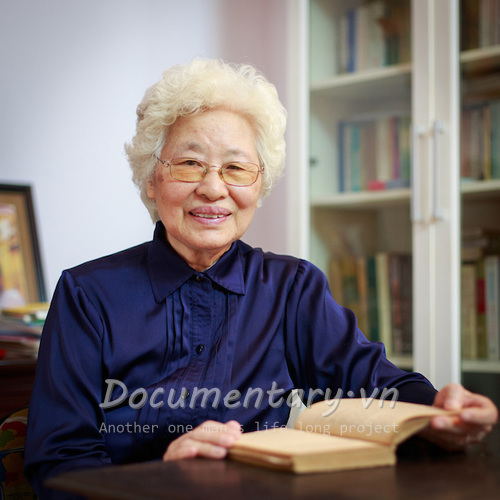
On my way cycling to the front lines, laden with loudspeakers, radios, newspapers… for my propaganda mission, I went to her house. I arrived to report my arrival, ask for her permission, and inquire if she had any message for her son, Huy, who was then a first-year physics student at the university and stationed on the front lines…
This time, while sitting and having a drink, I discussed with her the construction of the defensive line.
The story of the Cau River defense line of the young people of Hanoi at that time naturally intertwined with the story of the Nhu Nguyet River defense line, the Dong Xac, Yen Phong, Cho Gam, Dong Xuyen… in Yen Phong, Hiep Hoa (Ha Bac - now Bac Ninh, Bac Giang) of the Southern Kingdom era, which she surveyed and wrote about.Military genius Ly Thuong Kiet...
Then it was time to say goodbye to her and send her off.
She went inside the house and brought out a carefully wrapped package.
"What is it, miss??”
"Next, bring it up for Huy and the other guys from the History Department up there.!"
Not just one face towel, but... ten!
*
In 1999, the Hanoi Historical Society organizedScientific Conference Commemorating the 990th Anniversary of the Founding of the Ly DynastyNguyen Ngoc Hai and I searched for an article she wrote 20 years ago to learn about the policies for pacifying the border during the Ly Dynasty.
In July 2008, not only I, but also my students and young colleagues: Nguyen Tien Dung, Nguyen Ngoc Phuc, and Nguyen Bao Trang, diligently searched for...The resistance war against the Mongol invasion in the 13th centuryRegarding the Victory at Van Don, to contribute to the International Scientific Conference organized by the Faculty of History and Quang Ninh province.Van Don Port: History, Potential, and Cultural Exchanges.
And, in late summer, mid-autumn of 2011…
The East Sea experienced successive low-pressure systems followed by thunderstorms. On the mainland, Hai Duong, Nam Dinh (September), and Bac Ninh (October) organized surveys and scientific seminars related to the Tran Dynasty, the Conference of Princes and Nobles at Binh Than - Tran Xa in 1282; the Van Kiet - Luc Dau battlefield during the resistance against the Mongol-Yuan invasion; and the scientific arguments for the 750-year history of the Thien Truong Royal Palace in Nam Dinh (1262-2012).
On my desk, alongside the chronicles, my aunt's writings from her "youth" (from her words in the photo collage: one from 1959, one from 1994 given to the Faculty upon her retirement) unfold, with opinions and annotations about Van Don, Tay Ket, the resistance against the Mongol-Yuan invaders… And, the historical experience, the invaluable guidance of our ancestors about a bygone era.The king and his ministers are of one mind, brothers live in harmony, and the whole nation contributes its strength."With the heroic spirit of the Đông A era… blended into my writings: As citizens, we should never betray our country!; The Vạn Kiếp - Bình Than front in the 12th century - embodying the qualities and capabilities of Vietnamese patriotism."
|
Associate Professor, Distinguished Teacher Pham Thi Tam
+ Workplace: Department of Ancient and Medieval Vietnamese History (Faculty of History).
History of the feudal system in Vietnam, Volume 1. Education Publishing House, 1962. (Write one chapter). The resistance war against the Mongol invasion in the 13th century (Written jointly with Ha Van Tan).Social Sciences Publishing House, Hanoi, 1968, 360 pages. (Reprinted 1970, 1972, 1975, People's Army Publishing House, 2003). Strategic decisive battles in the nation's history(Co-authored). People's Army Publishing House, Hanoi, 1976. (Reprinted 2003).
+ First Vietnam National University, Hanoi Science and Technology Award (2006) for the workThe resistance war against the Mongol invasion in the 13th century. |
Author:Assoc. Prof. Dr. Nguyen Hai Ke

