Industry 4.0 and its impact on journalists.
Four hundred years ago, the English philosopher F. Bacon said, "Knowledge is power," and "He who masters information will master the world." In his book "The Coming of Post-Industrial Society," Daniel Bell asserts: "Industrial society is based on mechanical technology, post-industrial society is based on intellectual technology. If capital and labor are the two characteristics of industrial society, then information and knowledge are the two characteristics that replace them in post-industrial society. Post-industrial society is also called the information society."
Information and communication technology (ICT) is the driving force of the global economy, revolutionizing how we interact, exchange information, behave in society, and conduct global economic and trade activities. Information has become one of the five key elements of the economy; the quantity and speed of information transmission reflect a nation's strength, and the development of an information society is an inevitable trend of modern society. Information networks are gradually transcending the power of individual states to create regional and supranational forces.

With the rapid development of science and technology, artificial intelligence (AI) is increasingly developing and being used to replace humans in many fields, including journalism, greatly assisting journalists and providing readers with new and exciting experiences.
The New York Times uses artificial intelligence to manage reader comments. The BBC uses AI to extract information from over 850 news sources globally, then compiles and tags articles according to four categories: organizations, places, things, and people. Bloomberg uses AI to produce and manage news content. The Canadian Press uses AI to speed up translation. Many news organizations use AI to write legal documents, press releases, summary reports, and news articles.

On November 8, 2018, Xinhua News Agency caused a stir among viewers when it introduced a news broadcast with a "virtual presenter," whose voice and facial expressions were developed using artificial intelligence. Many newspapers in Vietnam, such as VOVLive, VnExpress, Vietnam News Agency, ZingNews, Dan Tri, and Lao Dong, are pioneers in integrating audio versions of news, allowing readers to listen to the content of articles instead of reading text as before. To suit their preferences and region, readers can choose a male or female voice, or a Southern or Northern accent, helping them to hear the content of the article more clearly and accurately.
Overall, the development of journalism is always closely linked to the development of technology. Technology is a key factor, playing a crucial role in news production, enabling the delivery of news almost instantaneously when events occur. Artificial intelligence can perform many tasks, partially replacing the work of journalists. However, can AI replace journalists, and what will journalism training look like in the future?
Journalism training integrated with digital technology.
Unlike undergraduate training in other social science fields, developing practical skills is always the top priority in journalism and media training schools.
The history of journalism and media training shows that initially, journalist training was only conducted in newsrooms. Many even believed that journalism was a profession that could only be honed through on-the-job learning, and that 'an outstanding journalist might not need any formal schooling at all'. Therefore, even in England, one of the cradles of world journalism, where the first English-language newspaper appeared in London in 1665, and the first radio station was established in 1922, journalism training as a university-level subject only emerged in 1971.
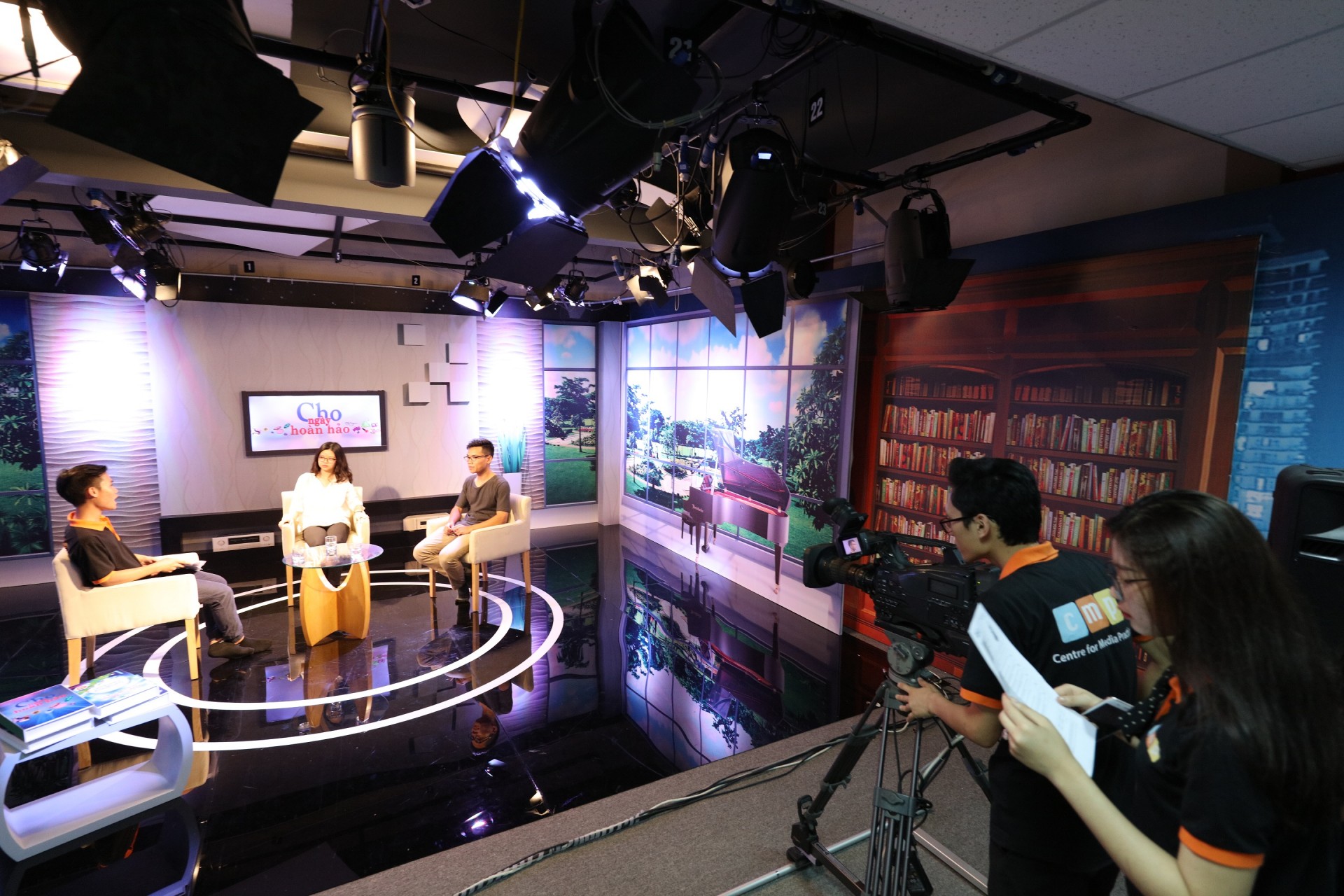
The most fundamental method at journalism schools in the UK, US, and other developed countries is to require students to perform tasks exactly as they would in a real newsroom. At the Hanoi University of Social Sciences and Humanities, with its Journalism and Communication Training Center receiving two phases of investment totaling nearly 60 billion VND, over the past five years, journalism students have had many opportunities to study, work, and hone their skills in a very dynamic environment. This is a favorable opportunity, creating momentum for the journalism and communication ngành at the University of Social Sciences and Humanities to take a new step forward. For the first time, the application of the 'miniature newsroom' and 'miniature radio and television station' models in journalism and communication training institutions in Vietnam has the necessary conditions for implementation.
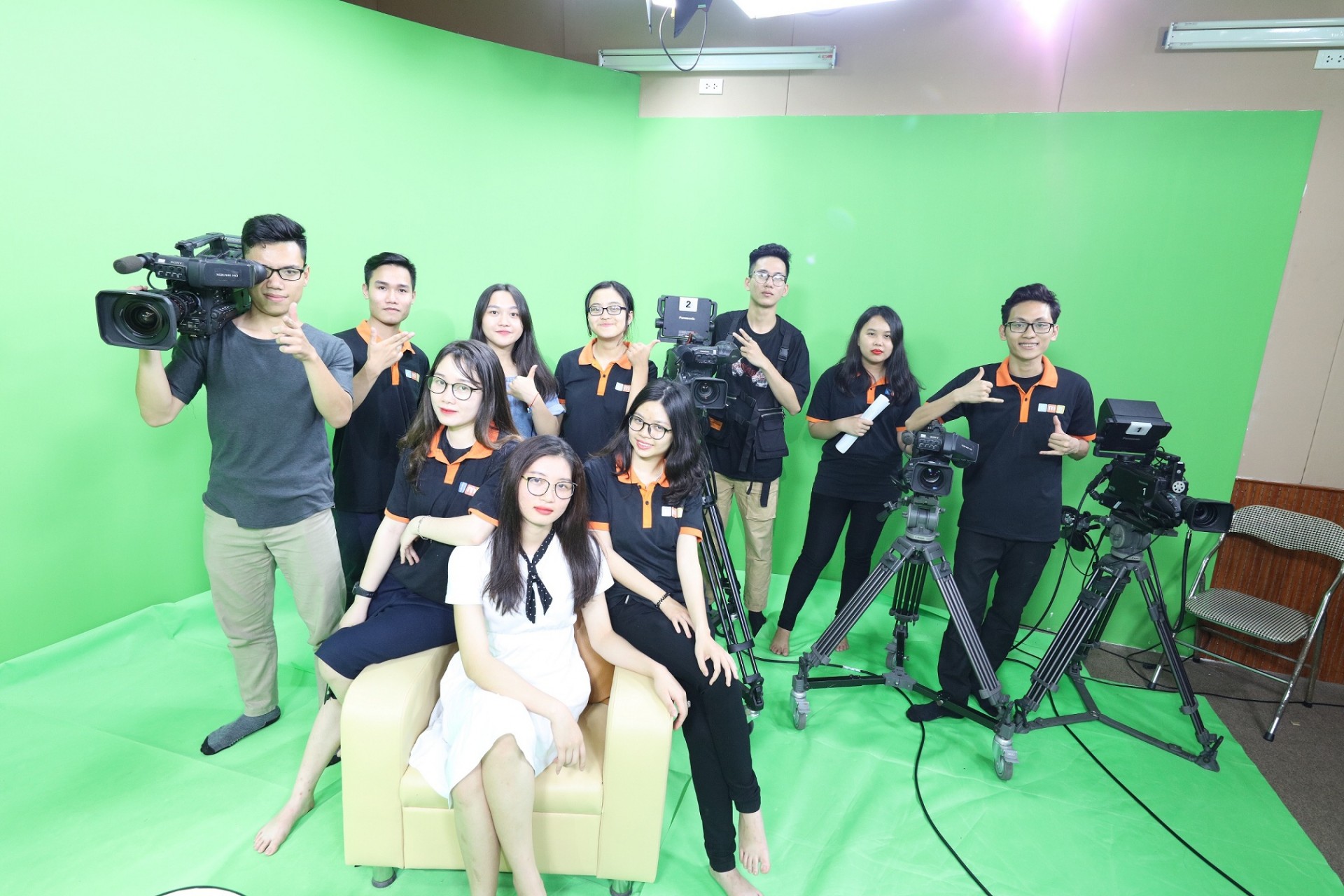
One hour of practical training at the studio of the Institute of Journalism and Communication Training.
In the context of the media boom, teaching about new media, convergent and multimedia media, social media, and the development of modern journalism in the new media environment is becoming an important part of the curriculum at the Institute of Journalism and Communication Training, with many new modules such as Mobile Journalism, Data Journalism, Content Organization and Creation of Masterpieces, Emergency Reporting, and other specialized fields of journalism.
Journalism connects with human values.
Journalism possesses a unique power because the information journalists provide has a significant impact on the general public and plays a crucial role in shaping public opinion. Journalism is not merely a profession, but a mission, because it does not exist for itself, but for society. Journalists and the press must work for the benefit of the majority of working people in society, and therefore must always strive for genuine values of truth, goodness, and beauty. In the digital age, journalistic ethics need to be emphasized and implemented more effectively than ever before. The sheer volume of information transmitted instantaneously via the internet makes it impossible for people to control what they receive.

Dishonesty, distortion of facts, and manipulation of information for malicious purposes are widespread, especially on social media, where information spreads rapidly and without control. Many new social ills have emerged, and the dissemination of pornographic images, violent games, hate speech, and defamation are causing concern for many responsible members of society.
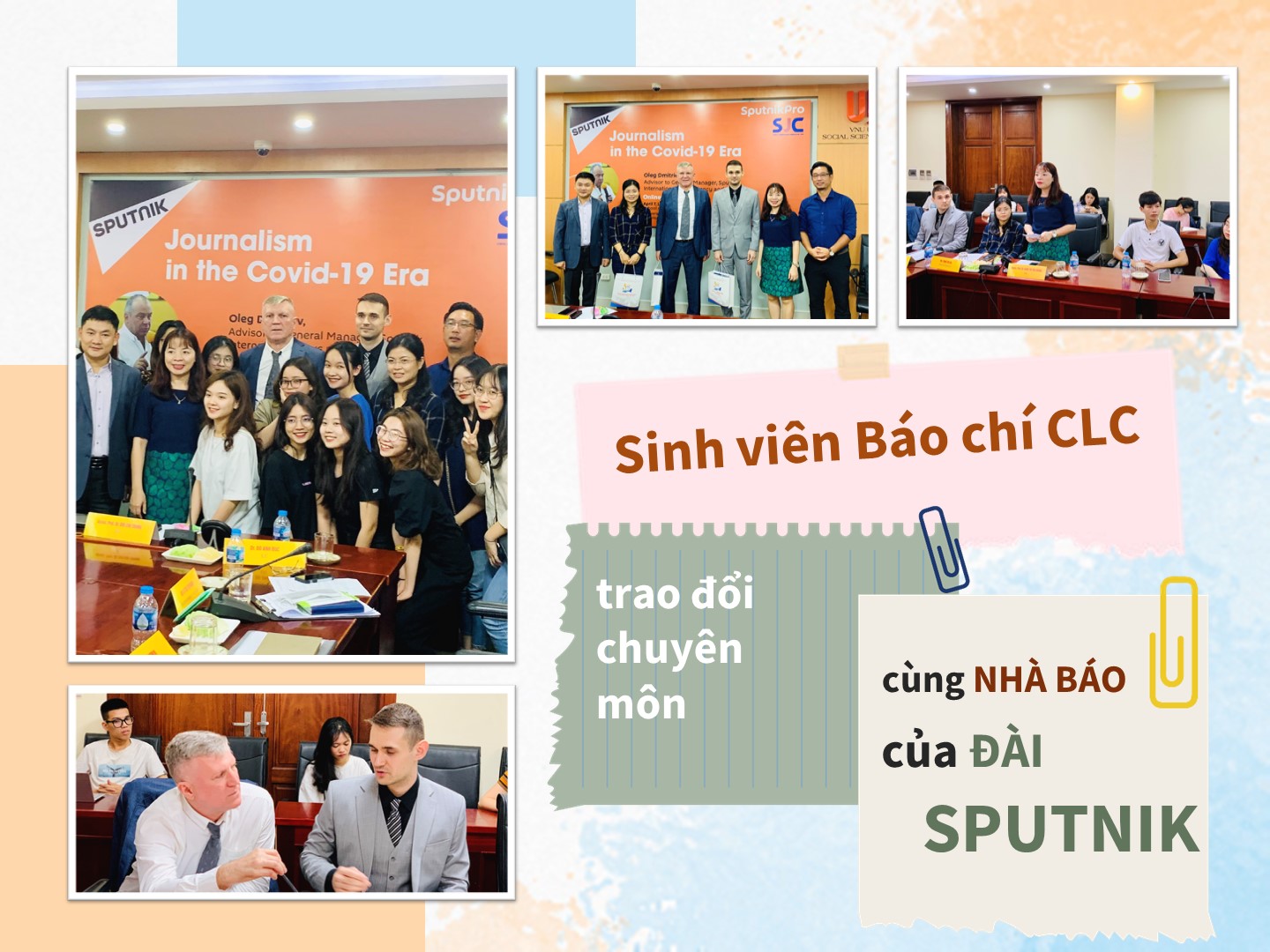
The primary mission of journalism and media training is to equip journalists with a solid foundation of knowledge so they can thoroughly identify issues and convey information to the public in the most humane way. Therefore, building upon the foundation of the University of Social Sciences and Humanities, a renowned institution with generations of profound professors in history, literature, philosophy, linguistics, psychology, and political science, journalism and media students at the Institute of Journalism and Media Training are provided with a deep and fundamental knowledge base in culture, philosophy, history, political science, sociology, psychology, and more. This valuable foundation helps future journalists create articles that resonate with readers, possessing cultural depth and a comprehensive understanding of society.
Integrating journalism training and research.
One of the crucial issues in guiding the development of Vietnamese journalism and training high-quality human resources to serve its development is to link training with journalistic research.
The development of the media and journalism industry is most effective when those working in this field possess a solid understanding of media theory and mass media, comprehend the laws governing the development of mass media in society, grasp the principles of formation, the mechanisms of mass media's impact on society, and the economic operating model of this industry.
Due to differences from Western countries in political institutions, socio-economic conditions, local circumstances, historical factors, and socio-cultural values—factors considered fundamental to shaping the models and functions of various media outlets worldwide—Vietnamese journalism has a development model and functions and tasks distinctly different from those in Western countries. Professional journalism research must identify the core values, development direction, and management model of Vietnamese journalism in the future.
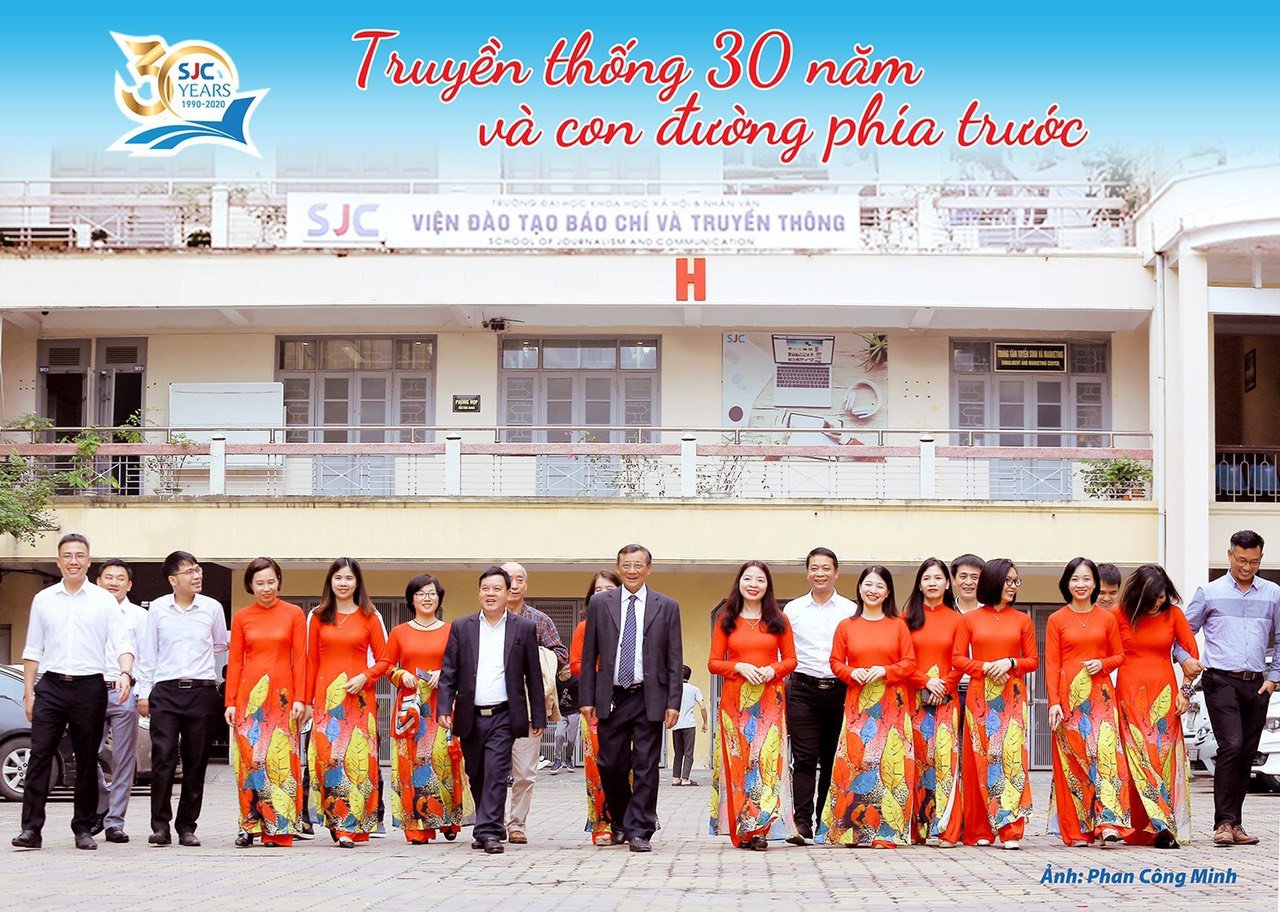
Following the Doi Moi (Renovation) period, Vietnamese journalism adopted a media model that combined the unwavering principle of "journalism under the leadership of the Party and the State" with the principles of a socialist-oriented market economy. From a one-way, single-function press, Vietnamese journalism transformed into a multi-functional press, not only focusing on disseminating the Party's policies but also serving as a bridge and channel for social critique, creating a seamless flow within society and forging a strong informational link between the Party, the Government, and the people. Simultaneously, it opened up avenues for the development of the media economy, fostering connections between businesses and the public.
Research in journalism and media must truly contribute solutions to help the media industry develop, especially in the current period when Vietnam is applying policies of openness, innovation, and development according to a socialist-oriented market economy model; and when the current model of development for the media industry in Vietnam is unprecedented in the world.
Promoting research in journalism and media, as a science with its own theoretical foundation, research subject, and specific research methods, is a crucial factor and driving force in improving the quality of journalism and media training in a systematic and professional manner. More importantly, it establishes a solid theoretical foundation, creating the premise and direction for the proper development of revolutionary and professional journalism in Vietnam today.
Author:Assoc. Prof. Dr. Dang Thi Thu Huong
Newer news
Older news

