
In 1966, when the war against America had spread throughout both North and South Vietnam, the poet Nam Ha wrote these verses that are truly heart-wrenching:
Country!
Of the daughters and sons
Beautiful as a rose, strong as steel.
We parted ways without shedding a single tear.
"The tears are saved for the day we meet…".
The poem "We fight for you, Vietnam, to live forever" contains the above stanza, and when recited, everyone understands that "the day of reunion" refers to the first day of peace, the day of joyful victory. The phrase "day of reunion" in the poem here is symbolic: it symbolizes a belief, a determination, and a hope for the future of the war.
No one thought the war would last so long, with "tears shed to win" lasting for decades afterward.
In 1971, thousands of students from universities in North Vietnam eagerly enlisted in the army. The mobilization order, recruiting university students into the military, was understood as a moment when the country had to use its "reserve resources," its "last cards" in the resistance struggle for independence and freedom. Aware of their responsibility and the historical context, the university students who were drafted into military service were even more determined and ready to go to war.
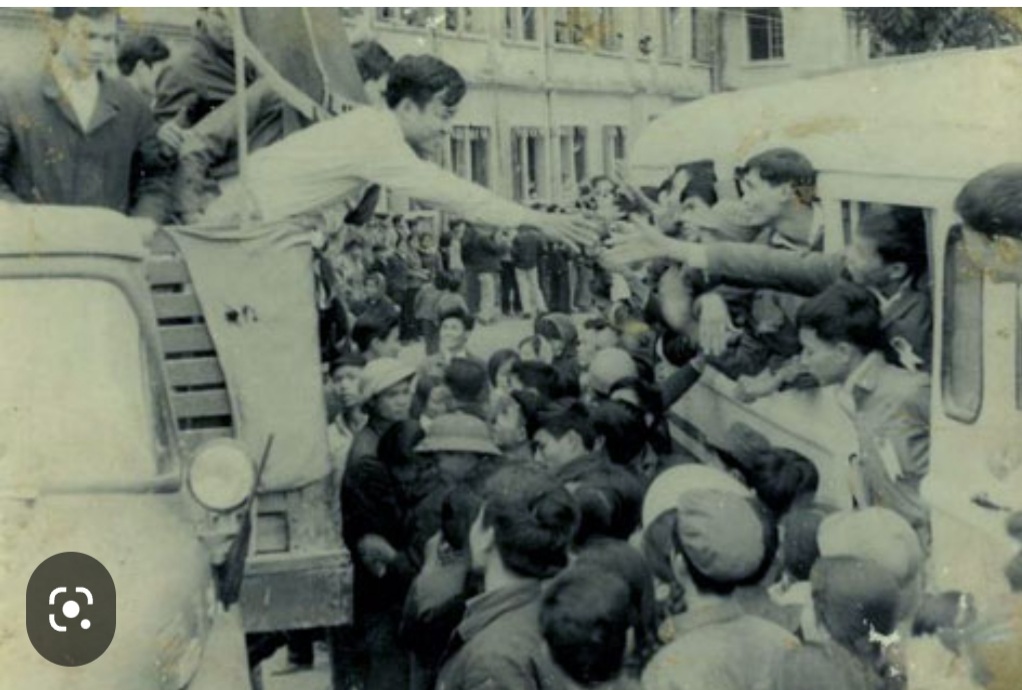
Students and staff of Hanoi University enthusiastically enlisted in the army on September 6, 1971.
Among the student regiments that set off that year were us: 20 students from the 15th cohort of the Faculty of Literature, Hanoi University. It was truly a farewell without tears. Of the 20 young men leaving that day, one was the saddest, his tears seemingly "flowing inward." He was sad because he hadn't yet received his score on an exam. It was the Western Literature exam taught by Professor Nguyen Van Khoa. He felt that he had written the 180-minute exam with great enthusiasm and dedication, but it might have been off-topic, resulting in a low score and requiring a retake. Professor Nguyen Van Khoa didn't come to see us off at the departure ceremony. Everyone guessed it was because he lived far away; he was a former deputy platoon leader of the intelligence unit during the resistance against the French, a veteran whose health was now failing, and he couldn't ride his rickety bicycle, the kind he used to ride to teach during the Dien Bien Phu campaign, to attend the farewell ceremony. But the professor wrote a short note, asking someone to deliver it as a message to the nine students who had taken his exam: “I’m keeping your nine exam papers, you who are going to war. Since you won’t be continuing to the second year, you don’t need to keep your grades on your transcripts anymore. I’m waiting for the day you return victorious, to come visit me and get your papers back. Go on your way with peace of mind. All of you deserve the highest marks, even a perfect 10. Because there is no subject greater than the subject of love for one’s country. By volunteering to enlist, you’ve already earned the top marks in that important subject. I wish you victory!”
Reading Khoa's encouraging message, the sad-faced young man still couldn't cheer up. He only sighed and got into the car… Entering the training ground, he enthusiastically practiced shooting all kinds of guns and studied all types of weapons. While his comrades were reluctant to carry heavy loads, preferring to keep the lightweight AK submachine gun, he volunteered to carry the light machine gun, the heaviest weapon in the company at that time. After three months of infantry tactical training, our student battalions were divided into smaller groups and assigned to different divisions and military units.
Another breakup. A breakup between men, and of course, "without a single tear."
Many still remember: at the farewell ceremony for his comrades who were leaving for another division, he stood there hesitantly, because that division had gone south first, while his unit had to wait and go later. Unable to see his friends off further, as his squad still had to go collect rice for the company, he stood by the eucalyptus trees, utterly dejected, his eyes "filled with the twilight of the setting sun." His friends and comrades could never forget his slender figure standing by the roadside, bidding farewell to his friends with a sorrowful look in his eyes. Those eyes seemed to foreshadow something ominous that awaited him ahead.
During the Quang Tri campaign, he remained the first to operate the machine gun. Seeing his small stature, the battalion commander considered transferring him to the communications squad, but he earnestly requested to stay and fight directly, citing his familiarity with the machine gun. In the battles to defend the Quang Tri citadel, he was one of the most active and courageous machine gunners. Seeing him often leading the attack formation, the platoon leader whispered to him, "When encountering the enemy, the first to go is easily targeted by the ambush. You're an only child; if you die, who will take care of your mother?" Hearing his superior's advice, he laughed and immediately corrected him, "Commander, you've misread my background. Our platoon has several only children; let me go first to shield them from the bullets. I have an older sister and a younger brother. And who knows if they'll even hit me?" After "reconciling" with his commander, he continued to lead, occupying the position of the first to go into battle. His platoon achieved many victories, holding firm at the outposts around Quang Tri citadel.
Amidst the fierce bombing in Quang Tri town, he never forgot his parents, his hometown, the university lecture halls, and of course, the exam papers that his teacher hadn't returned. He once confided: if he survived and returned, he would ask Professor Khoa to grade his exam fairly and objectively, just like he did for his classmates who stayed on to continue their studies. He was willing to accept a low grade and retake the exam, rather than receive a perfect 10, a kind of "priority" bonus for soldiers. His longing was fragile and fleeting, vanishing quickly amidst the relentless battles to defend the newly liberated Quang Tri region.
Five years passed. On April 30, 1975, along with the rest of the country, we were all victors. From different divisions and different fronts, we gradually returned to university to continue our studies. We arranged to meet on a "beautiful day" to visit Professor Khoa and receive our exam results from five years prior. We all went to visit him, along with other students from the previous enlistment period—easily an entire platoon. A platoon of unarmed soldiers busily climbed the stairs to the second floor of an old house on Tran Hung Dao Street in Hanoi. The small room of the unmarried professor became cramped, filled with the green of soldiers' uniforms. Professor Khoa was very happy; his face lit up. He picked up the exam papers he had found at the bottom of the cupboard and began to analyze the questions he had set. He reread the exam questions.
Exam Question: “Commenting on Shakespeare’s play Hamlet, the Russian critic Belinsky wrote: “…In the end, Princess Ofélie dies, King Clodius dies. There is neither good nor evil. Everything passes away, everything fades away.” Comment on this statement.”
The teacher told us: "I don't give anyone low grades, only high or low. Because this is a challenging exam, a bit tricky, forcing the test-taker to decipher it with their own key… Many students were shocked when they saw the name Bielinsky, thinking that everything all world-famous Russians said was the truth. Many tried to analyze and prove that Bielinsky's opinion was correct. I only gave those papers average grades. No matter how well written, points were deducted and penalties were imposed for the crime of personality cult. Only one paper received the highest grade, because the student had a clear opinion and a firm stance. First, the student implicitly criticized me – the test-taker – for not specifying the source of the opinion. Which article did Bielinsky write it in, when, where, and in what specific historical context?" When analyzing the play's content, the writer proactively started from a consistent conception of the nature of literature and art: humanism. Art cannot be a carefree game, "without good or evil," indifferent to social life. True art always fights for good, opposes evil, and strives for the victory of beauty and humanity. At the end of the essay, the writer seems to stray from the topic, but in reality, they haven't; instead, they connect the tragedy of the distant West from centuries ago with the current Vietnamese war of national defense, linking literature to the reality of life. Clearly, the writer criticized the critic Bielinsky from the perspective of a Vietnamese person taking up arms. You must have written this with the mindset of someone preparing to enlist. That's the essay by… Nguyen Chi Thanh. Where is Nguyen Chi Thanh? Take this essay back!
No one spoke up to claim the paper. Professor Khoa looked at each student's face, students whose names he didn't even remember. He flipped to another exam paper and added, "If Thanh doesn't come, anyone can hold it for him. Who wants it?" Seeing us silently looking at each other and avoiding his gaze, with the intuition of a veteran soldier, he understood immediately. We, both professor and students, were stunned, lowering our heads and avoiding eye contact. One student bravely spoke softly: "During an attack, on August 20, 1972, defending the Quang Tri citadel, leading the formation, Thanh fell into an enemy ambush, a bullet hit his chest, and he never returned."
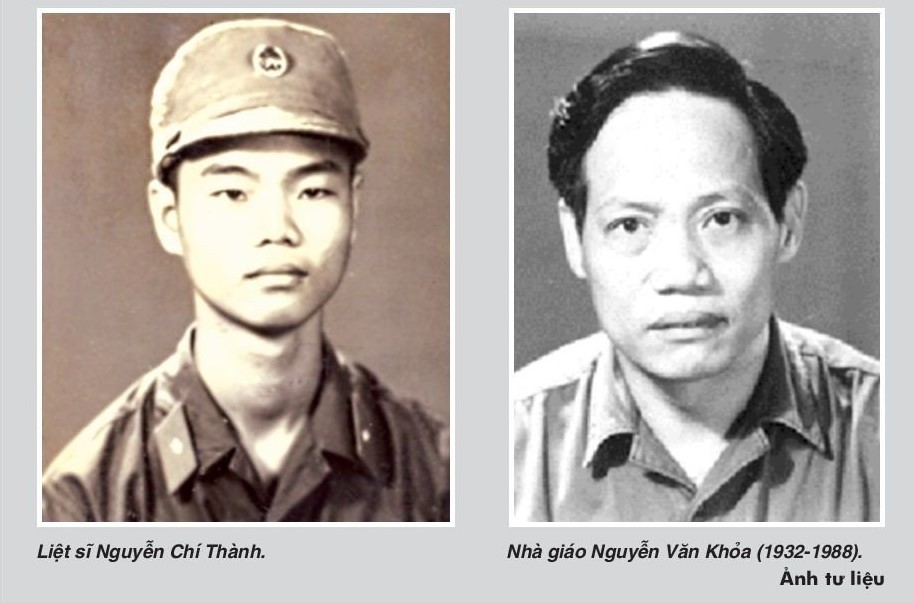
The cramped room of the former Dien Bien Phu soldier was eerily silent. For the first time, we saw the old man's tears fall onto the exam paper. The teacher's tears fell on Nguyen Chi Thanh's 5/5 score. The red ink blurred the number 5 in the "Comments" section like a drop of blood.
It was then that we all suddenly remembered a Vietnamese poem from 1966, a poem that had inadvertently become a command of an era:
Save your tears for the day we meet!
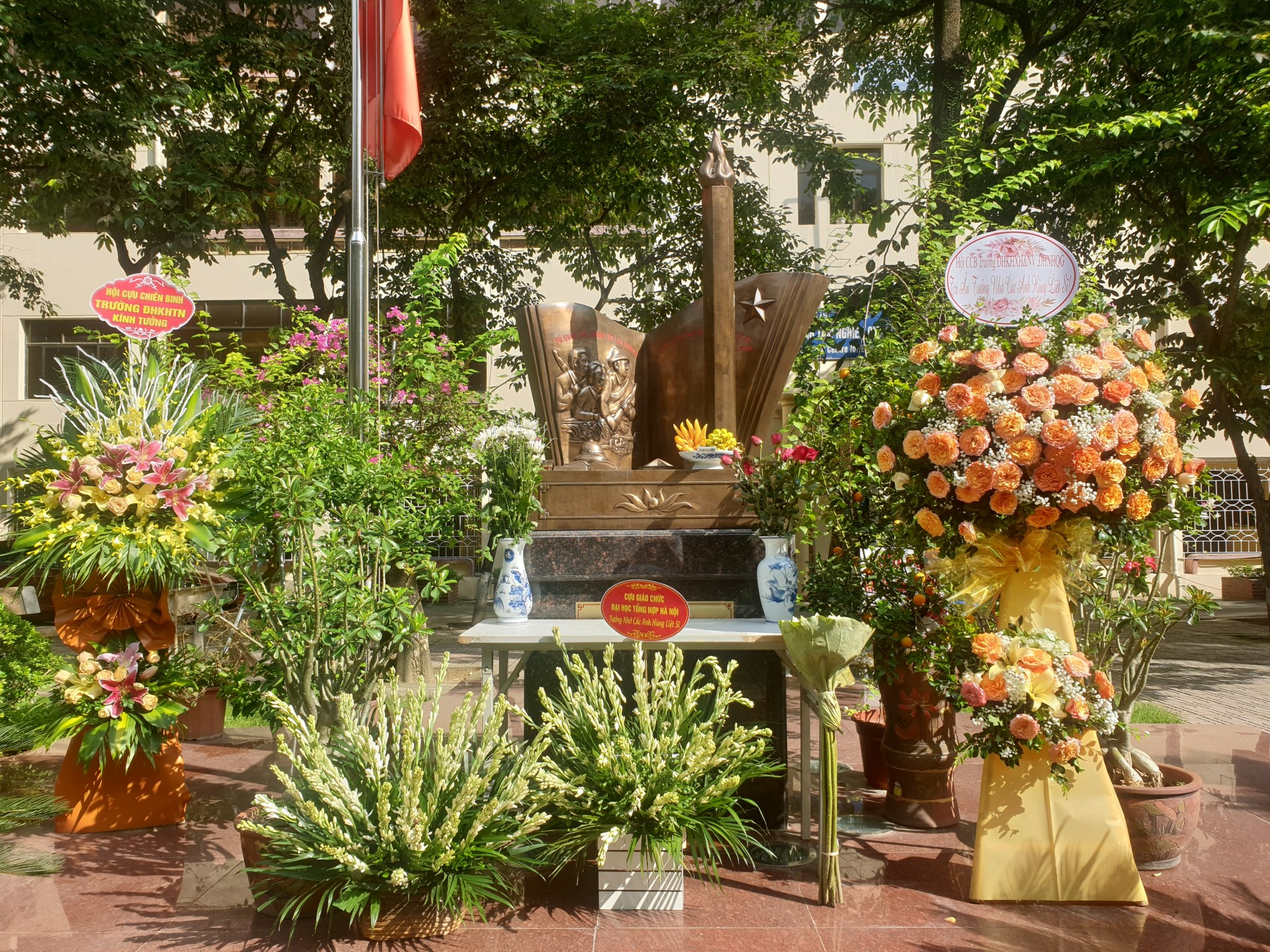
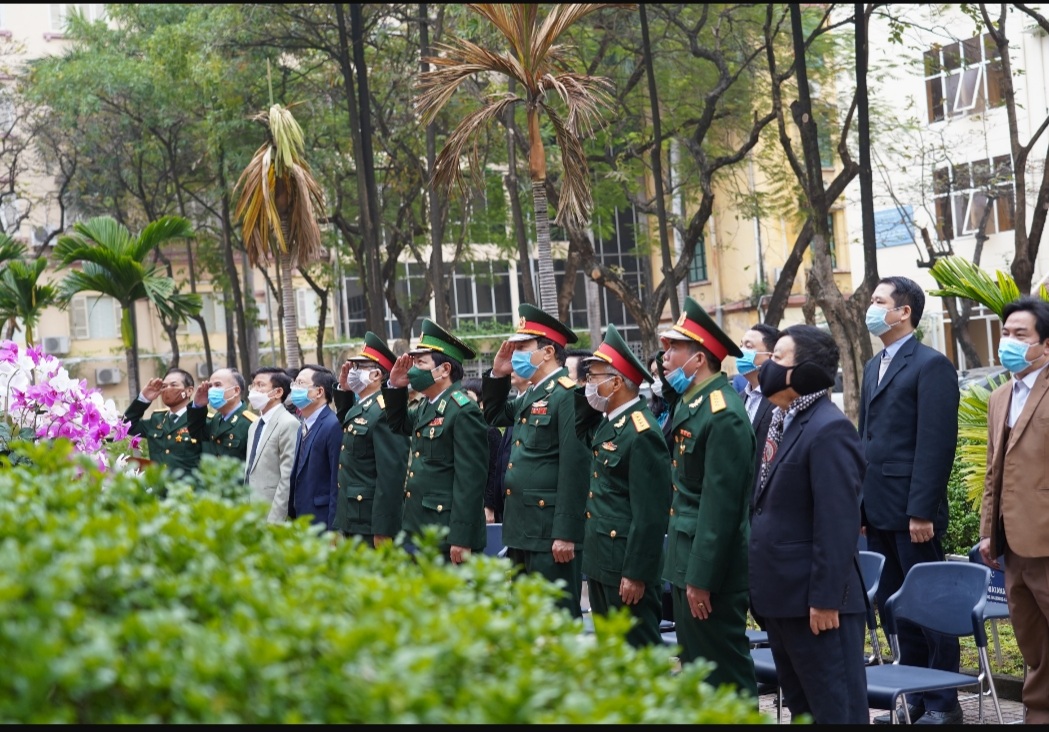
Former students and staff of Hanoi University laid flowers at the Monument.
Author:Pham Thanh Hung
Newer news
Older news

