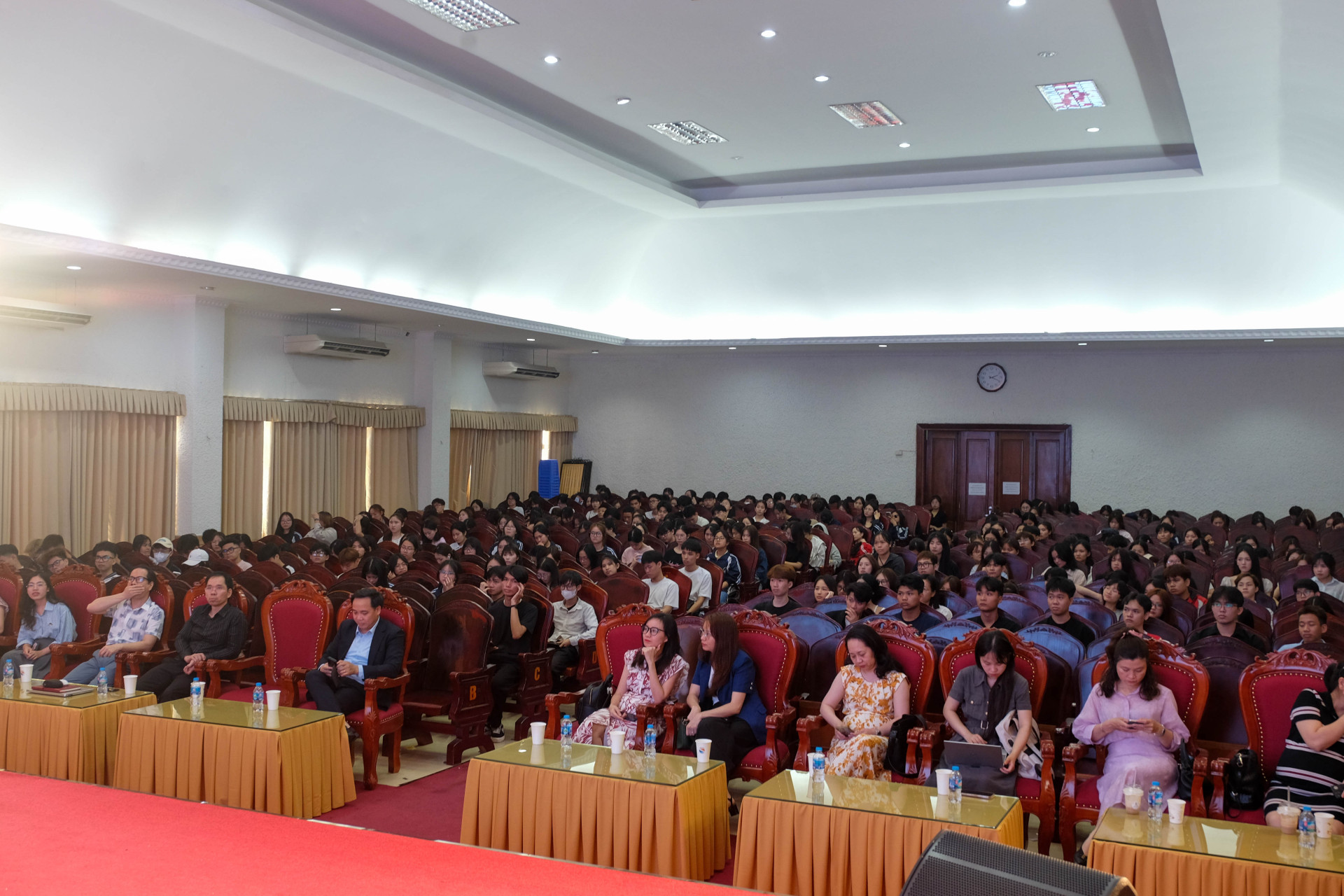
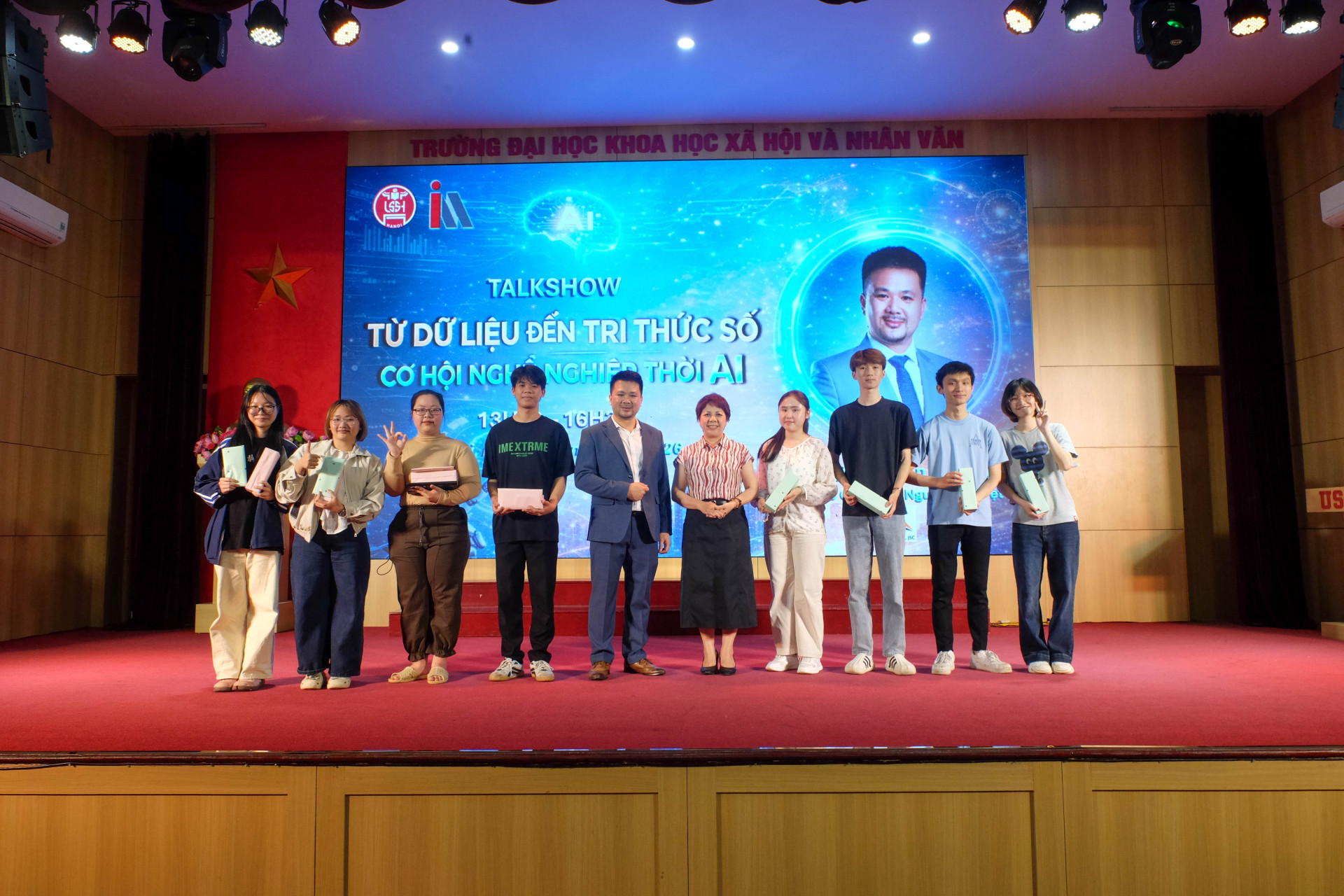
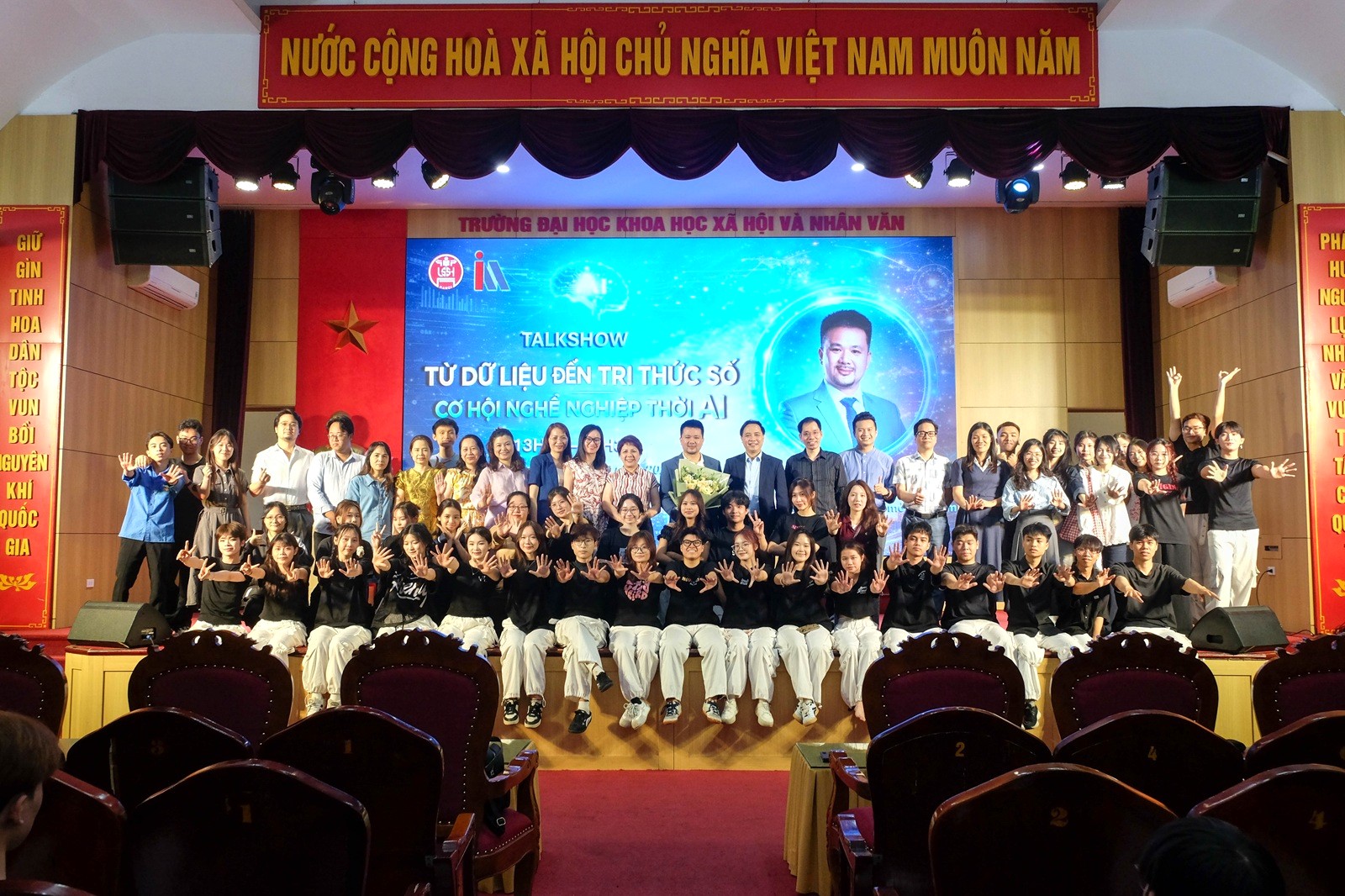
The talk show attracted the participation of all faculty members and nearly 500 students from the Faculty of Information and Library Science, and featured a special presentation by Mr. Nguyen The Hung – CEO of VINADES.,JSC, Chairman and Founder of the Bidding Ecosystem Startup, a speaker with many years of experience in technology, media, and entrepreneurship.
Assoc. Prof. Dr. Do Van Hung - Head of the Department of Information and Library Science, delivered the opening remarks for the talk show.
During the talk show, the speaker offered a comprehensive and insightful perspective: in the age of AI, data is merely the starting point; the more crucial skill is the ability to transform data into knowledge and create practical value. Therefore, students should not only focus on accessing tools but also develop analytical thinking, systems thinking, and the ability to extract insights from data. This is considered one of the fundamental competencies for adapting to the new work environment, where AI is increasingly prevalent in all fields.
One of the program's key messages was: the world doesn't lack data, but it lacks people who understand data. Speakers emphasized that value lies not in the quantity of data collected, but in the ability to organize, connect, analyze, and tell stories from that data. Therefore, the ability to transform data into knowledge, and then use that knowledge to support decision-making, is becoming a crucial competitive advantage for human resources in the digital age.
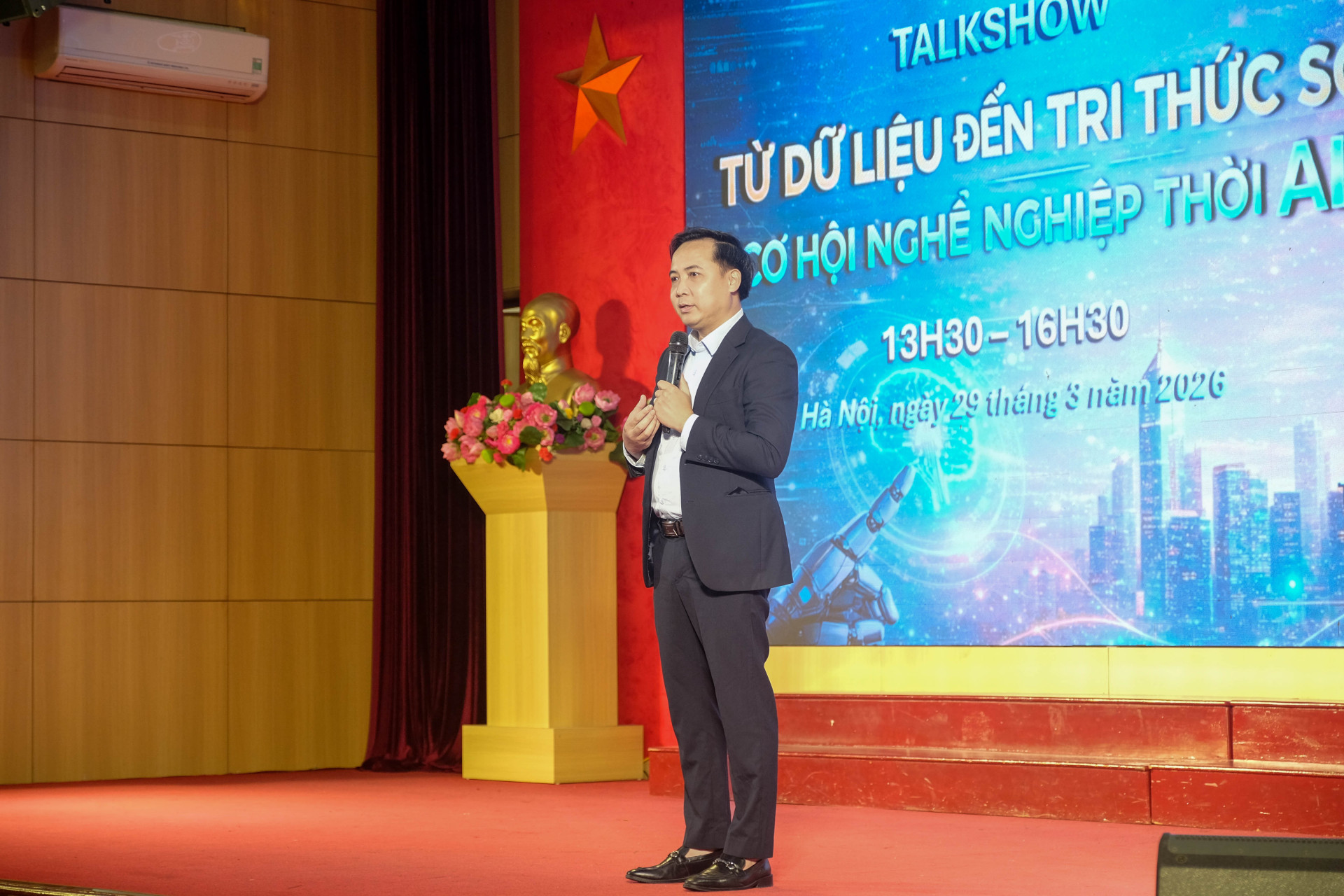
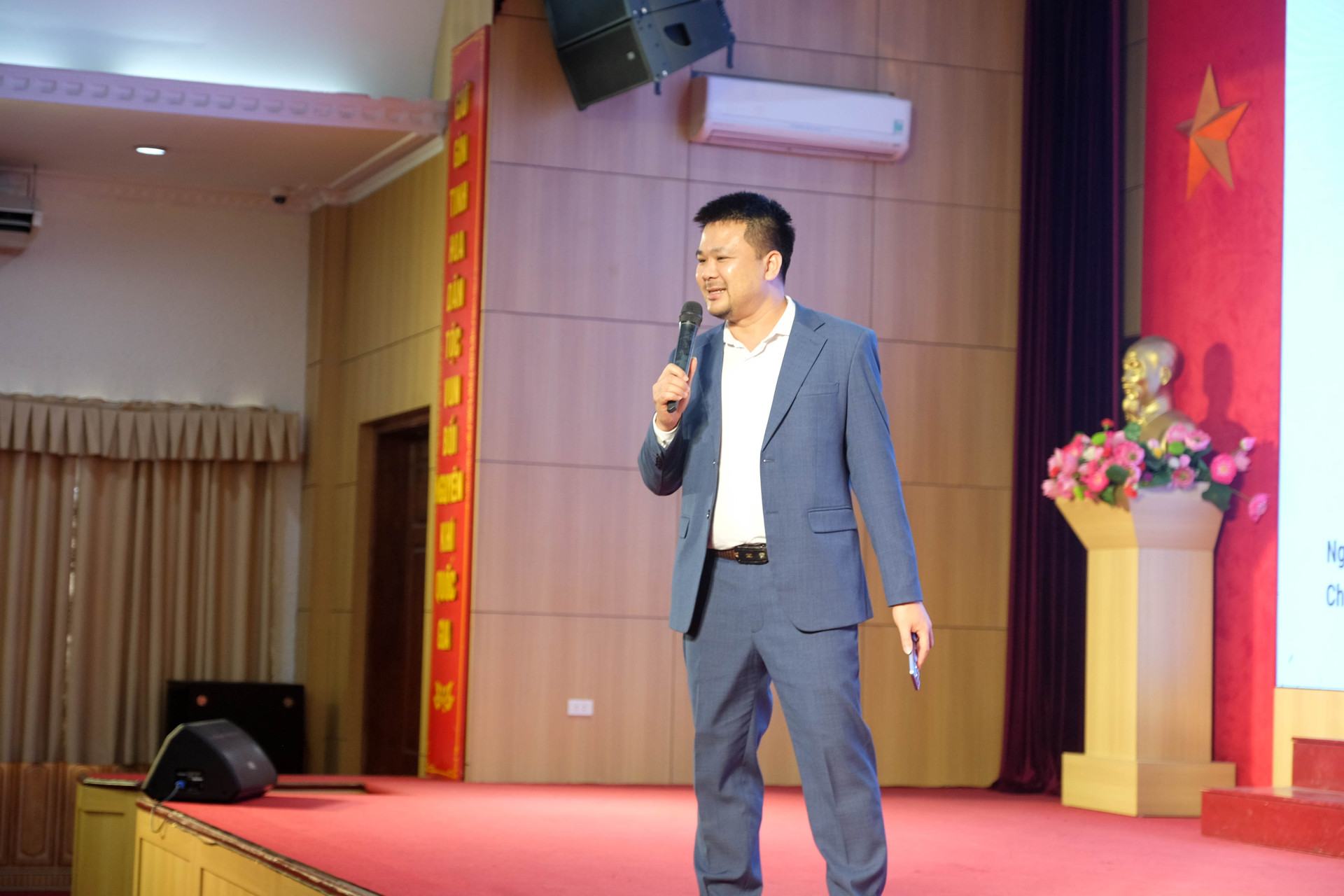
Mr. Nguyen The Hung - CEO of VINADES.,JSC shared his insights with the students at the seminar.
Drawing from practical experience, the speaker also shared a more open-minded perspective on the impact of AI on careers. Accordingly, AI is not simply replacing humans, but is changing working methods and simultaneously creating new demands for digital skills and adaptability. Those who know how to use AI can significantly increase productivity; however, a more sustainable advantage belongs to those who not only know how to leverage AI but also possess the ability to master data and understand the essence of the problem.
Notably, the talk show suggested several specific career paths for students, including Data Analyst, Knowledge Engineer, UX/UI Designer, and AI Trainer. These positions reflect the shift in the labor market towards interdisciplinary roles, where learners need to simultaneously understand data, systems, and users. For students in the social sciences and humanities, this message is particularly meaningful, as critical thinking skills, information organization abilities, human empathy, and experience design can all become significant advantages in this new professional environment.
Besides highlighting career opportunities, the speaker also proposed a roadmap for developing students' competencies in stages. In the early years, students should focus on building a foundation of systems thinking, mastering data structures, and enhancing their foreign language skills. In later stages, learners need to proactively use AI tools, participate in practical projects, expand their research, and accumulate personal projects. In particular, the speaker encouraged students to shift from a mindset of "learning to complete assignments" to a mindset of "learning to create real products," thereby gradually building a portfolio as proof of their future professional capabilities.
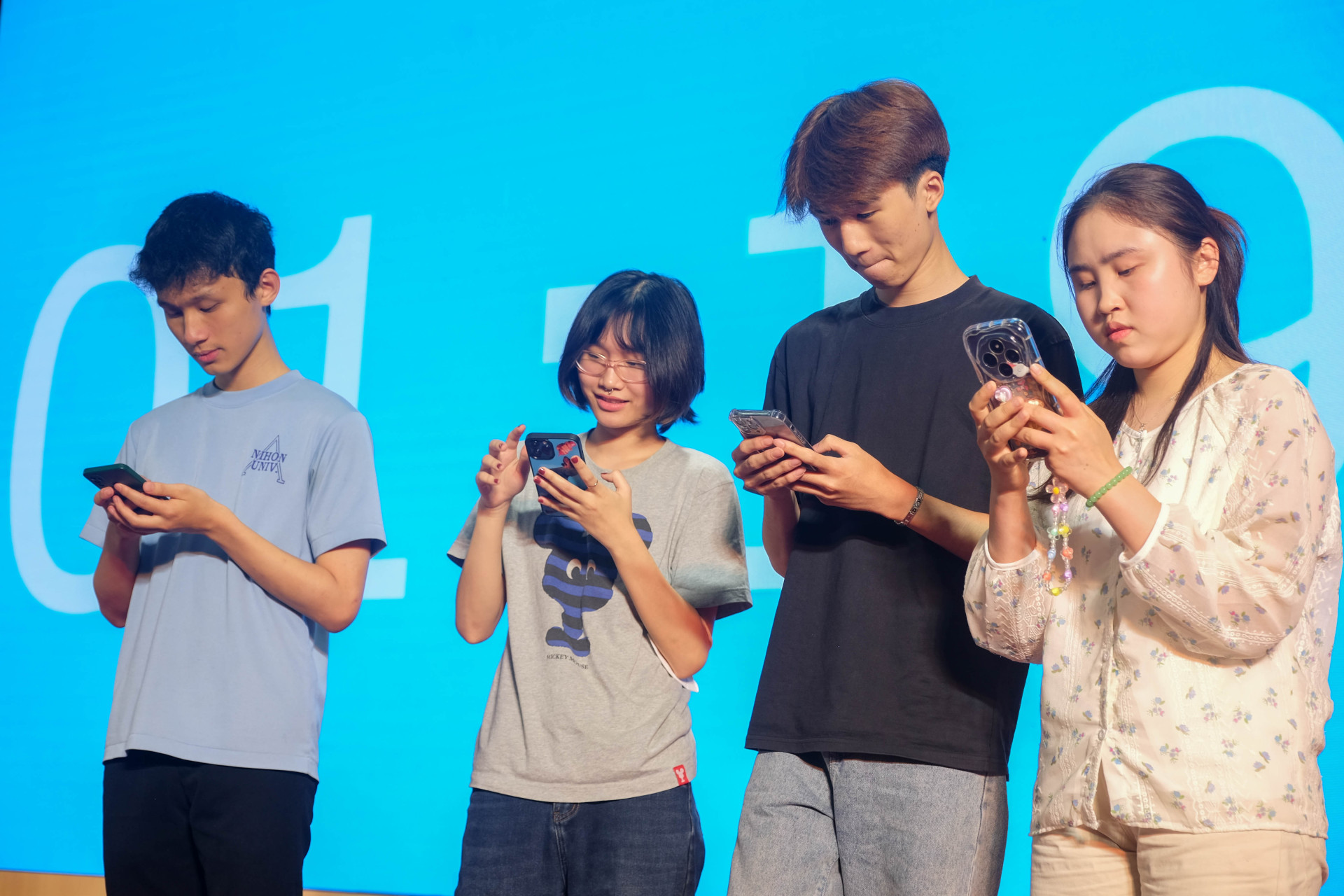
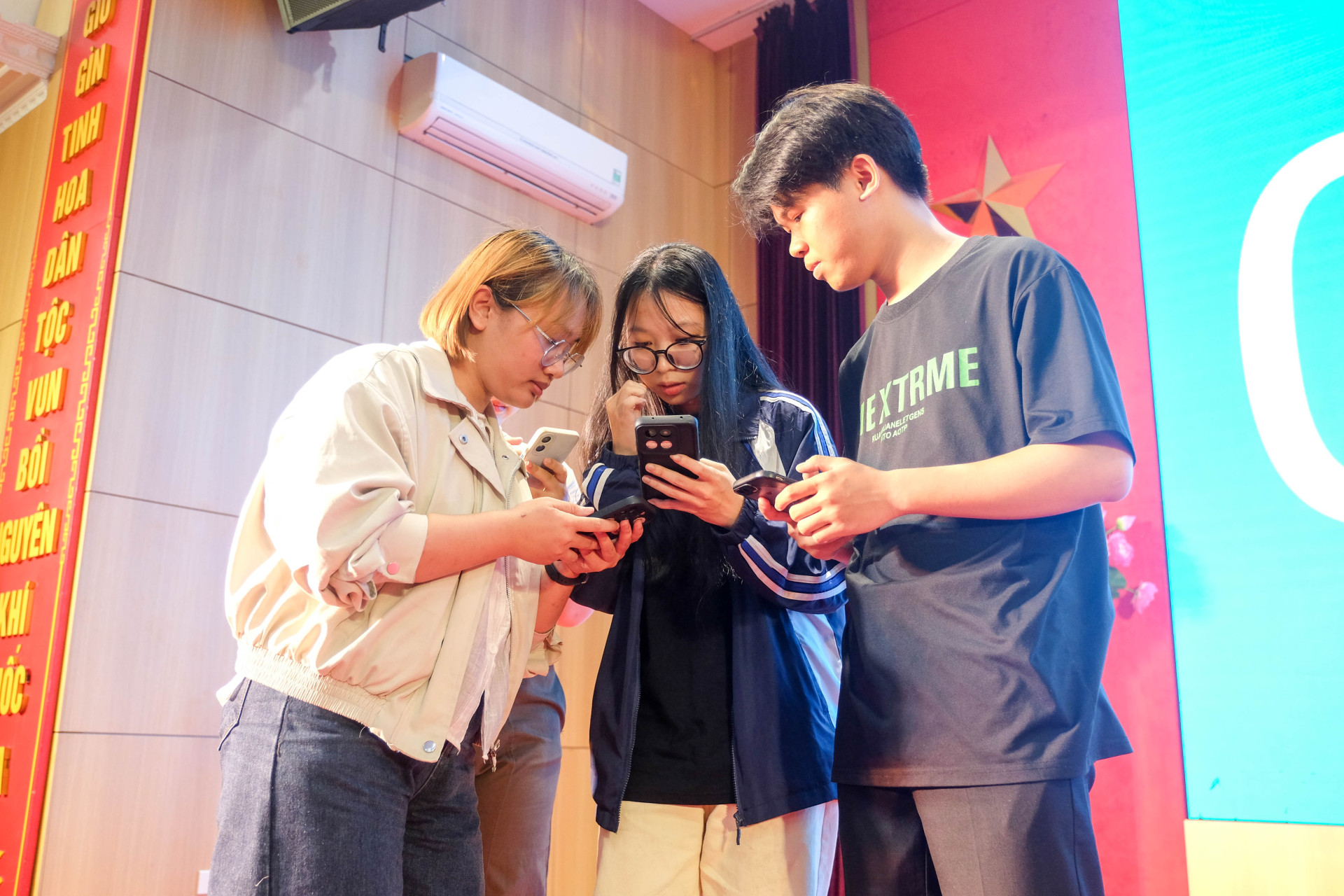
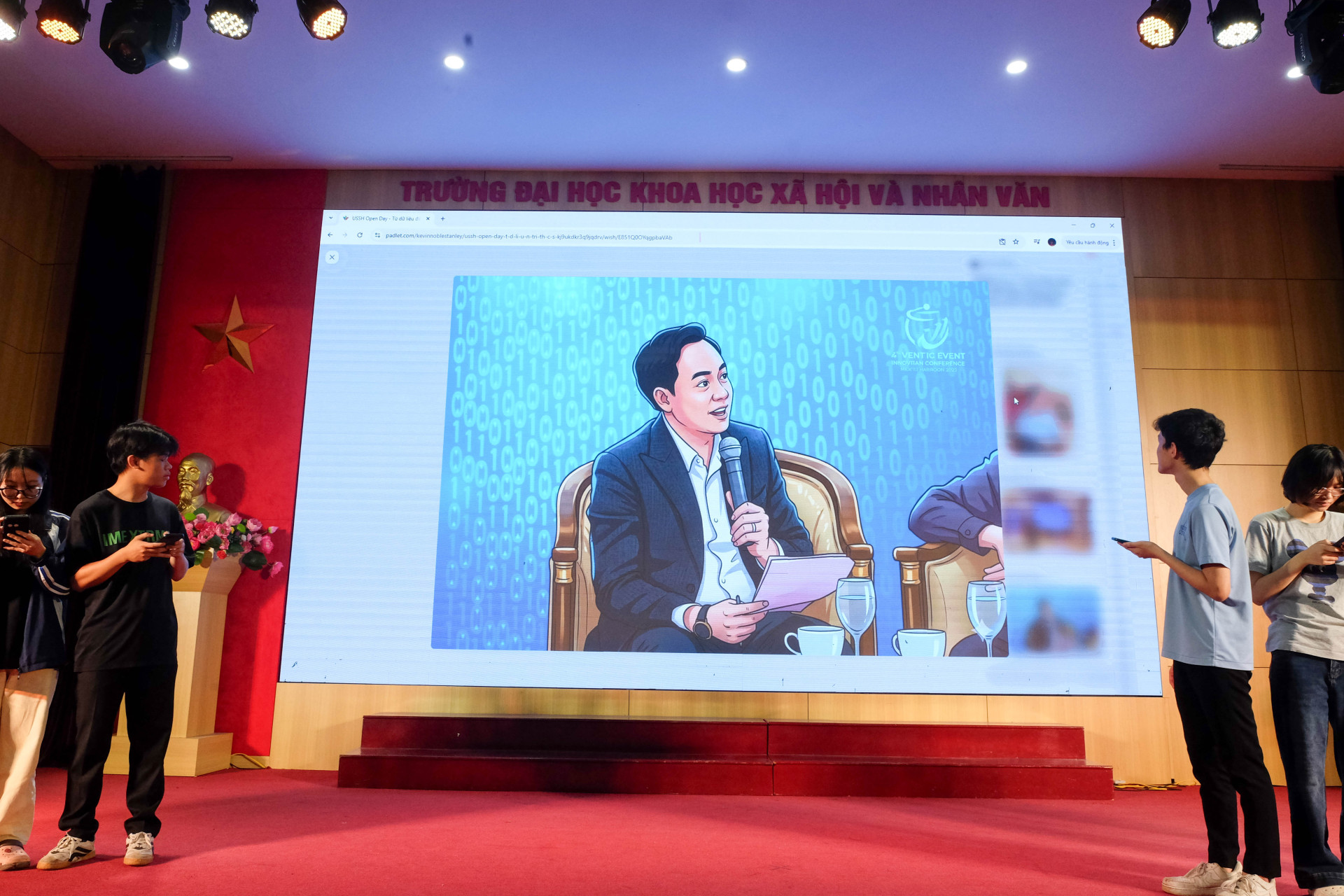
The students participated and interacted during the talk show.
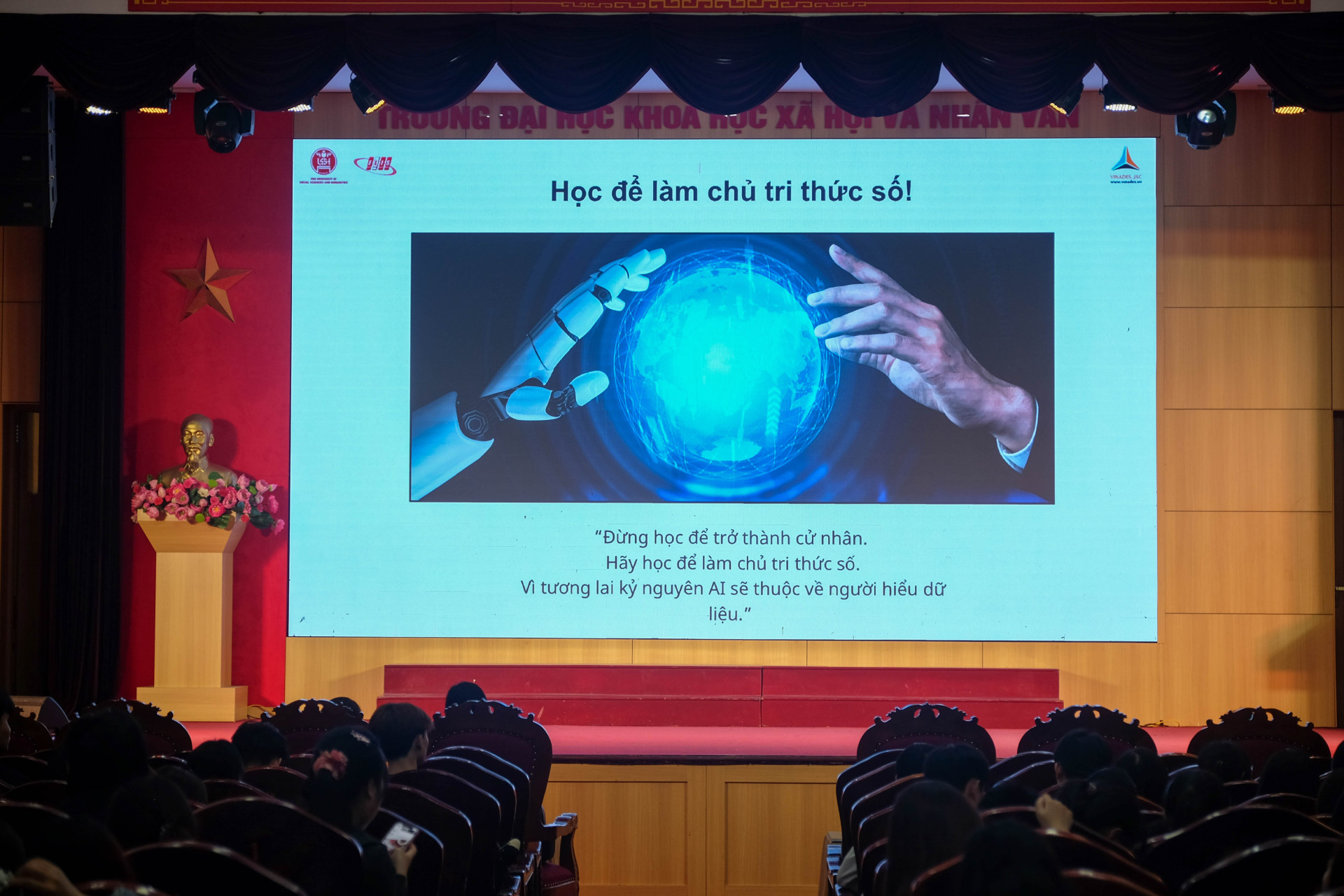
The talk show concluded with an inspiring message: “Don’t study to become a graduate. Study to master digital knowledge. Because the future of the AI era will belong to those who understand data.” This message not only emphasizes the role of data in the new era but also suggests a more proactive approach to learning, career development, and personal growth for students.
Through this program, students have more opportunities to access practical insights and better define their career paths to meet the demands of the future job market. The talk show also affirms the school's role in connecting education with professional practice, supporting students in developing interdisciplinary thinking, digital skills, and adaptability in the rapidly changing context of contemporary society.