
Opportunities for travel are not limited to the tourism industry.
Speaking with Vietnamnet, Dr. Nguyen Ngoc Dung, Head of the Tourism Department at the University of Social Sciences and Humanities, Vietnam National University, Hanoi, said that for a long time, many people have assumed that only industries like tourism and aviation are suitable for those who like to travel, because the nature of the work is closely related to experiences and changing environments.
However, in the context of globalization and the strong development of the experience economy, opportunities for travel have expanded to many other fields with equally diverse levels and potential.
Specifically, in addition to familiar positions in the tourism industry such as tour guides, tour operators, or event organizers – which are highly mobile and closely linked to hands-on experiences at destinations – several other fields also offer job opportunities in many places, such as media, journalism, diplomacy, aviation, international trade, or logistics…
In addition, fields such as education, scientific research, especially research related to tourism, culture, sustainable development, or non-governmental organizations, also open up opportunities for work, research, and collaboration in many areas both domestically and internationally.
Notably, in the digital age, the concept of "mobility" is no longer limited to geographical space. Jobs such as digital content creation, designing smart travel experiences, or managing digital platforms also allow people to work flexibly in many places, even working while traveling.
However, according to Dr. Dung, the "shift" in this field is not just about changing geographical location, but also requires a shift in mindset and the ability to adapt to technology and the global environment.

Students from the University of Social Sciences and Humanities on a field trip for their Tourism Resources - Tourism Business course. Photo: Provided by the university.

Dr. Nguyen Ngoc Dung and a group of students from the Faculty of Science studied and experienced life at the Yacht by DC Hotel.
What preparations do students need to make to pursue a career that involves a lot of travel?
To pursue these careers sustainably, Dr. Nguyen Ngoc Dung believes that students need thorough preparation in terms of knowledge, professional competence, and supplementary skills. A solid foundation of specialized knowledge is a prerequisite, enabling individuals to adapt to various work environments.
Furthermore, foreign language proficiency plays a crucial role when working in a multicultural environment. Skills such as communication, problem-solving, time management, teamwork, and adaptability also need to be emphasized and practiced regularly.
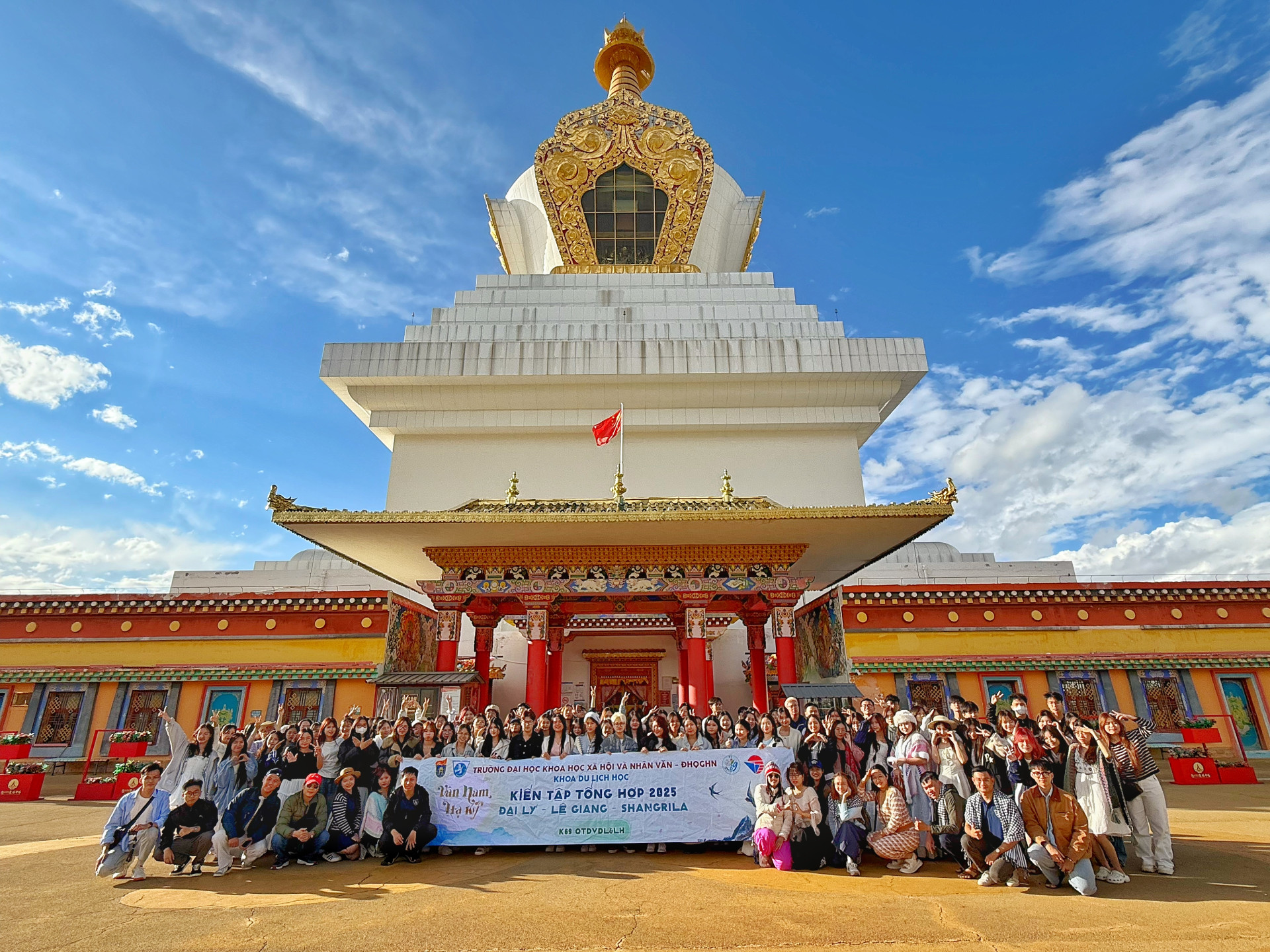
Tourism students undertake a comprehensive internship in Dali, Lijiang, and Shangri-La in 2025. Photo: Provided by the interviewee.
Furthermore, Dr. Dung believes that in the context of digital transformation, young people also need to equip themselves with data analysis skills, understand customer behavior, and know how to apply technology to their work to enhance their competitiveness and avoid the risk of being replaced by AI.
But most importantly, Dr. Dung emphasized, students should not choose a profession simply because they want to travel to many places. More importantly, they must choose a field that aligns with their passion and abilities, so that each career move brings value to themselves and the community.
"Movement is only sustainable when it's linked to professional growth. Experiences should become the building blocks for a long-term career path, rather than just spontaneous trips," said Dr. Dung.
If students want to travel to many places, what career path should they choose?
Do the "hot" fields of Social Sciences and Humanities still retain their appeal in the digital age?
Nearly 90% of Social Sciences and Humanities students find employment after graduation.
Understanding Religious Studies Correctly: A Scientific Perspective and Broad Career Opportunities
"Open lecture hall" for students majoring in History and Cultural Studies.
Author:According to Vietnamnet
Newer news
Older news

