University of Social Sciences and Humanities - VNU Hanoihttps://ussh.vnu.edu.vn/uploads/ussh/logo-ussh-2_100_100.png
Tuesday - March 17, 2026 14:22
Field trips to cultural sites and historical monuments throughout the country, regularly organized by the University of Social Sciences and Humanities, have truly become vast practical learning environments for students of the History Department.
Opening up field-based classrooms at famous cultural heritage sites. Recently, more than 120 students and postgraduate students from the Faculty of History, University of Social Sciences and Humanities, Vietnam National University, Hanoi, participated in a field trip to the Am, Ngoa Van Pagoda - Yen Tu World Heritage Site (Dong Trieu, Quang Ninh) to commemorate the 692nd anniversary of the passing of the Third Patriarch Huyen Quang to the Buddha's realm. The pagoda, originally built during the Tran Dynasty, was the place of practice and enlightenment of the first patriarch of the Truc Lam Zen sect, Truc Lam Dieu Ngu Giac Hoang Tran Nhan Tong. His disciples continuously renovated and expanded it into a complex of pagodas, hermitages, and stupas of the Truc Lam Zen sect on Bao Dai Mountain. During the Later Le Dynasty, many more magnificent architectural structures were added. The pagoda complex has three layers. At the top is the Ngoa Van Hermitage. Inside the hermitage is an altar with a bronze statue of Emperor Tran Nhan Tong in the posture of entering Nirvana. Here, students and trainees in History and Cultural Studies have learned about the history of formation and development, the ideological, literary, historical, and religious values of the Truc Lam Zen sect, as well as the architectural values of the Ngoa Van hermitage and pagoda. This place not only boasts majestic nature but is also the site where Emperor Tran Nhan Tong attained enlightenment, becoming a national spiritual center and a symbol of Vietnamese self-reliance, strength, and wisdom.
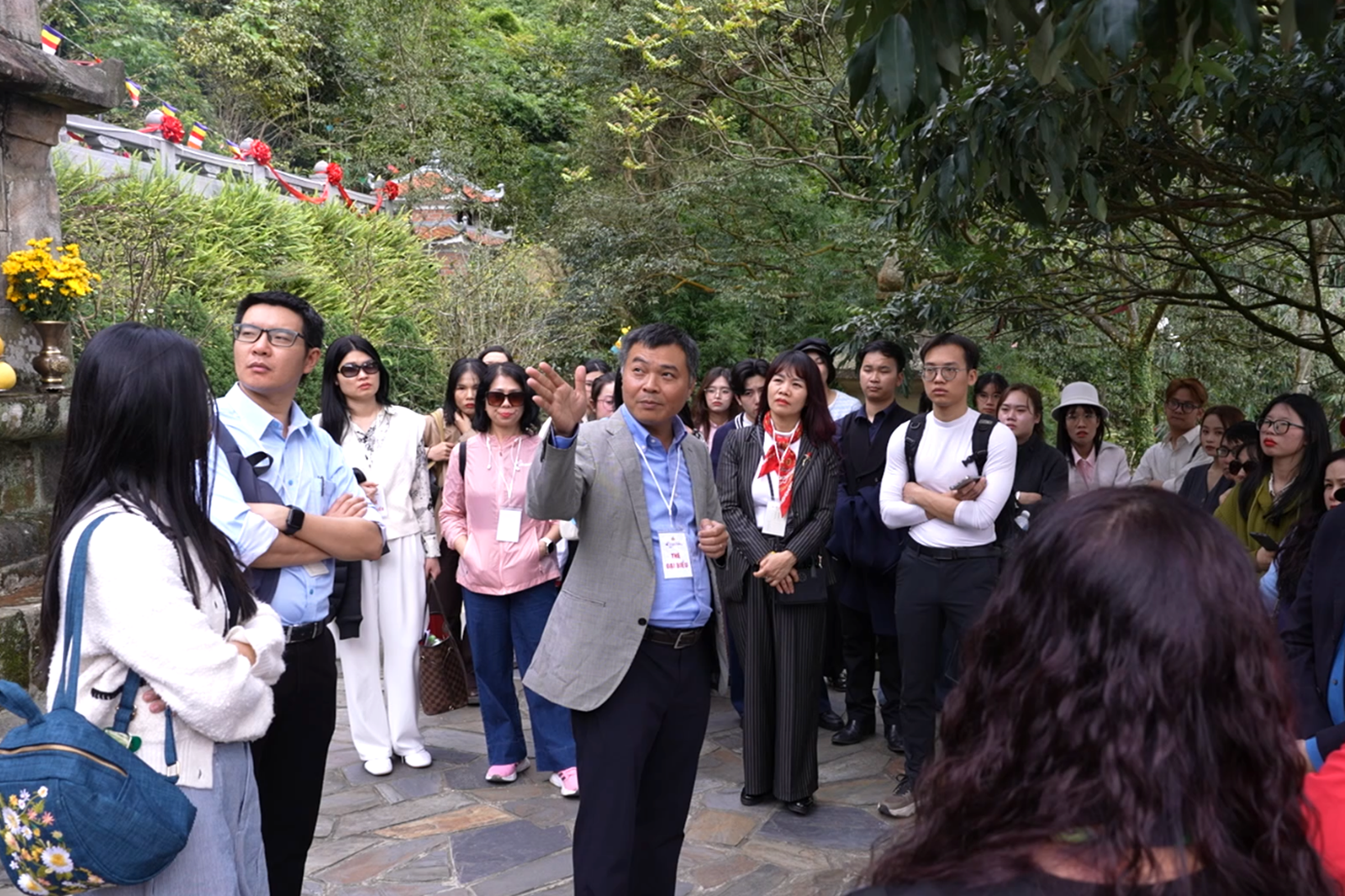
Dr. Nguyen Van Anh - Head of the History Department, discussed with lecturers, students, and trainees of the History Department about the cultural and historical values at the Am and Ngoa Van Pagoda World Heritage Site.
According to Professor Hoang Anh Tuan, Rector of the University of Social Sciences and Humanities, cultural relics such as the Ngoa Van Pagoda and Temple serve as an "open classroom" for the university's students. The university regularly organizes practical activities and experiences for students at these cultural sites. Furthermore, the university hopes that researchers and managers at these cultural and historical sites will participate in the training process at all levels, providing students with valuable practical experience. The University of Social Sciences and Humanities has signed a memorandum of cooperation with Ngoa Van - Yen Tu Cultural Tourism Joint Stock Company to promote heritage values and disseminate and transform academic knowledge into mass-market products. Accordingly, the Ngoa Van Pagoda and Temple complex aims to welcome not only tourists but also young people, students, graduate students, and researchers from the university for fieldwork and internships. The future workforce of the cultural tourism industry must be people with a deep understanding of their roots. Ngoa Van will be a breeding ground for tour guides, heritage managers, and cultural communication experts who possess the serenity of Zen Buddhism and the sharp intellect of the modern era. With 14,000 students at all levels from bachelor's to master's and doctoral degrees, generations of students at the University of Social Sciences and Humanities will have more opportunities to visit, research, and study at Ngoa Van, a place rich in cultural and historical value.
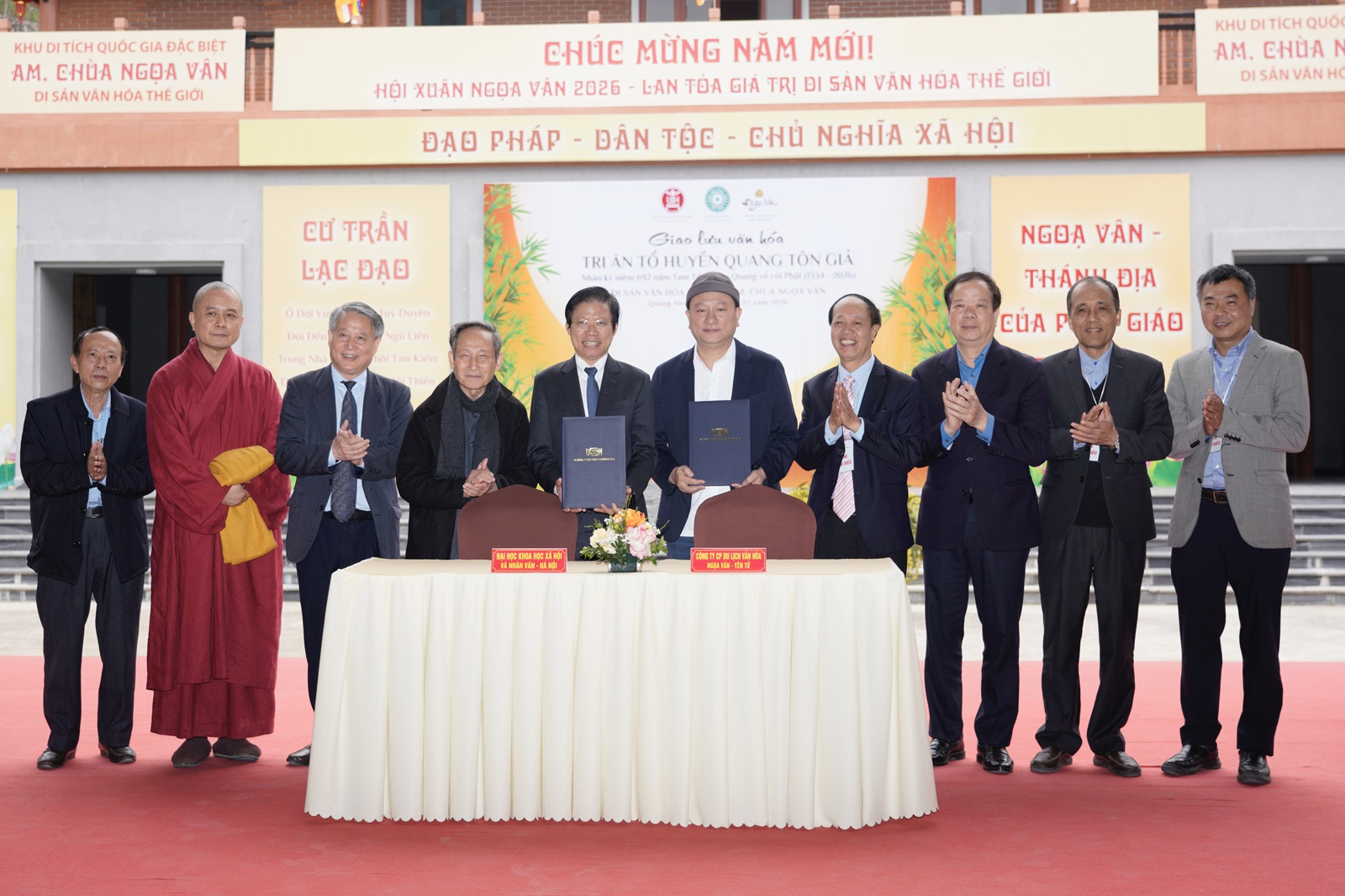
The University of Social Sciences and Humanities and Ngoa Van - Yen Tu Cultural Tourism Joint Stock Company signed a Memorandum of Understanding to cooperate in transforming the Ngoa Van heritage site into a major learning environment for students and trainees.
Instilling a passion for historical research through practical, hands-on training methods. For Bui The Vinh, a K68 student in the History Department at the University of Social Sciences and Humanities, field trips to cultural and historical sites are not only opportunities for students to learn and research deeply about national culture to serve their studies and research at the University of Social Sciences and Humanities, but also a chance for them to further appreciate the values left by their ancestors. Accessing heritage spaces contributes to making classroom knowledge more concrete and relatable, broadening perspectives on the culture and history of the region associated with the Truc Lam Zen sect. This is also part of the University of Social Sciences and Humanities' practice-oriented training method. Through these field trips to historical sites and cultural lands, students gain access to local resources and directly exchange ideas with lecturers and local researchers. Video:Following in the footsteps of the Buddhist Emperor in the sacred Ngoa Van mountain.(Video source: HTV5 - Bchannel)Taking students on field trips to local research sites is one of the activities regularly organized by the Faculty of History, as part of the training program for all majors. Students in the Faculty of History not only get to visit famous landmarks from North to South Vietnam, such as Hanoi, Bac Ninh, Thai Nguyen, Hai Phong, and Hue, but also have the opportunity to study, research, and interact with many international universities in Indonesia, South Korea, and other countries.
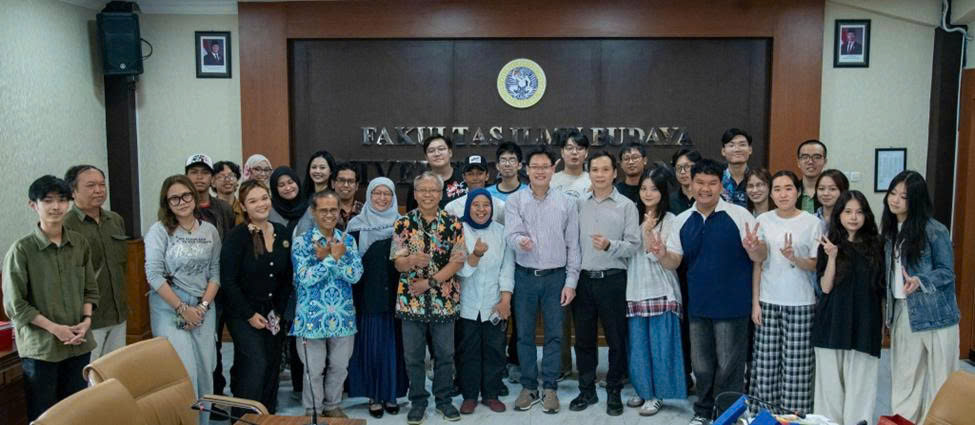
A group of students from the World History and Cultural Studies departments of the Faculty of History on an internship and academic exchange trip to Indonesia.
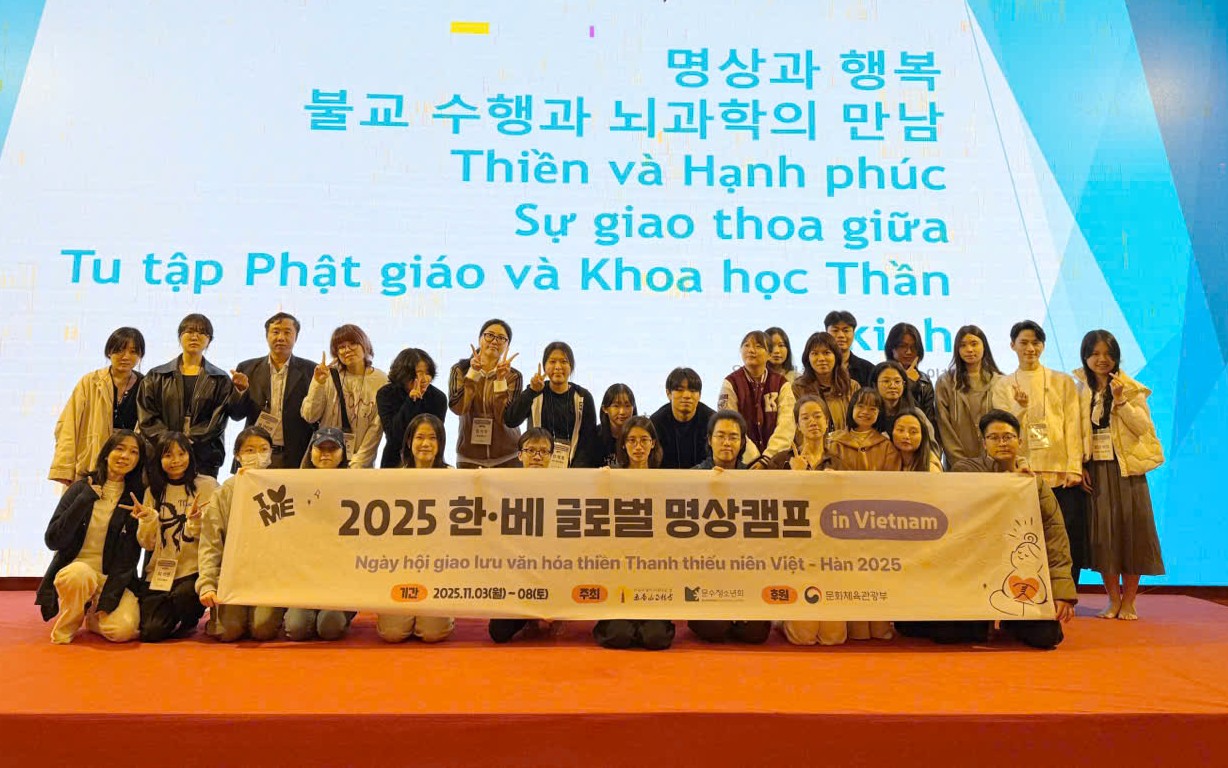
Students from the University of Social Sciences and Humanities participated in the Vietnam-Korea Youth Cultural Exchange Activities on Zen Buddhism and the East Asian Youth Festival on Zen Buddhism in 2025.
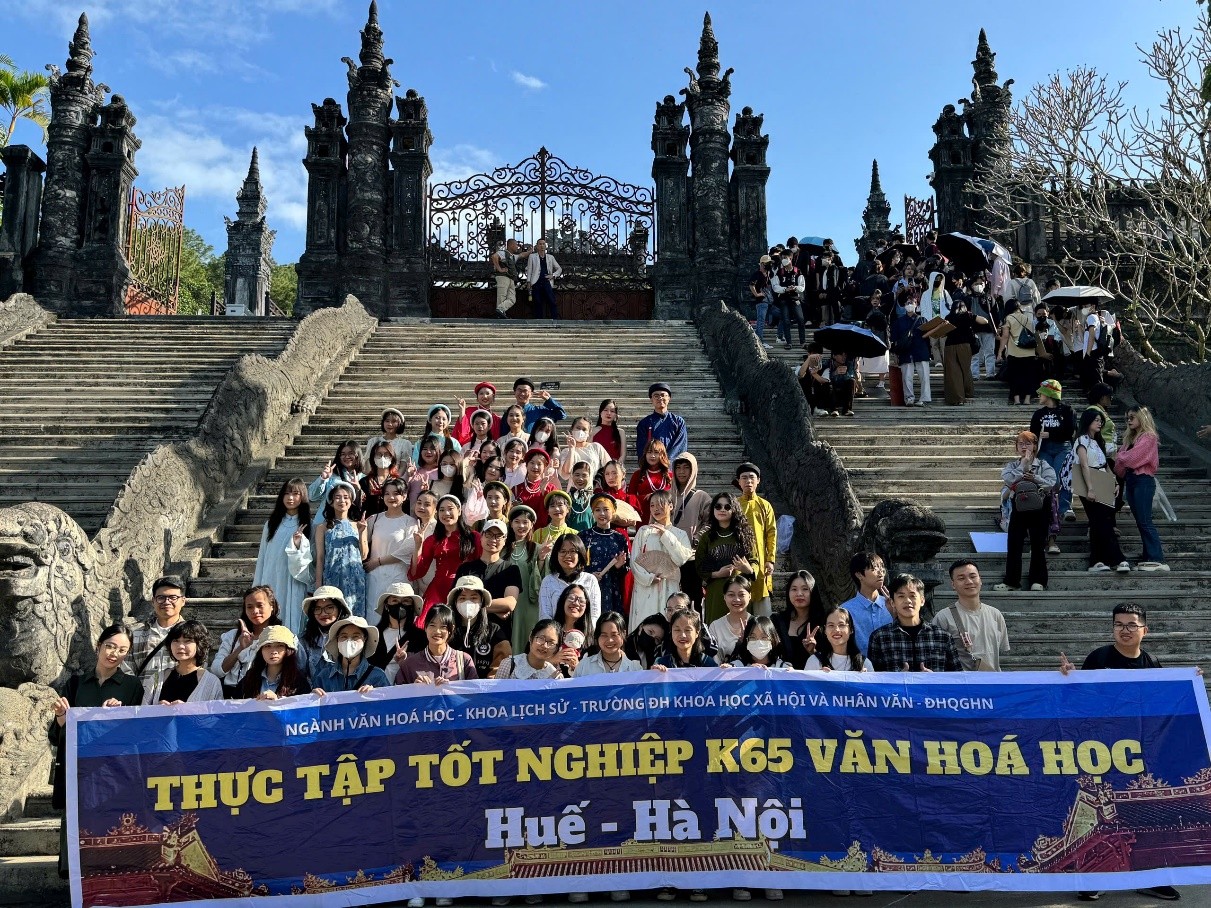
K65 Cultural Studies students are doing their graduation internship in Hue.
In addition, students participate with faculty members in numerous research and heritage preservation projects, contribute articles and scientific papers published domestically and internationally; participate in scientific conferences and seminars, and meet with experts to exchange ideas on professional issues. Students of the department also participate in many exchange programs with students from history departments of universities across the country. Extracurricular activities, experiential learning, and field trips organized annually have created a unique brand for the Department of History, continuously inspiring, imparting knowledge, skills, and a passion for cultural and historical research to generations of students in the department.