The subject matter of Religious Studies is both personal and introspective, difficult to observe directly, yet also institutional and communal, constantly evolving with the changes in contemporary social life. Therefore, students of Religious Studies cannot simply master the doctrines, histories of religions, or religious theories through textbooks; they need to directly observe and participate in religious life as it unfolds—where doctrines are practiced, beliefs are expressed, and religious communities exist in relation to the state and society.
In that spirit, from July 20th to 25th, 2026, lecturers and students of the QH-2023 (K68) cohort of the Religious Studies major, Faculty of Anthropology and Religious Studies, University of Social Sciences and Humanities, Vietnam National University, Hanoi, completed their internship and practical training in Hai Phong city - an area where many religions coexist and transform through different historical periods.
The first distinctive feature of the internship was the opportunity for students to gain a multi-faceted approach to local religious life. The group not only worked with the Hai Phong City Department of Ethnic Minorities and Religion (the state agency responsible for religious affairs), but also directly met with religious leaders and officials of Catholicism, Protestantism, and Buddhism, as well as representatives of some typical folk religions in the port city. This arrangement was not accidental, but accurately reflected the nature of contemporary religious life, which always exists within a three-way relationship between religious institutions, state management institutions, and the community of believers. To understand a religious phenomenon, researchers must place themselves in all three observational positions, rather than approaching it from only one perspective.
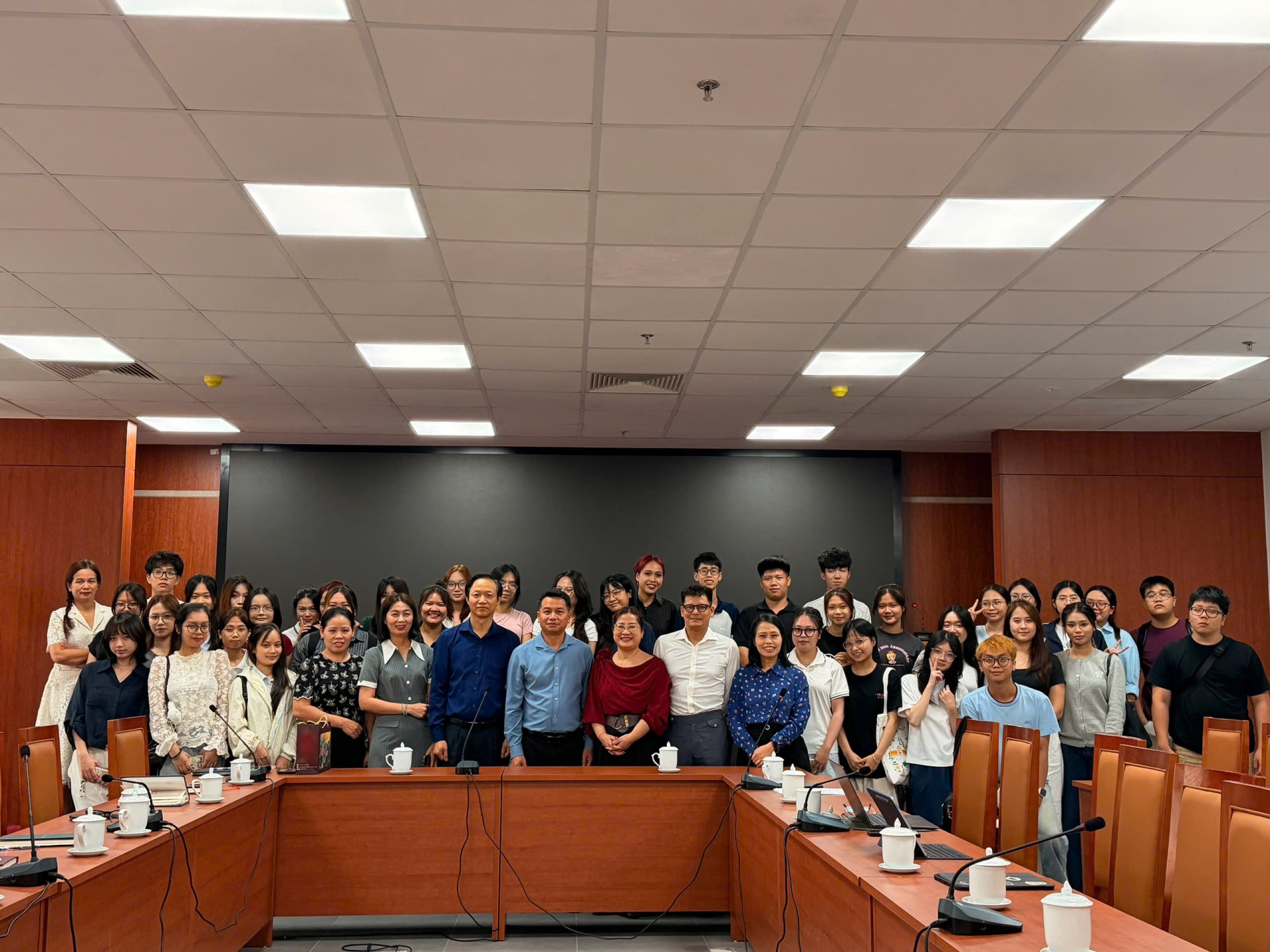
The group of interns from the Religious Studies department worked with the Ethnic and Religious Affairs Committee of Hai Phong city.
Besides the working sessions, the delegation also surveyed many typical religious sites and relics in Hai Phong. For those studying Religious Studies, each place of worship is not simply an architectural structure, but a living document, preserving the traces of the introduction, localization, adaptation, and even the changes of a religion within the flow of Vietnamese history and society. Reading these traces through the arrangement of the worship space, through the accounts of religious leaders, and through the activities of the community of believers requires a specialized observational and interpretive ability that cannot be acquired through theoretical study alone.
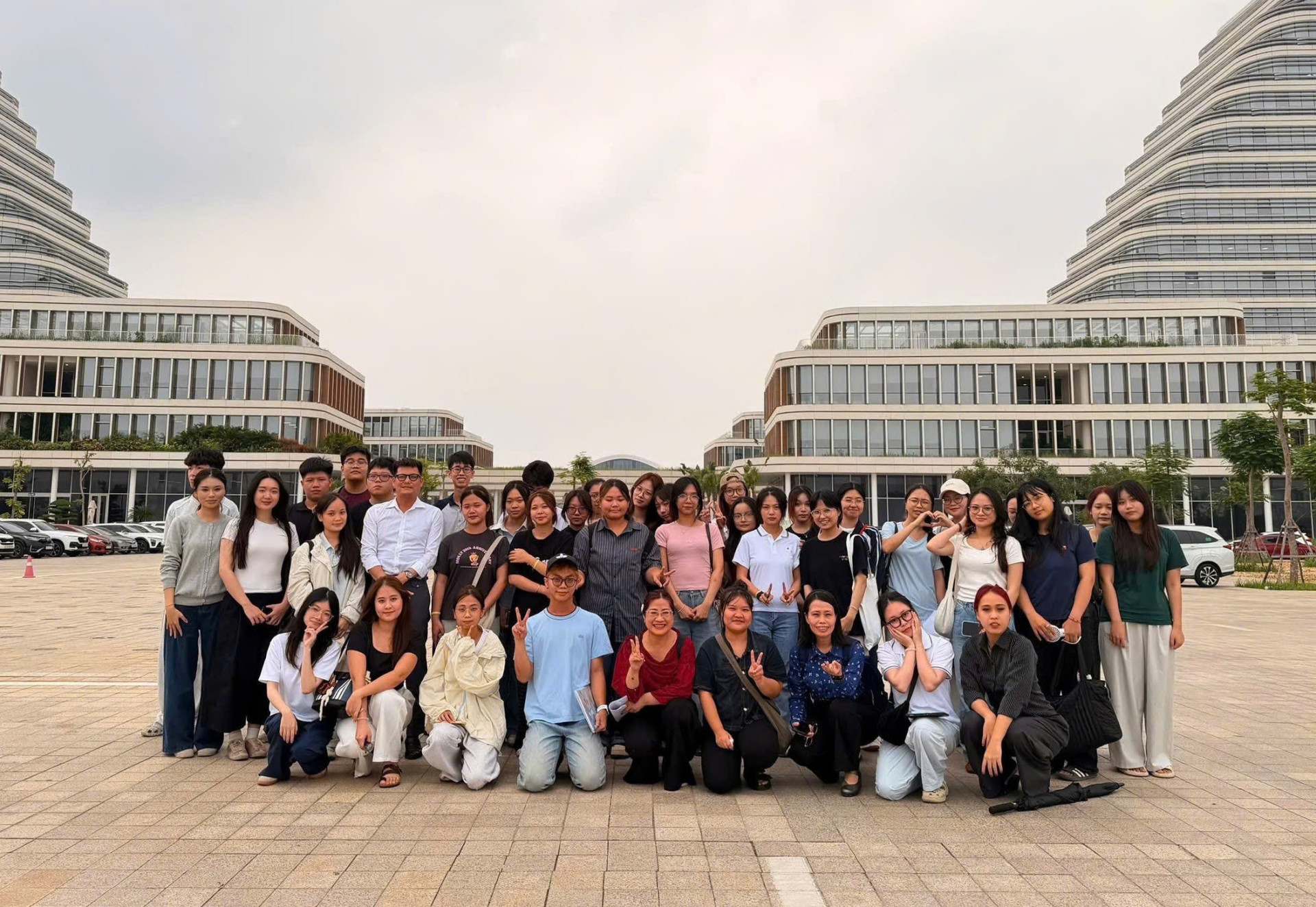
The internship group took a commemorative photo at the Hai Phong City administrative center.
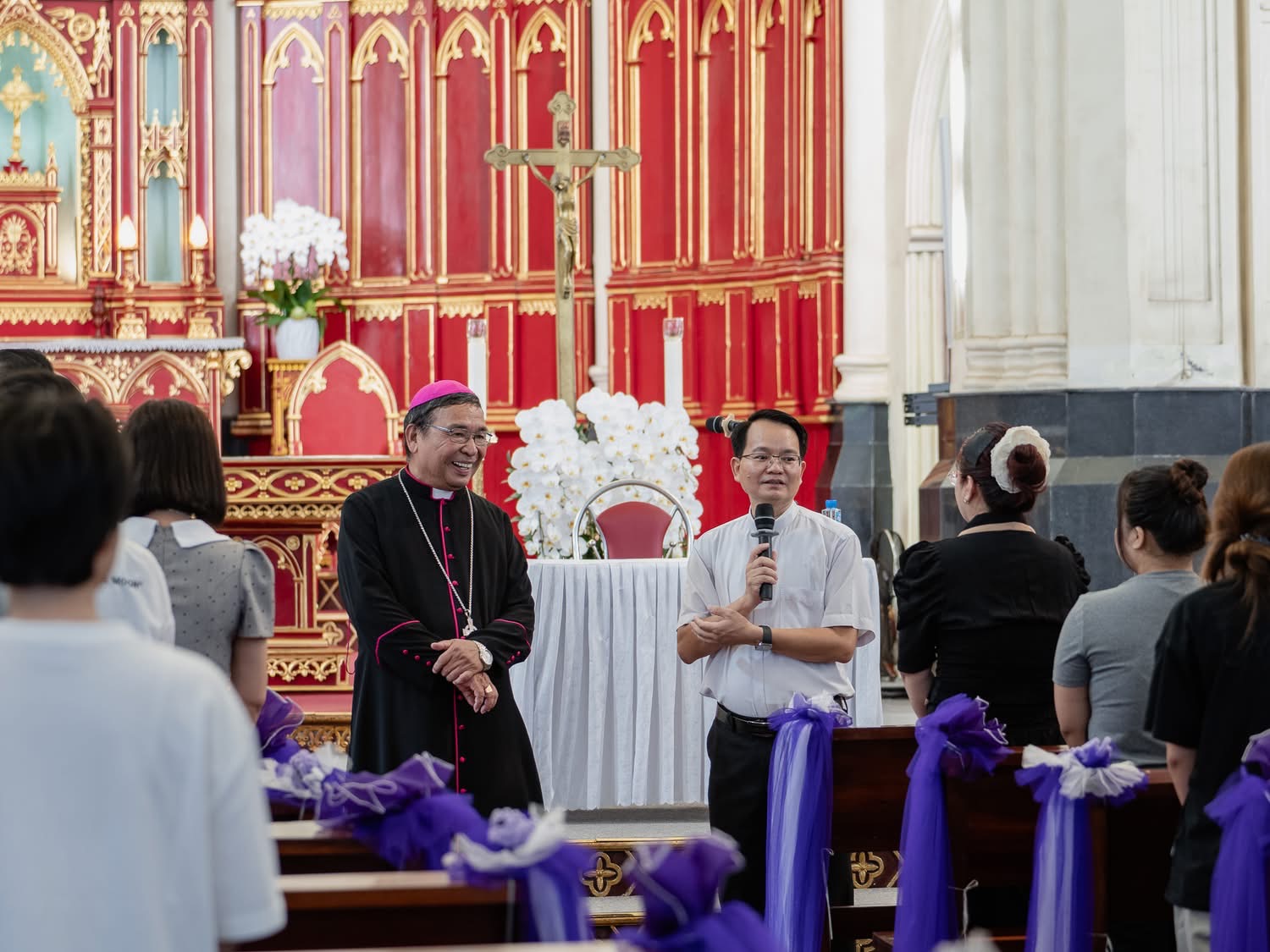
The Bishop shared and exchanged ideas with the internship group.
Through internships, field trips, and local surveys, students apply religious studies research methods such as observation, interviews with religious leaders and followers, religious field research, and data collection in the field. Simultaneously, students have the opportunity to compare two dimensions of knowledge: the doctrinal dimension, which is what religious scriptures and doctrines prescribe, and the practical dimension, which is what actually happens in the religious life of the community. The gap, compatibility, or transformation between these two dimensions is one of the core issues that modern religious studies theory is concerned with, and Hai Phong has become a vibrant "field experiment" for students to verify this through their own experiences.
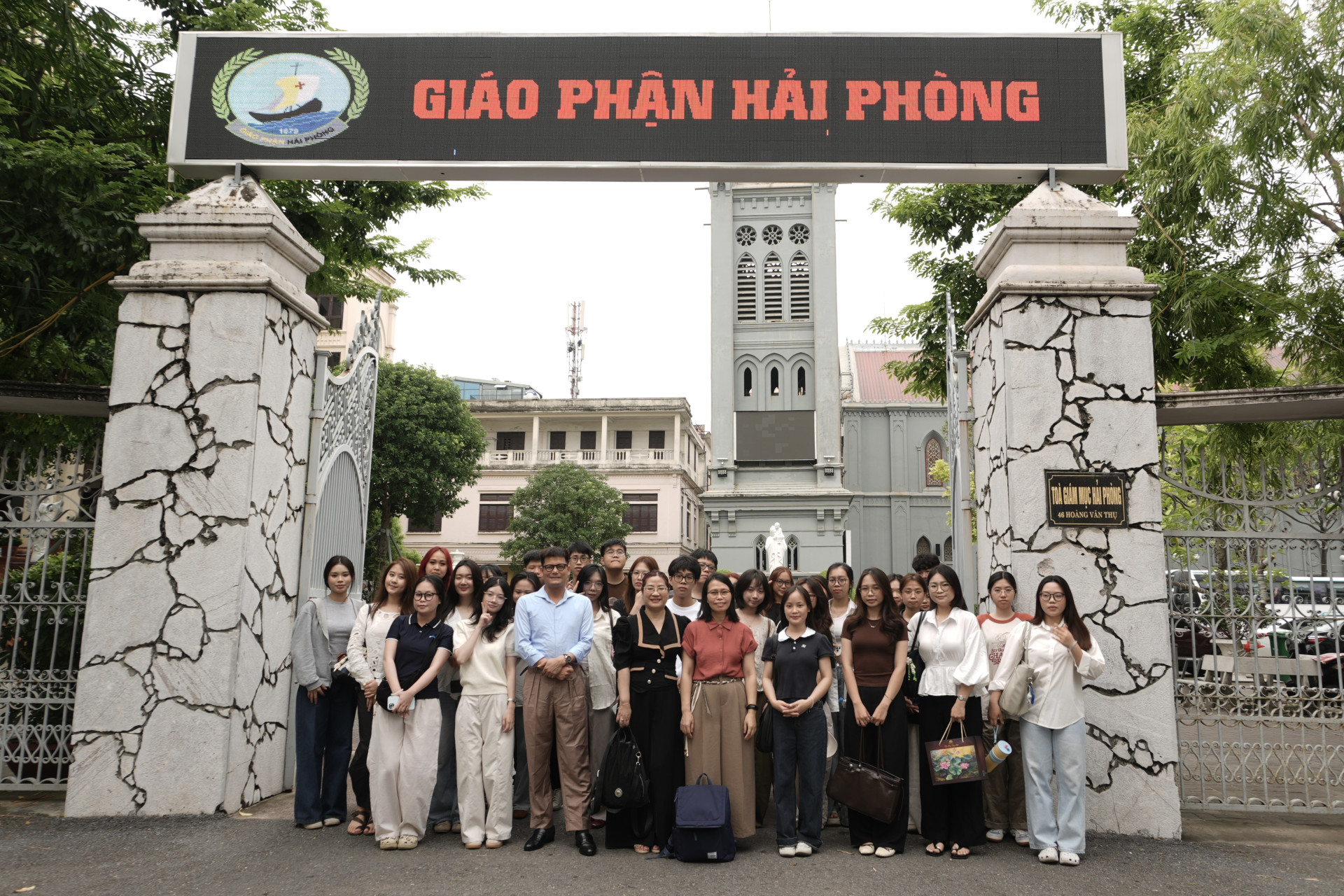
The group took a commemorative photo at the cathedral of the Hai Phong Diocese.
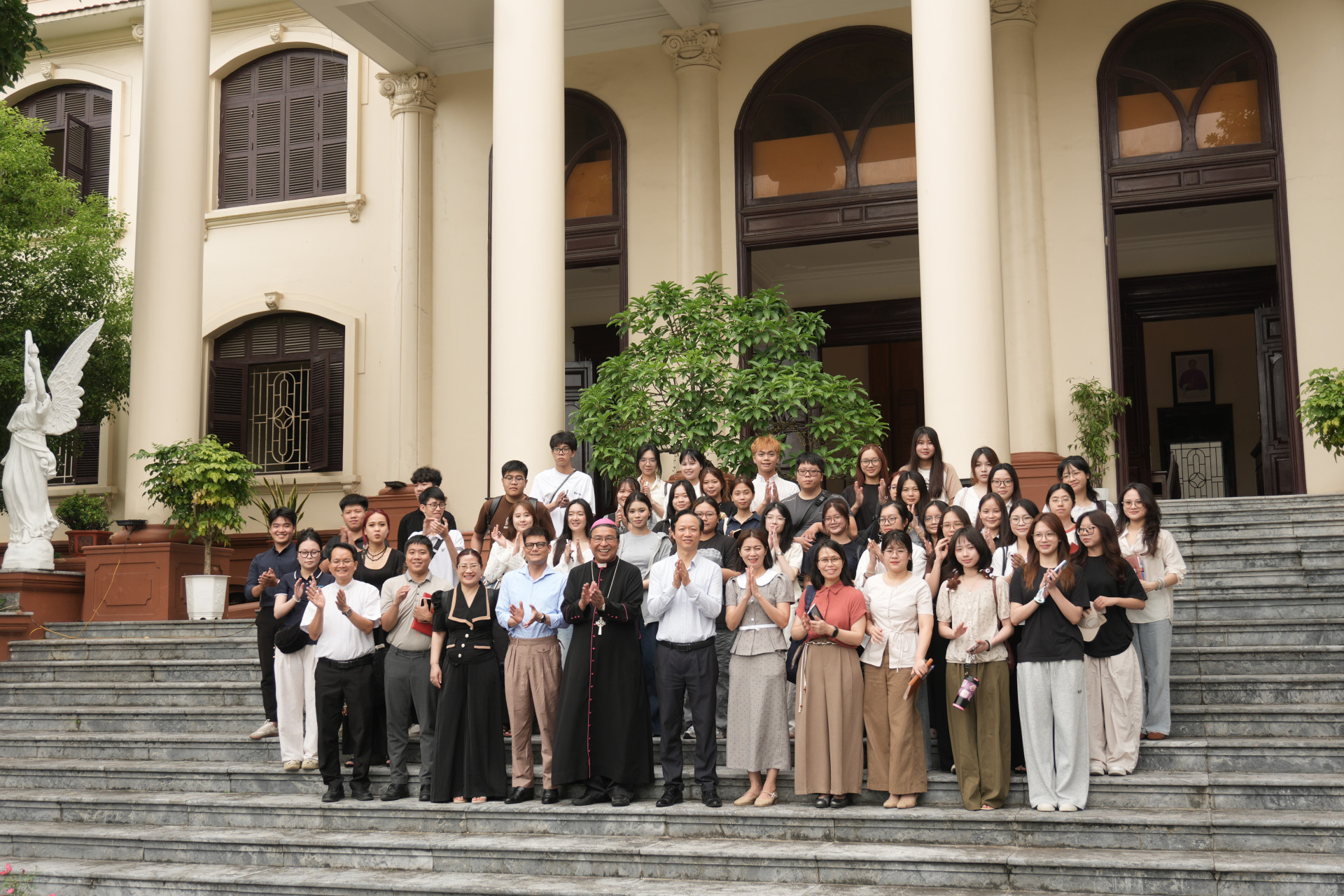
The delegation took a commemorative photo with the Bishop and the City's Committee for Ethnic and Religious Affairs.
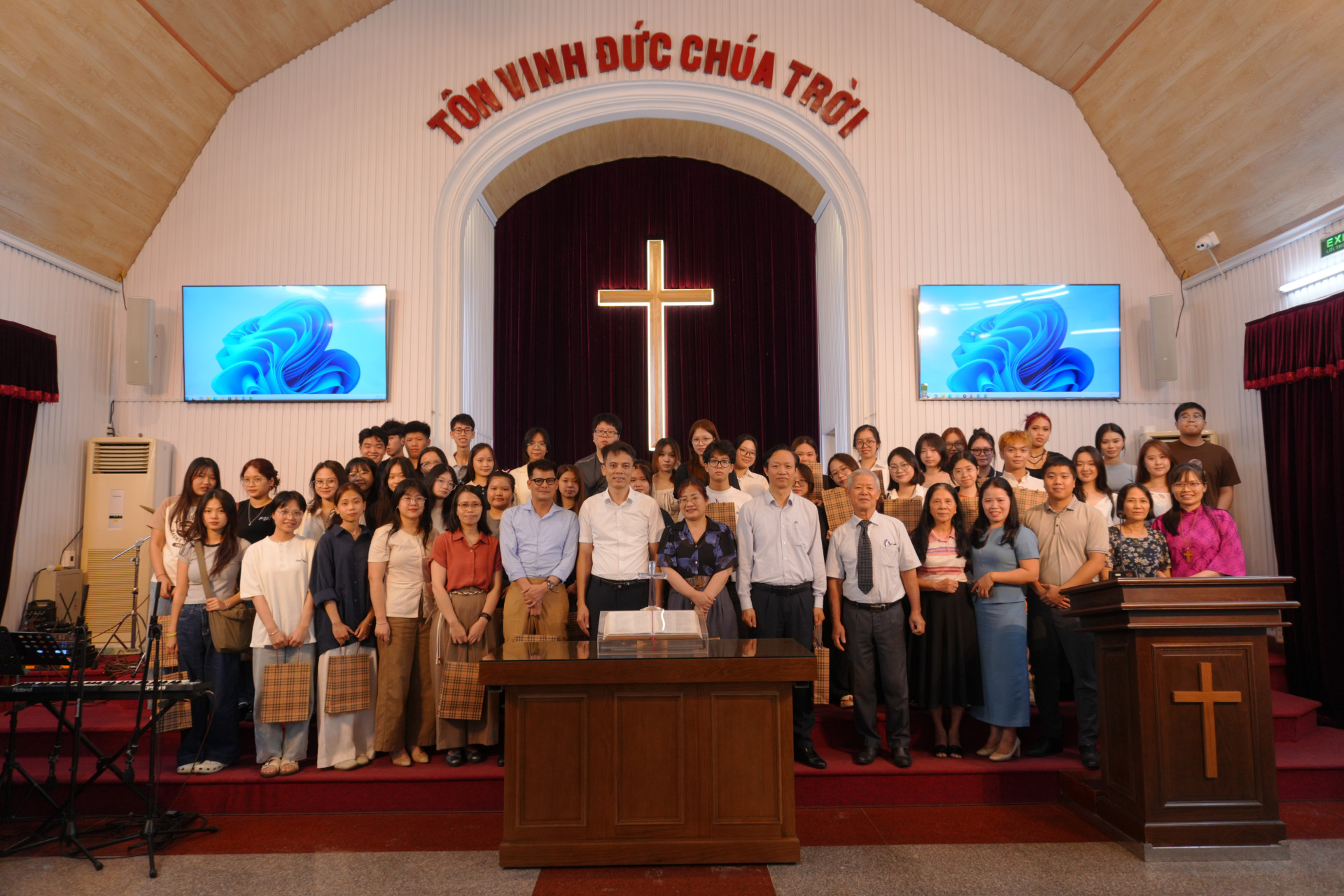
The delegation worked and took a commemorative photo at the Protestant Church in Hai Phong city.
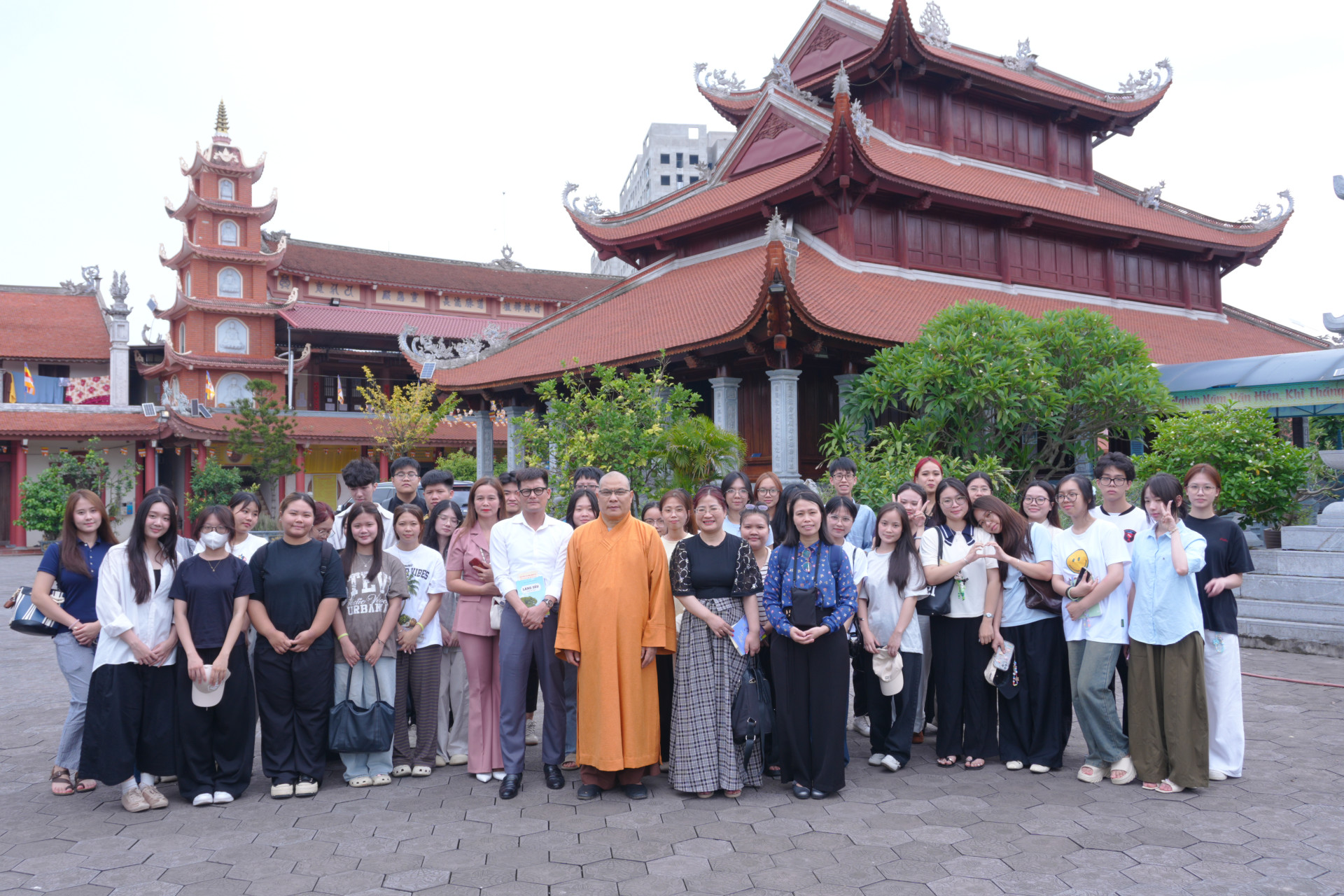
The delegation worked and took a commemorative photo at Dong Cao Pagoda, Hai Phong (formerly Crane Pagoda - Hai Duong).
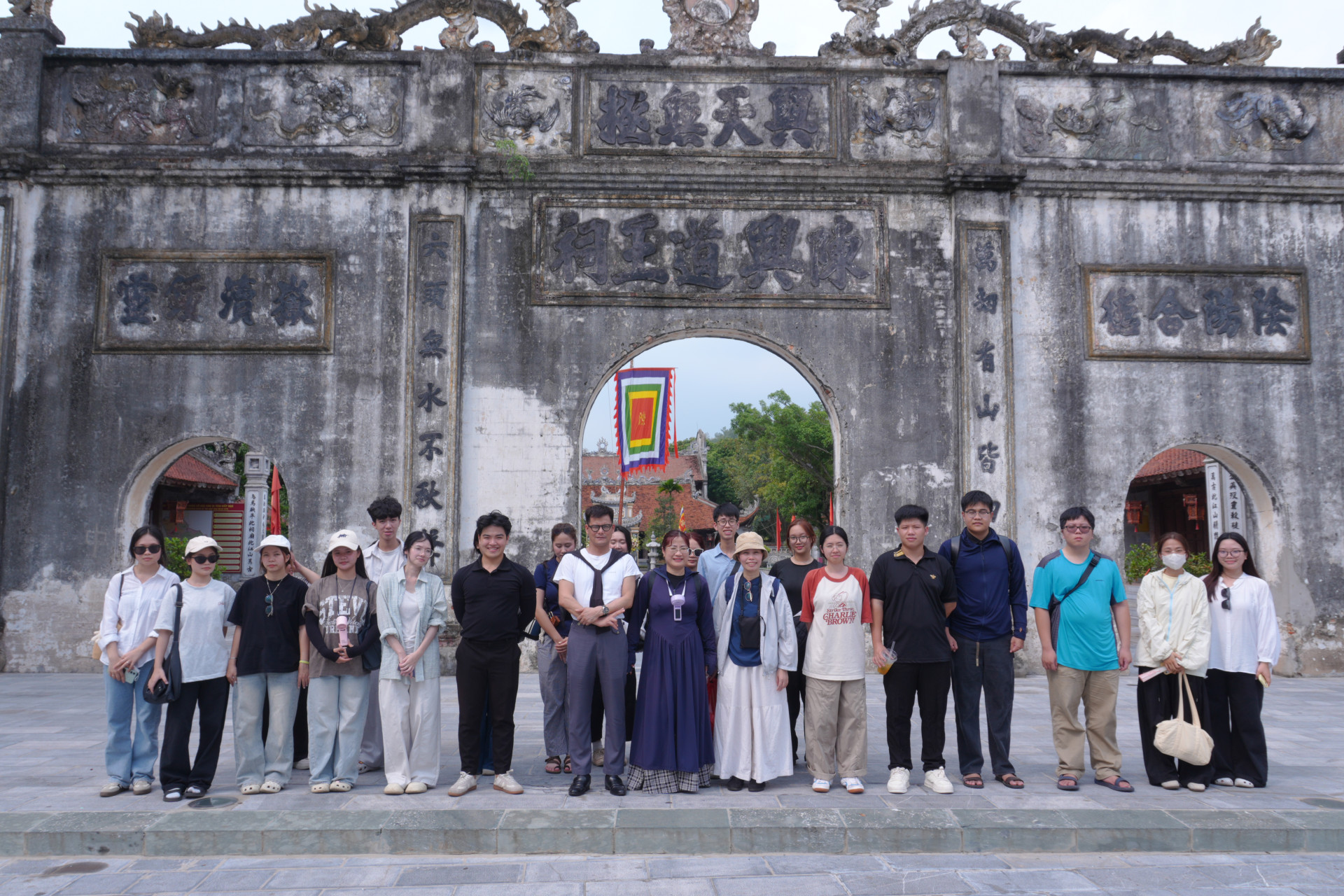
The delegation worked and took a commemorative photo at the Con Son - Kiet Bac historical site in Hai Phong city.
With a training orientation that connects theory with practice, the Department of Religious Studies, Faculty of Anthropology and Religious Studies, always emphasizes organizing field trips as an integral part of its training program. These are not merely supplementary extracurricular activities, but rather a method for testing, concretizing, and expanding theoretical knowledge about religion within the ever-evolving religious life itself. The internship in Hai Phong, therefore, not only helps students broaden their understanding of contemporary religious life but also contributes to cultivating graduates in Religious Studies who possess strong character, independent research capabilities, and the ability to meet the increasingly complex demands of religious affairs in today's society.
Author:Department of Anthropology and Religious Studies
Newer news
Older news

