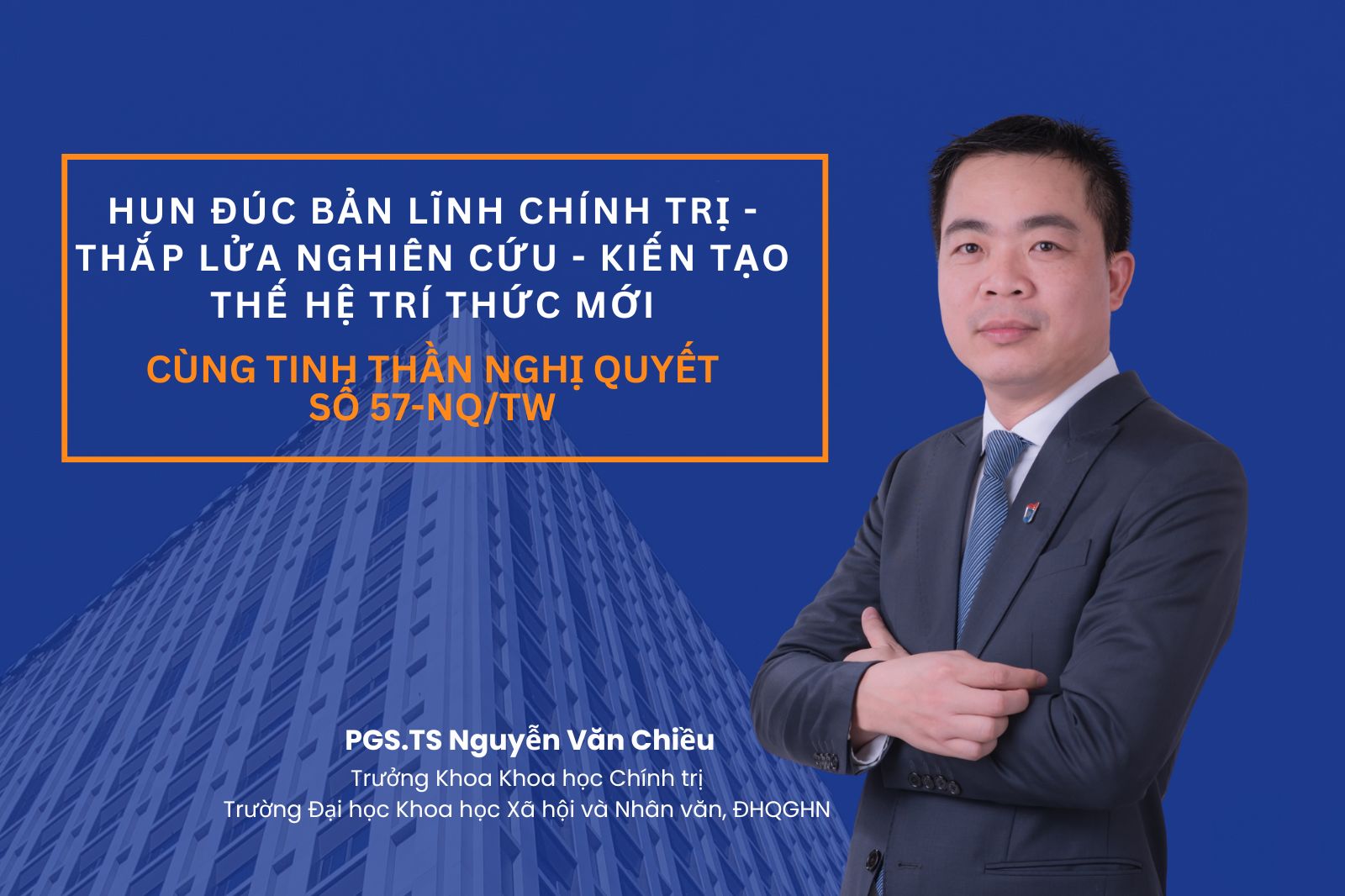
PV:Sir, in the context of the country's efforts to promote the development of science, technology, innovation, and digital transformation, what is the significance of Resolution No. 57-NQ/TW for the field of higher education in general, and especially for the social sciences and political science disciplines – which train the intellectual workforce and theoretical cadres for the country?
Assoc. Prof. Dr. Nguyen Van Chieu:Resolution No. 57-NQ/TW of the Politburo is a groundbreaking strategic direction, setting the goal of developing science, technology, innovation, and digital transformation as key drivers for the rapid and sustainable development of the country. For the field of higher education, this Resolution creates an important political, legal, and directional basis for universities to restructure and innovate their training, research, and management methods.
For the social sciences and political science fields, this significance is even more special. This is because these are the training grounds for intellectuals, theoretical cadres, management cadres, and policy makers – those who play a key role in spreading innovative ideas and continuing to build a solid theoretical foundation for national development in the new era. We always believe that political acumen and idealistic qualities are inseparable from critical thinking skills, the ability to innovate, and adapt to digital transformation.
Therefore, the spirit of Resolution No. 57-NQ/TW serves as a guiding principle for educational institutions, especially faculties and departments in political science and social science, to continuously innovate their training programs, teaching methods, and research approaches. This ensures that each graduate is not only theoretically sound and professionally competent but also capable of integration, creativity, and making practical contributions to the country's development.
On May 15, 2025, at the 2025 Science, Technology and Innovation Conference, Vietnam National University, Hanoi awarded Certificates of Merit from the Director of Vietnam National University, Hanoi to nearly 150 scientists for their outstanding achievements in scientific research in 2024. Five scientists from the University of Social Sciences and Humanities were honored with these certificates. Among them, Associate Professor Dr. Nguyen Anh Cuong - Deputy Head of the Faculty of Political Science (13th from the left) was honored.
PV: So, what directions has the Department of Political Science implemented to concretize the spirit of Resolution 57-NQ/TW in training and research?
Assoc. Prof. Dr. Nguyen Van Chieu:Immediately after Resolution No. 57-NQ/TW was issued, the Faculty of Political Science thoroughly grasped its spirit, identified very specific goals and solutions, and focused on three key directions.
Firstly, we have reformed our training programs towards a modern, integrated, and internationalized approach, closely linking theory with practice. Course modules are updated with current issues in science, technology, innovation, and digital transformation. For example, many new topics such as political power and control of political power, policy and public administration, digital government, contemporary national governance theories and models, local organization and administration, political security in the digital environment, comparative political science in the context of globalization… have been included in the curriculum. At the same time, we are strengthening students' research skills, policy analysis, and critical thinking from their early years with modules such as: political behavior analysis, political activity skills, government policy communication and public relations, and political writing and presentation skills.
Secondly, the Faculty promotes scientific research, considering it a core task alongside training. We establish interdisciplinary and interfaculty research groups, inviting experts from within and outside the university to participate. Lecturers guide undergraduate students, graduate students, and doctoral candidates in conducting research related to pressing social issues, thereby generating scientific publications and directly contributing to political theory and policy making.
Thirdly, we focus on expanding cooperation and networking. The Faculty has organized numerous workshops, seminars, and academic exchange forums both domestically and internationally, creating opportunities for students to interact with reputable scholars and experts. In addition, students are encouraged to participate in practical programs at Party and government agencies and research institutes to experience the working environment, strengthen their political acumen, and develop a professional and integrated work style.
These three orientations are always implemented synchronously and flexibly, in accordance with the specific characteristics of training theoretical cadres and political-management cadres, thereby transforming the spirit of Resolution No. 57-NQ/TW into concrete values, closely associated with each generation of students.
Faculty and students of the Department of Political Science (University of Social Sciences and Humanities) pose for a commemorative photo at the Faculty-level Student Scientific Research Conference for the 2024-2025 academic year, marking the spirit of creativity, academic passion, and aspiration for scientific research and contributing knowledge to the community.
PV:Given its specialized nature, how does the Faculty particularly emphasize the element of "cultivating political character," sir?
Assoc. Prof. Dr. Nguyen Van Chieu:For us, fostering political awareness in students is not just a slogan, but a continuous task integrated into all training and development activities. This is also the "core value" that has built the brand of the Faculty of Political Science over the years.
From the very beginning of our training program, we have always emphasized equipping students with a solid theoretical foundation in Marxism-Leninism, Ho Chi Minh Thought, and the Party and State's guidelines and viewpoints in the political and social fields. Students should not only learn to memorize but also be able to apply, analyze, critically examine, and view issues scientifically, objectively, with a firm political stance but always with innovative thinking.
The Faculty regularly organizes extracurricular activities, socio-political forums, current affairs seminars, and meetings with historical witnesses, leaders, and senior management officials. These dialogues not only inspire but also cultivate patriotism, a sense of responsibility, and a commitment to serving the nation. Through these activities, students have the opportunity to develop their character, assertive attitude, and ability to express their opinions and engage in scientific debate.
We create a training environment and encourage students to participate in practical work at the grassroots level – this is a crucial "training ground." Political field trips and internships at Party and government agencies, organizations, and associations not only help students consolidate their theoretical knowledge but also cultivate work style, public service ethics, discipline, and community responsibility.
Furthermore, political acumen is also fostered through a spirit of daring to think, daring to act, and daring to take responsibility. The Faculty always encourages students to develop self-governance, proactively organize academic activities, research, and youth movements. We believe that only when political acumen is combined with professional competence will students be ready to step into practice and confidently assume the roles of officials, researchers, and managers in the future.
Fifty students from the Faculty of Political Science, University of Social Sciences and Humanities - Vietnam National University, Hanoi, had the honor of assisting in welcoming Thai Prime Minister Paetongtarn Shinawatra during his official visit to Vietnam on the evening of May 15, 2025, at the Government Office, contributing to spreading the image of Vietnamese students as professional, capable, and integrated.
PV:In the journey of "igniting the research passion" among students, what innovative approaches has the Faculty adopted to ignite their research enthusiasm, sir?
Assoc. Prof. Dr. Nguyen Van Chieu:For us, "igniting the flame of research" is not just a task, but also a long-term commitment to supporting students, so that they see scientific research as a path to affirming their capabilities, honing critical thinking skills, and making direct contributions to society.
First and foremost, we create an open academic environment, encouraging students to become familiar with research from their first year of university. Faculty members are always ready to guide students in finding and developing research topics related to practical issues, closely aligned with the needs of the country and the community. We encourage students to participate in research projects at all levels – from faculty and university levels to collaborative projects with research institutes and practical organizations.
In addition, the Faculty regularly organizes scientific seminars, workshops, thematic exchange forums, and conferences with the participation of leading scientists. Students have the opportunity to present their research results, engage in debates and direct critiques, thereby honing their academic presentation skills and confidently defending their viewpoints in front of a group.
Another new development is our increased collaboration with media outlets, research institutes, and international organizations. Students participate in interdisciplinary and inter-faculty research projects, or collaborate on research topics outside the university. Through these experiences, many students have published scientific papers in prestigious journals, received international publications, and won student scientific research awards at various levels. This is a positive sign, demonstrating that the spirit of Resolution 57-NQ/TW is being concretely realized in each research paper, each project, and each student.
Finally, the Faculty always emphasizes the role of the teacher – a companion and source of inspiration. We consider it a constant responsibility to ignite passion, share research experiences, connect with experts, and open up new avenues for students. Only when lecturers are truly exemplary in their research, with concrete works and results, will students see them as role models, believe that "research is not something distant" but very close to all fields and makes a practical contribution to the community.
PV: In the context of increasingly deep international cooperation, what has the Faculty done, is doing, and will do to help students confidently integrate into the global community, sir?
Assoc. Prof. Dr. Nguyen Van Chieu:International integration is an inevitable trend, especially in higher education and the fields of social sciences and political science. We always consider equipping students with the capacity for integration not only as expanding learning and research opportunities, but also as fostering global thinking, foreign language skills, and the ability to adapt to a multicultural work environment.
Over the years, the Department of Political Science has strengthened cooperation with many prestigious universities, research institutes, and international organizations. We have signed agreements for student exchange programs, short-term scholarships, and international academic conferences. Students participate in bilingual courses, seminars, and forums, and have direct contact with professors and experts from abroad, thereby broadening their perspectives and improving their communication and work skills in foreign languages.
Furthermore, the Department of Political Science always encourages lecturers to invite international speakers and experts to give lectures, discuss specialized topics, and share practical experiences. These academic spaces provide opportunities for students to become familiar with modern research methods, access new knowledge, and confidently engage in academic discussions in foreign languages.
Another important point is that we focus on developing soft skills, teamwork skills, critical thinking skills, and problem-solving skills. These are all competencies that students need to have to successfully integrate, not only in the domestic environment but also when working in international organizations and businesses.
In the coming period, the Faculty will continue to expand its international partner network, promote joint training programs, exchange scholarships, and internships abroad. We will also continue to develop and expand bilingual courses, creating opportunities for students to learn and practice specialized foreign languages naturally.
I believe that, with thorough preparation, the generation of Political Science students at the University of Social Sciences and Humanities will have the confidence, competence, and courage to integrate, develop, and contribute effectively to the country in the context of increasingly profound globalization.
These beautiful and meaningful moments from the Political Science Department's field trip to Ba Vi aimed to further cultivate spiritual values, guiding each individual towards truth, goodness, and beauty in their learning and personal growth.
PV: Looking ahead, what message would you like to convey to today's generation of students?
Assoc. Prof. Dr. Nguyen Van Chieu:I always emphasize to my students that the greatest asset of youth is not just book knowledge, but also courage, ambition, and a sense of responsibility towards the community and the country. In the context of the country entering a new stage of development, with many opportunities and not a few challenges, each student needs to equip themselves with the spirit of daring to think, daring to act, daring to innovate, and being ready to adapt to constant change.
I hope you will never be complacent with what you have achieved, but rather view each day as a journey of discovering new knowledge, honing your skills, and broadening your perspectives. Knowledge is only truly valuable when you know how to apply it to solve practical problems and contribute to society and the country. I also hope that our generations of students will continuously nurture their passion for scientific research, critical thinking, perseverance, and ambition, because only in this way can they become true intellectuals – the "core" individuals who will realize the goals set forth in Resolution No. 57-NQ/TW.
In particular, I believe that, regardless of their position, today's generation of students must maintain a strong foundation of political integrity, absolute loyalty to revolutionary ideals, and at the same time be open to learning and international integration, but without assimilating. This is the key for them to confidently move forward, take control of their own future, and contribute to the sustainable development of a prosperous nation.
My colleagues and I at the Department of Political Science will always support, inspire, and create the best environment for you to develop comprehensively and shine brightly, worthy of your roles as future intellectuals, theoretical cadres, and managers.
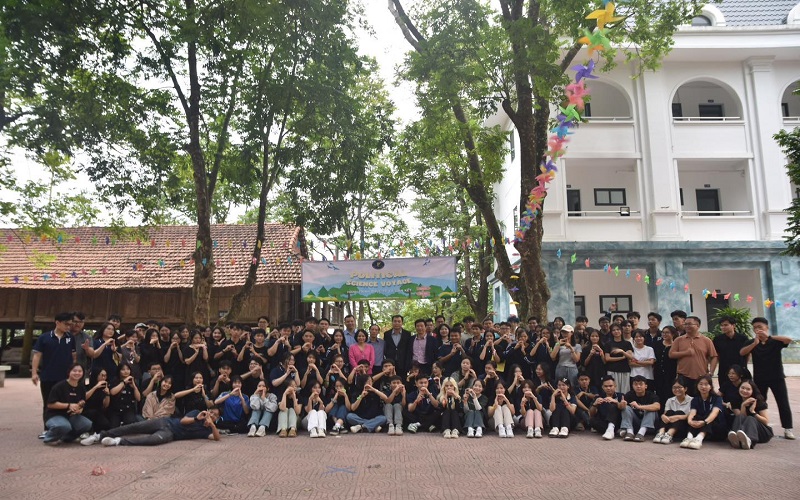
The field trip to the Hanoi National University Guest House (Ba Vi campus) was an opportunity for the Head of the Political Science Faculty to inspire a passion for scientific research, foster a spirit of unity, dynamism, and brilliance in generations of students – young citizens full of aspirations to contribute to building the country.
The conversation with Associate Professor Dr. Nguyen Van Chieu not only opened up profound insights into the meaning and importance of Resolution No. 57-NQ/TW, but also conveyed a powerful message about the responsibility and aspirations of those working in training and research in the field of political science. With a determination to innovate, cultivate political acumen, ignite research passion, and build a new generation of intellectuals, the Faculty of Political Science - University of Social Sciences and Humanities (Vietnam National University, Hanoi) is contributing to bringing the spirit of Resolution No. 57-NQ/TW into life, nurturing human resources – the most valuable asset for sustainable national development and self-reliance in the digital age.
PV: We would like to express our sincere gratitude to Associate Professor Dr. Nguyen Van Chieu for sharing his insightful and inspiring perspectives!