
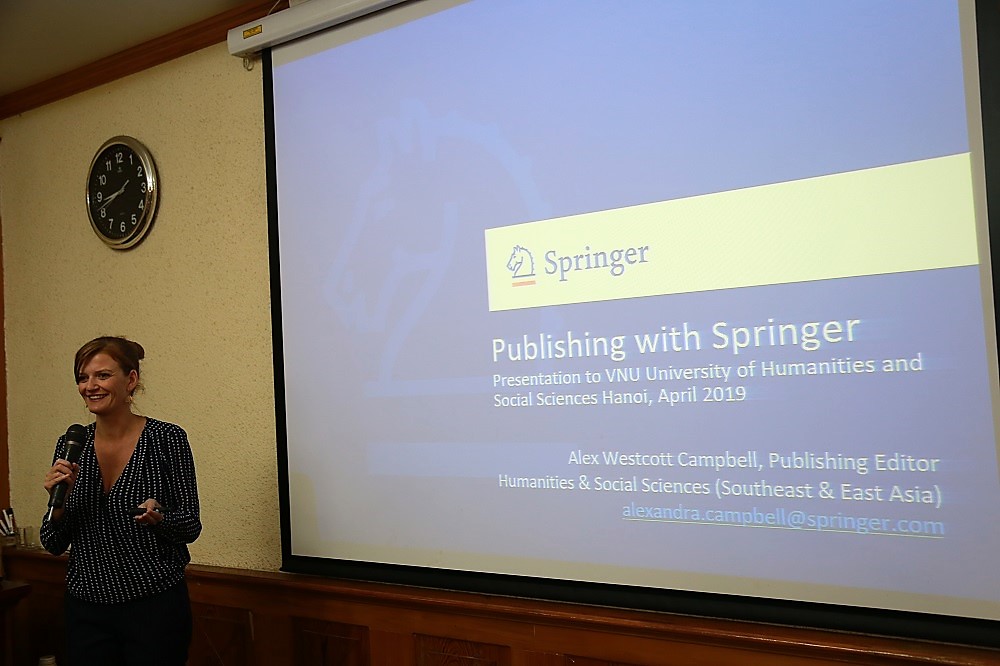
Springer is a global publishing company founded in 1842 as Springer-Verlag. In 2015, Springer merged with Springer Nature. With over 13,000 employees from 50 countries worldwide, Springer publishes 8,500 books and 2,500 journals annually, providing open-source scientific databases across over 550 journals through its SpringerLink and Nature.com platforms to more than 250 million researchers per year. Most Nobel laureates have had their work published in Springer journals.
Ms. Alexandra Westcott Campbell
Springer publishes a wide variety of works, including: monographs – books on a single topic or group of topics, approximately 200 pages long; thematic collections – collections of chapters on a single, interdisciplinary subject; series – collections of monographs or thematic collections; key reference works – peer-reviewed encyclopedias, handbooks, and atlases; as well as textbooks and handbooks. Notably, Springer also publishes a specialized publication called SpringerBriefs, which are collections of series in a particular scientific field, typically short (50-125 pages) and paperback.
The works that Springer accepts need to be groundbreaking and innovative, have a solid theoretical foundation and regional/international reach, be relevant to a debate in the field, be carefully proposed, and have a clear target audience. Above all, the author needs a compelling introductory chapter in which the objectives of the work are clearly stated.
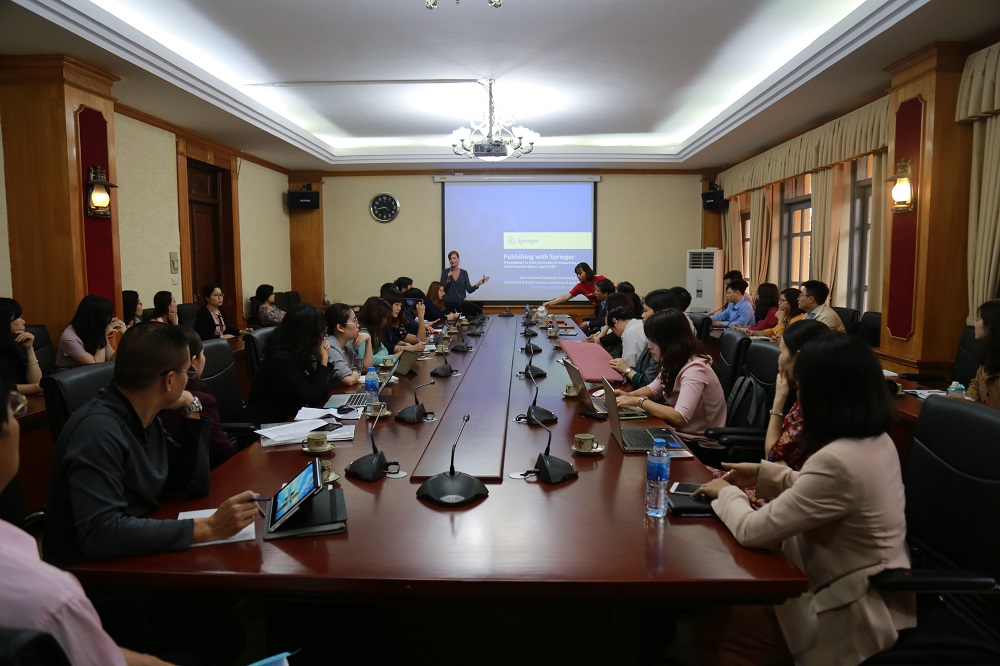
The presentation was attended by a large number of faculty and staff members of the school.
The book publishing process at Springer is thorough and detailed. Authors develop ideas, write book peer review proposals (approximately 2 months), and wait for Springer's review results (2 weeks). If accepted, the author signs a publishing contract with Springer and writes the manuscript. The manuscript, once submitted to Springer, undergoes a rigorous peer review process (usually 2 months) until the final version is completed and submitted to the publisher. Springer then edits and completes the publishing process, which takes approximately 4 months (for e-books) or 6 months (for print books).
Alexandra Westcott Campbell encourages scholars and researchers to choose Springer for publishing. Springer offers many benefits, such as allowing publication in both print and digital formats (with a wide range of formats such as PDF, HTML, and ePub), secure and efficient data storage, multilingual publishing capabilities, wide reach (through Springer's own channels like SpringerLink and partners like Amazon and Google Books), detailed citation and listing capabilities down to the chapter level, and high compatibility with various electronic devices such as iPads, Nooks, and Sony Readers. In addition, Springer supports authors in promoting their work through seminars, workshops, press conferences, book reviews in newspapers and magazines, and online summary videos.

Professor Nguyen Van Kim encouraged scientists at the University of Social Sciences and Humanities to boldly publish their works internationally.
During the presentation, Alexandra Westcott Campbell also reviewed Springer's work review process, offered some suggestions for writing book manuscripts, guided on how to optimize titles to increase citation index (BCI), introduced open-source publishing options, answered some questions about language and translation, and shared some experiences on international publication and publishing.
Author:Tran Minh
Newer news
Older news

