

This page commemorates the 80th anniversary of the school's tradition and 30 years of development.University of Social Sciences and Humanities
1. THE ESTABLISHMENT AND ORGANIZATION OF THE FRONT SUPPLY COUNCIL
Prior to the 1953-1954 Winter-Spring campaign, the task of ensuring human and material resources to support the front lines was usually carried out by local authorities, mobilizing resources directly from their localities to the front lines according to the army's plan. Through the practical experience of organizing support for the front lines, the logistics agencies of the army and the relevant localities came to a common understanding that the coordination between the two sides in ensuring the requirements of the front lines, while achieving many great successes, also had shortcomings and limitations, causing waste, strain on the rear, and at times not providing timely support to the troops...
Based on the summaries after each campaign regarding the causes of the strengths and weaknesses in frontline support, the leadership of the General Department of Military Supply submitted a proposal to the Government Council for research and establishment of an independent organization, directly under the Government, with the function and nhiệm vụ of coordinating the activities of the rear with the front lines, connecting the local government apparatus with the military's logistics support forces in mobilizing human and material resources from the rear and transporting them through supply lines and stations to the front lines to serve the fighting army. This agency was named the Frontline Supply Council (HĐCCMT).
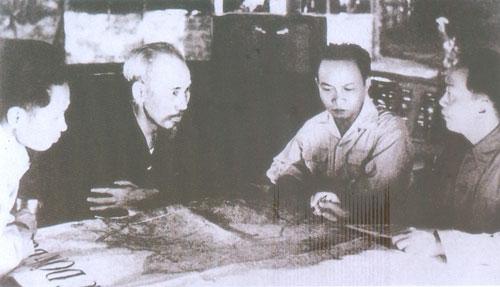
The Standing Committee of the Central Party Committee discussed the operational plan for the 1953-1954 Winter-Spring Campaign.
After being agreed upon by the Standing Committee of the National Assembly, on July 27, 1953, the Government Council issued a resolution establishing the Council for the Protection of the National Liberation Front. The resolution clearly stated:
“1. Establish at the central level and in necessary regions and provinces Front Supply Councils to ensure the provision of manpower and resources to the front lines.
2. The Central Front Supply Council consisted of: the Deputy Prime Minister: Chairman (i.e., Comrade Pham Van Dong); Mr. Nguyen Van Tran, Inspector General of the Government: Vice Chairman; and the Ministers, Deputy Ministers, members of the Regional Resistance Administrative Committee, and high-ranking officials at the Central level whose work was closely related to the Front's supply activities.
3. The Central Supply Council has the following tasks: Studying the supply capacity of localities; Planning and coordinating the mobilization of human and material resources to serve the front lines, investigating the needs of the front lines and the rear; Researching and submitting to the Government for approval policies and regulations on the mobilization of human and material resources; Directing the Front Supply Councils and ensuring transportation; Managing the supply budget within the scope of the Council's responsibility.
4. The establishment of Front Supply Councils in necessary regions and provinces shall be proposed by the Central Front Supply Council and decided by the Government Council.”[1].
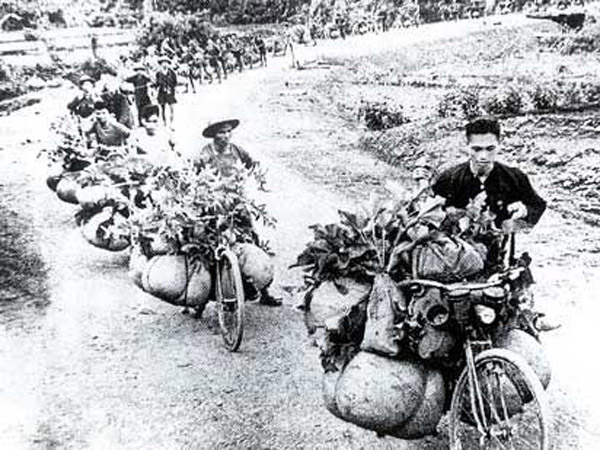
Logistics for the Dien Bien Phu campaign
Along with this Resolution, the Government Council also issued documents appointing members of the Central Council for Resistance and Defense. These are: Mr. Le Van Hien, Minister of Finance; Mr. Nguyen Tao, Minister of Labor; Mr. Tran Quoc Hoan, Minister of Public Security; Mr. Le Dung, Deputy Minister of Transport and Public Works; Mr. Dang Viet Chau, Deputy Minister of Industry and Trade; Mr. To Quang Dau, Government Inspector; Mr. To Huu, Director of the Propaganda and Arts Department; Mr. Le Loc, Member of the Administrative Resistance Committee of Inter-region IV. Among them, Mr. Nguyen Van Tran, Mr. To Quang Dau, and Mr. Le Loc hold the position of Permanent Member.[2].
Following the establishment of the Central Council for the Protection of the Nation, several inter-regional and provincial Councils for the Protection of the Nation were also successively organized, such as the Councils for the Protection of the Nation in the Viet Bac Inter-region, Inter-region IV, Inter-region III, Thanh Hoa province, Phu Tho province, etc.
In terms of specific organization, the Council for the Protection of Ethnic Minorities is structured according to the following principles:First,The National Liberation Front (NLF) was only established at the central level and in some necessary localities with suitable conditions, in liberated areas; in enemy-occupied areas, temporary and less stringent organizational forms would be used during hostilities.SecondAlthough the organization of the National Liberation Front (NLF) is based on local areas, it is not fixed or confined to the boundaries of administrative units. Typically, depending on the mobile nature and scope of the campaign, the NLF at the local level will include members from one or more inter-regions, one or more provinces, or one or more districts.Third isAlthough there are certain boundaries and scopes between the tasks and organizational structures of the Military Supply Council and the military supply agency, they are not entirely independent of each other, but rather closely coordinated.[3].
Regarding the organizational system, according to the aforementioned principles, at the central level, the Council has a Chairman who is the Deputy Prime Minister; the Vice Chairman is the Inspector General of the Government. The members are Ministers, Deputy Ministers, and Directors of Departments, plus one member of the Inter-Regional Committee for Administrative Reform IV, which includes the Thanh-Nghe-Tinh strategic rear area, possessing the largest human and material resources in the country, serving as a rear area for the Binh-Tri-Thien battlefield, the Central and Upper Laos battlefield, and the main battlefield in Northern Vietnam.
At the Inter-regional level, the apparatus consists of a Chairman or Vice-Chairman or Secretary or Deputy Secretary of the Inter-regional Committee as the Chairman. Members are representatives from various sectors and a number of capable regional-level officials. When participating in the Council, members representing various sectors will assign a number of officials from their respective sectors to form a support unit or agency for the Council. The Regional Supply Council also has an office with departments similar to those of the Central Committee. The tasks of the Inter-regional Supply Council are to understand and grasp the capabilities of the localities, plan mobilization, coordinate and guide the subordinate provinces; directly organize transportation on routes and at stations during campaigns; implement work plans and enforce mobilization policies and regulations from higher levels, and ensure transportation in the area, etc.
At the provincial level, the composition of the People's Mobilization Councils was the same as at the inter-regional level, and in addition to the tasks similar to those at the regional level, they had the added responsibility of directly settling accounts with the people for the mobilization efforts after each campaign. At the district and commune levels, there was no policy to establish People's Mobilization Councils, but the mobilization of human, financial, and material resources for the front lines was managed through close coordination between the government and mass organizations, with the district and commune administrative resistance committees playing the main decision-making role.
2. SUPPORTING THE FRONT LINE AND THE DIEN BIEN PHU CAMPAIGN BY THE FRONT SUPPLY COUNCIL
To fulfill their functions and duties, the People's Mobilization Councils at all levels had to handle many complex situations. These included issues related to organizational structure, personnel deployment, compensation and remuneration for civilian workers, advance budgets for campaigns, procurement prices, transportation infrastructure, and community activities along the service routes, etc.
According to regulations, the mobilization of human and material resources from the rear for the front lines was ordered by the government at all levels, based on tasks assigned by higher levels and plans drafted by the People's Mobilization Council at that level. In emergency situations, the higher-level People's Mobilization Council could order specialized departments at lower levels to carry out tasks, but they had to report to those departments and the government at the equivalent level. Government orders to mobilize resources for the front lines were considered priority orders. Government specialized departments sent a number of officials to participate in and assist the Council. Political organizations were tasked with coordinating the Council's mobilization plan, educating the people about the service policies, helping the Council understand its capabilities, and providing feedback to the Council to develop appropriate mobilization plans.
The working method of the Council for the Protection of the People's Front is based on a vertical structure, with the higher-level council directly leading the lower-level council. Communication between the Council for the Protection of the People's Front and local government, political, and party agencies is handled by the equivalent-level People's Front Council. Service and mobilization plans are disseminated in stages to relevant departments and councils according to the timeline and tasks of each department to ensure confidentiality. When large-scale mobilization is required, the Council for the Protection of the People's Front has the right to convene and preside over meetings of officials from specialized departments and political organizations at its level to disseminate and implement the assigned tasks.
The activities of the Frontline Logistics Council encompassed all aspects of work within its areas of responsibility, but its primary and most important role was the mobilization and transportation of resources from the rear to the front lines. Mobilization was closely coordinated with and relied upon local authorities and organizations in the rear, while transportation involved coordination with military units at the front, as well as with transportation and logistics agencies. The main task of the Frontline Logistics Council was to work with local authorities to mobilize and receive resources from the rear, then organize their transfer to the central and front lines, handing them over to the military's logistics agencies for further distribution and allocation to the troops. Specifically for transporting materials to the front lines, the Frontline Logistics Council had to mobilize tens of thousands of civilian laborers – short-term, medium-term, and long-term – including those serving locally and those serving the central and front lines, as well as general and specialized laborers – for numerous large-scale campaigns simultaneously.
In fact, during the 1953-1954 Winter-Spring strategic offensive, due to multiple offensive directions and simultaneous campaigns, the Central Steering Committee had to undertake an enormous, heavy, and urgent workload. The South-Ngai-Binh-Phu Free Zone (Zone V) focused on supporting the Central Highlands and Lower Laos; the Thanh-Nghe-Tinh Free Zone (Zone IV) provided support to five battlefields: Binh-Tri-Thien, Central Laos, Upper Laos, the Northern Delta, and Dien Bien Phu; the Viet Bac Free Zone provided support to the Northwest battlefield, Dien Bien Phu, etc.
Despite its relatively short construction and operational period, and facing numerous complex difficulties, the Central and local branches of the National Liberation Front (NLF) have strived to excellently fulfill their historical mission in the overall resistance war, and in the strategic offensive of the 1953-1954 Winter-Spring campaign and the Dien Bien Phu campaign in particular.
For the Dien Bien Phu campaign, in total, over 210 days (from November 1953 to May 1954), the National Liberation Front mobilized 261,453 civilian laborers, contributing 3 million man-days, 20,991 bicycles, 11,800 rafts, and 500 pack horses. In addition, there was a military logistics force of 3,168 people, distributed across 7 medical teams, 1 automobile transport team with 446 vehicles, 18 military stations, and traffic control stations, military supply depots, and weapons depots. Later, this was reinforced by 4 engineering battalions for road repair, 2 communications companies, 2 battalions of 37mm anti-aircraft artillery (24 guns), and 12.7mm artillery companies.
The amount of food and supplies provided for the campaign included 25,056 tons of rice, 907 tons of meat, 917 tons of other food items, 1,860 liters of cooking oil and 280 kg of lard, 71 tons of military equipment, 1,783 tons of gasoline, and 55 tons of medicine and medical supplies. Treatment was provided to 10,130 wounded and sick soldiers (not including enemy wounded), along with over 3 million rounds of ammunition, 96,480 grenades, 27.5 tons of explosives, 4,950 hoes, 8,700 shovels, and 2,920 knives. The total amount of materials supplied for the campaign was 30,759 tons, of which 19,989 tons were consumed. The volume of transport during the Dien Bien Phu campaign was 4,450,000 tons/km, 36 times the volume of transport during the Border Campaign (1950), building 89 km and repairing and reinforcing 500 km of roads,...
In addition, the Council also secured tens of thousands of civilian laborers, with millions of man-days of work and a huge amount of other material resources to cover the costs of various tasks before and after the campaign.[4]On transport route 80 of the Thanh Hoa Provincial People's Mobilization Committee, as well as on other routes, our civilian workers, with the spirit of "All for the front line, all for victory," constantly competed in transporting goods by bicycle, increasing the load from 165 kg to 215 kg, then 250 kg, then 320 kg, and peaking at 352 kg (by Cao Van Ty and Ma Van Thang).[5].
Mobilizing and transporting such a massive amount of food and weapons from the rear to the front lines (the furthest places being Ha Tinh and Lang Son, about 500-700 km from Dien Bien Phu) and delivering them to the army's logistics sector was a heavy task and also a glorious achievement of the People's Front at all levels, contributing decisively to the great victory of Dien Bien Phu in 1954. General Vo Nguyen Giap affirmed: "Never before in the entire years of resistance war have our people contributed so much effort as in the 1953-1954 Winter-Spring campaign to support the army in killing the enemy (...). Never before have so many Vietnamese people gone to the front lines (...), the rear transferred a determination to kill the enemy, a revolutionary spirit of enthusiasm brought about by land reform to the soldiers fighting on the front lines."[6].
For the enemy, the defeat at Dien Bien Phu had many causes, including mistakes in organizing supplies for the front. In the book...The tragedy of Indochina,Edited by E. Krieg, French scholars wrote in Volume III:The Dien Bien Phu Trap(Le Priège Dienbienphu) on this matter states: “It has been confirmed to Nava, and Nava also believes, that the Viet Minh cannot supply Dien Bien Phu; that the coolies, if they wanted to reach it, would consume four-fifths of their food supplies; that the supply of ammunition would not allow the enemy to take advantage of the larger number of troops they could muster compared to the French. And also because, despite daily proof, Nava still believed that his air force, with its already severely limited resources, could destroy the Viet Minh's supply lines.”
General Nava didn't think that Giap (referring to General Vo Nguyen Giap, NDTri's note) was mobilizing tens of thousands of men and women, 50,000 or 80,000? No one knew the exact number. That group had begun to form a huge swarm of ants supplying the army, moving up towards the Thai ethnic minority region (...). When creating the Dien Bien Phu hedgehog, Nava thought he could lure the Viet Minh there. He thought he had seized the initiative, which he often complained the expeditionary army had lost since 1950. While he nonchalantly imagined himself luring the Viet Minh, he didn't know that he was allowing Vo Nguyen Giap to move troops to shackle him (...). It was he (Vo Nguyen Giap), not Nava, who was setting a trap in the Thai ethnic minority region, in a region very dear to the enemy commander. And on November 20, 1953, the hedgehog named Nava fell into that trap."[7].
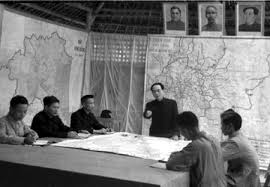
Winter-Spring 1953-1954 Operational Plan
Bernard Fall, an American scholar, in his bookViet Minh 1945-1960(Le Viet Minh 1945-1960) said about the Viet Minh's victory at Dien Bien Phu: "First and foremost were the victories in organizing supplies."[8]). Ivon Panhinet, a French scholar, in his book: “What I've seen in Vietnam"The book records the bitter lament of a French officer acknowledging their failure and the Vietnamese victory in supplying the Battle of Dien Bien Phu: "Alas! Our planes were outmatched by the Viet Minh's civilian laborers!"[9].
It is noteworthy that along the transport routes of the Provisional Revolutionary Government, after the war ended, thousands of French prisoners of war from Dien Bien Phu were brought by us to rear areas for care and returned to the enemy, in Viet Tri, Phu Lo (by land) and in Sam Son, Thanh Hoa (by sea), after the Geneva Agreement (July 21, 1954),…
3. HISTORICAL EXPERIENCE AND HISTORICAL SIGNIFICANCE
Several major lessons learned from the organization and operation of the National Front for Strategic Offensive in supporting the 1953-1954 Winter-Spring offensive and the Dien Bien Phu campaign are as follows:
The firstIt was necessary and possible to organize a specialized agency for battlefield support, namely the Central Military Commission (CMC). The CMC was a rear-area agency, built on the basis of separation from specialized rear-area branches, with a mass character, but its centralized and military nature had to be emphasized as necessary. Due to these characteristics, the CMC did not necessarily have to report all matters to the corresponding government. And when on the transport route, all participating forces: civilian laborers, road and bridge builders, air defense, stations, barriers, etc., had to be under the unified command of the CMC. This means that the CMC was both a rear-area agency and relatively independent of the rear, closely related to the military's logistics forces but not a part of the military. The National Defense and Security Council is the agency responsible, accountable to the Party, the government, and the military, for all activities related to mobilizing and deploying human and material resources from the rear to the front lines to support the army in combat.
MondayTo build a rational organization and effectively direct the activities of the Frontline Support Council, it is crucial to grasp the characteristics of frontline support work, especially at times when the slogan "all for the front, all for victory" is not just a propaganda slogan but also a direct action slogan of the entire Party, army, and nation. The need for frontline support at this time is enormous, urgent, complex, and involves many sectors, levels, localities, and all classes, ethnic groups, and religions. Although focusing on two main aspects and stages—mobilization and transportation—these two issues are closely related, leading to a series of other issues serving them. In particular, mobilization must pay attention to two important issues: understanding capabilities and ensuring fair and rational mobilization. In transportation, three issues need to be addressed: organizing transportation, ensuring traffic flow, and political work.
Tuesday,In organizing and operating the transportation of resources from the rear to the front lines, the Council for the Protection of the People's Army had to organize supply and transport stations along the transport route. These stations were the basis for implementing the transport plan and carrying out the Party and Government's policies regarding civilian laborers and other forces involved in transportation. Stations also served as the basis for the Council to organize its vertical structure; simultaneously, they represented the Council in each transport segment in the localities through which the transport route passed, acting as links connecting the rear with the front lines and vice versa. Therefore, each station was a unified body with all the necessary components, characteristics, and authority of a regional council. The distance between supply and transport stations was calculated and arranged appropriately depending on whether the route was steep or flat, and whether it was populated or remote and frequently attacked by the enemy. There were routes where civilian laborers traveled back and forth within a few days, routes that lasted for many days or months, or stations where they only stopped overnight, or stations that served as central warehouses, with the import, export, and delivery of goods between localities, etc. When necessary, the army's logistics forces could directly receive resources in the rear, or the rear could directly deliver resources to the front lines to the troops. However, generally, the Central Logistics Command was responsible for mobilizing and transferring resources from the rear to the front lines, while the army's logistics forces were responsible for transporting resources from the front lines to the battlefront.
Wednesday,Due to the difficulties, hardships, and fierce nature of supporting the front lines, and the large number of cadres, Party members, and people involved, the Central Committee of the Communist Party of Vietnam had to organize political and ideological work effectively. Throughout the entire strategic offensive and in a specific campaign, especially the Dien Bien Phu campaign, thousands of Party members and tens of thousands of people temporarily left the rear to serve on the front lines, making political and ideological work extremely important. To unite Party members, maintain Party activities and Party leadership along the transport lines, and to mobilize, educate, and motivate the masses to carry out their tasks and overcome difficulties, a unified and tightly-knit system of Party and mass organizations was necessary. Although the transportation routes encompassed various Party organizations from different sectors and localities, the nature of the work along these routes shared a common characteristic: unity and centralization. Therefore, upon reaching the routes, existing Party organizations had to be unified under the leadership of the Party Committee of the Central and Inter-regional Commands (if it was a Central or Inter-regional route) or the Party Committee of the Provincial Party Committee (if it was a provincial route). These Party committees were tasked with both political work and Party building, while also focusing on implementing the support plan. Originally Party branches of local Party committees, although entirely under the leadership of the higher-level Party committees along the routes, they still had to maintain contact with their former bases so that activities could resume normally upon returning to their localities.
Fifth, the need for personnel to support the front lines is enormous, so the Frontline Support Council must mobilize and build a team of personnel with the necessary quantity and quality. To obtain this team, the Frontline Support Councils at all levels must rely on equivalent specialized departments at the rear to avoid increasing the number of personnel, maintain a streamlined apparatus, and ensure that work runs smoothly and promptly. Personnel working on frontline support in general, and on transport routes in particular, face very arduous tasks, requiring good health and high levels of dynamism. They must constantly travel and closely monitor work to supervise operations on often difficult, sparsely populated, or frequently attacked routes. Therefore, the Council needs to have appropriate health-boosting policies and regulations to enable them to work for extended periods. At the same time, it is also necessary to constantly pay attention to improving the quality and capacity of their work; otherwise, a decline or inadequacy in their sense of responsibility and in their leadership and management of work will lead to enormous losses and waste of human and material resources, causing difficulties and reducing the results of battles and campaigns…
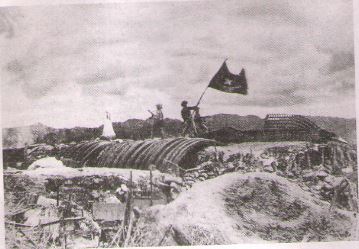
The Winter-Spring Campaign was a victory.
The establishment and use of the Central Military Commission to mobilize rear-area resources and organize support for the advance along the lines and supply stations during the 1953-1954 Winter-Spring strategic offensive and the Dien Bien Phu campaign was a unique Vietnamese innovation of significant historical importance.
Firstly, this was the first time the National Liberation Front (NLF) took charge of supporting the front lines as an independent agency, acting as an intermediary connecting the rear with the army. In terms of transportation alone, the NLF was responsible for supply routes spanning hundreds of kilometers, involving hundreds of thousands of civilian laborers, tens of thousands of tons of materials, and hundreds of types of vehicles, passing through dozens of transit stations, across districts, provinces, inter-regions, and even the entire country. This success was due not only to the high level of awareness among the people in the liberated areas – the rear – and the role of Party organizations, government agencies, and mass organizations at all levels, but also to the close coordination of military logistics at all levels. The most decisive factor was the active, dynamic, thorough, and effective leadership and organization of the NLF's staff at all levels and in all localities.
Secondly, the establishment of the Council for Frontline Support in the final stages of the resistance war against French colonialism, and its organizational principles, structure, working methods, and frontline support activities, were a unique innovation of the Central Committee of the Party, the Government, and the Vietnamese Army in leading and directing the war in general, and in supporting the strategic offensive of the 1953-1954 Winter-Spring campaign and the Dien Bien Phu campaign in particular. The organization and activities of the Council for Frontline Support made a tremendous contribution to Vietnam's victories on the battlefields, leading the resistance war against French colonialism to a glorious victory.
Thirdly, and with lasting significance, the organization and operation of the Frontline Support Council left behind extremely valuable experiences for subsequent historical periods, especially in the construction, organization, mobilization, and transportation of human and material resources from the North to support the Southward front via the Truong Son trail during the resistance war against the US (1954-1975). During the Spring 1975 General Offensive and Uprising, a similar type of frontline support organization was established: the Frontline Support Council, directly under the Government. The Frontline Support Council also made a significant contribution to Vietnam's overall victory on April 30, 1975. Perhaps the Frontline Support Council, from a unique innovation in supporting the strategic offensive of the 1953-1954 Winter-Spring campaign and the Dien Bien Phu campaign, has become a regular feature of Vietnam's people's war under the leadership of the Party.
Fourth, the practical experience of organizing support for the Dien Bien Phu campaign further strengthens and enriches the historical implications of the role of the rear in revolutionary warfare. This shows that when we say the rear is a consistently decisive factor in war victory, it's not just about the rear being built up, strengthened in all aspects, securely protected, and always focused on the front lines, but also about the effective organization of support for the front lines. Because in war, there are times when the army has to retreat or abandon its operational plans, not because of a lack of fighting spirit or insufficient support from the rear, but because of the inability to organize the timely delivery of what the rear has and the troops need to the front lines. Therefore, organizing support for the front lines is an extremely important issue related to the victory or defeat of the war.
Fifthly, although the war ended more than 65 years ago, the unforgettable memories of those years, of tens of thousands of Vietnamese soldiers and civilian workers, and thousands of former French prisoners of war who traveled back and forth along the routes and transport stations of the Provisional Revolutionary Government, and the desire of succeeding generations to learn about history, are raising many issues that we need to pay attention to and address. Perhaps it is necessary and feasible to plan "Road to Dien Bien Phu" tourist routes following the old supply lines, from Viet Bac to Northwest Vietnam, from Thanh Hoa, Nghe An, and Ha Tinh to Son La, Lai Chau, and Dien Bien Phu, passing through once-famous landmarks such as Co Noi Junction, Pa Din Pass, and Lung Lo Pass. On these historical and scenic tours, domestic and international tourists could travel on foot, by bicycle, or by car, through reconstructed field camps, ethnic minority villages, and key transportation hubs. This would allow them to recall the scenes of a fierce wartime period, enjoy the majestic and poetic scenery, and gain a deeper understanding of the diverse culture of the people of Northwest Vietnam during the period of reform and international integration. This would further strengthen the Vietnam-France and France-Vietnam relations, fostering peace, friendship, cooperation, and sustainable development.
N – D – T
Note: Author's address: Assoc. Prof. Dr. Ngo Dang Tri, Department of History, Faculty of Social Sciences and Humanities, Vietnam National University, Hanoi. Email:ngodangtri@yahoo.comButPhone number: 0913593354
[1]-Excerpt from Resolution No. 284-TTg, dated July 27, 1953, of the Government Council on the establishment of Front Supply Councils. Archived at the Central Archives, Hanoi, PTT Collection, file number 750, page number 10.
[2]-Official document No. 3302/PL concerning the establishment of the Front Supply Council, dated September 5, 1953. The aforementioned file, page 11.
[3]Ngo Dang TriFrontline Supply Council during the resistance war against the French, Journal of Military History, 5(29)- 1988, page 19.
[4]General Department of Logistics.History of Logistics of the Vietnam People's Army (1944-1954).Published by the General Department of Logistics, Hanoi, 1985, page 327.
[5]Ngo Dang Tri. The Thanh-Nghe-Tinh Free Zone during the Resistance War against the French (1946-1954), National Political Publishing House, Hanoi, 2001, page 220.
[6]General Vo Nguyen Giap.War of liberation and war of national defensePeople's Army Publishing House, Hanoi, 1974, pages 158-160.
[7].Krieg.E:Le Prieg DienbienphuSaint Clair, Paris, 1966.
[8]Fall Bernard:Le Viet Minh 1945-1960Paris, 1960.
[9].NewspaperPeopleMay 7, 1964
Author:Assoc. Prof. Dr. Ngo Dang Tri
Newer news
Older news