
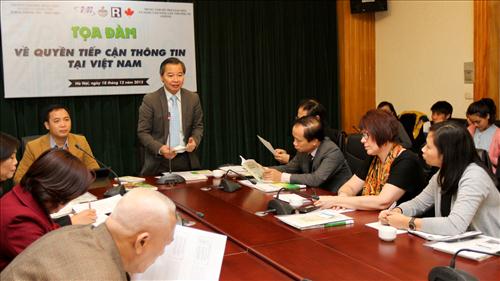
Attending the seminar were Ms. MoniQue Lamouveux, Political and Cultural Information Counselor, Embassy of Canada; Ms. Nguyen Thi Kim Hoa, Director of the Criminal and Administrative Law Department, Ministry of Justice; Dr. Pham Tat Thang, Standing Member of the National Assembly's Committee on Education, Youth and Children; Dr. Le Van Viet, former Deputy Director, Vietnam National Institute; Ms. Ngo Thi Thu Ha, Deputy Director of the Center for Education Support and Capacity Building for Women; Assoc. Prof. Dr. Pham Quang Minh, Vice Rector of the University of Social Sciences and Humanities, Vietnam National University, Hanoi, along with numerous researchers, lecturers, and students from the University.
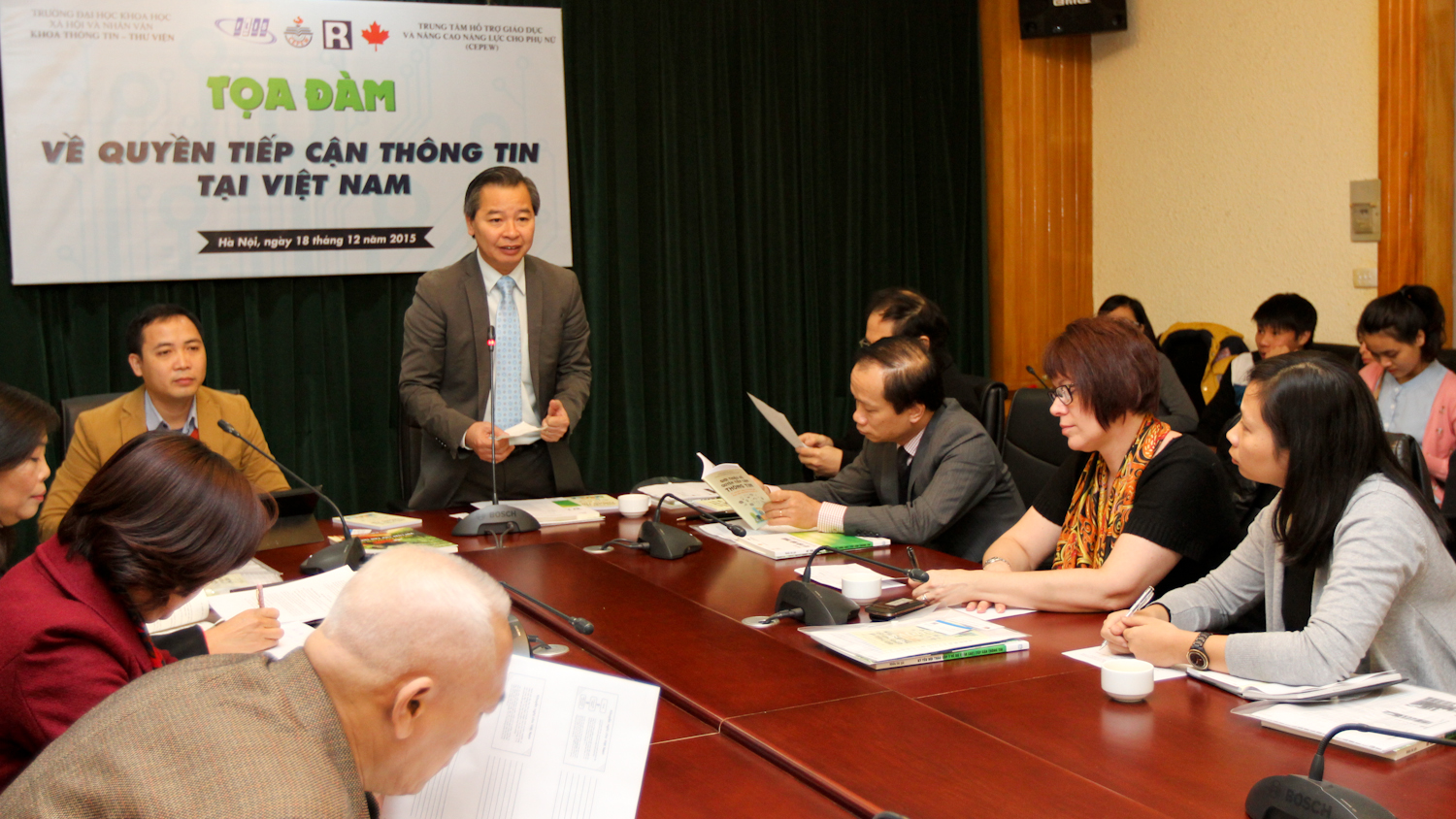
Associate Professor Pham Quang Minh, Vice Rector of the University, delivered the opening remarks at the seminar.
In his opening remarks at the seminar, Associate Professor Pham Quang Minh, Vice Rector of the University, highly appreciated the content of the seminar's topic. This is a hot topic that has attracted the attention and interest of society.
Today, information is power, information is strength, information is knowledge. If we possess this knowledge and power, we can control the future. However, we also need to evaluate how that information is used, what regulations govern access, how it is accessed, how it is used, and for what purposes.
Currently, the Vietnamese National Assembly is discussing a draft law on the right to access information. The opinions expressed at today's seminar will be of significant value, providing advice and suggestions to state management agencies to finalize the draft law. This will promote transparency in the process of accessing and utilizing information in Vietnam, shared Associate Professor Pham Quang Minh.
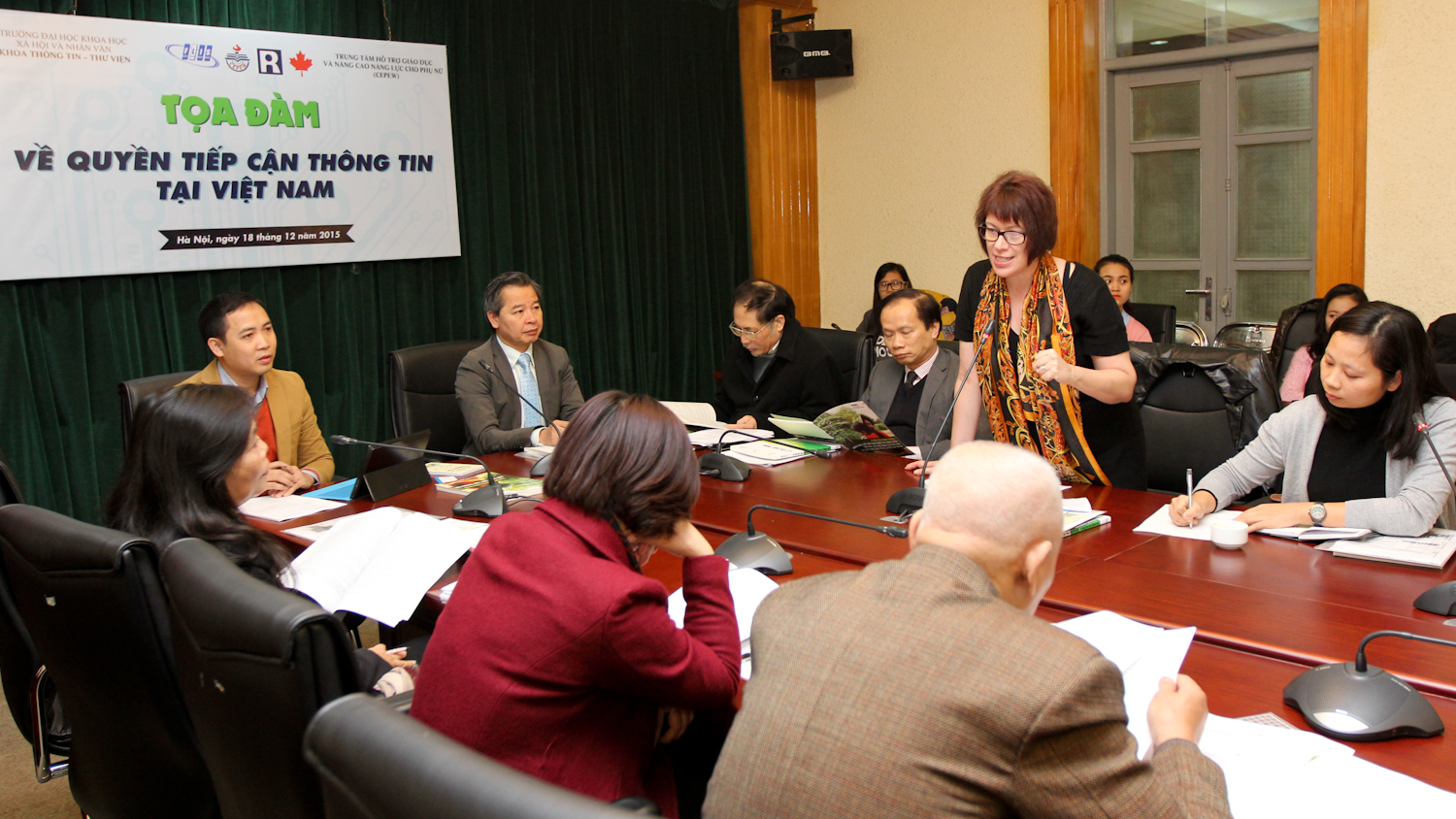
Ms. MoniQue Lamouveux, Political and Cultural Affairs Counselor at the Canadian Embassy, shared her insights at the seminar.
Sharing the same view, Ms. MoniQue Lamouveux, Political and Cultural Information Counselor at the Canadian Embassy, said that the seminar was held at a time when the Vietnamese Government is paying great attention to human rights and the right to access information.
She hoped the seminar would spark important discussions on the right to access information, ensuring access to information, and accessing information safely. This is one of the roles and responsibilities of the young generation of Vietnam in the future.
In her presentation "Introducing the standards on the right to access information in international law and the 2013 Constitution and sharing the process of building the Law on Access to Information in Vietnam," Ms. Nguyen Thi Kim Thoa, Director of the Criminal and Administrative Law Department, Ministry of Justice, stated that stemming from the mindset that the state possesses a lot of important information, why not share it with the people – the target group that needs it – many countries have enacted laws on access to information (or laws on freedom of information, laws on providing public information, laws on providing information by state administrative agencies, etc.).
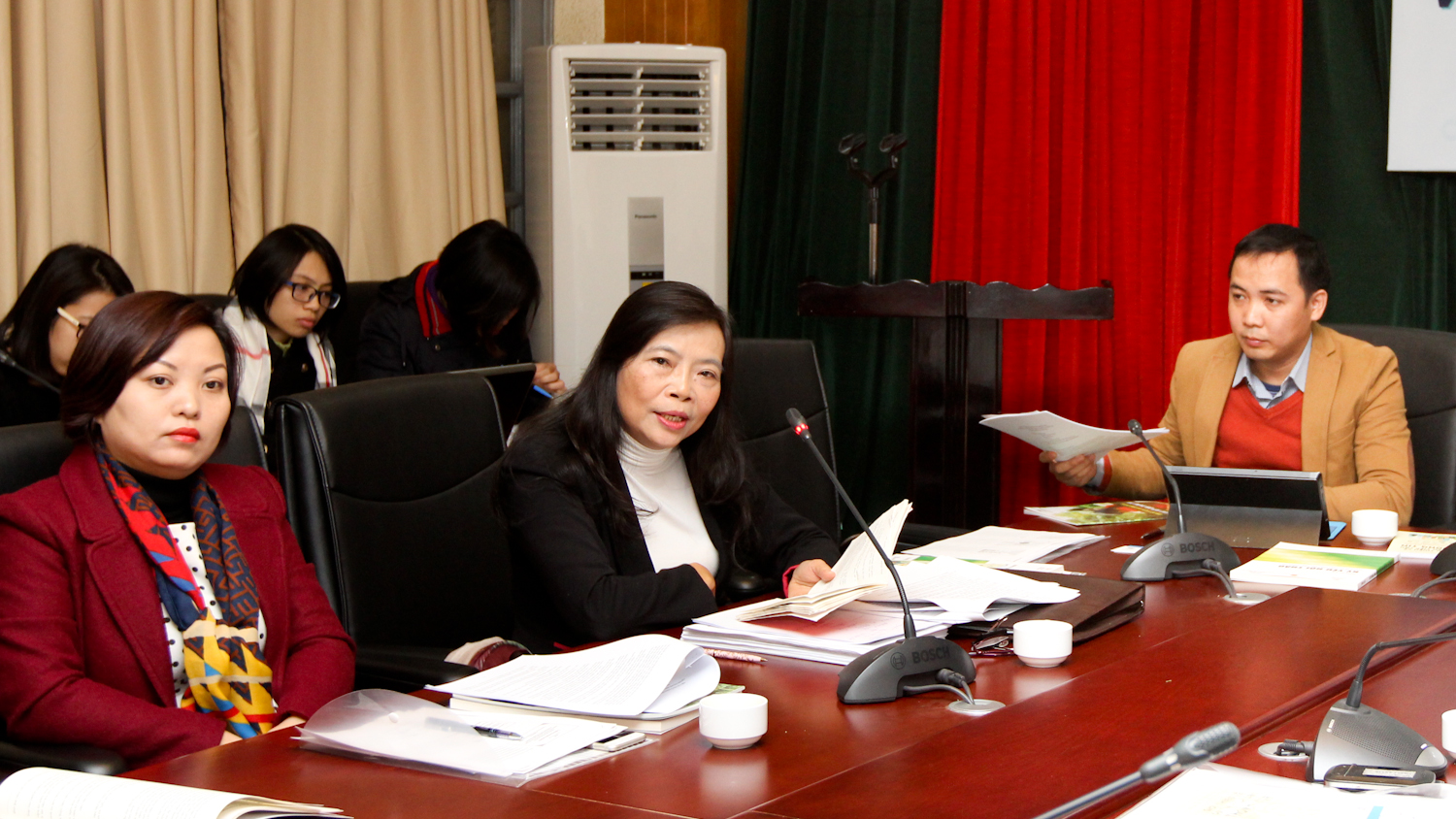
Ms. Nguyen Thi Kim Thoa, Director of the Criminal and Administrative Law Department, Ministry of Justice, presented a paper at the seminar.
Of course, the information provided varies from country to country, depending on the legal system and the concept of different types of information.
Basic information, directly related to people's lives and scientific research, is accessible to all citizens.
However, according to Ms. Nguyen Thi Kim Thoa, every country has dark areas in the provision of information. These are confidential information, such as secrets related to privacy, business operations, national security, etc.
According to Ms. Nguyen Thi Kim Thoa, this dark zone also involves careful consideration of information. Within this dark zone, there are areas that are half-dark and half-bright – balanced areas where information is provided if the public interest is higher.
She gave the example of business production, stating that if a trade secret affects the lives of the community, then the trade secret becomes secondary to public health.
Or consider the consideration of information to reassure the public regarding Slovakia's defense secrets. When the public raised concerns about corruption in the country's purchase of two military aircraft, the government ultimately decided to provide the public with all relevant documents, costs, and purchase contracts.
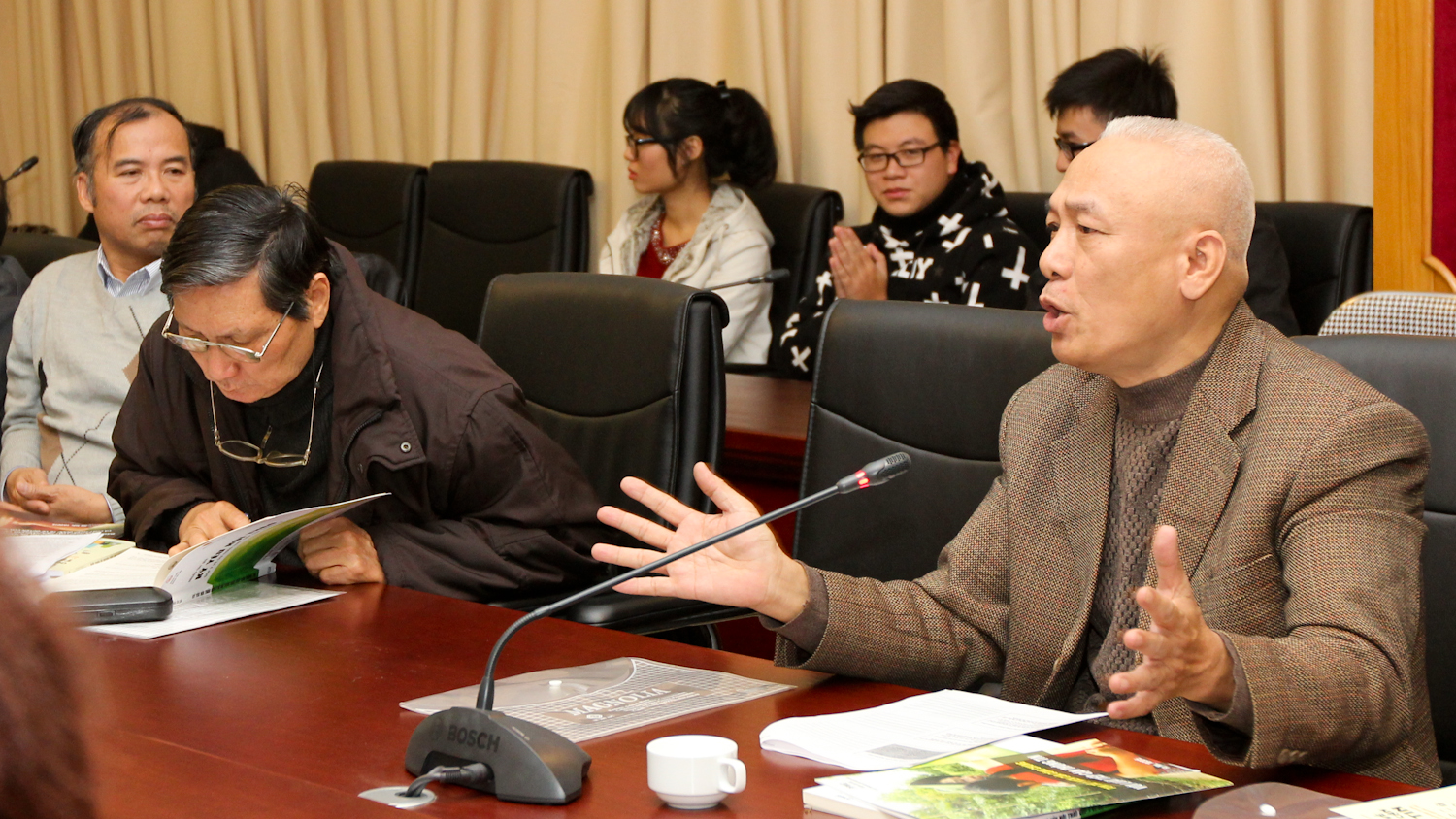
Professor Nguyen Dang Dung presented a paper on the topic "India's Freedom of Information Law and Lessons for Vietnam".
Sharing his experience researching India's freedom of information law, Professor Nguyen Dang Dung stated that passing information laws is difficult, but enforcing them is even more challenging.
The lesson for Vietnam is that the law on freedom of information or the law on access to information must be written in the form of human rights. Rights for all people in a universal way. Therefore, the draft needs to pay attention to vulnerable groups when exercising this right.
The passage and implementation of laws is a difficult struggle between the people and the executive branch. No government wants to enforce these rights of the people. To succeed, civil society organizations need to unite and persistently demand that the government pass and strictly enforce the laws, shared Professor Nguyen Dang Dung.
The seminar also included discussions on the following topics: Sharing the results of public consultations on the Law on Access to Information in Vietnam, presented by Ms. Ngo Thi Thu Ha, M.Sc., Center for Education Support and Capacity Building for Women (CEPEW); a presentation on international experiences in mechanisms for protecting the right to access information, by Ms. Nguyen Thanh Phuong, M.Sc., Center for Social Development Programs;…
The seminar on the right to access information in Vietnam is the opening activity for the project "Enhancing understanding of youth participation in promoting the right to access information in Vietnam". The project is implemented by the Faculty of Information and Library Science, University of Social Sciences and Humanities, Vietnam National University, Hanoi, in collaboration with the Center for Education and Capacity Building for Women (CEPEW).
The project is expected to run from now until the end of February 2016 with several activities aimed at achieving the following goals: Enhancing understanding of the right to access information among faculty and students of the University of Social Sciences and Humanities, Vietnam National University, Hanoi; Establishing a core group of young people with sufficient knowledge and skills to promote learning and application of access to information for young people and students in Hanoi; Establishing a human rights-based information provision model for the Faculty of Information and Library Science to provide information relevant to its students and disseminate it to other faculties throughout the university.
Author:Hoai An
Newer news
Older news

