
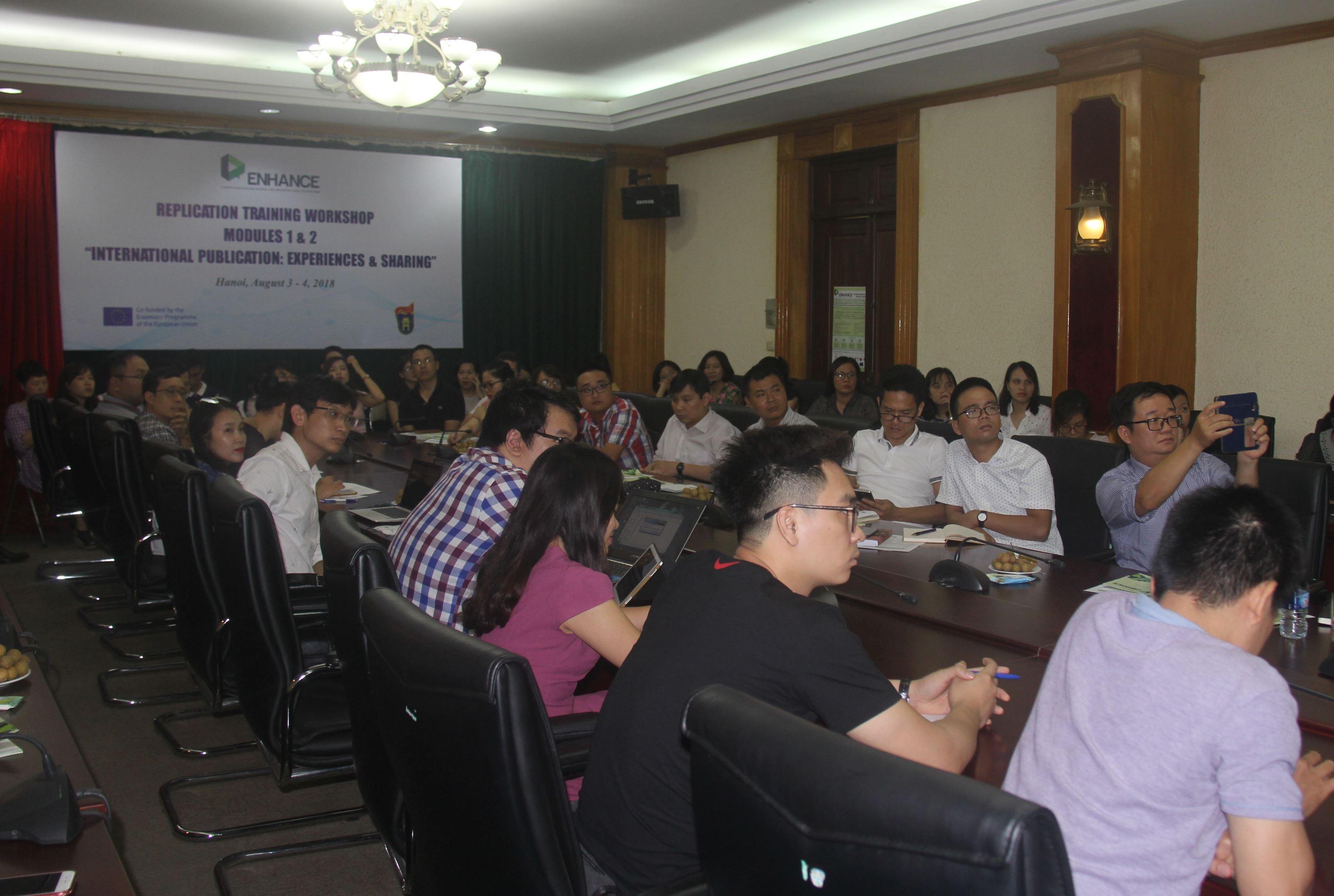
At the seminar, Professor Pham Quang Minh emphasized that international publication is an essential path for Vietnamese scientists to integrate with the global scientific community. This is also a pressing requirement for researchers, regardless of their scientific field. The Rector also pointed out the difficulties currently hindering the integration of Vietnamese scientists, including language barriers, a lack of scientific information, differences in scientific research methodologies, and especially, barriers in perception.
Furthermore, Vietnam's increasingly deep integration into the international community also presents many opportunities: Vietnam is becoming an increasingly attractive research subject, receiving attention from the scientific community worldwide; access to information and regional and international connections are becoming easier; and the number of Vietnamese scientists studying and researching abroad is growing...
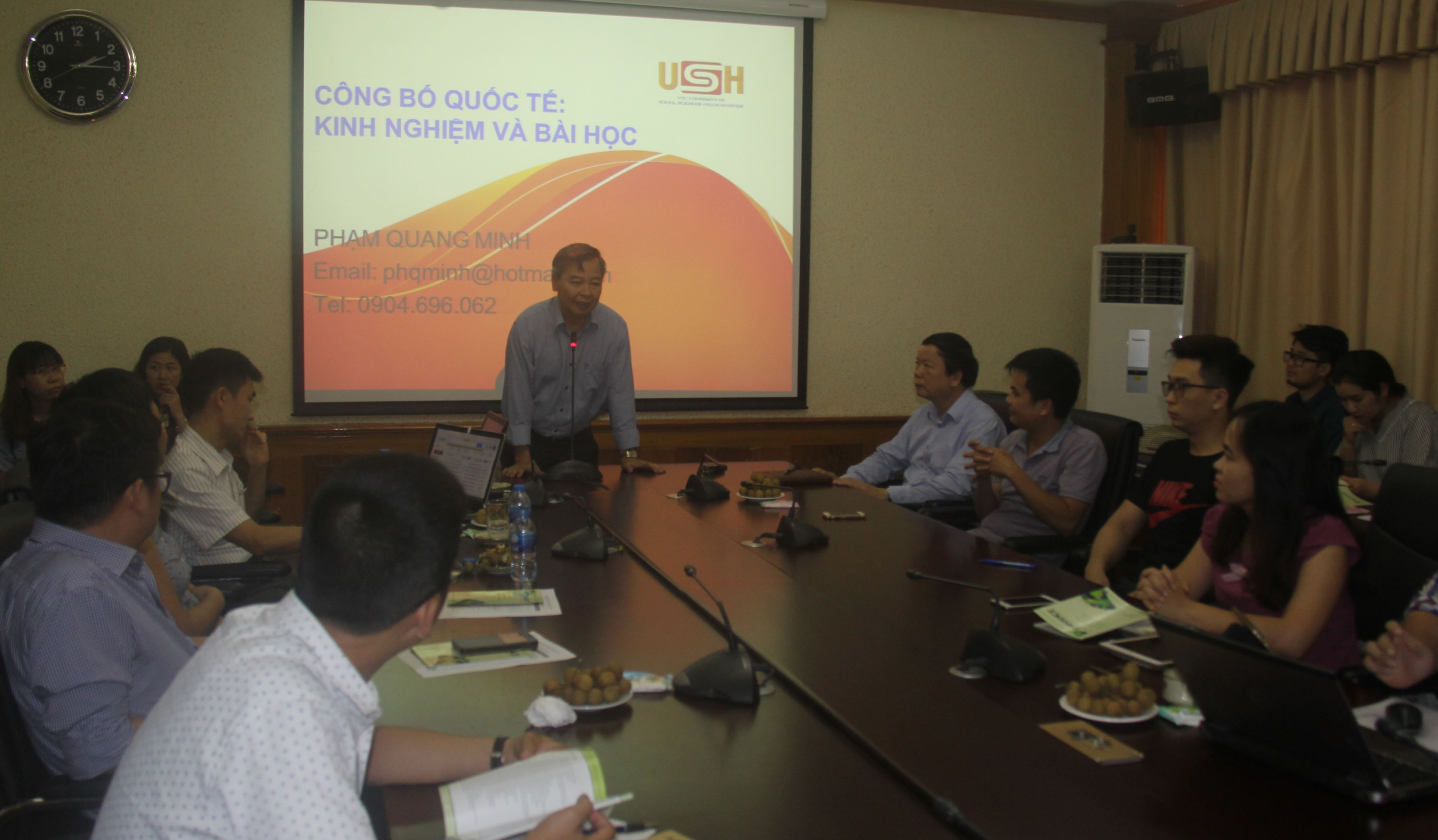
Professor Pham Quang Minh emphasized that international publications are an essential path for Vietnamese scientists to integrate with the global scientific community.
Since 2010, the University of Social Sciences and Humanities has implemented policies to promote international publications. In 2010, the entire university had only 13 international publications, but this number increased rapidly each year. By 2015, the university had 50 international publications, and in 2017, this number reached 55. Of these, the number of articles in ISI and Scopus journals was not significant; in the period 2012-2016, the university had 26 articles. In addition to directly rewarding and supporting authors with internationally published articles, the university also organizes numerous seminars and workshops on sharing experiences in international publication; courses on academic writing; and the formation of forums and scientific networks to promote international publications among staff, especially young staff members. Recently, the university issued a new policy to further promote this activity, providing maximum support of up to 250 million VND for a book published by reputable foreign publishers. As a result, awareness of the important role of international publication has been gradually changing in a positive direction among the staff.
According to Professor Pham Quang Minh, publishing internationally in social sciences and humanities is not as difficult as people think, but achieving it requires strong determination. To begin, young scientists need to actively participate in international scientific conferences, thereby building professional relationships with international scholars and collaborating on joint research projects. In addition, faculty members must consciously improve their academic English skills as a prerequisite for scientific integration.
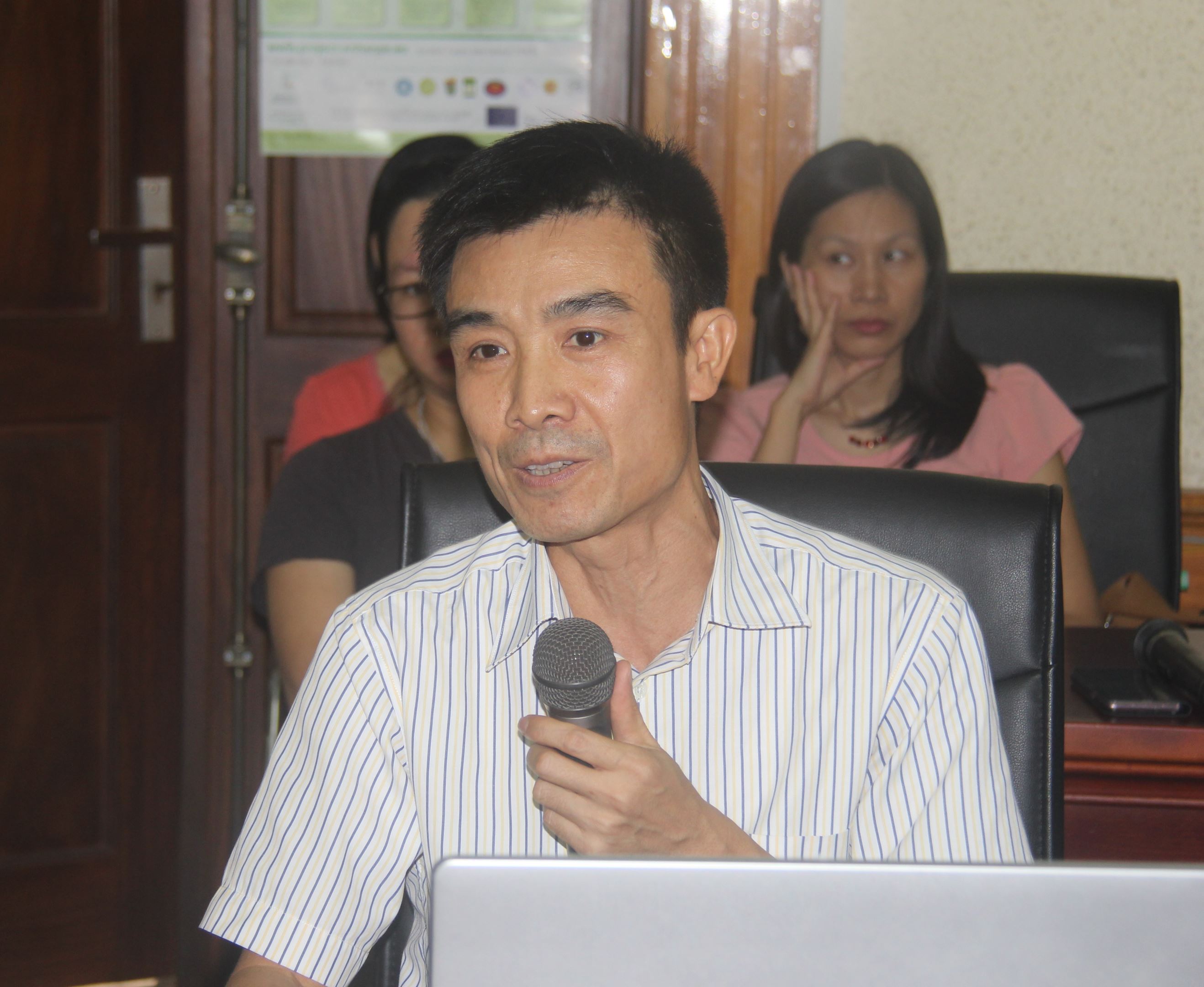
Dr. Tran Quang Tuyen (Faculty of Economics, Vietnam National University, Hanoi) warns about "fake" scientific journals.
Agreeing with the above viewpoint, Dr. Tran Quang Tuyen stated that the current trend of interdisciplinary and multidisciplinary research is increasingly developing, opening up many opportunities for scientists in the social sciences and humanities. International publications in prestigious journals not only enhance the status and reputation of individual scientists but also improve the ranking of their departments and universities, creating more opportunities to attract research funding. Therefore, scientists need to determine the right motivation and a strong determination, not being discouraged by difficulties.
Dr. Tran Quang Tuyen also warned about the phenomenon of "fake" international scientific journals not included in the ISI or Scopus lists, published by small private companies, disreputable and unethical groups of scholars. Typically, publishing articles in these journals requires a fee, has a fast acceptance time, and does not require peer review. Without proper information, professors can easily submit articles to these journals by mistake, damaging their personal reputation, wasting their efforts, and jeopardizing the value of their dedicated work.
In terms of research methodology, there are differences between fields such as economics, business, and finance, which tend towards quantitative research, and social sciences and humanities, which tend towards qualitative research. Statistical methods offer many benefits and values to research in the social sciences and humanities.
Dr. Nguyen Thi Nguyet Minh believes that the most important factor determining the quality and value of an international publication is clarifying the author's research background and methodology. This includes what the author researched, the research methods used, the data on which the conclusions are based, and the author's role in the research.
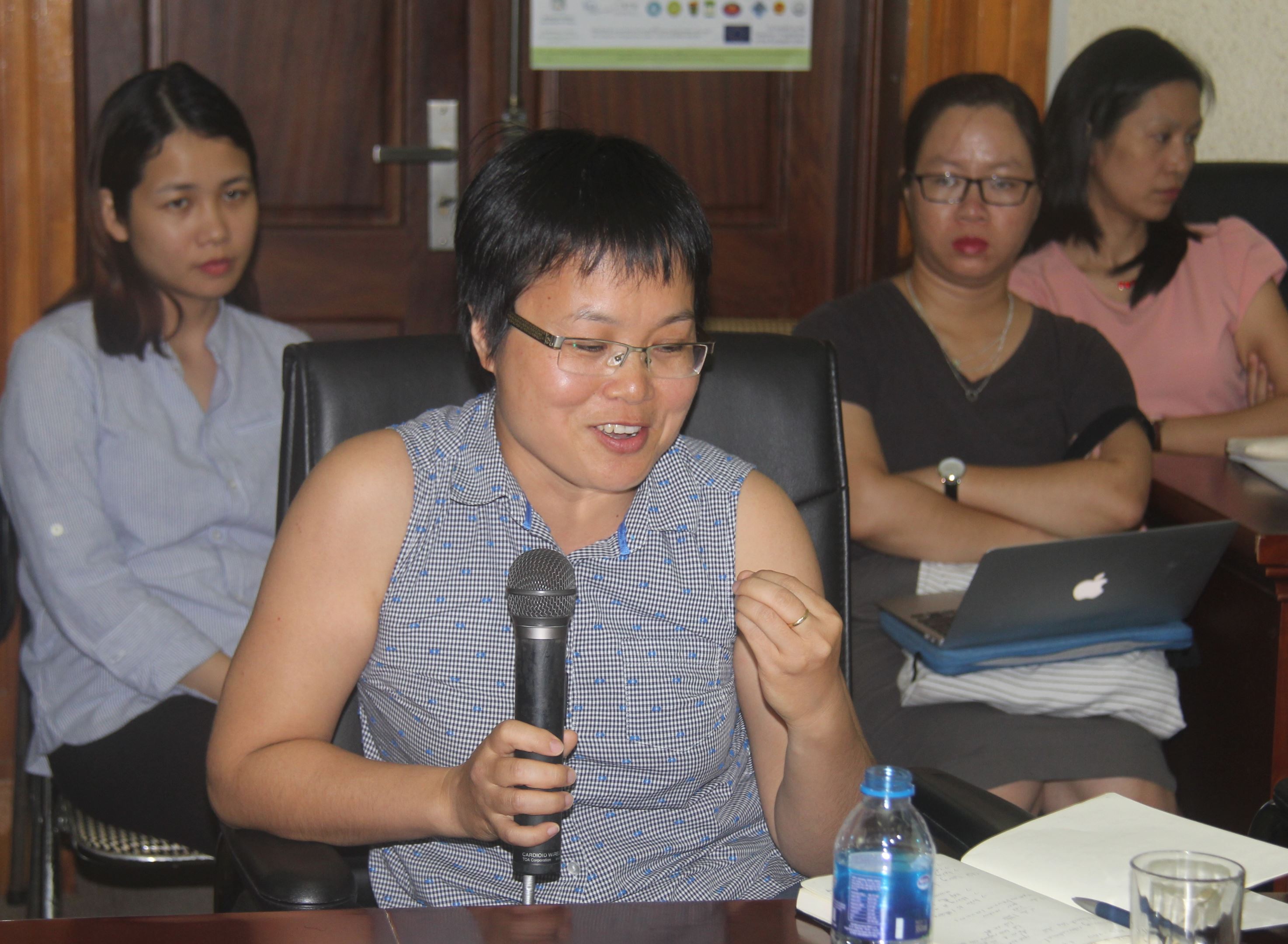
Dr. Nguyen Thi Nguyet Minh believes that a good research paper should clearly state: what the author researched, what research methods were used, what data were used to draw conclusions, and the author's role in the research.
To ensure their research is accepted for publication, Dr. Nguyen Thi Nguyet Minh advises young scientists to be sincere and receptive to comments and feedback from international reviewers. Editors of prestigious international scientific journals are often leading scientists, and their decisions to reject or accept research can even create new trends in research. Therefore, scientists should carefully research the preferences of each journal and its editorial team to guide their research content accordingly.
The female scientist also believes that it's essential to build scientific credibility from an early stage of your research journey, whether you're a student or an assistant to a professor. Simply put, it means working responsibly, not giving up, always being interested in new scientific ideas, always consulting with colleagues and senior scientists, actively participating in and connecting with networks of scientists in your field... If you are a promising young researcher, there will always be established scientists interested in helping you.
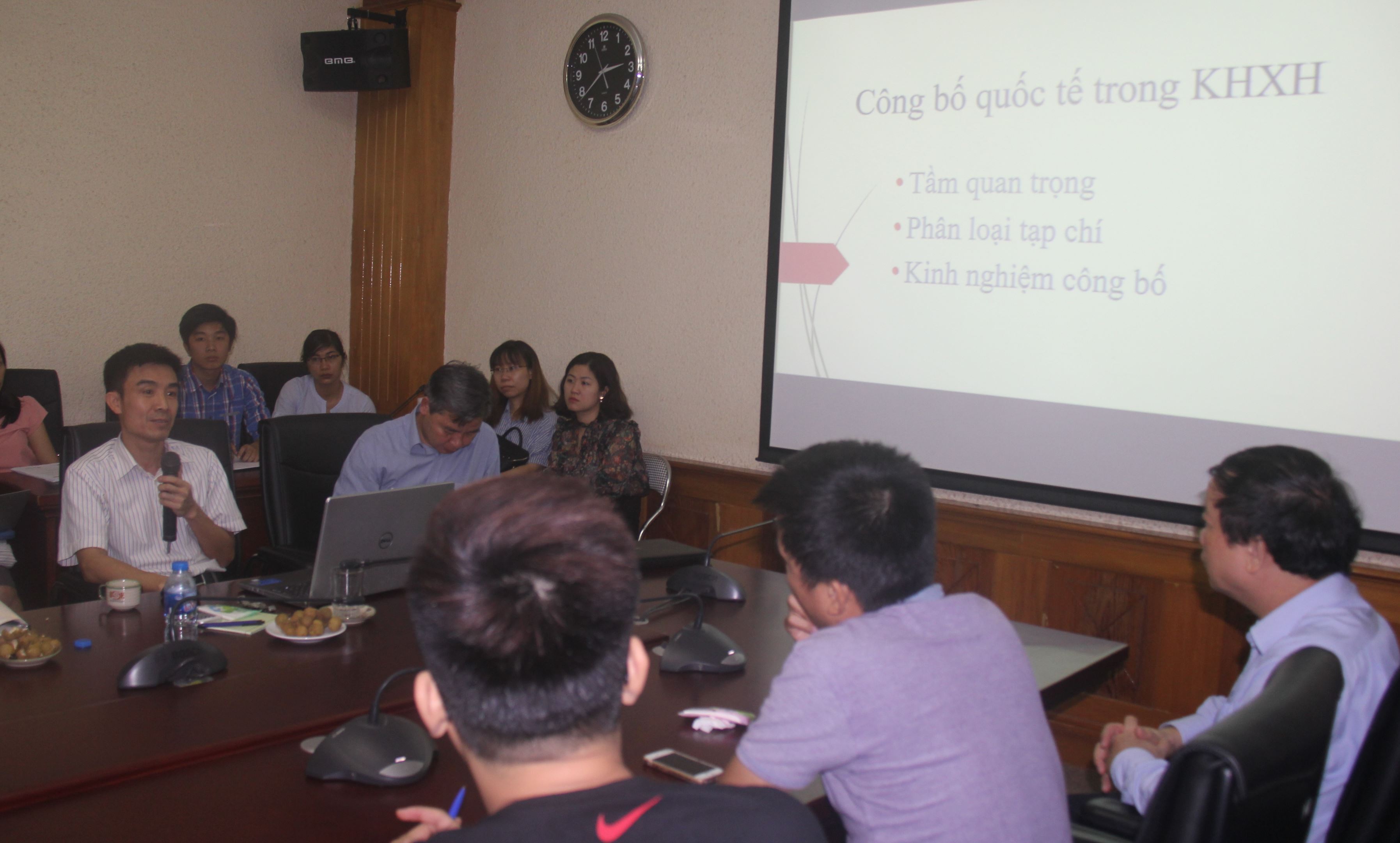
Also at the seminar, young faculty members of the University proposed establishing a network of researchers inside and outside the university to share and update information on international publications. The University also needs to open more academic forums and expert classes on specialized topics to support research, such as: the use of quantitative methods in social sciences and humanities research, the use of data retrieval software in research, new theories in humanities research, interdisciplinary and multidisciplinary research in social sciences, etc.
|
Author:Thanh Ha
Newer news
Older news

