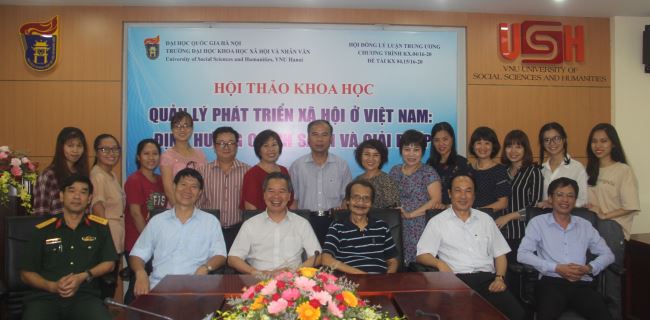
The workshop was attended by renowned scientists from various fields of social sciences and humanities, including: Prof. Dr. Pham Tat Dong (Vice President of the Vietnam Association for the Promotion of Learning), Prof. Dr. Dang Canh Khanh (Director of the Institute for Traditional and Development Studies), Prof. Dr. Nguyen Huu Khien (former Deputy Director of the National Academy of Public Administration), Assoc. Prof. Dr. Nguyen Minh Phuong (Vice Rector of Hanoi University of Interior Affairs), Assoc. Prof. Dr. Tran Thi Thanh Thuy (Deputy Director of the Institute of Leadership Studies and Public Policy), Colonel Le Duc Cuong (Foreign Affairs Department, Ministry of National Defense), Assoc. Prof. Dr. Ngo Thanh Can (National Academy of Public Administration), Assoc. Prof. Dr. Tran Thi Minh Ngoc (Head of the Sociology Department, Regional Political Academy 1)...
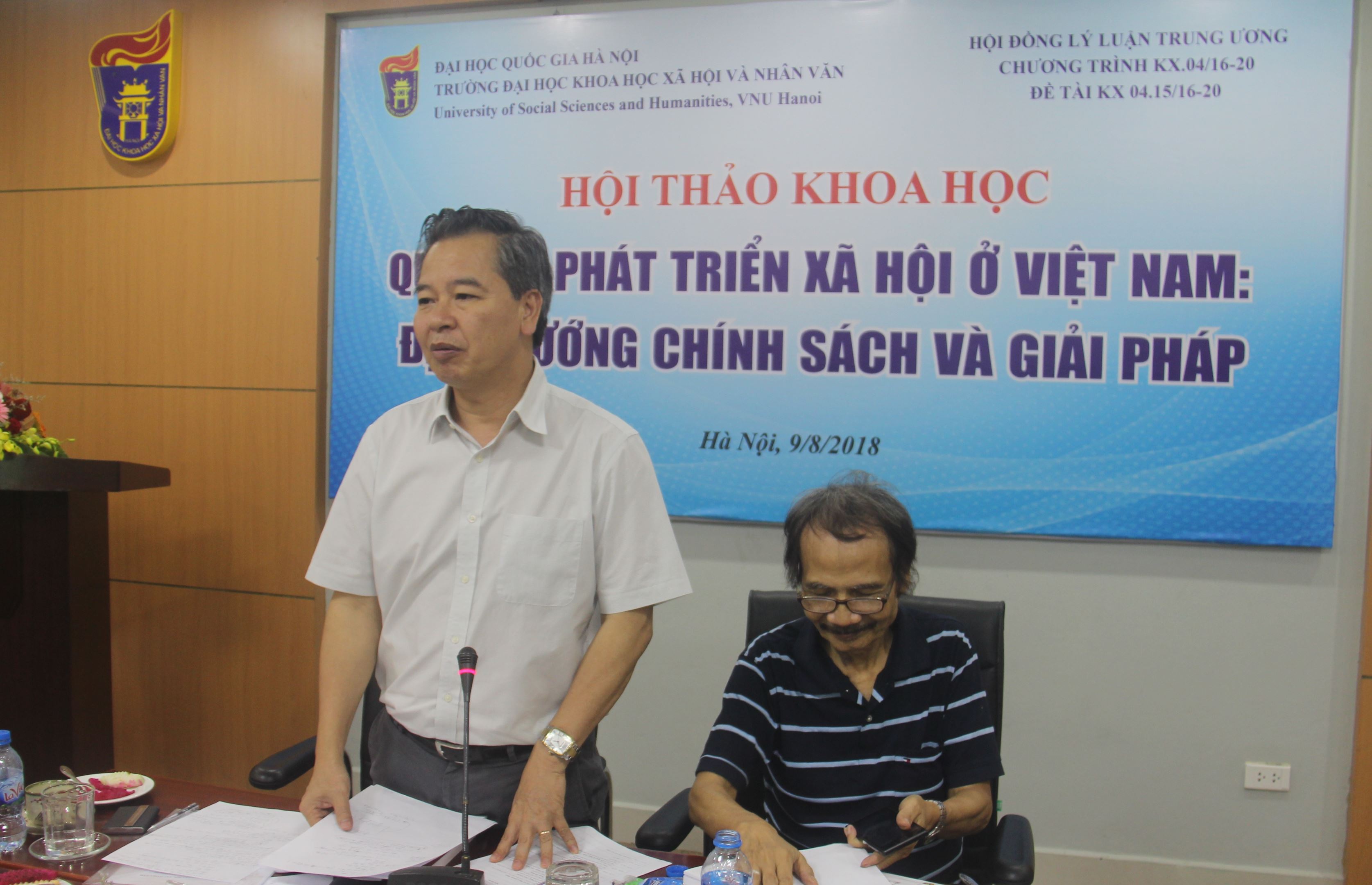
Professor Pham Quang Minh (Rector of the University of Social Sciences and Humanities, Project Leader) delivered the opening remarks at the Workshop.
The workshop received nearly 20 papers offering suggestions on the direction of social development management policies in Vietnam from various perspectives: social security and human safety, factors affecting the social development management process, the role of the grassroots political system in social development management, management of social anomalies, the impact of administrative reform on social development management, innovation in social assistance policies, social development management in the context of market economy development and international integration, the role of social organizations in social development management, overcoming social inequality and wealth disparity through social development management policies, social development management in the field of health insurance, etc.
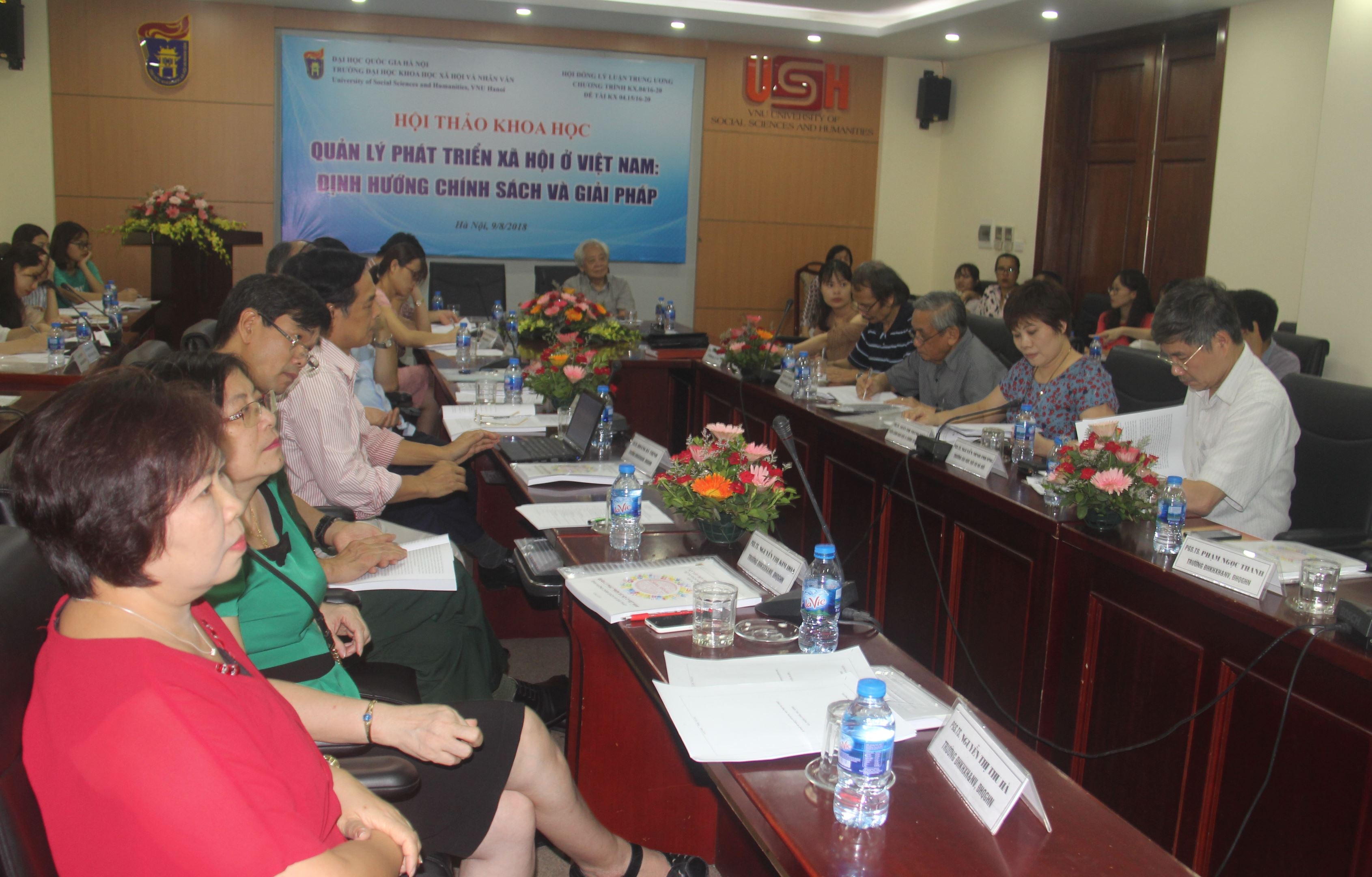
The conference was attended by many leading scientists in the fields of social sciences and humanities.
In his introductory report to the workshop, Professor Pham Quang Minh (Project Leader) addressed the importance of research on socio-economic development management in the current context. Accordingly, effective and well-directed socio-economic development management is the most fundamental issue in implementing the socialist orientation in our country. Socio-economic development management determines the maintenance of social order, prevents conflict, improves the material and spiritual lives of the people, and creates momentum for socio-economic development. In the context of integration and increased international cooperation, many urgent issues regarding socio-economic development management in Vietnam are being raised, requiring solutions with a new mindset and a new system of policies and practices for socio-economic development management.
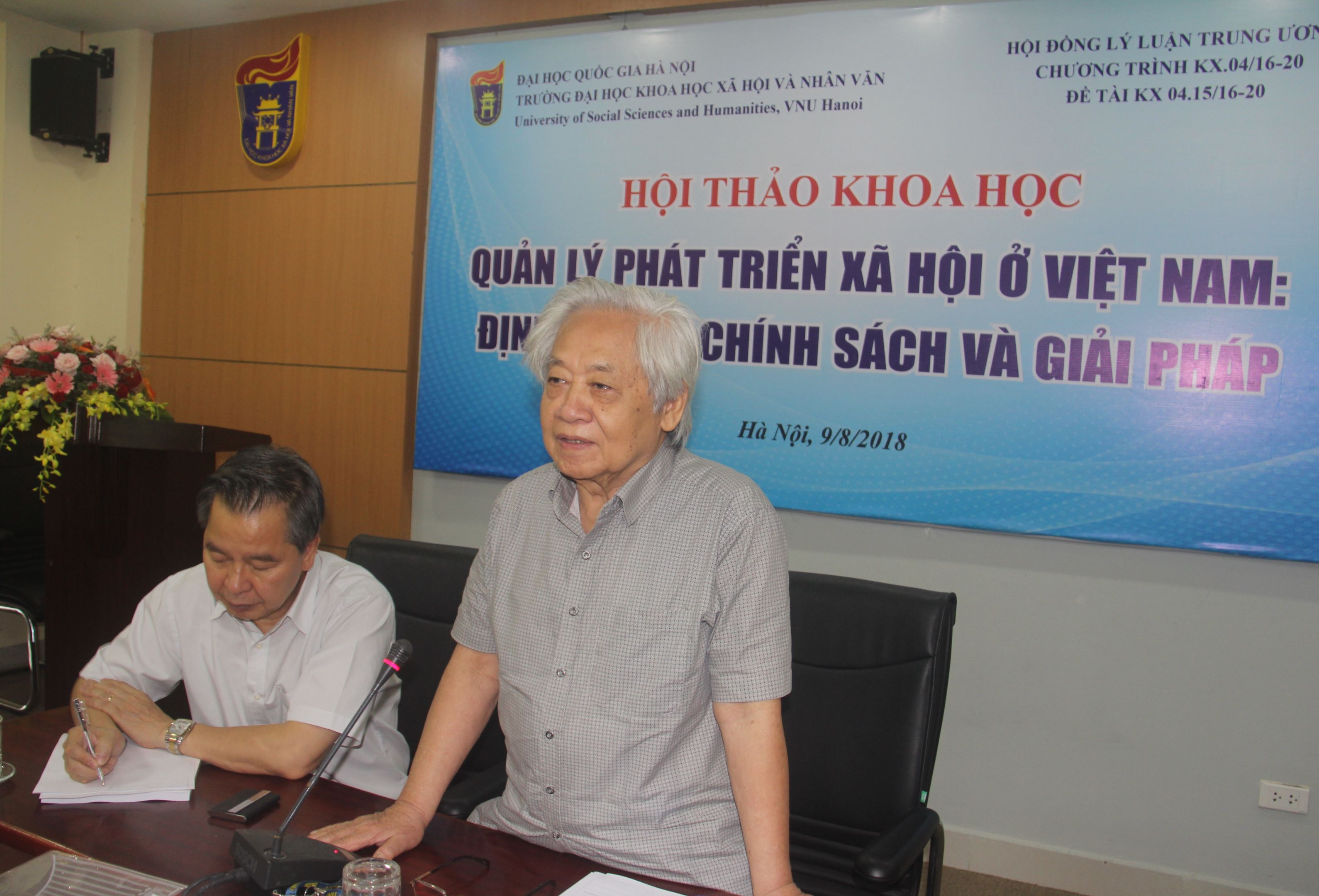
Prof. Dr. Pham Tat Dong (Vice President of the Vietnam Association for the Promotion of Learning)) emphasizes that social security should aim to enhance the security capacity of each individual and community.
Presenting on "Social Security and Human Safety," Professor Pham Tat Dong argued that social security policies should focus on enhancing the security capacity of each individual and community, and emphasize reliance on local knowledge. In particular, solutions to support people should aim to improve their knowledge, broaden their understanding, and enhance their job-seeking skills to achieve sustainable effectiveness.
Professor Dang Canh Khanh from the Institute for Traditional and Development Studies suggested that it is necessary to objectively research, review, and re-evaluate the cultural heritage of our ancestors in governing and managing society, with a view to overcoming negative and conservative remnants while simultaneously promoting positive and progressive elements from national traditions.
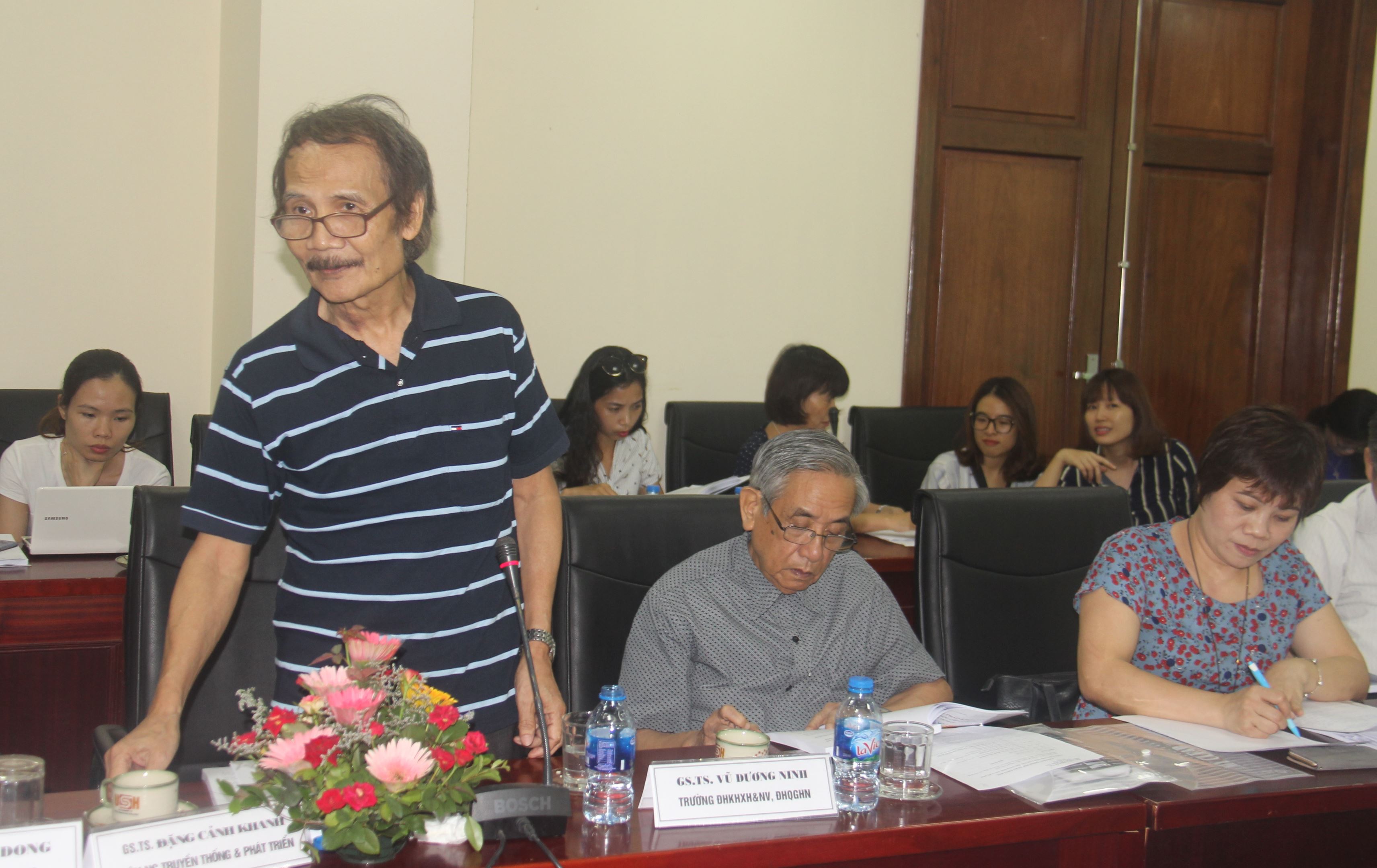
Professor Dang Canh Khanh (Institute for Traditional and Development Studies) highly praised Nguyen Trai's "civil governance" philosophy in governing the country.
In his paper, "Some Thoughts on the Management of Social Development from Nguyen Trai's Perspective of 'Cultural Governance' in the Context of Our Country Today," the professor stated that the brilliant cultural figure and thinker Nguyen Trai had profound thoughts on moral governance and legal governance, and created one of the fundamental principles in Vietnamese national governance – the principle of "cultural governance," meaning governing the country with knowledge and culture. Accordingly, a society cannot be maintained and developed without laws and ethics. However, laws and ethics must be built on the foundation of an increasingly advanced cultural heritage of the nation. Nguyen Trai's ideas remain relevant today because it is impossible to manage society effectively without a common foundation of knowledge and knowledgeable people.
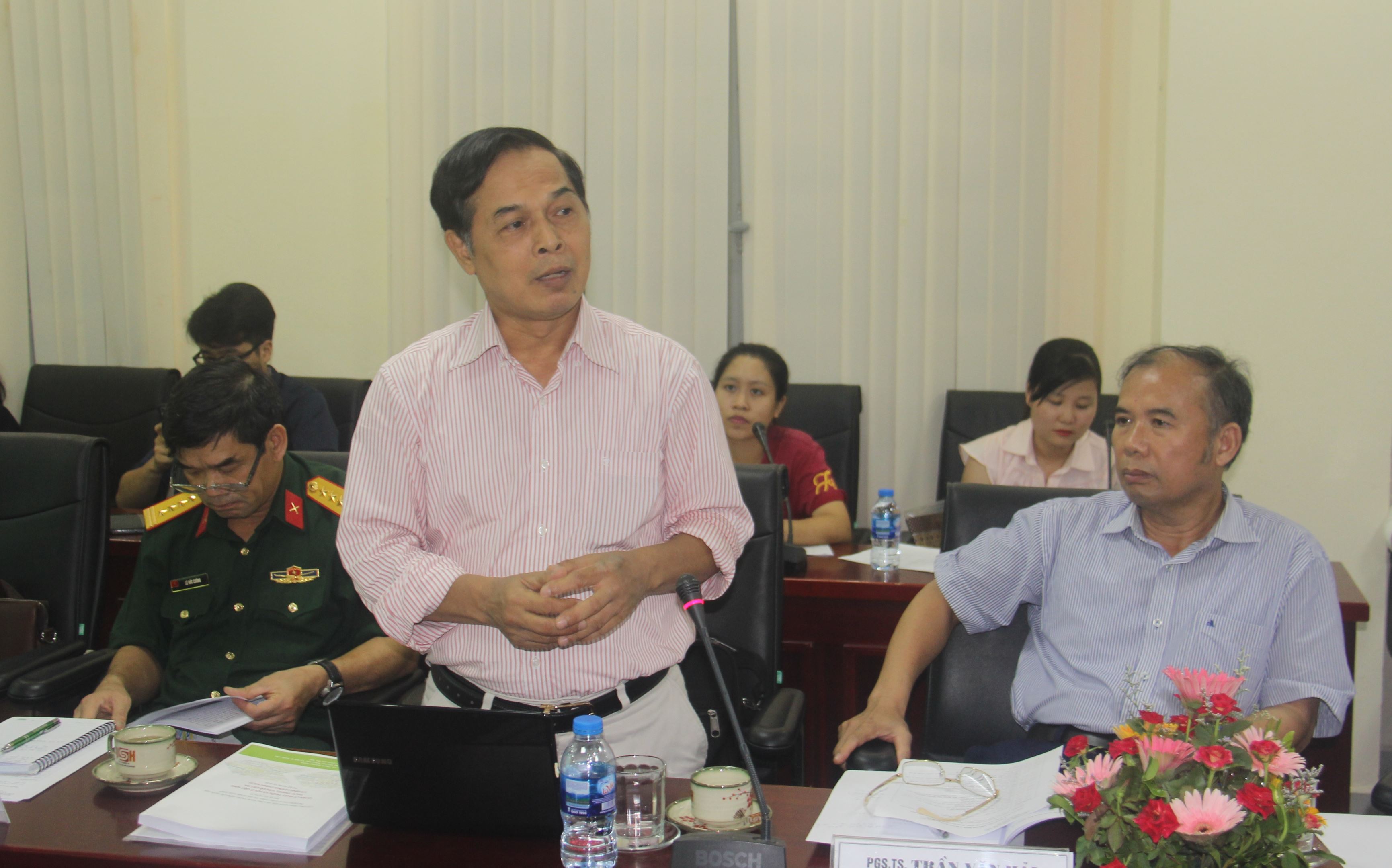
Associate Professor Hoang Ba Thinh (University of Social Sciences and Humanities) argues that social management in Vietnam lacks the active and proactive participation of the community and the people.
In their presentation, "Some Factors Affecting the Process of Social Development Management in Vietnam Today and the Issues Arising," Professor Hoang Ba Thinh and Dr. Doan Thi Thanh Huyen highlighted the challenges facing social development management in Vietnam. These include a cumbersome and overlapping administrative system, inadequate quality of leadership and management, and low salaries and benefits that fail to motivate public sector employees. Currently, social management in Vietnam is still primarily based on a top-down model, neglecting the model of management with the participation of citizens and communities. The role of the community in social management, both from the bottom up and in a proactive manner, has not received sufficient attention.
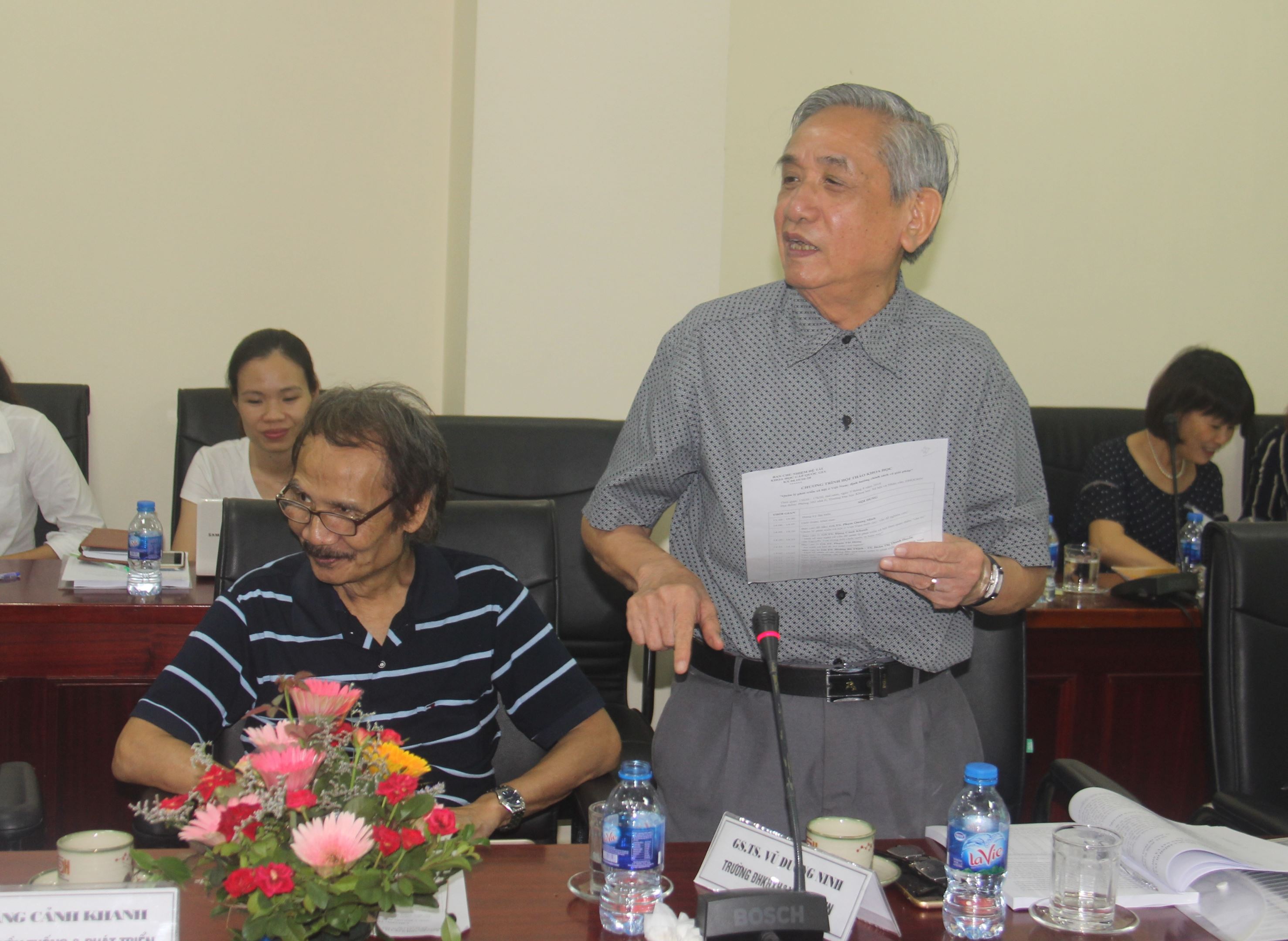
Professor Vu Duong Ninh (University of Social Sciences and Humanities) stated: the intellectual elite of the country, in every historical period, has played an extremely important role in managing social development.
Emphasizing the leading role of intellectual elites in society, Professor Vu Duong Ninh (Chairman of the Association of Retired Faculty Members of the University of Social Sciences and Humanities) stated: For a time, we underestimated the role of intellectuals, failing to listen to their opinions, which led to incorrect management and handling of social issues. Therefore, we must not be afraid of intellectuals but must listen to and utilize them, valuing their ideas even when they go against the majority.
From the perspective of researching the role of the grassroots political system in Vietnam today, Associate Professor Dr. Nguyen Minh Phuong argues that the commune is the basic administrative unit in rural areas – a vast area accounting for the majority of all grassroots units in our country. It is where traditional cultural values and customs of the community are preserved. Therefore, this grassroots political system plays a very important role in connecting family members and the community, preserving and promoting national cultural identity, and developing socio-cultural values. Thus, the requirement is that the grassroots political system must correctly identify, awaken, and promote this sense of community.
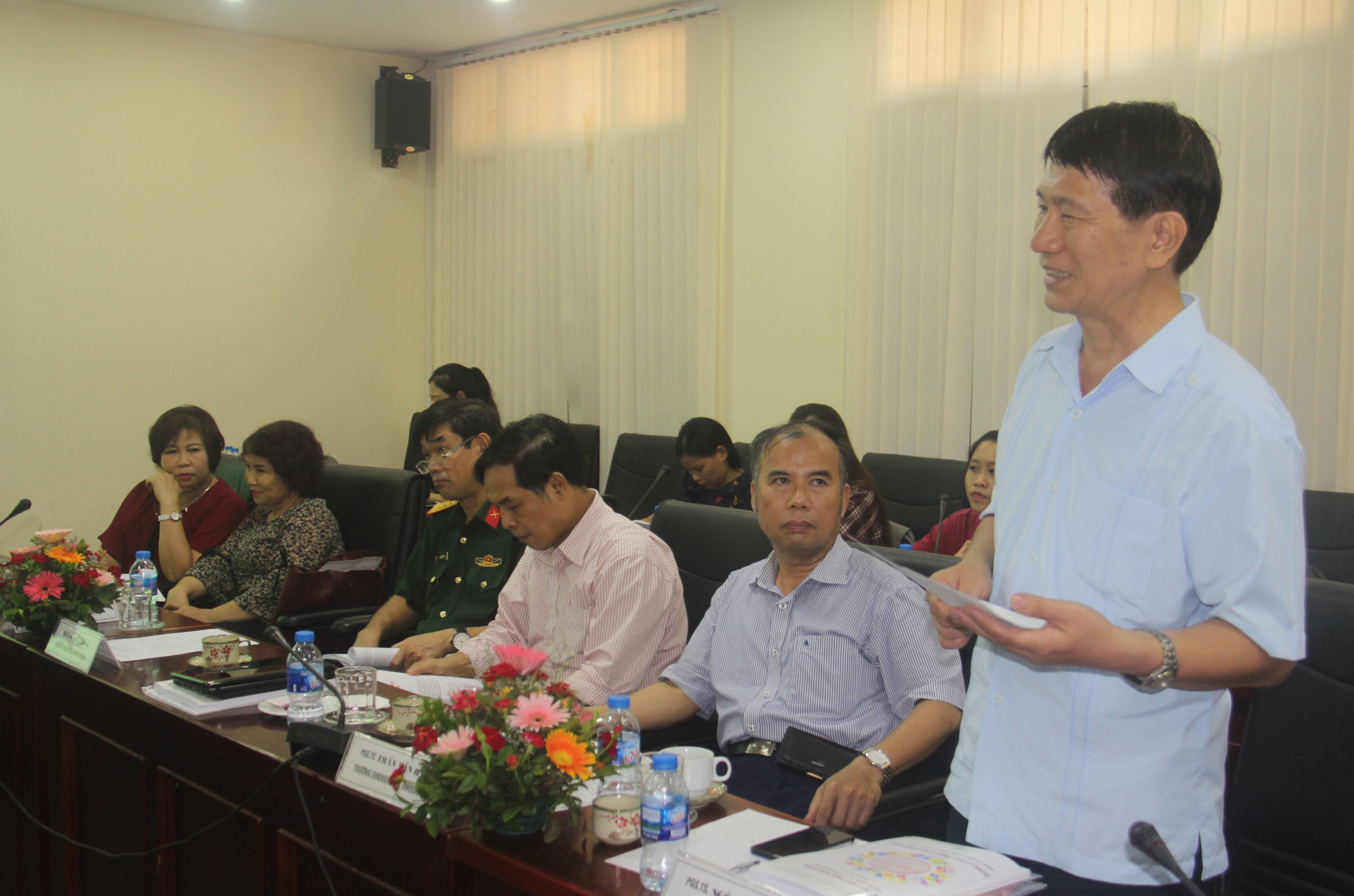
Associate Professor Ngo Thanh Can (National Academy of Public Administration) discusses administrative reform to promote social development management.
Discussing the urgent need to reform the administrative system to promote socio-economic management in Vietnam, Associate Professor Dr. Ngo Thanh Can said: "There are no poor countries, only poorly managed countries." He proposed specific contents for administrative reform: Administrative reform should focus on leading and guiding activities, concentrating on building legal documents that ensure the development of businesses and create conditions for economic development; overcoming overlapping functions between state agencies; creating an environment for fair and equitable development; promoting decentralization of state administrative management between the central and local levels to serve the people and organizations; and building a capable team of officials and civil servants…
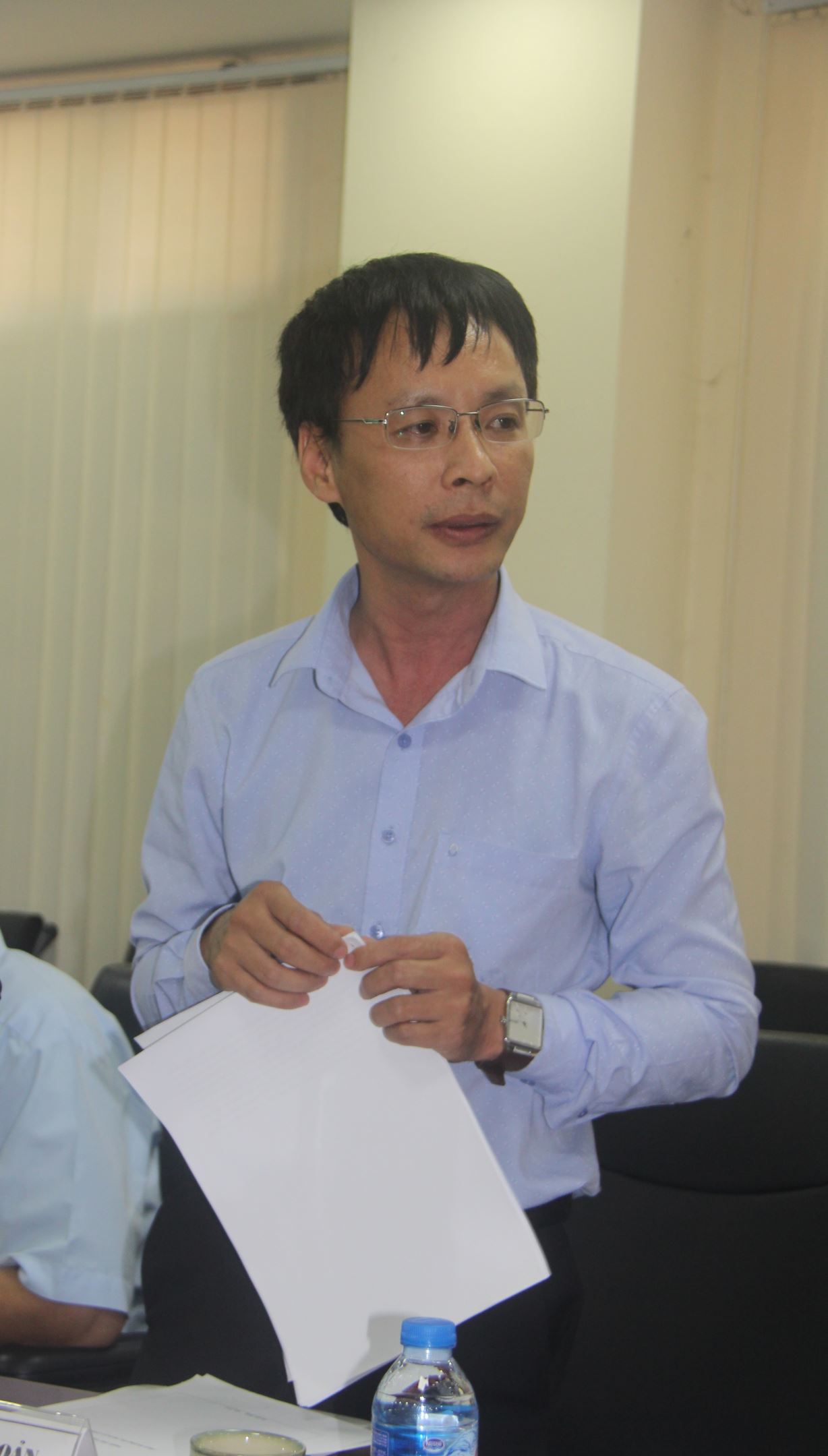
Dr. Nguyen Ngoc Toan (Department of Social Protection, Ministry of Labor, War Invalids and Social Affairs) believes that receiving social assistance is a right of the people.
Regarding the implementation of social assistance policies for vulnerable groups, Dr. Nguyen Ngoc Toan (Department of Social Protection, Ministry of Labor, Invalids and Social Affairs) presented a fresh approach by considering these activities as the responsibility of the State to ensure the rights and equality of the people. First and foremost, it is necessary to change the mindset that this is a right of the people, not just a humanitarian aid activity. Social work models must take into account supply and demand. The responsibility for social assistance activities should gradually shift from the State to socialized initiatives.
Associate Professor Tran Thi Thanh Thuy (Institute of Leadership Studies and Public Policy) mentioned five prominent characteristics of Vietnam's current social development that policymakers need to consider. These include a rapidly changing society, sometimes unpredictable and erratic; the internet and technology having a strong and far-reaching impact on various aspects of social development; an increasingly "open" society with blurred boundaries between different sectors; a growing risk of conflict, particularly conflicts of values; and the increasing individualization of needs and how those needs are met. Therefore, she suggested that a historical and cultural approach, combined with surveys of the current social situation, is necessary to gain a comprehensive understanding and guide the development of policies and solutions for social development management.
Author:Thanh Ha
Newer news
Older news

