
The Southwest Border War ended nearly 40 years ago, but it still leaves me with many indelible impressions of the bond between soldiers and civilians, the camaraderie, and the courageous spirit of our officers and soldiers who were ready to sacrifice themselves for their comrades.
I enlisted on October 26, 1977, in Dai Kim Commune, Thanh Tri District, Hanoi. Initially, I was assigned to the 252nd Regiment, 520th Division, engineering corps.
The training days in Dai Tu, Thai Nguyen, were incredibly difficult and arduous for soldiers from Hanoi like me. Besides getting familiar with weapons and ammunition, on Saturdays and Sundays we would go into the forest to gather bamboo shoots, collect firewood, and cut reeds to build shelters.
My first time away from home was also the first time I had to eat cassava instead of rice for months on end. Our meals mainly consisted of cassava soup, bamboo shoot soup, stir-fried bamboo shoots, and salt; meat and fish were rare. Because I ate so much cassava and missed rice, one day, Fat San and his squad invited me to a meal, hoping to get some chicken or at least pork. But when the food was served, I couldn't believe it – it was just a pot of freshly cooked rice and a plate of plain salt.
The food was meager, but getting scabies and ringworm was even worse. Most of us new recruits, probably due to unfamiliar surroundings, contracted scabies and other skin infections. Fortunately, the locals advised us to boil branches of the three-pronged tree and use the water to bathe once or twice, which cured the condition. For ringworm, they suggested using the sap of unripe bananas, but not everyone recovered.
During the day, we crawled, rolled around, and learned to shoot AK and CKC rifles. At night, regardless of the time, if the air raid siren sounded, we had to jump up and engage in outdoor activities, crossing various terrains including hills, mountains, dense forests, and deep fields.
It was also thanks to these impromptu field exercises that Sỉnh, an ethnic minority from Vĩnh Phúc province, who had caught a cold, was saved by us. That night, when the air raid siren sounded, we found Sỉnh lying motionless. Using all the experience we had learned by observation, the whole squad rushed to massage his temples with medicated oil, rub his feet and hands, and perform artificial respiration. I don't know which massage method was effective, but a few minutes later, Sỉnh regained consciousness. On September 27, 1978, on a flight to the North for treatment of his wounds, I met Sỉnh again. He told me that in his first battle, around the beginning of June 1978, he had lost his right hand and suffered several other injuries. Battlefield experience is very important; I later learned that new soldiers suffer many casualties in their first battle.
On May 3rd, 1978, when we needed to exchange money, we were harvesting bamboo on top of Khe Pass in Tuyen Quang. Upon hearing the news, the squad sent someone down to exchange money, but by the time they arrived it was past midnight, and they couldn't. For the rest of the week, we only ate wild greens with salt. During this time, the forest on Khe Pass was dense, with trees extending down to the foot of the pass, and wild greens grew abundantly, tender and vibrant like freshly planted cabbage. Everyone frequently saw flocks of dozens of wild chickens flying up and down. Every night, the local people still went hunting for deer and elk.
I'm close friends with two guys from Vinh Phuc, one named Minh and the other named Thang.
One day, the three of us were in the forest. While Thang was picking bamboo shoots at the foot of the hill, Minh whispered to me, "Look at Thang's eyes, he's destined for a short life." I was surprised and didn't believe him. However, after hearing him say that and looking closely at Thang, I noticed his left eye was slightly crossed, and his eyes looked a bit different from others. Thang died in July 1978, a truly unfortunate case. It seems that thanks to his training, even with his crossed eyes, Thang became a skilled marksman and was selected for a sniper unit. That afternoon, the sniper squad was marching up to a high outpost. As they were walking, a barrage of bullets suddenly whizzed past, and Thang was hit in the stomach, bleeding profusely. Under normal circumstances, with timely first aid, a wound like Thang's would only last a few months in the hospital. Unfortunately for Thang, although helicopters usually flew in from within the country to pick up seriously wounded soldiers, not a single one landed that day. The soldiers and the transport team carried Thang all night, only arriving at the regimental surgical station at nearly 6 a.m. Only after setting the stretcher down did they realize Thang had fainted some time ago due to significant blood loss.
I still vividly remember my training days. My company's political officer, from Nghe An province, was short and stocky, with a stern demeanor and a powerful voice, but his education was limited. Every time he made an announcement on the mess hall bulletin board, we were met with illegible handwriting full of spelling errors. In the unit, there weren't many soldiers like me who had completed high school, so I was often assigned the task of correcting spelling mistakes in the commander's announcements and, at the beginning of the week, standing before the troops to recite the Ten Oaths and Twelve Disciplinary Rules.
In mid-May 1978, most of the new recruits were given leave before heading south. Some, including myself, were transferred to Noi Bai Airport to pour concrete and extend the runway for large military transport planes carrying bombs and tanks to land. Our meals usually consisted of two or three palm-sized pieces of flour and boiled water spinach, sometimes with yellow leaves and roots still attached. The dipping sauce was always burnt rice mixed with salt. But for us soldiers, this was the happiest period, because in the afternoons we could play football to our heart's content, or go pick small, finger-sized mushrooms to cook in soup, which tasted very sweet. Noi Bai Airport was vast, with tall grass, deep fields, and far from any houses. In the middle of the runway was a two-story building with a tall antenna. I guessed it was the control center for aircraft takeoffs and landings. One rainy evening, Thang from Vinh Phuc province braved the rain to go out. About an hour later, he returned with a sack full of frogs. Hungry, we skinned them, taking only the two frog legs to stir-fry with salt, but they were inedible because they lacked seasoning and were too fishy.
At the end of May 1978, we were unexpectedly granted three days of leave to prepare for our trip to the South. That summer, the flamboyant trees were in full bloom, and the cicadas chirped loudly throughout the streets, harmonizing with the children's song "Cicada, Summer is Coming" broadcast on the Voice of Vietnam radio station at midday. During my leave, I took the opportunity to visit my comrades and friends, and to say goodbye to my best friend from high school. The farewell was bittersweet, and the longing never faded. I will always remember her beautiful smile, her expressive eyes, and even the delicate taste of her jasmine tea. Back then, young soldiers like us mostly fell in love with our eyes; we didn't dare confess our feelings or even hold a girl's hand, even though we knew the old saying, "If you love someone, say you love them / If you don't, say it once and for all. Don't be ambiguous / Don't let your heart yearn for someone you don't love."
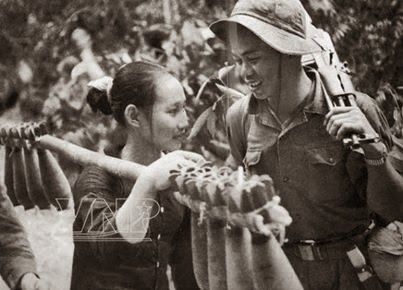
On May 23, 1978, the Division's armored vehicles transported all of us new recruits from Noi Bai Airport to Giap Bat train station. That evening, around 8 PM, we boarded a train heading south.
On May 26, 1978, we arrived at Long Binh base, the base of the 341st Division. It was a vast base, with paved roads stretching all around; it was said that it would take a whole day for a car to travel along them. Beyond the paved roads, the grass grew waist-high, so we only dared to use the narrow trails because straying off course could lead to landmines.
Our unit stayed there for about 3 days, then we were taken to stay with local families in Cao Xa Hamlet, Trang Bang, Tay Ninh, for another 2 weeks of training. During our time there, we were equipped with combat skills such as mine clearing, firing various types of weapons, including sniper rifles with optical sights, grenade launchers, and M72 rocket launchers.
In the evenings, during our free time, we would go out for sugarcane juice and get acquainted with the girls. The people here were mostly Catholic, some originally from Kim Lien village, Hanoi, who migrated south in 1954. Next to my house was the house of the village head of Cao Xa hamlet, also a Hanoi migrant. His wife, around 40 years old, walked unevenly but had a kind face and still retained many of the charm of her youth. Their ten daughters were all beautiful, but their faces held a hint of sadness, like the Virgin Mary. The three older sisters, in their late teens and early twenties, were as beautiful as beauty queens, soft-spoken and charming. They all cherished the soldiers from Hanoi because they were from the same hometown; moreover, the Hanoi soldiers were fair-skinned, hardworking, and had pleasant manners. They felt sorry for us, training hard and about to go to the battlefield, yet still eating millet for breakfast. The nearby houses took turns cooking rice and exchanging it for our millet to raise. That's also how they helped us alleviate our daily hardships. The third girl, Kieu Trinh, was mischievous and approachable, enjoying stories about the lives and activities of people in the North and about my friends and comrades. Knowing that my private's allowance was only 5 dong a month, not enough for pocket money, Kieu Trinh once slipped me some money and insisted I accept it. Before going to Cambodia, my squad was treated to a meal by the village chief and his wife, with rice wine, beef tripe, and pig's offal. At the end of the meal, we were even given coconut water and sugarcane juice to help us sober up.
The next morning, just before the bus was about to leave, she arrived. When we met, her soft, warm hand clasped mine, her rough hand tightly clasped mine. Her eyes were red and teary, and she avoided my gaze. She pressed a gift into my hand, leaned in, and whispered in my ear, "Have a safe journey, and come visit me whenever you have time." I wanted to hold her back longer and offer her words of comfort, but before I could, she rushed off, as quick as a gust of wind, leaving me with a mixture of joy and sadness, my eyes following her figure as she disappeared behind the trees.
At the end of June 1978, we marched across Ben Soi, reinforcing the units of the Division. I was assigned to the 82mm mortar platoon, belonging to the 4th Firepower Company, 7th Battalion, 3rd Regiment, 341st Division, which was stationed in Cambodia, about 20 kilometers from the Vietnamese border.
From the moment we crossed into Cambodia, passing the Nha Thuong intersection, we heard the deafening roar of artillery shells everywhere. The closer we got to the front lines, the louder the artillery fire became, the explosions deafening, and dust flying everywhere. Along the road, there were piles of various types of mines that had been defused and stacked high, mostly anti-tank mines of different sizes, smaller than a plate, and warning stakes were planted all over the rice fields to indicate the presence of mines.
In the car, none of us said a word, but we all knew we were about to enter a new, brutal phase, a confrontation between life and death.
Upon arriving at the new unit, we spent almost every night sleeping in bunkers, each bunker usually holding two to three people. If we were at an outpost and had more time, we would build A-shaped bunkers, but during normal combat operations, we would dig semi-submerged bunkers. The bunkers were dug to about two handspans deep; we couldn't dig any deeper because the water would surge up. Yet, sometimes, while sleeping soundly, we would suddenly wake up feeling cold, only to find the water had risen and soaked us. While sleeping in these bunkers, there were nights when my legs were numb, and I couldn't control them all day.
From then on, our clothes had to be embroidered with our names, birth years, and unit names. All our clothes and personal belongings were packed into plastic sacks (called "snake sacks"), the kind that could hold 10kg of rice, containing a tent, a parachute hammock, a set of long clothes, a set of underwear, a face towel, and toothpaste. Our soldiers' backpacks were made using a piece of parachute cord; the two ends were tied together at the two corners of the sack, folded in half, and then tied around the neck of the sack to form a backpack. Those who didn't participate in the Southwestern border campaign can hardly imagine this practical type of backpack used by soldiers.
My first night at the outpost. I was half-asleep due to the constant gunfire, and without warning, the squad leader woke me up to take over guard duty from another soldier. It was 3 a.m., raining, and pitch black. I quickly threw on a piece of green plastic sheeting and hurried outside. The guard post was a trench about 60 cm deep and 1 meter in diameter, surrounded by a mound of earth about 20-30 cm high. I received my AK rifle and about 10 grenades, including American duckbill grenades, Hungarian stick grenades, and one Claymore guided grenade already planted in front. After receiving the weapons and instructions from the veteran soldier, I was left alone, straining my eyes and ears, observing and listening, but it was too dark to see far. I could only hear the muffled sounds of gunfire, the pattering of rain, the rustling of grass and plants, and the buzzing of mosquitoes. Mosquitoes swarmed everywhere, clinging to my face and hands. Afraid to swat them away for fear of revealing my position, I occasionally rubbed my face and hands to kill them. Only when a burst of gunfire erupted from somewhere could I observe the wide open space ahead: deep rice paddies, overgrown with weeds reaching knee-high. Further away was a high ditch, where the enemy had set up a blockade. To my right, closer, was a cluster of tall palm trees, where the enemy was stationed. Time dragged on slowly, but I, like my comrades, tried to stay on guard for a little longer so they could get some sleep. Around 5 o'clock, dawn broke, and I could faintly see the silhouettes of Pol Pot's soldiers ahead. I breathed a sigh of relief because, with the light, I could now take the initiative in combat.
During my two days stationed here, the soldiers in my squad, mostly from Nghe An and Ha Tinh provinces, who enlisted in 1974, mentored and instructed me on how to skillfully use the 82mm mortar. They assigned me tasks such as aiming, adjusting the range and direction, and how to increase the propellant charge by attaching it to the tail of the shell. I also learned that when hungry, I could nibble on the propellant charge from the 82mm shell, which had a slightly sweet taste, and I learned a very effective way to treat scabies using 82mm mortar shell powder mixed with lubricating oil used to clean the gun.
My 82mm mortar squad had nine men, and I was the youngest. The squad leader, from Thai Binh province, had a round face, was short and stocky. The deputy squad leader was from Nghe An province, with a dark, weathered face dotted with a few pockmarks, and a scruffy beard, but he was talented, kind, fond of reading, emotional, and communicative. He showed me a few of his letters before I sent them to my lover. The love letters he wrote perfectly matched his mood and the setting. In his letters, when he was happy, his heart seemed to sing, flowers bloomed, and trees sprouted; when he was sad because of a troubled love, the sky and earth seemed to be in storm, and the roads were muddy…
The company commander was from Nghe An province, and the political commissar was Mr. Vien, from Vinh Bao, Hai Phong. Honestly, in my squad, I couldn't tell the difference between the soldiers from Nghe An and those from Ha Tinh because their accents were hard to understand and sounded very similar. Everyone kept asking me, "Are you from Hanoi, the inner city or the outskirts?" I'd say, "I've lived in the Dong Da area of Hanoi since I was one year old." In front of my house was Dong Da Hill, the burial ground of the Qing Dynasty's invading officials and soldiers from the late 18th century. Hanoi in the 1960s and 70s looked like a small town, with many thatched houses and bamboo walls. It could be said that at that time, Hanoi was a city of lakes and ponds, with lakes connected to lakes, teeming with crabs and fish, and never flooded when it rained. The Dong Da area was sparsely populated then. When we started school, there were few schools, so we had to study in the Nam Dong church. There were few cinemas, so we often watched movies in the fields of Khuong Thuong and Long Bien. My most unforgettable impression of Hanoi at that time was the towering rows of ancient kapok trees, stretching along the tram tracks from Hoan Kiem Lake to Ha Dong, their red kapok flowers falling all over the streets in the summer.
At 7 PM on July 1st, 1978, we received orders to each take two packages of dried rice and carry 40-50 kg of weapons and ammunition. Around 8 PM, it was raining heavily, the sky was moonless and starless, and it was very dark. Guided by scouts, the unit moved silently and heavily deep into the enemy base. The unit marched in a column, with those behind catching glimpses of those ahead, strictly following one of the three commands given by the commander at the front of the column: “Move quickly! Stop! Lie down!”
To reach the assembly point, we had to cross many fields, sometimes on the embankment, sometimes in the rice paddies, our clothes soaked and covered in mud. At 5 a.m., the unit stopped, and we all silently dug trenches. We estimated we had traveled about 20-25 kilometers in a roundabout way.
At 5:30, our 105mm artillery unleashed a concentrated barrage on the enemy's position. Shells exploded everywhere. The enemy's position was engulfed in smoke and fire, the air thick with the acrid smell of gunpowder.
After the artillery barrage, our infantry advanced in groups. Our artillery company then located enemy firing positions to provide cover for the infantry. First came the sound of the machine gun, then the 12.7mm machine gun, followed by the DK75. I quickly adjusted the direction and range of my mortar according to the squad leader's instructions. When I heard the rhythmic "tong-tong" sound of the mortar starting up, I rushed to get close to the termite mound, observing the enemy's firing positions. A few minutes later, having recovered my composure, enemy weapons unleashed a barrage of fire on our formation. Boom! A B41 rocket hit the termite mound where I was hiding; earth covered me, but thanks to my helmet, I was unharmed. However, I managed to see the enemy's 12.7mm machine gun and the blue smoke from the B41. Estimating the distance and using my memory of the firing angle, I adjusted the mortar once more. The sound of the artillery firing echoed again, the shells exploding with deafening roars, raining down on the enemy's backs. It must be said that these guys were very skilled fighters, as they moved positions very quickly after each shot. Suddenly, with a whoosh and a bang, I had just managed to lie down when a dynamite shell landed on our squad, scorching fire and sending dust flying. This dynamite shell wounded two comrades in my squad, including Hoang, who usually shared a bunker with me. The battle then became a back-and-forth struggle, with both sides exchanging fire. In fact, for every dynamite shell we fired, they would return two or three. My unit's advance was very difficult because we hadn't yet destroyed the enemy's 75mm dynamite and 12.7mm machine guns.
At 8 o'clock, with the arrival of two tanks as reinforcements, some soldiers climbed onto the tanks, while the rest of us followed, launching a fierce attack. The enemy panicked and fled. We surged forward in pursuit. I saw a man in black pants and a black short-sleeved shirt using a rope to drag the body of a fallen comrade, disappearing into the bushes. Entering their mess hall, we discovered several rectangular baskets woven from palm leaves, each containing about three bowls of still-warm rice, topped with two dried fish, each about the size of two fingers.
After the battle, when we regrouped, my company had one killed and four wounded. My squad was commended by the command for accurate shooting, concentrated fire, and providing effective support to the infantry. I heard that many new recruits like me, who had joined the regiment, were killed or wounded in this battle.
The next morning, the company commander called me in and assigned me the task of capturing deserters from the company. The first thing he asked me was, "Do you know how to swim?" I replied, "Yes, sir." He unfolded a map of Svay Rieng province, showed me a shortcut across the river to the Vietnamese border (I didn't know the name of the river), and used a cluster of tall, green trees on the map as the destination. I slung my AK rifle over my shoulder, tucked an American hand grenade into my belt, and cut across the river, running as I went. After about half an hour, I reached the riverbank. I took off some of my long clothes, wrapped them in the nylon tarp I was carrying, and hid it in the bushes.
Leaping into the river, relying on strength but also lacking experience, I swam with my right hand, my left hand holding the rifle high above the water's surface. After swimming a short distance, my arm ached, the rifle began to sink, and I swallowed several mouthfuls of water, forcing me to abandon it. Returning to shore, I was very worried, as I hadn't completed my mission and had lost my rifle; battlefield discipline would be severely punished. Determining the location where the rifle had fallen, I swam out, took a deep breath, and dived down, searching with both hands. The water was murky, but only about 2 meters deep. The first dive yielded nothing. I had to dive a third time before I found the rifle, clutched it tightly, and swam back to shore. It was a truly unforgettable lesson, a close call.
To make up for lost time, I ran as fast as I could as an amateur football player. Near the Nha Thuong intersection, I encountered an old soldier from my company along with some new recruits who had been stopped there. I met him and asked him to return to the unit. He said he was a soldier from the 74th Regiment, recently on leave to get married, and his wife was pregnant. He also mentioned that three soldiers from his company had gone home to get married, and two had been killed. He refused to return to the unit and accepted being escorted to Ba Den Mountain to join the Division's recruitment force.
I arrived back at the unit around 4 p.m. and reported the results of the trip to the Company Commander and the Company Political Officer. They encouraged me, saying that although I hadn't captured any deserters, I had completed my mission and my morale remained unwavering.
During our few days stationed here, besides reinforcing the trenches, we wandered around, cutting down coconut palm tops to eat as vegetables and catching fish. There were plenty of fish here, mostly tilapia and snakehead fish. The Cambodian rice fields were relatively flat, with many irrigation canals, making them ideal for agriculture. The rest were higher areas of land, within which and along the roads were rows of tall palm trees, interspersed with thorny bamboo bushes.
In all the areas I passed through, I saw demolished houses and coconut trees with their tops cut off. Remarkably, I didn't see any graves, only occasional shrines containing urns of ashes.
At 6:00 AM on July 6, 1978, we launched a divisional-level attack. My regiment had tanks and M113 armored vehicles attached to it. At 9:00 AM, we received further air support from our aircraft, which dropped bombs on the enemy positions.
The unit's attack was relatively successful. By noon, we had captured several enemy villages. Some members of my unit were wounded, mainly from stepping on landmines. Anyone who stepped on one of these mines lost both feet and had both calves ripped off, leaving only bone.
At noon, the entire squad was gathered to eat dried rice, with a pot of broth containing a can of chicken, and vegetables consisting of thinly sliced coconut shoots stir-fried with pork fat. In the middle of the meal, suddenly there was a loud rumble. Dozens of artillery shells rained down on my company's position. Everyone quickly scattered and took shelter in the bunkers; no one was injured. At that moment, we knew we had been hit by stray bullets from our own artillery adjusting its aim. A few days later, we learned that the 105mm artillery company stationed near us had also been hit by several of our bombs, and three soldiers were wounded. In war, bombs and stray bullets are unavoidable, but we were still sad, still thinking, "If only..."
That morning, the direction our regiment was advancing was generally favorable, while other regiments faced numerous difficulties. One battalion was almost completely wiped out, with only three soldiers remaining. Also in this direction, two of our T54 tanks were destroyed by enemy fire. Later, upon closer examination of the burnt-out T54 tanks, only a small, finger-sized hole in the melted steel was visible, but the soldiers inside were charred black.
At noon on July 7, 1978, the squad leader assigned me and another comrade to reinforce the forward outpost. Crawling out from the thicket of palm trees, we were met with a barrage of enemy fire from the high dike, sending water splashing all around us. At times, the enemy's gunfire was so intense that we recoiled, lying still and pretending to be dead. At this point, we felt utterly helpless, our lives hanging by a thread, relying entirely on the protective shield of our steel helmets. Whenever the gunfire subsided, we continued to crawl. Nearing the thicket, we saw patches of blood, and my right hand felt a green electrical wire used to detonate a mine. I felt an electric shock run through me, and I recoiled, preparing to lie down quickly if I heard the detonator explode.
Changing direction, we ran quickly into the bushes. The battlefield was very quiet there; no one was there to meet us. After searching for a few minutes, we discovered three soldiers who had been killed by sniper fire. Checking the outer perimeter more closely, we found another soldier wounded, bleeding profusely, and delirious. He had been shot in the chest; the bullet hole was only the size of a finger, but the wound on his back was as big as the bottom of a bowl. After bandaging his wound, we carried him out.
Compared to the journey in, the exit was far more arduous and brutal because we had to carry the stretcher along a narrow, single-track road bordered by rice paddies, while enemy guns fired at us. Enemy bullets whizzed past, and water splashed all around us. When the gunfire became too intense, we would tell each other to quickly put the stretcher down on the road and roll down into the rice paddies. Perhaps due to the violent jolting, the wounded soldier was sometimes conscious, sometimes unconscious. From him, I learned that he was from Nghe An and that his girlfriend was studying abroad.
Fortunately, at that critical moment, the booming and crackling sounds of our mortars and 12.7mm machine guns provided support, firing relentlessly at the enemy position and pinning them down. Taking advantage of this moment, the two of us shouted to each other to carry the stretcher and run, regardless of their pursuit and gunfire.
To this day, I still don't know how serious the wounds of that soldier from Nghe An were, or whether he was destined to be with the girl he mentioned when he was nearing the end of his life, but I still believe he is alive. I hope that the world keeps turning, and one day we will meet again.
After July 7, 1978, I became more well-known to the company command, especially to Political Commissar Vien, who held me in high regard. My company only had one K54 pistol, which he kept. Whenever he sent me on a mission, he would often give me that pistol as a precaution against enemy ambushes. Thanks to that, I fired a few shots with it, but the targets weren't Pol Pot's soldiers, but rather fish and birds. Through that experience, I realized that without proper training, it was very difficult to hit the target with a K54.
Throughout July 1978, my 341st Division, in coordination with the 2nd, 7th, and 9th Divisions of the 4th Corps and two local army regiments from Ho Chi Minh City, relentlessly fought the enemy along the border from Tay Ninh to Kien Giang and Dong Thap.
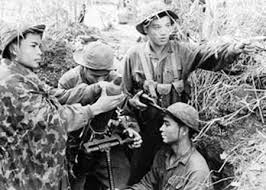
During this time, the soldiers' diets had improved. Our breakfast usually consisted of a loaf of bread with boxed milk. The bread was shipped from Tay Ninh. Lunch and dinner were still dried rice, but it was cooked (with dried rice, we usually just poured water from the rice paddies over it, waited a while for it to swell, and then ate it). Taking advantage of the lulls in the battlefield, we divided up the task of catching fish using various methods, sometimes even using grenades. If we had leftover fish, we dried them to eat later.
However, we and the enemy remained locked in a stalemate. The boundary between our unit and the enemy was only a few hundred meters. Both sides could still see each other, the battlefield was never silent, and death always lurked from artillery shells, sniper fire, and landmines.
In those circumstances, we witnessed my squad leader, a soldier from the 74th Regiment, who had been fighting the enemy since the early days of the campaign and had been slightly wounded twice, being so cautious that it was almost laughable. On our front lines, bullets were flying back and forth, both targeted and random. While we were moving normally from one tree to another, he would crouch and run "whoosh" from one tree to another.
In my company, from the commanders down to the soldiers, we were a close-knit group, regardless of age or rank. We cared deeply for each other, ready to share both joys and sorrows, and willing to live and die for one another. This was only possible in the harsh conditions of war, where we ate together in the morning, but by dinner some were missing, and we might never see each other again. To overcome ourselves and the brutality of war, we always kept in mind that bullets should avoid hitting people; moreover, even if the enemy shot, they might not hit us, and even if they did, we might not die—to put it more poetically, we would die a miserable death, but we would live a glorious life.
At noon on July 10th, Mật, the strongest man in the company, was hit in the heart by a stray bullet while bathing in the bushes. Death came so unexpectedly that he didn't have time to say a word.
A few days later, the squad leader of the 12.7mm squad, belonging to my company, was captured alive by the enemy. At dawn that day, his squad was assigned to provide cover for the sniper squad at a high outpost. The squad leader led the way, his AK rifle slung over his shoulder. The others followed, some carrying the barrel, others the mount, and some carrying ammunition. Suddenly, Pol Pot's soldiers emerged from the bushes, knocked the squad leader down, and others fired indiscriminately at the squad. The men scattered, using grenades to fight back, but due to the element of surprise, lacking submachine guns, and only having a few grenades, they were unable to save the squad leader. That night, they hung him from a tree, doused him with gasoline, and burned him alive. In the Cambodian war, Pol Pot's soldiers never kept prisoners. Our soldiers, if captured, were eventually killed in agony. That's why, on the front lines, wherever we went and whatever we did, we always carried a hand grenade with us, considering it our last resort, determined not to let it fall into the enemy's hands.
In August 1978, the company was reinforced with over a dozen new soldiers, 78th-generation recruits. My squad received two young men, Hung and Manh, from Nghe An province, both small, lightweight, and with a scholarly appearance. I was assigned to mentor and guide them. From then on, they followed me everywhere, like shadows. By mid-August, we had fought several battles together. For small battles, we would infiltrate enemy lines from 8 or 9 PM, and start fighting at 5 or 6 AM the next morning. For larger battles at the Division or Corps level, on fine days, our unit would not only use tanks and armored vehicles for coordinated attacks, but also our aircraft would drop bombs on enemy positions.
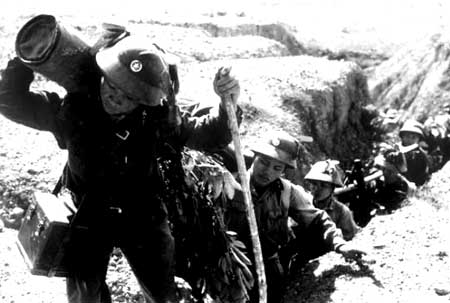
August 5th, 1978, was a lucky day for me, Hung, and Manh. It was around 5 PM, and the sky was already darkening. My unit was ordered to move closer to the enemy position to attack the next morning. As the three of us walked along a path through a dry, grassy field, I went ahead carrying over a dozen mortar shells. Hung and Manh followed, also carrying a similar load. Perhaps because they weren't used to carrying heavy loads, their shoulders were swollen. So I had to slow down and wait for them. Suddenly, two cooks carrying a large military cooking pot ran past me. Just five or six steps past me, there was a loud "Boom!" – the mine exploded. Looking up, I saw the two men fall in different directions, covered in blood. The one in front had a piece stuck in his neck, blood gushing out. Unintentionally, the two men and the cooking pot had shielded the three of us.
By the end of August 1978, in my unit's direction, the enemy had been pushed back and regrouped at the foot of the Playxớt bridge, across from the town of Svayrieng, but they put up fierce resistance and launched many counterattacks in an attempt to regain control of the territory. On our side, we also suffered heavy casualties.
Late afternoon on August 25, 1978, was an unforgettable day for us. The company command assigned me, along with Hung and Manh, to transport six crates of ammunition to the 12.7mm machine gun squad stationed at the crossroads. With my experience, I reminded Hung and Manh to each tuck a US-made hand grenade into their waistbands. Before we left, Vien, the company's political officer, carefully reminded me to bring my AK rifle, but I thought it would be cumbersome; besides, there was nothing to worry about at our outpost, so I didn't bring it. Later, I regretted it deeply. Then the three of us went to the outpost. A few hundred meters from the village, we encountered several T54 tanks and 37mm cannons lined up on either side of the road, firing towards the enemy. Convinced the enemy was still far away, we leisurely walked past them. After another 200-300 meters, we saw two reconnaissance soldiers covered in mud on my right. Later we learned that it was our forward outpost. After passing them by about 100 meters, it was already getting dark. As we continued on and saw the outpost in the middle of the road as indicated by the company command, about 30-40 meters away, Mạnh suddenly said to me in a trembling voice, “Brother, Miên!” Startled, I stopped to listen; it was indeed the voice of a Khmer soldier. I shouted to run. We ran back a few meters, then 12.8mm rounds came chasing us, the sound of exploding shells accompanied by the wind whipping around us. I remember clearly, I quickly jumped into the ditch on the left side of the road, Hùng and Mạnh followed. The sound of shells hitting the palm trees along the roadside was deafening. Our greatest fear at that moment was that they would chase us; we would have difficulty escaping, as we had no weapons and only three grenades, and the two of them lacked combat experience. Hiding behind a palm tree, I calmly observed and pulled the pin on a hand grenade, simultaneously giving an order: "Hand all the grenades to me." Then, I let the two boys retreat first, while I followed behind to keep watch and intercept. The three of us dragged three crates of ammunition through the thick muddy ditch, while the enemy continued firing in pursuit. After only about a hundred meters, I was exhausted, and the two boys were probably even more shaken and tired. Realizing our retreat was too slow and the two boys seemed to be running out of strength, and still worried about being pursued, I decided to bury the three crates of ammunition in the mud. Each of us carried one crate on our shoulders, running along the row of palm trees. Hung ran ahead, while Manh occasionally slowed down as if waiting for me. Fortunately for us, the trees along the roadside provided cover, and the enemy didn't dare pursue us. By the time we reached the unit, it was completely dark. I reported to the company command that our 12.7mm machine gun had been captured by the enemy and replaced with their 12.8mm machine gun. Fortunately, the three of us weren't captured alive. I recounted the incident. Hearing this, the Political Commissar, Vien, became furious. He immediately called the battalion commander on the radio, his voice filled with anger: "Is this how you do your job? You almost killed three of my soldiers!"
As National Day approached, we were given extra canned milk, beer, and five packs of American Rubi cigarettes. Without prior notice, on the night of August 28, 1978, my unit was ordered to hand over the outpost to a friendly unit, then board a Reo truck (a large American transport vehicle) to return to Tay Ninh town for a holiday celebrating September 2, 1978. The following afternoon, we played soccer with the local youths. Having not played soccer for a long time and with our stamina depleted, we lost without scoring a single goal.
On the morning of August 30, 1978, I took the opportunity to visit several families in Cao Xa Hamlet, where we had been sheltered during our training. First, I went to Kieu Trinh's house. I greeted them loudly: "Hello, Uncle and Aunt." Kieu Trinh's father looked at me suspiciously and asked, "Is that Quang?" He was startled by my sudden appearance. After a few seconds, he stepped forward and hugged me tightly, feeling me all over. At this point, I heard her crying louder and louder. After greeting everyone, I went closer to her; she was still crying, her eyes filled with tears. Through her, I learned that this was the second time she had cried because of my physical presence. She told me that about a month ago, a unit from Cambodia had returned, and she had inquired about me and learned that I had been killed in action. Hearing that news, not only she, but many others had also wept for me. Her family and the families I visited all invited me to stay for a meal. In return for everyone's kindness, each of my families ate a little and drank half a glass of wine, then returned to the unit to be on time for roll call.
Normally, we would have had a few days off on September 2nd, 1978, in Tay Ninh town, but because the regiment that took over our position the day before had lost the outpost, on the night of August 30th, 1978, at around 10 PM, we were picked up by Reo trucks and taken to Cambodia.
After September 2nd, 1978, we launched a major corps-level offensive. A few days later, we recaptured the territory seized by Pol Pot's forces at the end of August and gathered dozens of fallen soldiers. We were also saddened to learn that among those fallen were several wounded soldiers who had been captured by the enemy and later had their limbs amputated, causing them to die slowly.
Around September 14th or 15th, 1978, I was summoned by the company command to be assigned as the Chief Administrator, Deputy Company Commander in charge of logistics and matters concerning wounded and deceased soldiers of the unit, replacing a Lieutenant - Chief Administrator who would be transferred to become the Commander of another company.
Upon hearing the news, I felt a mixture of joy and apprehension. Joy because my promotion was so rapid, beyond my wildest imagination. Joy because from now on I wouldn't have to face the smoke and fire of the battlefield. But I was also very worried because I didn't know how I would handle the job ahead, which would be taking care of dozens of people for the first time. Furthermore, I felt a pang of sadness at having to leave behind my comrades who had shared life and death with me.
Following orders from the company command, I met with the Chief Administrator for a few dozen minutes. I briefly assessed the unit's food, weapons, ammunition, and the number of wounded and deceased soldiers. During this meeting, I learned that the unit had over 60 wounded and fallen soldiers, exceeding both the initial and current troop numbers. Upon hearing that I was the Chief Administrator, several squad leaders approached me, introduced themselves, and politely asked me to store some items for them. I didn't know what they would send, but I suspected they would be sending me valuable items they had collected.
A few days later, because the unit's affairs hadn't been settled yet, the former Chief Administrator hadn't returned to his new unit, so I went back to my platoon's outpost.
On the night of September 25, 1978, at 8 PM, we received orders to infiltrate and cover the enemy. The enemy was positioned in the village ahead, surrounded by rows of palm trees. At this time, the moonlight made our journey easier. However, because it was still light, we were sometimes spotted by the enemy, who fired relentlessly, forcing us to crawl and maneuver to avoid their bullets.
Around 5:30 AM on September 26, 1978, as dawn broke, we spotted enemy figures lurking in the village. After our 105mm artillery and tank fire opened fire on the enemy position, we surged forward across the knee-deep flooded fields, advancing and firing at them. We were supported by M113 armored vehicles. The rapid-fire 12.7mm machine gun on the vehicle churned up the enemy's position with a barrage of gunfire. After a few minutes of regaining our composure, the enemy's 105mm artillery, 75mm anti-aircraft guns, and mortars unleashed a fierce barrage on us. Enemy shells exploded with a deafening roar all around us. Columns of earth, water, and thick black smoke rose high into the air; at times, we didn't know where to hide. All we knew was that upon hearing the "whoosh, whoosh" sounds above, we would lie down or dash into the craters left by the exploding shells. As I was crossing the rice paddies, I suddenly heard a whooshing sound above my head. I dashed down, but before my body touched the water, there was a loud bang—the shell exploded. Mud and dirt covered me, my right hand and right leg went numb. Blood gushed from my right hand. After the explosion, I tried to stand up, but fell down again. Hung and Manh rushed up to help me up and supported me. Standing up, I managed to see the crater left by the 105mm artillery shell to my right, only about 3 meters away. This shell wounded four people in my squad: the squad deputy, myself, Hung, and Manh. When the shell exploded, the squad deputy was about ten meters away from me, but he was the most severely wounded, losing both legs. I later heard that he died. Compared to me, Hung and Manh were less seriously injured, each with a few shrapnel fragments. Hung's biggest wound was in his right shoulder, while Manh had a shrapnel fragment lodged in his right nipple. Upon hearing that we were injured, the men in the squad rushed over to bandage our wounds. Looking at my injuries, one of them even said, "Congratulations, you've survived and will be going home."
After having our wounds temporarily bandaged, we were taken to the regiment's field surgical station. By noon, the number of wounded soldiers at the station had reached several dozen, lying scattered around. There, the doctors examined me and re-bandaged my wounds.
At 3 PM that day, a helicopter took us back to Tan Son Nhat Airport, and then a car took us to Hospital 175 in Ho Chi Minh City. Besides me, Hung, and Manh, I also saw three stretchers hanging in the middle of the plane, each carrying a seriously wounded soldier.
Since then, I have emerged from the flames of war and returned to normal life, but I have never forgotten the faces of my comrades and the martyrs who fell on the Southwestern front. It is thanks to their sacrifice and protection that I have been able to live to this day and have the opportunity to recount these stories.
Hanoi, Autumn-Winter 2015
buixuanquang58@yahoo.com.vn
Author:Bui Xuan Quang
Newer news
Older news

