
In the late 1980s, journalism in Vietnam flourished with over 300 newspapers and magazines, and dozens of radio and television stations from the central to local levels. The image of the proactive, dynamic reporter, always traveling, knowing a lot, meeting many people, and bringing new information to the public, left a deep impression on the minds of many generations of students and was the dream of many boys and girls from their school days.
However, before 1990, in Vietnam there was only one institution (within the Party school system) that trained journalists and editors – the Central Propaganda School (now the Academy of Journalism and Communication). Fortunately for me and my peers, the Journalism Faculty (at the University of Hanoi) was established in the same year we took our university entrance exams.
On October 12, 1991, the opening ceremony of the first course was solemnly held in the main lecture hall at 19 Le Thanh Tong Street. For the first time, we had the opportunity to meet many professors from the department and the university, many journalists, and leaders from major media organizations… and to listen to the heartfelt welcoming speech by the Head of the Department – Professor Ha Minh Duc, whom we had long admired through his numerous theoretical and critical writings. His insightful sharing about journalism, a profession requiring both high intellectual capacity, broad knowledge of culture and society, and proficient professional skills, not only helped us better understand our future careers but also demonstrated his strategic vision, shaping the department's training philosophy, a philosophy that has been established and developed throughout to this day.
Journalism is a field of study encompassing a wide range of social science knowledge, including politics, sociology, law, literature, etc. Therefore, Professor Duong Xuan Son "recruited and nurtured talented individuals," inviting leading experts, scientists, and journalists in Vietnam to teach us. Besides Associate Professor Duong Xuan Son and Professor Tran Quang, who joined the department from the beginning, Associate Professor Do Xuan Ha, Dr. Doan Huong, Associate Professor Vu Quang Hao, Associate Professor Dinh Van Huong, Associate Professor Nguyen Thi Minh Thai, and others were successively invited by Professor Duong Xuan Son, creating the first golden generation of leading experts in journalism, culture, language, and history, who wholeheartedly dedicated themselves to teaching journalism students. In addition, thanks to Professor Duong Xuan Son's scientific prestige and extensive network, the first generations of students in our department learned from and received knowledge from renowned visiting professors such as Professor Do Quang Hung and Professor Tran Quang Hung. Professor Phuong Luu, Associate Professor Nguyen Thien Giap, ... experienced journalists such as Do Phuong, Truong Duc Anh, Tran Cong Man, Quang Dam, Hoang Tung, Le Ba Thuyen, Do Quang, ... and even poets and writers whose works have touched the hearts of generations of readers, such as poets To Huu and Huy Can, and writers Nguyen Ngoc and To Hoai, ... For the most part, Professor Ha Minh Duc personally brought these experts to the class. Later, when we stayed on as faculty members, we learned that Professor Ha Minh Duc had personally invited many people to share their knowledge with us, simply out of respect for his professional reputation and enthusiasm.
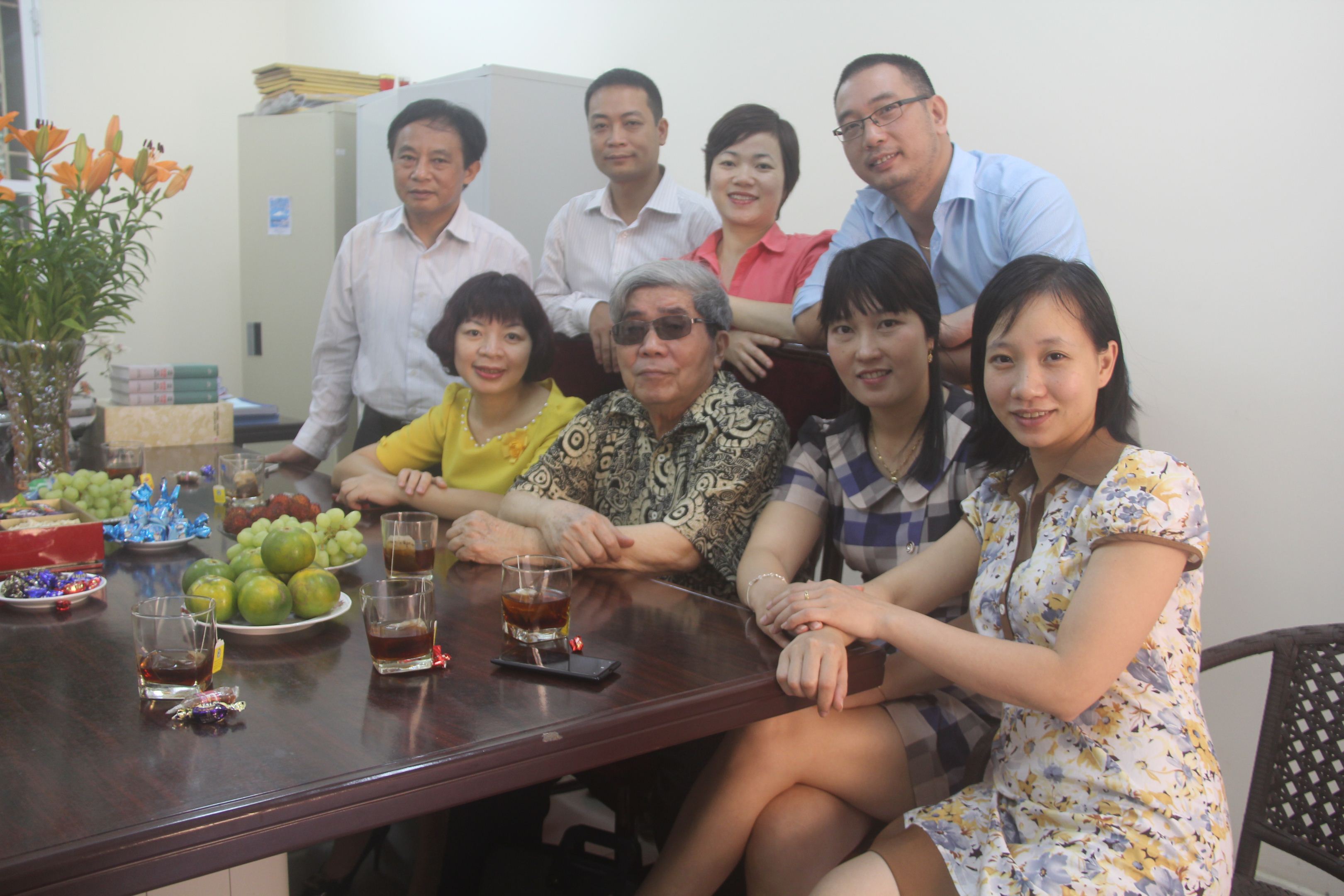
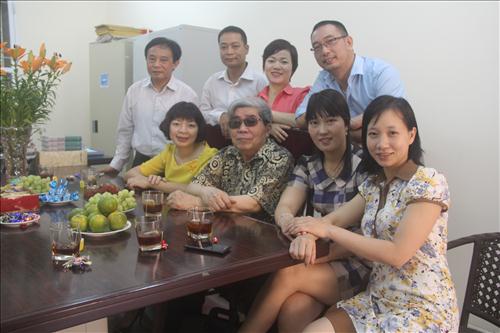
Professor Ha Minh Duc poses for a photo with faculty and staff from the Faculty of Journalism and Communication (Photo: Tran Minh)
Our class was personally mentored by Professor Ha Minh Duc. The five most outstanding students from that first K36 journalism class were retained by him as faculty members of the department, two of whom are now Associate Professors and Doctors of Philosophy. Nearly 60 students from my class have spread out to various media organizations, many now holding key leadership positions in important media outlets such as Vietnam Television, Vietnam Radio, Vietnam News Agency, Nhan Dan Newspaper, Vietnam Women's Newspaper, Customs Newspaper, etc. Every time we have a class reunion, we reminisce about old times, and stories about Professor Ha Minh Duc are always the focal point of our memories from our journalism school days. On the path of "seeking guidance from a master," not everyone is as fortunate as we were to be students of such erudite, talented, and compassionate professors as Professor Ha Minh Duc.
Professor Ha Minh Duc became famous at a very young age. He was one of the first to write research books on Nam Cao, and one of the first to introduce the concept of "realist writer," stating that Nam Cao was an outstanding realist writer of modern Vietnamese literature. His book, "Nam Cao - Life and Works," which attracted attention and high praise from researchers, was published when he was only twenty-six years old. A series of later works by Professor Ho Chi Minh, such as "Poetry and Some Issues Concerning Modern Vietnamese Poetry," "Writers and Works," "Time and Pages," "Searching for Artistic Truth," "Literature - Talent and Style," "C. Marx, F. Engels, V.I. Lenin and Some Issues of Literary Theory,"... have provided readers with a diverse and vivid view of a brilliant period of Vietnamese literature, while also presenting the most fundamental tenets of literary theory, which have had a significant impact on the country's literary activities. In particular, Professor Ho Chi Minh devoted much time and effort to researching Ho Chi Minh's poetry and prose with his treatises: "President Ho Chi Minh - A Great Poet of the Nation," "Literary Works of President Ho Chi Minh," and "Ho Chi Minh's Journalism." These works not only explore President Ho Chi Minh's conception of poetry, literature, and journalism, but also delve into analyzing the aspects that constitute Ho Chi Minh's style, and sequentially summarize them. In summary, the assessment is quite comprehensive, objective, and serious, encompassing the entire literary, poetic, and journalistic career of President Ho Chi Minh over nearly 20 years. His efforts, dedicated research, and immense contributions have been recognized through the State Prize for Social Sciences and Humanities Research and the Ho Chi Minh Prize for Social Sciences in 2012.
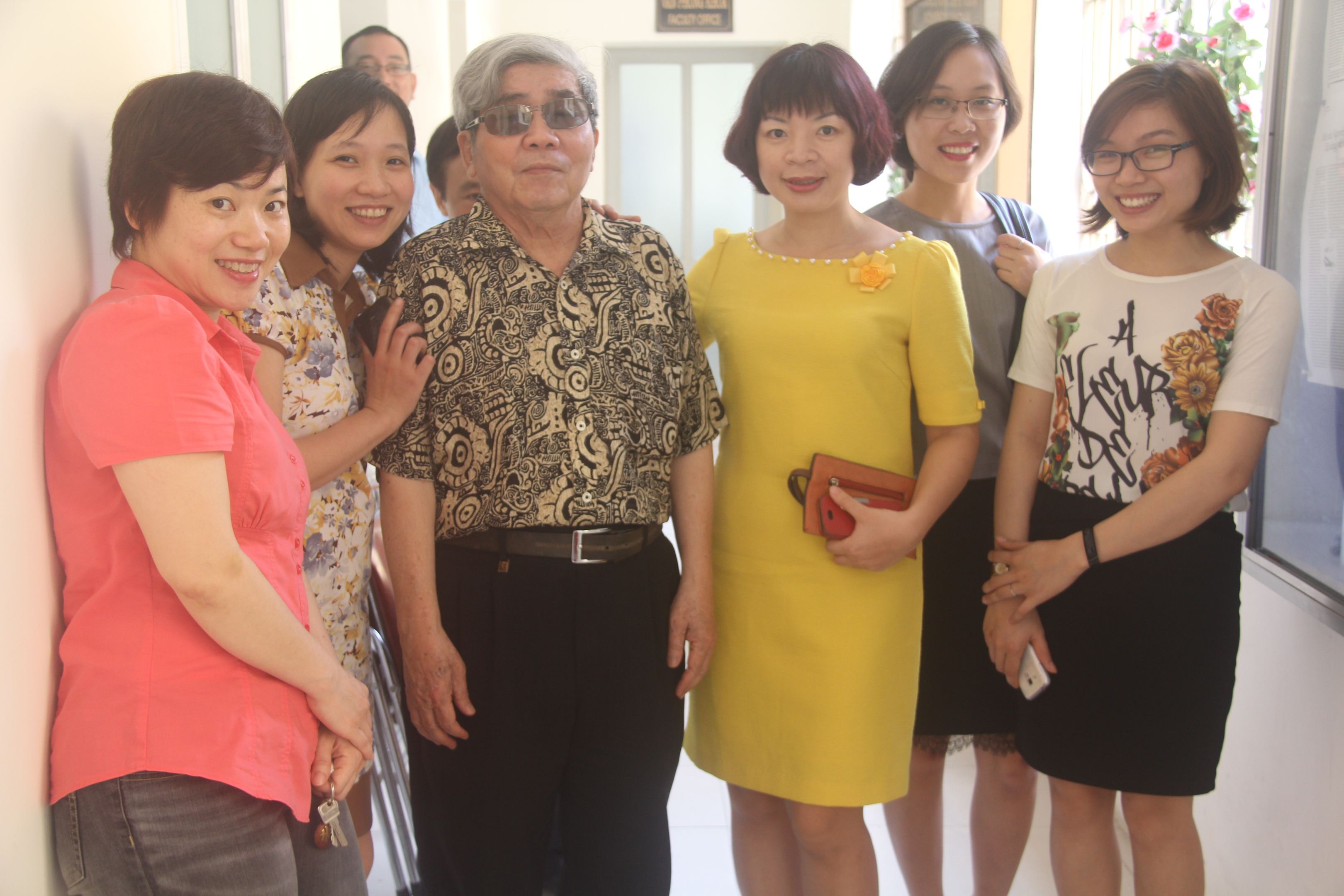
Photo: Tran Minh
The knowledge that the teacher carefully accumulated, synthesized, and systematized in those specialized works and research studies was wholeheartedly imparted to us by him in a witty and gentle way, through vivid and relatable examples.
Beyond researching and teaching literature, Professor was also the author of highly realistic essays and emotionally rich poems. He wrote essays about the world of rickshaws, essays about his colleagues such as "The Professor and the Hermit," "Musings at the City Gate," etc. He traveled to America and published the essay collection "Three Times in America," he went to Russia and wrote "Russia - Golden Autumn and Endless White Snow," and he went to France and wrote the essay collection "Paris - Two Autumns Reunion"... Many of his essays appeared in newspapers, serving as practical, relatable, and vivid lessons for us journalism students when studying "Literary Essays and Journalistic Essays."
Journalism is a science, closely linked to research and development. Therefore, Professor Ha Minh Duc designed the research direction for the department, with many books that he edited and directly wrote, such as "Time and Witnesses" (3 volumes), "Journalism and the Issue of Population and Family Planning," "Journalism - Theoretical and Practical Issues," etc. Many of these books later became the department's annual publications, introducing readers to research papers by faculty members, experts, and visiting professors, and shaping the brand of the Department of Journalism and Communication in the research community and the public.
The newly formed Faculty of Journalism had a small staff, but all were highly individualistic, sharp-witted, and even unconventional intellectuals who came to the faculty from diverse backgrounds. Professor [Name] was not only a source of moral support and one of the main pillars in the faculty's professional field, but also a fair, compassionate person who reconciled differences and even opposing viewpoints, uniting the faculty members under one roof. Even now, the tradition of solidarity, mutual support, consensus, and unity remains the fundamental strength that has helped the Faculty of Journalism (now the Faculty of Journalism and Communication) overcome many difficulties and challenges, fulfilling all its responsibilities to the university and society.
He was a renowned literary critic and researcher, a poet and writer whose works touched the hearts and emotions of readers. He was a fair and encouraging manager, supportive of his colleagues and subordinates. Above all, he was a knowledgeable, dedicated, and humble teacher who left countless generations of students with an exemplary role model of a teacher.
On the occasion of Professor's 80th birthday, the faculty and students of the Journalism and Communication Department wish him continued good health and many more works of theory and literature.
Author:Assoc. Prof. Dr. Dang Thi Thu Huong
Newer news
Older news

