
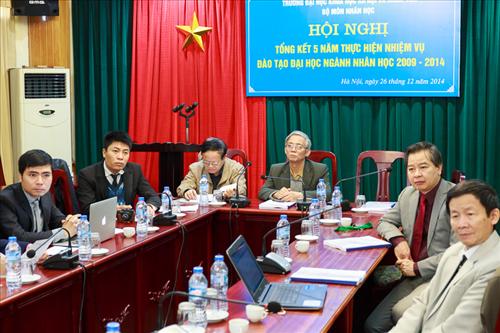
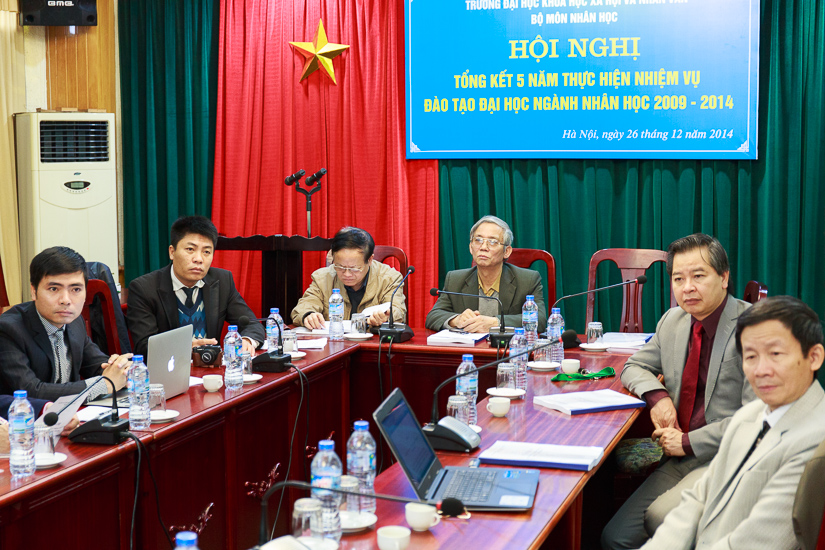
Photo: Jackie Chan
Anthropology Training: Initial Successes
Anthropology has a history of research and training spanning hundreds of years at universities worldwide, but in Vietnam, it was only introduced as a training program in 2003 and officially included in the Ministry of Education and Training's list of training majors in 2009. Anthropology in Vietnam is an evolution of the Ethnology specialization within the History field, expanding its research scope from issues of ethnic groups and ethnic cultures to a broader framework and vision of a comprehensive anthropological science that studies human beings in diverse settings, from rural communities to urban areas, connecting biological aspects with cultural, economic, and social aspects in the present and past, with both fundamental and practical research objectives.
Currently, Anthropology is taught at three institutions: the Department of Anthropology at the University of Social Sciences and Humanities (Vietnam National University, Hanoi), the Faculty of Anthropology at the University of Social Sciences and Humanities - Vietnam National University, Ho Chi Minh City, and the Academy of Social Sciences (Vietnam Academy of Social Sciences). Of these, the Department of Anthropology at the University of Social Sciences and Humanities (Vietnam National University, Hanoi) is the only unit in Vietnam that systematically offers Anthropology training from bachelor's to doctoral levels. After five years of training in Anthropology, the Department has enrolled six bachelor's degree cohorts, two master's degree cohorts, and one doctoral cohort. Two of the bachelor's degree cohorts have already achieved high graduation rates, with many graduates securing employment in various organizations.
Enhance the promotion of the field of study.
The five-year summary report on the implementation of the Anthropology undergraduate training program by the Department of Anthropology emphasizes that, upon graduation, Anthropology graduates possess the necessary competence and skills to work in various fields of the State and society, such as education, training, research, management, development, relief, poverty alleviation, conservation, museums, and the arts.
However, in order for Anthropology graduates to access more job opportunities, the Department and the University need to continue promoting Anthropology and the professional capabilities of those with an Anthropology degree so that local authorities, the public, and society in general have a better understanding of Anthropology and the professional capabilities of those with a bachelor's degree in Anthropology.
A survey of information on civil servant recruitment websites in Vietnam in 2014 (http://tuyencongchuc.vn)choAcross the country, it has been observed that many central agencies have officially announced recruitment for individuals with university and postgraduate degrees in Anthropology, including state agencies such as the Committee for Ethnic Minorities; universities, for example, Hanoi Medical University; research institutes, such as the Institute of Ethnology, the Institute of Psychology, the Institute of Sociology, the Institute of Human Studies; museums and some publishing houses; and international organizations and non-governmental organizations...
However, many sources indicate that at the local level, numerous positions within departments, agencies, and lower levels do not include candidates with anthropology degrees in their recruitment lists, even though the job descriptions are very suitable for the qualifications, knowledge, and skills of those with anthropology degrees. Specifically, some fields where anthropology graduates could excel but are not yet considered for recruitment include: culture, sports, tourism, labor, war invalids and social affairs, ethnic groups, and religion…
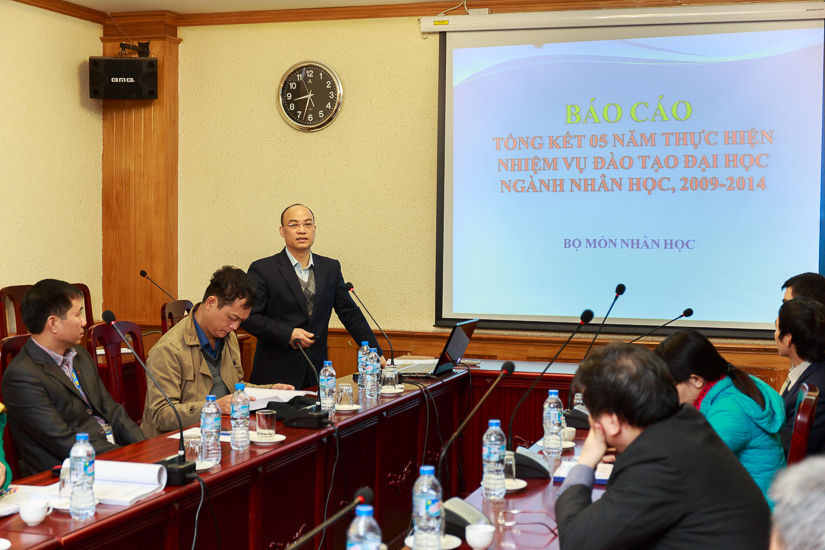
Photo: Jackie Chan
Commenting on this issue, Associate Professor Pham Quang Minh (Vice Rector of the University of Social Sciences and Humanities) affirmed that Anthropology has a very broad research scope in Vietnam. Furthermore, Anthropology is an interdisciplinary science, capable of connecting many other fields within and outside the social sciences and humanities, thus offering significant prospects and job opportunities. The problem is that in Vietnam, society and students still seem to lack a deep understanding of this field, and haven't yet grasped the potential job positions graduates can take on. Therefore, the Department and the University will need to continue promoting communication activities to attract students and publicize graduates, so that society can fully appreciate the value and significance of Anthropology and the career opportunities available to those with an Anthropology degree.
From another perspective, Associate Professor Dr. Nguyen Van Chinh (Department of Anthropology, University of Social Sciences and Humanities) believes that to expand the influence of the field, it is necessary to promote training linkages and research cooperation between the Department of Anthropology and other units outside the university, especially universities, research institutes, and central and local government agencies that have a need for human resources in the field of Anthropology.
Improving the quality of training to meet practical requirements.
Another important issue is that, in the vision of a high-quality, reputable training program that can compete with training programs in other countries in the region, the core principle must be to continuously improve the quality of training, meeting the practical demands of society and international integration.
Right here in Hanoi, the capital city, job postings are published weekly by numerous international organizations and non-governmental organizations for various positions that match the expertise and skills of anthropology graduates. However, to have a better chance of accessing these highly competitive yet promising career opportunities, students need to continue to improve their English skills and gain other necessary experience.
MSc. Dinh Viet Hai (Deputy Head of Training Department, University of Social Sciences and Humanities) suggested that a thorough survey of current and former students of Anthropology is needed to clarify: what path led them to Anthropology? How have they learned, changed, and grown through Anthropology? What do they see as needing improvement in training activities? These will be important foundations for further adjusting the training program, improving quality, both in professional skills and foreign languages, to better meet the needs of social practice.
Author:Thanh Ha
Newer news
Older news

