
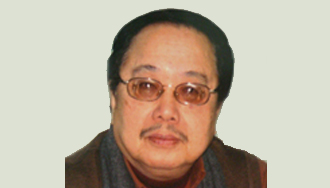
Associate Professor Bui Phung was born on March 21, 1936, in Chau Cau village, Thanh Liem district, Ha Nam province, and passed away on September 1, 2007, in Hanoi. The Bui Chau Cau family is a scholarly lineage with many generations achieving academic success, and their achievements were personally approved by Emperor Tu Duc.
"The number one family in the world"
"Four generations living together, great scholarly achievements"
This family has produced distinguished scholars such as Bui Ky, Bui Bang Doan, and others...
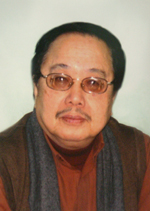
Associate Professor Bui Phung - a renowned lexicographer, Head of the Vietnamese Language Department, Hanoi University (1990-1994).Throughout his career as an educator, translator, and dictionary compiler, he remained closely associated with the Department of Vietnamese Studies, leaving behind many valuable scientific works.
Associate Professor Bui Phung, due to family circumstances, lived with his paternal grandparents from a young age. His paternal grandfather, Bui Dong, was an honest and upright official. During his official career, he was transferred to many places, from district chief to prefect... and then governor of Thai Nguyen. Later, he resigned from his position and settled in Ha Nam. During the resistance war against the French, he was elected Chairman of the Viet Lien Ha Nam. Because Bui Phung followed his grandfather, he did not attend any fixed school in his childhood. Later, when he returned to Hanoi, he studied at Nguyen Trai School and Chu Van An School before being admitted to the Faculty of Literature, Hanoi University (now the University of Social Sciences and Humanities, Vietnam National University, Hanoi). He graduated in 1959 and was retained by the university as a lecturer in the Vietnamese language department, later the Faculty of Vietnamese Studies, until his retirement. Born into a scholarly family and tutored by his grandfather, who was knowledgeable in both Chinese and French, he was studious and dedicated to languages from a young age. In North Vietnam during the 1950s, when English was underdeveloped (if not outright discriminated against), he was guided by his uncle, Bui Y, a teacher (one of the first people in North Vietnam to compile an English-Vietnamese dictionary), to self-study English.
.jpg)
Associate Professor Bui Phung's work "Vietnamese-English Dictionary" was awarded the State Prize for Science and Technology in 2000.
He was one of the first three graduates of the first cohort of the Faculty of Literature, Hanoi University, who were assigned to the Vietnamese Language Department, the predecessor of today's Faculty of Vietnamese Studies and Vietnamese Language, to teach Vietnamese to international students.
He once wrote: “After graduation, most of my friends – who were students from the old city – were assigned to work far from the capital. Only a few remained in Hanoi. I was fortunate enough to be retained at the university, assigned to the Vietnamese language department for foreign students. The work at that time was not highly regarded and seemed to have no glory (according to the perception of most of the teaching staff at that time) because it was just teaching Vietnamese, not literature or anything like that. That is also why some ‘intellectuals’ at that time did not dare to say they were in the Vietnamese Language Department.”
Yet, despite my immense stature, I have accomplished many things that have benefited the country, the university, and my department—I wouldn't dare say that—but they have benefited me: I can affirm this. I have seen the Vietnamese Language Department grow; I even led the Department for a four-year term. The Department has undergone a transformation and is sometimes the envy of other departments in the university, now the University of Social Sciences and Humanities, for many reasons...” (Page 12,30 Years of the Department of Vietnamese Language and Culture for Foreigners(Vietnam National University Publishing House, 1998)
Throughout his career as an educator, translator, and dictionary compiler, he was closely associated with the Department of Vietnamese Studies, leaving behind numerous scientific works. The Vietnamese language textbook for foreigners (often referred to as Textbook K, 1987), for which he was entrusted by the Ministry of Higher Education and Vocational Training, the University, and the Department as chief editor, truly marked a significant milestone in the compilation of Vietnamese language textbooks for foreigners in Vietnam. Following this communicatively oriented textbook, subsequent books by other authors followed this approach. During his tenure as Head of the Department of Vietnamese Studies, from 1990 to 1994, he also served as chief editor of this textbook.Vietnamese for foreigners(Education Publishing House, 1992) was very popular.
Not only did he teach Vietnamese to international students, but he also taught English to Vietnamese people. In some families, both generations studied English with "Uncle Phung." Between 1980 and 1985, he trained many young lecturers in English in the Vietnamese Department. Through these English lessons, the young teachers were able to communicate in English before the reforms. From those English classes, they also learned from him methods of teaching a foreign language, how to teach learners to speak and understand a language, and simultaneously absorbed from him the cultural knowledge of the previous generation of intellectuals that later generations could never possess.
In the field of translation, he also left many important marks. Literary translation brought him endless inspiration, so, in addition to teaching Vietnamese and English, he was a renowned translator. Even at the young age of twenty, he and his uncle, teacher Bui Y, translated famous plays such as...Macbeth, Hamletby William Shakespeare. And many of his translations are well-known, such asShogunby James Clarke,A Woman of Substanceby Barbara Taylor Bradford,Godaanby Indian writer Munshi Premchand...
However, what most generations of Vietnamese people learning English, or foreigners who know English and are learning Vietnamese, remember him for most is perhaps his great lexicographer. He wrote dozens of English-Vietnamese and Vietnamese-English dictionaries of varying sizes, but his monumental "Vietnamese-English" dictionary, which was awarded the First State Prize for Science and Technology in 2000, is truly a landmark in the bilingual dictionary system in Vietnam.
.jpg)
The late Associate Professor Bui Phung and the author of this article - Associate Professor Dr. Nguyen Thien Nam (Head of the Department of Vietnamese Studies and Vietnamese Language, University of Social Sciences and Humanities, Hanoi)
This Vietnamese-English dictionary was first published by Hanoi University Publishing House in 1978. Through 30 reprints, the number of entries has increased from 15,000 to over 350,000, with 2,301 pages. This dictionary fully meets the needs of a wide range of users in almost all fields: culture, art, science, economics, and daily life. At the time this dictionary received an award, and after several more reprints before the author's death, and even to this day, it remains the Vietnamese-English dictionary that is considered by the scientific community to have accurate definitions, a rich coverage of vocabulary, a blend of classic and modern elements, and the ability to best meet the needs of users. It is considered the largest and most useful Vietnamese-English dictionary in Vietnam and the world.
He based his work on the isolating characteristics and analytical nature of the Vietnamese language to compile and provide appropriate English equivalents. In the preface to the 2000 edition, he also stated: "The purpose of a dictionary compiler is not to establish rules and regulations, but simply to record and indicate how some words have been used and are currently being used" (page 9) and "It is not enough to simply provide"plane"without"aircraft", "helicopter"without"helicopter"(page 10).
Therefore, we can see that there is a word.way(ling.) isolate, p. 221, also found fromfreestandingIsolating, p. 692 (a term commonly used in linguistics). We can also see modern economic terms such as:atrophy(econ.) low inflation,deflation(currency or economy) deflate, disinglation, deflation, p. 1889. Those interested in classical literature may also find this entry.both laughedlaugh (loud/boisterously); shout with laughter;They looked at each other and smiled.(Kieu) eyes locked slang, p. 218. Common slang terms are also included by the author, for example:couple(slang) side;match with...side with..., page 218.
In addition, he carefully selected and included many local words from the North, Central, and South of Vietnam.
In terms of application, the dictionary has been widely used both domestically and internationally, making a significant contribution to Vietnam's integration and international exchange in many fields such as education, research, politics, economics, science, culture, and art. There was a period when computer dictionaries were not as developed as they are now, and this Vietnamese-English dictionary was present on most bookshelves of Vietnamese scientists and international scientists interested in Vietnam, as well as in the libraries of universities of all sizes around the world. Later computer dictionary developers basically based their software on the author's original dictionary.
Widely used in Vietnam, the "Vietnamese-English Dictionary" was also licensed for printing by Longman Publishing in the UK, and the University of Hawaii (USA) incorporated it into computer software… contributing to cultural exchange, foreign trade, diplomacy, and the learning of English and Vietnamese.
In the introduction to the 1995 edition, reprinted in this book, Dr. Jayn Werner, Department of Political Science, Long Island University and Columbia University, observes:"This is a quick, easy-to-use, and highly practical dictionary. It is compiled for both beginner students and experts in Vietnamese culture and civilization.”.
It can be said that his Vietnamese-English dictionary has made significant contributions to Vietnam's integration with the world, helping to raise the intellectual level of the people, especially after the Doi Moi (Renovation) period, and even to this day, no other Vietnamese-English dictionary has had a greater impact in terms of scientific value and practical application.
Eight years have passed since he left this world, but the works he left behind are truly monumental: Vietnamese language textbooks for foreigners that paved the way for a new trend, classic translations with seemingly impeccable Vietnamese writing style, and dictionaries that, for a long time, would have made learning English much more difficult for Vietnamese people and Vietnamese much more challenging for foreigners. Bui Phung truly deserves the title of a brilliant educator and a renowned lexicographer.
Hanoi, June 2015
|
ASSOCIATE PROFESSOR BUI PHUNG
+ Affiliation: Department of Vietnamese Language, Hanoi University, now the Department of Vietnamese Studies and Vietnamese Language, Faculty of Social Sciences and Humanities, Vietnam National University, Hanoi. + Management position: Head of the Vietnamese Language Department, Hanoi University (1990-1994).
TextbookVietnamese for foreigners(2 volumes) (editor-in-chief) Published by the Ministry of Higher Education and Vocational Training, Hanoi, 1987. TextbookVietnamese for foreigners(Editor), Education Publishing House, Hanoi, 1992. Nearly 100 works have been published: English-Vietnamese dictionary, Vietnamese-English dictionary, American-Vietnamese dictionary, various English language reference books, totaling nearly 35,000 pages.
+ First State Award for Science and Technology in 2000 for the workVietnamese-English Dictionary (1978). |
Author:Assoc. Prof. Dr. Nguyen Thien Nam, Bui Vu Minh

