

This page commemorates the 80th anniversary of the school's tradition and 30 years of development.University of Social Sciences and Humanities
In today's era, the development of science and technology has profoundly transformed the global economy, influencing all aspects of society, including international relations. Every nation recognizes that the development of science and technology is the most effective tool for socio-economic development and for consolidating its position in economic and political competition. The development strategies of all countries are based on the development of science and technology, with the core element being mastering the most essential scientific and technological achievements for their own development. A fierce race is underway among developing countries to master high-tech fields and narrow the gap with developed nations. This has led to an explosion of science and technology activities in the 21st century, promoting the division of labor and international cooperation, resulting in a situation of interdependence and mutual counterbalance among nations.
Furthermore, governments and large corporations are investing enormous sums in research and development (R&D) to acquire new technologies and products, thereby generating substantial profits and gaining a competitive advantage globally. Technology transfer, along with the price increases of high-tech products and the price reductions of agricultural products and raw minerals, further widens the gap between rich and poor countries. Thus, globalization creates both opportunities and a cumulative set of challenges for developing countries. This necessitates a shift in thinking regarding the planning and implementation of appropriate science and technology development policies to maximize national potential.
Despite being a resource-rich country with an abundant workforce, Vietnam's ranking in science, technology, and innovation has not seen much improvement in prestigious global rankings for many years. In 2014, Vietnam was ranked 71st out of 143 countries by the World Intellectual Property Organization (WIPO) for innovation level, and 5th out of 35 lower-middle-income countries. Even so, some indicators have lagged behind other countries in the region in recent years. This reflects the current state of science and technology development in Vietnam. The challenge for managers, policymakers, researchers, and those concerned with the development of science and technology in the country is: "How can Vietnam's STI system be compatible with the process of international science and technology integration and make the most positive contribution to development in Vietnam?"
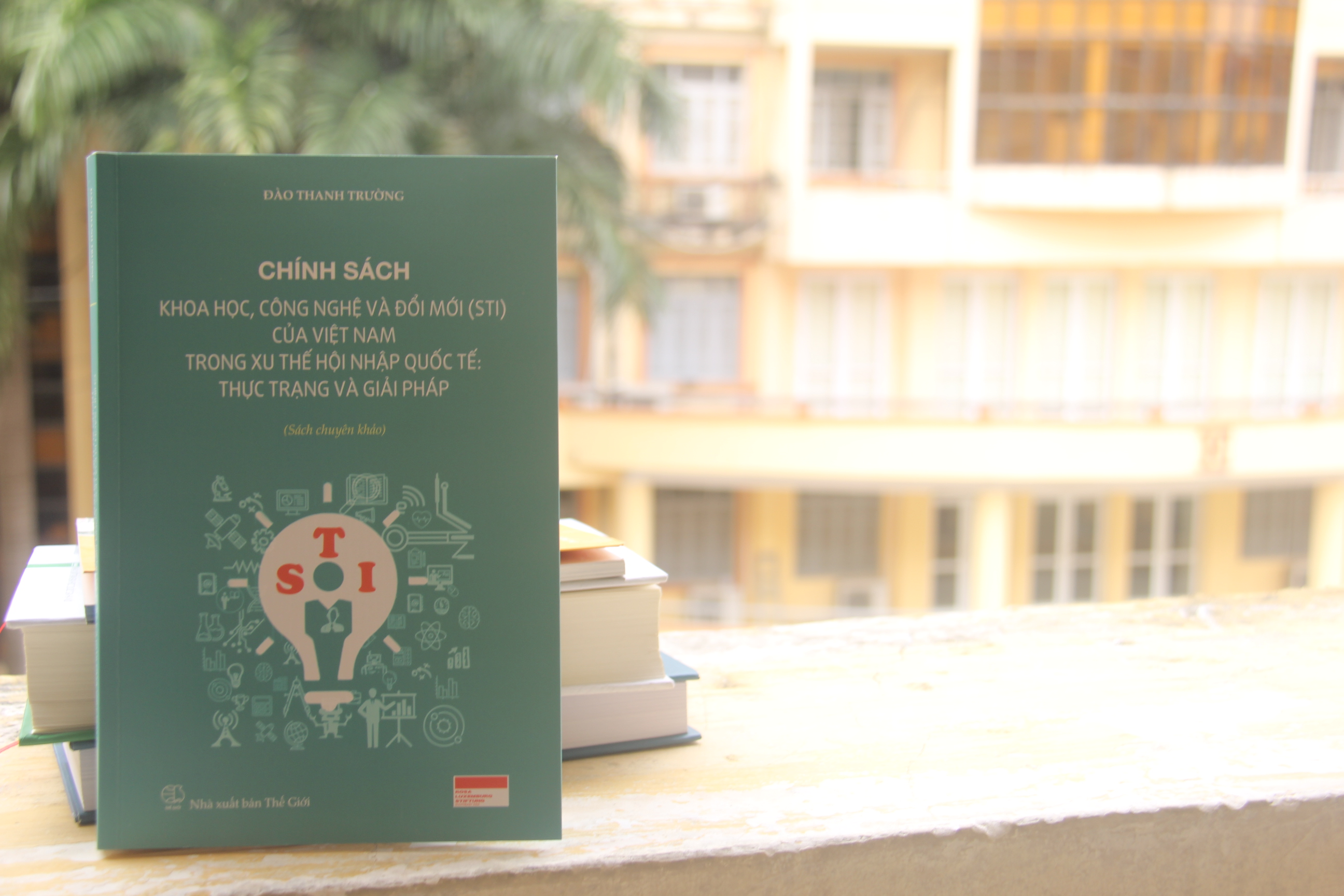
The monograph entitled "Vietnam's Science, Technology and Innovation (STI) Policy in the Context of International Integration: Current Situation and Solutions" studies the characteristics of the STI system from policy to practical operation. Through this book, the author hopes to contribute scientific arguments to the policy-making process for developing Vietnam's STI system in the context of international science and technology integration. This is also a topic that has attracted the attention of a wide range of readers – individuals working in science and technology, science and technology organizations, managers, and researchers – who have engaged in discussions and debates. The aim is to derive policy solutions and recommendations for management organizations and policymakers, contributing positively to creating a foundation for Vietnam's remarkable growth in today's "flat world."
Hanoi, April 2016
Author:Assoc. Prof. Dr. Mai Ha, former Director of the Institute of Science and Technology Strategy and Policy
Newer news
Older news