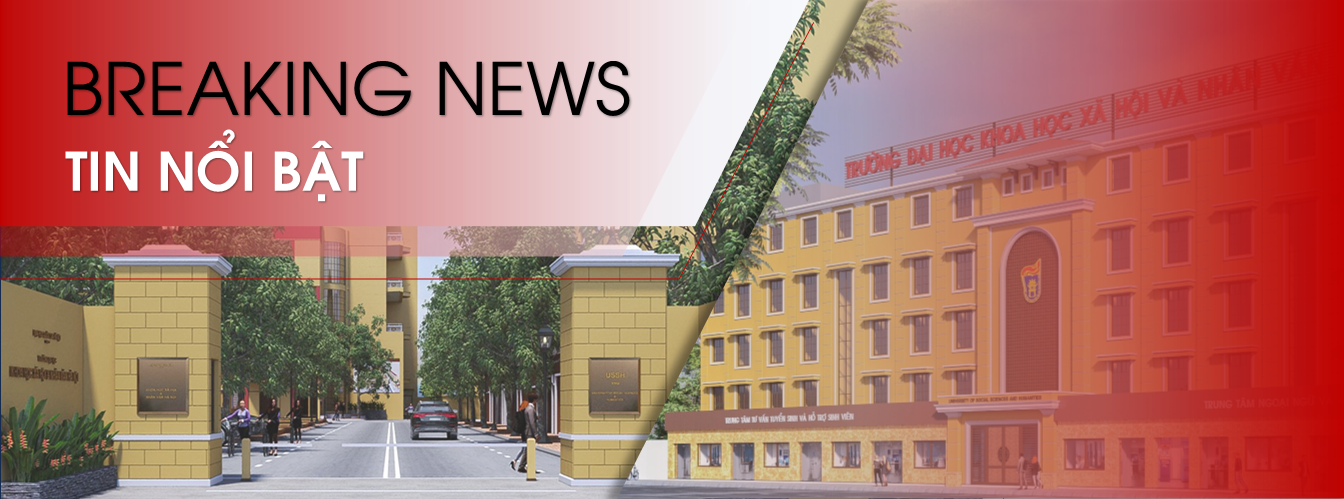
Peace was restored on October 10, 1954, and the capital was liberated. I returned to Hanoi on the afternoon of October 20, 1954. After two days of walking, a cyclo (rickshaw) dropped me off at the final leg of my journey in front of Hanoi train station. During the resistance war, the image of Hanoi, a distant, hazy place in my dreams, had now become a reality within the city. I immediately went to the university to inquire about the entrance exam. I was overwhelmed and amazed by the grand building of the university. I climbed more than forty white stone steps to reach the university office. Mr. Nhoan, the head of academic affairs, an elderly, stout man wearing white glasses, warmly told me: "Welcome, early applicants. The university will hold the entrance exam in December." I had to wait and earn a living to be able to enroll.
And the day arrived. In the majestic university lecture hall, each student had their own desk and chair. There was a small, semicircular stage with a large table where the professor would give his lecture. When the professors were introduced, our hearts were filled with anticipation. Hearing their names, we imagined them to be elderly gentlemen with handsome beards and hair, but in reality, they were only in their fifties, still strong and handsome. Each professor was given a Mercier bicycle by the university. Professor Tran Duc Thao would often ride his bike straight up the hill to the entrance of the lecture hall, park it, and go into the classroom. Many legends surrounded him: that he had won debates against many French philosophers like Jean Paul Sartres, and that he was on the list of intellectuals from France whom President Ho Chi Minh invited with the advice that one could not step sideways from the peak of idealist philosophy but had to descend the mountain to gradually ascend to the peak of materialist philosophy. Before us stood him, with his high forehead, white glasses, and a dignified and simple appearance. Without books or papers, the teacher nodded slightly and took the microphone, speaking at length as if not paying attention to the listeners. The class had prepared two front-row chairs with chalk marks on the desks for Nguyen Dinh Chu and Pham Hoang Gia to take notes. There was no recording, but the two students managed to record it, which the teacher then edited a little before printing it for the lesson. Tran Duc Thao was a true philosopher, not mixing sociology or political philosophy, but a single, pure, abstract, and concise stream of thought. Along Hang Chuoi Street, one would occasionally see a man walking and gesticulating as if speaking or debating with someone. At first, children found it strange and followed him, but they gradually got used to it. The teacher focused entirely on his train of thought and paid little attention to the outside world. From then on, after his teaching days came a life of wandering, like a traveler on a journey to a sacred place, enduring much suffering before finally being honored. After his death, only one close nephew remained in his family. He wished to have his grave brought back to his hometown. At our class reunion celebrating 50 years since graduation, Professor Nguyen Dinh Chu discussed with the class his request to act as his descendants in bringing his remains back to his hometown. The local community welcomed and awaited the return of the soul and ashes of this great intellectual and philosopher to rest in his homeland, the land that had the honor of having such a talented son.
I remember Professor Dang Thai Mai, a towering, leafy old tree in the garden of fairy tales. With his dignified bearing, sharp eyes, and discreet, kind smile, Professor Mai was not only a teacher and father figure to us but also to many other beloved students. Even an hour of class with Professor Mai was an unforgettable experience. I was fortunate enough to be his secretary. He assigned me the task of teaching the classics of French literature a year later. He helped, analyzed, and encouraged me to teach calmly. He would observe my classes, pat me on the shoulder, and say, "No emotion.".The professor sat in the outermost row, listening and looking out at the sky. After the lecture, he said, "That's a good start." He taught me that the first thing to write in an article or document is the date, and the last thing is the source. Without it, the document is worthless. He often took notes in Chinese characters, just a few lines with beautiful and flowing handwriting were enough to convey many ideas. He smoked a lot despite his poor health. Every time he came to work, he would sit on his bed, leaning against a high pillow, to lecture. He didn't need books or reference materials; everything was in his memory. He taught me the works of Corneiller, Boileau, and Racine, and occasionally he would passionately read a long passage from a Racine or Corneiller work. When leaving, he would sometimes shake my hand. Actually, he only extended his hand horizontally, his fingers slightly drooping, and I only dared to grasp his hand before quickly letting go. He nodded, smiled, and I asked permission to leave. Once, when I was sick, my teacher gave me a bottle of Soviet pantocrine and said, "You must take care of your health; you have a long way to go."
I remember Professor Hoang Xuan Nhi, a tall, imposing man with a head of white hair, though not yet very old. He had spent many years studying and working in France and Germany, and was fluent in several foreign languages. During the resistance against the French, he was in charge of education in the South. After relocating to Hanoi, he returned to teach Russian and Soviet literary history, a new and pioneering subject. Professor Nhi focused on learning Russian and, within a few months, had translated a book. It was published in issue 10 of the Vietnamese Student Newspaper in 1956.The Song of the Storm-Predicting BirdGorki's work was translated by Teacher Nhi from the original Russian; he continued his exploration of Russian literature, translating the complete series.History of Marxist-Leninist AestheticsThousands of pages thick. Professor Nhi was like a veteran general on the battlefield, defending the Party's line and venturing into academia. On his Simson motorbike, he was dynamically commuting. He taught Russian and Soviet literature, but he was particularly interested in studying President Ho Chi Minh's poetry. The book...Learn about President Ho Chi Minh's poetry.This was the first book I studied about President Ho Chi Minh's poetry. His house was in the Kim Lien area, with two separate rooms filled with books. One evening, when I visited him, I saw a strange sight. He was working, a large mosquito net covering the desk to keep out mosquitoes. The lights were bright, the net was white, and the professor, with his white hair, looked like a Taoist sage practicing magic. He possessed vast knowledge, was proficient in four foreign languages, and had a deep understanding of French, German, and Russian literature, yet he still held a special reverence for revolutionary poetry and literature, a sacred, unexplored land. He served as head of the Literature Department until the end of the anti-American war period. He said: "The longest-serving Minister of Education was Nguyen Van Huyen, the longest-serving Rector of the University was Nguy Nhu Kontum, and the longest-serving Head of the Literature Department was me."
Unlike the dynamic and energetic style of Teacher Hoang Xuan Nhi, Teacher Cao Xuan Huy clearly embodies the Eastern style. Deeply knowledgeable in Eastern philosophy and possessing a profound understanding of Chinese studies, from the essence of the pages to each individual character, Teacher Cao Xuan Huy is like a towering tree providing shade, guiding people towards kindness and compassion. He advocates for the principles of judo and its power. He pays little attention to material needs and pleasure. There are many anecdotes about him. He often takes leisurely walks. Once, by Thien Quang Lake, children saw a handsome, kind old man who looked very much like President Ho Chi Minh and ran up, shouting, "Oh, President Ho Chi Minh! We greet you, President Ho Chi Minh!" Teacher Huy smiled and waved his hand, saying, "No, I'm not President Ho Chi Minh, I'm a teacher." The children were astonished, clasped their hands in apology, and greeted him as well. Teacher Huy usually works at home in a quiet atmosphere. It is said that when the house was empty, a thief sneaked in and stole clothes from the yard. One of Teacher Huy's beautiful clothes, hanging on a clothesline, was stolen. Sitting inside the house, looking through the slightly open door, the teacher said nothing. Feeling safe, the thief went back in and took the other pair of trousers. Only then did the teacher speak up: "You must leave one for me!" It's a story from an old book, but it's true.
Also on that quiet path is Professor Nguyen Luong Ngoc. Professor Ngoc is one of the writers of the Xuan Thu Nha Tap (Spring and Autumn Elegant Collection). He writes...Static ConcentrationHe spoke about his philosophy of life. His life was like a river that had passed through rapids and now flowed silently, its depth immeasurable. He was a man of few words, pensive, and respectful to even his subordinates and younger colleagues. He taught Literary Theory. His lectures weren't captivating, but they were deeply meaningful. Some observed that some pre-revolutionary intellectuals often practiced suppressing their emotions in the face of joy or sorrow. They maintained a calm demeanor, suppressing their feelings; perhaps this was a form of self-protection, not wanting others to understand their emotional state in response to a particular event. He compiled the curriculum, incorporating knowledge of this new subject from Soviet and Chinese theoretical books, along with his own extensive knowledge. Besides teaching and leading the department, he also fully participated in various activities, including fieldwork helping farmers harvest rice.
Each teacher was a vast repository of knowledge, a precious asset from a life full of experiences, a simple yet noble lifestyle. Some lived quietly, reflecting on the depths of their being, while others were vibrant in their teaching as well as in their daily lives. Teachers Tran Van Giau, Nguyen Manh Tuong, and Truong Tuu were all eloquent orators. Teacher Tran Van Giau was a revolutionary who led the revolutionary movement in Southern Vietnam and Saigon. He studied Marxist philosophy, dialectical materialism and historical materialism, and the Vietnamese workers' movement. The strength and persuasive power of his arguments lay in the combination of theory and practice, the philosopher and the man of action. His erudition and eloquent speech, coupled with his tall stature and open demeanor, gave him the appeal of a revolutionary orator who could speak powerfully before thousands of people. He loved his students, and they loved him dearly, often gathering around him. Many students wanted to become his disciples and revered him as their master. Professor Nguyen Manh Tuong and Professor Truong Tuu were both beloved and attentive to the quartet of "Lam, Le, Tan, and Vuong." Professor Nguyen Manh Tuong and Professor Truong Tuu were also renowned orators in courtrooms and meeting rooms. Having earned two doctorates in law and literature in his early twenties, Professor Nguyen Manh Tuong was also famous in the courts as a skilled lawyer. In court, his defense arguments were sharp and polished, coupled with his elegant demeanor and gestures, creating a captivating presence. In the lecture hall, he presented his lectures clearly and his knowledge expanded both in breadth and depth. Students often hesitated to interact with him because they found him somewhat formal and serious. Professor Truong Tuu had a unique and distinctive style. He was of average height, or rather, slightly short, but he maintained a dignified and respectable posture. Professor Tuu taught modern Vietnamese literature and was particularly enthusiastic about authors like Vu Trong Phung and Le Van Truong. Professor Tuu's way of speaking was more engaging, like a public speaking lecture than a typical lecture. His ideas were firmly established, his language unfolding in layers, emphasizing and pausing, occasionally punctuated by a satisfied smile. He particularly had a beautiful mustache that could subtly add a touch of charm to the story. Teacher Tuu was a target of criticism during the Humanist Literary Movement due to his writings containing errors that were premature in the contemporary context.
Now, all that has passed. Professor Tran Van Giau has reached the age of 96, while the others have long since departed. Many professors have names inscribed on streets like Dang Thai Mai Street near West Lake, Pham Huy Thong Street near Ngoc Khanh Lake, and Nguyen Khanh Toan Street in the city center… More importantly, their works endure through time, and their lives serve as shining examples for future generations. They are like ancient trees in a garden, growing stronger and deeper into the earth, their green branches reaching towards the sky. Our university system has a century of history, a relatively short period compared to major universities around the world. But we have had a generation of brilliant scholars in natural and social sciences. Professors Ho Dac Di, Ton That Tung, Dang Van Ngu, Tran Huu Tuoc, Tran Dai Nghia, and Le Van Thiem, whose talents and intellect shone brightly in their time. The professors of Social Sciences are a proud and pioneering team, whose contributions will forever remain as a vibrant and enduring legacy. Generations of students will forever be grateful to them, the beloved teachers of the university lecture halls and also the mentors of life.
(Article published in the Tet issue of Education and Times Newspaper, December 2007)
|
Professor Ha Minh Duc, a People's Teacher, has spent over 50 years teaching and has published numerous books and research works on culture, social sciences, and humanities. He has received many awards from the State, notably the State Award for Science and Technology in 2000; the State Award for Literature and Arts in 2007; and the Ho Chi Minh Award for Science and Technology in 2010. "The Realm of Learning and the Teacher" is the 69th book published by Professor and People's Teacher Ha Minh Duc. The book is published by the People's Police Publishing House. We are pleased to introduce it to our readers. |
|
DThis is a list of articles from the book "The Realm of Learning and the Teacher". 1. Professor and Academician Nguyen Khanh Toan: A scholarly figure and a teacher. 2. Professor Dang Thai Mai was quiet and erudite. 3. Little memories about Professor and critic Hoai Thanh. 4. Congratulations to Mr. Hoang Xuan Nhi on having a street named after him. 5. Professor, Academician Pham Huy Thong, poet, historian. 6. Teacher Tran Duc Thao, a wise philosopher, a man of noble character. 7. Professor Nguyen Luong Ngoc was intelligent and virtuous. 8. Memories of Professor Truong Tuu. 9. Professor Nguyen Lan and the essence of the teaching profession. 10. Professor Hoang Nhu Mai. 11. Professor, Academician Hoang Trinh. 12. Professor Dinh Gia Khanh - spectacular breakthroughs and everyday life. 13. Remaining stories about Professor Bui Van Huyen. 14. The love of science and family life of Professor Nonna Vladimirovich Stankevich and Professor Nguyen Tai Can. 15. Professor Le Dinh Ky and his days of evacuation in the countryside. 16. Professor Bach Nang Thi 17. Remembering Dr. Nguyen Ham Duong. 18. Researcher in Philosophy and Aesthetics - Doctor of Literature Hoang Ngoc Hien. 19. Cao Xuan Hao, a talented linguist. 20. Memories of him, Professor, Academician Phan Cự Đệ. 21. Professor Tran Quoc Vuong. 22. Professor Nguyen Dinh Chu. 23. Professor Nguyen Hai Ha, an exemplary teacher and a role model of self-learning. 24. Associate Professor Nguyen Van Hoan, Knight of the Order of the Republic of Italy, President of the Association of Overseas Vietnamese Studies. 25. Doctor of Philosophy from Two Countries, Do Van Khang. 26. Associate Professor Le Ba Han and his family happiness. 27. Teacher Tran Thuyet from the suburban countryside. |
Author:ussh
Newer news
Older news

