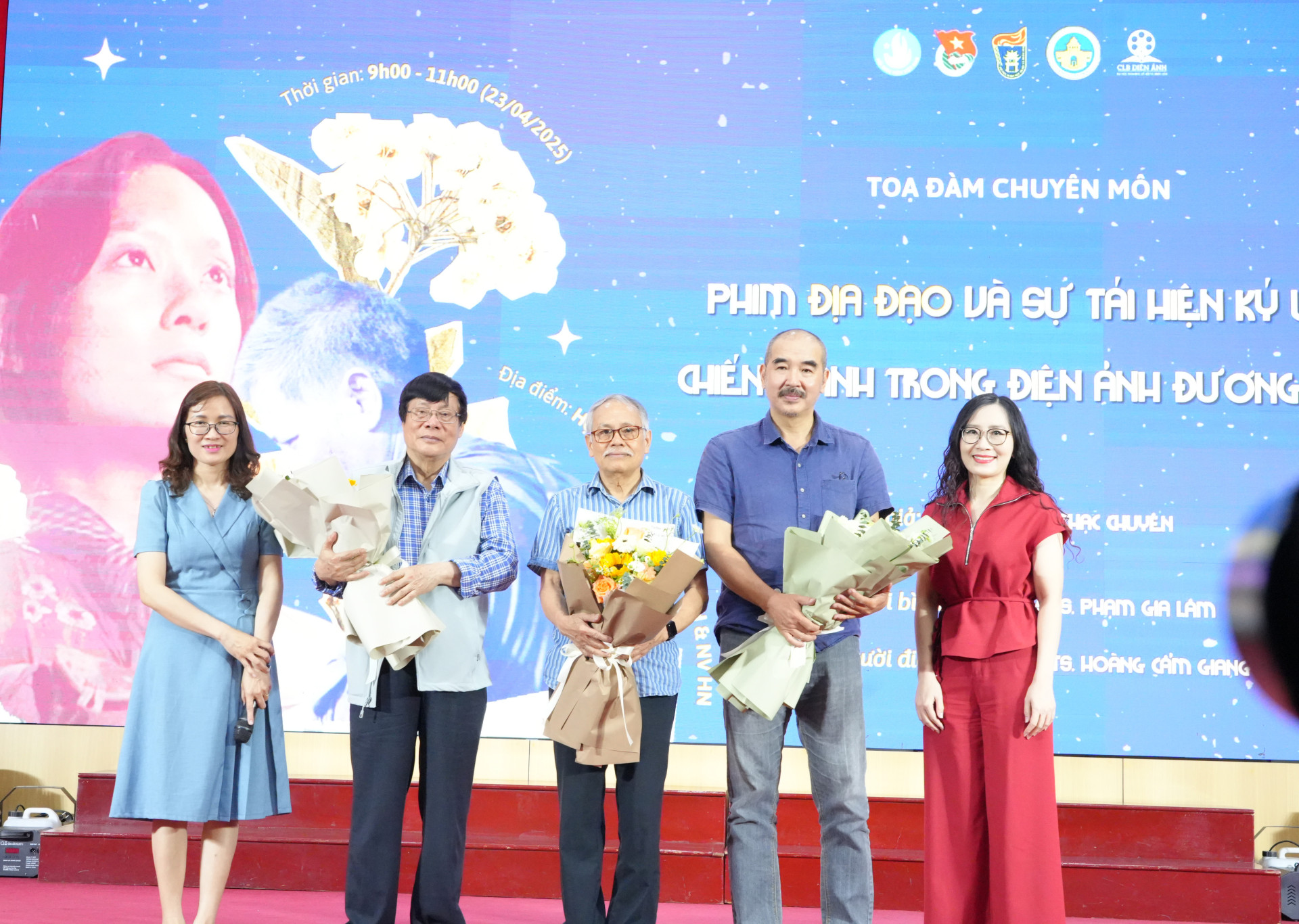
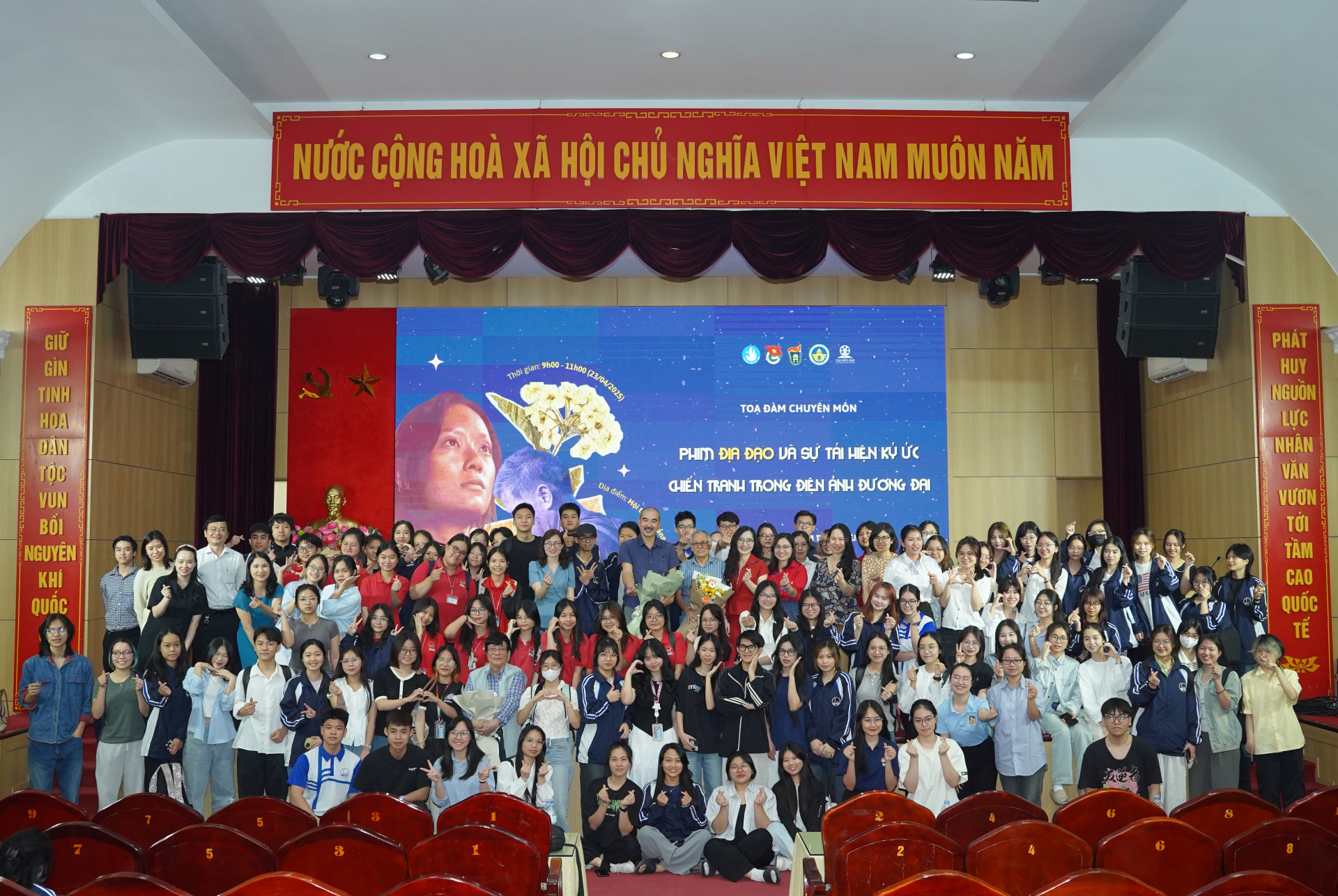
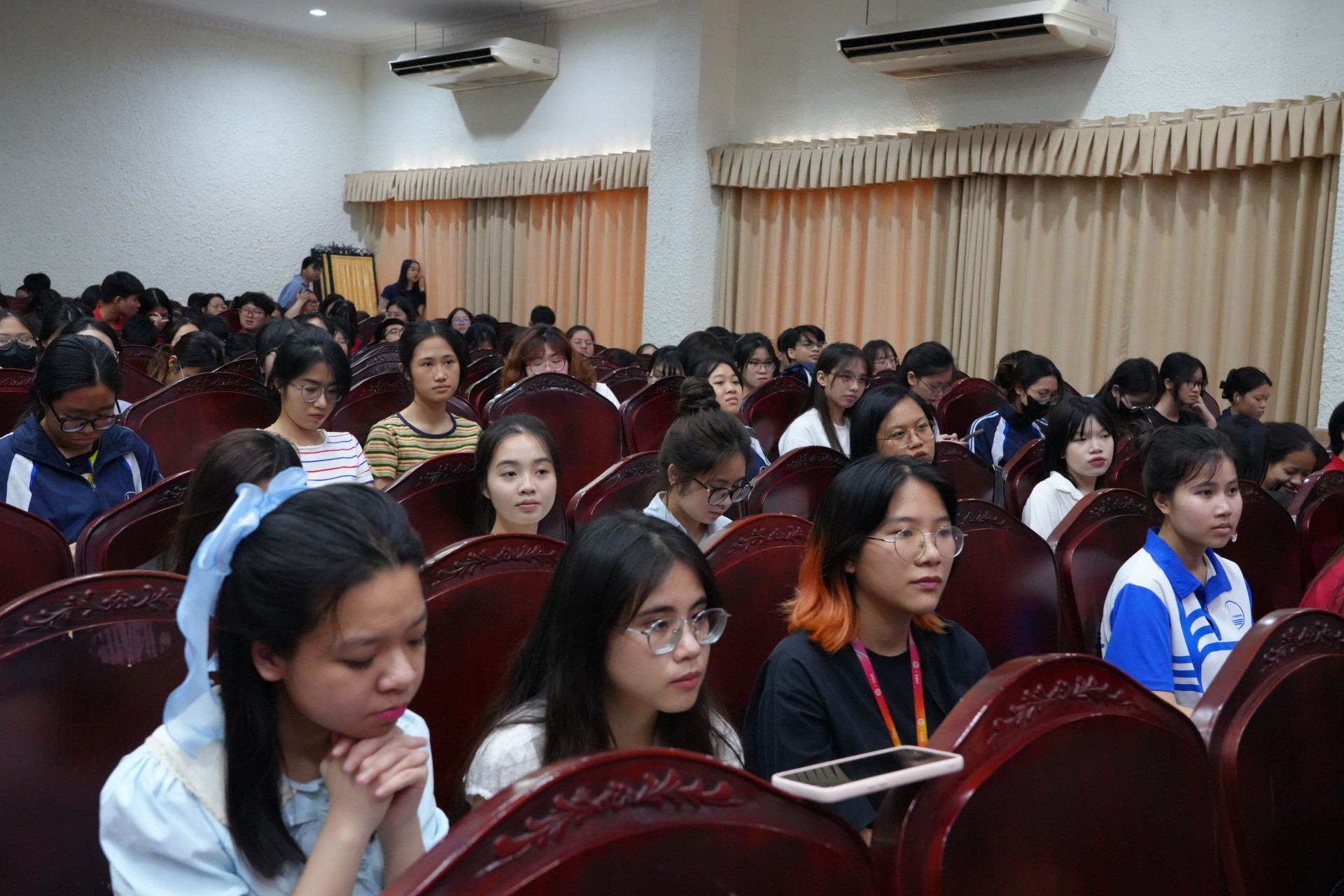
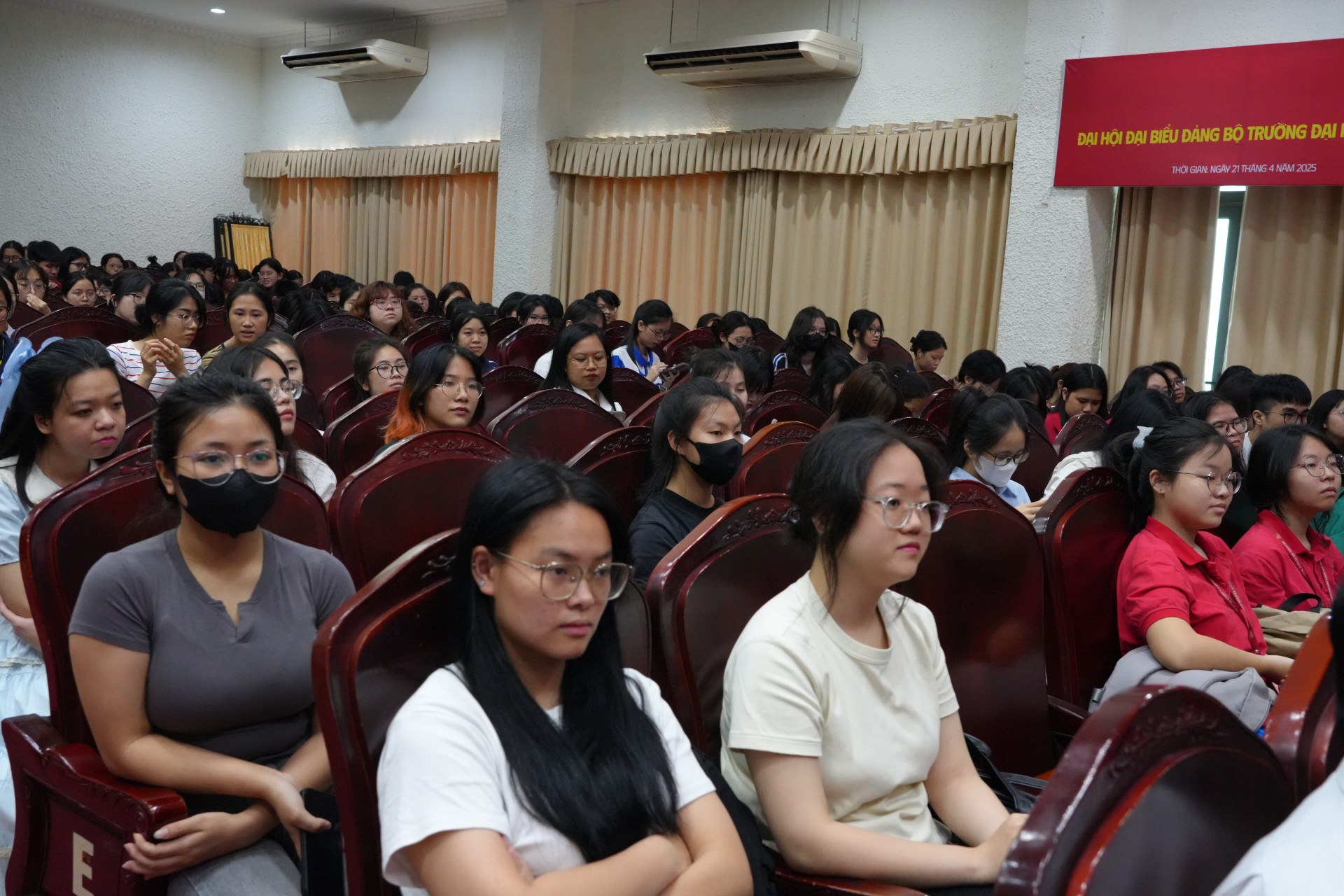
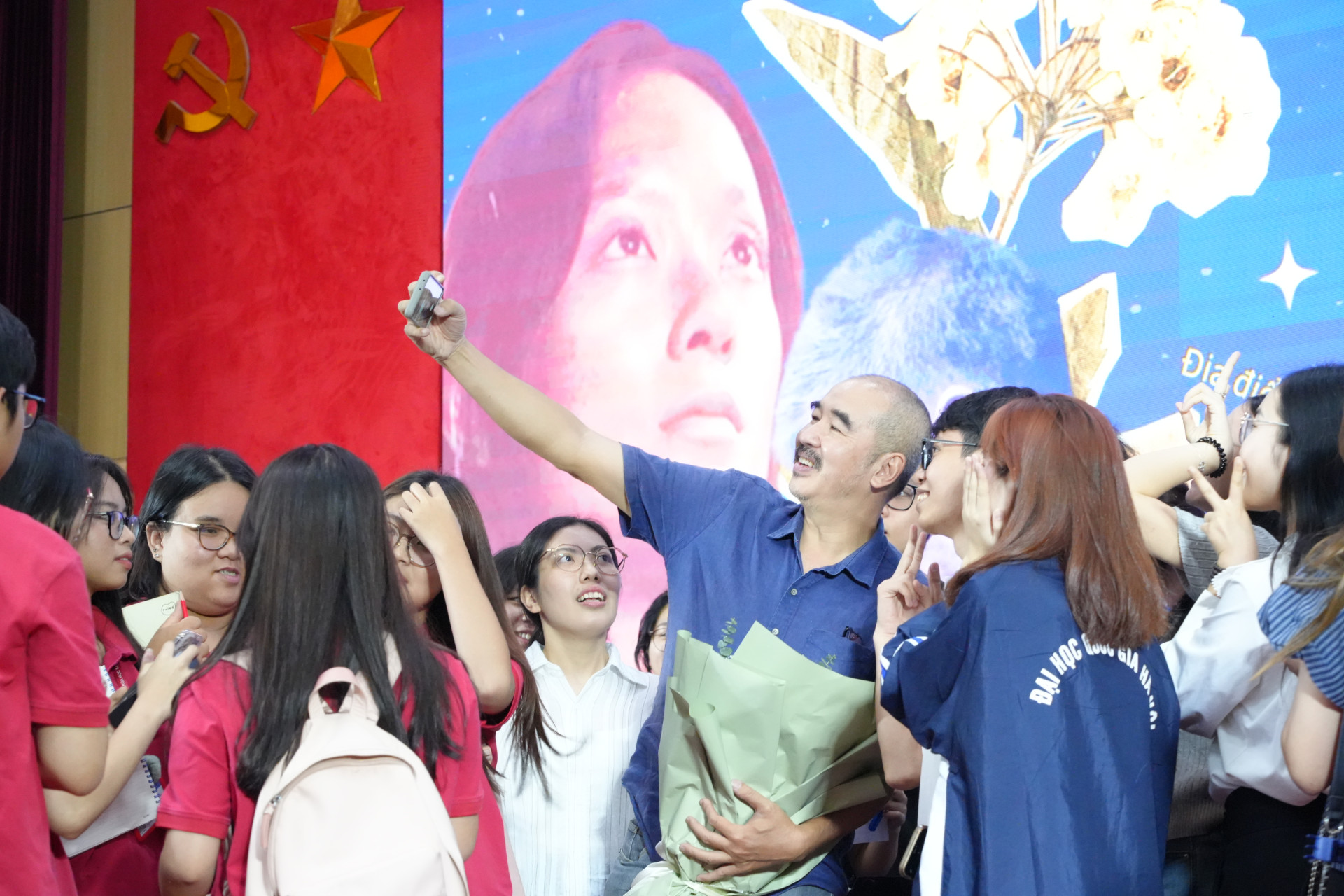
At the event, 600 students from the Specialized High School and students from the University of Social Sciences and Humanities, Vietnam National University, Hanoi, along with many other attendees, had a meaningful meeting and exchange with Director Bui Thac Chuyen, a highly creative director whose name is associated with many famous films, most recently the film "Underground Tunnels: The Sun in the Darkness". The discussion and exchange also included the participation of veteran teachers – living witnesses from the resistance war against the US; teachers from the Literature Department, the History Department, the Specialized High School of the University of Social Sciences and Humanities, and teachers from the Hanoi University of Theatre and Film. Notably, the discussion was also attended by Professor Hoang Anh Tuan, Rector of the University of Social Sciences and Humanities, along with leaders from the Central Propaganda Department and the Ministry of Education and Training.
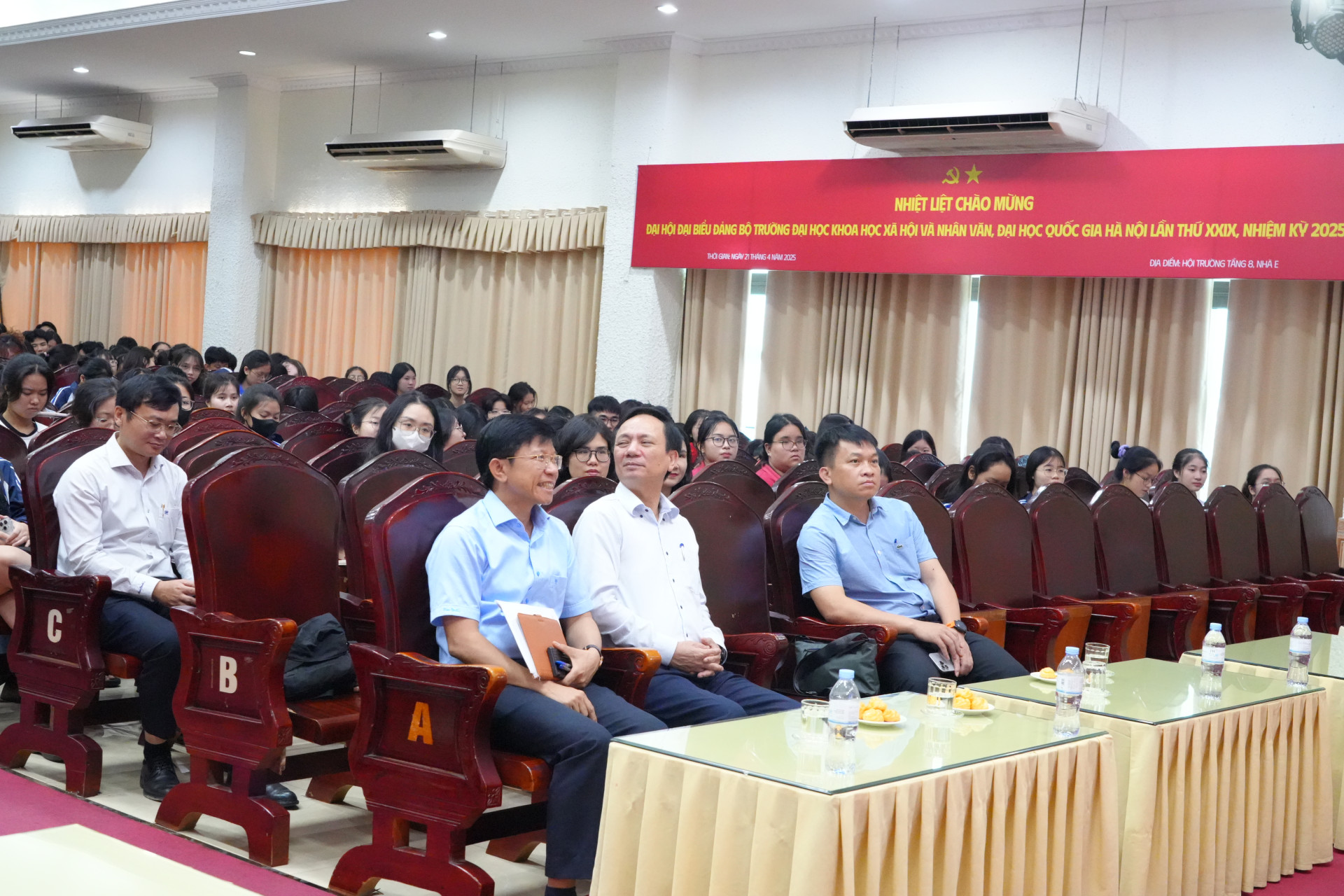
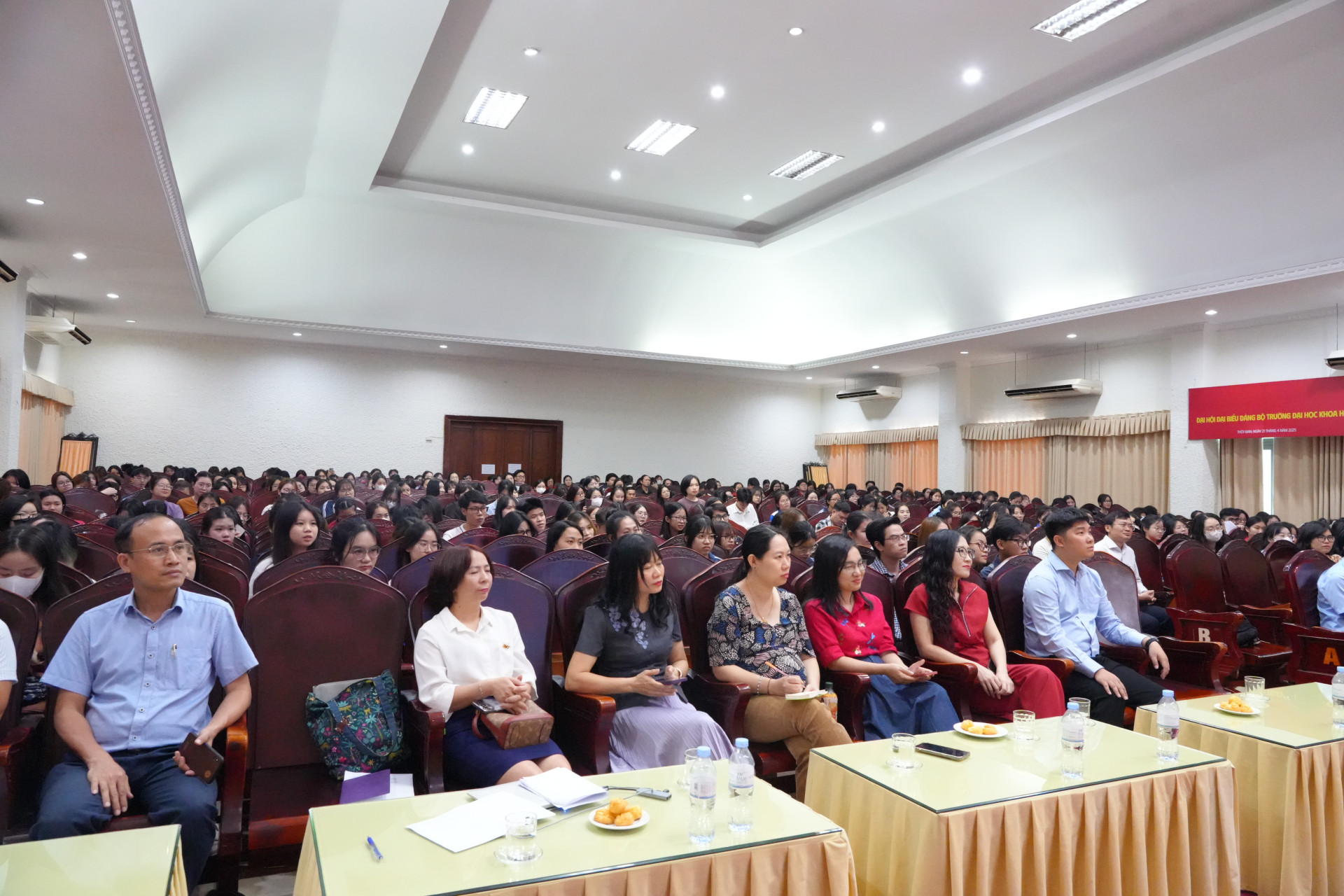
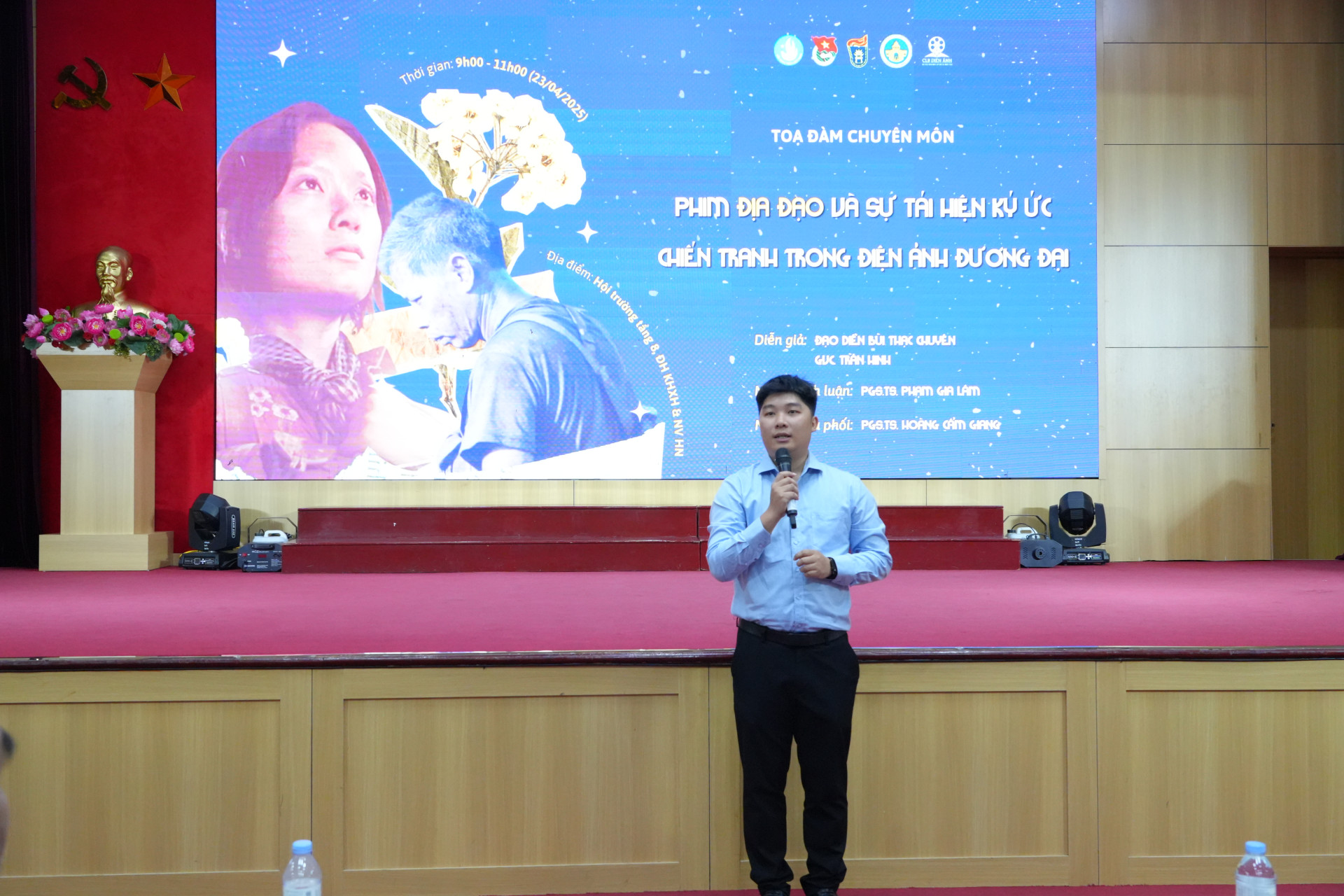
In his opening remarks, the Secretary of the Youth Union and Student Association of the University, Dr. Duong Tat Thanh, emphasized that the seminar was an extremely meaningful event, aiming to connect the young generation of the University of Social Sciences and Humanities with the older generations, those who did not hesitate to sacrifice their blood and lives for a peaceful and unified future for Vietnam.
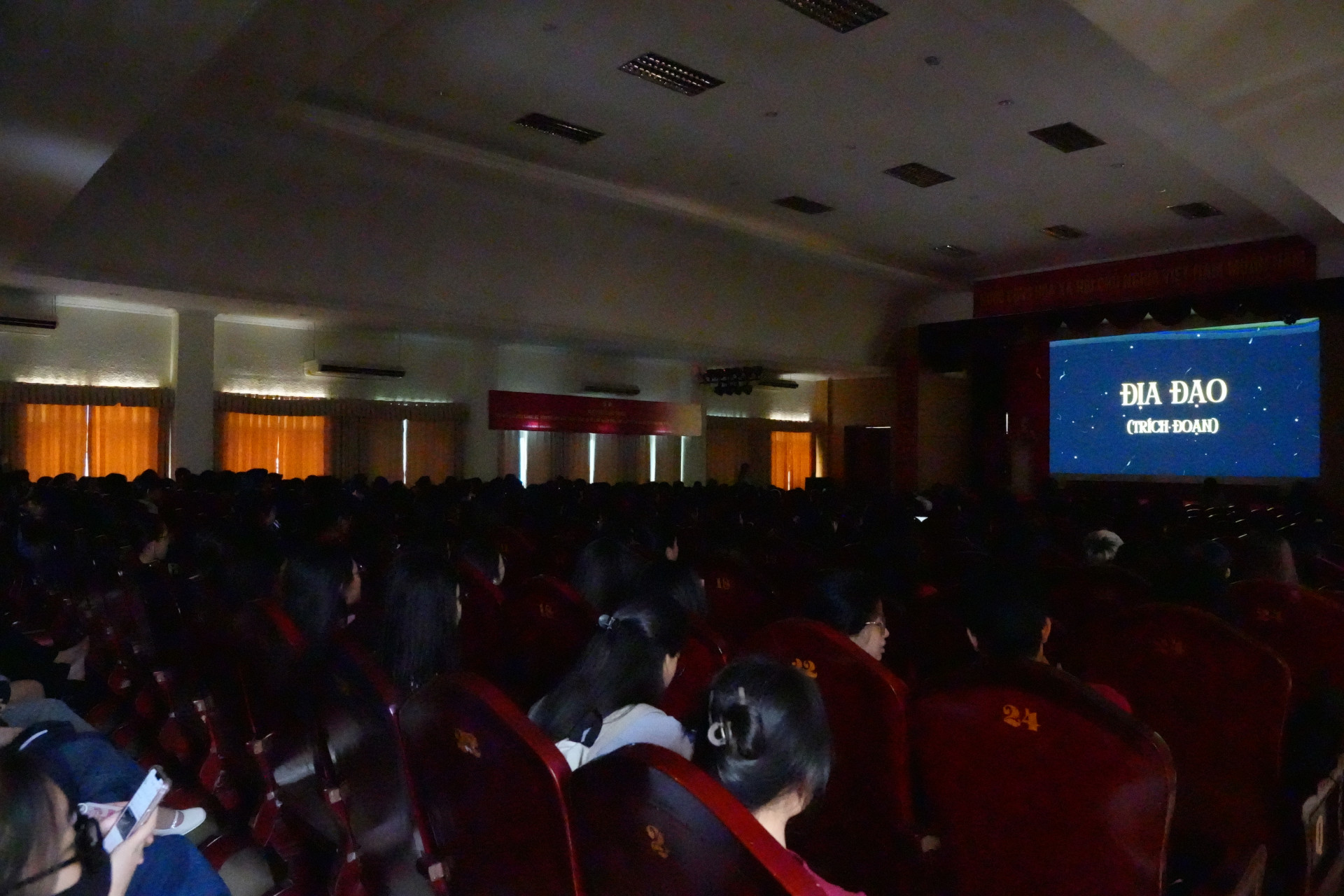
The short film showcasing the outstanding works of director Bui Thac Chuyen and the trailer for the film "Tunnels - The Sun in the Darkness" have given viewers a fairly complete picture of one of the most creative directors in Vietnamese cinema.
With a natural, engaging, and intellectually rich presentation style, Associate Professor Dr. Hoang Cam Giang, Head of the Department of Art Studies, encouraged Director Bui Thac Chuyen to share touching stories surrounding his journey to find "The Sun in the Darkness"; and speakers Senior Lecturer Tran Hinh and Associate Professor Dr. Pham Gia Lam shared insightful perspectives and assessments of the film.
"Cu Chi chose me, that topic chose me. I'm lucky to have been chosen, so I have to try my best to do it..."
That was the director's heartfelt response when asked: Why did you choose the Cu Chi Tunnels as the subject for your latest work? He confided: “The Vietnamese people's struggle for national liberation and reunification, and life in the post-war period, held many miraculous aspects that artists like us only hope to recreate a part of. From the very first days I learned about the story of the Cu Chi Tunnels, I was intensely captivated. I nurtured this topic since 2014, finished the script in 2016, and began searching for ways to make it happen. It was an incredibly arduous process, even marked by crises and depression, but I was always haunted by the thought that the Cu Chi Tunnels had chosen me, and I had to succeed. And I did it with all my love and admiration for the anonymous but great people who lived and fought in the dark, suffocating underground, yet shone with courage and resilience. The journey to complete the film was also a journey of self-healing.”
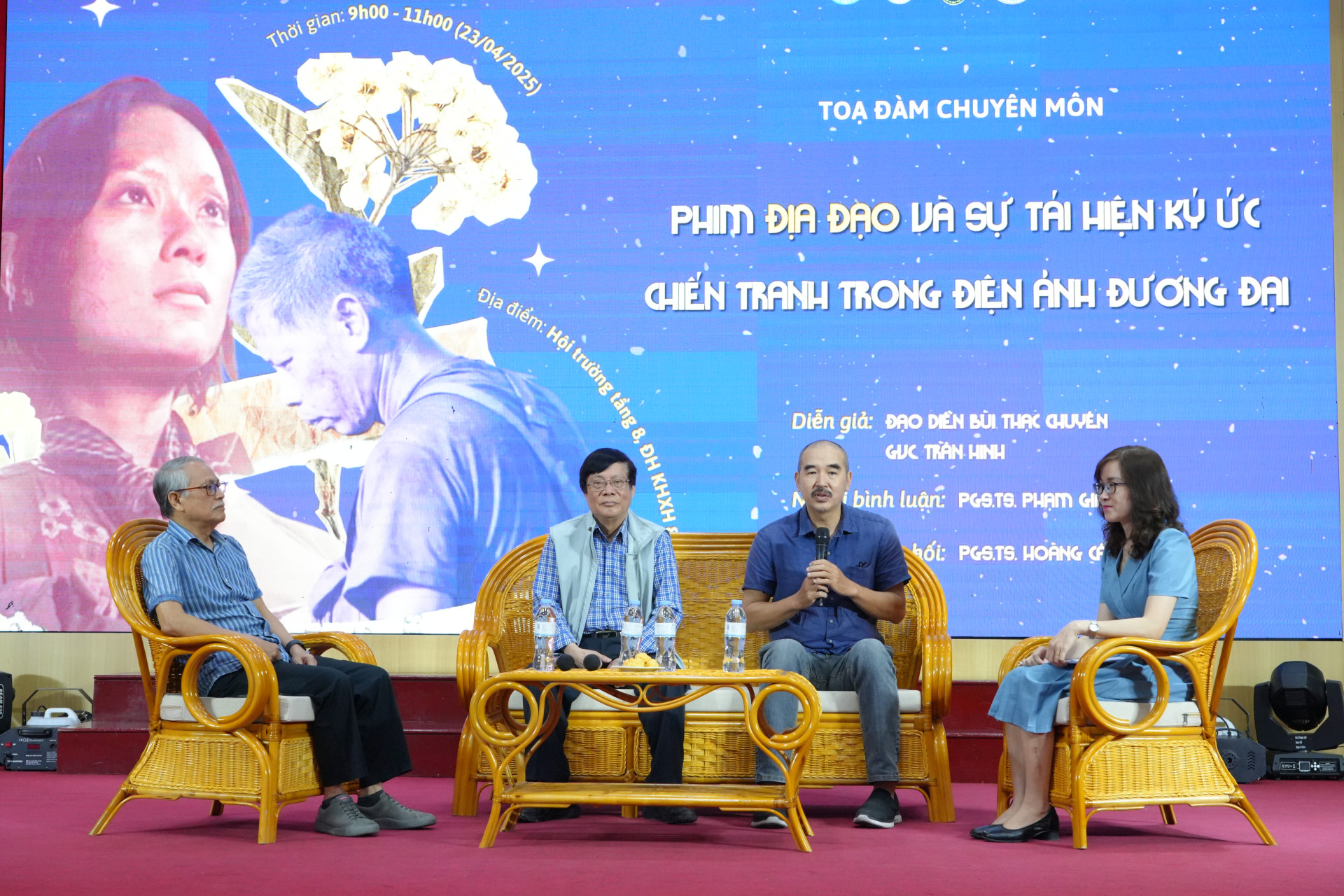
Director Bui Thac Chuyen recounted that many character names in the film, such as Bay Theo, Tu Dap, Luc Tac, Ba Hieu, etc., were inspired by or were the real names of fallen guerrillas. He said, "The film is a way for Vietnamese people today to always remember them - the heroic people of a heroic nation."
According to researcher Tran Hinh, "The Tunnels - A Sun in the Darkness" offers a new perspective by recreating one of the nation's most arduous battles, fought deep within the tunnels, with a hauntingly realistic portrayal. He emphasized: "Director Bui Thac Chuyen has taken a unique path in making films about war. He didn't choose to make a film with an epic tone, with main characters embodying all the noble qualities to make the audience weep profusely upon their death. He chose a documentary style – a slice of life, with meticulous and thorough descriptions of the life and battles of the guerrilla fighters deep within the Cu Chi tunnels, and above all, with love and pride for the Vietnamese nation. 'The tunnels are a people's war' is the important message that director Bui Thac Chuyen incorporates through the proud death of a rather important character in the story."
Even though he had seen the film before, watching a clip of it again in the cozy atmosphere of the auditorium of the University of Social Sciences and Humanities, Associate Professor Dr. Pham Gia Lam – a veteran and expert on war literature and cinema – was still deeply moved: “There are bombs falling, bullets flying, sacrifices, and deaths, but the film doesn't evoke feelings of sadness; instead, it's an epic about camaraderie, love, and the yearning for life of the soldiers, but above all, the spirit of sacrifice for the Fatherland. It has a purifying effect on the soul, touching the hearts of the audience. Watching the film, we can't help but feel compassion and admiration for these very ordinary people, these heroes, and we also feel that the peace, freedom, and independence we enjoy today were bought with the blood and sacrifices of many generations.”
He further shared: "Bui Thac Chuyen chose to make the film in a post-cinematic style with a plot lacking a climax, without a main character, and combining many genres… Therefore, the film may be difficult to follow for some viewers accustomed to traditional Hollywood film styles, but it is a commendable creation. The character portrayal is very subtle, the camera angles are very clever, especially in life-or-death situations, creating a very strong artistic emotion, immersing viewers in a realistic, haunting cinematic experience that is both tragic and heroic." The characters are built with genuine, natural, and lifelike emotions, yet still convey the theme and message of the entire film.
"Underground tunnels - the sun in the darkness" inspires and connects the younger generation with the glorious history of the nation.
That was the aspiration that motivated Director Bui Thac Chuyen to complete the film with all his love and passion, and it was also the sentiment shared by the young people at the seminar.
Phuong Anh, a student from the first cohort of the Film & Popular Arts program, shared that her experience watching the film in the theater, then listening to the professors analyze the film, and especially today listening to the director's heartfelt confession, truly resonated with her own strong emotions, allowing her to fully appreciate the power and beauty of war cinema.
Sharing her personal experience with the film, Hai Anh, a visually impaired student at the Institute of Journalism and Communication Training, said: "The film evoked deep emotions in me about a historical site and the heroic struggle of our nation. I hope that director Bui Thac Chuyen, as well as many other Vietnamese film directors, can find a way to convey the message so that a disabled person like me and 7 million other disabled people can more fully appreciate Vietnamese cinematic works."

Phuong Chi, another visually impaired student from the Literature Department, shared that she enjoys watching historical films such as "The 17th Parallel Day and Night," "The Nightingale," and "When Will October Come?" She found "The Tunnels" to be a very different experience – gentle, simple, yet deeply moving and vivid. Watching the film, viewers feel their hearts tighten, almost to the point of suffocation, witnessing scenes of bomb disposal or the suffocating atmosphere in the cramped, waterlogged tunnels, ready to collapse at any moment. The cramped and dark underground tunnels became a fierce battlefield, yet the unwavering spirit of patriotism always shone brightly within them. "I've watched the film three times, and I cried each time," she said.


The large turnout of students filled the auditorium of the University of Social Sciences and Humanities, with over 600 seats occupied, and their shared feelings and impressions of the film deeply moved director Bui Thac Chuyen. Director Bui Thac Chuyen shared: “I truly didn’t imagine the film would be so well-received by young people. And I must say I’m very moved. Listening to their sharing surprised me greatly, because they truly understand history and possess a very profound artistic sensibility. I believe that this support will be a great encouragement for me and other filmmakers to continue searching for good themes and new ways of expression, further developing Vietnamese cinema.”


The success of the seminar was not simply about introducing a film on the theme of war, but also about creating a powerful emotional bridge, linking the memories of the arduous yet heroic battles of our forefathers with the hearts and deep understanding of the value of peace of today's young generation, inspiring a desire for creativity and contribution.
This event is one of many meaningful activities commemorating the 50th anniversary of the liberation of Southern Vietnam and the reunification of the country on April 30, 1975. It is also one of the activities that the University of Social Sciences and Humanities, Faculty of Literature, Department of Art Studies, pays close attention to and organizes regularly. Its aim is to create an academic forum where students can meet experts for in-depth analyses of contemporary cinema and art; and listen to direct sharing from producers to gain a clearer understanding of the profession they may pursue in the future.
News reports:
Nhan Dan Newspaper:The film "Tunnels" and the re-creation of war memories in contemporary cinema.
Related news:
But"The History of European Cinema" – a valuable textbook for lecturers, students, trainees, and researchers.
ButCinema – a way to bring literary works in schools closer to students and young audiences.
ButVNU-USSH students have the opportunity to learn about classic works of Vietnamese cinema.
ButThe University of Social Sciences and Humanities successfully organized a film screening about the environment.
ButFilm screening and discussion "Cinema on War: When the Rice Ripens in the Stormy Fields"