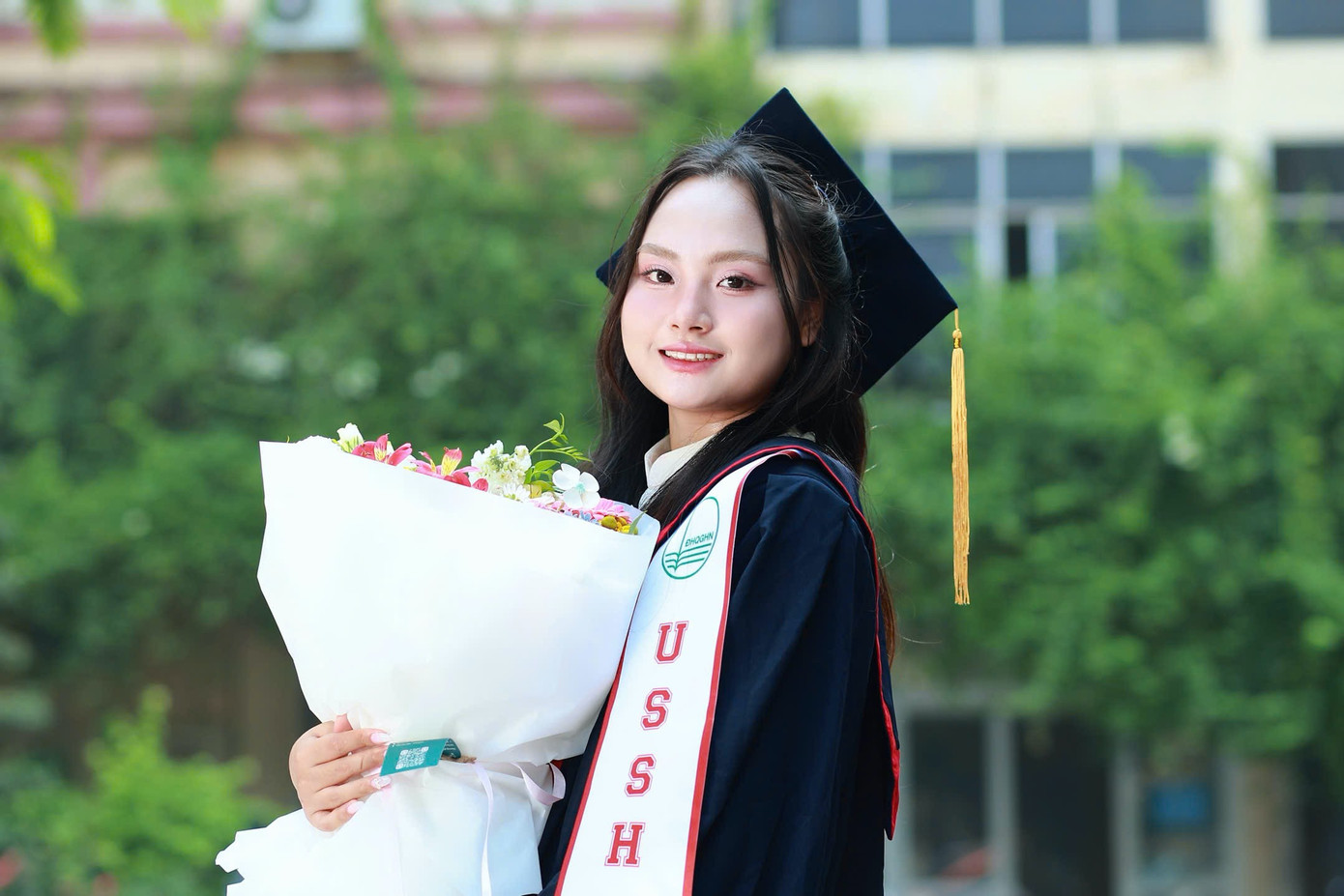
With a GPA of 3.62/4.0, Nguyen Thi Thu Hai is the valedictorian of the 2025 graduating class of the Religious Studies major, Faculty of Anthropology and Religious Studies, University of Social Sciences and Humanities, Vietnam National University, Hanoi (VNU-USSH).
The top-scoring female student on her university graduation day.
The 22-year-old girl was born in the former Thai Binh province into a family with a tradition of worshipping the Mother Goddess. Hai's father was a ceremonial singer, and her mother was a medium. She herself is also a follower of the Tam and Tu Phu Mother Goddess worship, and a practicing medium of this faith.
In a conversation with a reporter from the Vietnam Student Section of Tien Phong Newspaper, Hai shared: “I grew up surrounded by rich traditional rituals and have always wanted to understand more about the indigenous beliefs of our people as well as other religions present in our country. Not only to understand, but also to contribute to preserving and promoting the beauty of a Mother Goddess belief – both sacred and deeply humane – of the Vietnamese people.”
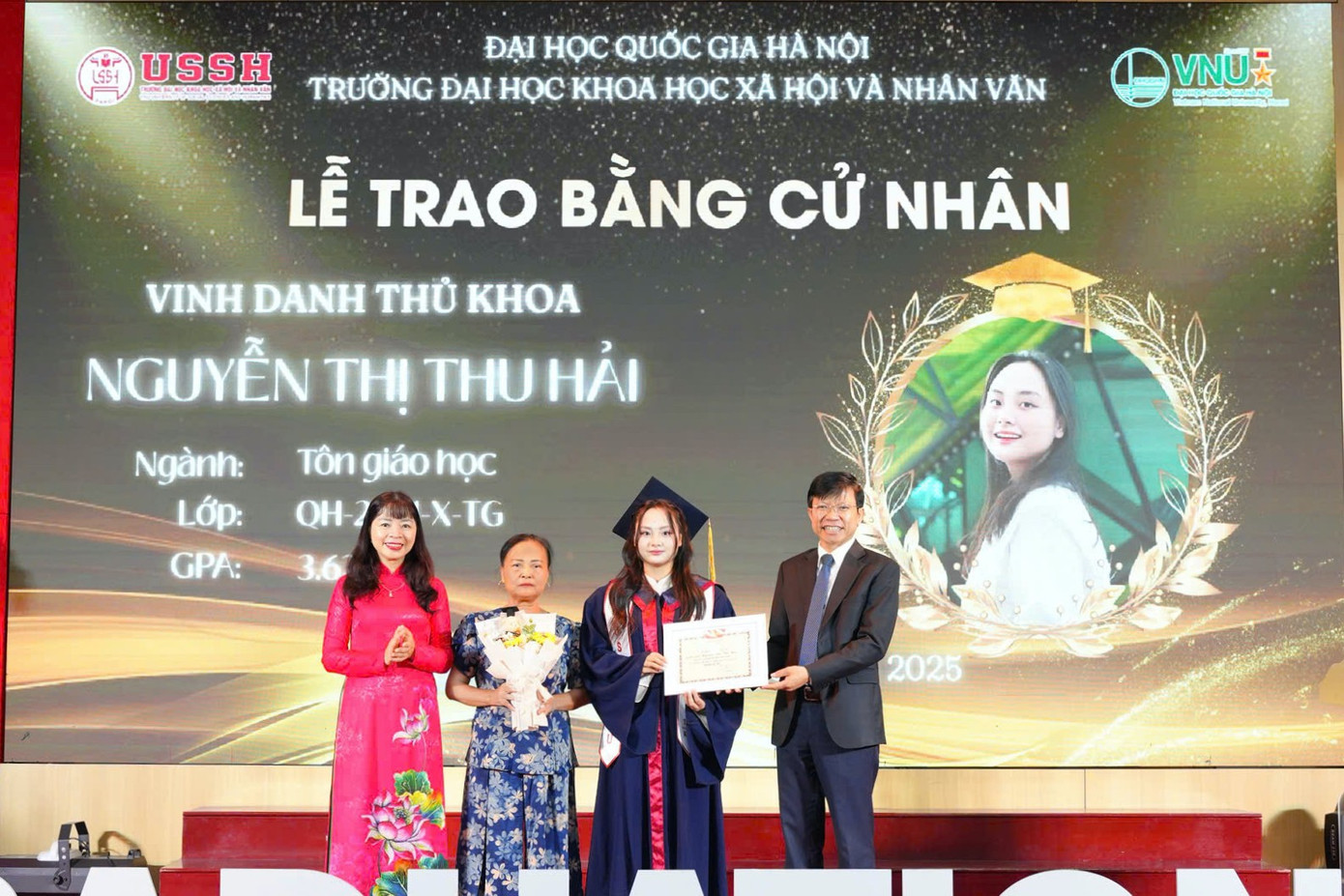
Thu Hai and her mother received the valedictorian award from the teachers in the school's Board of Directors.
Learning from the classroom to practice.After studying the A00 subject group (Mathematics-Physics-Chemistry) for three years in high school, Hai changed direction at the last minute and took the D01 group (Mathematics-Literature-English) because she wanted to study religion systematically. When she first entered university, she was often overwhelmed by the academic and heavily theoretical general subjects in social sciences. Hai doubted her own choice, wondering if she had the ability to pursue a field focusing on human beings, emotions, and beliefs like Religious Studies.
“I gradually discovered something very valuable: the intersection between the analytical thinking of natural sciences and the empathy of social sciences. It helped me gain a unique perspective when approaching religious phenomena – one that is both systematic and rich in humanistic depth,” Hai recalled.
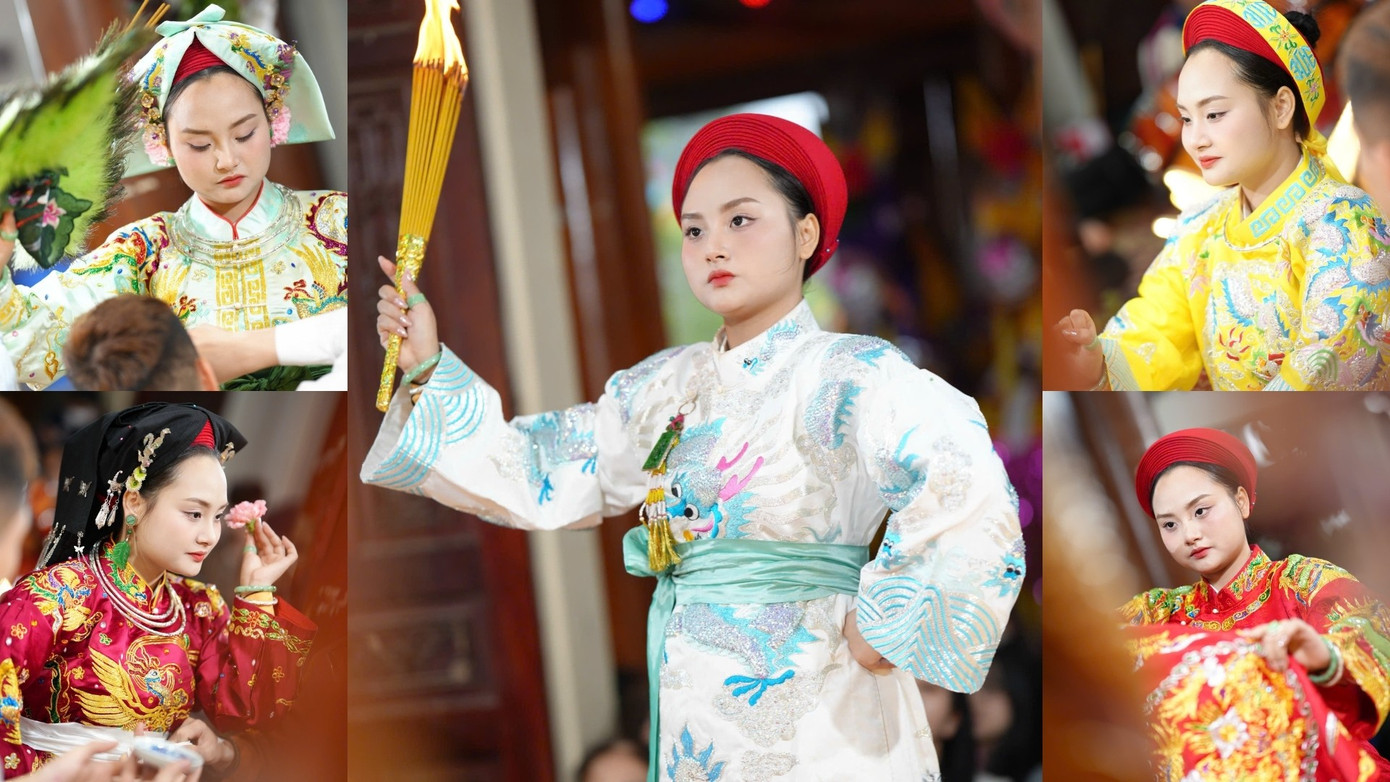
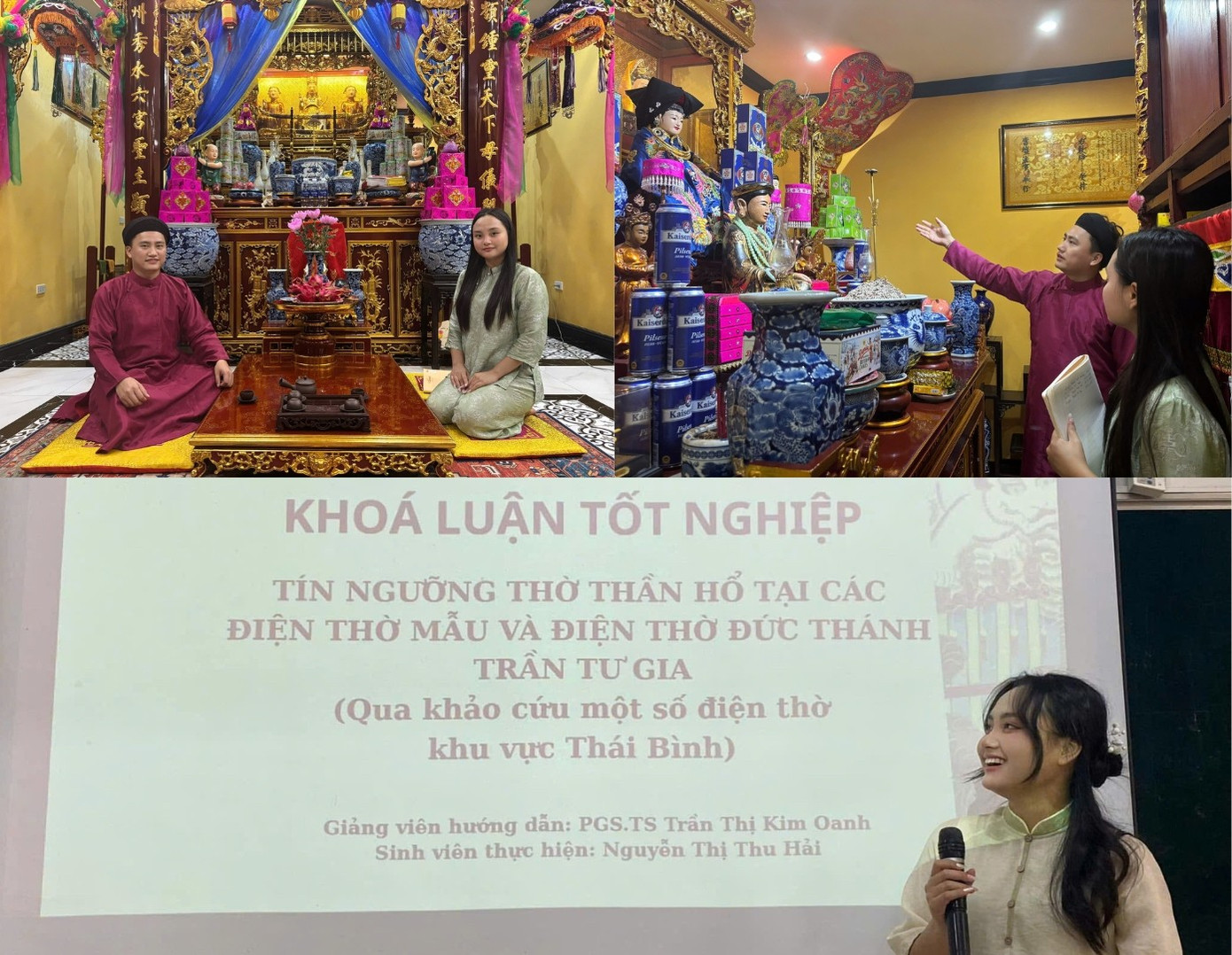
Hai was performing the spirit medium ritual, an important ceremony in the Mother Goddess worship tradition.
Overcoming initial difficulties, Hai gradually excelled in her specialized subjects. She often approached religious phenomena using a "foot in, foot out" approach – meaning she was both a participant, immersing herself in the religious space, while maintaining a certain distance to observe and analyze from a scientific perspective. Academic knowledge was no longer dry and boring, but became more vibrant, relatable, and highly applicable.
Among the specialized subjects, Hai was particularly impressed with the course on Festivals in Vietnamese Beliefs and Religions, taught by Dr. Tran Thi Hang, who was also the academic advisor for the K66 Religious Studies class, of which Hai was the class president. What Hai loved about this course was how the lecturer "brought festivals to the classroom" through vivid images, valuable documentary videos, and stories from fieldwork experiences.
Those lessons opened up a rich world of spiritual culture, helping Hai better understand the connection between religion, beliefs, and community in Vietnamese life. It was also through this subject that Hai began to cultivate a serious academic spirit, gaining further motivation to research folk festivals and beliefs in greater depth.
Dr. Tran Thi Hang with Hai and their classmates from class K66 Religious Studies.
In addition to textbook knowledge, Hai also learned from teachers outside the classroom. These included practitioners of folk beliefs, shamans, and temple keepers. They shared with her a wealth of valuable practical knowledge, helping her to have a more multifaceted perspective when approaching religious and belief phenomena.
Hai also had the opportunity to meet friends from many different religions, exchanging and discussing the cultural and spiritual values of each individual. These conversations not only broadened Hai's worldview but also helped her understand the diversity, tolerance, and humanistic aspects of religion in life.
"The combination of academic thinking, practical experience, and a relentless learning spirit has helped me maintain my motivation to study throughout my university years," Hai affirmed.
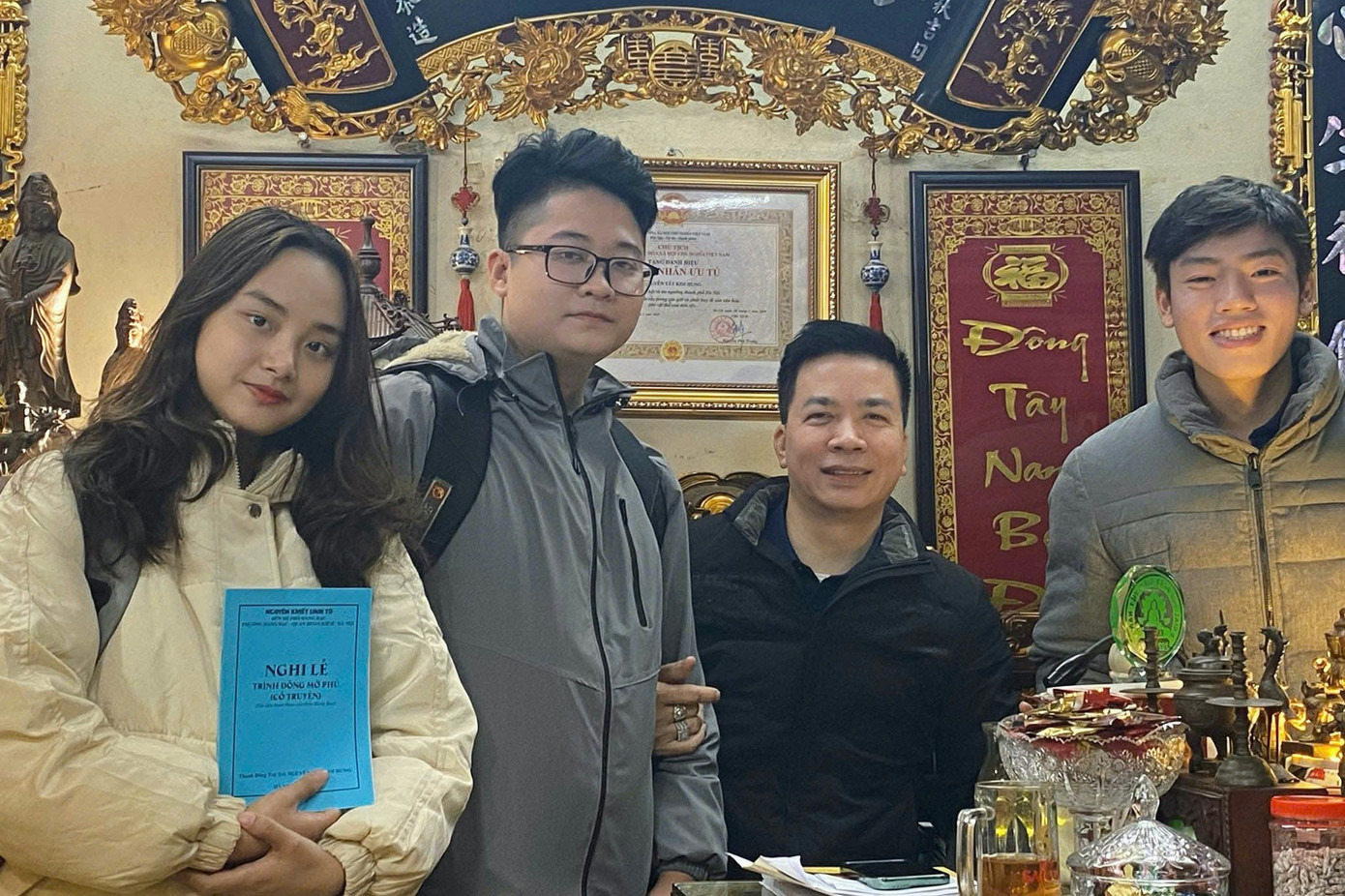
Hai and his colleagues in the scientific research group with Meritorious Artisan Nguyen Tat Kim Hung (in black shirt), the head priest of Nguyen Khiet Linh Tu Temple, Hanoi.
Whenever I introduce myself as a Religious Studies student, many people express surprise, skepticism, and ask questions like, "What can you do with this degree?", "Isn't studying such an abstract field difficult?".
For Hai, those very questions were opportunities to explain and spread the fascinating aspects of this field of study. After the conversations, many people expressed curiosity and a desire to learn more, which made her very happy. She believes that Religious Studies is not only for academic purposes but also helps in understanding oneself, others, and society.
Some photos of the K66 Religious Studies class during their field trip.
Understanding religion for sustainable developmentFrom her second year, Hai began participating in scientific research. She won second prize twice at the university level and was the author of a key student scientific research project. She had two articles published in the Journal of Religious Studies and the Journal of Cultural Studies.
“I still remember the days when the entire research team went to the highlands, sleeping in local homes, attending festivals and folk rituals to gain a deeper understanding of local religious life. There were nights close to the deadline when we stayed up all night, calling each other to compile materials and having lively discussions about every small detail in the research draft,” Hai shared.
Hai's graduation thesis topic is titled "The Belief in the Worship of the Tiger God at the Mother Goddess Shrines and the Shrines of Saint Tran in Private Homes," and it was conducted under the guidance of Assoc. Prof. Dr. Tran Thi Kim Oanh - former Head of the Department of Religious Studies.