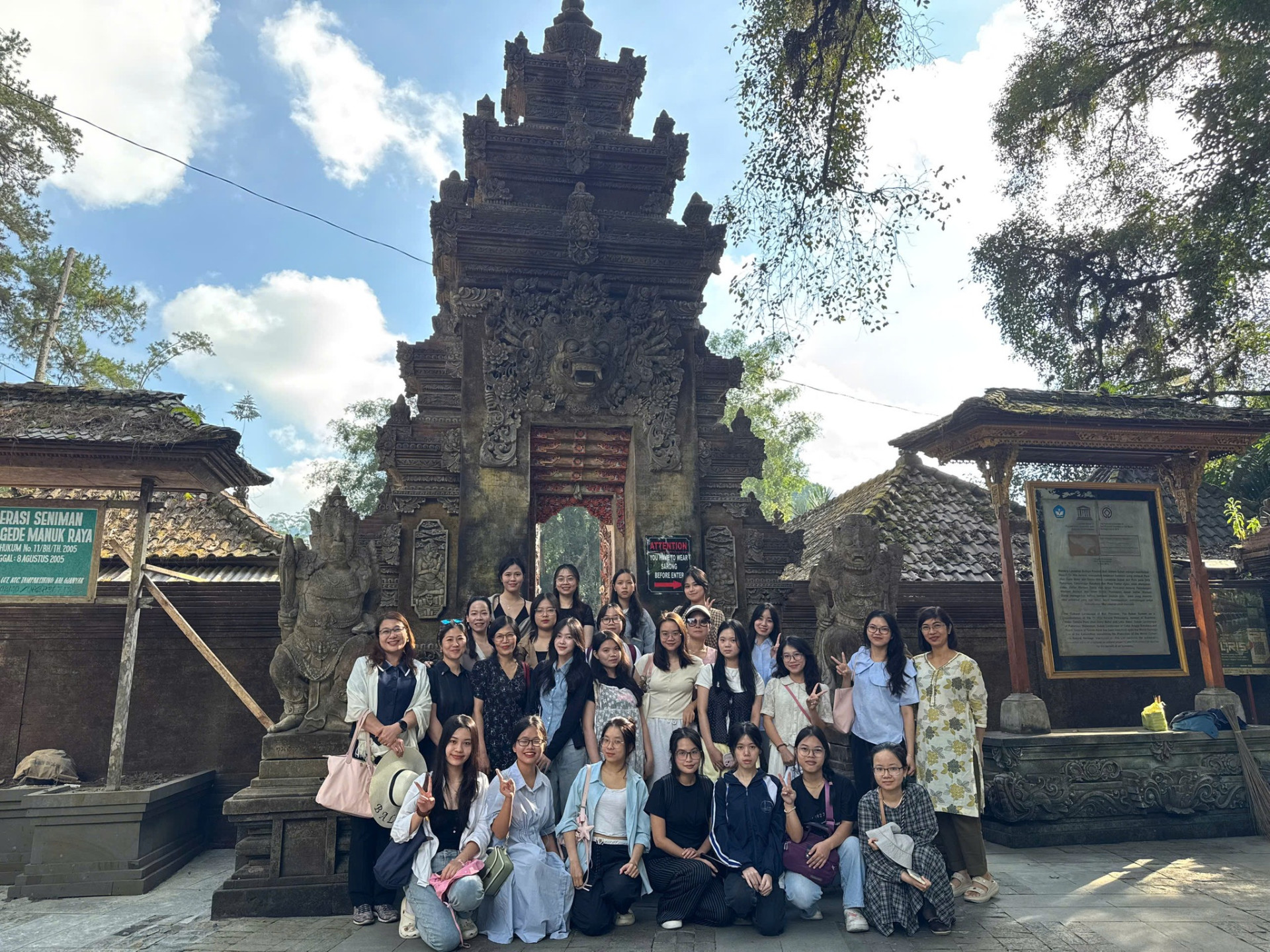
A group of Oriental Studies students from the Faculty of Tourism, Udayana University.
Religion – the most profound imprint of Indian culture.The most prominent influence of Indian culture in Bali is its religion; according to locals, over 70% of Balinese residents are Hindu. During their trip, the students visited some of the most sacred and representative temples, such as Taman Ayun, Tirta Empul, and Lempuyang. Each temple is not only a place of worship but also a center of community cohesion, a place where deep faith in Hindu deities is expressed.
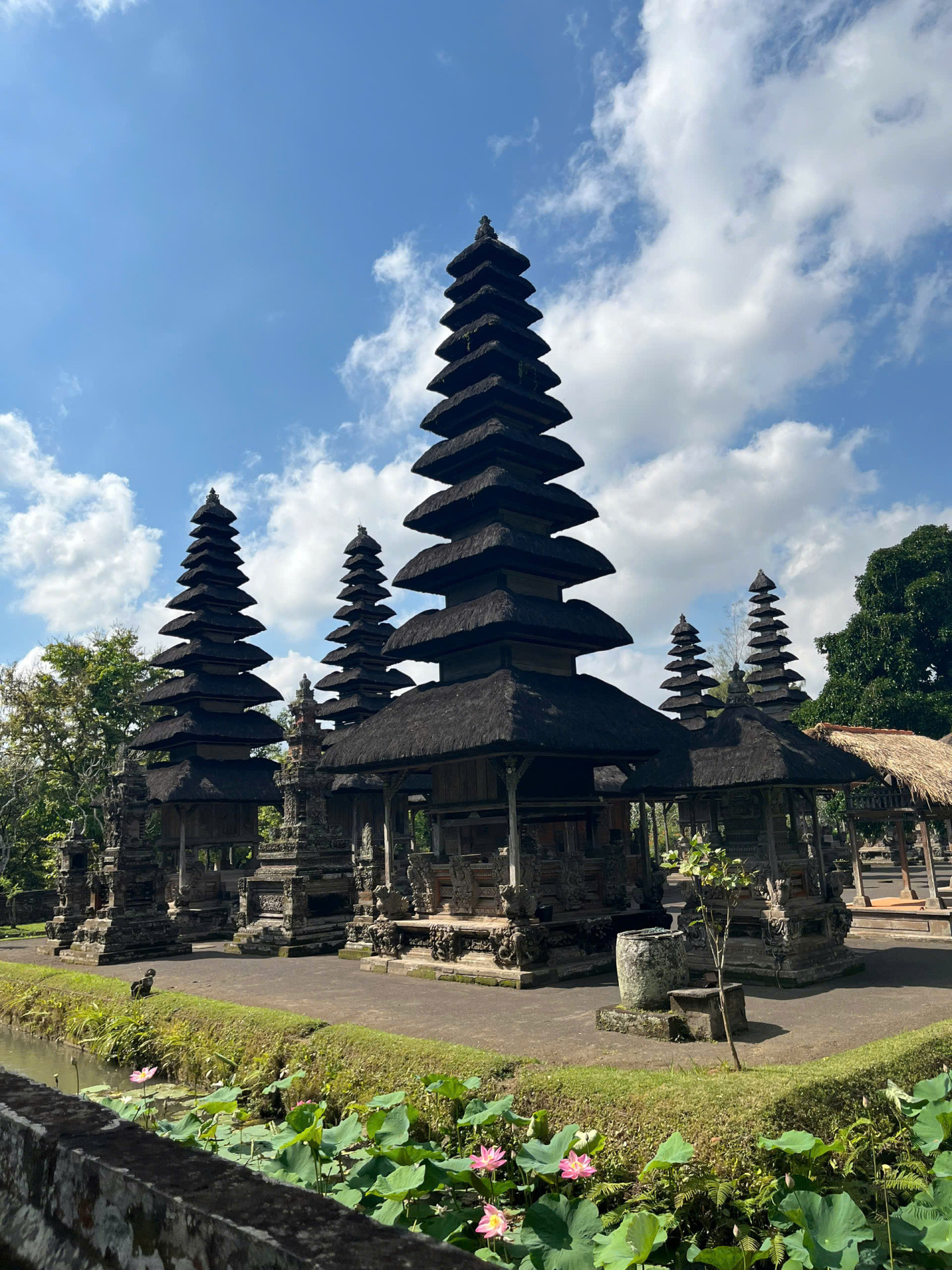
Indian Studies students visit Taman Ayun Temple – the royal temple of the Balinese people.
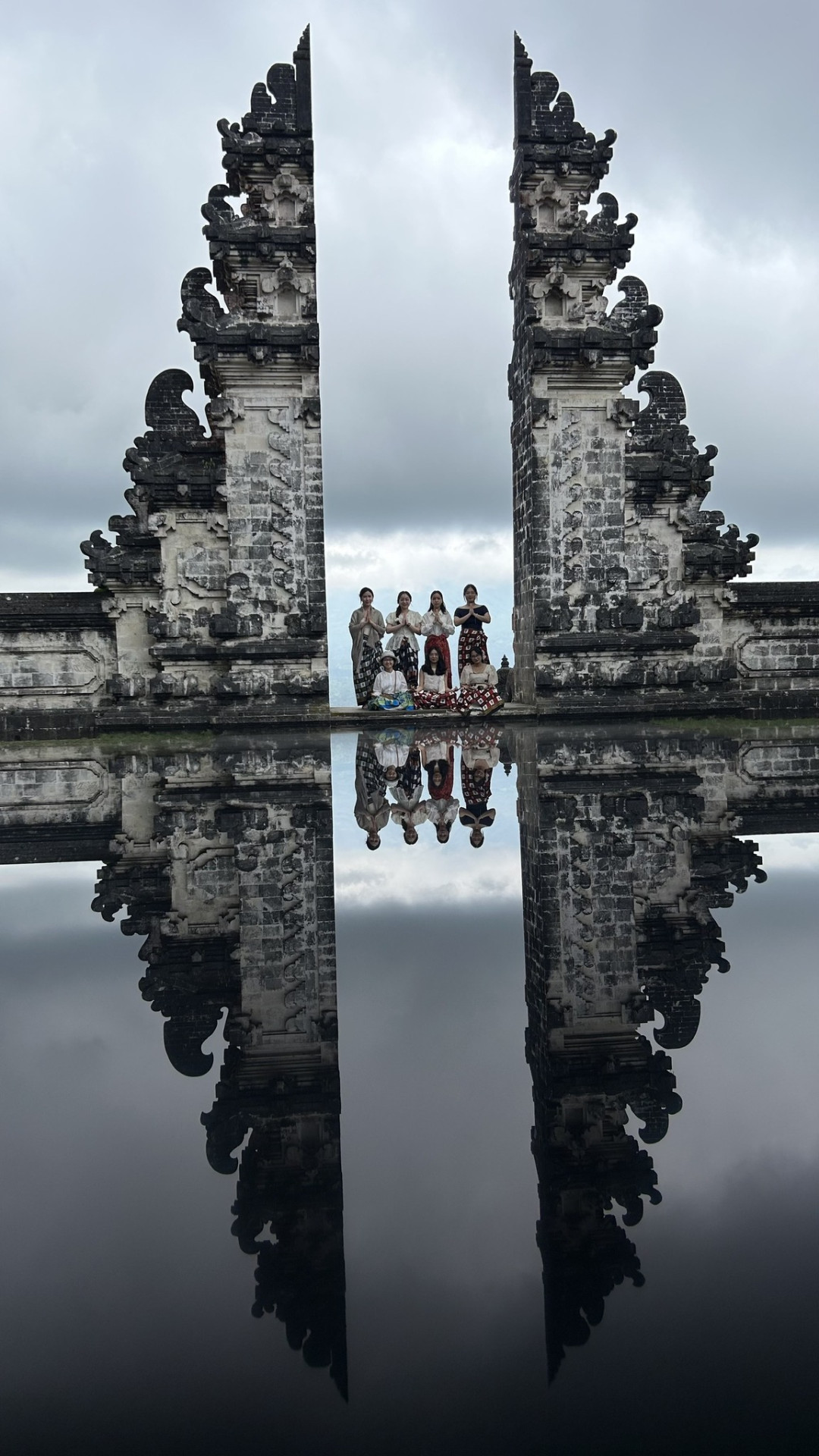
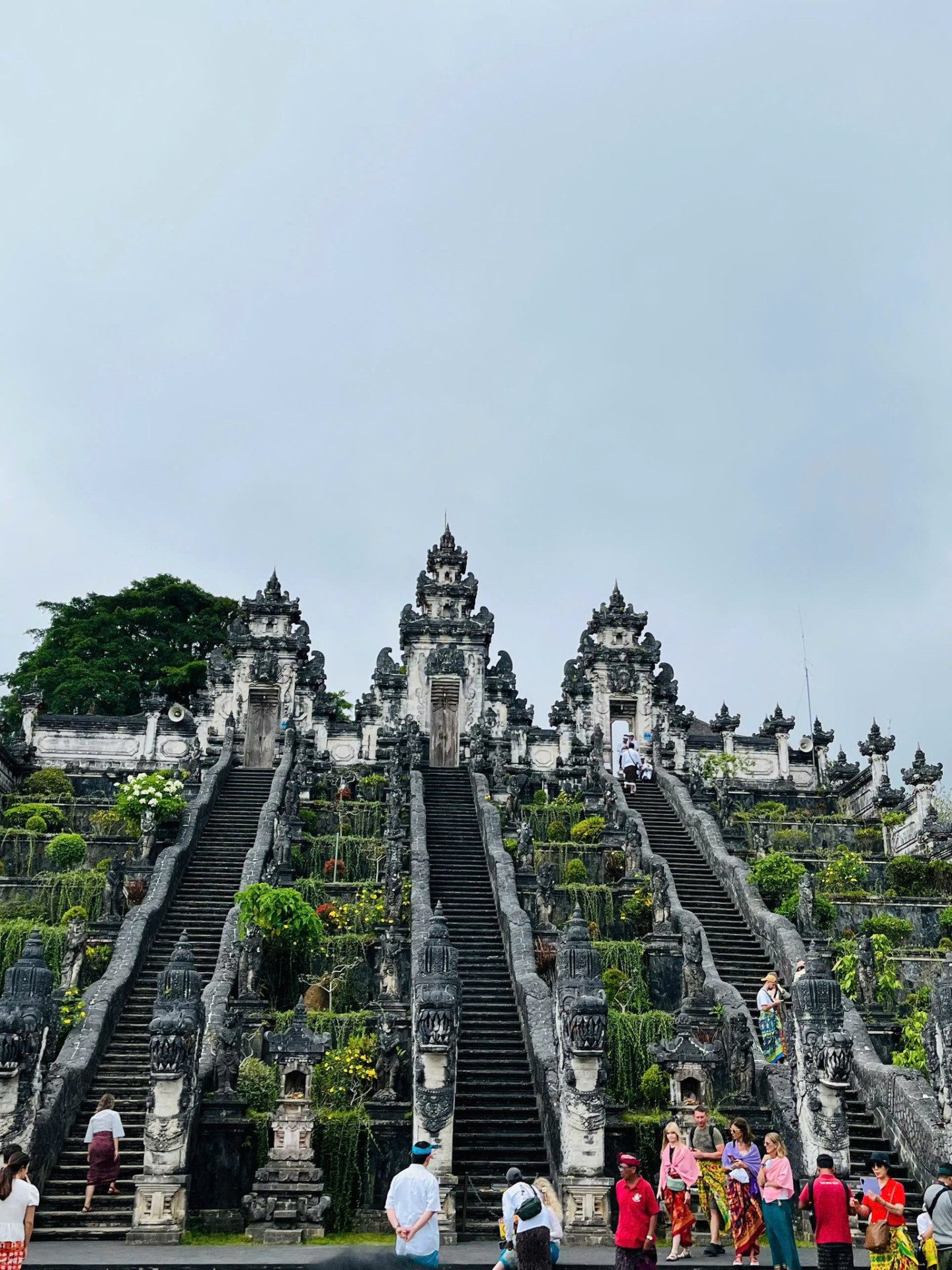
A group of Oriental Studies students visited Tirta Empul Temple and Lempuyang Temple.
Two purification rituals that left a deep impression were the melukat ceremony at Tirta Empul temple and the Banyu Pinaruh ceremony on the seashore. While melukat evokes the custom of bathing in the Ganges River in India, with the belief that the sacred water can cleanse impurities and bestow blessings, Banyu Pinaruh, which takes place after Saraswati, emphasizes the purification of the soul and the reception of new energy from the sea. Both demonstrate a direct transmission of Indian culture into Balinese religious life.
Tourists perform the ritual of cleansing themselves of melukat at the Tirta Empul temple.
Architecture - a harmonious blend of Hinduism and indigenous styles.Indian influence is also clearly evident in Bali's temple architecture. Taman Ayun Temple stands out with its multi-tiered towers (meru) inspired by the sacred Mount Meru in Indian mythology. Meanwhile, Lempuyang Temple, with its legendary "Gateway to Heaven," is both artistic and deeply philosophical. Both demonstrate the subtle fusion between Hindu architectural styles and the natural and cultural context of Bali.
The multi-tiered tower (meru) architecture within the Taman Ayun Temple complex.
The triple-arched gateway (candi bentar) is split in two within the Lempuyang temple complex.
Intricately carved statues of deities are characteristic of Hindu architectural style.
Not only in religion, but also in daily life, the architecture of Balinese houses bears the imprint of India. Many houses are built from stacked red bricks, unpainted and unplastered, similar to the traditional Indian style. However, the roofs are localized with Southeast Asian-style tile roofs, creating a unique harmony. In addition, the entrances to many restaurants, hotels, and markets also strongly reflect Hindu architecture, showing that Indian influence has permeated not only religious spaces but also everyday life.
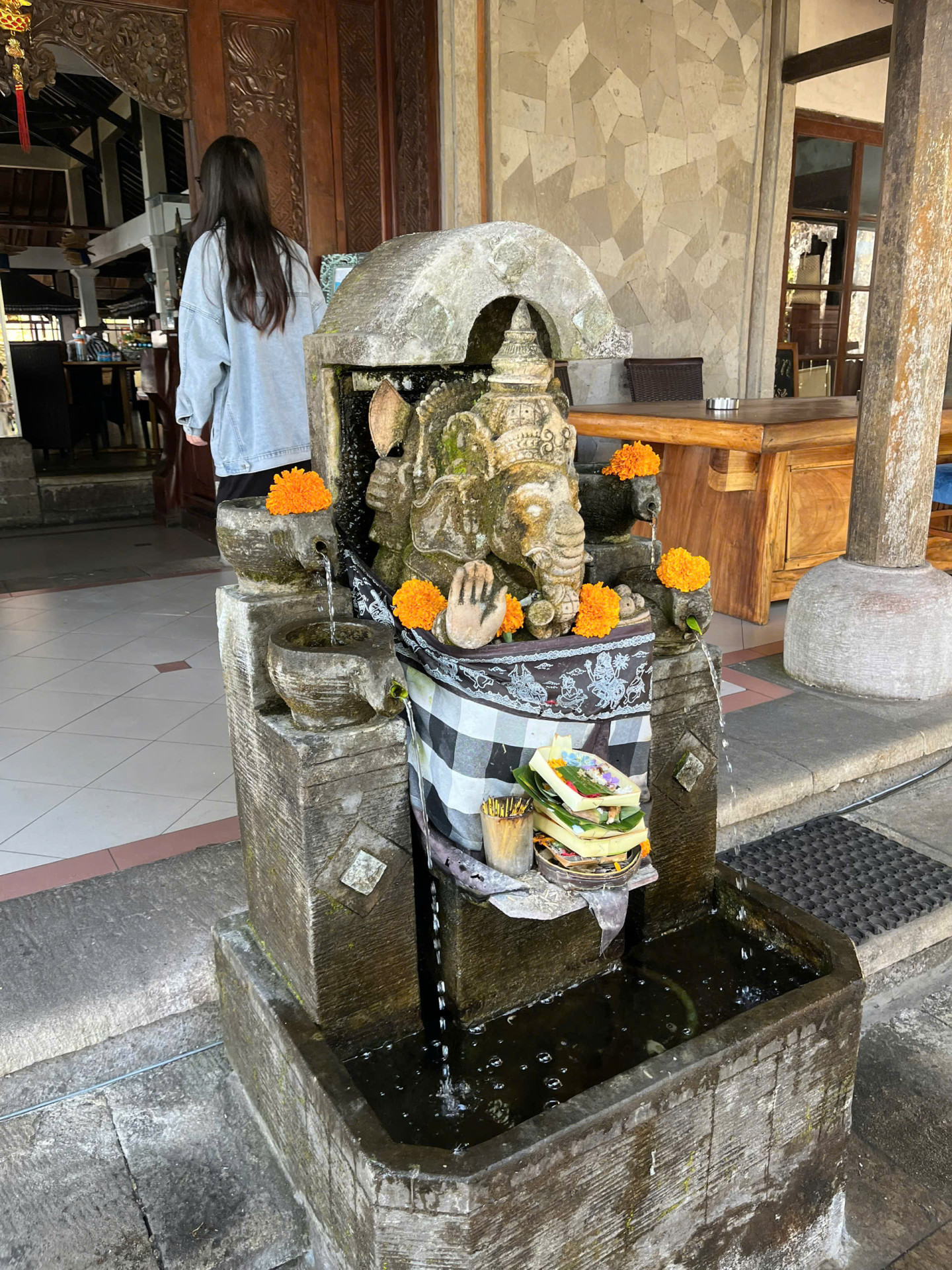
Indian culture is present in every aspect of life.The most striking impression for the students was how Indian culture was present in every small detail of the lives of the people of Bali. Along the streets, statues of Hindu deities could be seen everywhere, most notably the three supreme gods Brahma, Vishnu, and Shiva. In particular, Ganesha – the god of wisdom and good fortune – frequently appeared in front of restaurants, hotels, and shops, as a symbol of blessings and peace.
Statues of Ganesha, the god of wisdom and good fortune, often appear at the entrances to tourist sites.
The people of Bali also maintain a tradition of prayer. Every morning, they offer small offerings made from flowers, leaves, and incense called canang sari at the entrances of their homes, schools, or shops. This is not only a form of offering, but also an expression of gratitude to the deities and a desire for balance and harmony in life. Most families have small shrines in their yards or right in front of their gates for convenient worship. Because of these things, in any location, from public spaces to private spaces, one can easily feel the presence of beliefs and customs associated with Hinduism.
The internship trip to Bali provided an opportunity to observe and experience firsthand the strong presence of Indian culture on the island. From religion and architecture to daily life, everything demonstrated the enduring intermingling between India and Bali. These are not just "traces" but have become an inseparable part of Bali's identity. The trip concluded successfully with much valuable knowledge and precious experiences, but the memories will linger, and this journey will become an unforgettable experience for each member of the internship group.