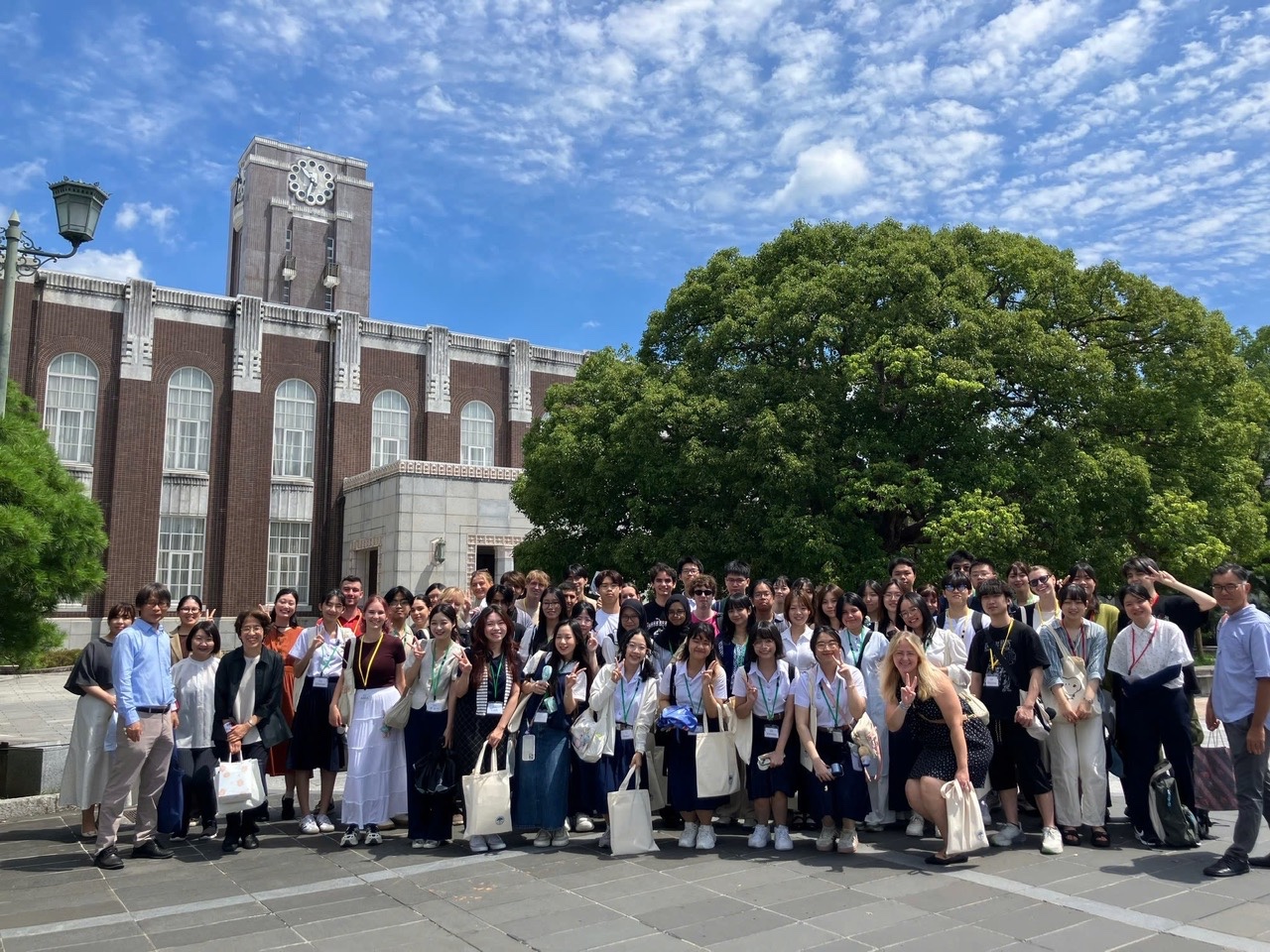
The Kyoto Summer Program is an annual program organized by Kyoto University, one of Japan's leading universities, with the aim of bringing the university's unique academic environment and cutting-edge research to international students. Through the program, students have the opportunity to access and better understand the social, scientific, and environmental issues facing Japan. At the same time, the program also provides students with the chance to experience Japanese life and culture firsthand, thereby fostering understanding and connection between different cultures.
Japanese students visit the campus of Kyoto University.
Over two weeks, the two students participated in Japanese language classes; academic lectures on diverse topics such as sustainable agriculture, gender and politics, mathematics, kanji and kanji culture, the World Expo, and the sustainability of traditional Japanese architecture; interacted and conversed with students from Kyoto University; and participated in academic discussions in Japanese. In addition to classroom learning, the two students also had the opportunity to participate in many practical activities such as a Japanese traditional culture experience day with activities like making Wagashi (Japanese sashimi) and enjoying matcha, learning about Noh and Rakugo theater; and educational field trips to Hikone Castle, the La Collina confectionery shop with its unique grass-roof architecture, and the Lake Biwa Museum.
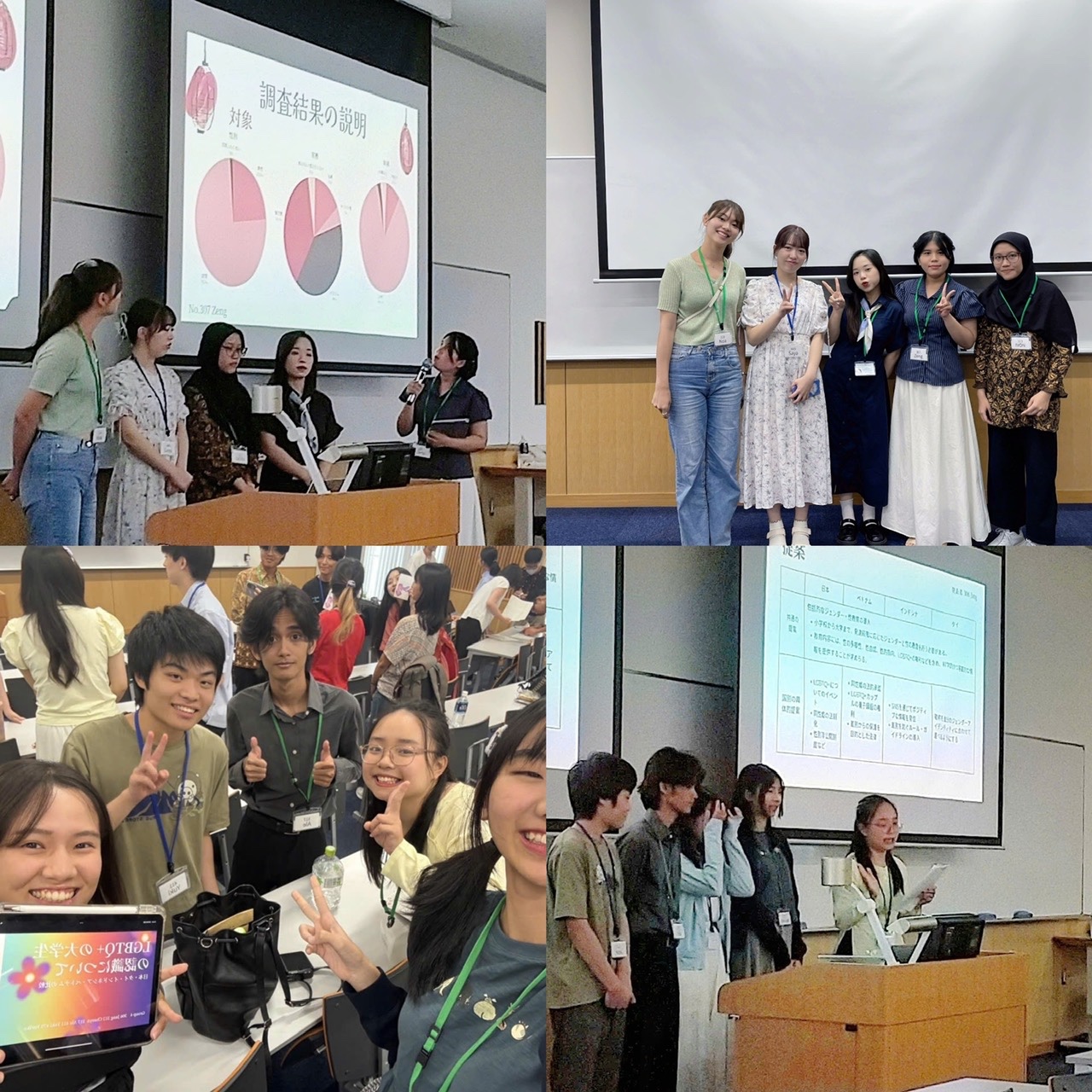
Group presentations on two topics: Comparing students' perceptions of LGBTQ+ in Japan, Vietnam, Thailand, and Indonesia; Superstition and taboos in Japanese, Vietnamese, Taiwanese, and Indonesian cultures.
At the end of the program, the two students, along with their groups, successfully presented their group topics and received questions and feedback from the teachers to help them improve their reports. Doan Vo Truong Giang's group presented the topic: Superstitions and Taboos in Daily Life: According to the Cultures of Four Countries/Regions: Japan, Taiwan, Vietnam, and Indonesia. Phuong Quynh Giang's group presented the topic: A Comparison of University Students' Perceptions of LGBTQ+: Japan, Vietnam, Thailand, and Indonesia. Through this, the two students not only applied their learned knowledge but also honed their research, analytical, teamwork, and presentation skills in Japanese within an international academic environment. This was also an opportunity to broaden their perspectives, gain a deeper understanding of socio-cultural issues in various countries, and thus lay the foundation for new research directions in the future.
These experiences not only left many memorable moments but also brought about profound emotions and thoughts for the two of you. Let's listen to what you both have to say after this special journey.
Student Phuong Quynh Giang shared: “If I could only use one phrase to describe this trip, I would say – ‘Dream comes true.’ During my four years of studying Japanese Studies, I had the opportunity to interact with student delegations from Kyoto University twice, and since then I have always cherished the dream of one day setting foot in this university. I am extremely happy and grateful to the Japan Foundation and the Japanese Studies department, Faculty of Oriental Studies, for giving me the opportunity to study and experience here. Although the two-week period wasn't very long, it was enough for me to complete the three tasks set by the program managers during the welcome ceremony: studying diligently, maintaining good health, and making friends. The specialized knowledge and skills I have learned and honed over the past four years in Japanese Studies have helped me quickly integrate into the international learning environment, offering my own perspectives in lectures and contributing ideas during preparation sessions.” I gave a presentation. At the same time, I learned how to take care of my health and manage my time effectively to complete my demanding study schedule. Besides that, I made many friends from different countries. One of the most memorable practical experiences was the cultural experience day. I had the opportunity to practice making Wagashi (Japanese tea sashimi) while studying in my major and as a member of the Urasenke Tea Ceremony Club at USSH. This time, I got to experience those cultures right here in Japan. I was so moved that day that I can't put it into words. The Kyoto Summer Program 2025 will forever be a special milestone in my student life.”

Students explore Kyoto after school.
Student Doan Vo Truong Giang shared: “After many years of diligently studying Japanese, my dream of setting foot in the Land of the Rising Sun finally came true through the Kyoto Summer Program 2025. For over two weeks at the Kyoto Summer Program 2025, I not only experienced Japanese culture but also studied in a unique academic environment, opening up many new ideas and research directions for the future. The specialized knowledge I accumulated throughout my studies at university has now become vibrant, helping me to connect the theoretical knowledge from lectures in Vietnam with practical experiences in Japan. In the advanced Japanese class, I studied and analyzed texts about Kyoto, thereby improving my language skills and gaining a deeper understanding of the culture and history of the ancient capital. In particular, I applied my knowledge from the Japanese Literature course on Haiku poetry, easily connecting it with the knowledge I learned in Japan, and better appreciating the subtle beauty of the language and the profound meaning of this poetic genre.” I also had the opportunity to interact with students from Kyoto University and international friends, improve my Japanese and English skills, and introduce Vietnamese culture to everyone. I would like to express my sincere gratitude to the Japan Foundation and the Department of Japanese Studies, Faculty of Oriental Studies, for providing all the necessary support to enable me to participate in the Kyoto Summer Program 2025. This is a valuable experience that has helped me not only expand my knowledge and skills but also cultivate my love for Japan and its culture, thereby further motivating me to continue striving in my studies and contributing to Vietnamese-Japanese cultural exchange activities in the future.”
The journey at the Kyoto Summer Program 2025 has become a memorable milestone, further inspiring and motivating Japanese Studies students to continue their journey from the East to the global stage, from the classroom to boundless experiences.