
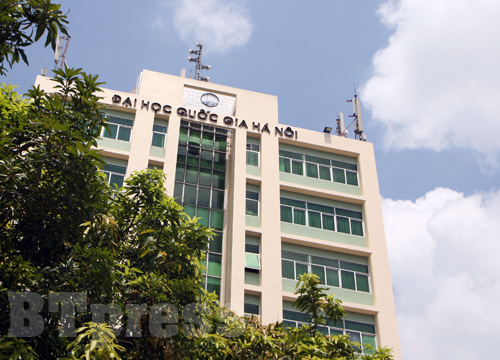
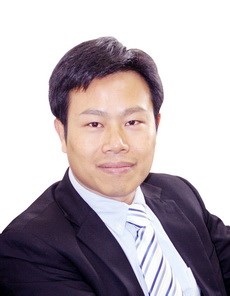
Deputy Director of Vietnam National University, Hanoi, Le Quan
We desire a strong pool of intellectual talent.
- Sir, we understand that Vietnam National University, Hanoi is systematically implementing a program to attract international scholars. Could you please tell us where this idea originated?
We believe that, in an integrated world, in order to improve quality and promote scientific and technological activities linked to international cooperation, Hanoi National University or any other university needs specific policies and solutions to attract and utilize a highly qualified team of scientists.
With over 2000 full-time scientists, of whom over 50% hold PhDs and over 20% are professors or associate professors, Hanoi National University has made efforts to innovate its personnel organization to create an environment, opportunities, and conditions for accessing information and resources for scientists; focusing on developing the team in conjunction with international integration.
To improve the quality of the scientific workforce, many solutions have been implemented, such as: the project to develop a team of highly qualified scientists by 2020, with a vision to 2030; a pilot policy to prioritize the recruitment of highly qualified scientists in relation to the quantity and quality of outputs; reforming investment policies to develop strong and potential research groups; developing a model of scientist clubs to connect scientists with major tasks; and removing administrative barriers in the placement and utilization of scientists...
In particular, Vietnam National University, Hanoi has also issued standards for scientists at Vietnam National University, Hanoi, linked to international integration, such as: having a doctoral degree, being able to use foreign languages in teaching and scientific research, having international publications, and participating in international cooperation.
Innovative solutions in personnel management have contributed to improving the productivity and quality indicators of the scientific staff at Vietnam National University, Hanoi.
All these efforts are aimed at fostering a team of scientists of regional and international caliber, ready to participate in and effectively carry out the country's scientific tasks.
ButIt is known that inviting international scholars to work in Vietnam is not a new idea, but Hanoi National University has unique policies that create its own special appeal.
It's true that this isn't a new problem; many places have implemented various solutions, but the results haven't been very good. I believe the key question that remains unanswered is: what specific tasks will these individuals be involved in?
The reality at Vietnam National University, Hanoi is similar; in recent years, thousands of international scholars have come to us every year. However, the effectiveness, proactiveness, and engagement have not been high; the contributions of international scholars to the implementation of specific tasks of Vietnam National University, Hanoi have not been significant.
Drawing lessons from this experience, to effectively implement the Scholar Attraction Program, we focus on specific and distinctive points: Firstly, we need to identify the tasks and projects that require international scholars.
Based on that, it's necessary to clarify who needs to be attracted, what the standards are, what the rights and obligations are, and what the working mechanisms and conditions are... Attracting talent should start from job needs, not from incentives.
- To ensure the program achieves its desired results, have you considered the potential difficulties that may arise?
The program issued serves as the initial framework. Action and determined effort from leadership are paramount. Action must be tailored to each specific scholar's case, not just remain policy-based.
Immediately after the Program was launched, the Director of Vietnam National University, Hanoi, Phung Xuan Nha, in his role as Head of the Steering Committee, directed the approval of the infrastructure investment project and initial financial support for the Program.
The project ensures suitable working conditions for the coordination office and provides workspace, conference and seminar facilities, video conferencing, etc., for international scholars.
We focus on attracting reputable scientists to act as leading figures, drawing in other scholars to participate. In addition, over 500 full-time staff members with doctoral degrees from overseas universities also act as ambassadors to attract colleagues and supervising professors to participate in the activities of Vietnam National University, Hanoi.
Our view is that it is not necessary to require highly qualified scientists to be recruited as full-time scientists at Hanoi National University, but they can participate for a certain period of time, or be involved in specific scientific projects and work remotely.
- With such a clear strategy, well-structured plans, and systematic implementation methods, what has Hanoi National University been doing to realize this aspiration, sir?
Let me give you an example: inviting Professor Nguyen Duc Khuong – ranked 7th in the Top 200 leading economists in the world (as selected by the RePEc – Research Papers in Economics project) – to participate in the program, along with myself as co-Deputy Heads of the Program's Steering Committee.
Upon receiving the invitation, Professor Khương immediately joined us in reviewing the need for international scholars in the fields of economics and finance.
Consequently, a plan to attract international scholars in these fields was developed; and through his international scholarly network, Professor Khuong invited, and more than a dozen scholars accepted, to participate in the program.
In the near future, Professor Khuong will work with us to develop a new master's program in international finance, in collaboration with the Association of Vietnamese Overseas Scientists in this field.
Through this program, many reputable Vietnamese expatriate scientists will periodically return to Hanoi National University to teach and conduct research. This program also helps Hanoi National University attract many international students to study there.
The positive results have gradually become apparent.
So, what has been recorded so far, sir?
Through practical implementation, we have found that having international scholars will help Hanoi National University acquire a valuable source of intellectual resources and experience to immediately participate in the implementation of training and scientific research projects and tasks.
Through this, scientists from Vietnam National University, Hanoi have the opportunity to connect quickly and directly with international universities through the implementation of joint projects.
Based on our achievements, in addition to our general goals, we are aiming for specific objectives over the next three years: ensuring that all high-quality training programs at Vietnam National University, Hanoi, have international scholars contracted to teach for periods ranging from two weeks to one semester per year, and to mentor students/learners annually.
Increase the number of articles, inventions, and co-authored scientific and technological products between scientists of Hanoi National University and international scholars; develop 10 to 15 joint research groups and laboratories co-chaired by international scholars within the next three years; and import new training programs through international scholars acting as program directors...
- Given how effective this program is, does Vietnam National University, Hanoi have plans for the future, sir?
During the period 2016-2020, Vietnam National University, Hanoi focused on attracting international scholars to jointly implement the following activities:
1. Participate in teaching high-quality training programs. These are programs with many courses taught in English, and have budgets to cover the costs of international scholars. In the future, these high-quality training programs need approximately 20% international faculty members.
Therefore, the Program Office will coordinate everything from needs assessment to promotion, signing of agreements, and coordination of international scholars for all high-quality training programs from 17 universities, institutes, and faculties under the Vietnam National University, Hanoi.
2. Participate in the implementation of major tasks related to the organizational development of Vietnam National University, Hanoi. A series of ongoing projects are linked to attracting international scholars, such as the Vietnam-Japan University project (with 6 master's programs taught in English and key laboratories), the development project of the International University, the University of Law, the Faculty of Medicine and Pharmacy, the Hospital, etc.
3. Participate in co-chairing research groups and laboratories, research centers, research projects, etc. Hanoi National University's policy prioritizes investment and development linked to international cooperation and prioritizes the development of affiliated laboratories both domestically and internationally.
4. Participate in leading and directing new training programs. The program plays a role in attracting and supporting international scholars to transfer new training programs to Vietnam National University, Hanoi.
International scholars will serve as program directors and, through them, will invite international colleagues to teach and conduct research. By launching a new master's program, Vietnam National University, Hanoi can attract more than a dozen international scholars to participate deeply and long-term.
5. To promote the international publication of Vietnam National University, Hanoi, we have a policy of investing in and providing financial support to scientists of Vietnam National University, Hanoi to collaborate with international scholars in joint research and international publication.
Initial financial support is sufficient to cover airfare, conference and seminar participation fees, etc. Therefore, scientists who connect with each other and commit to publishing internationally will receive financial support from Vietnam National University, Hanoi.
Through the synchronized implementation of solutions tailored to needs, Vietnam National University, Hanoi is determined to promote solutions to attract international scholars in both quantity and quality.
- Based on the program's experience, what solutions do you think Vietnam needs to implement to attract more leading scholars?
I believe that before attracting talent, we need to focus on innovating the use of local human resources. Therefore, personnel management needs to be reformed to ensure that scientists have access to resources, a favorable working environment (especially regarding administrative procedures), and are properly evaluated and compensated.
To achieve this, a crucial solution is to innovate the investment and human resource utilization mechanisms. The employment of scientists must be based on contracts with clear and effective commitments to deliver tangible results.
When attracting scientists, it's essential to have a specific problem to solve, commitments, working mechanisms, defined responsibilities and authority, and specific resources. Talented scientists don't necessarily need high salaries. What they fear most is being recruited but not being given concrete tasks.
Thank you, sir!
At the invitation of the Director of Hanoi National University, Phung Xuan Nha, Professor Furuta Motoo, former Vice-Director of the University of Tokyo, Japan, accepted the position of Rector of the Vietnam-Japan University under Hanoi National University. The Vietnam-Japan University is currently enrolling students in six master's programs taught in English. In the future, the Vietnam-Japan University aims to attract many international scholars from Japan and other countries.
According to giaoducthoidai.vn
Author:Diep Anh (compiled)
Newer news
Older news

