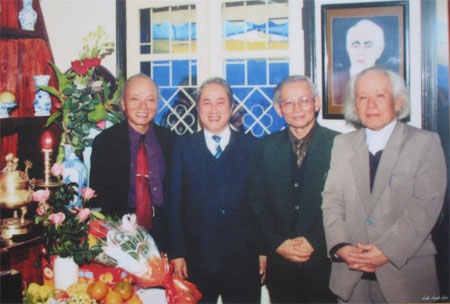
Professor Ha Van Tan was born on August 16, 1937, in Tien Dien commune, Nghi Xuan district, Ha Tinh province (the same village as the great poet Nguyen Du) - a land and a family known for its studiousness and scholarly achievements, with many talented and virtuous figures throughout history.
As a child, Professor Ha Van Tan lived and studied in his hometown, inheriting the family traditions, lineage, and cultural heritage of his birthplace. In early 1955, after graduating from the 9th grade, Ha Van Tan went to Hanoi. After a year of hard work and studying, he decided to enroll in the History department at the Hanoi Pedagogical University. In 1957, at the age of twenty, Ha Van Tan graduated from university (ranking second) and remained at the university as a staff member in the Department of Ancient Vietnamese History at the Hanoi Pedagogical University (at that time, the Hanoi Pedagogical University and the Hanoi University shared a teaching staff structure, but Ha Van Tan was on the staff of the Hanoi Pedagogical University; later, when the two universities separated, he became part of the Hanoi University staff), under the supervision of Professor Dao Duy Anh.
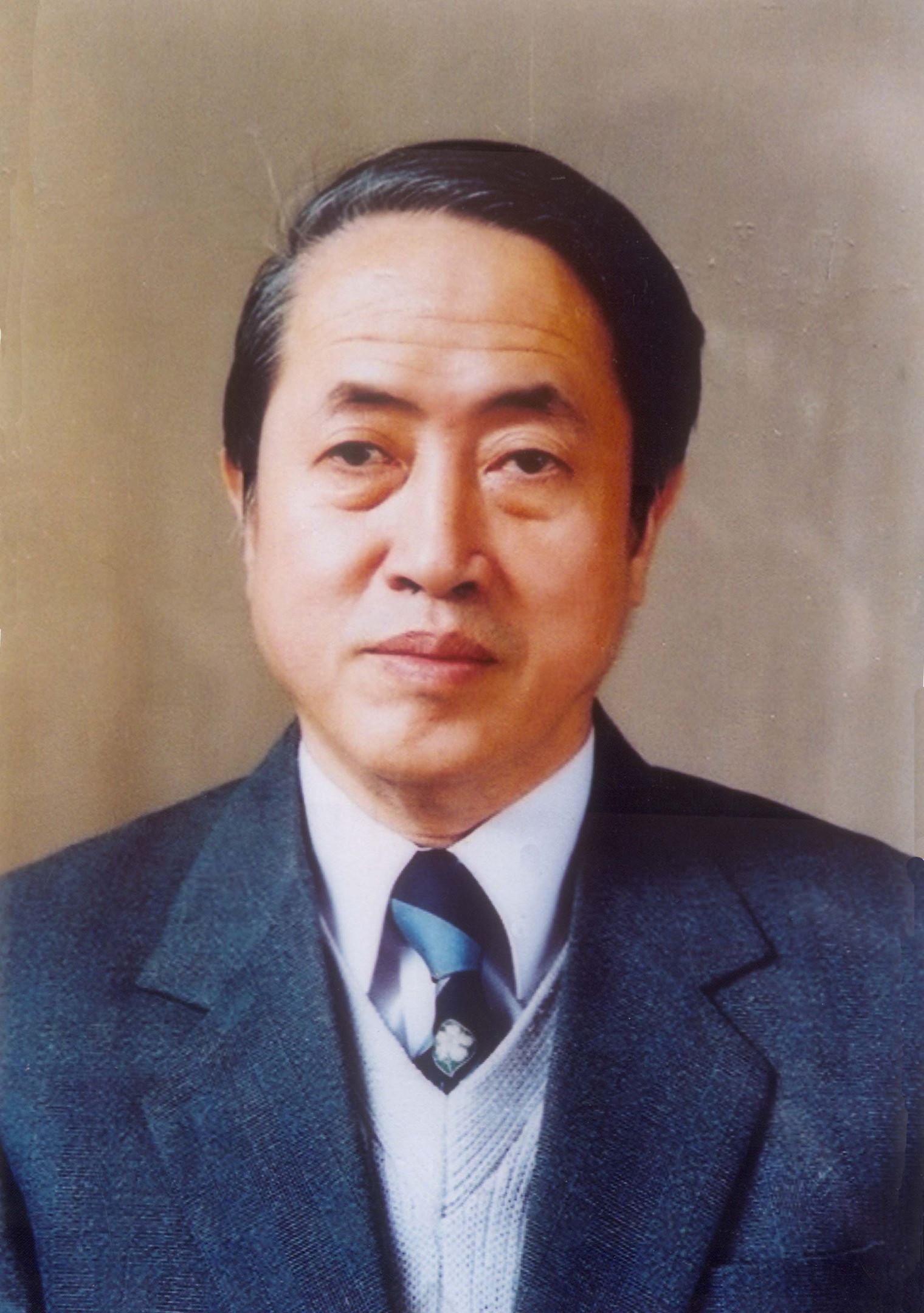
Professor, People's Teacher Ha Van Tan (1934-2019)
Professor was Head of the Department of Historical Methodology, Faculty of History (1982 - 2009); Director of the Institute of Archaeology (Vietnam Academy of Science) (1988-2008).
Throughout his life, Ha Van Tan was fortunate to have studied and later worked with teachers who would later have a profound influence on his academic journey. First and foremost was Teacher Nguy Cao Hien, a descendant of the Nguy Khac Tuan and Nguy Khac Dan families, when Ha Van Tan was still in high school in Ha Tinh. In the History department, he had teachers such as Dao Duy Anh, Tran Duc Thao, Truong Tuu, Cao Xuan Huy… Unfortunately, these teachers all left the school shortly afterward. From then on, Ha Van Tan embarked on a tireless journey of learning, teaching, learning, and teaching intertwined.
When Ha Van Tan started his internship in the Department of Ancient Vietnamese History, he was very worried. He jokingly remarked, "With a 9+2 level of education, what can I possibly accomplish?", so he decided he had to throw himself into studying. He was immediately met with the great example of self-study set by Professor Dao Duy Anh. The only way to learn independently was to read books. And to read books, one needed a solid understanding of the language. Before studying foreign languages, Ha Van Tan studied Vietnamese, reading books on phonetics, grammar, and especially researching issues related to the origins of the Vietnamese language. Later, Ha Van Tan became so proficient in languages that he became a member of the Vietnam Linguistics Association and was invited by linguist Cao Xuan Hao to work with him on linguistics. Then, solely through self-study, he became fluent in Chinese characters, French, English, Russian, German, and Japanese. Ha Van Tan learned German through Russian books, Japanese through Chinese books, and then independently learned Sanskrit – an ancient Indian language that is very difficult to learn – through German. For Ha Van Tan, language was just a key, not the goal, and indeed, foreign languages helped him a great deal on his scientific journey.
The first task that Professor Dao Duy Anh assigned to Ha Van Tan was proofreading.Local historyNguyen Trai's work, written in Chinese characters in the 15th century, was translated into Vietnamese by the Confucian scholar Phan Huy Tiep. The "annotations" are 115 pages long, four times the length of the original text (38 pages). To find the materials for these annotations, Ha Van Tan had to read approximately 30 Chinese books and 16 Vietnamese books, all in their original Chinese versions (according to researcher Nguyen Vinh Phuc). Professor and People's Teacher Phan Huy Le wrote: "Tan's first work was the editing and annotation of Nguyen Trai's *Du Dia Chi* (Geography of Vietnam), translated by Phan Duy Tiep and published in 1960 when he was only 23 years old. I remember that during a department meeting, when commenting on this work, Professor Dao Duy Anh said something to the effect that: 'Very meticulous and serious, I am very satisfied and have confidence in the author.' His talent and scientific style were revealed right in this first work."
After Professor Dao Duy Anh left the school, Ha Van Tan was assigned to teach Vietnamese history from ancient times to the end of the Ho Dynasty. Therefore, he was tasked by Professor Tran Van Giau, along with Tran Quoc Vuong, with writing.History of primitive communism in Vietnamand volume IHistory of the feudal system in Vietnam.Through writing these two books, Ha Van Tan became interested in the issues of Vietnamese prehistory and the period from the beginning of independence to the end of the Tran dynasty. It can be said that the direction of his entire scientific life was determined.
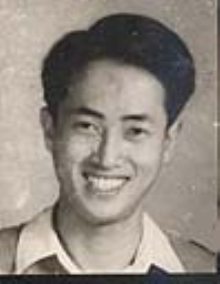
Professor, People's Teacher Ha Van Tan in his youth
In 1960, the History Department of Hanoi University invited Professor Boriskovsky from Leningrad State University to help Vietnam develop its archaeology sector. Ha Van Tan and Tran Quoc Vuong accompanied Professor Boriskovsky on archaeological expeditions to learn from him. They not only became familiar with the relics discovered by the French of the Hoa Binh and Bac Son cultures, but also made new discoveries themselves. As an expert in Paleolithic studies, Professor Boriskovsky's experiences and vivid lectures greatly influenced Ha Van Tan. Furthermore, under Professor Boriskovsky's guidance, Ha Van Tan and Tran Quoc Vuong wrote...A brief overview of Vietnam's prehistoric archaeology.(published in 1961). Besides general knowledge, the book also presents new findings of Vietnamese archaeology regarding the Stone Age. And, by chance, in 1988 he began working at the Institute of Archaeology, later becoming Director of the Institute of Archaeology, Vietnam Academy of Social Sciences and Humanities.
Archaeology demands a broad understanding and interdisciplinary knowledge. Therefore, Ha Van Tan ventured into the study of Physical Anthropology, particularly skull research, then statistical mathematics, and prehistoric Southeast Asian archaeology. Each time he discovered and conquered a new field, Ha Van Tan left his mark with highly regarded scientific products. Ha Van Tan never studied for the sake of studying, but rather to produce results in one form or another. From this, he drew two valuable lessons for scientists who followed him:""To achieve good results in any subject, one must know how to connect what has been learned with research and teaching," and "passion is not enough; one must be persistent, and have a little bit of daring, a serious kind of daring!" Perhaps that is why, in his nearly 50 years of dedicated research and teaching, he has supervised 25 doctoral students who successfully defended their dissertations, and published 298 articles, papers, and scientific studies in domestic and international journals. He is also the author and co-author of 15 books. These successes are not limited to archaeology alone.
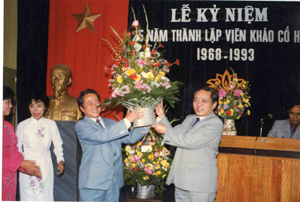
Professor Ha Van Tan at the ceremony commemorating the founding of the Institute of Archaeology.
Ha Van Tan's next passion and area of success was Vietnamese history from the 10th to the 14th centuries.The resistance war against the Mongol invasion.(co-authored) is a representative book of his research on this period. According to Do Thuy Lai, the book is appealing not only because of its many rare foreign documents, but also because of its writing style with many clear and rigorous analyses, recreating the historical atmosphere and affirming early on the erudition and profound abilities of Ha Van Tan. From studying ancient and medieval history, Ha Van Tan paid attention to land issues and cultural issues during the 10th to 14th centuries. His love for Buddhist history began to blossom when he studied the Buddhist scripture pillars in Hoa Lu, and he later delved into Vietnamese Buddhism from the 10th to 14th centuries and wrote his research in this book.History of Vietnamese BuddhismTo understand the history of Vietnamese Buddhism, Ha Van Tan had to read more about the history of Buddhism in India and China. Then, starting with Indian Buddhism, he had to study ancient and medieval Indian philosophy, and then broaden his knowledge to the history of Eastern philosophy…
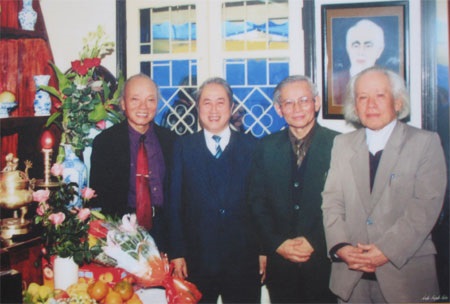
The "Four Pillars" of Vietnamese Historiography
Historical theory was not the top priority in Ha Van Tan's research, but like other great historians, he recognized the necessity of historical theory in historical research very early on, and it seemed that historical theory was his destiny. From the 1970s, Ha Van Tan lectured students in the History Department on topics such as historiography and textual studies. In 1982, he proposed to the Department and prepared all the necessary conditions to establish a Department of Historical Methodology at the History Department of Hanoi University, which he was later assigned to head. Embarking on his research into methodology, he had to read many similar foreign books. Only through reading did he realize that none of them presented a complete historical methodology. Authors only presented some methodological issues, not a systematic approach to historical methodology. He sought his own way of presenting it, starting with the activity theory put forth by Marx. Based on that theory, he viewed scientific research as an activity whose object of activity is the object of science and whose subject of activity is the scientist. Ha Van Tan also focused on professional training for staff in the Department of Historical Methodology, guiding young staff members in building and perfecting training programs, and supporting learning and research materials... Unfortunately, his planned textbook on methodology was not completed, nor were other textbooks that Ha Van Tan wanted to write such as those on historiography, textual studies, seal studies, classical script studies, inscription studies… and lecture notes on theoretical archaeology, archaeological schools, or Southeast Asian archaeology… when he fell seriously ill.
He was appointed Professor in 1980, awarded the title of People's Teacher, the First Class Labor Medal, the Third Class Labor Medal, the Second Class Anti-American Resistance Medal, and the Ho Chi Minh Prize for Science and Technology (2000), and many other medals. But above all, he is one of the "the four pillars of the court"In the history of Vietnam, the contributions of teachers like him have made the Department of History a heroic institution, and his name has become a source of pride for the Department of History, for the University of Social Sciences and Humanities, Vietnam National University, Hanoi."
PROFESSOR, PEOPLE'S TEACHER HA VAN TAN
Ho Chi Minh Prize for Science and Technology in 2000 for this work.Following the trail of ancient cultures. |
Author:Ms. Ho Thi Lien Huong
Newer news
Older news

