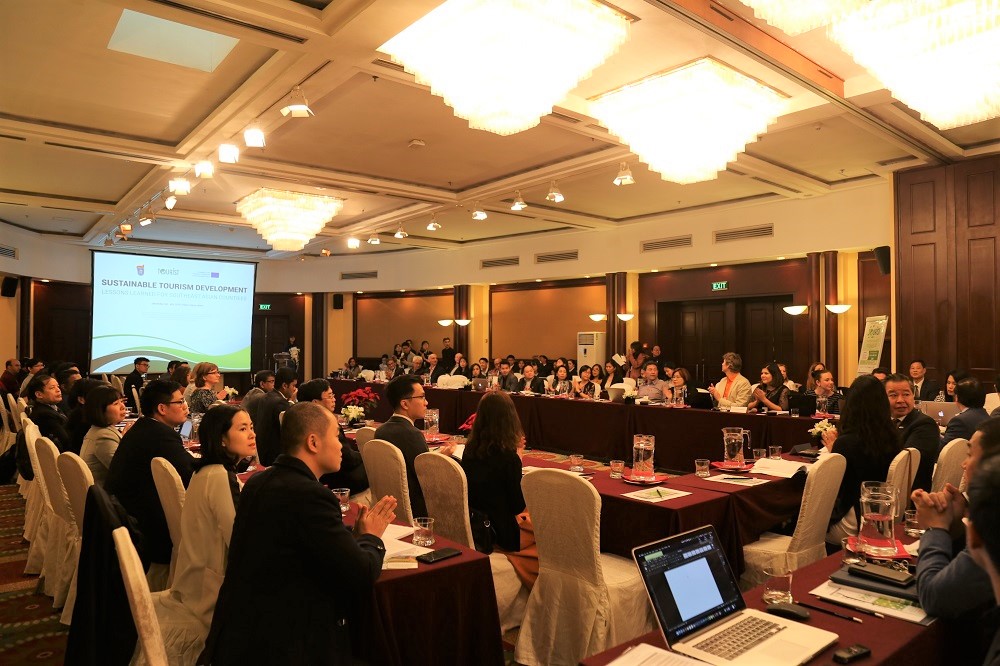
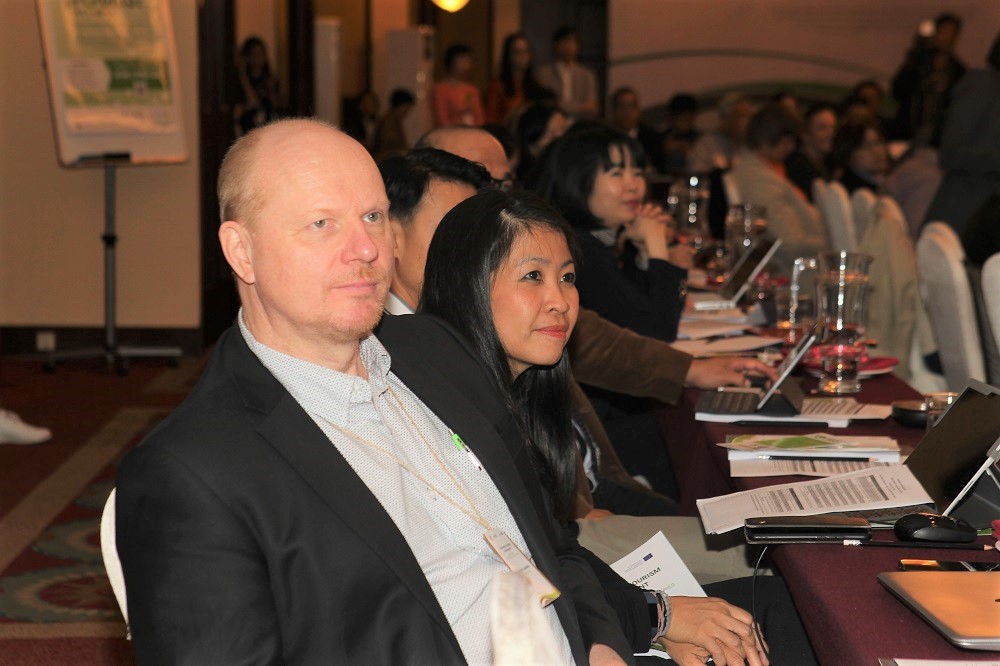
The workshop was attended by approximately 60 scholars from various countries and representatives from management agencies, training institutions, and research centers in tourism, both domestically and internationally.
Tourism development not only brings economic benefits but also contributes to poverty reduction, job creation, cultural exchange, and global integration. However, tourism development also comes with environmental problems, such as increased waste, water and air pollution, and climate change. Along with these are social ills such as increased prostitution and theft, often associated with the rise in domestic and international tourists.
These concerns have led to increased attention to “sustainable tourism development.” According to the WTO's 2005 definition, sustainable tourism is “a type of tourism that comprehensively considers the economic, social, and environmental impacts, both present and future, meeting the needs of tourists, industries, the environment, and the communities where tourism activities take place.” In Southeast Asian countries, where tourism is experiencing strong growth, the issue of sustainable tourism development is a constant concern. Although at different stages of tourism development, all Southeast Asian countries are facing problems caused by unsustainable tourism domestically and internationally.
In this context, the workshop "Sustainable Tourism Development: Lessons Learned for Southeast Asian Countries" was organized to create a forum for scholars, researchers, and tourism managers to exchange and share knowledge, results, and research methods related to this work. The workshop focused on clarifying the current situation and essential issues of sustainable tourism in Southeast Asia, including precedents, challenges, limitations, and cooperation among Southeast Asian countries. From this, solutions, implications, and recommendations were proposed for the countries.
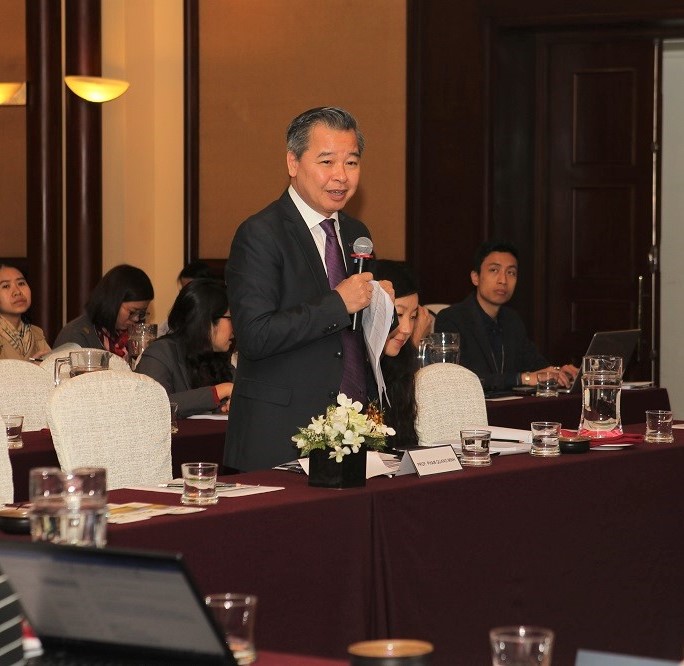
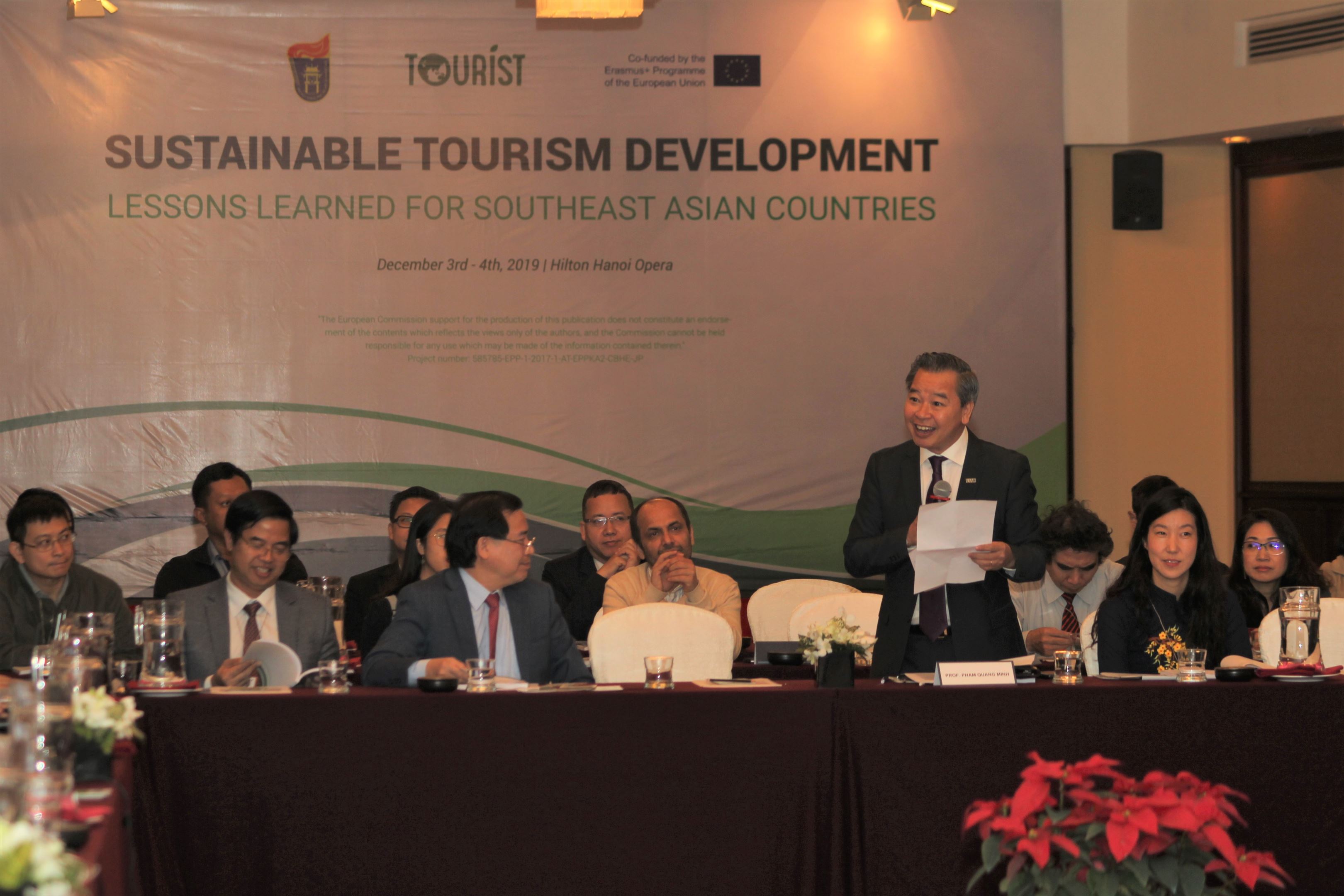
Professor Pham Quang Minh (Rector of the University of Social Sciences and Humanities) delivered the opening remarks at the conference.
In his opening remarks, Professor Pham Quang Minh (Rector of the University of Social Sciences and Humanities) highly appreciated the significance of the conference, not only from a scientific perspective but also from a social one. The conference is a positive signal, demonstrating Vietnam's participation, as well as that of other Southeast Asian countries, in contributing to the realization of the United Nations' Sustainable Development Goals. Furthermore, the Rector expressed his honor that the University of Social Sciences and Humanities continues to serve as an academic forum for domestic experts, scholars, and researchers to exchange ideas with foreign partners; contributing to the goals of innovation and international integration of the University in particular and Vietnam in general.
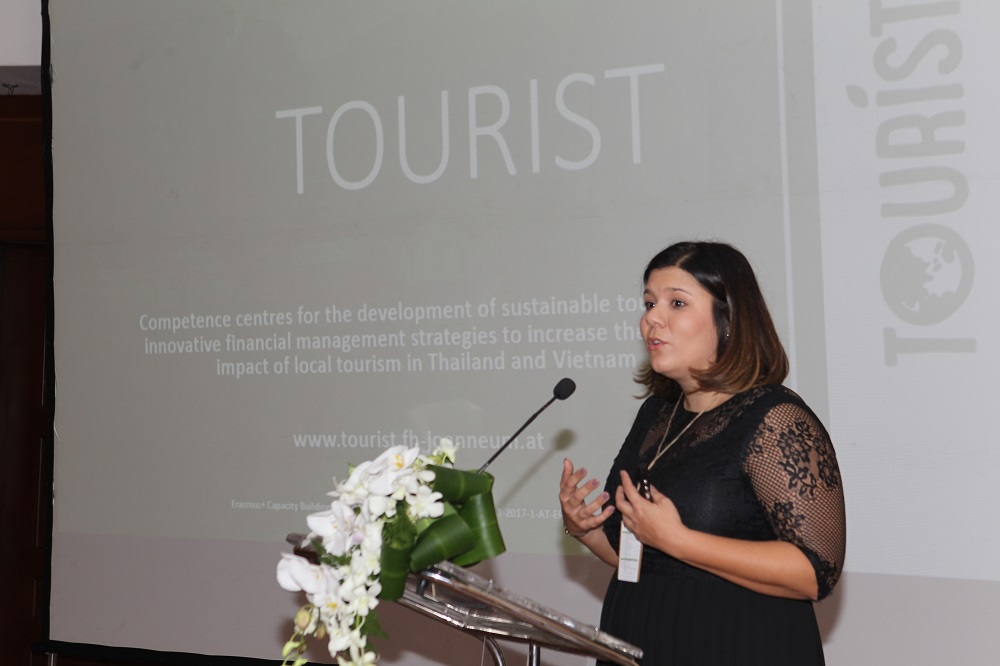
Ms. Claudia Linditsch (Fh Joanneum University of Applied Sciences - Republic of Austria) introduces the TOURIST Project.
Also at the opening session, delegates listened to a presentation on the TOURIST Project by Ms. Claudia Linditsch (Project Coordinator, Fh Joanneum University of Applied Sciences - Republic of Austria). The TOURIST Project focuses on building capacity centers for sustainable tourism development and innovative financial management strategies, aiming to enhance the positive impact of tourism in Thailand and Vietnam. The project provides training in tourism and financial management methods to seven universities in Vietnam and Thailand through four training courses; aiming to establish a network and forum for TOURIST knowledge transfer. Three Vietnamese universities are participating in the project: the University of Social Sciences and Humanities, Vietnam National University, Hanoi; the University of Social Sciences and Humanities, Vietnam National University, Ho Chi Minh City; and Hue University.
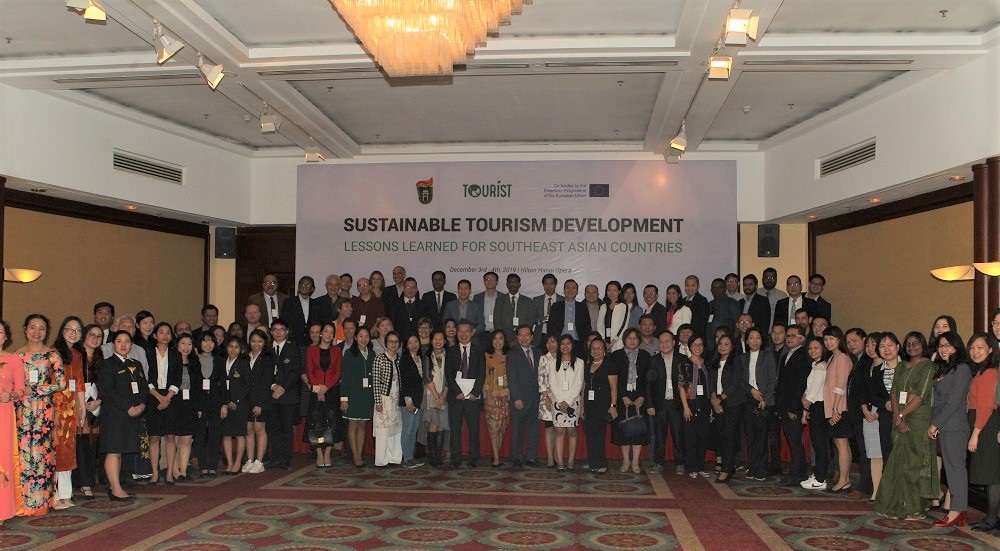
The delegates attending the workshop took a commemorative photo.
Following the opening session, the workshop continued until December 4th with four subcommittees:
Subcommittee 1: Overview of Sustainable Tourism Development
Subcommittee 2: Stakeholder participation in sustainable tourism development
Subcommittee 3: Different Forms of Sustainable Tourism
Subcommittee 4: Planning and Management of Sustainable Tourism Development
Author:Tran Minh, Photo: Phan Huy
Newer news
Older news

