Attending the opening ceremony were: on behalf of the Indonesian Embassy in Vietnam, Mr. Ibnu Hadi (Ambassador of the Republic of Indonesia to Vietnam), and Ms. Arum Primasty (Third Secretary); on behalf of the University of Social Sciences and Humanities, Prof. Dr. Pham Quang Minh (Rector of the University), representatives from the Faculty of Oriental Studies, the Faculty of Vietnamese Studies and Vietnamese Language, the Faculty of History, the Faculty of Linguistics, and the Office of Cooperation and Development.
The Indonesian language training course was organized under a cooperation agreement between the Indonesian Embassy in Vietnam and the University of Social Sciences and Humanities. Accordingly, the Indonesian Embassy sent an Indonesian language teacher to the University to teach; the University arranged and recognized Indonesian as an official subject in the training program. The course has 47 students participating and will last until June of this year. The students are divided into two classes, each class attending two sessions per week.
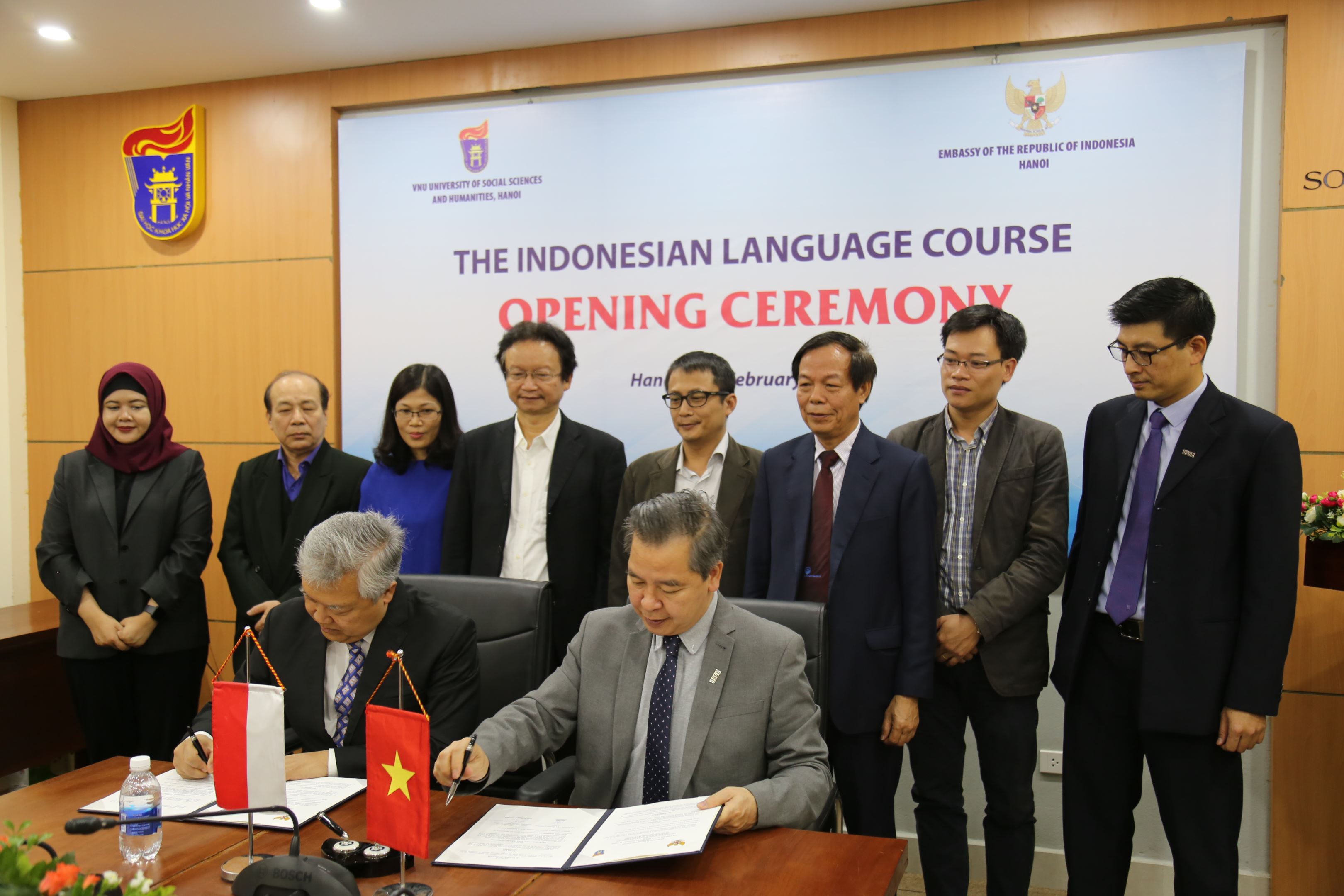
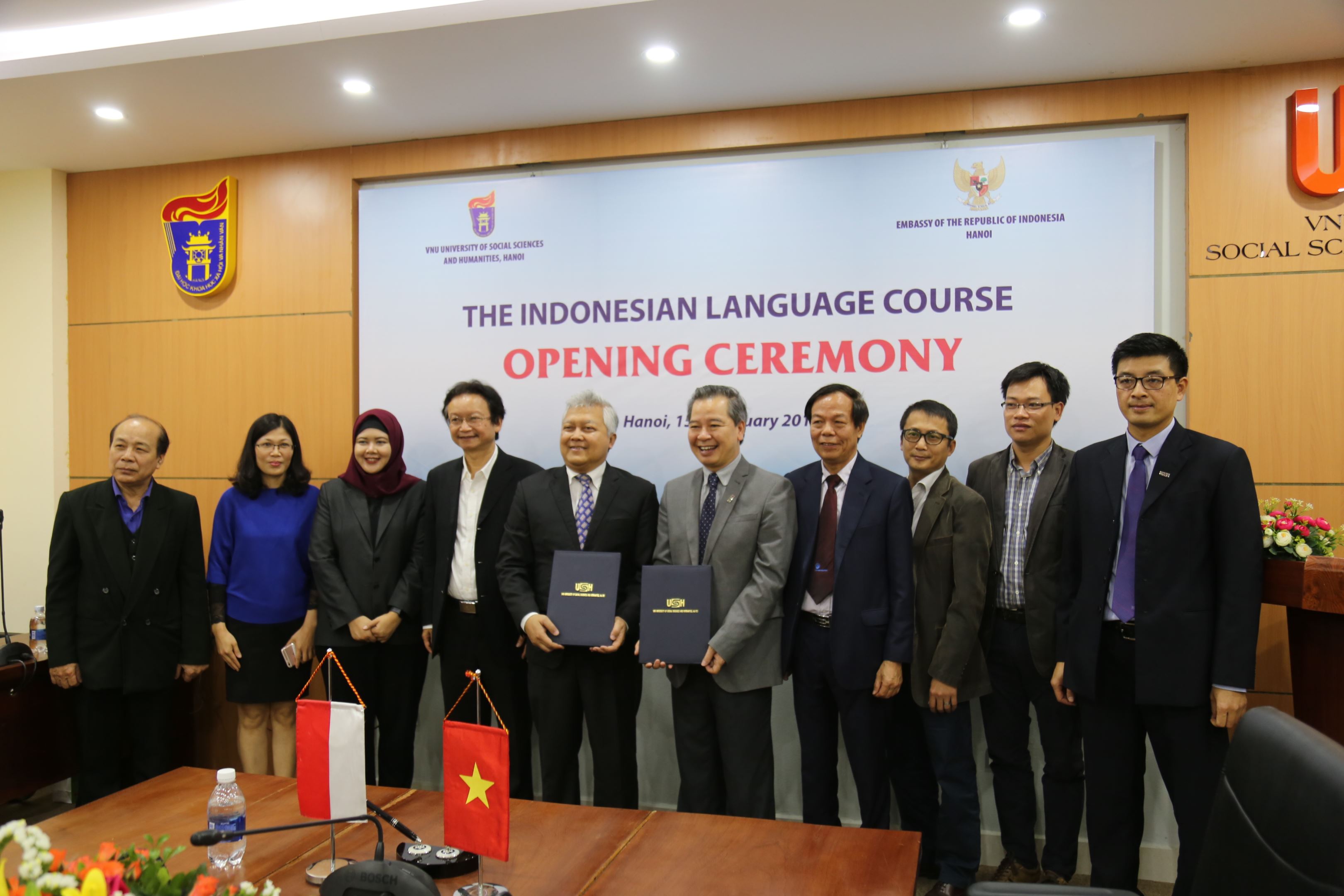
Professor Pham Quang Minh signed and exchanged a memorandum of cooperation with the Indonesian Ambassador to Vietnam, Ibnu Hadi.
Speaking at the opening ceremony, Professor Pham Quang Minh extended his congratulations to the students of the Department of Southeast Asian Studies. He noted that Indonesian is the fourth largest language in the world and can be considered the most widely spoken and familiar language to citizens of Southeast Asia. As a leading higher education institution in Vietnam, the University of Social Sciences and Humanities has a role and mission to contribute to the development of education in particular and culture in general within the ASEAN Community. The Rector also expressed his gratitude to the Indonesian Embassy for arranging and supporting the successful organization of this course.
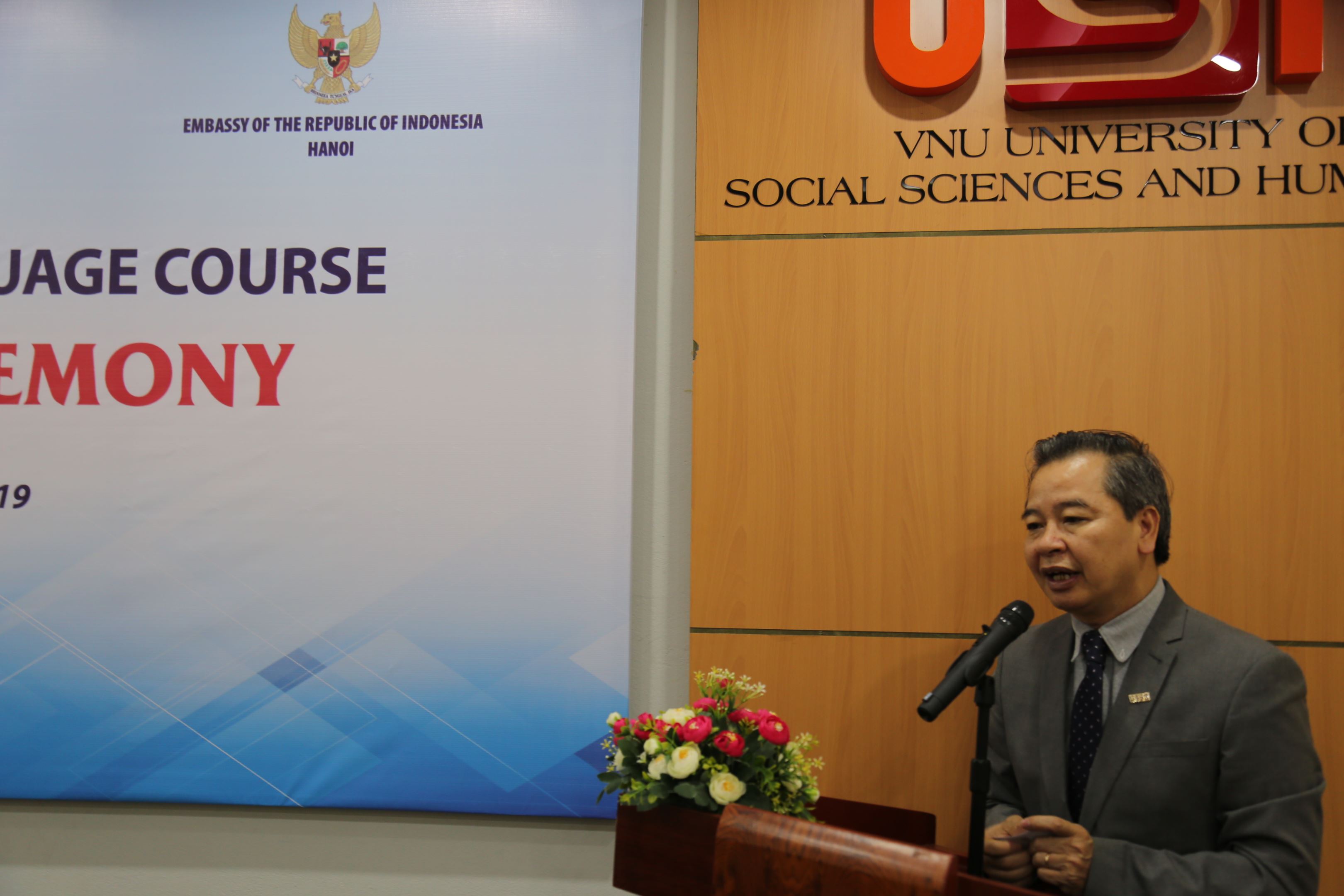
Professor Pham Quang Minh delivered a speech at the ceremony.
On behalf of the Indonesian Embassy, Mr. Ibnu Hadi expressed his optimism for Vietnamese students participating in the Indonesian language course. He stated that the language is spoken by nearly 200,000,000 people worldwide. In Southeast Asia, it is present not only in Indonesia but also in Malaysia, Singapore, Brunei, Thailand, and other countries. In the context of people-to-people diplomacy becoming an increasingly important force connecting ASEAN member states, learning Indonesian will help students proactively integrate into the region's cultural landscape. He also proposed awarding a short-term scholarship in Indonesia to students with outstanding academic achievements after the course.
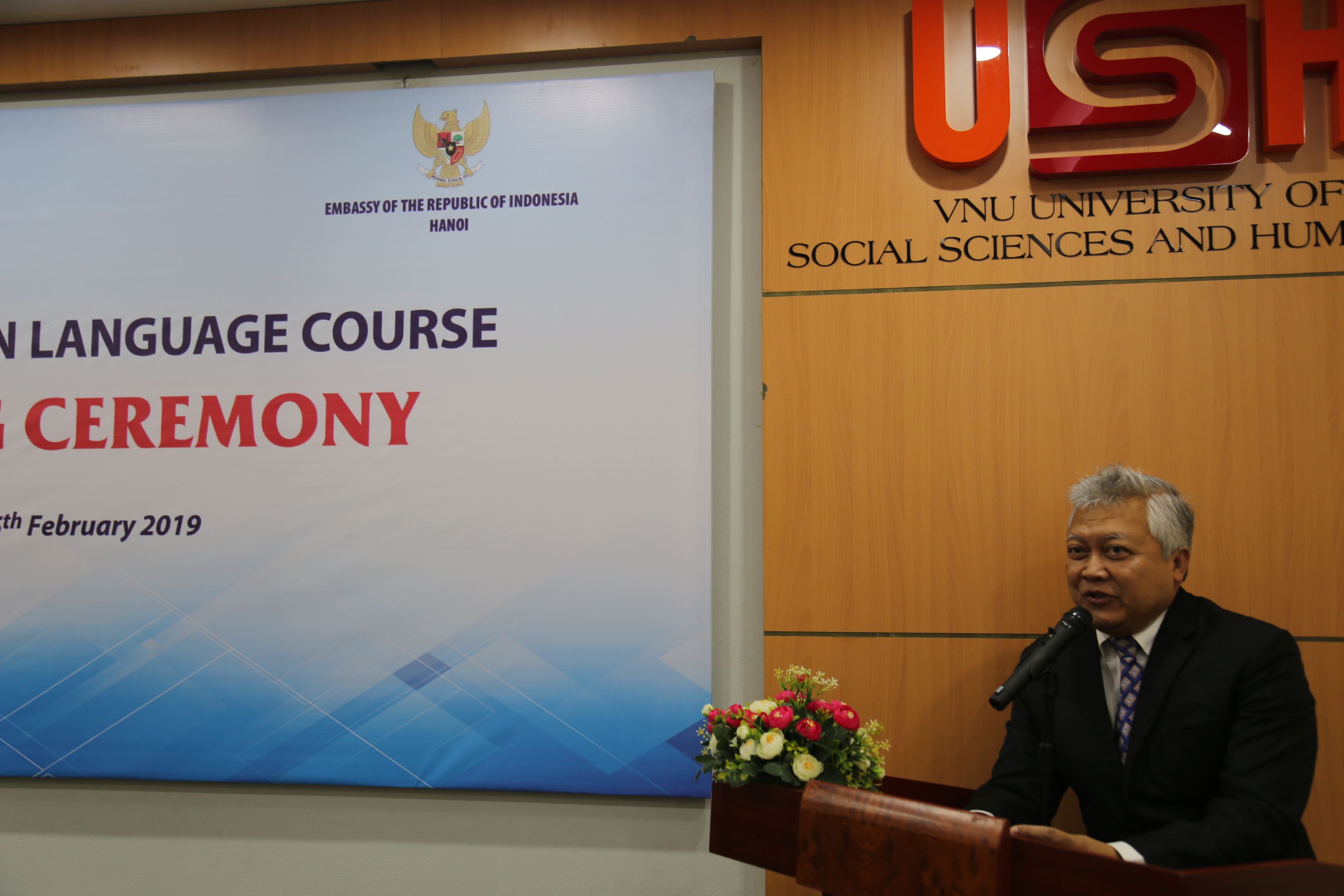
His Holiness Ibnu Hadi delivered a speech at the ceremony.
On behalf of the faculty of the Department of Southeast Asian Studies, Professor Mai Ngoc Chu (Head of Department) expressed his happiness that after more than 20 years, Indonesian is once again being officially taught at the University of Social Sciences and Humanities. He also believes that Vietnamese students can easily learn and master Indonesian with a solid foundation in Vietnamese and the support of English. Understanding Indonesian will not only increase job opportunities but also help students understand and connect more with ASEAN and Southeast Asia.
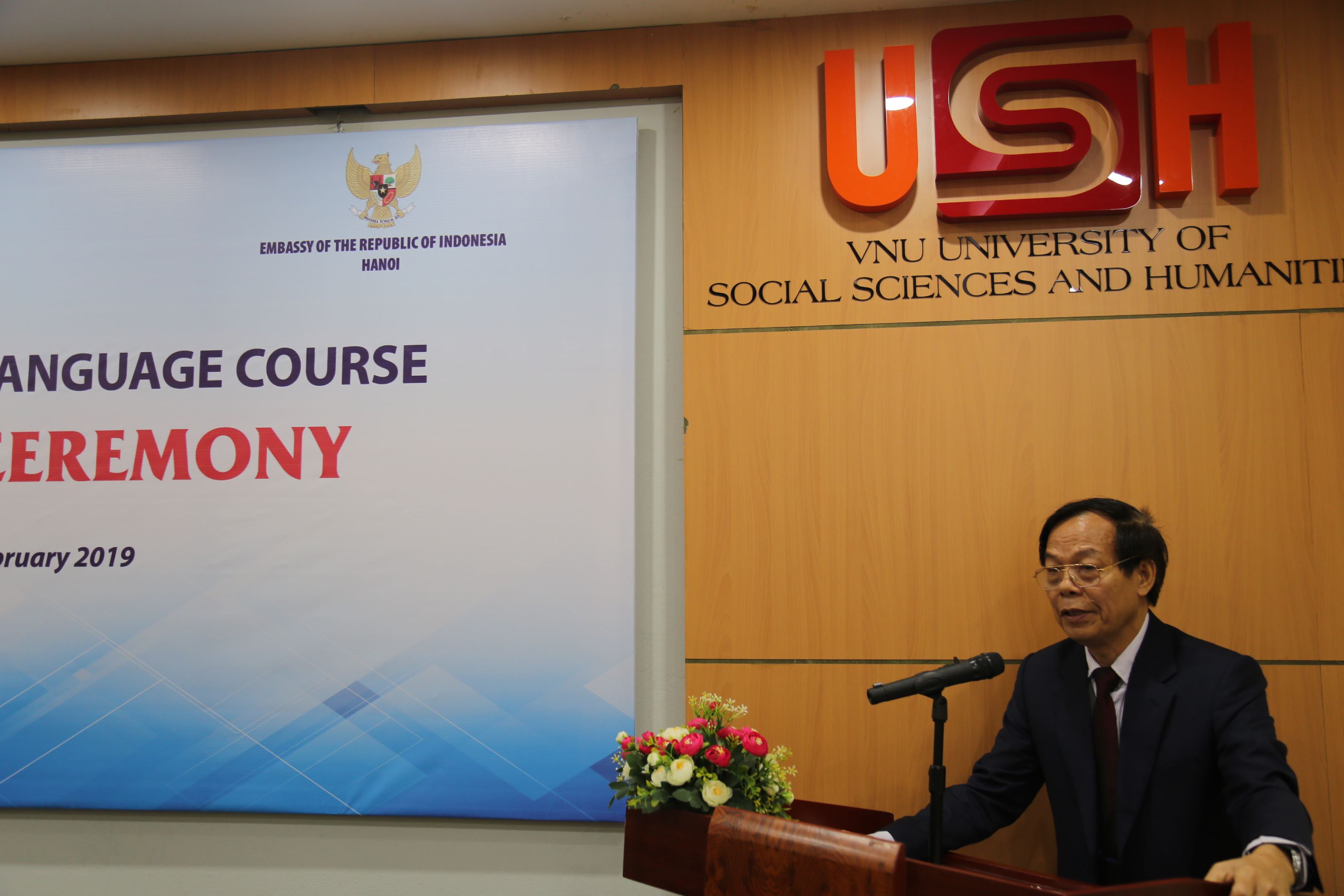
Professor Mai Ngoc Chu delivered a speech at the ceremony.
On behalf of the students participating in the course, Dao Thai Hoang expressed his pride in being one of the first students of the University to learn Indonesian with a native teacher. This language helps broaden the cultural background of the students, becoming a key to opening the door to integration into the ASEAN community in particular and the Southeast Asian region in general. He also extended his sincere thanks to the University and the Indonesian Embassy for creating favorable conditions for students of the Southeast Asian Studies Department.
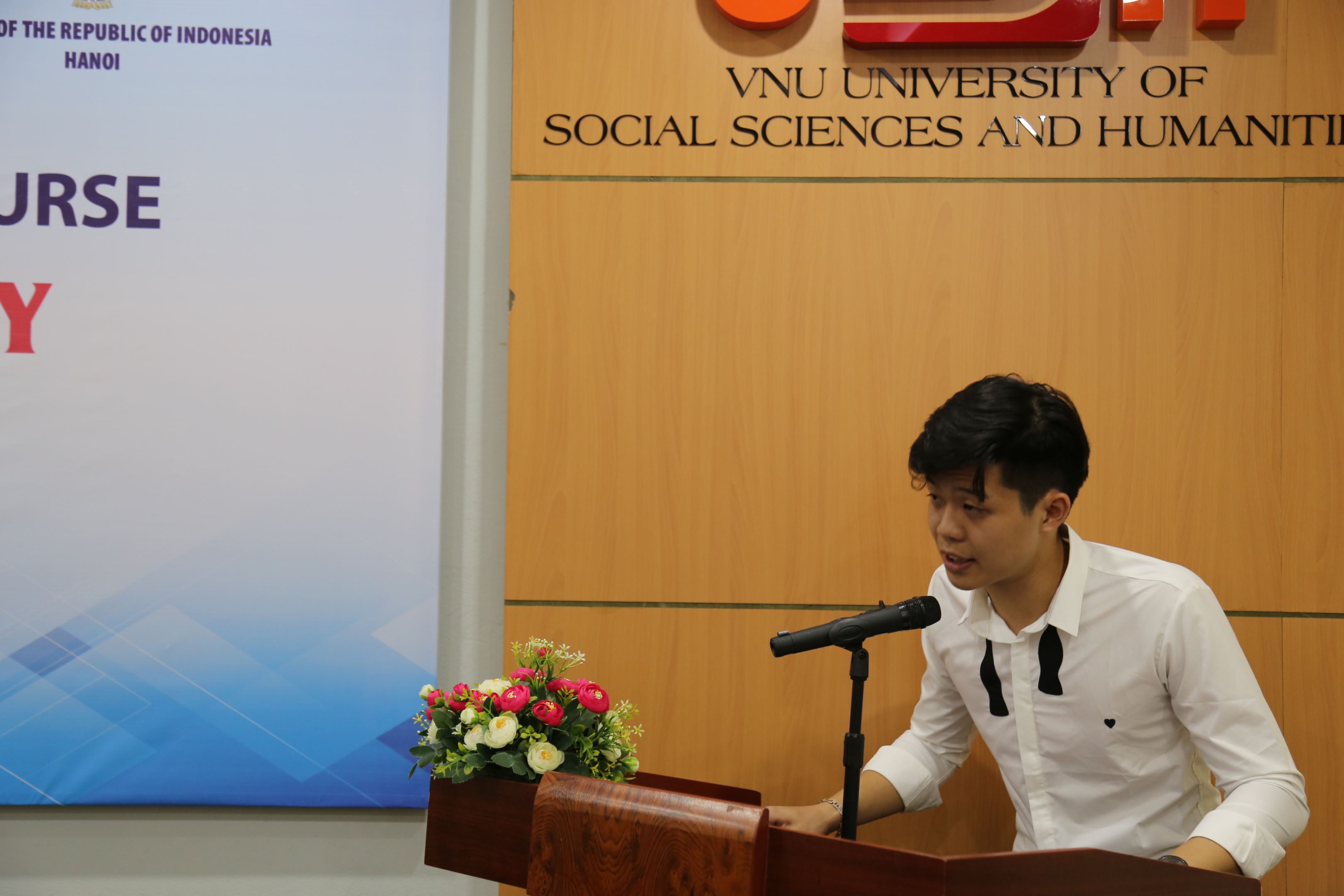
Mr. Dao Thai Hoang gave a speech at the ceremony.
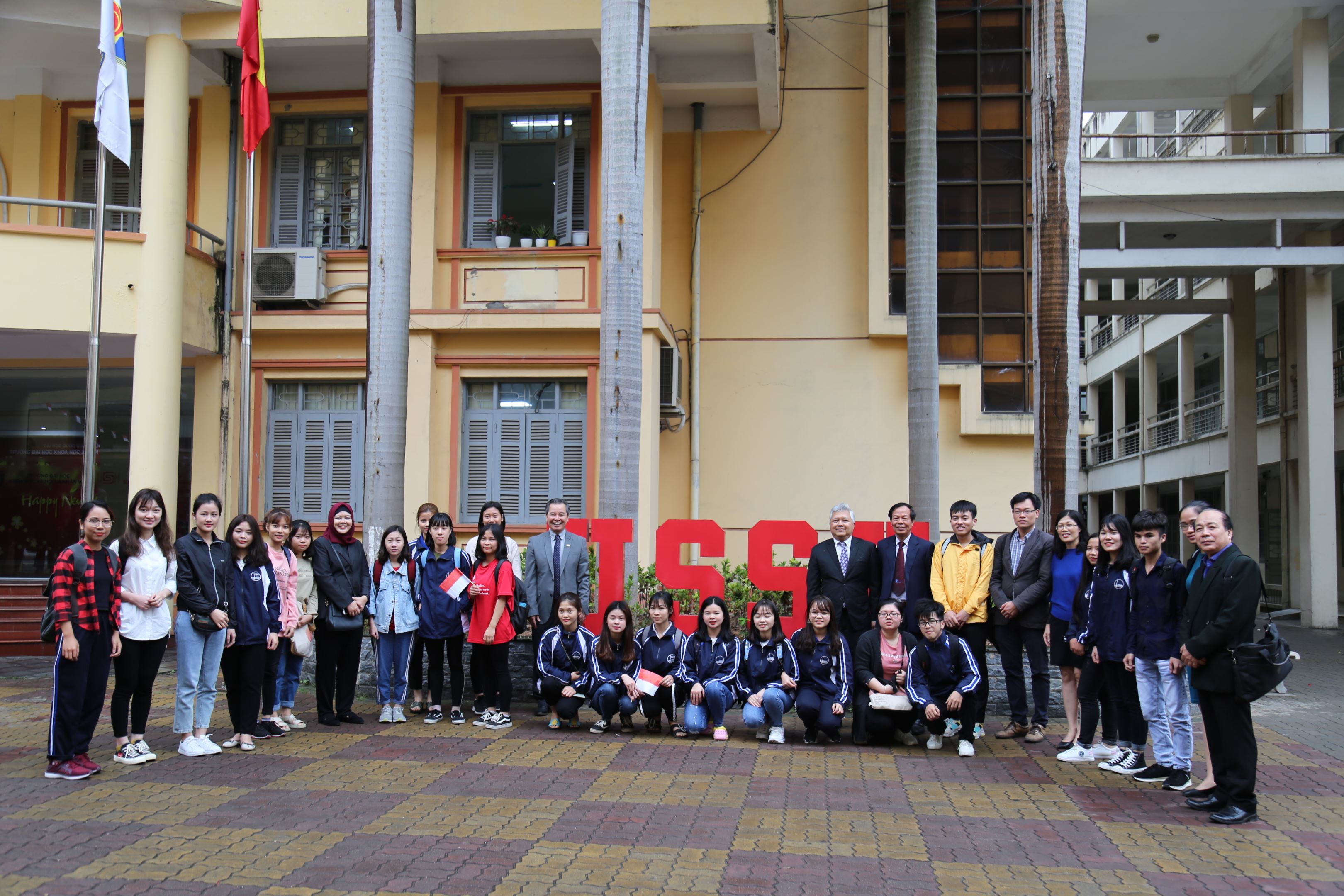
Starting in 2018, Southeast Asian Studies officially became an independent major taught at the University of Social Sciences and Humanities. Upon graduation, students are proficient in English and a regional language such as Thai or Malay (the national language of Malaysia, Indonesia, Brunei, and Singapore); they also possess regional studies research methods and international communication skills.
Author:Tran Minh
Newer news
Older news

