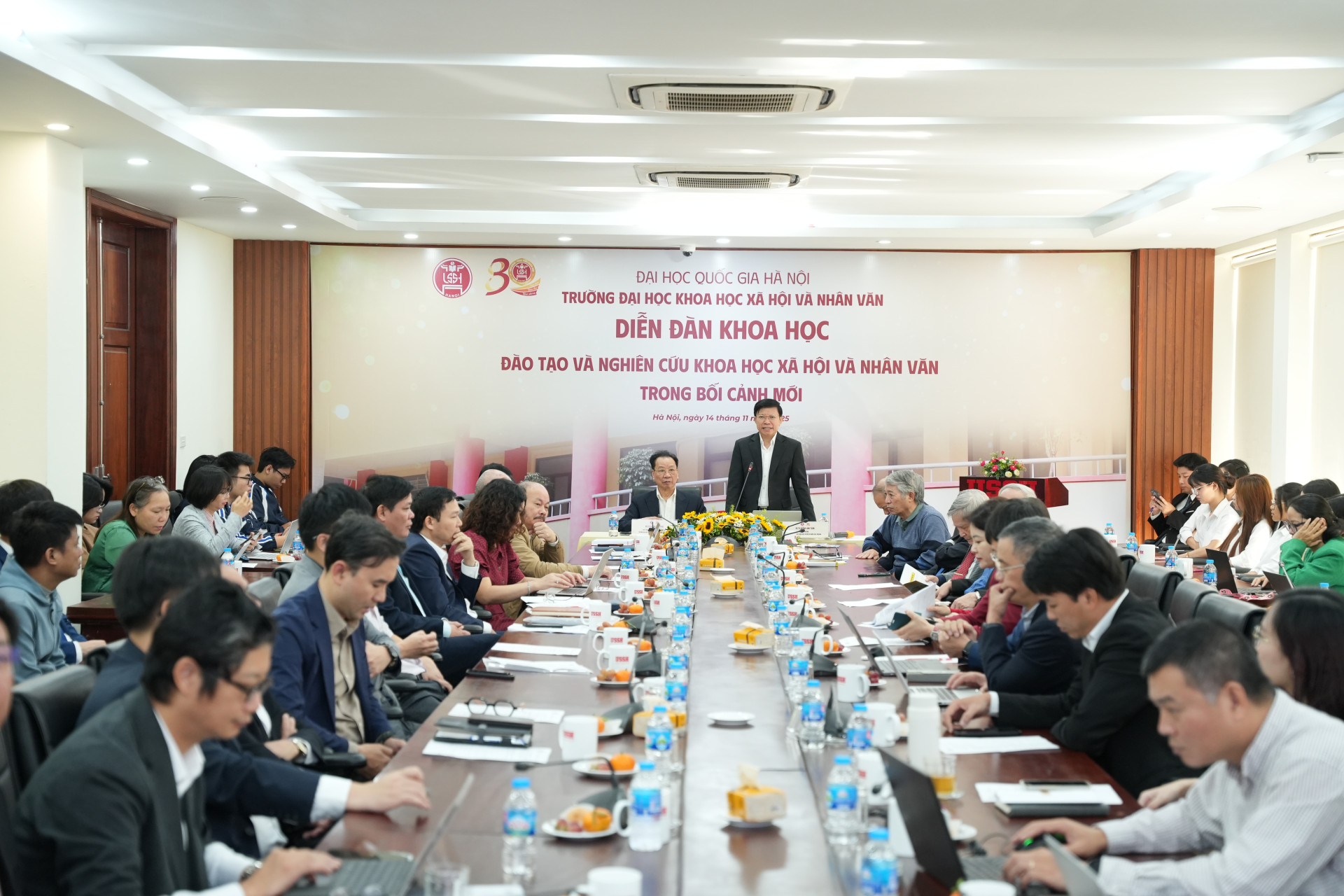
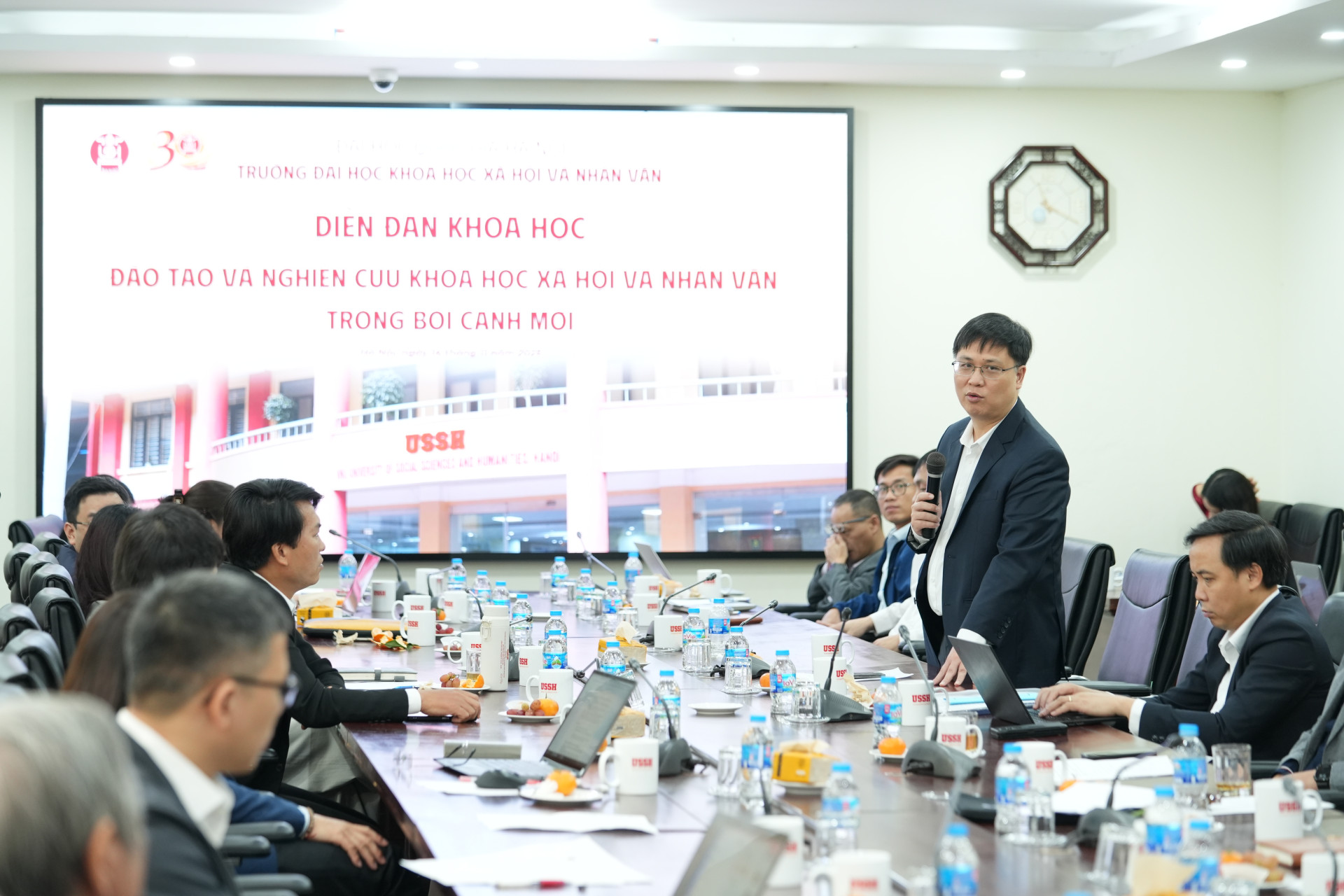
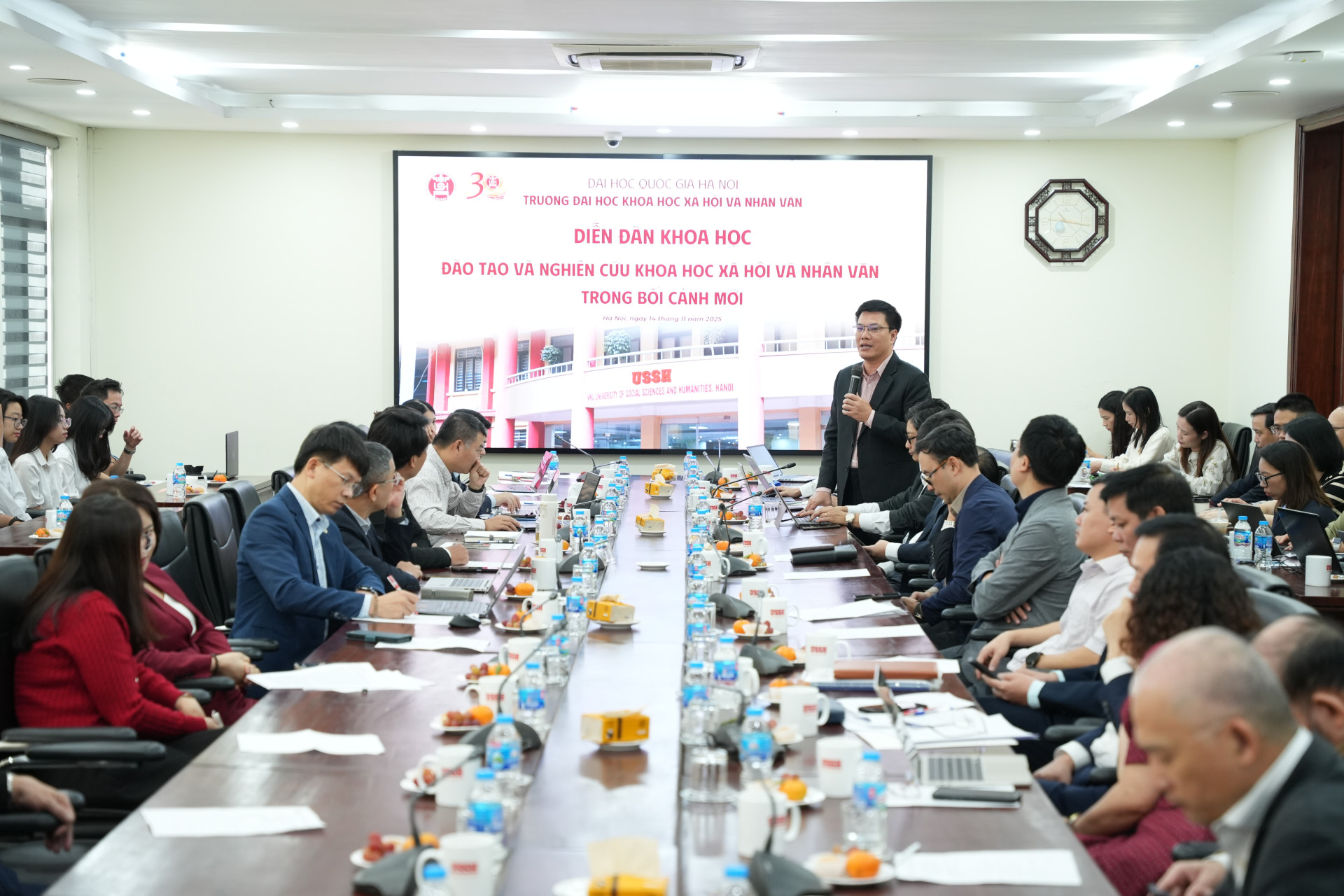
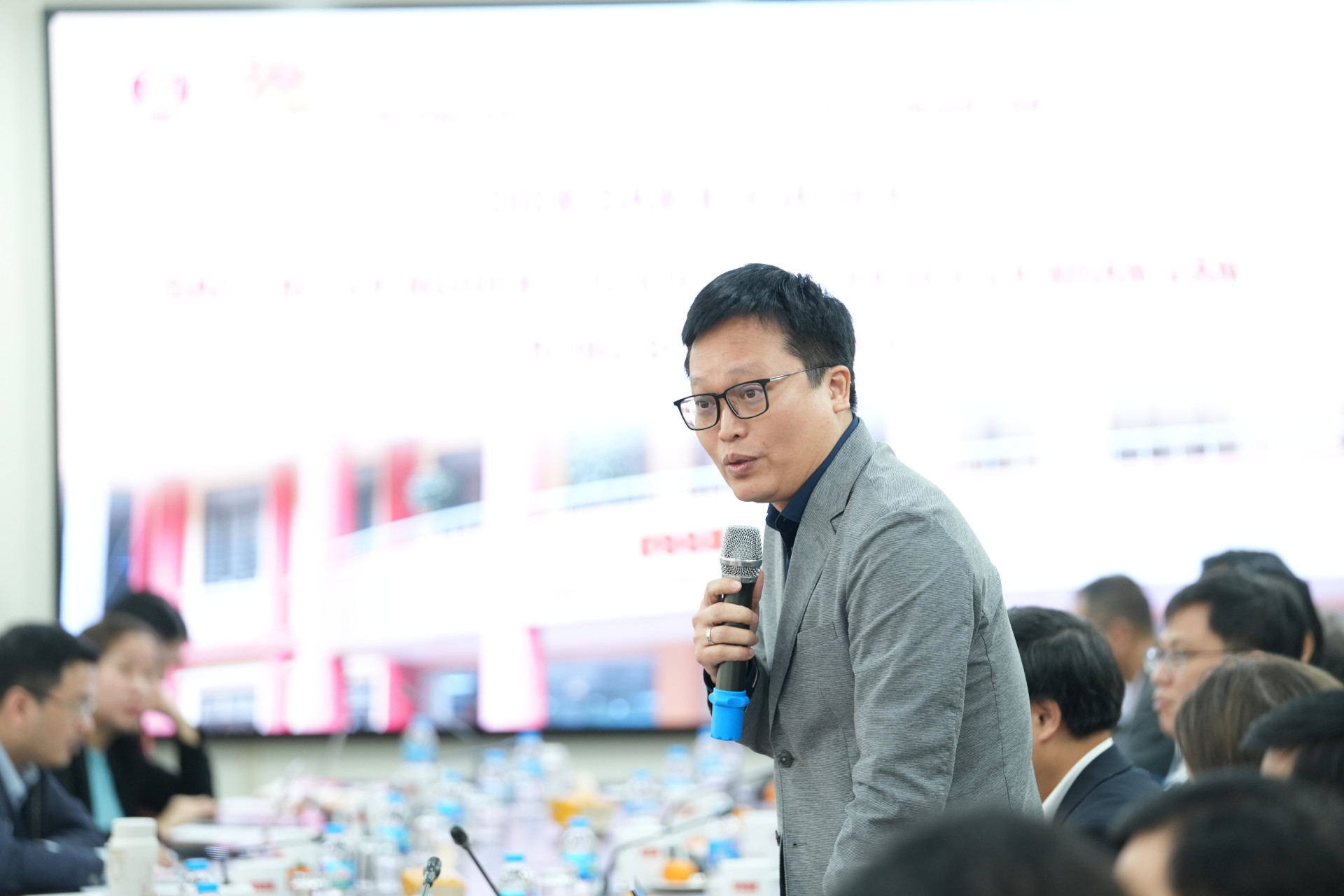
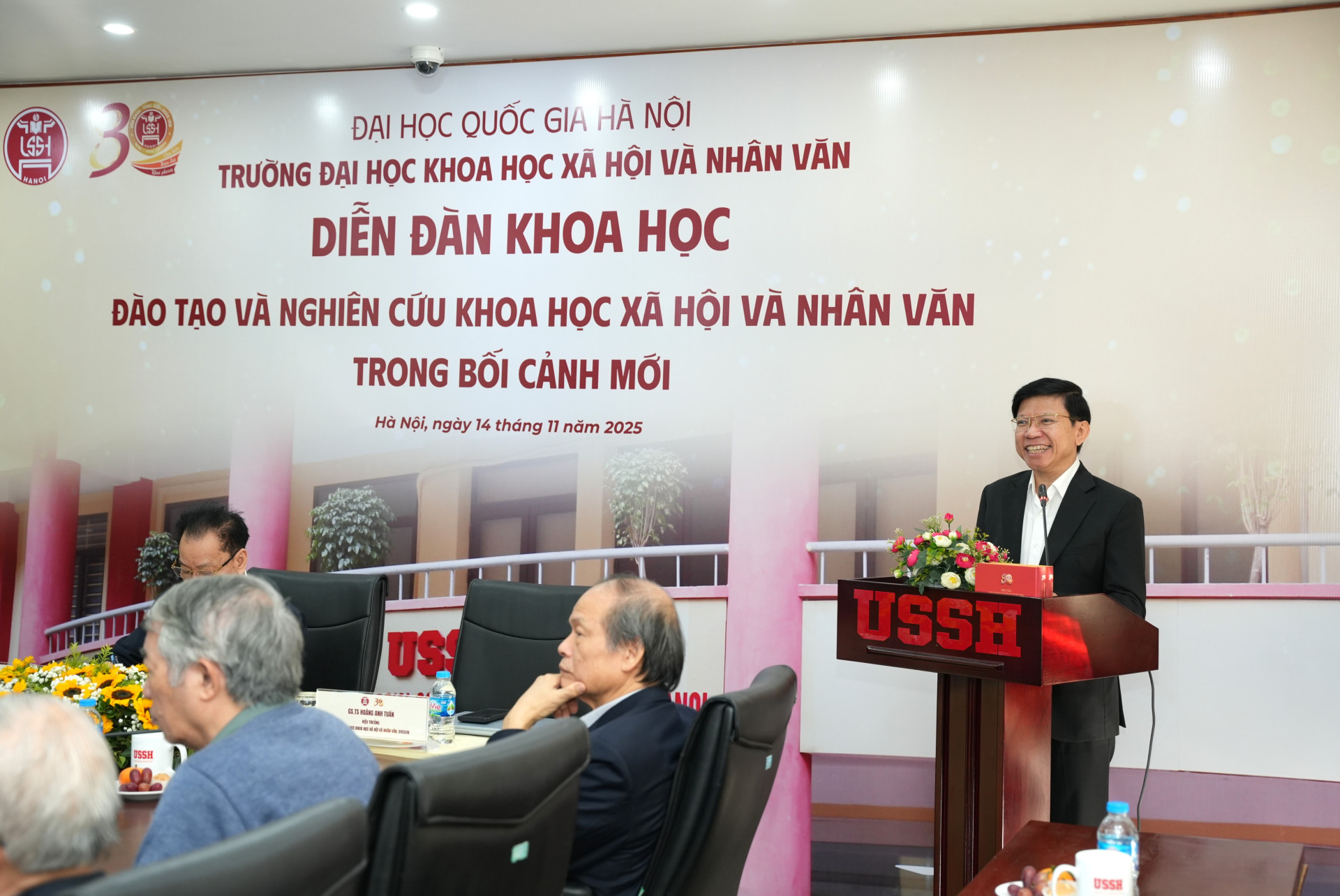
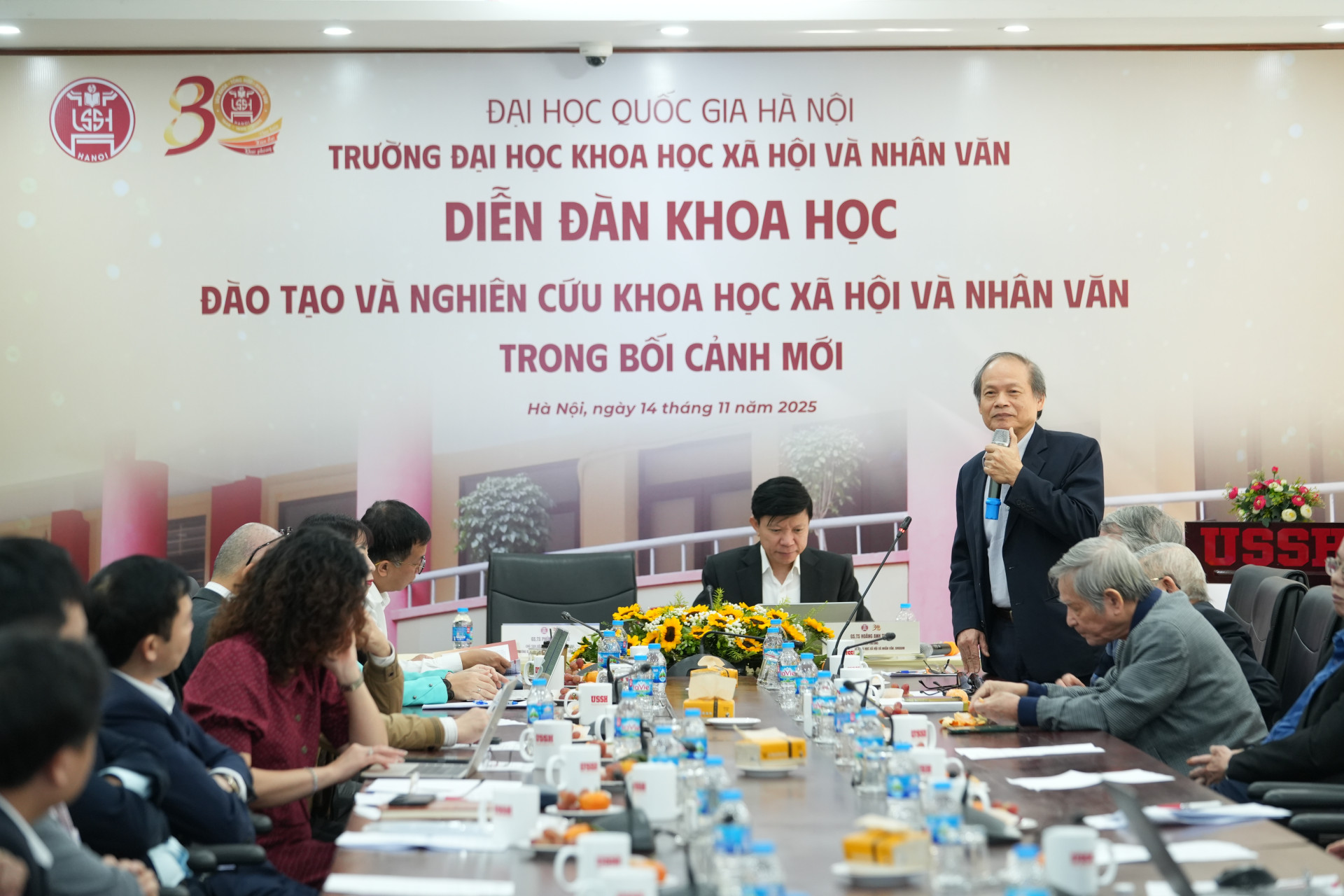
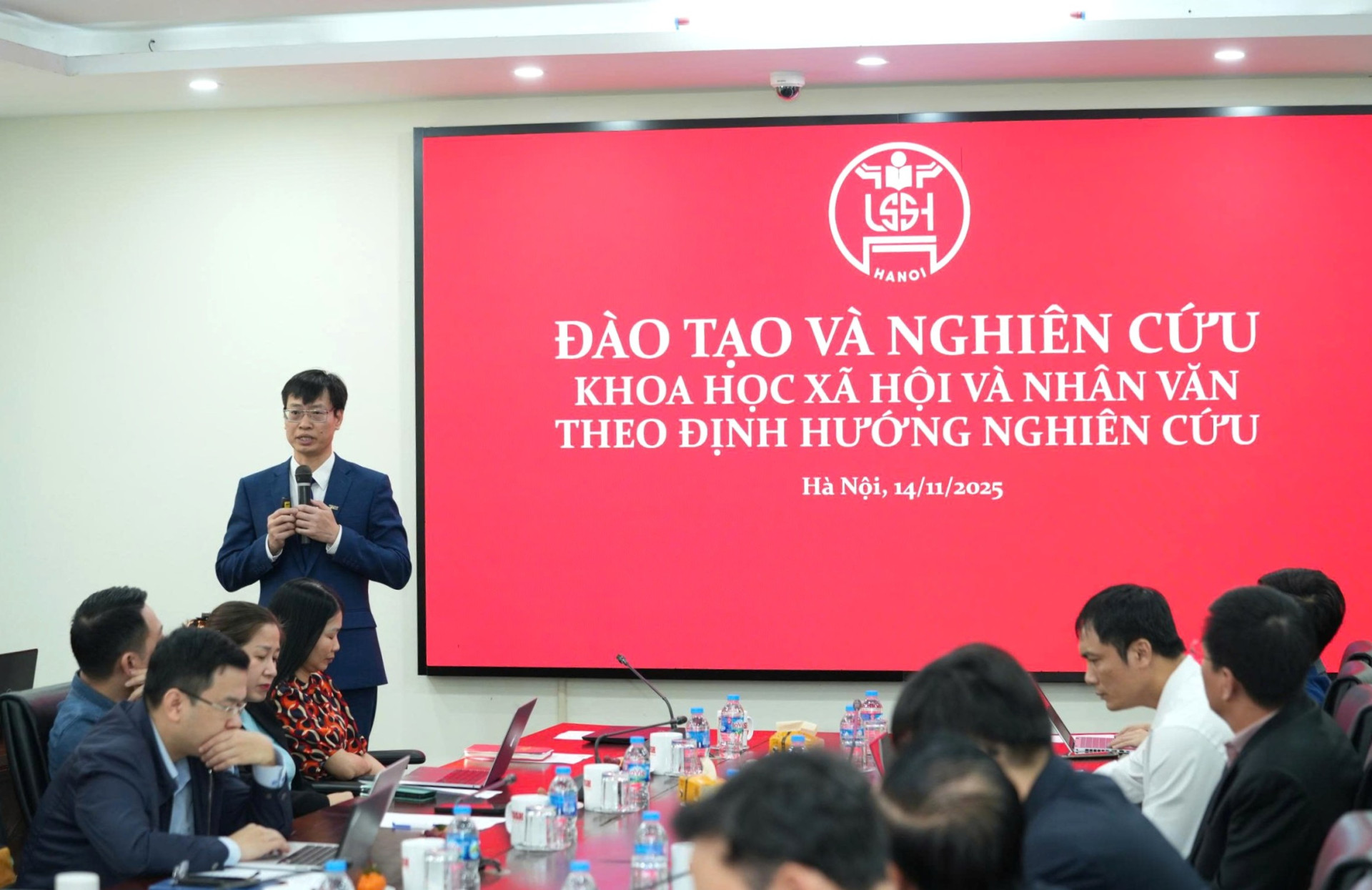
The forum is part of a series of activities celebrating the 80th anniversary of the tradition and the 30th anniversary of the establishment of the University of Social Sciences and Humanities (USSH), attracting the participation of many scientists, experts, and managers from ministries, departments, universities, and research institutes.
The forum focuses on discussing achievements, reflecting the current state of development of each training discipline, and researching and analyzing the challenges that training institutions in the social sciences and humanities are facing in the current context. From this, it aims to provide development directions for the social sciences and humanities in the future, contributing to the cause of education and serving the community, in accordance with the spirit of Resolution 57-NQ/TW and Resolution 71-NQ/TW of the Politburo.
Challenges and opportunities for the social sciences and humanities in the new context.At the forum, many opinions assessed that social sciences and humanities are facing both opportunities and challenges in the context of globalization, digital transformation, the Fourth Industrial Revolution, and the demands of developing a knowledge-based economy.
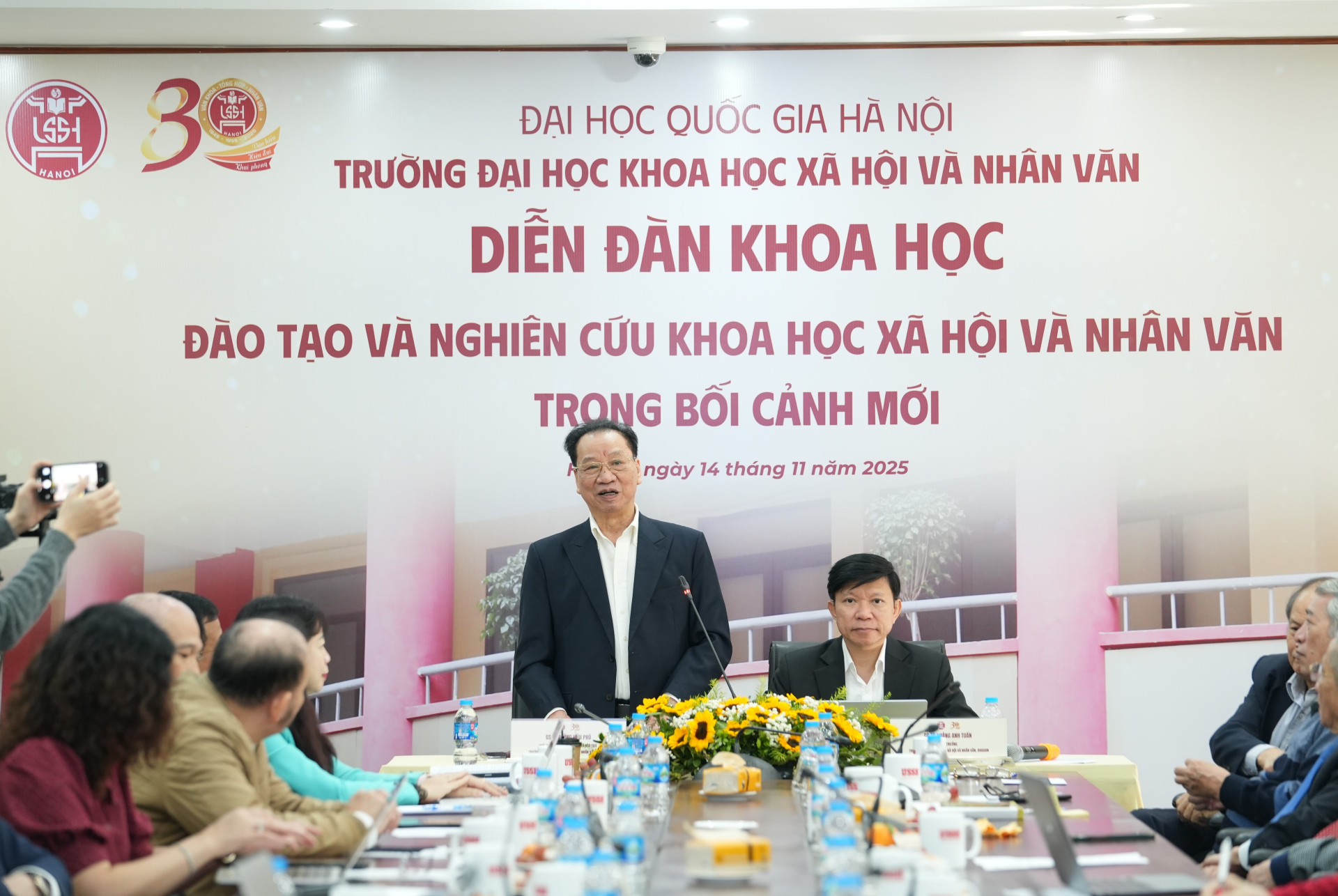
According to Professor Phung Huu Phu, former Standing Vice Chairman of the Central Theoretical Council, Member of the Central Committee of the Communist Party of Vietnam, and the first Rector of the University of Social Sciences and Humanities, social sciences and humanities do not directly generate GDP, but they play a fundamental role and serve as a "source technology" for the development of all socio-economic fields. Factors such as institutions, policies, human development, culture, and the quality of human resources all originate from knowledge in social sciences and humanities.
In the age of technology, social sciences and humanities must play a role in fostering human thinking, character, ethics, and adaptability – the decisive factors for effectively utilizing technology. "Smart technology requires a wise nation," he affirmed, while emphasizing the task of social sciences and humanities in building the Vietnamese people of the new era.
Professor Phung Huu Phu - the first Rector of the University of Social Sciences and Humanities
From a university management perspective, Associate Professor Dr. Nguyen Anh Tuan - Head of Training Department, Vietnam National University, Hanoi, believes that the application of artificial intelligence (AI) is an inevitable trend. The university needs to proactively build digital capabilities and integrate AI skills into its training programs to "turn challenges into opportunities."
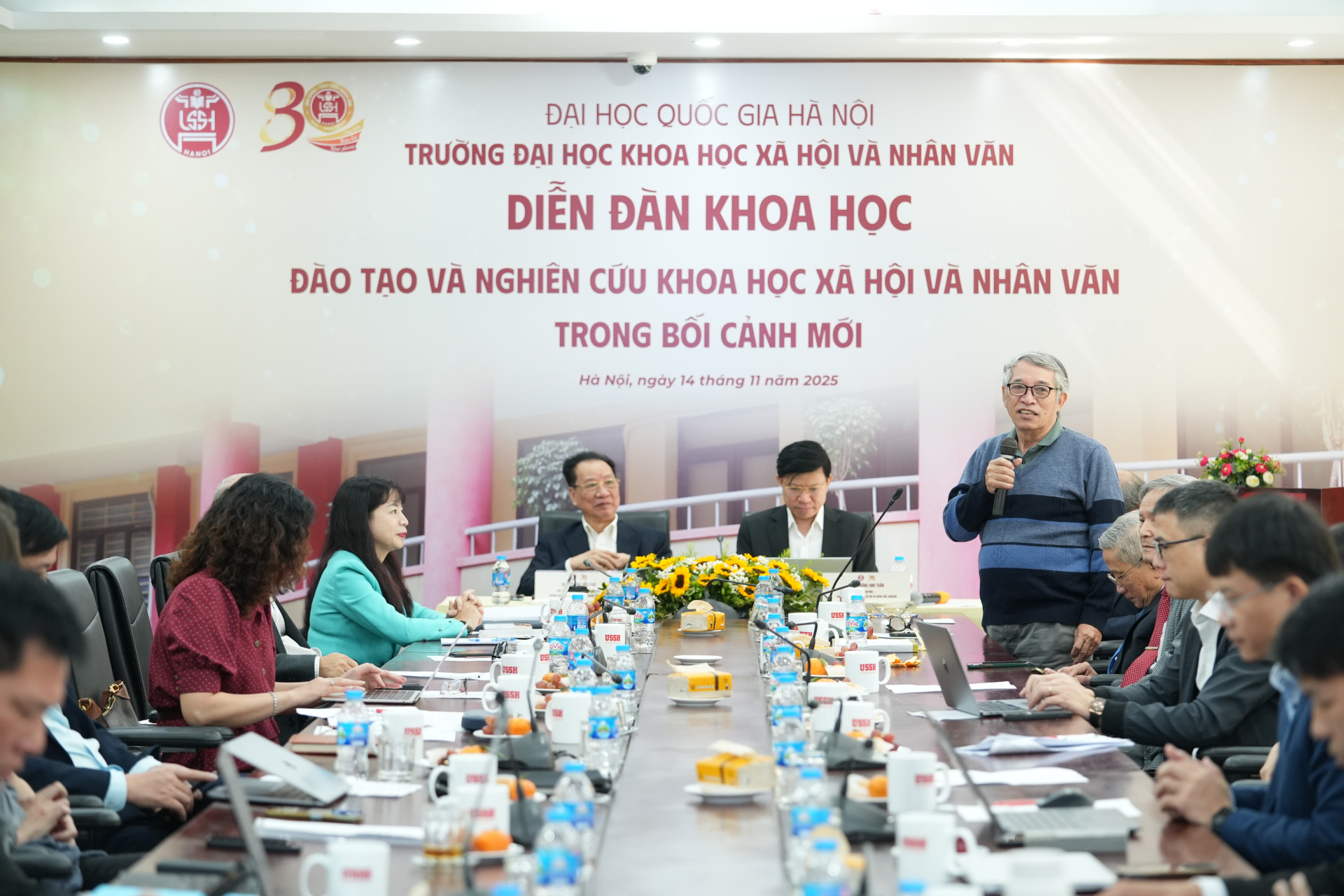
Several experts from universities such as Hanoi University of Culture, Academy of Journalism and Communication, etc., shared the common difficulties in the field of social sciences and humanities, especially the requirement to link training with the labor market, design interdisciplinary programs, integrate digital competency frameworks, and cooperate with businesses in training.
The opinions emphasized that the social sciences and humanities sector needs to drastically innovate its training model, increase its applicability, develop digital skills, interdisciplinary skills, and modern research methods to keep pace with the rapid changes in society.
Interdisciplinary approaches, digitalization, and integration are essential for the development of social sciences and humanities.One of the highlights of the forum was the discussion on the direction of development for training and research in social sciences and humanities in the coming period.
Associate Professor Pham Quang Long, former Rector of the University of Social Sciences and Humanities, proposed that social sciences and humanities must innovate their research approaches, increase interdisciplinary and cross-disciplinary content, and connect with solving practical problems of the country.
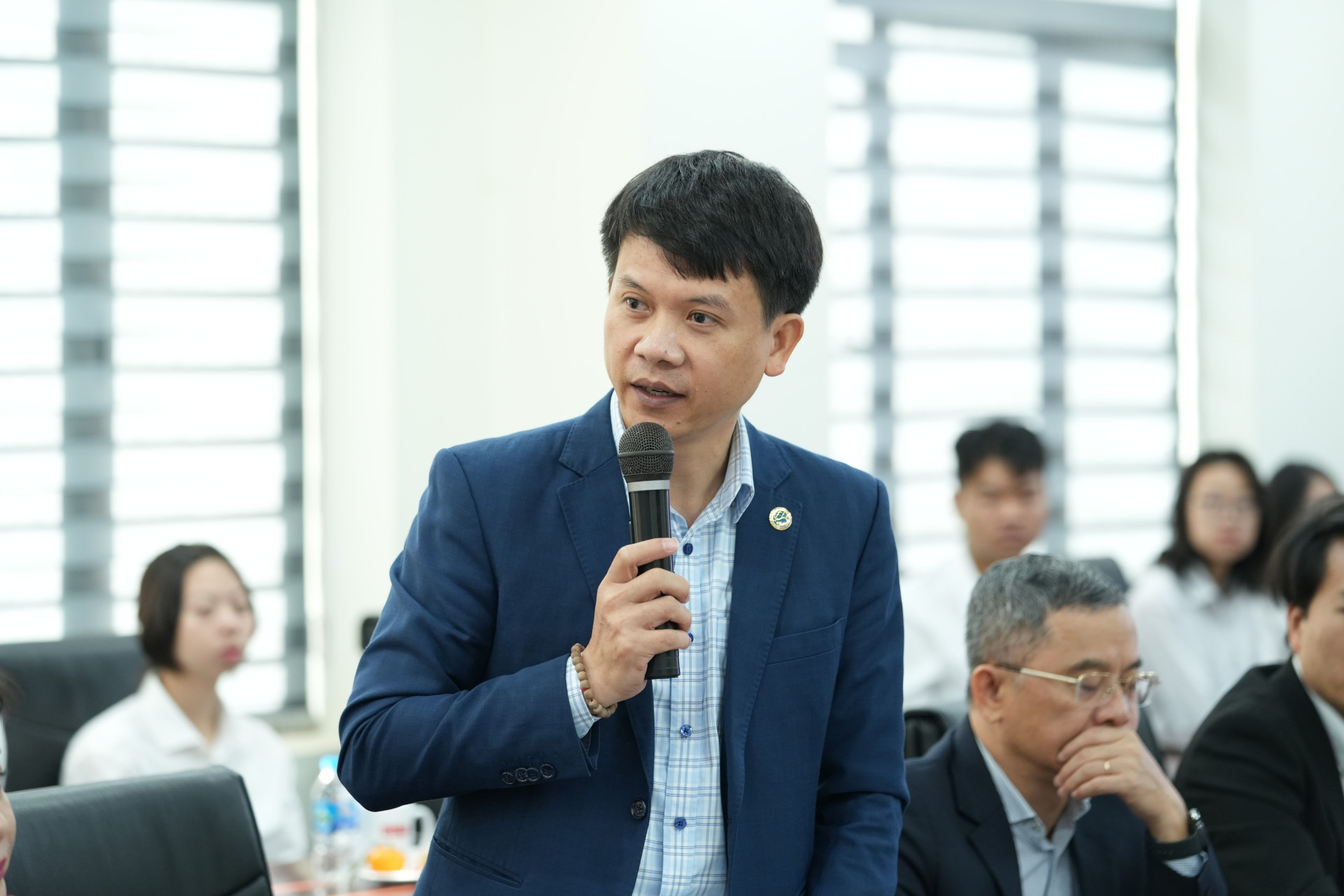
From a historical research perspective, Associate Professor Vo Xuan Vinh (Director of the Institute of History, Vietnam Academy of Social Sciences) believes that the research team must be strengthened in a specialized direction, capable of adapting to new methods and applying technology. This is a condition for social sciences and humanities to produce high-quality works that serve policy planning and international integration.
Assoc. Prof. Dr. Pham Quang Long - former Rector of the University of Social Sciences and Humanities
Assoc. Prof. Dr. Vo Xuan Vinh - Director of the Institute of History, Vietnam Academy of Social Sciences
According to Associate Professor Dr. Luu Van Quyet (Vice Rector of the University of Social Sciences and Humanities, Ho Chi Minh City), the strong link between the two largest humanities institutions in the country contributes to creating a broad and distinctive academic exchange space, while also adapting quickly to changes in social sciences both domestically and internationally.
Assoc. Prof. Dr. Luu Van Quyet - Vice Rector of the University of Social Sciences and Humanities, Ho Chi Minh City
Associate Professor Dr. Nguyen Tuan Cuong (Institute of Han-Nom Studies) emphasized the necessity of long-term investment in the field of social sciences and humanities, both in terms of infrastructure, research resources, and training mechanisms. The opinions from scientists, managers, and experts at the forum have suggested many important directions: modernizing training programs, strengthening interdisciplinary collaboration, digitalization, and international integration; expanding the training space; developing a high-quality research team; and linking research with the practical development of the country.
From Synthesis to Humanities: Affirming the Core Role in Research and Training in Social Sciences and HumanitiesRector of the University of Social Sciences and Humanities, Hoang Anh Tuan, emphasized that in the development of higher education, the University is always aware of its mission to train, research, and disseminate humanistic knowledge, contributing to shaping ideology, creating a knowledge foundation, and providing high-quality human resources for the development of the country.
From an academic training institution marked by the "Synthetic" school of thought, the University has gradually transitioned to a modern university model with advanced training philosophies such as student-centered learning, liberal education, and a combination of traditional and modern training methods. The number of academic disciplines has expanded significantly: from 10 disciplines (1994) to 20 disciplines (2009) and 30 undergraduate disciplines by 2025; along with this, master's and doctoral programs have been streamlined and integrated in an interdisciplinary and cross-disciplinary direction, in line with the development trends of contemporary social sciences and humanities.
Prof. Dr. Hoang Anh Tuan - Rector of the University of Social Sciences and Humanities
Professor Nguyen Van Khanh, former Rector of the University of Social Sciences and Humanities.
Assoc. Prof. Dr. Dang Hong Son - Vice Rector of the University of Social Sciences and Humanities Professor Nguyen Van Khanh, former Rector of the university, stated that the university's development strategy must revolve around the research university model; from research to training, everything must be innovated to adapt to the knowledge economy, digital transformation, and the requirements of university autonomy. Social sciences and humanities are increasingly playing an important role in policy planning, human development, and solving national problems; therefore, training and research must be geared towards application and international integration.
Delegates attending the forum all agreed that the University of Social Sciences and Humanities needs to continue to affirm its core role in the humanities education system of Vietnam National University, Hanoi and the whole country; quickly adapt to global development trends; and improve the quality of training and research to maintain its position as the leading center of social sciences and humanities in Vietnam.
The forum affirmed that the social sciences and humanities, with its mission of placing people at the center of development, continue to play a pioneering role in building culture, developing human resources, and promoting social progress. This is also a practical contribution of the University of Social Sciences and Humanities to the overall development of Vietnam National University, Hanoi and the country in the new era.
The press reported on the event:
People's Representatives Newspaper:The mission of the Social Sciences and Humanities is to build the Vietnamese people of the new era.
Education and Times Newspaper:Orientation of training and research in social sciences and humanities in the new context.
Culture Newspaper:Orientation of training and research in social sciences and humanities in the new context.
Hanoi New Newspaper: Finding directions for training and research in social sciences and humanities in the new context.
Vietnam National University, Hanoi:Training and research in social sciences and humanities in the new context.
Vietnam.vn:Multidimensional discussion on training and research in social sciences and humanities in the new context.
Business and Investment Magazine:Shaping a new vision for training and research in social sciences and humanities.eat