With its philosophy of "humanistic digital transformation" - considering people as the center of all technological innovation - the University of Social Sciences and Humanities, Vietnam National University, Hanoi, is pioneering in contributing to the creation of a new development model where technology serves and benefits people.
A reporter from HanoiMoi Newspaper had an interview with Professor, Doctor Hoang Anh Tuan, the school's principal, about the direction and commitment to promoting breakthrough innovation and digital transformation based on three pillars: mindset - institutions - human resources.
Professor, PhD Hoang Anh Tuan - Rector of the University of Social Sciences and Humanities, Vietnam National University, Hanoi
- You often emphasize that digital transformation is not just about technology. Could you elaborate on this point?We are living in an unprecedented context, where digital technology, artificial intelligence, and big data are developing at an unprecedented pace, profoundly impacting every aspect of life. Digital transformation has become a central strategy for the nation, for industries, organizations, and even individuals in society. However, there is a truth we need to clearly recognize: Digital transformation is not just about technology.
If we focus solely on infrastructure, digital platforms, and algorithms, we may create a technologically advanced society, but we risk a crisis of trust, an imbalance of values, and a widening digital divide. This is because the core of digital transformation lies not in technology, but in people – their mindset, behavior, institutions, and culture.
Digital transformation must answer fundamental questions: Who does technology serve? Who benefits from these innovations? What human values need to be protected and promoted?
So, what is the role of social sciences and humanities in the digital transformation strategy, sir?To address the core issues mentioned above, the social sciences and humanities play a crucial role.
Social sciences and humanities help us understand people, social behavior, and dynamics; help predict the impact of technology on social structures, culture, and ethics; and thereby guide technology to serve life better, instead of allowing technology to dominate people.
In the process of promoting national innovation and digital transformation, social sciences and humanities cannot stand aside, much less be merely "followers." On the contrary, social sciences and humanities must be a leading force, guiding thinking, contributing a scientific foundation to institutions, and developing human resources to help the digital society become inclusive, sustainable, and humane.
Therefore, the role of social sciences and humanities in promoting breakthrough innovation and digital transformation with three pillars—thinking, institutions, and human resources—is of paramount importance, not only for the strategy of the education sector but also for the future development of the country.
Technology can accelerate development, but it is the mindset, institutions, and human resources with humanistic values that ultimately determine the success of national digital transformation.
So, is mindset the most important starting point in the digital transformation process, sir?- To achieve successful digital transformation, the first step is to transform mindset. This is a crucial turning point for an organization or a nation to break through in the digital age. And the mindset we're discussing today isn't just technical or technological thinking, but a humanistic mindset in digital transformation.
For years, we've taken it for granted that technology drives change. But reality is showing the opposite: the success or failure of technology depends on whether it solves human problems and respects people. Many digital transformation projects fail not because of a lack of technological foundation, but because they fail to change behavior, build consensus, and gain the trust of users.
Therefore, innovation in thinking within the social sciences and humanities needs to focus on four core points:
The first,We need to shift from a passive mindset to a proactive, future-oriented approach to the digital world. Social sciences and humanities should not only analyze and critique, but also participate in co-creating innovative models, digital products, and digital services aimed at improving the quality of life for the community.
Monday,We need to develop a responsible data-driven mindset. We need to understand that data is not just an economic resource, but also a personal value and a right of every citizen in the digital environment.
Tuesday,Applying a human-centered design mindset is crucial. Technology must adapt to people, rather than forcing people to change to fit the technology. This requires a deep understanding of psychology, behavior, and culture—areas where social sciences and humanities are strengths.
WednesdayMaintaining ethical standards in the face of the rapid development of artificial intelligence and automation is crucial. Technology must be accompanied by responsibility, transparency, and social norms to avoid unintended consequences such as algorithmic bias, data exploitation, or increased inequality.
When thinking shifts towards a digital humanistic approach, social sciences and humanities can become the core force driving technological development for the benefit of humanity, leading to an inclusive digital society that respects human rights and fosters individual creativity.
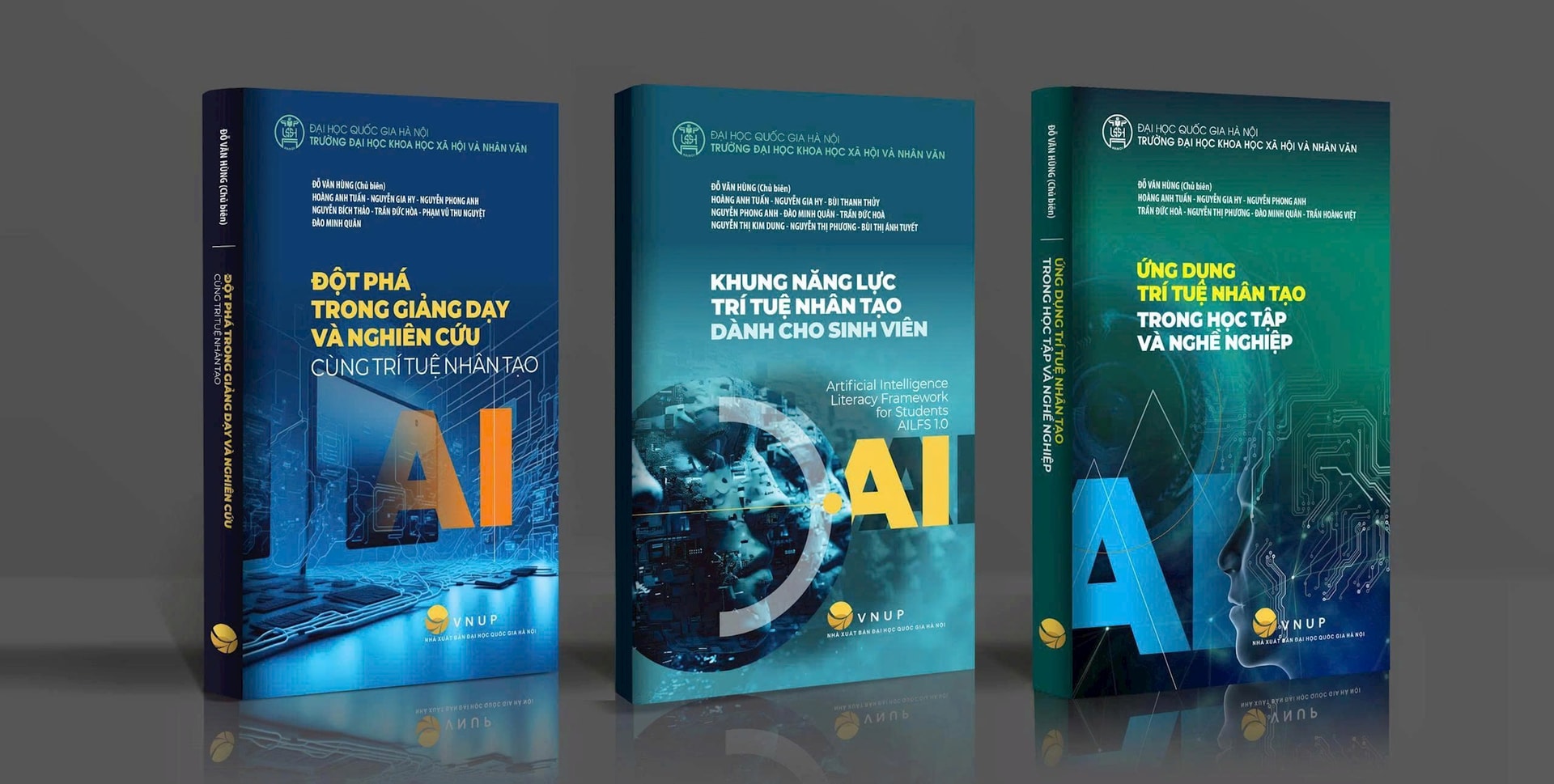
These textbooks on the application of artificial intelligence were compiled by the school's faculty.
- How do you assess the relationship between technology and institutions in the digital transformation process?- Innovation and digital transformation only truly create sustainable change when placed within a suitable, transparent, and flexible institutional framework. If mindset is the guiding beacon, then institutions are the foundation of governance that ensures all digital transformation initiatives are implemented and disseminated in practice.
However, institutions cannot simply follow technology. If technology changes daily while institutions remain stagnant, society will fall into a governance vacuum. Therefore, institution building must place people at the center of all decision-making.
There are three key issues of a humane digital institution: Firstly, protecting the rights and safety of citizens in the digital environment. The right to access information, the right to privacy, the right to respect for personal data, and the right to protection from the misuse of technology – these are core values that the institution must ensure.
Secondly, we must foster innovation and healthy competition, ensuring no one is left behind. Policies must pave the way for all individuals—especially young people and disadvantaged groups—to benefit from technological advancements and participate in innovation. Digital transformation must be inclusive, creating new opportunities rather than increasing inequality.
Third, managing the risks and social impacts of new technologies. Artificial intelligence, big data, and digital platforms can change the social structure, impacting beliefs, ethics, and culture. Social sciences and humanities provide scientific evidence to help design appropriate institutions to balance innovation and the preservation of human values.
In this process, universities of social sciences and humanities, especially the University of Social Sciences and Humanities, Vietnam National University, Hanoi, play a central role in critical thinking and policy planning, connecting the State - Universities - Businesses - Society, and forecasting the social impact of technology to improve institutions in a flexible, humane, and sustainable direction.
The school proactively implements many key programs and projects to equip both faculty and students with digital and artificial intelligence (AI) capabilities.
Professor, what role do human resources play in the three pillars driving innovation and digital transformation?- In the era of artificial intelligence and automation, technology can replace many jobs but cannot replace humans in terms of creativity, emotions, and human values. Therefore, developing human resources is the most fundamental and long-term factor in national digital transformation.
However, training human resources for the digital society is not just about technological skills; more importantly, it's about the ability to understand, evaluate, and apply technology responsibly and culturally, with a focus on serving the community and sustainable development.
The workforce of the new era needs to possess four key competency groups: digital and foundational technology skills; critical thinking and complex problem-solving; communication and collaboration skills in a multidisciplinary and multicultural environment; and digital ethics and social responsibility in data exploitation and cyberspace.
- The University of Social Sciences and Humanities is considered one of the pioneering institutions in training digital human resources with humanistic values. Could you share more about its outstanding achievements?- In recent years, the university has proactively implemented many key programs and projects to equip both faculty and students with digital and artificial intelligence (AI) capabilities. One notable collaboration is with Meta Group (Facebook), through which we have built a digital and AI competency framework, organized training courses and workshops to enhance understanding of responsible AI; and developed digital materials, lectures, and a practical ecosystem to help students master new technologies. As a result, AI has gradually been integrated into the regular training program and short-term training courses.
University of Social Sciences and Humanities, Vietnam National University, Hanoi