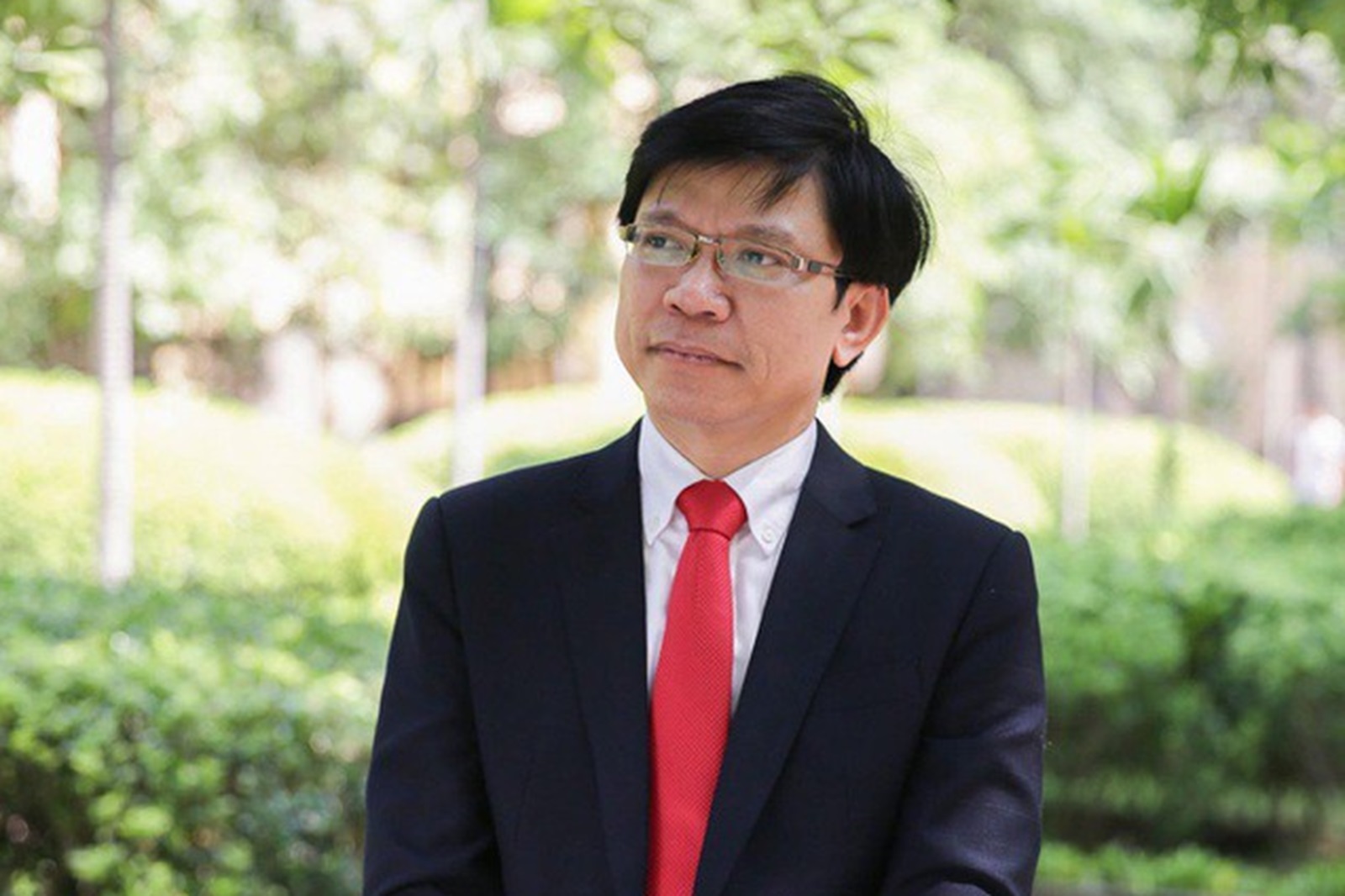
"International scientific articles" are not just "international journal articles."According to Professor Hoang Anh Tuan, equating "scientific articles" with "journal articles" is inaccurate and detrimental to several scientific fields, especially the social sciences and humanities.
"A 'scientific paper' is not just a journal article. A scientific paper can be a journal article, or it can be a chapter in a monograph. Equating a scientific paper with a journal article would be both flawed and unfair to many researchers in their scientific work."
"Reputable international journal articles undergo rigorous peer review. Chapters in international monographs published by prestigious publishers also undergo very strict peer review, resulting in very high scientific quality. The peer review and refinement process for an international monograph manuscript is quite lengthy. I have been an independent author and co-editor of monographs published in Brill (Leiden) and Routlege (London), and the editing and revision process took about 2.5 years."
For a long time, social science and humanities researchers highly valued the publication of articles as book chapters in monographs on a particular subject. For them, publishing a chapter in a monograph from a prestigious publisher was considered just as important as publishing an article in a specialized journal.
"To date, many researchers have chosen to publish their papers as book chapters in a monograph co-authored with reputable researchers, rather than in specialized journals. This practice is not only common in Vietnam but also in many international academic communities today," shared Professor Hoang Anh Tuan.
Therefore, Professor Hoang Anh Tuan argues that it would be both inaccurate and unfair not to recognize prestigious international book chapters as prestigious international scientific articles. The prestige of a book chapter is determined by the prestige of the international publisher, similar to how we determine the prestige of an international journal.
Professor Hoang Anh Tuan, Rector of the University of Social Sciences and Humanities, Vietnam National University, Hanoi
The international journal is ranked by WoS, and the international publisher is ranked by SENSE.
There are several journal ranking systems in the world, the most popular currently being ISI and SCOPUS. Similarly, international publishers are also ranked by several scientific organizations, for example, SENSE - Professor Hoang Anh Tuan pointed out.
SENSE ranks international (peer-reviewed) publishers into four groups: Group A includes only 10 publishers from prestigious universities (Cambridge, Columbia, Harvard, John's Hopkins, MIT, Oxford, Princeton, Stanford, Chicago, Yale), Group B includes about 70 publishers (including Routlege, Brill, Nomos, etc.), and Group C includes about 180 publishers.
SENSE itself is very objective in recommending "credit points" for a book chapter published by its respective publisher: publishers in group A: 4 credit points, B: 3, C: 1, and D: 0.
Decree 27/2020/ND-CP does not negate the international book chapter.
"There are some arguments that current legal texts on science and technology define 'international scientific articles' as 'international journal articles'. I don't think so," shared Professor Hoang Anh Tuan.
He analyzed that Decree 27/2020/ND-CP (amending Decree 40/2014/ND-CP and Decree 87/2014/ND-CP) mentions the phrase "scientific article published in an international scientific journal" seven times, but it absolutely does not imply a "definition" that a scientific article is merely a journal article, as some people are thinking.
Decree 40/2014/ND-CP itself mentions the phrase "scientific article published in a specialized scientific journal" twice, but it does not imply a definition that negates the concept of a book chapter. The issue is that if the documents do not fully encompass the concept, we have a responsibility to adjust it based on scientific theory and practical experience.
Decision No. 37/2018/QD-TTg of the Prime Minister on academic rank matters has an unreasonable point when it stipulates that "a scientific article is a scientific work by an author that has been published in a scientific journal with an international standard ISSN" (Clause 3, Article 2). The definition of a scientific article as merely a journal article is incomplete because it excludes book chapters.
"In my opinion, Clause 3, Article 2 of Decision No. 37/2018/QD-TTg should be amended to: 'a scientific article is a scientific work by an author that has been published in a scientific journal with an international standard ISSN or a book chapter in a monograph with an international standard ISBN.' The prestige level of a book chapter - as mentioned above - depends on the prestige level of the publisher, similar to how we are determining the prestige level of a journal," Professor Hoang Anh Tuan stated.
Professor Hoang Anh Tuan believes that it is time for scientific management agencies to add "prestigious international book chapters" and "prestigious international monographs" to legal documents on science and academic titles, placing them alongside "international journal articles." Doing so would both refine the content of regulations and ensure the very legitimate rights of scientists in specialized councils, especially at the National Science and Technology Fund (Ministry of Science and Technology) and the State Council for Professor Titles (Ministry of Education and Training).